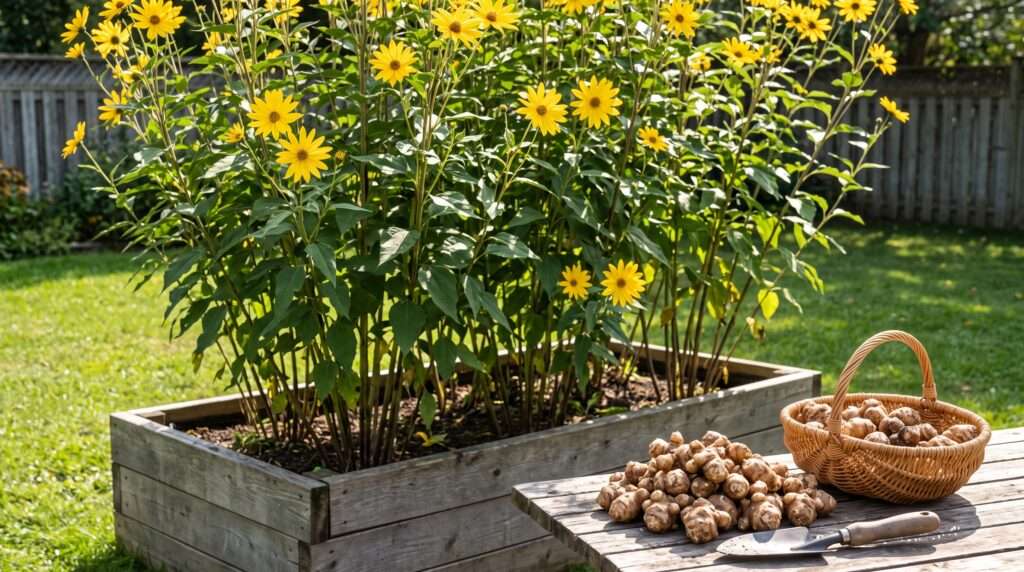
It’s the classic gardener’s dilemma. You want a high-yielding, drought-tolerant crop that requires virtually zero maintenance while producing delicious, nutty, low-glycemic tubers. But you’ve also heard the local gardening horror stories. If you aren’t extremely careful, growing Jerusalem artichoke plants can quickly turn from a backyard blessing into a permanent, invasive weed nightmare.
Welcome to the love-hate relationship of the sunchoke.
As a plant care specialist who has spent years experimenting with native edibles and testing various garden containment methods, I’ve seen firsthand how these incredible plants can transform a landscape—for better or worse. The good news? You don’t have to choose between enjoying huge harvests and keeping your sanity.
By the end of this comprehensive guide, you will learn the exact, battle-tested containment strategies, soil preparations, and strict care routines needed to harvest heavy yields of crisp sunchokes without letting them conquer your garden beds. Let’s dig in! 🚜
What Are Jerusalem Artichoke Plants? (And Why You Should Grow Them) 🥔
Before we can master growing them, we need to understand what we are actually planting. Despite the name, this plant has absolutely nothing to do with the Middle East, nor is it related to the globe artichokes you dip in butter.
Not from Jerusalem, Not an Artichoke 🌎
The Jerusalem artichoke (Helianthus tuberosus) is actually a species of perennial sunflower native to central North America. Long before European settlers arrived, Indigenous peoples across the continent cultivated this resilient plant for its nutrient-dense rhizomes.
So, where did the confusing name come from? When Italian settlers first encountered the plant, they noticed it tasted similar to artichoke hearts and called it girasole (the Italian word for sunflower). Over time, English speakers butchered the pronunciation of girasole into “Jerusalem.” Today, you’ll frequently see them marketed under the much more accurate and catchy name: sunchokes or sometimes “earth apples.” 🍏
The Incredible Benefits of Sunchokes 🍽️
If they have a reputation for taking over, why do seasoned horticulturists and homesteaders continue to plant them? Because the benefits heavily outweigh the risks when managed correctly.
-
Nutritional Powerhouse: Unlike traditional potatoes that are heavy in starch, sunchokes store their carbohydrates as inulin. This prebiotic fiber passes through the human digestive system largely undigested, making it an exceptional food for gut health, microbiome support, and blood sugar management. They are incredibly popular among diabetics and those on low-glycemic diets. 🩺
-
A Living Garden Wall: These aren’t tiny root veggies. Jerusalem artichoke plants routinely shoot up to 8, 10, or even 12 feet tall! Their thick, bamboo-like stalks create a brilliant, fast-growing summer privacy screen or windbreak for delicate garden crops. 🧱
-
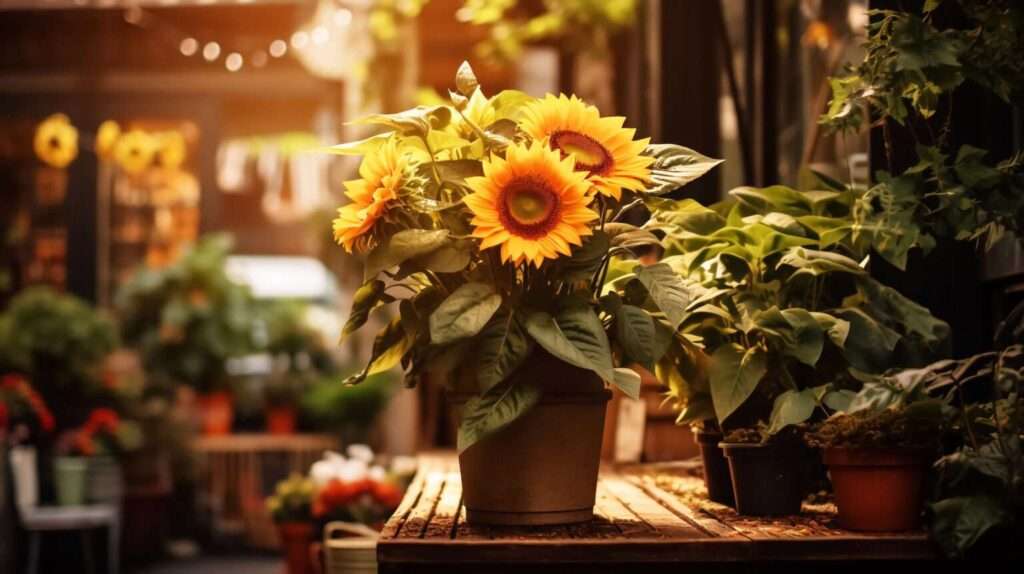
Late-Season Pollinator Magnet: Just as other garden flowers are dying back in late September and October, sunchokes burst into dozens of two-inch, bright yellow, daisy-like blooms. They provide a critical late-season nectar source for bees, butterflies, and migrating pollinators. 🐝
The Core Secret: 3 Bulletproof Ways to Contain the Spread 🚧
Let’s address the elephant in the garden right away. The reason sunchokes become invasive is due to their rhizomatic nature. Every tiny piece of tuber left in the soil will sprout a brand-new, 10-foot plant the following spring. To grow them responsibly, containment is not optional—it is mandatory.
Here are the three expert-approved strategies to keep your sunchokes exactly where you want them.
Strategy 1: The Raised Bed & Hardscape Trap 🧱
If you want to plant sunchokes in the ground, the safest method is to use an isolated raised bed surrounded by a “danger zone” for the roots.
Build a sturdy wooden or galvanized steel raised bed, but place it completely surrounded by an active lawn or concrete hardscape. Sunchoke rhizomes will eventually try to creep under the raised bed frames. If they creep under concrete, they hit a dead end. If they creep into your lawn, your lawnmower becomes the ultimate defense system.
Expert Tip: By simply mowing the grass around the perimeter of the raised bed every week, you repeatedly chop off the heads of any escaping runners. Without leaves to photosynthesize, the rogue rhizomes eventually starve and die, keeping your main crop perfectly boxed in. ✂️
Strategy 2: Heavy-Duty Container Gardening 🪴
For urban gardeners or those who want zero risk of an invasion, container gardening is the gold standard. Because sunchokes are incredibly vigorous, they actually perform beautifully in pots, provided they have enough room.
-
The Setup: Use heavy-duty, 15 to 20-gallon fabric grow bags, heavy plastic tubs (with drilled drainage holes), or half-whiskey barrels.
-
The Result: Containers naturally restrict the overall size of the tubers (they will be slightly smaller than ground-grown crops), but they guarantee 100% containment. When harvest time comes, you simply tip the container over onto a tarp and collect every single tuber with zero effort.
Strategy 3: Installing Underground Root Barriers ⛏️
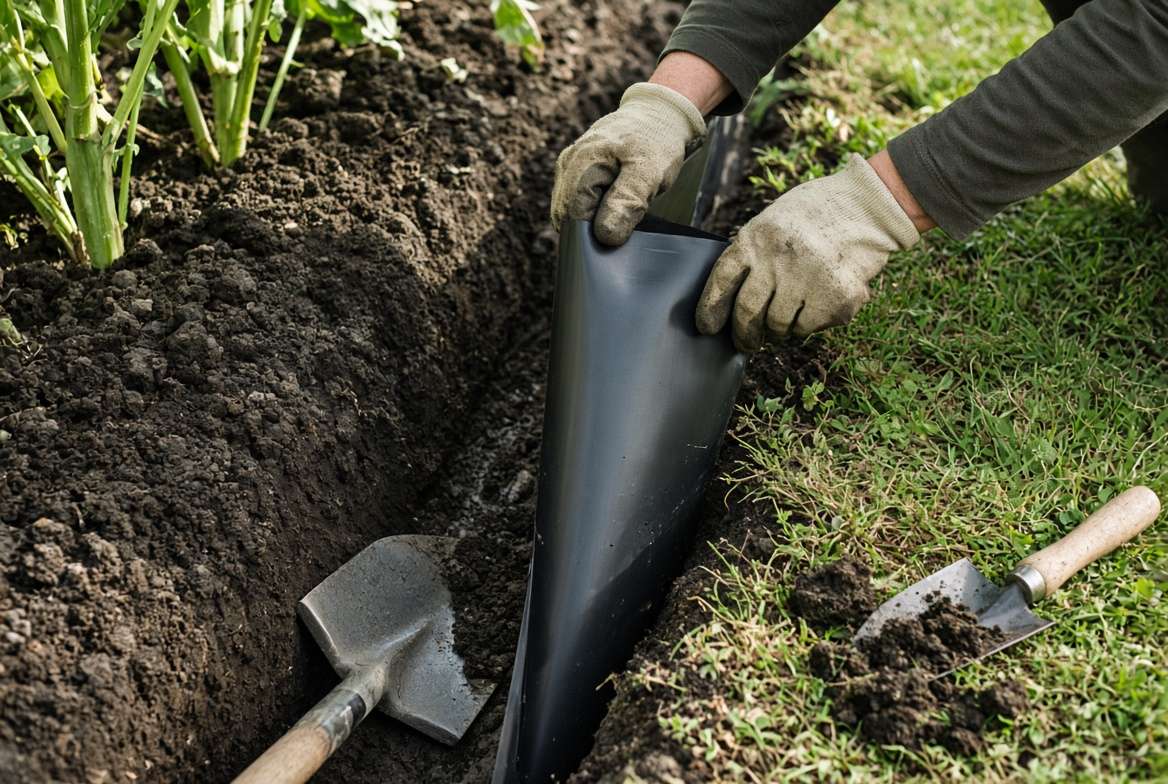
If you have a large property and want to grow a massive hedgerow of Jerusalem artichokes directly in the soil, you must install an underground root barrier. This is the exact same method arborists use to contain aggressive running bamboo.
-
The Technique: Dig a trench around your designated planting zone.
-
The Material: Install a high-density polyethylene (HDPE) root barrier that is at least 60 mil thick and goes down 18 to 24 inches deep into the soil. Leave about 2 inches of the barrier protruding above the soil line so the runners can’t hop over the top. This physical wall forces the rhizomes to turn back in on themselves, creating a dense, highly productive harvesting zone. 🛡️
Complete Planting Guide for Bountiful Yields 🌱
Once you have your containment strategy securely in place, it is time to actually get your hands dirty. Growing Jerusalem artichokes is famously easy—so easy, in fact, that the biggest challenge is usually holding them back rather than coaxing them to grow. However, if you want high-quality, plump, and delicious yields rather than a tangled mess of tiny roots, you need to follow a few best practices.
Choosing the Best Tubers for Seed Stock 🛒
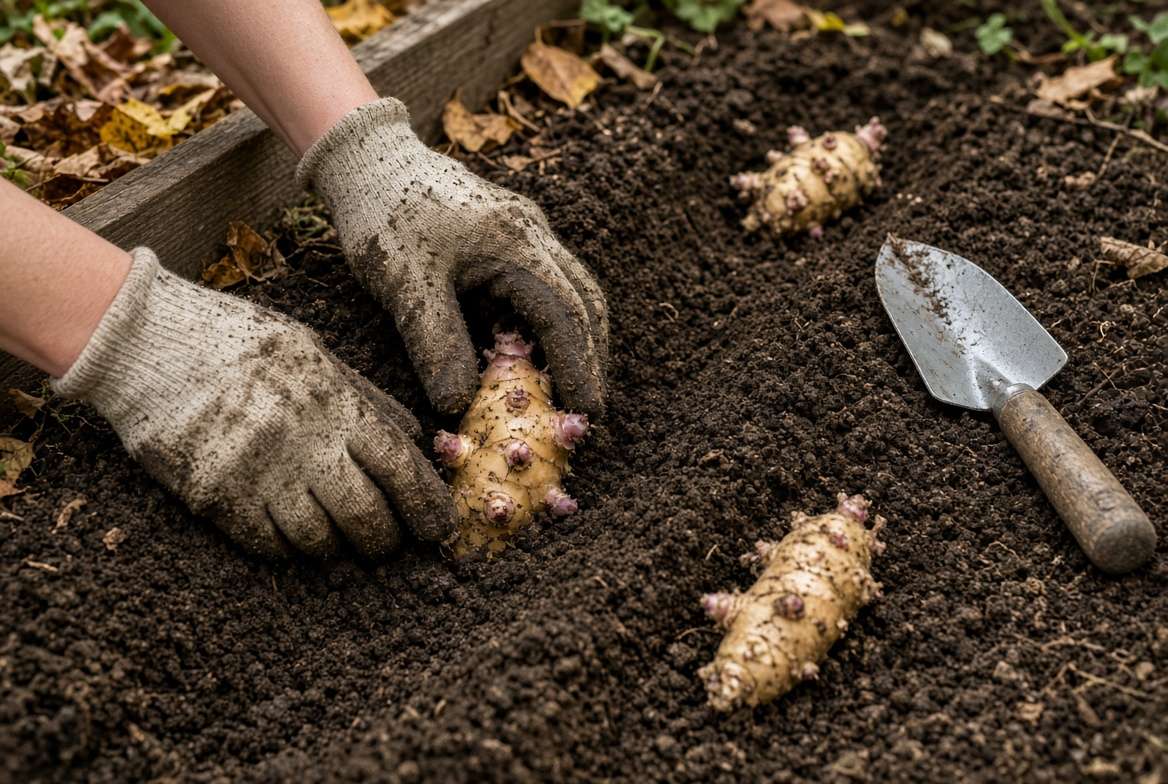
You don’t plant sunchokes from seeds; you plant them from the tubers themselves. While it is highly tempting to just buy a handful of organic sunchokes from your local high-end grocery store and throw them in the dirt, this isn’t always the best approach.
Grocery store sunchokes are often treated with sprout inhibitors to prolong shelf life, which can severely stunt your initial growth. Furthermore, grocery varieties might not be bred for your specific climate zone. Instead, source certified disease-free seed tubers from a reputable local nursery or an online seed company. Varieties like ‘Stampede’ (an early-maturing, heavy yielder) or ‘Clearwater’ (which produces smoother, easier-to-peel tubers) are excellent, high-performing choices for home gardeners. 📦
Sun, Soil, and Spacing Requirements ☀️
Sunchokes are incredibly adaptable and will stubbornly grow in almost any condition, but giving them the right environment is the secret to a bumper crop.
-
Sun: As members of the sunflower family (Helianthus tuberosus), these plants are aggressive sun-worshippers. Plant them in a location that receives full sun (at least 6 to 8 hours of direct, unfiltered sunlight daily) for maximum tuber production. If planted in partial shade, they will still grow tall, but the underground harvest will be noticeably smaller. 🌞
-
Soil: They tolerate poor, compacted, and even clay-heavy soils better than almost any other vegetable. However, to produce large, smooth tubers that are easy to clean, provide them with loose, well-draining, slightly alkaline soil (pH between 5.8 and 6.2). Working a few inches of well-rotted compost into the bed before planting will give the soil the perfect loamy texture. 🪱
-
Spacing: Overcrowding is the enemy of a good yield. Plant your seed tubers 4 to 6 inches deep. Space them out generously—at least 12 to 18 inches apart in rows that are 36 inches apart. This spacing ensures adequate airflow, which is critical for disease prevention later in the season. 📏
The Optimal Planting Window 📅
Because they are extremely cold-hardy, you have two primary planting windows. In colder climates (USDA Zones 3-8), plant them in early spring as soon as the ground can be worked—usually two to three weeks before your last expected frost date. For those in milder climates, late fall planting is actually preferred. The tubers will comfortably overwinter in the cold soil, naturally stratifying and preparing for explosive growth the moment spring temperatures begin to rise. 🌷
Care and Maintenance: Thriving on Neglect 💧
If you are a lazy gardener, you are going to love tending to sunchokes. Once established, they require very little human intervention. In fact, over-tending them is usually where beginners make their biggest mistakes.
Watering Rhythms for Crisp, Juicy Tubers 🚿
For the first few months of spring and early summer, your plants will rely mostly on natural rainfall. They are highly drought-tolerant thanks to their deep, aggressive root systems.
However, there is a critical watering window you cannot miss: late summer to early fall. This is the precise period when the plant shifts its energy from growing tall stalks to fattening up its underground rhizomes. During these crucial 6 to 8 weeks, ensure the plants receive at least 1 inch of water per week. Consistent moisture during this phase prevents the tubers from splitting or becoming woody and stringy. 🌧️
Should You Fertilize? (The Surprising Answer) 🧪
Expert Insight: Step away from the fertilizer bag! One of the most common mistakes I see in plant care consultations is gardeners treating sunchokes like heavy-feeding tomatoes.
If you apply heavy nitrogen fertilizers to these plants, you will trigger a massive explosion of green vegetative growth. You’ll end up with stalks soaring 12 to 14 feet into the air, completely shading out the rest of your garden. Worse, the plant will expend all its energy maintaining those giant leaves, resulting in an incredibly disappointing, tiny tuber harvest. A light top-dressing of compost at planting time is all the nutrition they need for the entire year. 🚫🌱
The Great Flower Debate: To “Chop” or Not? ✂️🌸
In late September, your sunchokes will burst into beautiful, golden-yellow blooms. But should you let them flower?
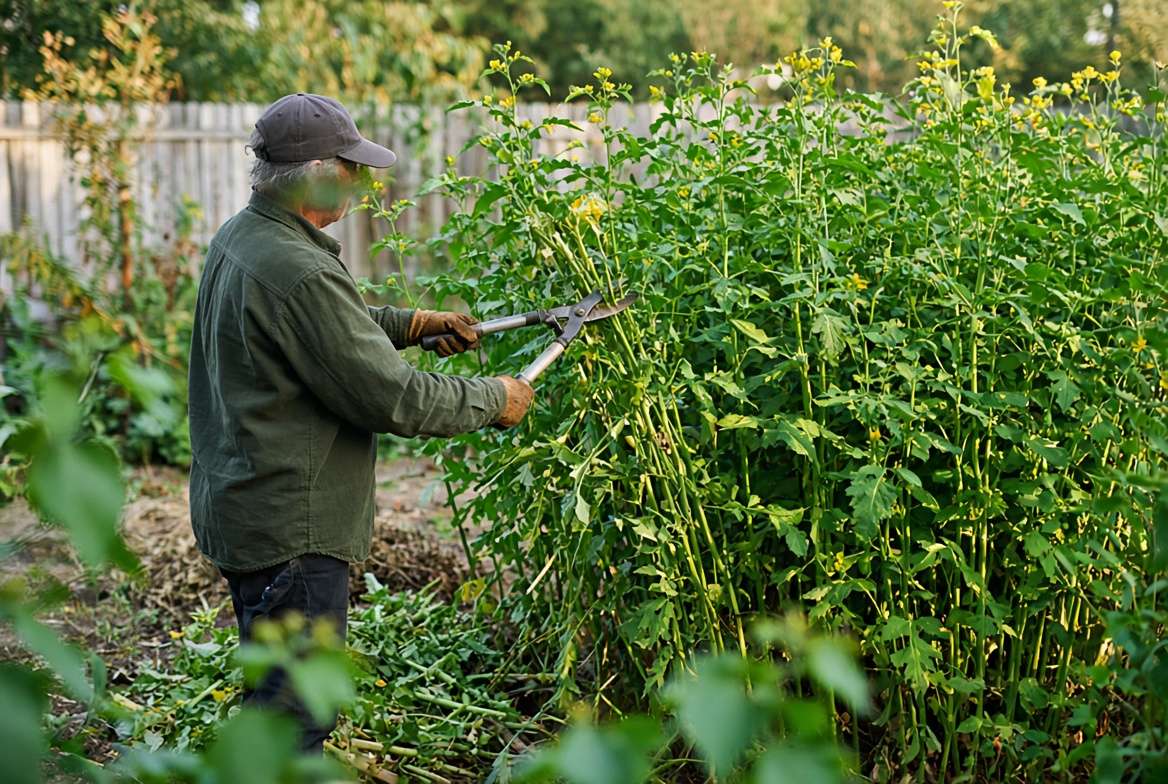
Horticulturists are divided. Leaving the flowers provides an essential food source for late-season pollinators. However, if your primary goal is the largest food harvest possible, you should employ a technique called “chopping.” When the plants reach about 4 to 5 feet tall, or right as flower buds begin to form, aggressively chop the top third of the stalks off.
This sends a biological signal to the plant to stop upward growth and redirects all that metabolic energy downward into the root system, resulting in significantly larger, heavier sunchokes. 🪓
Managing Pests and Diseases (Naturally) 🐛
Their thick stems and resilient nature make them practically immune to most standard garden pests, but there are a few invaders to watch out for.
Common Pests: Aphids and Slugs 🐌
In early spring, tender new sunchoke shoots can attract slugs and snails. A simple, organic beer trap placed near the base of the plants, or a scattering of crushed eggshells, will deter them. Later in the summer, you might notice aphids clustering on the undersides of the leaves. A sharp blast from your garden hose is usually enough to dislodge them. For severe infestations, a light spray of organic insecticidal soap or cold-pressed neem oil works wonders. 🐞
Fungal Issues: Powdery Mildew and Sclerotinia (White Mold) 🍂
Because they grow in dense, towering clumps, airflow can become restricted, inviting fungal diseases like powdery mildew (which looks like a dusting of white flour on the leaves) and Sclerotinia, or white mold, which affects the stems.
The best defense is proactive prevention. Stick to the 12-18 inch spacing rule, and don’t hesitate to thin out weak stalks mid-summer to let the wind blow through the patch. Fungal issues late in the season rarely affect the underground harvest, so if you see powdery mildew in October, simply let it be. 🌬️
Harvesting Your Jerusalem Artichokes Like a Pro 🧺
Harvesting is the most rewarding—and the most critical—phase of sunchoke cultivation.
Why You MUST Wait for the First Frost ❄️
Do not rush to dig up your crop in early fall! Patience is hands-down the most important ingredient for delicious sunchokes. Wait until your garden has experienced at least one, preferably two, hard frosts, freezing the stalks and causing the leaves to die back and turn brown.
Why? The cold temperature triggers a chemical reaction within the tuber, converting a significant portion of its complex inulin starches into simpler sugars. A sunchoke harvested after a frost is noticeably sweeter, crisper, and infinitely more pleasant to eat. 🥶
Step-by-Step Digging Technique 🪓
-
Cut the Stalks: Using heavy loppers, cut the dead stalks down, leaving about 6 inches of stem above the soil so you know exactly where to dig.
-
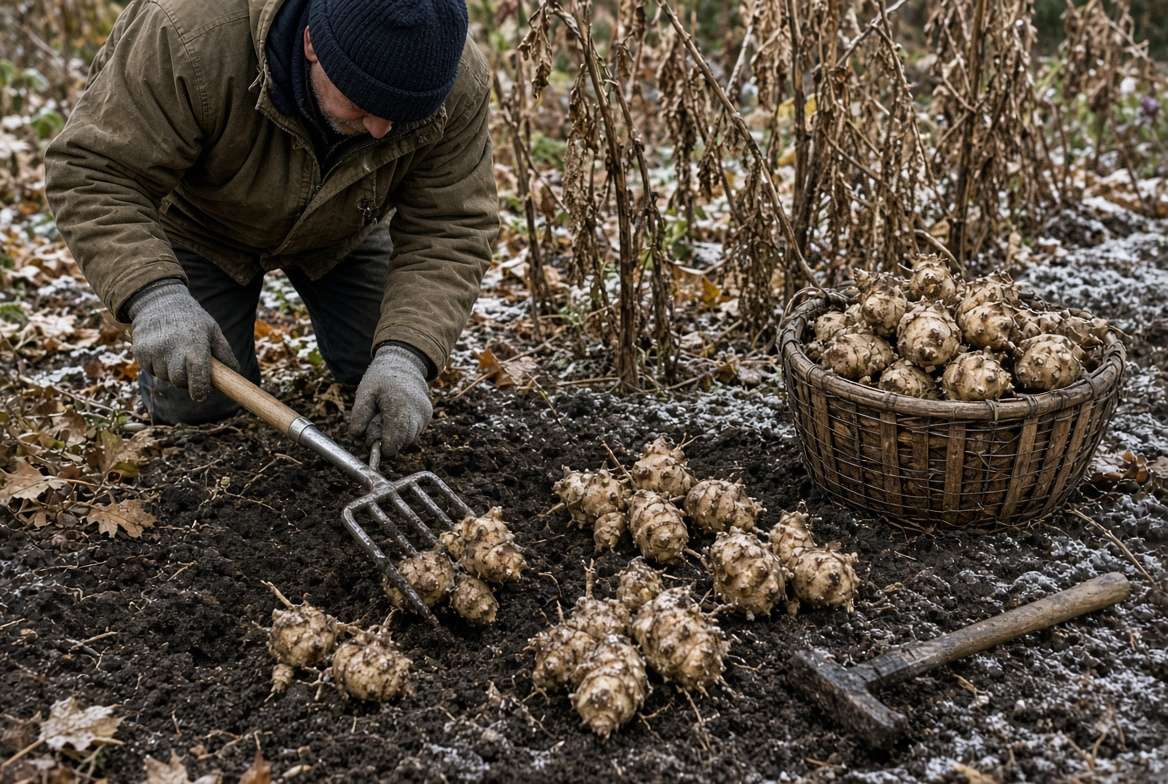
Loosen the Soil: Use a broadfork or a sturdy spading fork (never a shovel, which will slice right through the delicate tubers). Insert the fork about a foot away from the main stem and gently rock back and forth to lift the entire root mass.
-
The “Ruthless Harvest” Rule: I cannot overstate this: you must meticulously sift through the soil and extract every single piece of tuber you can find, no matter how small. Even a piece the size of a fingernail will sprout next spring. Treat the harvest like an archaeological dig to prevent future weed issues. 🕵️♂️
How to Store Sunchokes to Prevent Shriveling 🧊
Unlike potatoes, which have thick, curing skins, sunchoke skins are paper-thin. If left on the kitchen counter, they will lose moisture and shrivel up like raisins within a few days.
The best way to store them is directly in the ground, digging them up on-demand throughout the winter (as long as your soil doesn’t freeze solid). If you must harvest them all at once, brush off the dirt (do not wash them until you are ready to eat), and store them in a bucket of damp sand in a cool root cellar. Alternatively, seal them in a perforated plastic bag wrapped in slightly damp paper towels inside your refrigerator’s crisper drawer, where they will stay incredibly crisp for up to two months. ❄️
Frequently Asked Questions (FAQs) 🤔
Can I leave Jerusalem artichoke plants in the ground over winter? 🌨️ Absolutely. In fact, this is the preferred method for home gardeners. The earth acts as a natural, temperature-controlled root cellar. Just apply a heavy layer of straw mulch over the bed in extreme climates to make mid-winter digging easier.
Do sunchokes really cause digestive issues? 💨 This is the source of their infamous nickname, the “fartichoke.” Because the human body doesn’t possess the enzymes to break down raw inulin, gut bacteria ferment it, which can cause significant gas and bloating in sensitive individuals. The solution? Start by eating small portions to let your gut biome adjust, and always cook them slowly over low heat (like roasting or making a pureed soup), which chemically breaks down the inulin into easily digestible fructose.
Are the towering leaves and stems useful for compost? ♻️ Yes! Once you chop down those massive stalks in the fall, they make fantastic, carbon-rich “brown” material for your compost pile. Run them through a wood chipper or chop them into small pieces with garden shears first, as the thick, woody stalks take a long time to break down otherwise.
Embrace the Sunchoke (Responsibly) 🌿
Growing Jerusalem artichoke plants is an incredibly rewarding experience that connects you to a deeply historic, native food source. They demand almost nothing of the gardener, easily survive blistering droughts, and provide a late-season floral show that your local bees will thank you for.
The secret to success relies entirely on respecting their vigorous nature. By implementing a strict containment strategy—whether through heavy-duty grow bags, concrete barriers, or underground root walls—and practicing the “Ruthless Harvest” technique, you can enjoy baskets full of these crisp, nutty, prebiotic tubers year after year without them ever overtaking your prized garden beds.
Have you successfully grown sunchokes, or are you currently battling an invasive patch? Drop your favorite containment strategies (or your favorite roasted sunchoke recipes!) in the comments below.