You bring it home from the local plant nursery, completely mesmerized. You gently tap a feathery green leaf, and like magic, it folds inward, shrinking away from your touch. It is undeniably fascinating. But fast forward just one week, and that same magical mimosa pudica plant has transformed into a crispy, yellowing, leafless tragedy on your windowsill. Sound familiar?
If you are struggling to keep your sensitive plant alive, you are absolutely not alone. As a novelty item, these plants are wildly popular, but they are often sold without the crucial context needed to keep them thriving indoors. Native to the lush, humid environments of South and Central America, the Mimosa pudica (commonly known as the touch-me-not plant) is a tropical houseplant with very specific environmental demands.
In my years of working with delicate indoor tropicals and rehabilitating stressed greenery, I’ve seen countless sensitive plants succumb to the same few easily avoidable mistakes. The good news? With a few precise adjustments to your lighting, humidity, and daily habits, keeping this unique specimen vibrant—and even getting it to produce its famous pink puffball flowers—is entirely within your reach.
Let’s dive into the exact science and expert sensitive plant care strategies you need to stop the decline and cultivate a lush, thriving plant.
Why Is My Mimosa Pudica Plant Dying? (The 3 Fatal Mistakes) ⚠️
Before we map out the perfect care routine, we need to stop the bleeding. If your plant is actively dropping leaves, turning brown, or looking wilted, you are likely committing one of these three fatal errors.
1. You Are “Playing” With It Too Much 🛑
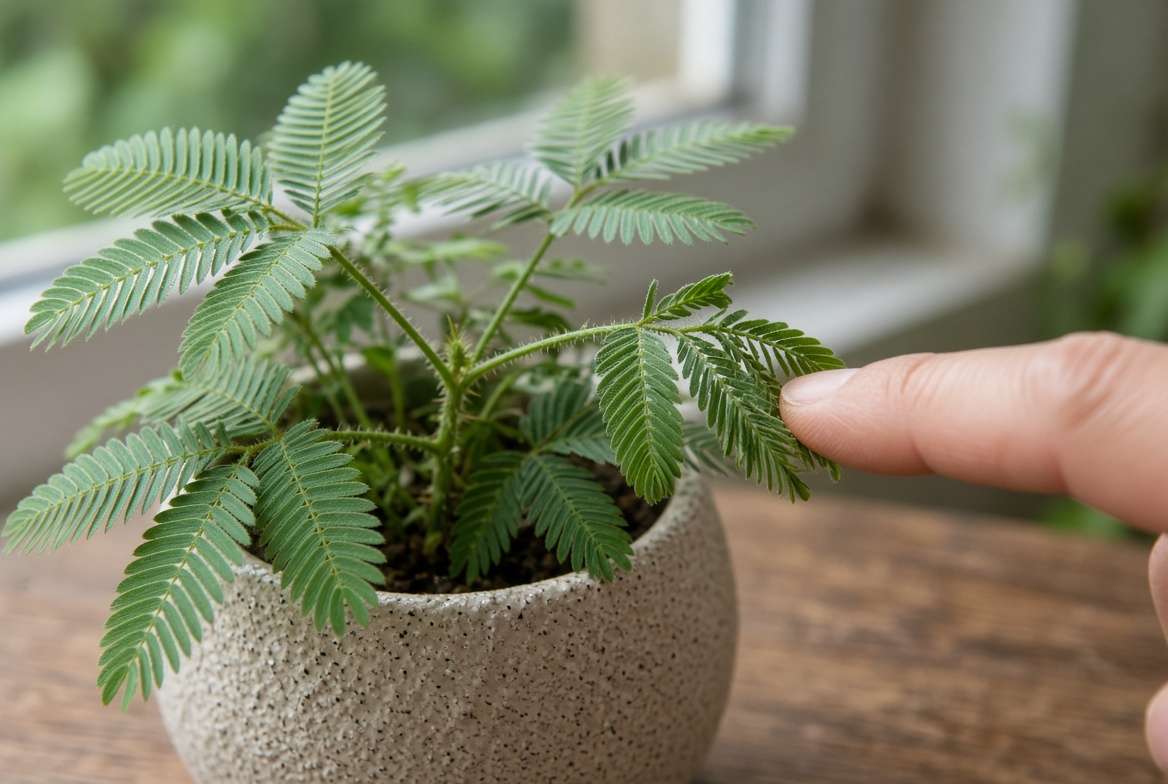
It is the number one reason we buy them, and ironically, the number one reason they die. The dramatic folding of the leaves is a fascinating botanical defense mechanism known as thigmonasty. When triggered by touch, heat, or even a strong breeze, the plant rapidly releases water from specialized cells at the base of the leaflets (the pulvinus), causing them to collapse.
While it looks effortless, this rapid movement expends a massive amount of the plant’s stored energy. In the wild, this mechanism deters hungry herbivores. In your living room, repeated poking by curious hands (or pets) forces the plant into a state of constant exhaustion. If triggered repeatedly, the plant literally starves itself of energy and drops its leaves to survive.
The Expert Fix: Look, but do not touch. Treat the folding mechanism as an occasional treat rather than a daily party trick.
2. The Great Moisture Mismatch (Rot vs. Drought) 💧
Mimosa pudica has incredibly fine, delicate root systems. Because of this, it has a zero-tolerance policy for extreme moisture fluctuations. If the soil dries out completely, the fragile roots instantly desiccate, leading to sudden, irreversible leaf drop. On the flip side, if left sitting in dense, waterlogged soil, those same fine roots will rapidly succumb to root rot, turning to mush within days.
Many indoor gardeners treat it like an indestructible pothos, waiting for it to wilt before watering. By the time a sensitive plant wilts from thirst, the damage to the root system is already severe.
The Expert Fix: You must aim for consistent, even moisture. The soil should feel like a well-wrung-out sponge—never soaking wet, and never bone dry.
3. The Humidity is Too Low 🏜️
Remember the origins of the touch-me-not plant: the steaming, humid tropics. When we bring them into our homes—especially during winter when central heating systems are blasting dry air—we place them in an environment resembling a desert.
Low humidity causes the delicate, fern-like leaflets to brown at the edges, crisp up, and eventually fall off. If your plant is located directly near a heating vent, an air conditioning unit, or a drafty window, it is fighting a losing battle against the dry air.
The Expert Fix: You must artificially recreate a tropical microclimate around the plant. Ambient indoor humidity of 30% won’t cut it; these plants demand humidity levels of 60% or higher to truly flourish.
The Ultimate Mimosa Pudica Plant Care Guide 🌿
Now that we have eliminated the fatal mistakes, let’s build a foundation for vigorous growth. The secret to a skyscraper-worthy Mimosa pudica lies in mirroring its natural habitat as closely as possible.
Perfect Lighting Conditions ☀️
Light is non-negotiable for this species. To generate the massive amounts of energy required for its daily leaf movements and to produce its signature fluffy pink puffball flowers, it needs abundant light.
However, “abundant” does not mean scorching. Placing your plant in a blazing, unprotected South-facing window in the middle of summer will scorch the fragile leaves, turning them white or pale yellow.
-
The Sweet Spot: Aim for bright, indirect sunlight for most of the day, supplemented with a few hours of gentle, direct morning sun. An East-facing window is often the holy grail for sensitive plants.
-
Artificial Support: If your home lacks natural light, do not attempt to grow this plant in a dim corner. Instead, invest in a high-quality, full-spectrum LED grow light. Position it about 12 to 18 inches above the foliage and run it for 12-14 hours a day to mimic tropical day lengths.
The Ideal Soil & Potting Mix 🪴
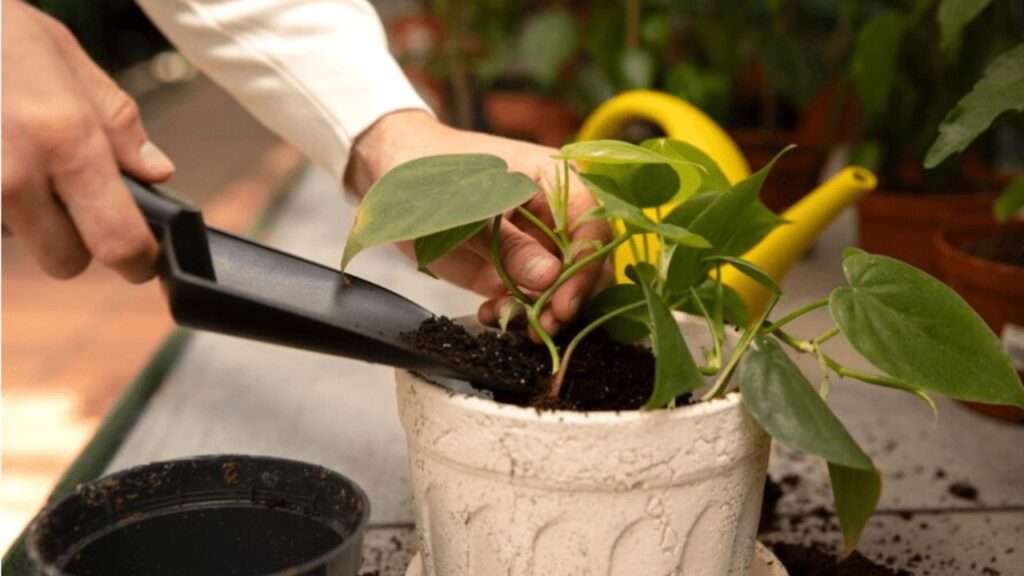
The standard, heavy potting soil you buy in big-box stores will suffocate your sensitive plant. Standard mixes hold far too much water and lack the necessary aeration for those delicate roots. To prevent root rot while maintaining that “goldilocks” moisture level, you need a custom, loamy soil profile.
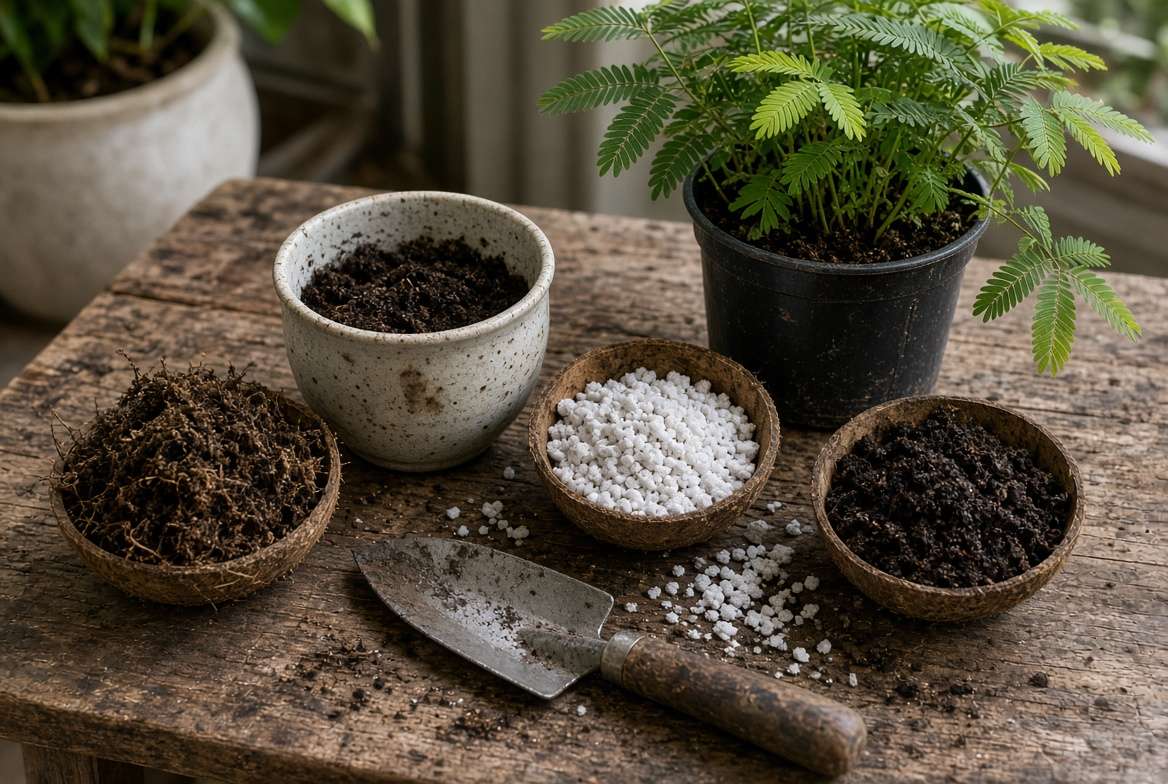
The Expert “Touch-Me-Not” Soil Recipe: Skip the dense commercial soils and mix your own batch. Combine:
-
2 Parts Peat Moss or Coco Coir: This provides the essential moisture retention, ensuring the roots never completely dry out.
-
1 Part Perlite or Pumice: This guarantees excellent drainage, preventing water from pooling at the bottom of the pot.
-
1 Part Loamy Compost or Worm Castings: This provides a gentle, slow-release source of organic nutrients.
Pro-Tip: Always use a pot with a designated drainage hole. Terracotta pots can be risky for this species as they wick moisture away from the soil too quickly. Opt for a glazed ceramic or heavy-duty plastic nursery pot instead.
Watering Strategy (The “Goldilocks” Method) 🚿
Mastering the watering schedule is arguably the most critical component of Mimosa pudica plant care. As we established, these tropical houseplants despise both swampy conditions and dry spells.
To achieve the “Goldilocks” standard—just right—you must ditch the watering calendar. Do not simply water every Sunday because it is convenient. Instead, you need to actively monitor the soil’s moisture levels.
-
The Finger Test: Press your finger about an inch into the top of the soil. If it feels completely dry, it is time to water. If it still feels moist or cool to the touch, wait another day or two.
-
The Bottom-Watering Technique: Because the delicate foliage of the touch-me-not plant is highly susceptible to fungal issues if it gets wet, bottom-watering is an excellent strategy. Fill a basin or saucer with room-temperature water (ideally filtered or left out overnight to allow chlorine to dissipate) and place the nursery pot inside. Allow the plant to soak up moisture through the drainage holes for 20-30 minutes, then remove it and let the excess drain away. This ensures the root ball is thoroughly hydrated without dampening the leaves or encouraging fungus gnats at the surface.
Temperature and Humidity Targets 🌡️
If your sensitive plant is dropping its lower leaves and looking incredibly sparse, a lack of humidity is the most likely culprit.
-
Temperature: Keep your plant in a cozy temperature range between 65°F and 85°F (18°C – 29°C). Never expose the plant to temperatures below 60°F (15°C). Cold drafts from windows or air conditioning units will cause the plant to enter a state of shock, leading to rapid decline.
-
Humidity: The Mimosa pudica craves atmospheric moisture. Aim for a baseline humidity of at least 50%, with 60% to 70% being the ideal sweet spot for lush, vigorous growth.
How to Hack Your Humidity: Misting the leaves is a common myth—it only raises humidity for a few minutes and actually increases the risk of foliar disease on this specific plant. Instead, try these proven methods:
-
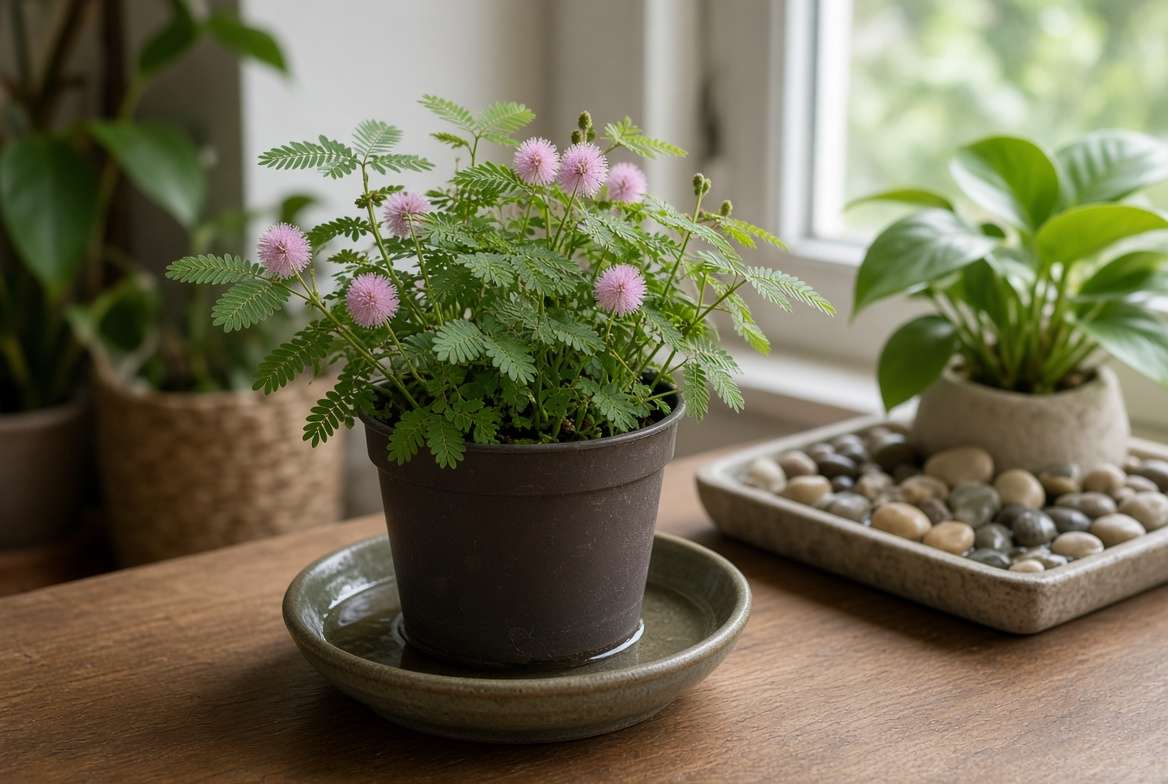
The Pebble Tray: Fill a shallow tray with pebbles and water, placing the plant pot on top (ensuring the bottom of the pot isn’t touching the water). As the water evaporates, it creates a localized humid microclimate.
-
Grouping: Group your tropical houseplants together. Plants release moisture through transpiration, naturally elevating the humidity in their immediate vicinity.
-
Invest in a Humidifier: For the best, most consistent results, a dedicated warm-mist or ultrasonic humidifier is your greatest tool.
Expert Product Pick: If you are comparing humidifiers, look for models with built-in hygrometers and directional nozzles so you can aim the mist near (but not directly on) the foliage.
Fertilization: Less is More 🧪
Here is a fascinating botanical fact that most generic care guides miss: The Mimosa pudica plant is a legume. Like peas and beans, it is nitrogen-fixing. This means it has a symbiotic relationship with bacteria in its roots that allows it to pull nitrogen directly from the air and convert it into usable nutrients.
Because of this incredible adaptation, sensitive plants require very little supplemental fertilizer. In fact, over-fertilizing with heavy synthetic nitrogen will actually burn the delicate roots and result in weak, spindly growth.
The Feeding Schedule: Feed your plant only during the active growing season (Spring and Summer). Use a high-quality, liquid organic fertilizer diluted to half-strength. Look for a formula higher in potassium and phosphorus rather than nitrogen—this will encourage strong root development and promote those beautiful, fluffy pink puffball flowers. Feed once every four to six weeks, and halt fertilization entirely during the Fall and Winter dormancy period.
How to Prune and Maintain a Bushy Sensitive Plant ✂️
One of the most common complaints about the Mimosa pudica plant is that it becomes “leggy” or stretched out over time. Left to its own devices, it behaves like a creeping weed, producing long, trailing stems with sparse foliage.
To maintain a compact, bushy, and aesthetically pleasing indoor houseplant, regular pruning is essential.
-
When to Prune: The best time to prune is early spring, right as the plant enters its active growth phase.
-
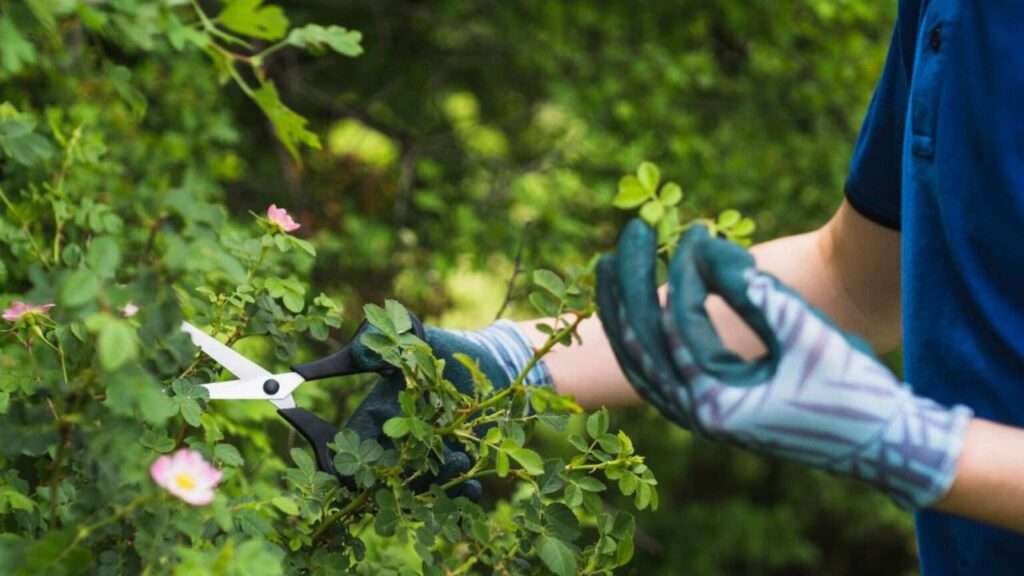
The Technique: Using sterilized pruning snips, trim back the longest, most unruly stems. Always make your cut just above a leaf node (the little bump on the stem where a leaf attaches). Pruning triggers the plant to push out new lateral growth from that node, resulting in a fuller, bushier canopy.
-
Routine Maintenance: Consistently pinch off dead or yellowing foliage. Decaying plant matter left on the soil surface is a breeding ground for pests and pathogens.
[Editor’s Note for Visual Layout: Insert a 16:9 text-free macro photograph showing precisely where to cut above the leaf node.]
Propagation: Growing Mimosa Pudica from Seed 🌱
While you can technically propagate a touch-me-not plant via stem cuttings, the success rate is notoriously low due to the fragile nature of the stems and high susceptibility to rot. The absolute best way to multiply your collection is by growing Mimosa pudica from seed.
It is incredibly rewarding, and seeing those tiny seedling leaves fold up for the first time is a joy.
Step 1: Prepping the Seeds (Scarification)
The seeds have a very hard outer coat designed to survive harsh conditions in the wild. To ensure a high germination rate, you must perform “scarification.” Take a piece of fine sandpaper and gently scratch the surface of the seed. Next, soak the seeds in a bowl of warm water for 24 hours. You will know they are ready when they swell slightly.
Step 2: Planting and Germination
Fill a small nursery pot with a light seed-starting mix (or pure peat moss and perlite). Place the seeds on top and cover them with just a light dusting of soil—they need some light to germinate.
Moisture and heat are vital here. Cover the pot with a clear plastic bag or a humidity dome to lock in moisture, and place it on a seedling heat mat to maintain a soil temperature of around 70°F – 75°F (21°C – 24°C).
Step 3: Seedling Care
Within 7 to 14 days, you should see sprouts. Remove the humidity dome immediately to provide air circulation. Wait until the seedlings have developed at least two sets of “true leaves” before attempting to transplant them. The taproot of a young Mimosa pudica plant is incredibly delicate; handle it with extreme care to avoid transplant shock.
Troubleshooting Common Pests and Diseases 🐛
Even with the best sensitive plant care routine, issues can arise. Here is how to diagnose and treat the most common ailments like an expert.
Spider Mites: These microscopic arachnids are the number one enemy of the Mimosa pudica, especially when indoor humidity drops.
-
The Signs: You will notice fine webbing near the stems and a stippled, dusty appearance on the leaves.
-
The Fix: Because the plant’s leaves close when touched, aggressively wiping them down is difficult. Instead, take the plant to the shower and gently spray off the foliage with lukewarm water. Follow up with a thorough spray of cold-pressed neem oil or a targeted horticultural insecticidal soap.
Fungus Gnats: If you see tiny black flies hovering around the soil, you have fungus gnats.
-
The Signs: Adult flies are annoying, but the real danger is the larvae in the soil, which feed on the plant’s delicate root hairs.
-
The Fix: This is a clear indicator that your topsoil is staying too wet. Switch to the bottom-watering method mentioned earlier. To kill the larvae, water the soil with a diluted solution of hydrogen peroxide (1 part 3% peroxide to 4 parts water) or use Mosquito Bits (BTI) steeped in your watering can.
Yellowing Leaves:
-
If the lower, older leaves are yellowing and dropping: It is likely natural aging, or a sign of low humidity/under-watering.
-
If the entire plant is yellowing: You are likely overwatering, and root rot has begun to set in. Check the soil immediately and repot into fresh, dry soil if it smells swampy.
Frequently Asked Questions (FAQs) ❓
How long does a Mimosa pudica plant live? In its native tropical habitat, it is a creeping perennial. However, indoors, it is often treated as an annual because it tends to become woody and less attractive in its second year. With perfect care, ideal lighting, and regular pruning, you can keep a sensitive plant looking vibrant indoors for 2 to 3 years.
Is the Mimosa pudica toxic to cats and dogs? Good news for pet owners! According to the ASPCA, the Mimosa pudica is considered non-toxic to cats, dogs, and horses. However, the plant does contain tiny, sharp thorns on its stems as it matures, which can cause mild mechanical irritation if chewed, so it’s best kept out of reach.
Why did my Sensitive Plant produce fluffy pink flowers? Congratulations! If your plant produces those beautiful, alien-like pink puffball flowers, it means you have perfectly dialed in its light and humidity requirements. These blooms typically appear in mid-to-late summer. If pollinated, they will produce tiny seed pods, allowing you to harvest your own seeds for next year!
Can I grow Mimosa pudica outdoors? Yes, but only in specific climates. It can be grown outdoors year-round in USDA Hardiness Zones 9 through 11. In cooler climates, it can be grown outdoors as an annual during the summer months, but it must be brought back indoors long before the first threat of frost.
Conclusion & Next Steps 🏁
Caring for a mimosa pudica plant requires a slightly different approach than your average indoor pothos or snake plant, but the reward of growing such an interactive, dynamic species is well worth the effort.
Remember the golden rules of sensitive plant care: give it bright but indirect sunlight, maintain a consistently moist but well-draining soil profile, keep the humidity high, and most importantly—resist the urge to over-stimulate its fascinating thigmonastic leaves!
By treating this tropical beauty with the delicate touch it deserves, you will prevent the dreaded crispy leaf drop and enjoy a lush, bushy plant that actively responds to its environment.
What is your biggest struggle with your sensitive plant? Let me know in the comments below! And if you’re struggling to keep your indoor jungle humid enough this winter, be sure to check out our comprehensive comparison guide on the best indoor plant humidifiers for optimal tropical growth.