
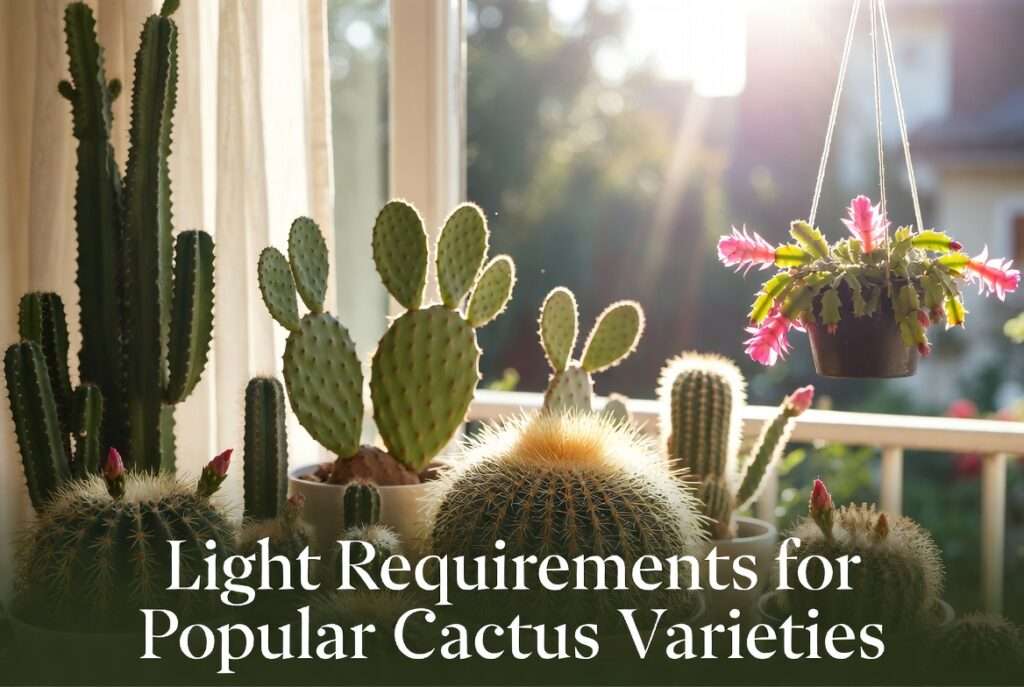
Light requirements for popular cactus varieties are the single most important factor in keeping these resilient plants happy, healthy, and blooming year after year. Yet most new (and even experienced) growers get it wrong — leading to stretched, pale “leggy” cacti or scorched, mushy disasters.
If your cactus looks sad, refuses to flower, or is slowly dying despite perfect watering and soil, the culprit is almost always lighting. As a certified horticulturist with over 15 years growing more than 200 cactus specimens across desert and jungle types — both indoors in apartments and outdoors in challenging climates — I’ve seen every common mistake. In this comprehensive, skyscraper-level guide, you’ll discover exactly how much light each popular variety needs, how to set it up indoors or outdoors, and foolproof fixes for common problems.
By the end, you’ll have the confidence to give every cactus on your windowsill or balcony the perfect light it craves. Ready to transform your collection? Let’s dive in! 🌞
Why Proper Lighting Is the Make-or-Break Factor for Cactus Health 🌞
Light powers everything your cactus does — from photosynthesis and vibrant spine color to dramatic blooms and compact growth. Without the right amount and intensity, even the toughest desert species will struggle.
How Light Powers Photosynthesis, Spines, and Blooms Cacti are masters of survival, but they still rely on sunlight to produce sugars. Desert types evolved under intense, direct rays in arid regions, while jungle/epiphytic varieties adapted to dappled forest light. Give them the wrong type and they’ll stretch (etiolation) or burn.
Real Signs Your Cactus Is Begging for Better Light (and What They Mean)
- Pale, stretched stems reaching toward the window? → Not enough light.
- Yellow or brown scorched patches? → Too much direct sun without acclimation.
- No flowers for years? → Often a light issue (especially short-day needs for Christmas cacti).
- Weak, soft spines or slow growth? → Insufficient intensity.
I’ve rescued dozens of “hopeless” plants simply by correcting their lighting — proof that light truly is the #1 success factor.
The Science-Backed Difference Between Desert and Jungle Cacti Lighting Needs Desert cacti (like barrel or prickly pear) crave 6–8+ hours of direct sun daily. Jungle types (Christmas cactus family) prefer bright indirect light and can scorch in full midday rays. Understanding this split prevents 90% of beginner failures.
Understanding Cactus Light Basics: Terms, Measurements & Easy Home Tests 📏
Before we get to specific varieties, let’s master the fundamentals every grower needs.
Direct Sun vs. Bright Indirect vs. Filtered Light – What Each Really Means
- Direct sun: Unobstructed rays hitting the plant (south/west windows or outdoors).
- Bright indirect: Strong light but no direct beams (east window or sheer-curtain south window).
- Filtered/dappled: Light through leaves or light curtains — perfect for jungle cacti.
How Many Hours and How Intense? (The 6-Hour Rule and Beyond) Most desert cacti need a minimum of 6 hours direct; many thrive on 8–10. Jungle varieties want 4–6 hours bright indirect. Intensity matters too — aim for 10,000–20,000 lux for desert types.
Simple DIY Light Tests Every Grower Should Know Try the hand-shadow test: Hold your hand 6 inches above the cactus. A sharp, dark shadow means strong direct light. Fuzzy shadow = bright indirect. No shadow = too dim. Free phone apps like “Lux Light Meter” give precise readings in seconds.
Lux and Foot-Candles Explained – Plus Recommended Ranges for Cacti Desert cacti: 15,000–50,000 lux. Jungle: 5,000–15,000 lux. These numbers sound technical but translate to “sunny windowsill” in real life.
Light Requirements for Popular Desert Cacti (Full-Sun Lovers) 🏜️
These spiky icons evolved in harsh deserts and demand maximum brightness.
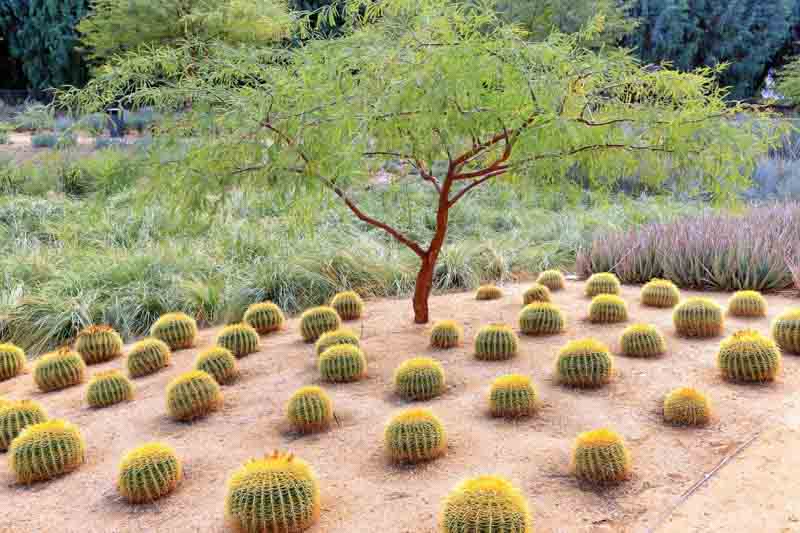
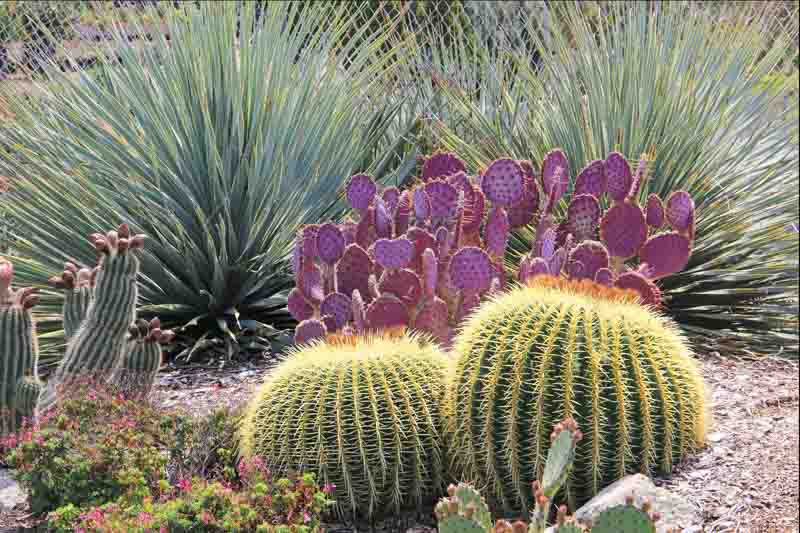
Golden Barrel Cactus (Echinocactus grusonii) – The Sunshine Champion ☀️ This golden beauty needs 8+ hours of direct sun daily. Indoors, place it in a south-facing window; outdoors, full sun is ideal. Insufficient light causes it to lean dramatically. In my collection, barrels grown under full sun develop the tightest, most vibrant golden spines and occasional yellow flowers.
Prickly Pear & Bunny Ears Cactus (Opuntia spp.) – Tough and Thriving in Direct Sun Opuntia love 6–10 hours direct. They’re forgiving but etiolate quickly in low light. Outdoors they spread beautifully; indoors they need a bright west or south window. Pro tip: Morning sun prevents sunburn while delivering the intensity they crave.
Saguaro Cactus (Carnegiea gigantea) – Outdoor Giant That Demands Maximum Light True saguaros are slow growers but need full, unobstructed sun (10+ hours). Indoors they’re challenging unless you use powerful grow lights. Outdoors in warm zones they’re unstoppable.
Barrel Cactus (Ferocactus spp.) – Heat-Loving Desert Icon Like the golden barrel, these need intense direct light. They tolerate heat but will stretch without it. I’ve seen barrels bloom reliably only when given at least 7 hours of direct rays.
Mammillaria (Pincushion Cactus) – Flowering Powerhouse That Loves Bright Windows These small, fuzzy cuties bloom profusely with 6–8 hours direct sun. South or west windows are perfect. Many varieties turn bright red or pink in strong light.
Hedgehog Cactus (Echinocereus) & Old Man Cactus – Full Sun Favorites Both thrive in 6+ hours direct. Old Man’s long white hairs protect it from intense rays — a natural sunscreen!
Light Requirements for Popular Jungle & Epiphytic Cacti (Bright-but-Gentle Types) 🌿
These forest-dwellers hate harsh direct midday sun.
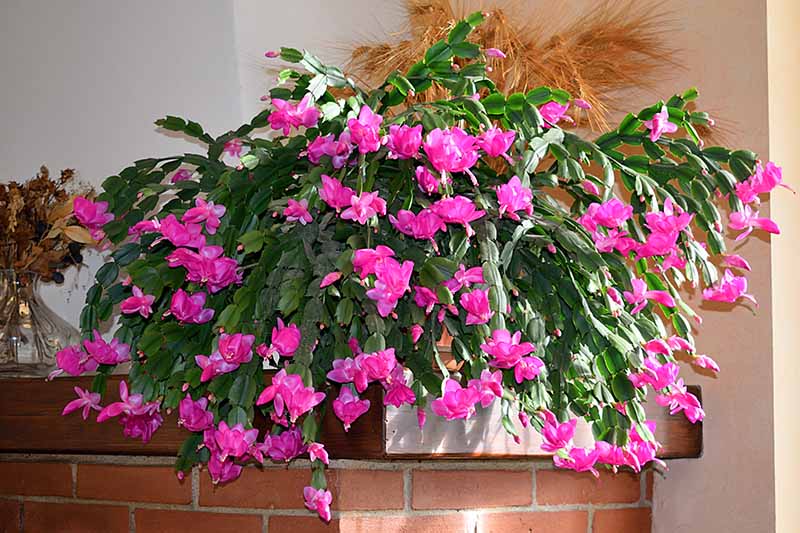
Christmas Cactus (Schlumbergera) – Loves Bright Indirect Light & Short Days for Blooms 🎄 Give it 4–6 hours bright indirect light. East or north windows work beautifully. Direct sun scorches the flat stems. For winter blooms, provide 12–14 hours darkness nightly starting in fall — light timing triggers the magic!
Easter Cactus & Thanksgiving Cactus – Similar Needs with Seasonal Twists Almost identical to Christmas cactus but bloom at different times. Same bright indirect preference. Rotate them quarterly for even growth.
Fishbone or Rhipsalis Cactus – Thrives in Dappled Indoor Light These trailing beauties love filtered or bright indirect light. Perfect for hanging baskets near east windows. They tolerate lower light better than desert types but still need consistency.
Creating the Ideal Indoor Light Setup for Any Cactus 🪟
Best Window Directions – South, West, East, or North? (Pros & Cons)
- South: Best for desert cacti (brightest).
- West: Strong afternoon light — great but watch for heat.
- East: Gentle morning sun — ideal for jungle types.
- North: Usually too dim unless supplemented.
When and How to Use Grow Lights (Full 2025 Recommendations + Budget Options) If natural light falls short, full-spectrum LED grow lights are game-changers. I recommend 20–40 watt panels (like the popular Spider Farmer or Sansi models) hung 12–18 inches above plants for 12–16 hours daily. Timers make it effortless. In low-light apartments, grow lights have saved countless of my cacti from etiolation.

Rotating, Reflectors & Sheer Curtain Tricks for Perfect Light Balance Rotate pots weekly. White walls or foil reflectors boost light by 20–30%. Sheer curtains diffuse harsh south-window rays for sensitive varieties.
Outdoor Light Mastery – From Balcony to Garden 🌳
Safe Acclimation Steps to Prevent Sunburn When Moving Plants Outside Never move a houseplant straight into full sun. Harden off over 7–10 days: start with 1 hour morning sun, gradually increase. I lost a beautiful barrel to shock until I learned this!
Summer vs. Winter Outdoor Light Strategies Summer: Full sun for desert types, afternoon shade for jungle. Winter: Maximize every ray possible — move to brightest spots.
Protecting Cacti from Intense Midday Sun & Sudden Weather Changes Use 30–50% shade cloth during heatwaves. Watch for sudden storms that can topple tall specimens.
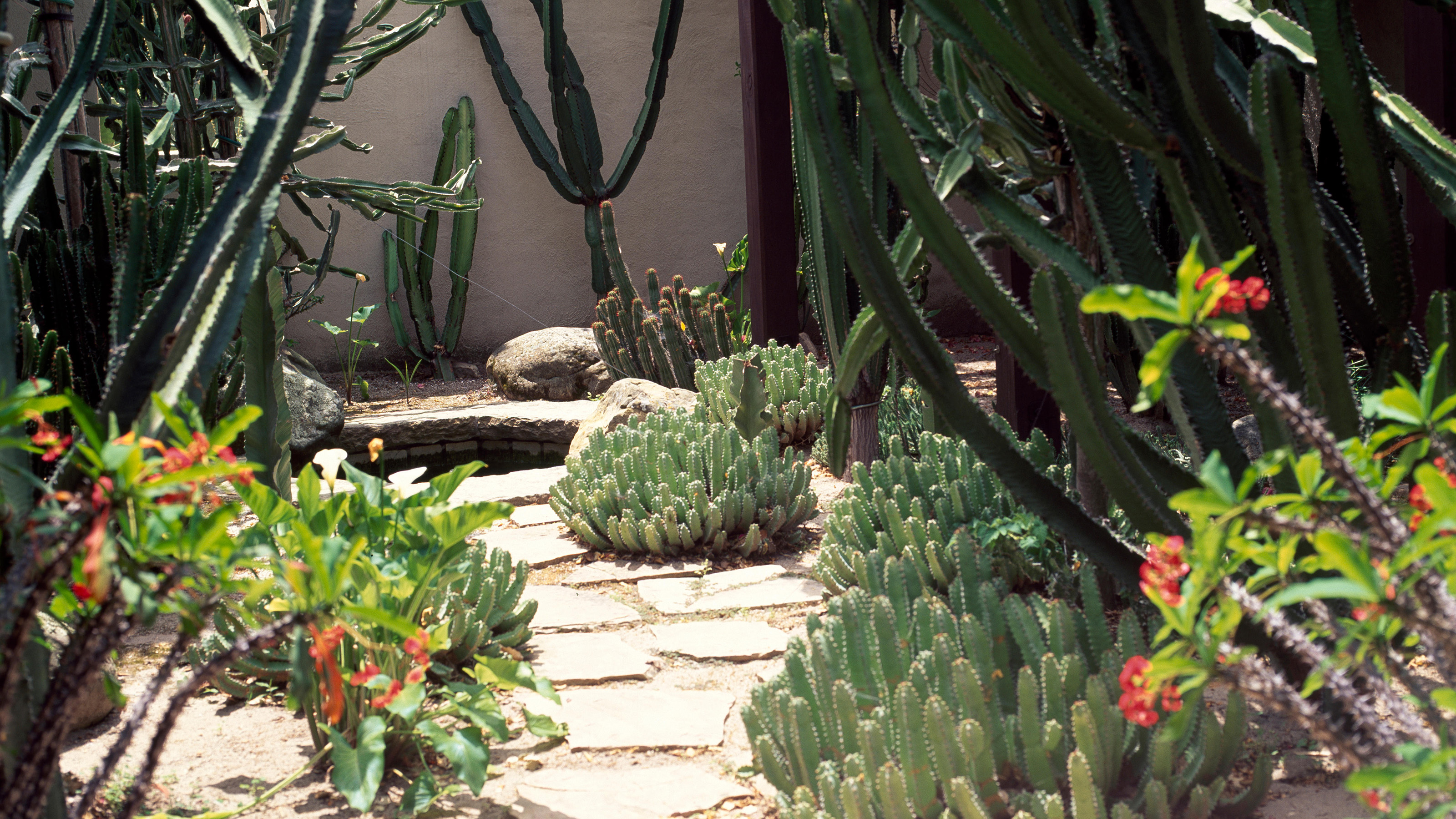
Troubleshooting Common Light Problems (With Quick Fixes) 🔧
Etiolation (Stretching & Weak Growth) – How to Spot It Early and Reverse It Move to brighter spot immediately and prune stretched sections. New growth will compact up. Prevention is easier than cure!
Sunburn, Scorching & Yellowing – Prevention and Recovery Cut off damaged tissue, move to slightly less intense light, and let it heal. New growth returns healthy.

Leggy Winter Growth? Seasonal Light Hacks That Work Supplemental grow lights during short winter days keep plants compact and colorful.
Checklist: Diagnose Your Cactus’s Light Issues in 60 Seconds (Quick printable checklist coming in the free download at the end!)
Expert Pro Tips & Advanced Lighting Strategies ✨
- Use a light meter app weekly — data beats guesswork.
- Reflective mylar on walls can add hours of effective light.
- Companion plant taller species to shade sensitive jungle cacti naturally.
- Spine color is a live indicator: vibrant = perfect light!
- For maximum blooms, match light with temperature and day length.
Quick-Reference Cactus Light Requirements Comparison Table 📋
| Variety | Indoor Light | Outdoor Light | Minimum Hours | Grow Light Needed? | Bloom Bonus |
|---|---|---|---|---|---|
| Golden Barrel | South window, direct | Full sun | 8+ | Sometimes | Yellow flowers in strong sun |
| Prickly Pear | South/West direct | Full sun | 6–10 | Rarely | Colorful pads |
| Saguaro | Grow lights or south | Full sun | 10+ | Yes indoors | Rare but spectacular |
| Christmas Cactus | Bright indirect | Morning sun only | 4–6 | Often in winter | Pink/red blooms with short days |
| Mammillaria | South window | Full sun | 6–8 | Sometimes | Crown of flowers |
| Rhipsalis | East or filtered | Dappled shade | 4–6 | Rarely | Tiny white flowers |
Conclusion Mastering light requirements for popular cactus varieties is the fastest way to turn struggling plants into thriving, blooming showstoppers. Whether you have one windowsill cactus or a full collection, the right light setup pays dividends for decades.
Download your free “Cactus Light Cheat Sheet” (link in comments or newsletter) and start applying these tips today. Your cacti will thank you with vibrant growth and stunning flowers!
Have a specific variety that’s struggling? Drop it in the comments — I’m happy to give personalized advice based on 15+ years of hands-on experience. 🌵✨
FAQ Section ❓ How many hours of sunlight do most cacti need? Desert types: 6–10+ hours direct. Jungle types: 4–6 hours bright indirect.
Can cacti survive in low-light apartments? Yes — with grow lights and bright-indirect choices like Christmas or Rhipsalis cacti.
What’s the best grow light for indoor cacti in 2026? Full-spectrum LEDs (20–40W) with timers. Look for models with red/blue spectrum boosts.
Why is my Christmas cactus not blooming? Usually insufficient darkness in fall or inconsistent bright indirect light.
How do I transition my cactus outdoors without burning it? Gradual hardening off over 7–10 days is essential.











