
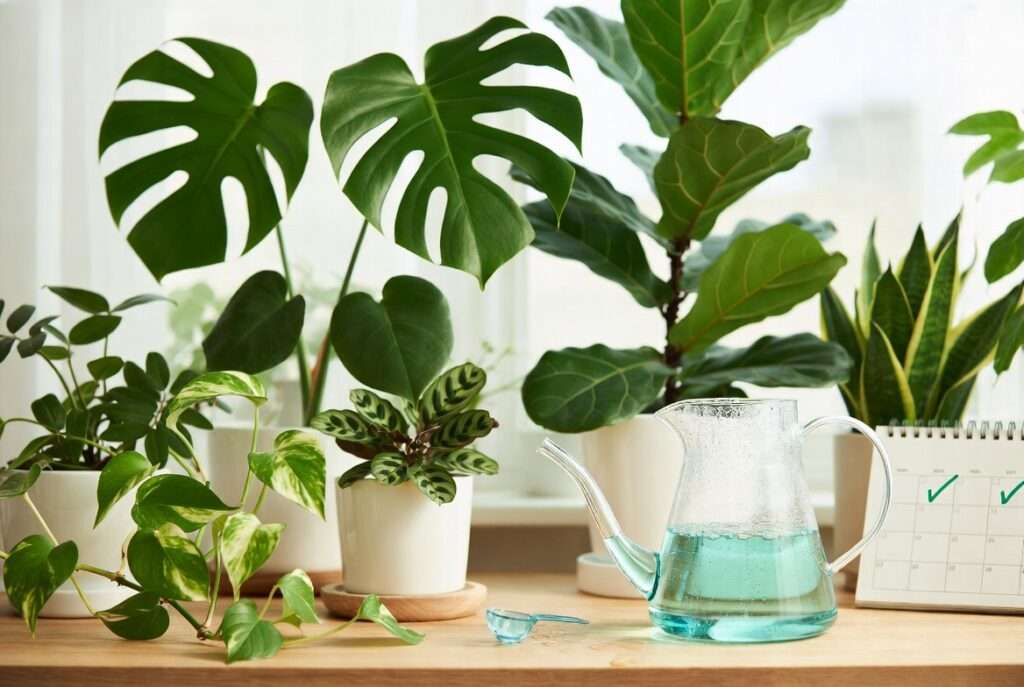
Is your once-vibrant Monstera dropping leaves faster than you can say “Swiss cheese,” or does your Fiddle Leaf Fig look more like a sad umbrella than a tropical statement piece? 😔 The secret often isn’t more sunlight or perfect watering — it’s nailing the right liquid fertilizer schedule for houseplants that matches their natural growth rhythms.
As a plant care specialist with over a decade of hands-on experience nurturing hundreds of indoor jungles (from beginner pothos collections to advanced rare aroid setups), I’ve seen the same story repeatedly: well-intentioned plant parents either starve their greenery of nutrients or accidentally burn roots with too much love. A consistent, season-smart liquid fertilizer schedule for houseplants solves both problems beautifully.
In this ultimate monthly guide, you’ll discover exactly when, how often, and at what strength to feed your indoor plants using liquid fertilizer. We’ll cover the science behind seasonal feeding, plant-specific tweaks, common mistakes to dodge, and pro tips that turn average houseplants into lush, Instagram-worthy showstoppers. 🌿✨
Whether you’re a total newbie or a seasoned plant parent tired of guessing, this guide delivers actionable, research-backed advice you can start using today. Let’s grow happier, healthier plants together! 🪴
Why Liquid Fertilizer? Benefits and How It Works for Houseplants 💧
Liquid fertilizers stand out as one of the most effective and forgiving options for houseplant care. Unlike slow-release granules or spikes that can unevenly distribute nutrients, liquids offer quick absorption through roots (and sometimes leaves) and let you fine-tune strength easily.
Key benefits include:
- Rapid uptake — Plants absorb balanced N-P-K (nitrogen, phosphorus, potassium) almost immediately, supporting faster leafy growth and stronger roots.
- Precise control — Dilute to ¼, ½, or full strength depending on the season and plant type — perfect for avoiding fertilizer burn.
- Minimal buildup — When used correctly with regular soil flushing, liquids reduce salt accumulation compared to solid fertilizers.
- Versatility — Great for both soil drench and occasional foliar feeding on plants like ferns or calatheas.
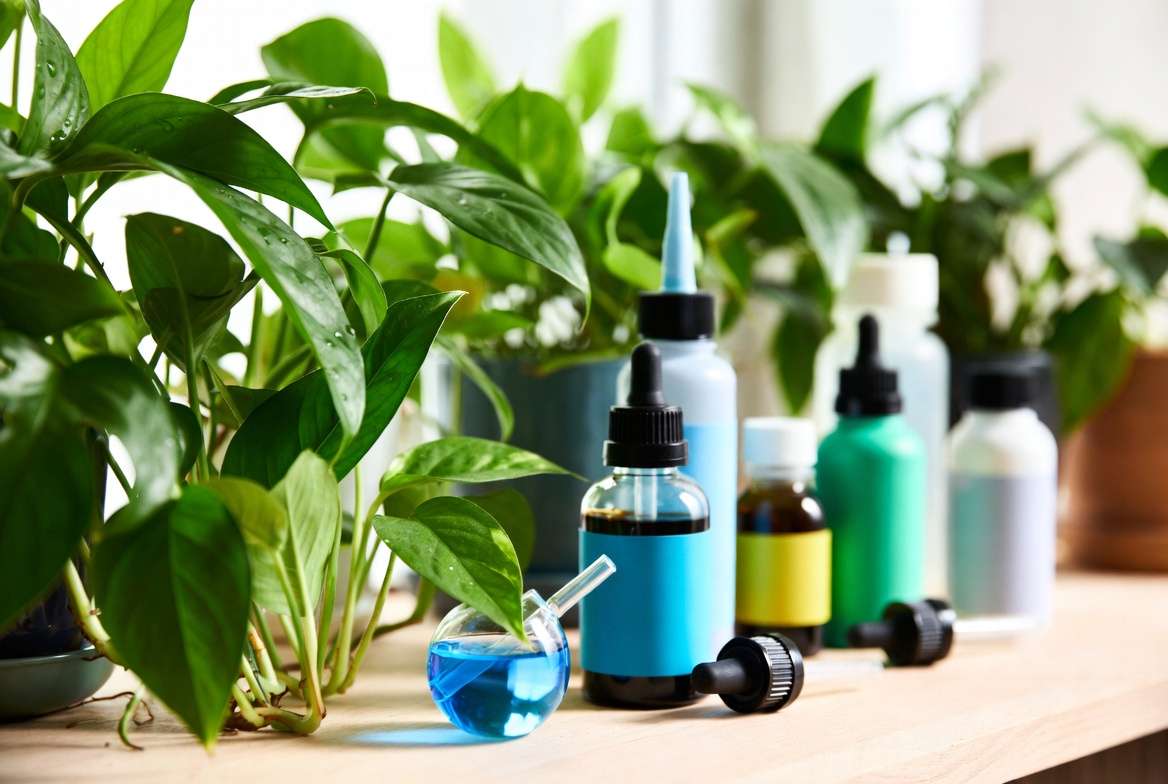
How liquid fertilizer works: The N-P-K ratio on the bottle tells the story. Nitrogen (first number) fuels lush foliage — ideal for Monstera, Pothos, and Philodendron. Phosphorus (middle) supports root development and flowering. Potassium (last) boosts overall resilience against stress and disease. Most balanced houseplant liquids hover around 3-1-2 or 10-10-10, which aligns perfectly with how indoor plants actually use nutrients.
Organic vs. Synthetic: Organic options (like fish emulsion or seaweed-based) release nutrients more slowly and improve soil microbiology but can smell stronger. Synthetic liquids deliver consistent results with less odor — excellent for beginners. Both work wonderfully when part of a thoughtful liquid fertilizer schedule for houseplants.
Expert Insight: Many professional growers swear by the “weakly weekly” approach — feeding at ¼ to ½ strength more frequently rather than hitting plants with a full dose once a month. This mimics steady nutrient availability in nature and reduces shock.
Signs Your Houseplants Need (or Don’t Need) Fertilizer 📊
Before following any schedule, learn to read your plants’ signals. Over- or under-fertilizing ranks among the top reasons houseplants struggle.
Signs your plant needs fertilizer (under-fertilizing):
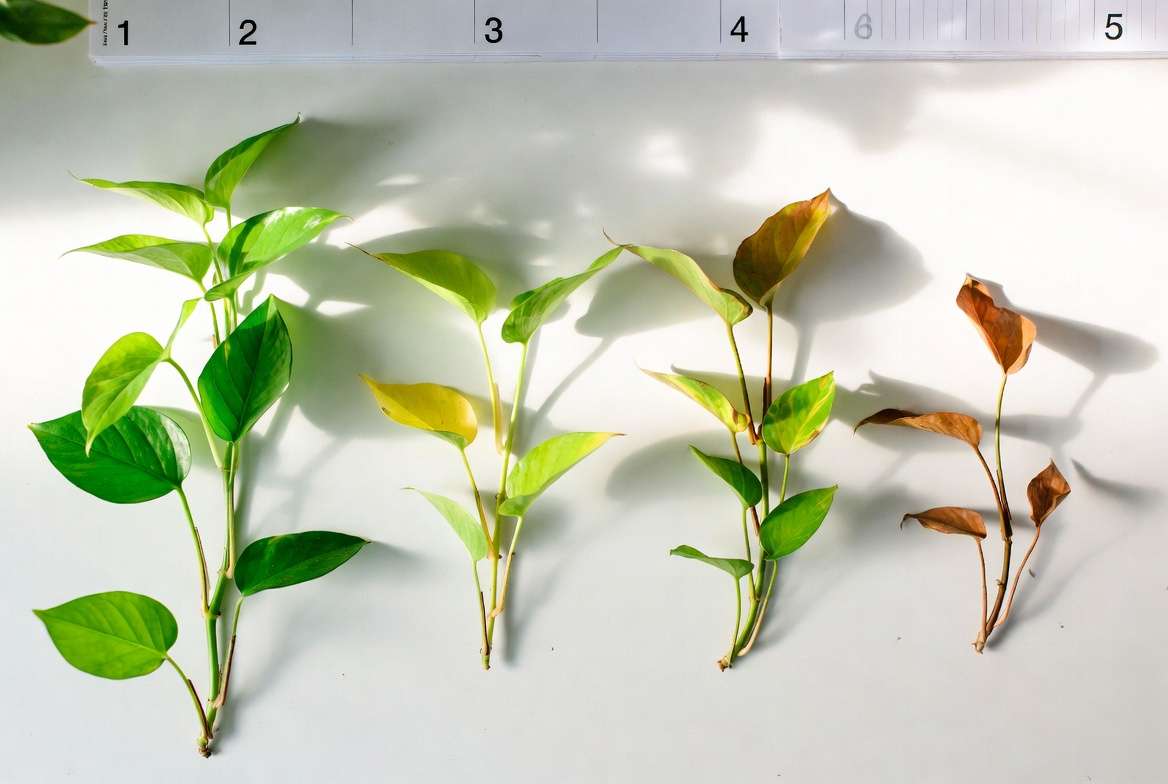
- Pale or yellowing older leaves
- Slow or stunted new growth
- Smaller-than-normal new leaves
- Leggy, stretched stems reaching for light
- Overall dull, lackluster foliage color
Signs you should hold off (or have been over-fertilizing):
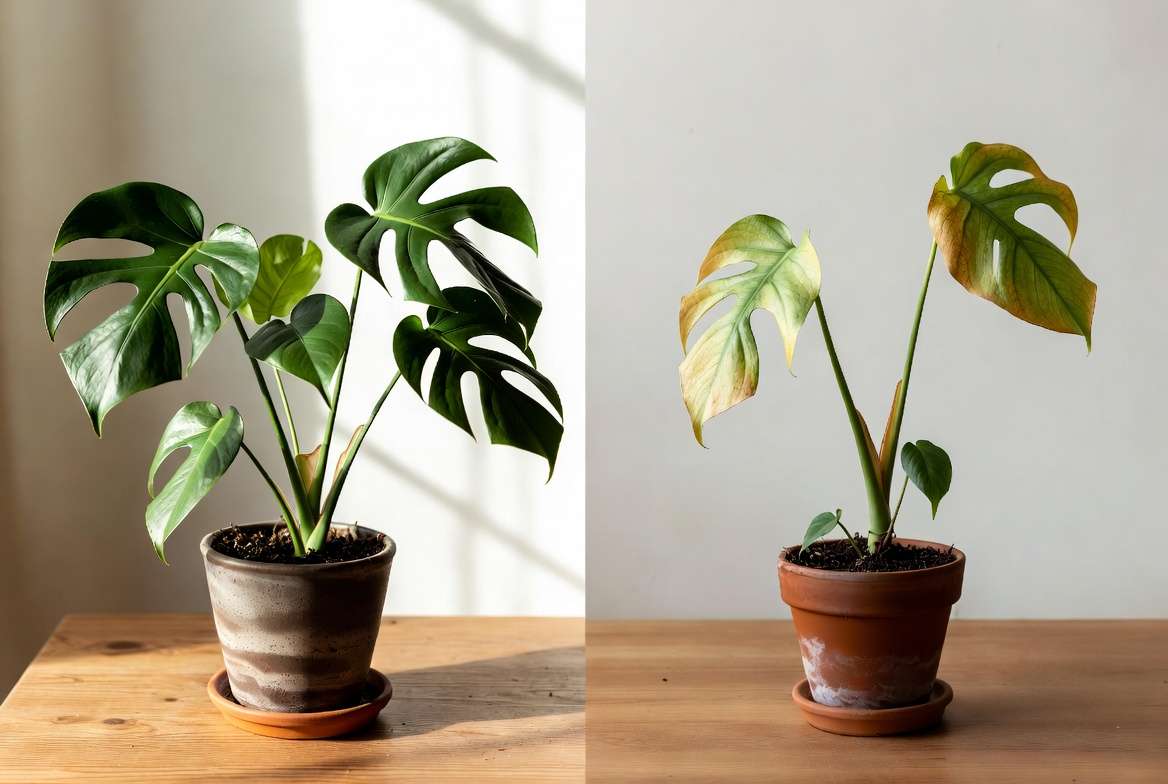
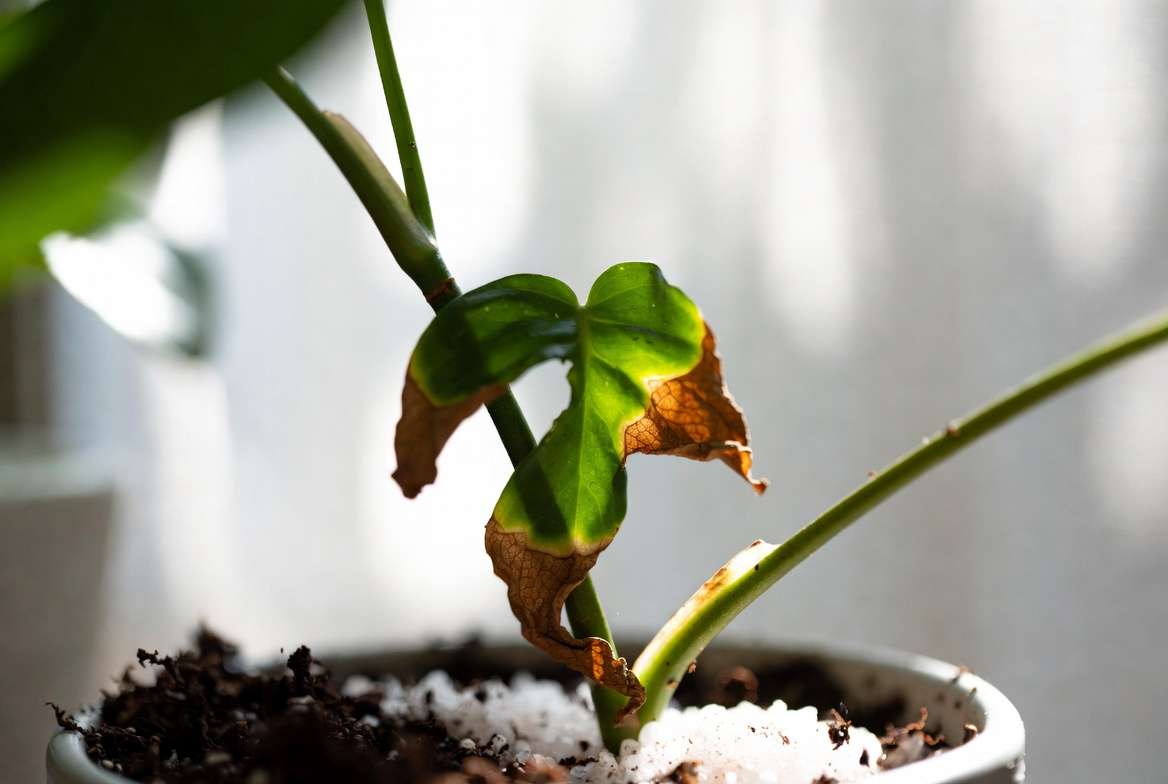
- Brown, crispy leaf tips or edges (fertilizer burn)
- White crusty buildup on soil surface (salt accumulation)
- Wilting despite moist soil
- Sudden leaf drop
- Black or mushy roots when checked
When to skip fertilizing entirely:
- Right after repotting (wait 4–6 weeks)
- During winter dormancy for most plants
- When a plant shows stress from pests, underwatering, or temperature swings
Pro tip: Always check soil moisture first. Never apply liquid fertilizer to dry soil — it can scorch roots. Water thoroughly with plain water, wait 30 minutes, then fertilize. 🛡️
The Science Behind Seasonal Fertilizing: Growing vs. Dormant Periods 🌞❄️
Houseplants don’t follow a strict calendar — they respond to light, temperature, and humidity. Most tropical houseplants enter a semi-dormant phase when days shorten and light intensity drops in fall/winter.
Spring (March–May): Awakening As daylight hours increase and temperatures warm, plants wake up and push new growth. This is the perfect time to gently reintroduce nutrients at half strength.
Summer (June–August): Peak Growing Season Longer days and warmer indoor conditions (especially with grow lights) mean maximum nutrient demand. Heavy feeders like Monstera deliciosa or Philodendron can handle more frequent feeding.
Fall (September–November): Slowdown Growth tapers as light decreases. Reduce frequency and strength to avoid pushing tender new growth that can’t handle lower light.
Winter (December–February): Rest Period Most experts recommend pausing or minimizing fertilizer. Plants use far less energy, and excess nutrients sit in soil, risking burn or salt buildup. Exceptions apply if you use strong grow lights and see active growth. ❄️
General rule: Fertilize only when you see active growth (new leaves unfurling, brighter green color). This science-based approach prevents the guesswork that plagues so many plant parents.
Your Ultimate Monthly Liquid Fertilizer Schedule for Houseplants 📅
Here’s the heart of the guide — a practical, month-by-month liquid fertilizer schedule for houseplants adaptable to most common indoor varieties. Always start at half the label’s recommended strength and observe your plants for two weeks before increasing.
Spring (March–May): Wake Up and Grow Strong 🌷
- Weeks 1–2: Begin with ¼–½ strength every 10–14 days as new growth appears.
- Weeks 3–8: Move to ½ strength every 7–10 days for most foliage plants.
- Heavy feeders (Monstera, Pothos, Calathea): Every 7 days at ½ strength once actively growing.
- Light feeders (Snake Plant, ZZ Plant, Succulents): Every 14–21 days at ¼ strength.
Summer (June–August): Fuel the Boom Season ☀️
- Most plants: ½ to ¾ strength every 7–14 days.
- Fast growers in bright light: Weekly “weakly” feeding at ¼–½ strength works wonders.
- Flowering plants (Peace Lily, African Violet): Use a bloom-booster formula (higher phosphorus) every 10–14 days.
Fall (September–November): Ease Off Gracefully 🍂
- Reduce to ½ strength every 14–21 days.
- Stop completely by late November for low-light setups.
- Monitor: If your plants still push healthy new leaves (thanks to grow lights), continue lightly.
Winter (December–February): Rest and Minimal Maintenance ❄️
- Pause for most plants.
- Under strong grow lights with visible growth: Very light feeding (¼ strength) once a month max.
- Blooming winter plants (e.g., Christmas Cactus): Light feeding every 3–4 weeks.
Handy Printable Summary Table (imagine this as a clean visual chart on the site):
| Season | Frequency | Strength | Notes for Most Plants |
|---|---|---|---|
| Spring | Every 7–14 days | ½ | Start gentle after repotting |
| Summer | Every 7–10 days | ½–¾ | Increase for heavy feeders |
| Fall | Every 14–21 days | ½ | Taper as light decreases |
| Winter | Pause or monthly | ¼ or none | Only if active growth visible |
Adjust based on your specific indoor conditions — brighter light and warmer temps = slightly more frequent feeding.
How to Properly Apply Liquid Fertilizer – Step-by-Step Guide 🪴
Correct application makes all the difference between thriving plants and sad ones.
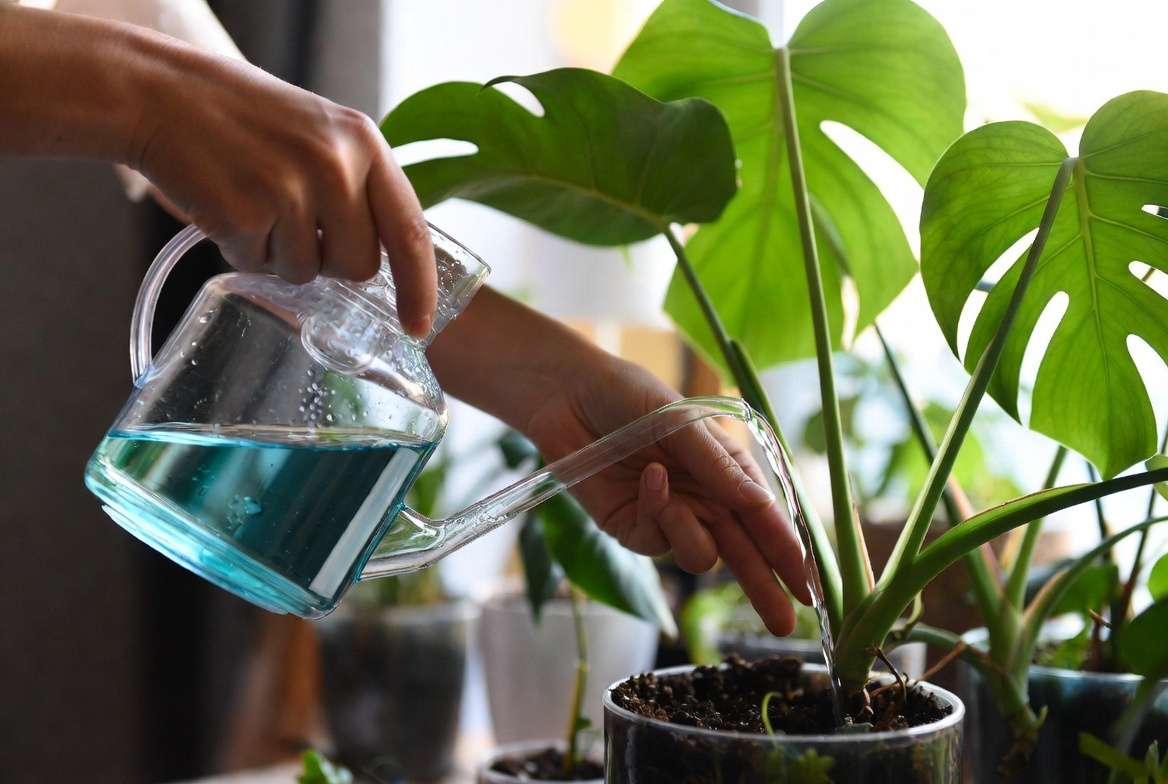
- Water first — Always moisten soil with plain water. This prevents root burn from concentrated fertilizer.
- Mix accurately — Use a measuring spoon or syringe. Example: If label says 1 tsp per gallon for monthly use, try ½ tsp for bi-weekly or ¼ tsp for weekly.
- Apply evenly — Pour slowly until it drains from the bottom. Discard excess runoff.
- Foliar option — For some plants, mist diluted fertilizer on leaves early in the day (avoid direct sun to prevent spotting).
- Timing — Morning applications work best. Avoid fertilizing in extreme heat or right before vacation.
Tools you’ll love: A dedicated watering can for fertilizer mix, a soil moisture meter, and a small funnel for easy measuring. 🛠️
Plant-Specific Liquid Fertilizer Adjustments 🌿
Not all houseplants have the same appetite!
- Foliage stars (Monstera, Fiddle Leaf Fig, Pothos, Philodendron): Balanced or slightly nitrogen-heavy (3-1-2 or 5-2-3). Feed more generously in summer for those giant leaves.
- Flowering beauties (Peace Lily, African Violet, Orchids): Higher phosphorus formulas during bloom periods.
- Low-maintenance types (Snake Plant, ZZ Plant, Succulents, Cacti): Very light feeding (¼ strength) every 3–4 weeks max — they store nutrients efficiently.
- Tropical divas (Calathea, Alocasia, Ferns): Consistent weak feedings; they dislike salt buildup, so flush soil monthly.
Quick tip: Group plants with similar needs on the same feeding day to simplify your routine.
Common Mistakes to Avoid When Using Liquid Fertilizer ❌
Even experts slip up sometimes. Here are the biggest pitfalls:
- Fertilizing dry soil → instant root damage.
- Using full strength too early in spring.
- Feeding during true dormancy (winter for most).
- Never flushing soil → salt buildup leads to crispy tips.
- Ignoring plant signals and sticking rigidly to a calendar.
Recovery tip: If you suspect over-fertilizing, flush the soil thoroughly with plain water 3–4 times over a week, then pause feeding for 4–6 weeks.
Advanced Tips and Pro Tricks for Thriving Plants ✨
- Weakly weekly method: Many pros dilute to ¼ strength and feed every watering during peak season — steady nutrition without shock.
- Combine with organics: Alternate liquid synthetic with compost tea or worm casting tea for soil health.
- Grow lights extension: Supplemental lighting can justify continuing light feeding into winter.
- DIY boosters: Banana peel tea (potassium) or eggshell water (calcium) as gentle supplements — use sparingly.
Monitor EC (electrical conductivity) with a cheap meter if you get serious — it helps prevent salt issues.
Troubleshooting: What to Do If Things Go Wrong 🛠️
- Yellow leaves with green veins: Often nitrogen deficiency or overwatering — check schedule and soil.
- Brown tips: Classic over-fertilizing or low humidity. Flush soil and reduce strength.
- No new growth in spring: Could be insufficient light or delayed start to feeding. Gradually introduce nutrients.
Patience and observation are your best tools.
Frequently Asked Questions (FAQs) ❓
How often should I use liquid fertilizer on houseplants? During active growth (spring/summer), every 1–2 weeks at half strength is a solid starting point for most plants.
Can I use liquid fertilizer every time I water? Yes, if diluted very weakly (¼ strength). This “weakly weekly” method works beautifully for many foliage plants.
Is it safe to fertilize in winter? Usually no for standard houseplants. Pause unless you have strong grow lights and see active growth.
What’s the best liquid fertilizer for beginners? A balanced all-purpose like 3-1-2 or 10-10-10 formulas from reputable brands. Organic options are gentler.
How do I flush soil after over-fertilizing? Run plain water through the pot until it drains clear, repeating 3–4 times over several days.
Conclusion: Build a Greener, Happier Indoor Jungle 🌴
Mastering a thoughtful liquid fertilizer schedule for houseplants is one of the most rewarding steps you can take on your plant journey. Consistent, season-smart feeding transforms struggling plants into vibrant, resilient members of your home.
Start small, observe closely, and adjust as needed — your plants will thank you with lush new growth and that satisfying “I did it!” feeling. Download the printable schedule, mark your calendar, and watch your indoor jungle flourish. 🌿
Have questions or success stories? Drop them in the comments! For more expert plant care guides, explore our articles on perfect watering techniques, best soil mixes, and repotting made simple.
Happy growing — you’ve got this! 🪴💚











