Did you know that the eastern monarch butterfly population has plummeted by nearly 80% over the last two decades? Every year, these delicate, stained-glass creatures embark on a seemingly impossible 3,000-mile, multi-generational migration from the oyamel fir forests of central Mexico all the way across North America. However, human development and agricultural expansion have rapidly destroyed their natural habitats.
If you are a gardener wanting to make a genuine environmental impact, the single most important action you can take is to start growing milkweed plants in your backyard.
Unfortunately, good intentions often go wrong. Many enthusiastic gardeners inadvertently plant the wrong species of milkweed or utilize harmful garden center chemicals, ultimately hurting the very butterflies they are trying to save. In this comprehensive, science-backed guide, we will walk you step-by-step through exactly how to select the right native species for your region, successfully germinate seeds, manage garden pests safely, and build a thriving, chemical-free monarch waystation that provides a vital lifeline for these incredible pollinators. Let’s dig in! 🧑🌾
🌿 Why Milkweed is the Secret to Saving Monarchs
To understand why planting milkweed is an absolute necessity for monarch conservation, we have to look closely at the biological relationship between the plant and the insect. It is one of the most fascinating examples of co-evolution in the natural world.
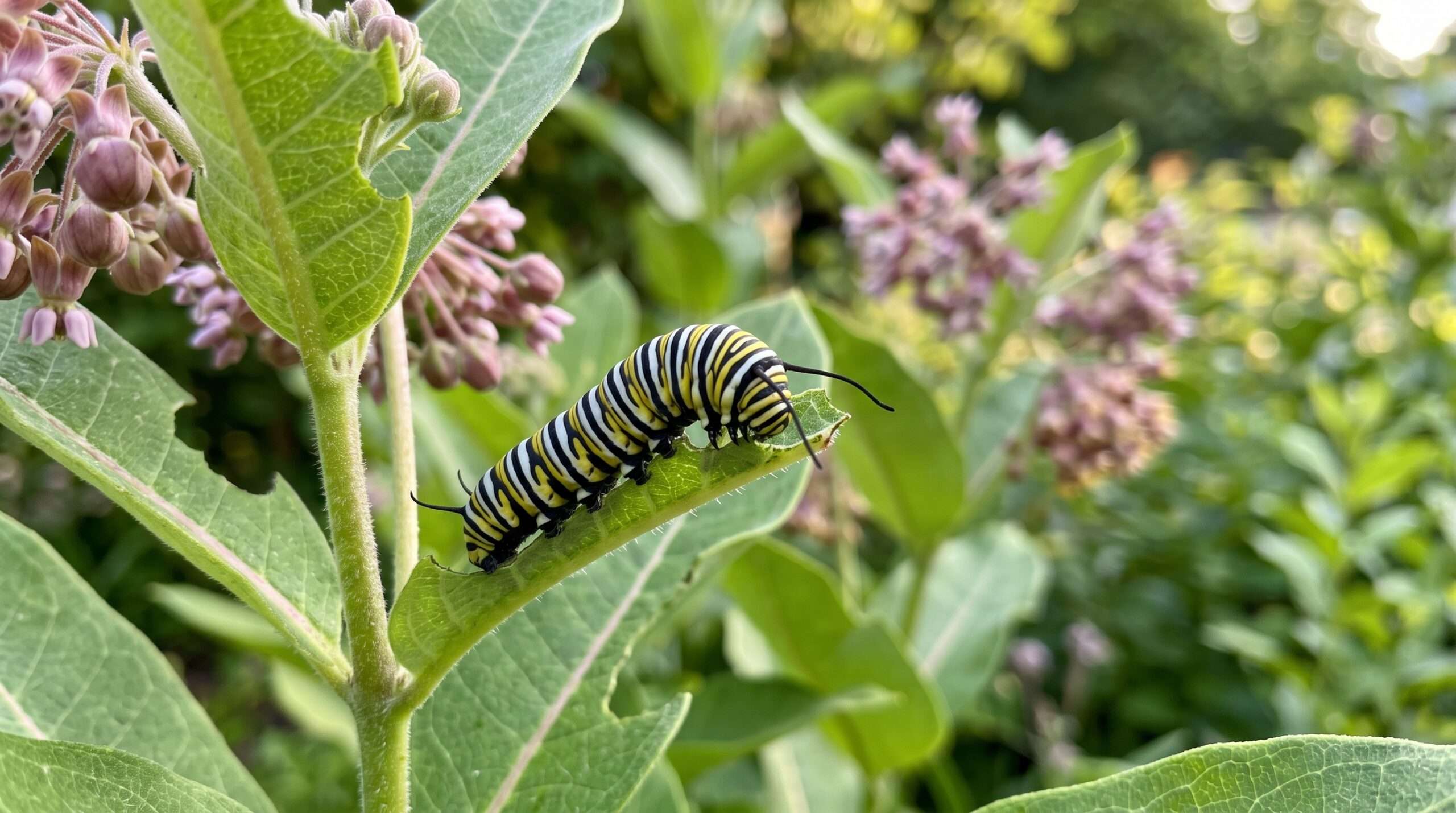
The Exclusive Host Plant for Caterpillars 🐛
While adult butterflies can sip nectar from a wide variety of blooming flowers, monarch caterpillars are incredibly specialized. They are obligate feeders, meaning they can only eat the leaves of plants in the Asclepias (milkweed) family. If there is no milkweed, there is no next generation of monarchs. Period.
But why milkweed? The secret lies in the plant’s defense mechanism. When you break a milkweed stem, a sticky, white, milky sap oozes out. This sap contains specialized toxic compounds known as cardenolides (cardiac glycosides). While these toxins are dangerous to most animals, monarch caterpillars have evolved to ingest and store them. As the caterpillar munches on the leaves, it absorbs the cardenolides, making its own body intensely bitter and toxic to predators like birds, frogs, and mice. This toxicity stays with them entirely through metamorphosis and into their adult butterfly stage!
A Nectar Powerhouse for Adult Pollinators 🌸
While the foliage serves as an exclusive nursery and buffet for the caterpillars, the vibrant, uniquely shaped flowers of milkweed plants are a high-octane energy source for adult pollinators.
Adult monarch butterflies rely heavily on milkweed nectar to fuel their exhausting migration routes and reproductive cycles. Furthermore, these blooms are not just for monarchs. When you plant milkweed, you are creating a biological hotspot that attracts native bumblebees, honeybees, hummingbirds, swallowtail butterflies, and beneficial predatory insects.
⚠️ Choosing the Right Milkweed: The Native vs. Tropical Debate
If you walk into a standard big-box garden center, the milkweed you see on the shelves is almost always Tropical Milkweed (Asclepias curassavica). It boasts beautiful, fiery red and yellow blooms, grows incredibly fast, and looks stunning. But here is the critical expert warning: Planting Tropical Milkweed in temperate regions is actively harming the monarch population.
The Danger of Tropical Milkweed (Asclepias curassavica) 🛑
Native milkweeds have a natural life cycle: they grow in the spring and summer, and they die back to the ground in the fall and winter. This natural die-back is an evolutionary signal to adult monarchs that it is time to stop breeding and start migrating south to Mexico.
Tropical milkweed, however, is an evergreen in warm climates (like the southern US and California) and often survives long into the winter. Because it doesn’t die back, it disrupts the butterflies’ migration instincts. Monarchs will stay put, continue breeding out of season, and ultimately freeze to death when a winter snap finally arrives.
Even worse is the threat of the OE Parasite (Ophryocystis elektroscirrha). OE is a debilitating protozoan parasite that covers the dormant spores of adult monarchs. As monarchs land on milkweed to lay eggs, they drop OE spores onto the leaves. With native milkweed, the plant dies back in the winter, effectively killing off the accumulated OE spores and providing a clean slate the next spring. Because Tropical Milkweed never dies back, OE spores accumulate to lethal levels. Caterpillars eat the spore-covered leaves and emerge from their chrysalises with severe wing deformities, weakness, and shortened lifespans.
Expert Actionable Tip: If you already have tropical milkweed in your garden, you don’t necessarily have to rip it out. Conservationists at organizations like Monarch Joint Venture advise cutting tropical milkweed down to 4–6 inches every October to mimic natural die-back and force the monarchs to migrate.

Top Native Milkweed Species for Your Garden 🗺️
To support healthy monarchs, you must plant species native to your specific geographic region. Here are the top three powerhouse native milkweed plants that thrive in most North American gardens:
1. Common Milkweed (Asclepias syriaca)
-
Best For: Large garden spaces, meadow restorations, and native borders.
-
Profile: This is the classic, broad-leafed milkweed that produces large, spherical clusters of dusty pink, highly fragrant flowers.
-
Care Warning: Common milkweed is a vigorous spreader. It utilizes underground rhizomes to create massive colonies. It is incredibly hardy but can easily take over a small, manicured flower bed.
2. Swamp Milkweed (Asclepias incarnata)
-
Best For: Moist soils, clay-heavy yards, rain gardens, and standard flower beds.
-
Profile: Don’t let the name fool you! Swamp milkweed features gorgeous, vanilla-scented rosy pink blooms and narrow, willow-like leaves.
-
Care Warning: Unlike Common Milkweed, Swamp Milkweed is a “clumper.” Its roots stay exactly where you plant them, making it the perfect, well-behaved choice for suburban landscaping. It prefers wet feet but adapts surprisingly well to average garden soil.
3. Butterfly Weed (Asclepias tuberosa)
-
Best For: Hot, dry microclimates, sandy soils, and drought-tolerant xeriscaping.
-
Profile: A low-growing, bushy plant that bursts into brilliant, neon-orange or yellow blooms. It lacks the milky white sap of its cousins but is still a critical host plant.
-
Care Warning: Butterfly weed develops a massive, deep taproot to survive droughts. Because of this, it absolutely despises being moved or transplanted once established. Plant it exactly where you want it to stay permanently.
🌱 How to Plant and Grow Milkweed from Seed
Growing native milkweed from seed is incredibly rewarding, but it is not as simple as dropping seeds into potting soil and hoping for the best. Because these are native wildflowers, they have evolved highly specific reproductive mechanisms to survive harsh winters and competitive spring awakenings.
The Secret to Germination: Cold Stratification ❄️
If you plant native milkweed seeds indoors in the spring without preparation, you will likely see a zero percent germination rate. Why? Native seeds have a built-in biological clock. If they sprouted in the warm days of autumn, the fragile seedlings would be immediately killed by the first winter freeze. To protect themselves, the seeds enter a deep dormancy and will only wake up after they have experienced a prolonged period of cold, moist conditions—a process known as cold stratification.
If you are starting seeds indoors, you must simulate winter to break this dormancy.
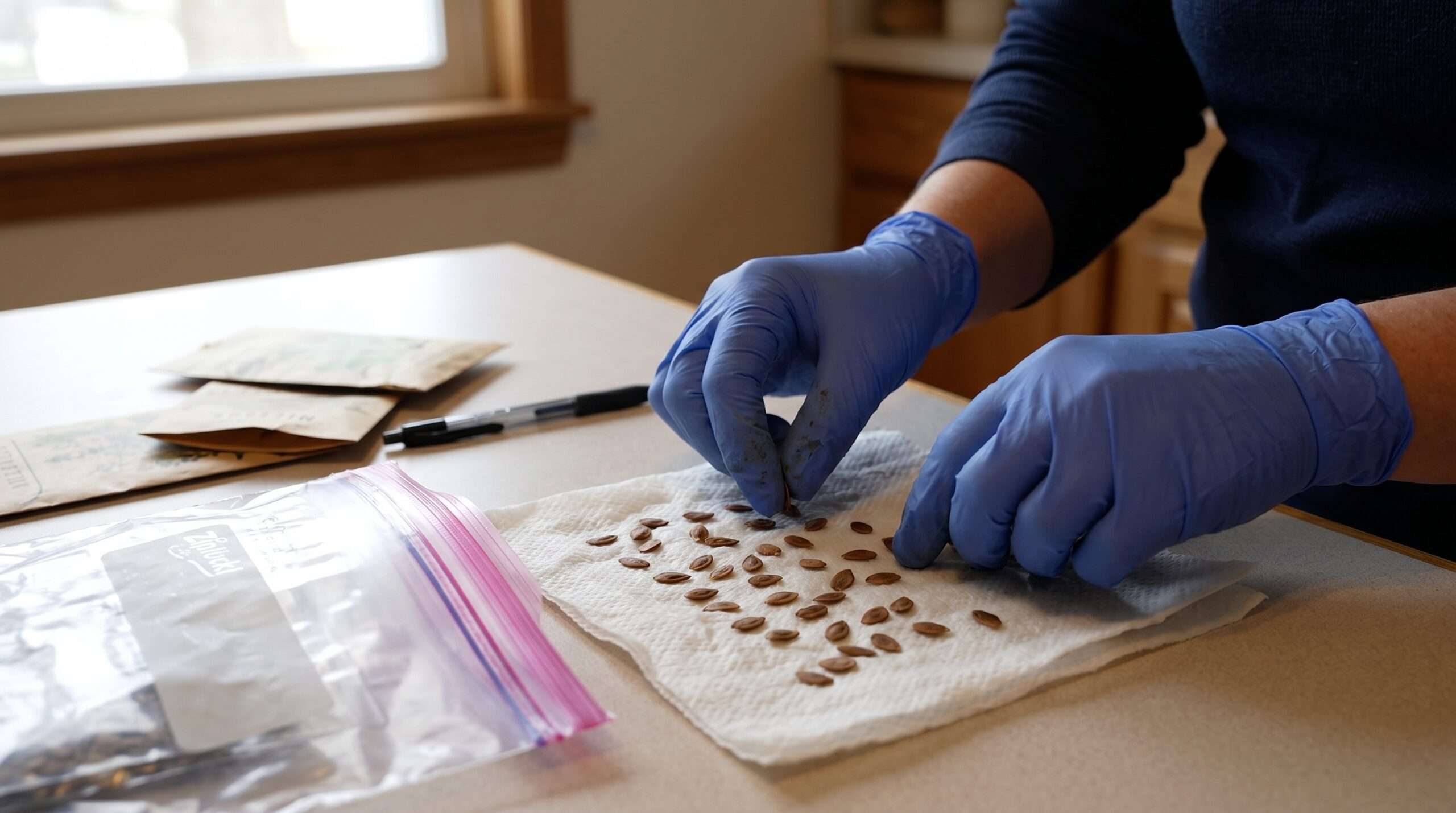
-
Dampen a paper towel (it should be moist, not dripping wet).
-
Spread your milkweed seeds evenly across one half of the towel.
-
Fold the towel over the seeds, place it inside a sealed ziplock bag, and label it with the date.
-
Store the bag in your refrigerator for exactly 30 days.
-
After 30 days, remove the seeds and immediately plant them in seed-starting trays under grow lights.
Sun, Soil, and Spacing Requirements ☀️
For robust foliage and prolific blooming, milkweed plants demand full sun. You must select a planting site that receives a minimum of 6 to 8 hours of direct, unobstructed sunlight per day.
When preparing your garden bed, spacing is critical. Give each plant about 18 to 24 inches of breathing room to ensure proper airflow, which helps prevent fungal issues like powdery mildew.
The Taproot Warning: As mentioned earlier, species like Butterfly Weed (A. tuberosa) and Common Milkweed (A. syriaca) develop deep, carrot-like taproots to survive droughts. Once that taproot is established in the ground, the plant will not survive being dug up and moved. Plan your garden layout carefully and plant your seedlings in their permanent, forever home.
When to Plant for Maximum Success 🗓️
You generally have two options for timing your milkweed planting:
-
Fall Sowing (The Natural Method): This is the easiest, most hands-off approach. Scatter your untreated seeds directly onto your prepared garden beds in late October or November, gently pressing them into the soil without burying them deeply (they need light to germinate). Mother Nature will provide the cold, wet winter weather to naturally stratify them, and they will sprout predictably in the spring.
-
Spring Planting (The Controlled Method): If you missed the fall window, use the refrigerator cold-stratification method mentioned above starting in early March. By April, your seeds will be ready to sow indoors, and by after the last spring frost, your seedlings will be strong enough to transplant outside.
🧑🌾 Daily Care and Maintenance for Thriving Plants
Once established, native milkweed plants are rugged, resilient, and famously low-maintenance. However, a few expert horticultural practices will keep them looking beautiful and performing optimally as monarch host plants.
Watering Guidelines by Species 💧
During their first year of life, all newly planted milkweeds require consistent, deep watering (about one inch per week) to establish their root systems. Once they mature, your watering routine must shift based on the specific native species you selected:
-
Swamp Milkweed thrives in moisture. It prefers low-lying areas, rain gardens, and clay soils, and it appreciates supplemental watering during intense summer heat waves.
-
Butterfly Weed is a desert-like survivor. Overwatering it will quickly lead to root rot. Let the soil dry out completely between waterings.
Pruning and Managing Seed Pods ✂️
In mid-summer, when the first flush of flowers begins to fade and turn brown, you can actively “deadhead” (snip off) the spent blooms. This technique redirects the plant’s energy away from seed production and often forces a brilliant second flush of nectar-rich flowers in late summer, right when migrating monarchs need it most.
By early fall, your milkweed will produce large, teardrop-shaped seed pods. When these pods dry and crack open, they release hundreds of seeds attached to silky, wind-catching parachutes (floss). If you are growing the aggressive Common Milkweed, this can quickly turn your manicured garden into a wild meadow. To prevent unwanted spreading, simply slip a small organza drawstring bag over the unripe seed pods in September, or gently secure them closed with a rubber band. You can harvest the seeds later to share with neighbors!
Why You Should Skip the Fertilizer 🚫
Put down the Miracle-Gro. Native wildflowers have spent thousands of years adapting to poor, unamended soils. Applying heavy nitrogen fertilizers to milkweed causes the plant to put out weak, floppy, leggy growth that easily snaps in the wind. Worse, overly fertile soil can actually reduce the amount of nectar-producing flowers the plant creates. A light layer of natural compost in the spring is all the nutrition your waystation will ever need.
🛡️ Protecting Your Milkweed (and Monarchs) from Pests
Creating a monarch waystation means you are creating a living, breathing ecosystem. You must shift your mindset from “immaculate garden” to “wildlife habitat.”
The Golden Rule: Never Use Pesticides ☠️
The most crucial rule of growing milkweed is that you can never use chemical pesticides, systemic insecticides, or even so-called “organic” solutions like Neem Oil, insecticidal soap, or Bacillus thuringiensis (Bt). Monarchs are insects. Any product designed to kill a garden pest will quickly and ruthlessly kill a monarch caterpillar.
How to Handle Oleander Aphids Safely 🐞
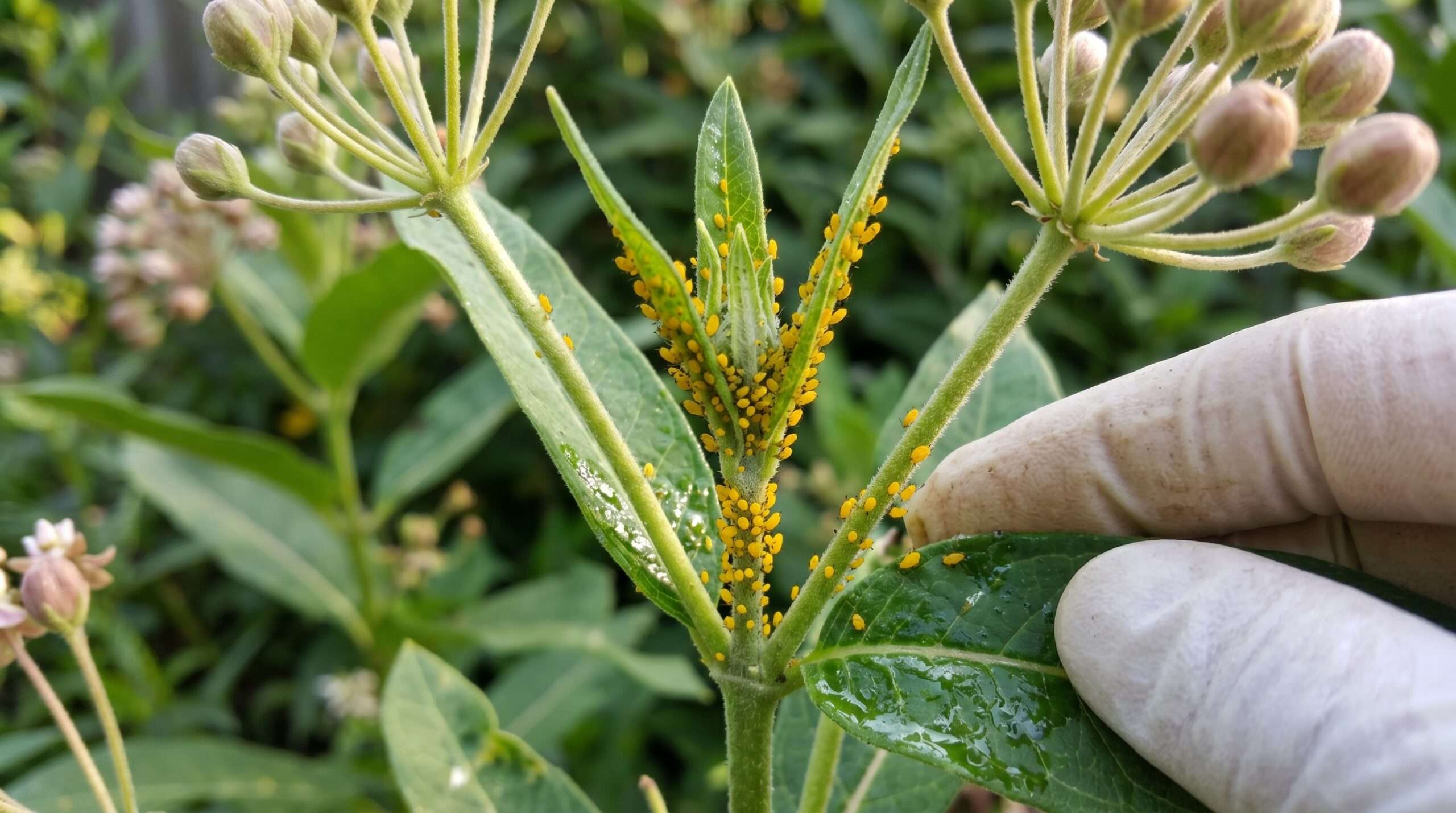
Within a few weeks of planting milkweed, you will inevitably notice hundreds of tiny, bright yellow bugs clustering tightly around the stems and new growth. These are Oleander Aphids.
First, take a deep breath—they are largely harmless in small numbers. They suck sap from the plant but rarely kill established milkweed. However, if an infestation becomes heavy enough to stunt the plant’s growth or cause severe leaf drop, you must handle it manually:
-
The Water Blast: Use a garden hose with a jet nozzle to simply blast the aphids off the stems. Once knocked to the ground, they rarely make it back up.
-
The Squish Method: Put on a pair of gardening gloves and gently run your fingers up the stem, squishing the aphids by hand.
-
Biological Control: Release native ladybugs or green lacewing larvae into your garden, which will happily devour the aphids without harming your caterpillars.
Milkweed Bugs vs. Monarch Caterpillars 🔎
You will also likely spot Large Milkweed Bugs—striking insects with geometric orange and black patterns. Beginners often panic, thinking these bugs are eating their caterpillars. They are not! Milkweed bugs are exclusively interested in eating the seeds inside the pods. Unless you are actively trying to harvest seeds for next year, let them be. They are a natural, colorful part of the milkweed ecosystem.
🐾 Safety Warning: Milkweed Toxicity to Pets and Humans
The very defense mechanism that makes the monarch caterpillar toxic to birds also means milkweed should be handled with care by humans and pets.
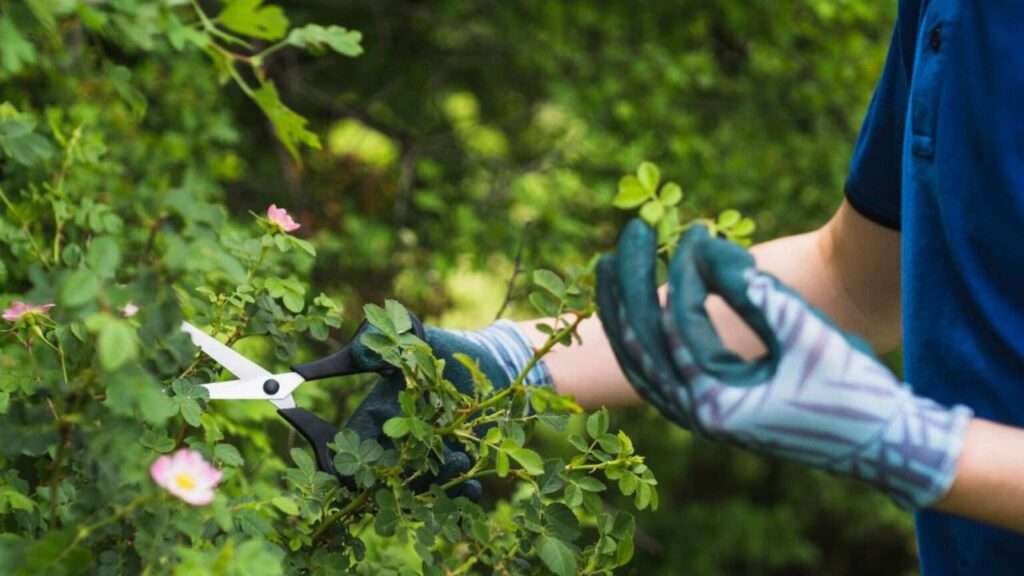
The thick white sap contains cardiac glycosides. If you snap a stem and the sap gets onto your skin, it can cause mild to severe contact dermatitis (a rash) in sensitive individuals. If accidentally rubbed into the eyes, it causes intense stinging and corneal damage. Always wash your hands immediately after pruning, or better yet, wear protective gardening gloves.
Additionally, milkweed is toxic if ingested by dogs, cats, horses, and livestock. While the bitter taste usually deters animals after one nibble, it is best to plant your milkweed patches away from enclosed puppy play zones or grazing pastures.
❓ Frequently Asked Questions (FAQs)
Why are the leaves on my milkweed suddenly disappearing and full of holes? Congratulations, your plant is doing exactly what it was meant to do! Those holes mean monarch caterpillars have arrived and are aggressively eating the foliage to fuel their metamorphosis. A healthy native milkweed plant will easily bounce back and regrow its leaves after the caterpillars transition into chrysalises.
Can I grow milkweed successfully in pots or patio containers? Yes, but you must choose the right species. Because of their massive taproots, Common Milkweed and Butterfly Weed do terribly in containers. Swamp Milkweed, with its shallow, fibrous root system, thrives in large, well-watered patio pots.
How long does it take for milkweed to bloom from seed? Native perennials are heavily focused on building deep root systems during their first year of life. While they will produce plenty of leaves for caterpillars in year one, you generally will not see significant flower blooms until their second summer. Patience is key!
What should I do if I find a monarch chrysalis on or near my plant? Absolutely nothing! The brilliant green chrysalis (dotted with a ring of metallic gold spots) is incredibly fragile. Leave it exactly where it is, ensure you are not spraying any hoses or chemicals nearby, and simply enjoy the magic of watching a new butterfly emerge in about 10 to 14 days.
✨ Build Your Monarch Waystation Today
Cultivating milkweed plants is far more than a weekend gardening project; it is a direct intervention in the survival of one of nature’s most iconic migratory species. By committing to geographically appropriate native species, leaning into the magic of cold stratification, abandoning harsh chemical pesticides, and tolerating a few yellow aphids, you can transform your backyard into an ecological sanctuary.
Every single native milkweed plant you add to the ground provides vital nectar for exhausted adult butterflies and the only source of food for the next generation of caterpillars.
Ready to get started? Check out our top affiliate recommendations for sourcing 100% native, pesticide-free seed packets, durable gardening gloves to protect your hands from sap, and the best pocket magnifying glasses to help you spot those tiny, first-instar monarch caterpillars hiding under the leaves! 🦋🌿