
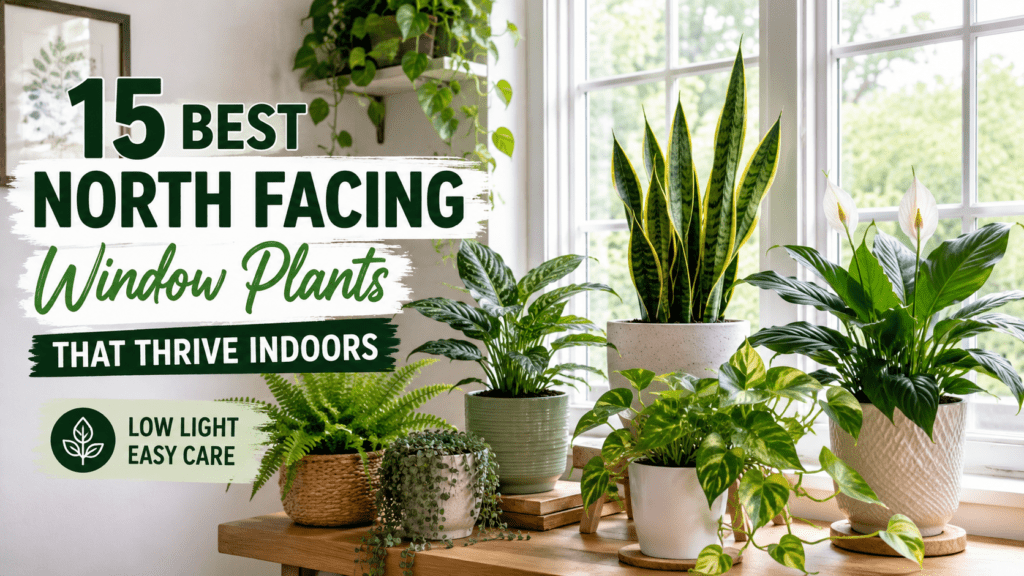
Many plant lovers give up on indoor gardening because they believe a north-facing window means weak light, struggling plants, and endless disappointment. But here’s the surprising truth: some of the most beautiful and resilient houseplants actually prefer the gentle, indirect light that north-facing windows provide. 🌿✨
If you’ve dealt with yellow leaves, leggy stems, or plants that slowly fade away despite your best efforts, you’re not alone. The problem usually isn’t your plant care skills — it’s choosing plants that don’t match your lighting conditions.
The good news? There are plenty of north facing window plants that naturally thrive in low-light environments. From elegant Peace Lilies to nearly indestructible Snake Plants, you can still create a lush indoor jungle even in dim apartments, shaded rooms, or offices with limited sunlight. 🪴💚
In this expert guide, you’ll discover:
- The best low-light indoor plants for north-facing windows
- Easy care tips to keep them thriving year-round
- Common mistakes that kill low-light houseplants
- Pet-safe and beginner-friendly options
- Styling ideas to turn dark corners into vibrant green spaces
Whether you’re a beginner plant parent or an experienced indoor gardener, this guide will help you choose the right plants with confidence. 🌱
🏡 What Makes a North-Facing Window Different?

Understanding your home’s lighting is one of the most important parts of successful indoor gardening. A north-facing window receives the least direct sunlight compared to south-, east-, or west-facing windows. But that doesn’t mean it’s useless for plants.
In fact, many tropical houseplants evolved under dense rainforest canopies where direct sunlight rarely reaches the forest floor. 🌳
🌤️ Understanding North-Facing Light Conditions
North-facing windows typically provide:
- Soft, indirect light throughout the day
- Cooler temperatures
- Consistent but lower light levels
- Minimal harsh afternoon sun
This environment is ideal for shade-loving plants and foliage plants that scorch easily in direct sunlight.
🌱 Why Some Plants Thrive in Low Light
Many popular indoor plants originate from tropical forests where they naturally grow in filtered or indirect light. These plants have adapted to:
- Absorb light efficiently
- Grow slowly with minimal sunlight
- Retain moisture longer
- Tolerate shaded indoor conditions
That’s why plants like ZZ Plants, Pothos, and Peace Lilies often perform better in low-light homes than sun-loving succulents.
⚠️ Signs Your Plant Isn’t Getting Enough Light
Even low-light plants have limits. Watch for these warning signs:
🍂 Yellowing Leaves
Can indicate insufficient light or overwatering.
🌿 Leggy Growth
Long stems with sparse leaves usually mean the plant is stretching toward light.
🪴 Slow or Stunted Growth
Plants may stop producing new leaves entirely.
💧 Constantly Wet Soil
Low light reduces water usage, increasing the risk of root rot.
🌱 Small New Leaves
Tiny or weak leaves often signal inadequate lighting.
If you notice these issues, try moving the plant closer to the window or supplementing with a small LED grow light.
🌿 How to Choose the Best North Facing Window Plants
Not every low-light plant behaves the same way. Some tolerate neglect, while others need extra humidity or careful watering.
Here’s how to choose wisely. 👇
🏠 Match Plants to Your Room Conditions
Consider:
- Room humidity
- Temperature fluctuations
- Window size
- Air circulation
- Nearby heaters or AC vents
Bathrooms and kitchens are often perfect for humidity-loving tropical plants like Ferns and Calatheas.
👩🌾 Consider Your Plant Care Experience
🌱 Best for Beginners
- Snake Plant
- ZZ Plant
- Pothos
- Spider Plant
🌿 Best for Intermediate Growers
- Calathea
- Ferns
- Prayer Plant
🐾 Pet-Friendly Options
- Parlor Palm
- Calathea
- Prayer Plant
🔍 Key Features to Look For
The best low-light houseplants usually have:
- Broad dark-green leaves
- Slow growth habits
- Low watering needs
- Shade tolerance
Avoid sun-loving plants like cacti or many succulents unless you use grow lights.
🌱 15 Best North Facing Window Plants That Actually Thrive Indoors
1. 🐍 Snake Plant (Sansevieria)

Snake Plants are famous for surviving almost anywhere. Their upright leaves add modern style while requiring minimal care.
🌟 Why It Thrives
- Tolerates very low light
- Drought-resistant
- Handles inconsistent watering
💧 Care Tips
- Water every 2–4 weeks
- Use well-draining soil
- Avoid overwatering
🏡 Best Placement
Perfect for bedrooms, offices, and dim corners.
2. 🌿 ZZ Plant (Zamioculcas zamiifolia)

If you want a nearly indestructible plant, the ZZ Plant is hard to beat.
🌟 Why It Thrives
- Extremely tolerant of neglect
- Stores water in thick rhizomes
- Grows well in low-light apartments
💧 Care Tips
- Let soil dry completely before watering
- Avoid direct harsh sunlight
⚠️ Common Mistake
Too much water causes root rot quickly.
3. 🍃 Pothos

Pothos is one of the easiest and fastest-growing indoor plants.
🌟 Why It Thrives
- Adaptable to low light
- Beautiful trailing vines
- Excellent air-purifying qualities
💧 Care Tips
- Water when top soil feels dry
- Prune regularly for fuller growth
✨ Styling Idea
Use hanging baskets or floating shelves.
4. 🤍 Peace Lily

Peace Lilies bring elegance with their glossy leaves and white blooms.
🌟 Why It Thrives
- Loves indirect light
- Signals thirst dramatically by drooping
- Helps improve indoor air quality
💧 Care Tips
- Keep soil slightly moist
- Increase humidity if leaf tips brown
🌸 Bonus
Can flower even in lower-light environments.
5. 🪴 Cast Iron Plant
This plant earned its name for a reason.
🌟 Why It Thrives
- Extremely tough
- Tolerates neglect and darkness
- Resistant to temperature changes
💧 Care Tips
- Water moderately
- Avoid soggy soil
🏡 Ideal For
Hallways, offices, and dark apartments.
6. 🌱 Chinese Evergreen (Aglaonema)

Chinese Evergreens are loved for their colorful foliage and easy care.
🌟 Why It Thrives
- Handles low light beautifully
- Adds vibrant colors indoors
- Slow-growing and manageable
💧 Care Tips
- Water when soil partially dries
- Protect from cold drafts
7. ❤️ Heartleaf Philodendron
A timeless favorite among indoor gardeners.
🌟 Why It Thrives
- Naturally grows under forest canopies
- Tolerates medium to low light
- Easy to propagate
💧 Care Tips
- Allow top inch of soil to dry
- Trim vines for bushier growth
✂️ Propagation Tip
Root stem cuttings easily in water.
8. 🌿 Ferns

Ferns create a lush jungle vibe indoors.
🌟 Best Fern Types
- Boston Fern
- Bird’s Nest Fern
- Maidenhair Fern
💧 Care Tips
- Maintain humidity
- Keep soil lightly moist
- Mist regularly
⚠️ Important
Dry air is the biggest enemy of indoor ferns.
9. 🕷️ Spider Plant
Spider Plants are cheerful, adaptable, and beginner-friendly.
🌟 Why It Thrives
- Grows well in indirect light
- Produces baby “spiderettes”
- Pet-friendly
💧 Care Tips
- Water when soil dries slightly
- Avoid fluoride-heavy tap water if tips brown
10. 🌴 Parlor Palm

Parlor Palms have been popular houseplants for generations.
🌟 Why It Thrives
- Prefers indirect light
- Elegant tropical appearance
- Safe for pets
💧 Care Tips
- Keep lightly moist
- Avoid direct afternoon sun
🌸 Best Flowering Plants for North-Facing Windows
Many people assume flowers require bright sun, but several flowering houseplants can bloom beautifully in low-light environments. 🌼
🌺 African Violet
African Violets are compact flowering plants that thrive in gentle indirect light.
🌟 Why They Work
- Prefer moderate to low light
- Bloom repeatedly indoors
- Ideal for windowsills
💧 Care Tips
- Water from the bottom
- Avoid wetting leaves
- Use room-temperature water
🤍 Peace Lily
Peace Lilies deserve another mention because they’re among the best low-light bloomers available.
🌸 Blooming Tip
Feed monthly during spring and summer with diluted fertilizer.
🌿 Begonias
Certain Begonia varieties thrive surprisingly well near north-facing windows.
🌟 Best Types
- Rex Begonia
- Cane Begonia
💧 Care Tips
- Avoid soggy soil
- Provide moderate humidity
🍀 Oxalis (Purple Shamrock)
Oxalis adds dramatic purple foliage and delicate blooms to dim indoor spaces.
🌟 Why It’s Popular
- Unique leaf movement
- Compact growth habit
- Great tabletop plant
🪴 Best Hanging Plants for North-Facing Windows

Trailing plants can transform a plain window into a cozy indoor jungle. 🌿✨
🍃 Pothos
Fast-growing and adaptable.
❤️ Heartleaf Philodendron
Elegant trailing vines.
🍀 English Ivy
Classic cascading greenery.
💕 String of Hearts
Best in brighter north-facing windows with indirect light.
✨ Styling Tips
- Use macrame hangers
- Combine varying leaf textures
- Add floating shelves for layered greenery
⚠️ Common Problems With North Facing Window Plants
Even the toughest low-light plants can struggle if their care needs aren’t understood.
💧 Root Rot From Overwatering
This is the #1 killer of low-light houseplants.
Why It Happens
Plants use less water in dim conditions, so soil stays wet longer.
How to Prevent It
- Check soil before watering
- Use pots with drainage holes
- Choose airy potting mixes
🌱 Leggy Growth
Plants stretch toward available light.
Solutions
- Move plants closer to windows
- Rotate weekly
- Add grow lights during winter
🍂 Brown Leaf Tips
Usually caused by:
- Dry indoor air
- Low humidity
- Mineral-heavy tap water
Quick Fixes
- Use filtered water
- Increase humidity with pebble trays
- Group plants together
🐛 Indoor Plant Pests
Low-light plants can still attract pests like:
- Fungus gnats
- Spider mites
- Mealybugs
Natural Prevention Tips
- Avoid overwatering
- Wipe leaves regularly
- Inspect new plants before bringing indoors
🌟 Expert Tips to Help Low-Light Houseplants Thrive
🔄 Rotate Plants Regularly
Ensures even growth.
🧽 Clean Dust From Leaves
Dust blocks light absorption.
🌱 Use Well-Draining Soil
Essential for preventing root rot.
💡 Add LED Grow Lights in Winter
Especially useful in cloudy climates.
🚫 Avoid Overfertilizing
Low-light plants grow slowly and need less feeding.
🍂 North Facing Window Plant Care by Season
❄️ Winter Care Tips
Winter is challenging for indoor plants because daylight hours shrink significantly.
What to Do
- Reduce watering frequency
- Keep plants away from cold drafts
- Stop fertilizing dormant plants
- Increase humidity indoors
☀️ Summer Care Tips
Plants may grow faster during summer.
Seasonal Adjustments
- Monitor moisture levels more often
- Watch for overheating near glass
- Prune excess growth
👶 Best North Facing Window Plants for Beginners
Starting your indoor plant journey can feel overwhelming, especially when your home doesn’t receive bright sunlight. The good news? Some low-light houseplants are incredibly forgiving and practically thrive on neglect. 🌿✨
If you’re new to plant care, these beginner-friendly plants are the safest choices for north-facing windows.
🐍 1. Snake Plant

🌟 Why Beginners Love It
- Tolerates missed waterings
- Survives in very low light
- Resistant to pests
💧 Care Simplicity
Water only when the soil is completely dry.
⚠️ Avoid
Overwatering is the fastest way to kill a Snake Plant.
🌿 2. ZZ Plant
The ZZ Plant is one of the most resilient indoor plants available.
🌟 Perfect for Busy People
- Handles neglect easily
- Grows slowly
- Rarely develops problems
🪴 Best Spot
A few feet away from a north-facing window works perfectly.
🍃 3. Pothos
Pothos grows quickly and gives satisfying results even for inexperienced plant owners.
🌟 Beginner Benefits
- Easy to propagate
- Tolerates irregular care
- Visibly shows growth progress
✂️ Fun Bonus
You can root cuttings in water and create new plants for free.
🕷️ 4. Spider Plant
Spider Plants are cheerful, adaptable, and fast-growing.
🌟 Why They’re Beginner-Friendly
- Produce baby plants easily
- Adapt to different indoor conditions
- Pet-safe
💡 Pro Tip
Bright indirect light produces more baby spiderettes.
🪴 5. Cast Iron Plant
True to its name, this plant is incredibly tough.
🌟 Why It Rarely Fails
- Tolerates shade exceptionally well
- Handles temperature changes
- Slow-growing and stable
🐶🐱 Pet-Safe Plants for North Facing Windows

Pet owners need to be extra careful because many popular indoor plants are toxic to cats and dogs. Thankfully, several beautiful low-light plants are completely pet-friendly. 🐾💚
🌴 Parlor Palm
🌟 Why It’s Great
- Non-toxic to pets
- Elegant tropical appearance
- Thrives in indirect light
🌈 Calathea
Calatheas are famous for their stunning patterned leaves.
🌟 Pet-Friendly Benefits
- Safe for cats and dogs
- Adds dramatic foliage indoors
- Thrives in humidity
💧 Care Note
Calatheas prefer consistently moist soil and higher humidity.
🙏 Prayer Plant
Prayer Plants fold their leaves upward at night, creating a unique display.
🌟 Why Pet Owners Love Them
- Completely non-toxic
- Compact and decorative
- Perfect for shelves
🕷️ Spider Plant
Another excellent pet-safe option for beginners.
🌟 Added Benefits
- Air-purifying
- Easy to propagate
- Low-maintenance
⚠️ Toxic Plants to Keep Away From Pets
Even though some low-light plants are beautiful, they may be harmful to animals.
🚫 Common Toxic Plants
- Peace Lily
- ZZ Plant
- Snake Plant
- Philodendron
- Pothos
If you have curious pets that chew leaves, choose pet-safe alternatives whenever possible.
🏡 Decor Ideas for Styling Plants Around North-Facing Windows

Indoor plants do more than clean the air — they completely transform the atmosphere of a room. Even a dim corner can become vibrant and cozy with thoughtful plant styling. 🌿✨
📚 Shelf Styling Ideas
Floating shelves are perfect for:
- Trailing plants like Pothos
- Compact Calatheas
- Decorative pots
🌟 Styling Tip
Mix different leaf shapes and heights for a natural layered effect.
🪴 Hanging Basket Inspiration
Hanging plants maximize vertical space in small apartments.
Best Hanging Choices
- Pothos
- Philodendron
- English Ivy
- String of Hearts
✨ Design Tip
Use woven baskets or macrame hangers for a cozy aesthetic.
🌿 Create a Minimalist Indoor Jungle
You don’t need dozens of plants to create a lush look.
Simple Formula
- One tall plant
- Two trailing plants
- One statement foliage plant
This creates balance without visual clutter.
🏠 Small Apartment Plant Arrangements
Limited space? No problem.
Smart Placement Ideas
- Window ledges
- Corner stools
- Hanging shelves
- Plant stands
💡 Bonus Tip
Use mirrors near plants to reflect available light.
❓ Frequently Asked Questions About North Facing Window Plants
🌵 Can Succulents Survive in a North-Facing Window?
Most succulents struggle in low light because they naturally prefer bright sun. However, a few varieties like Snake Plants and Haworthias tolerate lower light better than others.
💡 Expert Recommendation
Use LED grow lights if you want traditional succulents indoors.
💡 Do North-Facing Rooms Need Grow Lights?
Not always.
Many low-light houseplants thrive naturally near north-facing windows. But during winter or in very dark apartments, supplemental lighting can improve growth significantly.
🌟 Best Choice
Full-spectrum LED grow lights.
🌱 Which Plants Grow Fastest in Low Light?
Some of the fastest-growing low-light plants include:
- Pothos
- Heartleaf Philodendron
- Spider Plant
- English Ivy
These plants quickly fill shelves and hanging baskets.
💧 How Often Should I Water Low-Light Plants?
Low-light plants generally need less water than sun-loving plants.
General Rule
Water only when the top 1–2 inches of soil feel dry.
⚠️ Important
Overwatering causes more indoor plant deaths than underwatering.
🌴 Are North-Facing Windows Good for Tropical Plants?
Yes — many tropical plants naturally grow beneath rainforest canopies and prefer indirect light.
Great Tropical Choices
- Parlor Palm
- Philodendron
- Calathea
- Ferns
🌿 What’s the Easiest Low-Light Indoor Plant?
Most experts agree these are among the easiest:
- Snake Plant
- ZZ Plant
- Pothos
- Cast Iron Plant
These plants tolerate beginner mistakes exceptionally well.
🌟 Final Thoughts
A north-facing window doesn’t have to limit your indoor gardening dreams. In fact, it can become the perfect environment for many beautiful, low-maintenance houseplants that struggle in harsh direct sun. 🌿✨
The secret is choosing plants that naturally thrive in low-light conditions instead of fighting against your home’s lighting limitations.
Whether you prefer dramatic foliage, trailing vines, pet-safe greenery, or elegant flowering plants, there are plenty of north facing window plants that can transform your space into a calming indoor oasis. 🪴💚
Start with beginner-friendly favorites like Snake Plants or Pothos, learn your watering habits carefully, and gradually build your confidence as an indoor gardener.











