
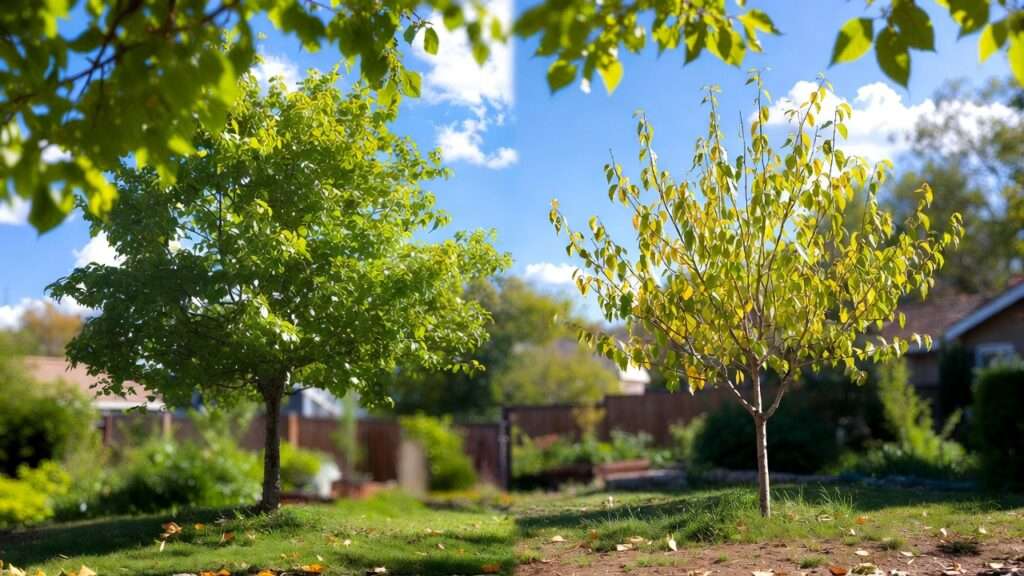
Imagine stepping into your backyard and noticing your once-vibrant oak or maple tree looking pale and sickly — yellow leaves curling at the edges, stunted new growth, or branches that seem to be dying back. 😟 Is it a disease? Pests? Drought? Or something simpler yet often overlooked: your tree is literally starving for essential nutrients?
Nutrient deficiencies are one of the most common yet underdiagnosed issues affecting trees in home landscapes, orchards, urban parks, and even forests. They weaken overall health, reduce fruit or nut production, make trees more susceptible to pests and diseases, and can lead to long-term decline or death if ignored. The good news? With early detection and targeted fixes, most deficiencies are reversible — and your trees can bounce back stronger than ever! 🌳💚
In this in-depth guide, we’ll cover everything you need to know about nutrient deficiency symptoms in trees, from understanding why they happen to spotting telltale signs, confirming the problem, and applying fast, effective solutions. Drawing from trusted sources like university extension services (University of Maryland Extension, RHS, Iowa State University Extension, and more), arborist best practices, and real-world case studies, this article goes beyond basic lists to provide actionable, expert-level advice that helps homeowners, gardeners, and tree enthusiasts save their trees quickly and sustainably.
Whether you’re dealing with a beloved shade tree turning yellow or fruit trees producing poorly, you’ll learn how to diagnose accurately, fix issues fast, and prevent future problems — turning “sick” trees into thriving ones. Let’s dive in and get your trees the nutrition they deserve! 🍃
Understanding Plant Nutrients: The Basics Every Tree Owner Needs to Know ⚗️
Trees, like all plants, require a balanced diet of essential nutrients to grow, photosynthesize, resist stress, and reproduce. These fall into two main categories:
- Macronutrients (needed in larger amounts): Nitrogen (N), Phosphorus (P), Potassium (K), Calcium (Ca), Magnesium (Mg), and Sulfur (S).
- Micronutrients (needed in trace amounts but still critical): Iron (Fe), Manganese (Mn), Zinc (Zn), Copper (Cu), Boron (B), Molybdenum (Mo), and others.
Each nutrient plays a specific role. For example:
- Nitrogen powers lush green leaves and vigorous growth by forming chlorophyll and proteins.
- Iron and manganese are vital for chlorophyll production and enzyme functions, especially in alkaline soils.
- Potassium strengthens cell walls, improves drought resistance, and boosts disease tolerance.
Deficiencies often stem from:
- Poor soil quality (low organic matter, compaction).
- High soil pH (>7.0–7.5), which “locks up” micronutrients like iron and manganese, making them unavailable even if present in the soil.
- Leaching in sandy or heavily watered soils.
- Root damage from construction, poor drainage, or competition from grass/turf.
- Over-fertilization creating imbalances.
A key concept: mobile vs. immobile nutrients. Mobile ones (N, P, K, Mg) move from older leaves to new growth when scarce — so symptoms show first on older/lower leaves. Immobile ones (Fe, Mn, Zn, Ca, B) stay put — symptoms appear on new/younger leaves first. This pattern is your biggest diagnostic clue! 📊
How to Accurately Diagnose Nutrient Deficiencies (Step-by-Step Guide) 🔍
Don’t guess — misdiagnosis wastes time and money (and can harm trees). Follow this expert process:
- Observe symptom patterns closely — Note where symptoms appear (old vs. new leaves), type (uniform yellowing, interveinal chlorosis, scorching, purple tints), and progression.
- Rule out other causes — Check for pests (aphids, mites), diseases (fungal spots, cankers), drought/wilting, herbicide drift, or mechanical injury. Deficiencies usually lack pest evidence or uniform patterns.
- Test your soil — Essential! Get a professional soil test for pH, macronutrients, and micronutrients. High pH (>7.2) often explains iron/manganese issues in species like pin oaks or river birches.
- Consider leaf/tissue analysis — For confirmation, especially micronutrients. Labs analyze nutrient levels in leaves.
- Factor in species, season, and environment — Pin oaks and maples are prone to iron/manganese chlorosis in alkaline soils; fruit trees often show nitrogen or zinc issues. Symptoms may worsen in spring (cold soils slow uptake) or after heavy rain (leaching).
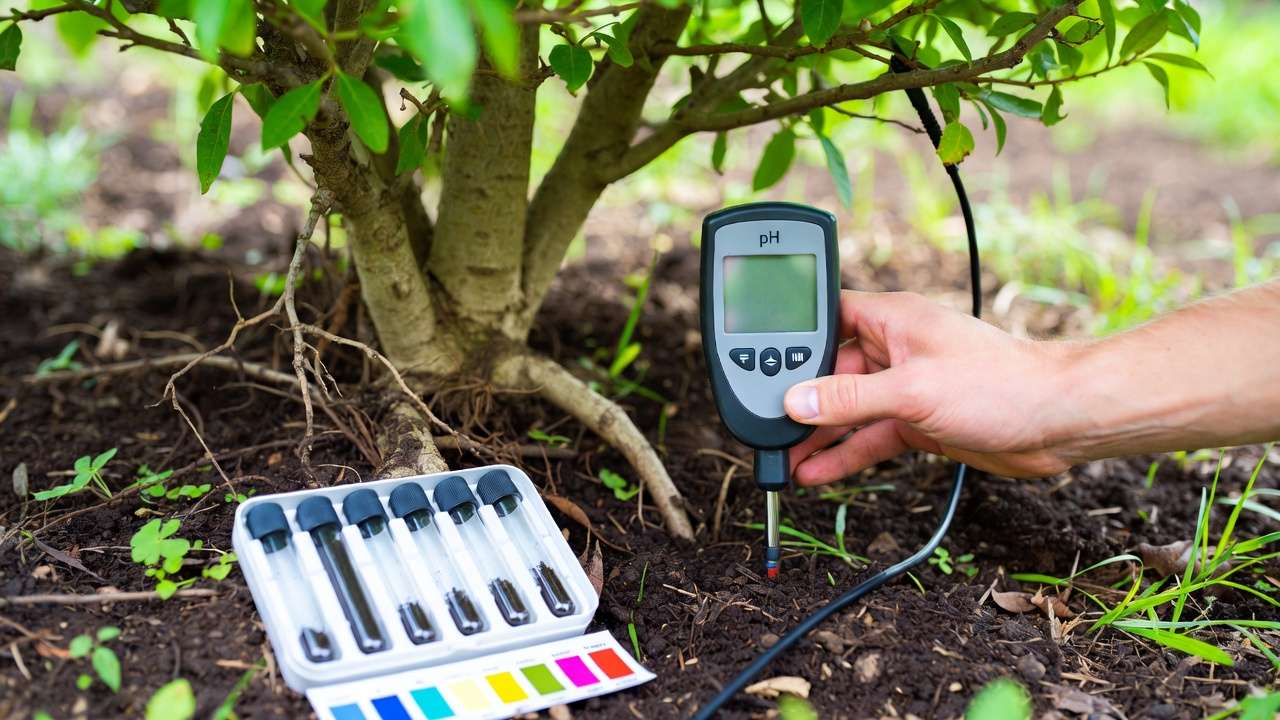
Pro tip: Take clear photos of affected vs. healthy branches/leaves and compare — this helps track progress after treatment! 📸 When in doubt, consult a certified arborist for on-site evaluation.
Common Nutrient Deficiency Symptoms in Trees – Visual Breakdown with Examples 🌱
Here’s a detailed, visual-friendly guide to the most frequent deficiencies, based on extension service observations.
Macronutrient Deficiencies (Usually Older Leaves First)
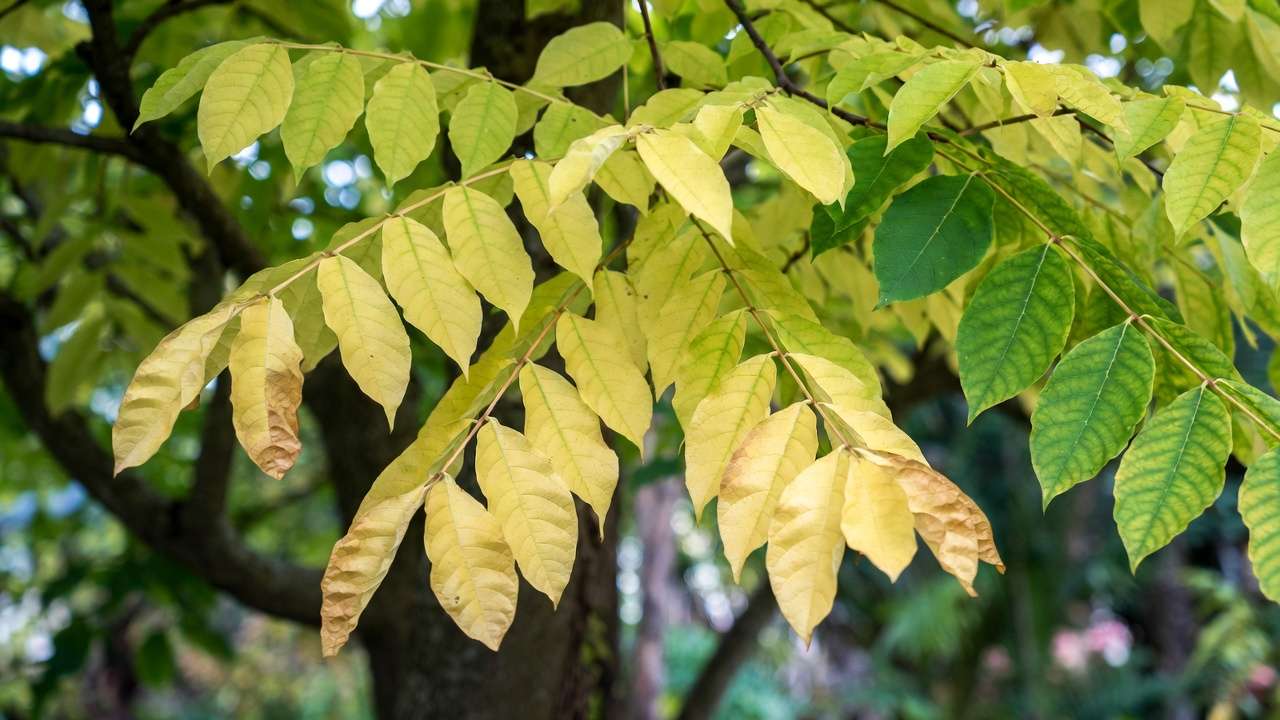
- Nitrogen (N) Deficiency 🌿 Leaves turn pale green to uniform yellow, starting with older/lower ones. Growth slows — shorter shoots, smaller leaves, fewer branches. Fall color may appear earlier or more intensely; early leaf drop common. Often seen in young trees on poor soils or after heavy mulching without added N.
- Phosphorus (P) Deficiency 🔵 Older leaves darken to deep green or develop bronze/purple undersides and margins. Stunted growth, weak roots, delayed maturity, poor flowering/fruiting. Common in compacted or cold soils.
- Potassium (K) Deficiency 🔥 Older leaves show marginal scorching/browning, interveinal yellowing, then necrosis. Weak branches, increased pest/disease vulnerability. Edges look “burned” — often confused with drought.
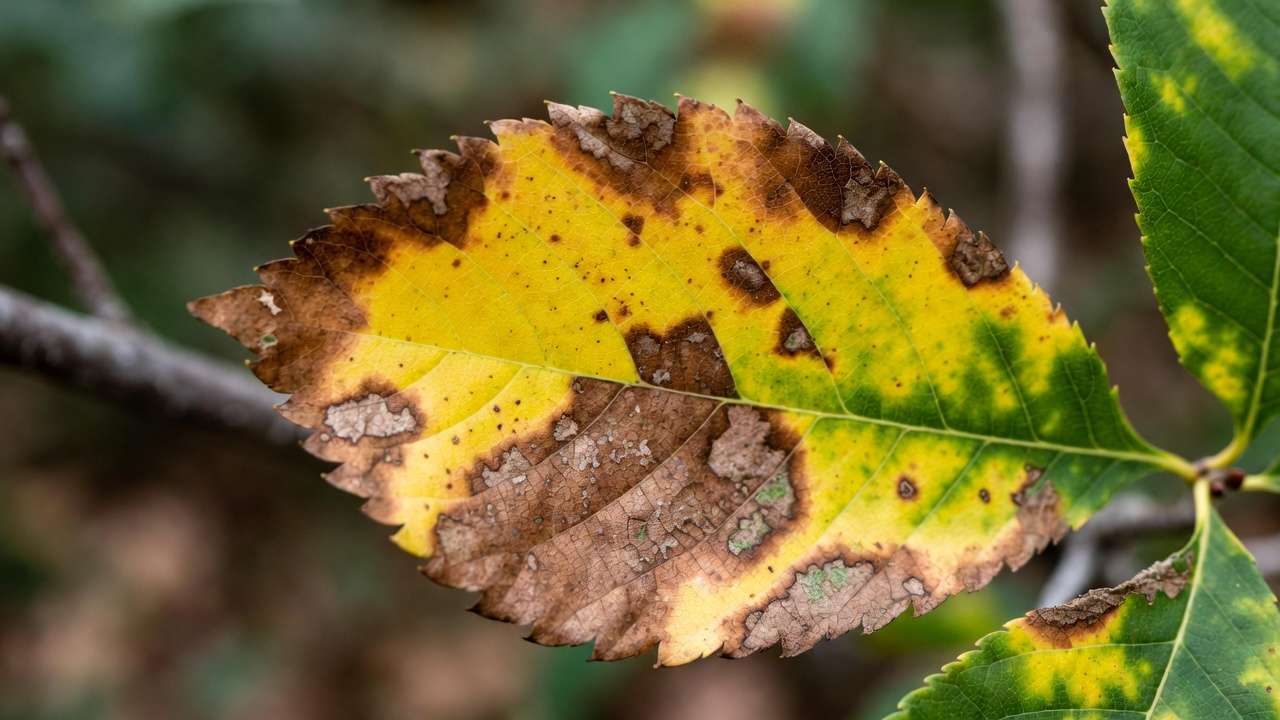
- Magnesium (Mg) Deficiency 🟡 Interveinal chlorosis on older leaves (yellow between green veins), sometimes with reddish-purple tints. Common in acidic, sandy, or heavily cropped soils.
- Calcium (Ca) & Sulfur (S) Ca: Distorted, hooked new growth; tip dieback; blossom-end rot in fruit trees. S: Uniform pale yellowing on young leaves (similar to N but rarer).
Micronutrient Deficiencies (Usually Newer/Younger Leaves First – Often pH-Related)
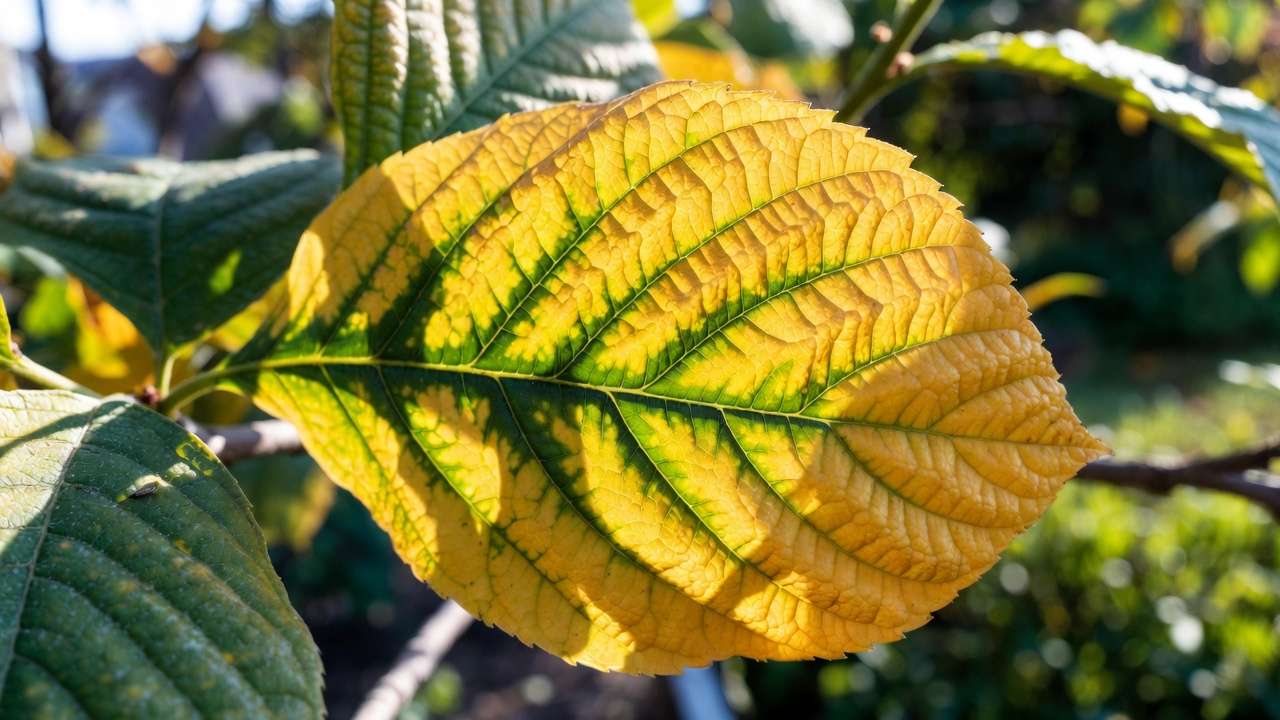
- Iron (Fe) Deficiency (Chlorosis) ⚡ Classic interveinal chlorosis: new leaves turn bright yellow while veins stay dark green. Severe cases lead to white/bleached leaves, stunted growth, branch dieback. Extremely common in alkaline soils for pin oaks, river birches, azaleas, and fruit trees.
- Manganese (Mn) Deficiency Similar to iron but often starts on mid-canopy leaves; interveinal yellowing, brown spots/margins on maples and other species.
- Zinc (Zn), Copper (Cu), Boron (B) Zn: Small, narrow “rosetted” leaves; bronzing; dieback. Cu: Twig dieback; distorted leaves. B: Thickened, brittle leaves; shoot tip death; poor fruit set.
(Pro tip: Insert high-quality photos here — e.g., iron chlorosis on pin oak leaf showing green veins, nitrogen yellowing on older foliage, potassium leaf scorch — to make diagnosis easier for readers! 🖼️)
Causes and Contributing Factors – Why Your Trees Are Hungry 🧪
Beyond low soil levels, common culprits include:
- Soil pH imbalance — High pH locks micronutrients (Fe, Mn, Zn).
- Poor drainage/compaction — Limits root oxygen and uptake.
- Environmental stress — Drought, cold soils, overwatering.
- Over-fertilization — Excesses (e.g., high P) block others.
- Species vulnerabilities — Acid-loving trees struggle in alkaline soils.
How to Fix Nutrient Deficiencies: Fast & Effective Solutions 🚀
Act fast for best recovery!
- Immediate relief — Foliar sprays: Chelated iron/Mn/Zn sprays green leaves in days/weeks (repeat every 2–4 weeks if needed). Great for quick visual improvement.
- Long-term correction — Soil amendments: Elemental sulfur or acidifiers to lower pH; organic matter (compost) to improve structure/nutrient availability.
- Fertilization — Use slow-release, balanced formulas based on soil tests. Avoid high-N in stressed trees.
- Advanced methods — Trunk injections for severe iron chlorosis in large trees (professional application). Soil drenches for targeted delivery.
- Organic approaches — Compost teas, seaweed extracts, Epsom salts (for Mg), manure. ♻️
- Timing — Apply in spring/early summer when growth is active; avoid hot/dry periods.
Improvement often shows in 2–6 weeks with proper treatment — monitor and re-test soil!
Prevention: Keep Your Trees Nutrient-Rich Year-Round 🛡️
- Soil test every 2–3 years.
- Plant species suited to your soil pH/type.
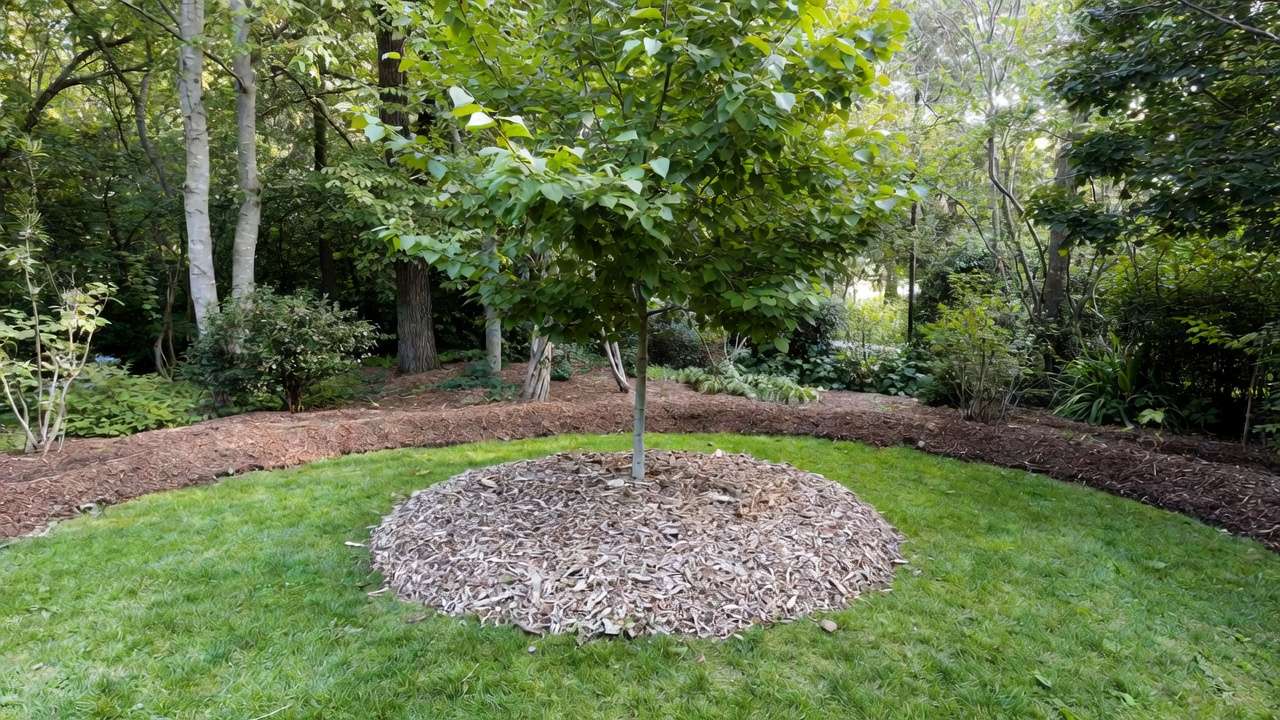
- Mulch properly (2–4 inches organic mulch, kept away from trunk).
- Aerate compacted soil; ensure good drainage.
- Water deeply but infrequently; avoid competition from turf.
Real-World Examples & Case Studies 🌍
- Urban pin oak with severe iron chlorosis: Soil pH 7.8 → sulfur amendment + chelated iron drench → full greening in one season.
- Fruit orchard nitrogen shortage: Slow-release N + compost → doubled yield next year.
Frequently Asked Questions (FAQs) ❓
- What’s the difference between nutrient deficiency and disease? Deficiencies lack spots, fungi, or insects; patterns follow nutrient mobility.
- Can I fix it without a soil test? Possible for obvious cases (e.g., iron in alkaline soil), but testing prevents guesswork.
- How long until improvement? Foliar: days to weeks; soil fixes: months to seasons.
- Are deficiencies reversible in mature trees? Yes, especially early — many recover fully!
- Best fertilizers for common trees? Test-based; e.g., acid-loving mixes for oaks/maples.
Conclusion: Empower Your Tree Care Journey 🌟
Spotting and fixing nutrient deficiency symptoms in trees early can transform struggling trees into healthy, beautiful ones that provide shade, fruit, and joy for years. Start with observation, confirm with tests, and apply targeted fixes — your trees will thank you! 🌳
Test your soil today, keep an eye out this growing season, and enjoy the rewards of nourished trees. When unsure, reach out to a local extension service or certified arborist for personalized help. Happy tree caring! 😊











