
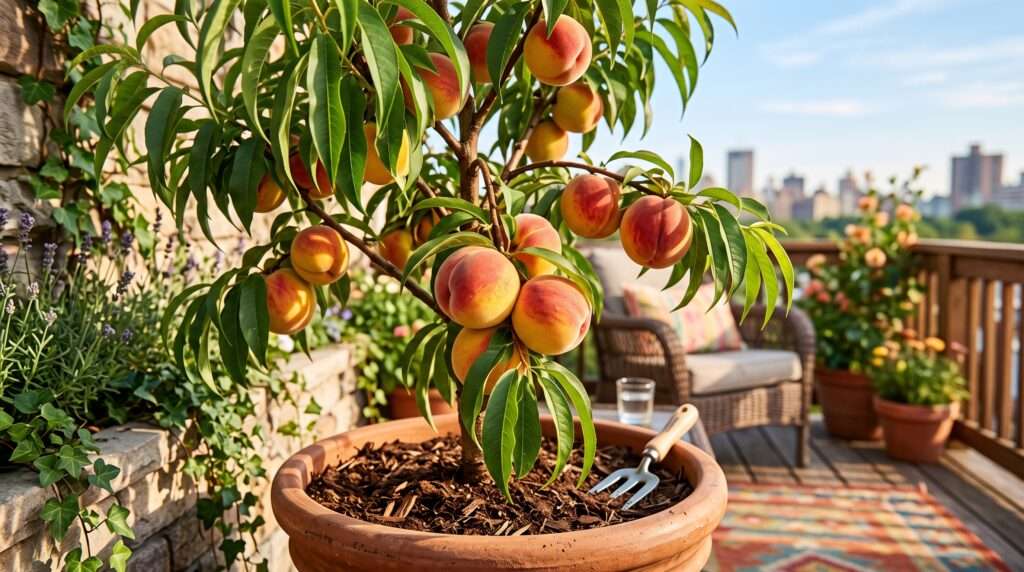
Imagine stepping out onto your balcony, patio, or small urban terrace on a warm July morning. The air is sweet, and right there in a decorative container sits a stunning miniature tree, its branches heavily laden with blushing, velvet-skinned fruit. You reach out, gently twist a sun-warmed peach from the stem, and take a bite. The juice runs down your chin—a perfect, homegrown harvest.
If you think you need acres of sprawling orchard land to achieve this, think again! The secret to unlocking a massive yield in a micro-space lies in mastering the cultivation of dwarf stone fruits. Growing abundant, sweet patio peach tree fruit is entirely possible, even if your only gardening space is a sunny concrete slab.
For years, gardeners have struggled with the heartbreak of planting standard fruit trees in small spaces, only to battle aggressive root systems, towering canopies, and sparse harvests. But dwarf and patio peach trees completely flip the script. They are the ultimate container-friendly fruit producers, engineered to stay compact while producing full-sized, mouth-watering fruit.
As someone deeply passionate about plant diagnostics and optimizing soil health, I can tell you that container fruit growing leaves zero room for error in the root zone. But when you get the soil biology, watering cadence, and pruning just right, the results are visually spectacular—honestly, they make for the most beautiful, highly pinnable garden photos you could ever share.
In this comprehensive guide, we are going to dive deep into exactly how to choose the right tree, engineer the perfect soil recipe, and manage pests so you can guarantee a heavy, juicy yield. Let’s get your hands dirty! ✨
🌳 What Exactly is a Patio Peach Tree? (And Why You Need One)
Before we start potting, we need to understand the biology of what makes a patio peach tree unique. A patio peach (often categorized under Prunus persica) isn’t just a regular peach tree that you prune ruthlessly to keep small. It is a marvel of horticultural grafting.
Growers take a “scion” (the top part of the tree that dictates the fruit variety, flavor, and foliage) and graft it onto a dwarfing “rootstock.” This specialized root system naturally restricts the tree’s vertical growth, typically capping its height at a highly manageable 4 to 6 feet.
The most incredible part? While the tree’s stature is dwarfed, the patio peach tree fruit is not. You still get large, standard-sized peaches.
Beyond their fruit production, these trees are top-tier ornamental assets. In early spring, they explode into a dense cloud of vibrant pink blossoms. Their lush, elongated green foliage provides beautiful summer structure, making them perfect visual centerpieces for your outdoor living space.
🏆 Top Dwarf Peach Varieties for Container Growth
Not all peach trees are suited for pot life. When shopping at your local nursery or ordering bare-root trees online, look for these proven dwarf varieties:
-
Bonanza: 🌸 Perhaps the most famous dwarf peach. It is prized for its exceptionally showy, large pink spring flowers and heavy yields of medium-to-large, yellow-fleshed freestone peaches.
-
Pix Zee: 🍑 An incredibly vigorous grower that produces firm, delicious peaches that ripen early in the season.
-
Eldorado: 🍯 Known for exceptionally sweet, rich, yellow-fleshed fruit. It has a beautiful weeping growth habit that looks stunning in a decorative pot.
-
Honey Babe: 🐝 A heavy yielder perfect for tighter spaces. It produces super-sweet, classic-tasting peaches, though it requires slightly more chill hours than others.

🪴 Setting the Stage: Pots, Soil, and Plant Health
When you grow a tree in the ground, its roots can travel for yards to seek out moisture, minerals, and symbiotic fungi. In a container, you are entirely responsible for creating the universe your tree lives in. Setting the stage correctly from day one is the most critical factor in your long-term success.
🪣 Choosing the Right Container
You cannot squeeze a fruit-bearing tree into a tiny pot and expect a harvest.
-
Size Matters: Start with a 15- to 20-gallon pot (or a classic half-whiskey barrel). This provides enough volume for the root system to expand and anchor the heavy canopy, preventing the tree from tipping over in high winds.
-
Material Pros & Cons:
-
Terracotta/Clay: Beautiful and breathable, allowing oxygen to reach roots, but incredibly heavy to move.
-
Plastic/Resin: Lightweight, making it easier to rotate the tree for sun exposure. Retains moisture longer, which is great in hot climates but requires careful monitoring to prevent waterlogging.
-
Fabric Grow Bags: 🥇 The expert choice. They offer excellent “air-pruning,” which prevents roots from circling and strangling the tree, though they dry out much faster and require more frequent watering.
-
-
Drainage is Non-Negotiable: Peach trees despise “wet feet.” If your pot does not have at least three to four large drainage holes, get out your drill. Standing water leads directly to Phytophthora root rot, which will kill your tree before it ever sets fruit.
🪱 Crafting the Ultimate Soil Recipe for Stone Fruits
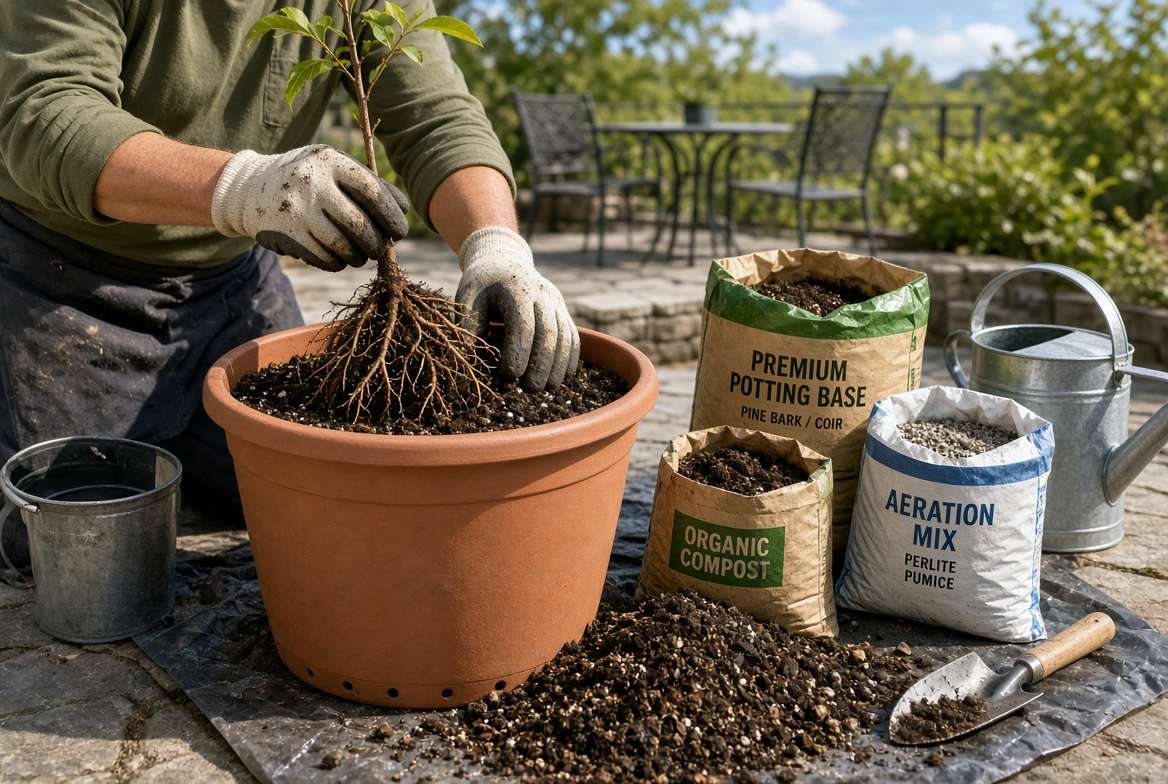
Let’s talk soil health—the true engine of your harvest. If you want abundant patio peach tree fruit, you must skip the cheap, compacted, store-bought potting soil. Stone fruits require a living, well-aerated, and nutrient-dense soil matrix.
Here is a master-level container soil recipe for optimal plant health:
-
50% High-Quality Potting Base: Use a mix based on aged pine bark fines or coconut coir (which is more sustainable than peat moss). This provides bulk and moisture retention.
-
25% Aeration and Drainage: Add coarse perlite or pumice. This ensures water flushes through the pot quickly, pulling fresh oxygen down to the roots.
-
25% Organic Nutrients: Mix in premium compost, well-rotted manure, or worm castings. This introduces essential microbes and steady, slow-release nutrition.
💡 Expert Soil Diagnostic Tip: When potting your bare-root or nursery tree, dust the roots with a mycorrhizal fungi inoculant. These beneficial fungi form a symbiotic relationship with the peach tree’s roots, effectively acting as secondary root hairs that vastly increase the tree’s ability to absorb water and phosphorus—crucial for flower and fruit development.
☀️ Sun, Sun, and More Sun: Light and Temperature Needs
If soil is the engine of your tree, sunlight is the fuel. Peaches are sun-worshippers by nature, and maximizing their exposure is the secret to developing high sugar content (measured as Brix levels) in your patio peach tree fruit.
The 6-Hour Minimum Rule: For optimal flowering and fruiting, your container tree requires a bare minimum of 6 to 8 hours of direct, unfiltered sunlight every single day. Less sunlight results in leggy branches, fewer blossoms, and tart, undersized fruit.
Mastering Patio Microclimates: Urban balconies and paved patios can get intensely hot. You can use this to your advantage by placing your pot near a south-facing brick wall, which absorbs heat during the day and radiates it back at night. However, because the light source may be directional (like on a covered balcony), it is vital to rotate your pot a quarter-turn every week. This ensures the entire canopy receives equal light, preventing lopsided growth.
❄️ Understanding “Chill Hours” for Patio Peaches
A common misconception in container gardening is that fruit trees want summer weather year-round. In reality, stone fruits require a period of winter dormancy to reset their biological clocks and produce blossoms the following spring. This dormancy requirement is measured in “chill hours”—the total number of winter hours where temperatures hover between 32°F and 45°F (0°C to 7°C).
-
Match Your Zone: When selecting your tree, verify its chill hour requirement against your local climate. Varieties like Bonanza need about 250 chill hours, making them ideal for milder winter climates (USDA Hardiness Zones 7-9).
-
Winter Protection for Pots: While the canopy needs the chill, the roots are vulnerable. In the ground, soil acts as a massive insulator. In a pot, a hard freeze can kill the root system. If temperatures drop below 20°F (-6°C), wrap your container in heavy bubble wrap, burlap, or old blankets, and heavily mulch the top of the soil. Do not bring the tree inside your heated living room, or you will break its dormancy!
💦 The Secret to Juicy Fruit: Watering & Fertilizing
Container trees live in a restricted environment, meaning they dry out significantly faster than in-ground orchards and rapidly deplete their available nutrients.
🚫 Mastering the Watering Schedule
Overwatering and underwatering are the top two reasons gardeners fail to harvest healthy patio peach tree fruit.
-
The “Knuckle Test”: Never water on a strict calendar schedule. Instead, plunge your index finger into the soil up to your second knuckle. If it feels moist, wait. If it feels completely dry, it is time to water.
-
Deep vs. Shallow Watering: When you do water, soak the pot thoroughly until water flows freely out of the bottom drainage holes. Shallow, daily sips encourage weak, surface-level root systems that cannot support heavy fruit loads.
-
The Fruit-Swelling Stage: About three weeks before harvest, the developing peaches will begin to swell rapidly. Consistent moisture is absolutely critical here. If the tree dries out during this stage, it will aggressively drop its fruit to conserve energy.
🌸 Feeding Schedule for Maximum Yield
Because container potting mixes are sterile, you must become the sole provider of your tree’s nutrition.
-
Spring Awakening: Just as the buds begin to swell in early spring, apply a high-nitrogen, slow-release organic fertilizer. This fuels the initial burst of leafy, green canopy growth needed for photosynthesis.
-
Fruit Set: Once the blossoms fade and tiny green fruits appear, switch to a fertilizer rich in phosphorus and potassium (like a specialized fruit tree or tomato feed). Potassium is essential for fruit development, water regulation, and branch strength.
-
Micronutrients Matter: Stone fruits are highly susceptible to zinc and calcium deficiencies. Incorporating a micronutrient spray or adding crushed eggshells/bone meal to the soil surface can prevent frustrating issues like split pits or premature fruit drop.
✂️ Pruning and Thinning: The Hardest Task for the Best Reward
Pruning shapes the tree, but thinning guarantees the quality of your harvest.
Why We Prune: Late winter, while the tree is still dormant, is the time for structural pruning. Aim for an “open center” or vase-like shape. Remove any branches that cross each other, grow straight upward (water sprouts), or point toward the center of the trunk. This open structure maximizes airflow, reducing fungal risks, and allows sunlight to penetrate deep into the canopy to ripen the interior fruit.
🍑 Why You MUST Thin Your Patio Peach Tree Fruit
This is the most emotionally difficult task for any container gardener, but it separates the novices from the experts.
When your tree finishes blooming, it may set 50, 60, or even 100 tiny peaches. A dwarf tree in a container simply does not have the root mass or carbohydrate reserves to develop that much fruit. If left alone, you will harvest a massive crop of tiny, hard, flavorless pits with barely any flesh. Worse, the sheer weight of the growing fruit will snap the delicate branches.
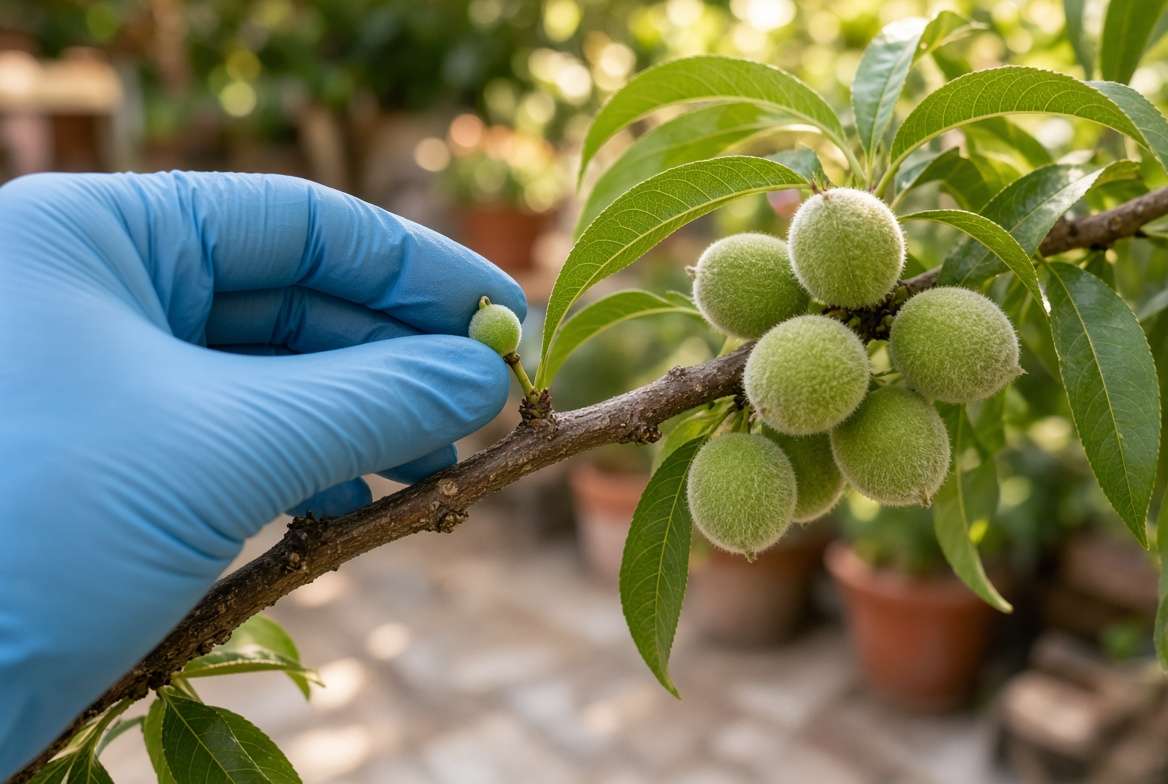
The Thinning Rule: When the baby peaches are the size of marbles (about 3/4 of an inch across), you must ruthlessly pluck off 60% to 70% of them. Leave only one peach every 6 to 8 inches along a branch. By forcing all the tree’s energy into just 15 to 20 fruits, you guarantee a harvest of massive, sweet, drippingly juicy peaches.
🛡️ Plant Diagnostics: Defending Your Harvest from Pests & Diseases
Growing in a pot gives you a distinct advantage: it is much easier to closely inspect your tree and catch problems early.
🐛 Common Pests and Organic Solutions
-
Aphids & Spider Mites: These sap-suckers love new, tender growth. If you notice curling leaves or fine webbing, spray the foliage immediately with a mixture of water, a few drops of dish soap, and cold-pressed Neem oil. Ensure you spray the undersides of the leaves where they hide.
-
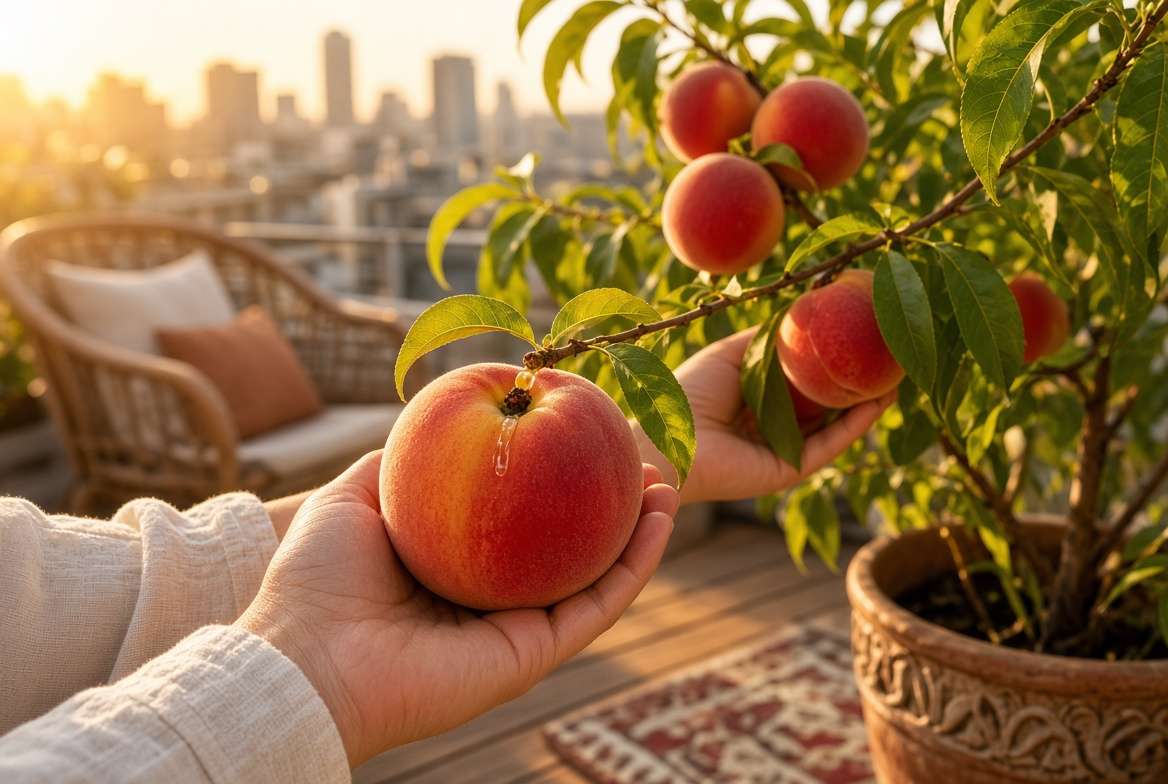
Peach Tree Borers: Look for jelly-like sap oozing from the lower trunk. These pests bore into the wood and can easily kill a small tree. Use organic sticky traps at the base of the trunk in early summer to catch the adult moths before they lay eggs.
🍂 Fungal Foes: Defeating Peach Leaf Curl
The single most common and destructive disease for this species is Peach Leaf Curl. It presents as thick, blistered, reddish-puckered leaves in the spring that eventually drop off, severely weakening the tree and ruining the harvest.
The Expert Treatment Plan: Once you see the blistered leaves, it is too late to treat them. You must be proactive. Spray your tree thoroughly with a copper fungicide twice a year: once in late autumn after 90% of the leaves have fallen, and again in late winter/early spring just before the pink buds crack open.
🧺 The Grand Finale: Harvesting Your Patio Peach Tree Fruit
After months of careful soil management, watering, and thinning, it is time for the reward. Knowing exactly when to pick your fruit requires engaging all your senses.
-
The Visual Check: The “ground color” (the background color of the peach behind the red blush) should change from green to a warm, creamy yellow.
-
The Gentle Squeeze: Give the fruit a very soft squeeze near the stem. It should yield slightly to gentle pressure. If it feels like a baseball, leave it alone.
-
The Scent: A ripe peach will smell unmistakably sweet and fragrant even from a few feet away.
-
The Twist: To harvest, cup the peach in your palm, lift it slightly upward, and give it a gentle twist. It should pop off easily. Never pull straight down, as this can strip the bark and damage the fruiting spur for next year’s crop.
Store perfectly ripe peaches at room temperature on your counter for a day or two to preserve their melt-in-your-mouth, velvety texture. Only put them in the refrigerator if they are in danger of becoming overripe.
❓ Frequently Asked Questions (FAQs)
How many years does it take for a patio peach tree to produce fruit? If you purchase a grafted sapling from a reputable nursery (usually 1 to 2 years old upon arrival), you can typically expect your first small harvest by its second summer in your pot.
Do I need two patio peach trees for cross-pollination? No. The vast majority of dwarf and patio peach varieties are completely self-fruitful (self-pollinating). A single tree will set fruit on its own. However, having a second tree nearby can attract more bees and marginally increase your overall yield.
Can I grow a patio peach tree entirely indoors? It is highly discouraged. While they make beautiful houseplants, the lack of sufficient chill hours (winter dormancy), absence of natural pollinators, and inadequate direct sunlight mean an indoor tree will almost never produce fruit. Keep them outdoors!
✨ Your Balcony Orchard Awaits!
Cultivating a thriving, fruit-bearing tree in a container is one of the most rewarding projects you can undertake in a small space. By investing in a high-quality pot, mixing a biologically active, well-draining soil, staying vigilant with your watering schedule, and bravely thinning those early fruits, you are setting the stage for horticultural success.
The first time you bite into a sun-warmed, perfectly ripe peach grown entirely on your own patio, every bit of effort will instantly feel worth it. Start evaluating your sunniest outdoor corners, choose a dwarf variety that fits your climate, and get ready to enjoy the sweetest harvest of the summer! 🍑🌿











