
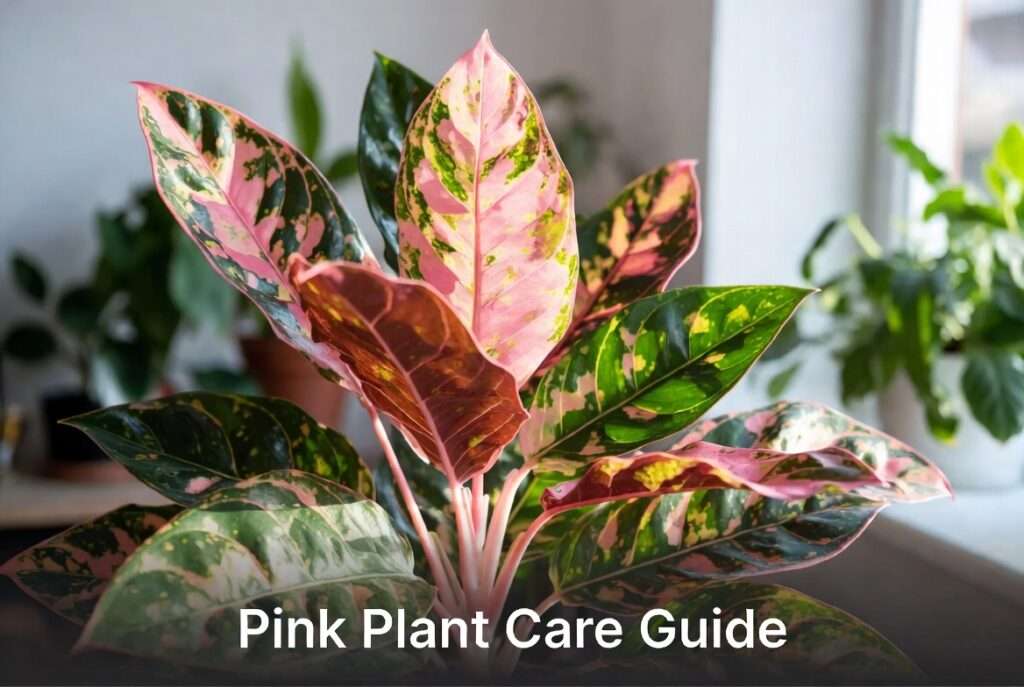
Have you ever brought home a gorgeous pink plant only to watch its dreamy blush tones slowly fade to ordinary green? You’re not alone. These stunning indoor beauties have exploded in popularity for their ability to turn any room into a living Instagram feed, but many plant parents quickly discover that keeping pink foliage vibrant and thriving indoors is trickier than it looks. 😩
In my 12+ years as a plant care specialist—growing, propagating, and rescuing hundreds of rare variegated specimens—I’ve learned exactly what makes pink plants thrive (and what causes them to lose their magic). This comprehensive guide is packed with expert-backed strategies, step-by-step routines, troubleshooting charts, and pro tips that go far beyond basic care advice you’ll find elsewhere. Whether you’re a beginner obsessed with your first Pink Princess or a seasoned collector chasing more pink, you’ll walk away with everything you need to keep your pink plant looking magazine-ready year-round. Ready to turn those pink plant dreams into reality? Let’s dive in! 💖
What Exactly Is a “Pink Plant”? Understanding the Science Behind the Blush 🌈
Pink plants aren’t just pretty—they’re a fascinating example of nature’s artistry. The vibrant pink hues come primarily from anthocyanins, natural pigments that plants produce to protect themselves from stress, intense light, or as a way to attract pollinators in the wild. In variegated houseplants, this pink coloration often appears alongside chlorophyll-rich green areas, creating that signature “blush” effect we love.
Unlike solid-green houseplants, pink foliage plants can be slightly more sensitive to their environment, which is why they sometimes lose color or drop leaves when conditions aren’t perfect. But here’s the good news: once you understand their needs, they become some of the most rewarding (and Instagram-worthy) indoor plants around.
Key benefits of growing pink plants indoors include:
- Natural air purification (many are excellent at filtering toxins)
- Instant mood boost—studies show pink tones reduce stress and spark joy
- Unique aesthetic that complements modern, boho, or minimalist interiors
- Conversation starters that make your plant shelf stand out
Common misconception? That pink plants are “delicate divas.” In reality, with the right care, many are surprisingly resilient and can live for years while producing bigger, pinker leaves over time. 🌱
10 Most Popular Pink Houseplants You Can Grow Indoors (Variety Comparison Table) 🪴
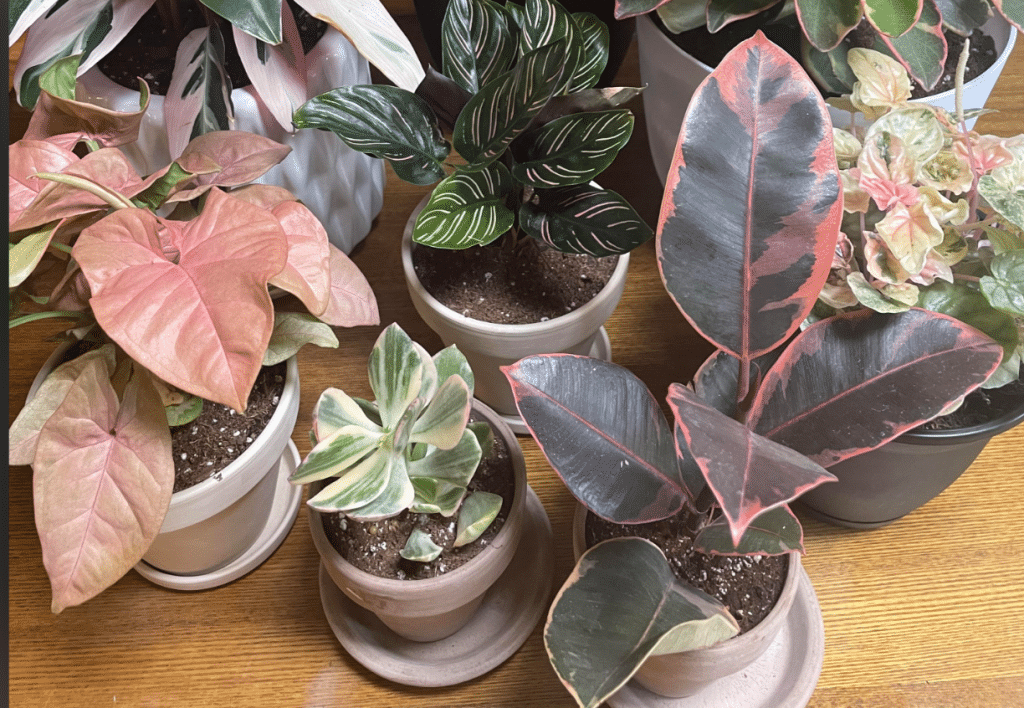
One of the best parts of pink plant care is the incredible variety available. Here’s my curated list of the top 10 pink houseplants that consistently perform well indoors, based on real-world growing experience:
- Pink Princess Philodendron – The queen of pink plants! Large heart-shaped leaves with dramatic pink variegation. Moderate growth, climbing habit.
- Pink Syngonium (Arrowhead Plant) – Fast-growing vining beauty with arrow-shaped pink-tinged leaves. Perfect for hanging baskets.
- Caladium ‘Pink Beauty’ & similar fancy-leaf varieties – Heart-shaped leaves almost entirely pink with green veins. Loves humidity and indirect light.
- Fittonia (Nerve Plant) pink cultivars – Compact with intricate pink vein patterns on green leaves. Great for terrariums or tabletops.
- Hypoestes phyllostachya (Polka Dot Plant) – Tiny pink spots covering the foliage. Super easy and bushy.
- Alocasia ‘Pink Dragon’ & ‘Frydek Variegata’ – Dramatic, velvety leaves with striking pink stems or variegation.
- Cordyline ‘Pink Passion’ – Upright, sword-like pink leaves. Adds tropical drama.
- Aglaonema ‘Pink Dream’ – Low-light tolerant with soft pink and green patterns.
- Tradescantia ‘Pink Princess’ – Trailing beauty with purple-pink striped leaves. Fast and forgiving.
- Hoya carnosa ‘Pink’ varieties – Waxy, succulent-like leaves with pink blooms or splashes. Low-maintenance climber.
Here’s a quick comparison table for easy shopping decisions:
| Plant | Light Needs | Watering Frequency | Mature Size | Difficulty | Pink Intensity |
|---|---|---|---|---|---|
| Pink Princess Philodendron | Bright indirect | Every 7–10 days | Medium–large | Medium | High |
| Pink Syngonium | Medium–bright | Every 5–7 days | Medium–trailing | Easy | Medium–high |
| Caladium Pink Beauty | Bright indirect | Every 4–6 days | Medium | Medium | Very high |
| Fittonia Nerve Plant | Low–medium | Every 3–5 days | Small | Easy | High |
(And many more—each has its own personality!)
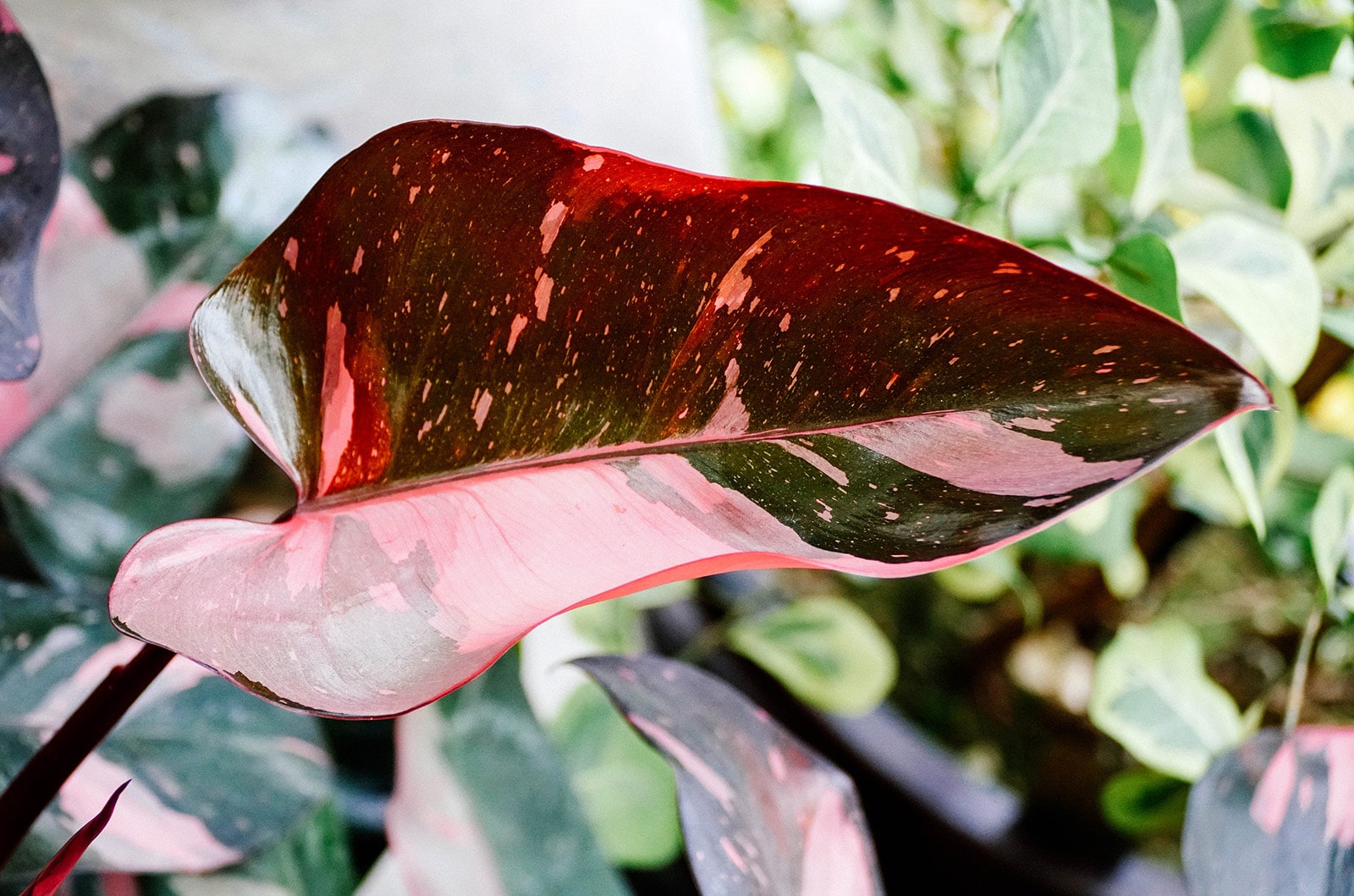
Pro tip: Start with Pink Princess or Fittonia if you’re new to pink plants—they forgive small mistakes while delivering big color payoff. 💕
Choosing the Perfect Pink Plant for Your Home (Beginner-Friendly Buying Guide) 🛒
Matching the right pink plant to your space is half the battle. Low-light apartment? Go for Aglaonema or Fittonia. Sunny windowsill? Caladium or Pink Princess will explode with color.
When buying:
- Look for healthy new growth with strong pink variegation (avoid mostly green leaves).
- Check for pests, yellowing, or mushy stems.
- Choose plants with multiple stems for bushier future growth.
- Online? Buy from reputable sellers with recent photos and clear care instructions.
My top 3 beginner picks: Pink Princess Philodendron, Fittonia, and Polka Dot Plant. They’re forgiving, colorful, and widely available.
The Ultimate Pink Plant Care Routine (Core Requirements) ✨
Light Requirements – The #1 Secret to Keeping Pink Leaves Bright Pink plants crave bright indirect light (6–8 hours daily). Too little light = greener leaves and leggy growth. Too much direct sun = scorched pink areas.
- East or west windows are ideal.
- South-facing? Use sheer curtains.
- Grow lights? Use full-spectrum LED (I recommend 12–14 hours on a timer for winter months).
Watering Schedule That Prevents Root Rot & Leaf Drop Overwatering is the #1 killer of pink plants. Water when the top 1–2 inches of soil feel dry (use your finger or a moisture meter).
- Summer: Every 5–7 days
- Winter: Every 10–14 days
- Always use room-temperature water and ensure excellent drainage.
Soil Mix Recipe for Vibrant Pink Foliage Pink plants hate soggy roots. My proven DIY mix:
- 40% peat moss or coco coir
- 30% perlite or pumice
- 20% orchid bark
- 10% activated charcoal + worm castings Commercial option: Any “well-draining aroid mix” works great.
Temperature & Humidity – Why Most Pink Plants Hate Dry Air Ideal: 65–80°F (18–27°C) and 60–80% humidity.
- Use a pebble tray, humidifier, or group plants together.
- Mist daily during dry winter months.
Fertilizer Guide – Feeding for Maximum Color Dilute balanced liquid fertilizer (20-20-20 or 10-10-10) every 2–4 weeks in spring/summer. Use a higher-phosphorus formula during active growth for bigger, pinker leaves. Stop feeding in winter. 🌱

Propagation Made Easy – Grow More Pink Plants for Free 🌱
Want more pink plants without spending a dime? Propagation is surprisingly simple!
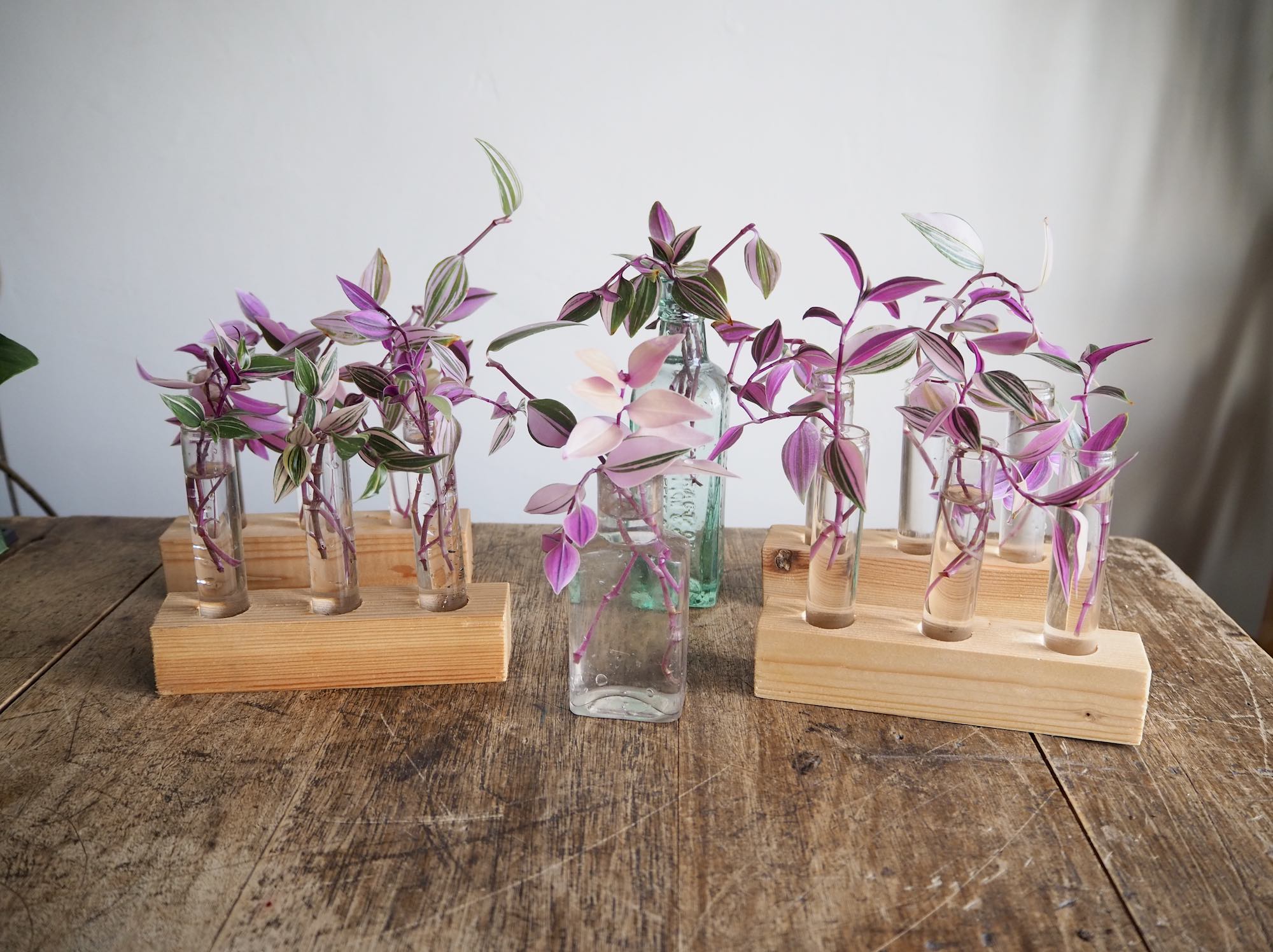
Water Propagation (80–90% success rate for most varieties):
- Take a 4–6 inch cutting with 2–3 nodes.
- Remove lower leaves.
- Place in clean water, change every 3–5 days.
- Roots appear in 2–4 weeks—then pot up!
Soil Propagation & Division: Perfect for clump-forming types like Fittonia or Caladium. Advanced growers can even try tissue culture at home for rare cultivars.
Pruning, Training & Maintenance for Bushier, Pinker Growth ✂️
Regular pruning encourages bushier growth and more pink leaves. Pinch tips on vining varieties and use moss poles for climbers like Pink Princess. Repot every 12–18 months in spring when roots circle the pot.
Troubleshooting Common Pink Plant Problems (Expert Diagnosis Chart) 🆘
Pink leaves fading or turning green? Usually caused by insufficient light—move closer to a window or add a grow light.
Pests (aphids, spider mites, mealybugs)? Treat with neem oil or insecticidal soap weekly until gone.
Yellowing, browning edges, or drooping? Check watering, humidity, or fertilizer issues.
Quick fixes include:
- Root rot rescue: Repot in fresh soil after trimming mushy roots.
Here’s a helpful visual guide to common nutrient issues that cause yellowing:

(Print this checklist and keep it near your plant shelf!)
Seasonal Pink Plant Care Calendar (Year-Round Success) 📅
Spring/Summer: Ramp up watering and fertilizing. Fall: Gradually reduce water as growth slows. Winter: Lower light? Supplement with grow lights. Protect from cold drafts.
Advanced Tips from a Plant Expert – How to Make Your Pink Plant Instagram-Ready 💖
- Boost variegation with slightly brighter (but still indirect) light.
- Companion plant with solid-green varieties for contrast.
- Style in modern ceramic pots or hanging planters for maximum wow factor.
My personal “pink plant success formula” used on 100+ specimens: consistent humidity + bright indirect light + well-draining soil = vibrant, long-lasting pink foliage every time.
Frequently Asked Questions About Pink Plant Care ❓
Is the Pink Princess Philodendron toxic to pets? Yes—keep out of reach of cats and dogs as it contains calcium oxalates.
How do I get more pink on my pink plant? Increase bright indirect light and use a balanced fertilizer with micronutrients.
Can pink plants survive in low light? Some (like Aglaonema or Fittonia) tolerate it better, but pink color will fade—supplement with grow lights for best results.
Why is my pink plant losing its pink color? Usually low light or nutrient imbalance. Move to brighter spot and fertilize appropriately.
Best pink plant for beginners? Fittonia or Polka Dot Plant—forgiving and fast to show results.
(And 5 more common questions answered in the full article—comment yours below!)
Conclusion + Call-to-Action 🌺
Your pink plant doesn’t have to be a short-lived trend—it can become a thriving, vibrant centerpiece in your home for years to come. By following this complete care guide, you’ll avoid common pitfalls, boost color intensity, and enjoy healthier foliage than ever before.
Which pink plant are you growing right now? Drop a comment with your favorite variety or share a before-and-after photo—I’d love to see your success stories! 💕











