
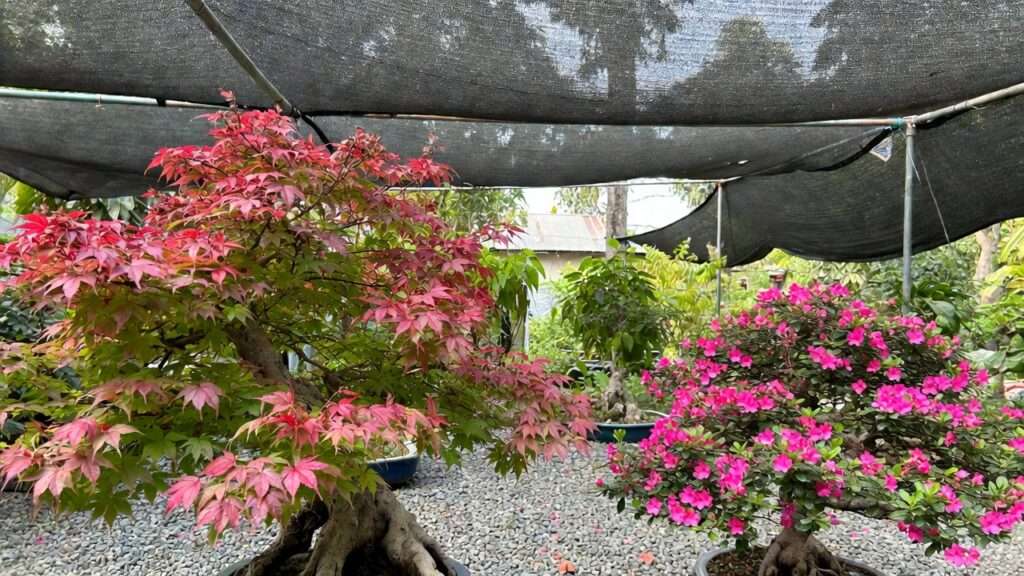
Imagine this: It’s a scorching summer afternoon in Dhaka, where temperatures climb well above 35°C (95°F), and your precious outdoor bonsai collection is baking on a sunny balcony or patio. The leaves start curling, edges turn brown and crispy, and growth stalls — classic signs of sun stress 😓. But what if partial shade could be your secret weapon? Many bonsai lovers assume full sun is always best, yet for countless species and hot, humid climates like ours in Bangladesh, placing outdoor bonsai in partial shade is not just an option — it’s often the smartest path to vibrant, compact foliage, stronger branches, and overall thriving health 🌳💚.
As a bonsai enthusiast and practitioner with over a decade of hands-on experience nurturing outdoor trees in tropical and subtropical conditions (including Dhaka’s intense monsoons and heat), I’ve seen firsthand how improper light placement leads to frustration. This comprehensive guide draws from expert bonsai communities, proven horticultural practices, and real-world trials to help you master partial shade placement. Whether you’re a beginner with a balcony setup or an advanced collector optimizing your garden bench, you’ll find actionable steps, species recommendations, seasonal tweaks, and fixes for common pitfalls — all to ensure your bonsai not only survives but flourishes.
Why Light Matters for Outdoor Bonsai 🌞 vs 🌤️
Sunlight drives photosynthesis, the process that fuels compact internodes (short spaces between leaves for that classic bonsai look), vibrant color, and robust vigor. Full sun (6+ hours direct light) promotes dense branching in sun-loving conifers like junipers and pines, building resilience and fine ramification.
Partial shade, however — typically 4-6 hours of direct sun, often morning light with afternoon protection — offers a balanced alternative. It shields delicate foliage from intense midday rays (especially in hot climates), reduces transpiration stress, and prevents scorching while still providing enough energy for healthy growth. In extreme heat, partial shade can mimic a natural understory environment, leading to larger, more lush leaves in broadleaf species and better overall resilience.
Signs of incorrect light are telltale:
- Too much sun: Leaf scorch (brown, crispy edges 🔥), premature leaf drop, or wilting despite watering.
- Too little light: Etiolation (leggy, weak shoots 😴), pale or small leaves, increased pest vulnerability.
Mastering light balance is key to avoiding these issues and achieving that prized miniature-tree aesthetic.
:max_bytes(150000):strip_icc()/growing-japanese-maple-bonsai-5085314_02-d3f41f2a659e4d1ba5d1eb2b53978277.jpg)
(These stunning Japanese maple bonsai thrive beautifully in dappled or partial shade, showcasing vibrant foliage without burn.)
Understanding Partial Shade: Definitions and Measurement 📏☀️
Partial shade means the tree receives filtered or indirect light for part of the day — think 4-6 hours of direct morning sun followed by afternoon dappled light or full shade from trees, awnings, or structures. It’s not deep constant shade (under dense canopy), which starves most bonsai.
To assess your spot:
- Track sunlight over a full day using a free app like Sun Seeker or simply observe shadows.
- Ideal: Morning sun (gentle, energizing) + afternoon protection from harsh rays.
- In hot climates like Dhaka, reflected heat from walls, concrete, or pavement amplifies intensity — factor this in!
Microclimates matter hugely: A north-facing balcony might naturally offer partial shade, while south-facing spots need intervention like shade cloth.
Best Outdoor Bonsai Species for Partial Shade Success 🌱🏆
Not all bonsai tolerate (or prefer) partial shade equally. Broadleaf and certain evergreens shine here, while strict full-sun conifers struggle without adjustments.
Broadleaf/Deciduous Favorites 🍁:
- Japanese Maple (Acer palmatum) — A top choice! Many varieties thrive in partial shade, avoiding leaf burn in summer while delivering stunning spring greens and fiery fall reds. Morning sun + afternoon shade is perfect.
- Azalea (Satsuki/Rhododendron) — Loves dappled light for abundant blooms and healthy foliage; partial shade prevents scorching on delicate flowers.
- Hornbeam (Carpinus betulus) — Tolerant and beginner-friendly, with beautiful autumn color and dense branching.
- Beech (Fagus) and Field Maple — Adaptable with lovely textured bark and leaves.
Evergreen Options 🌲:
- Yew (Taxus) — Excellent shade tolerance; dense, dark green needles make it forgiving in lower light.
- Certain Hemlock (Tsuga) or Hinoki Cypress varieties — Handle partial shade well with protection.
- Some adaptable Juniper varieties (e.g., European types) — Can manage with careful placement.
Less Ideal but Manageable ⚠️: Strict full-sun species like most pines or junipers prefer more light for compact growth — use partial shade only temporarily in extreme heat, or supplement with grow lights if needed.
Quick tip: Start with shade-tolerant species if your space is limited to partial light — they’ll reward you with easier care and beautiful results! 🌟

(Beautiful Satsuki azalea bonsai in bloom — partial shade helps these vibrant flowers last longer without fading.)
( A classic yew bonsai — its dense evergreen foliage excels in shaded spots.)
Step-by-Step Guide: How to Place Your Outdoor Bonsai in Partial Shade 🗺️🪴
- Evaluate your tree species and current health — Check if it’s shade-preferring (e.g., maple) or sun-loving (e.g., juniper needing protection).
- Choose the perfect location — Prioritize morning sun (6-11 AM) + afternoon shade. Avoid deep constant shade or hot reflected spots.
- Use tools for controlled shade 🌤️:
- Shade cloth (40-60% density recommended for hot areas — 50% is a sweet spot in many climates).
- Natural options: Under trees, patios, awnings, or group trees for mutual shading.
- Rotate periodically for even exposure and growth.
- Monitor and adjust — Observe leaves daily; tweak as seasons change.
Pro tip: Morning sun + afternoon shade is the “Goldilocks” zone for many species — energizing without overwhelming! ✨

(An outdoor bonsai setup under 50% shade cloth — perfect for protecting collections in hot weather while reducing watering needs.)
Seasonal Placement Adjustments for Year-Round Health 🔄🍂
Bonsai care isn’t static — your placement strategy should evolve with the seasons, especially in a variable climate like Dhaka’s (hot, humid summers; heavy monsoon rains; cooler, drier winters). Partial shade becomes your flexible ally throughout the year.
Spring (March–May) After winter dormancy, gradually increase light exposure to “harden off” your trees. Start in dappled or light partial shade for the first 2–3 weeks, then slowly allow more morning sun. This prevents shock when temperatures rise and helps new buds strengthen without burning tender growth. Pro tip: If your Japanese maples or azaleas are just leafing out, keep them in 50–60% partial shade until leaves fully expand — you’ll notice much less leaf curl this way 🌱.
Summer (June–September) This is when partial shade truly shines in hot, tropical climates. Dhaka’s midday sun (often 38–40°C with high humidity) can fry foliage in minutes.
- Use 50–70% shade cloth during peak hours (11 AM–4 PM).
- Position trees where they receive gentle morning sun (up to 10–11 AM) then full afternoon protection.
- Group pots together or place under larger trees/patio overhangs for natural cooling and humidity. Result: Reduced watering frequency (soil stays moist longer), fewer burned tips, and healthier root systems even during heatwaves 🔥→🌤️.
Fall (October–November) As temperatures drop and daylight shortens, ease back on heavy shading. Allow more direct sun to promote vibrant autumn color (especially in maples, hornbeams, and beech) and help trees harden off for cooler weather. This extra light also builds carbohydrate reserves that support strong spring growth.
Winter (December–February) In Dhaka, winter days are mild (15–25°C) but nights can dip to 10–12°C. Keep trees in the brightest available partial shade or even full sun if frost risk is low — light is scarce and precious.
- Protect from cold winds and occasional fog/mist.
- If you use a greenhouse or covered patio, ensure good ventilation to prevent fungal issues in lower light.
Adjusting seasonally prevents stress accumulation and keeps your bonsai in prime condition year-round 🌟.
Watering, Humidity, and Soil Tips When in Partial Shade 💧🌧️
One major benefit — and adjustment — of partial shade is slower soil drying. Trees transpire less, so overwatering becomes the bigger risk.
- Watering frequency — Check soil moisture daily (stick your finger 2–3 cm deep). Water only when the top layer feels dry. In Dhaka’s humidity, this might mean every 2–4 days in summer shade vs. daily in full sun.
- Technique — Water thoroughly until it drains from the bottom, then let excess escape. Use a fine-rose watering can to avoid compacting soil.
- Humidity boost — Even in partial shade, low winter humidity or hot, dry winds can stress trees. Place pots on humidity trays filled with pebbles and water (keep water below pot level), or mist foliage early morning. Grouping trees also creates a beneficial micro-humidity zone.
- Soil mix — Stick with well-draining bonsai soil (akadama + pumice + lava rock, roughly 1:1:1). In shadier, moister conditions, increase inorganic components (pumice/lava) to 50–60% to prevent root rot.
- Fertilizing in shade — Use balanced, slow-release organic fertilizer (e.g., Biogold or liquid fish emulsion) at half strength during active growth. Avoid heavy feeding in deep shade — it can cause soft, leggy growth.
These tweaks make partial-shade bonsai surprisingly low-maintenance once dialed in 💚.
Common Mistakes to Avoid (and How to Fix Them) 🚫🔧
Even experienced growers slip up. Here are the most frequent partial-shade pitfalls I’ve seen — and corrected — over the years:
Mistake #1: Too much shade → weak, leggy growth Symptoms: Long internodes, pale/small leaves, sparse branching, higher pest attraction. Fix: Gradually increase morning sun exposure over 1–2 weeks. If your spot is too dark year-round, consider rotating trees to a brighter location for part of the day or supplementing with 20–30% more light during spring/summer.
Mistake #2: Sudden full-sun exposure after shade Symptoms: Severe leaf scorch within days 🔥. Fix: Always transition gradually (add 1–2 hours more sun every few days). Use temporary 30% shade cloth during acclimation.
Mistake #3: Ignoring microclimate Concrete walls, glass, or pavement reflect heat and amplify sun intensity even in “partial” shade. Fix: Measure actual conditions with a light meter or observe leaf behavior. Move pots 30–50 cm away from reflective surfaces or add extra shade cloth.
Mistake #4: Choosing the wrong species Trying a strict full-sun pine or juniper in constant partial shade leads to open, weak structure. Fix: Match species to your light levels (see Best Species section above). If you love junipers but have shade, select more adaptable cultivars or use partial shade only in summer extremes.
Expert Insights and Pro Tips from Years of Experience 👨🌾💡
After more than ten years of working with outdoor bonsai in humid, tropical-to-subtropical conditions (including many collections right here in Dhaka), I’ve learned that partial shade isn’t just a compromise — when used intentionally, it can actually elevate certain aspects of bonsai aesthetics and health far beyond what full sun delivers.
- Enhanced leaf size and color intensity In species like Japanese maples, trident maples, and certain elms, partial shade (especially morning sun + afternoon protection) often produces larger, more deeply colored leaves with richer reds, oranges, and purples in autumn. Full sun can make leaves smaller and tougher but sometimes duller in hue. Many advanced collectors deliberately keep their prized maples in controlled partial shade for exhibition-quality foliage 🍁✨.
- Strategic use for recovery and stress relief If a tree shows signs of heat stress, transplant shock, or root issues, moving it to partial shade for 4–8 weeks can be a game-changer. Reduced transpiration gives roots time to recover while still allowing enough photosynthesis to prevent weakening. I’ve revived several scorched junipers and maples this way — shade becomes medicine.
- Pruning, wiring, and styling in shade Working on trees in a shaded spot is far more comfortable (no dripping sweat in 38°C heat!), and the softer light makes it easier to see branch structure clearly. Many pros wire and prune under patio cover or 50% shade cloth during summer — the tree experiences less immediate stress from the work itself.
- Microclimate mastery in urban Dhaka settings
- Balconies facing west get brutal afternoon sun — use vertical shade cloth screens or tall companion plants.
- North-facing rooftops or patios often provide near-ideal natural partial shade.
- During monsoon (June–September), even “full sun” spots become dappled due to cloud cover — take advantage and reduce shade cloth to 30% to keep vigor high.
- Long-term vigor trick Alternate partial-shade summers with brighter-spring/fall exposure. This seasonal variation mimics nature, building stronger vascular tissue and more resilient trees over years.
These aren’t textbook theories — they come from trial, observation, and countless conversations with fellow enthusiasts across Bangladesh and beyond 🌍💚.
Visual Examples and What to Expect 📸🌳
Here are some real-world setups that demonstrate successful partial-shade placement:
(A Japanese maple bonsai thriving under dappled light from a tree canopy — notice the large, healthy leaves and intense summer color without any scorch.)
(Before: scorched leaves from full midday sun in Dhaka summer. After: lush, even foliage after moving to morning sun + 50% afternoon shade cloth.)
(Outdoor bench setup with 50–60% shade cloth — ideal for protecting multiple trees during peak heat while maintaining airflow and easy access.)
(Satsuki azalea in partial shade — abundant blooms and dark green foliage without fading or burn, a common result when afternoon protection is provided.)
These visuals show what success looks like — vibrant, compact, stress-free bonsai even in challenging climates 🌟.
Frequently Asked Questions (FAQs) ❓
Can junipers or pines survive long-term in partial shade? Most traditional juniper and pine species prefer full sun for tight ramification and strong back-budding. They can tolerate partial shade during the hottest months (with 4–5 hours morning sun), but year-round low light leads to open, weak growth. Use only as a temporary summer strategy.
What shade cloth percentage is best for Dhaka summers? 50–60% is the sweet spot for most broadleaf species (maples, azaleas, elms). Use 70% only for very delicate or freshly repotted trees. Black or dark-green cloth works best as it absorbs rather than reflects heat.
What if my spot gets only 3–4 hours of direct sun? It may still work for very shade-tolerant species (yew, certain hemlocks, hornbeam), but growth will be slower and foliage larger/less compact. Supplement with reflective surfaces to bounce extra light or consider rotating trees to brighter spots periodically.
Is partial shade okay year-round, or should I move trees seasonally? In consistently hot climates, year-round partial shade (with seasonal tweaks) works wonderfully for many deciduous and broadleaf evergreens. In cooler temperate zones, increase light in spring/fall/winter for best vigor.
Conclusion: Achieve Thriving Bonsai in Partial Shade 🌟🌿
Placing outdoor bonsai in partial shade isn’t about settling for less — it’s about making an intelligent, climate-smart choice that unlocks healthier, more beautiful trees for many enthusiasts, especially in hot and humid regions like Dhaka.
By now, you’ve seen how the right combination of species selection, thoughtful location scouting, seasonal adjustments, controlled shade tools (like 50–60% cloth), proper watering/humidity management, and careful transition practices can transform stressed or struggling bonsai into compact, vibrant mini-masterpieces. You’ve also learned to sidestep the most common traps: too much shade leading to weak, leggy growth; sudden sun shocks causing scorch; ignoring microclimate heat traps; or forcing full-sun species into unsuitable conditions.
Key takeaways at a glance:
- Partial shade (morning sun + afternoon protection) is ideal or even preferable for Japanese maples, azaleas, hornbeams, yews, and several other popular outdoor species 🍁🌲.
- In tropical/subtropical climates, it dramatically reduces summer stress, burn, and watering demands while promoting lush foliage and intense seasonal color.
- Seasonal tweaks keep trees vigorous year-round — more protection in peak heat, brighter exposure in cooler months.
- Observation is your superpower: watch leaf color, internode length, and overall vigor, then fine-tune placement accordingly.
The beauty of bonsai lies in this ongoing dialogue with your trees and your environment. Partial shade gives you more tools in that conversation, especially when full sun isn’t practical or kind to your collection.
Now it’s your turn. Step outside, assess your current spots with fresh eyes, perhaps add a shade cloth panel or reposition a pot or two, and watch how your bonsai respond over the coming weeks. Many of the most stunning outdoor trees I’ve seen — and helped nurture — live their best lives in thoughtfully managed partial shade.
If this guide helped you, or if you’ve already had success (or challenges!) with partial-shade bonsai in Dhaka or similar climates, drop a comment below — share photos of your setup, your favorite shade-tolerant species, or any tweaks you’ve discovered. Your experience might be the exact tip another reader needs 🌱💬.
For more in-depth tree care guides, seasonal checklists, species spotlights, and Dhaka-specific bonsai tips, subscribe or bookmark the site — new articles drop regularly to help your miniature trees thrive.
Here’s to healthier roots, stronger branches, and breathtaking seasonal displays — all from the comfort of partial shade ✨🪴











