
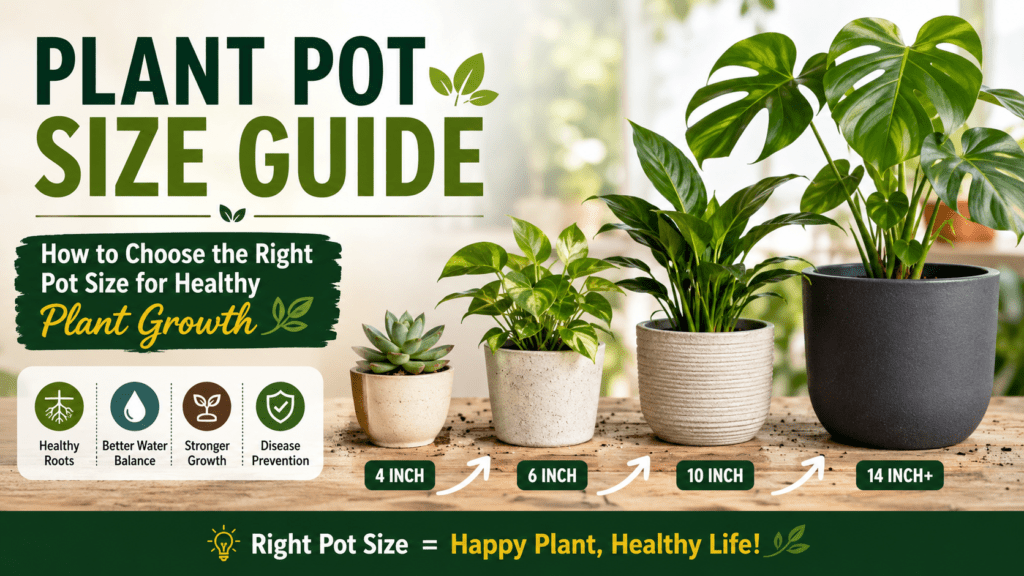
Have you ever bought a beautiful plant, cared for it diligently, watered it on schedule, and still watched it struggle? 😟 The hidden problem might not be sunlight or fertilizer — it could be the pot size.
Choosing the correct container is one of the most overlooked aspects of plant care, yet it directly affects root health, watering frequency, nutrient absorption, and overall growth. This plant pot size guide will help you understand exactly how to choose the right pot size for every type of plant, whether you’re growing indoor houseplants, succulents, herbs, vegetables, or patio trees. 🌱
The truth is simple: a pot that’s too small can choke roots and stunt growth, while a pot that’s too large can trap excess moisture and lead to deadly root rot. Finding the “just right” size is essential for thriving, healthy plants.
In this complete guide, you’ll learn:
- How pot size impacts plant health 🌿
- The best pot sizes for popular plants 🪴
- When and how to repot correctly 🔄
- Common mistakes gardeners make ⚠️
- Expert container gardening tips for long-term success 🌸
Whether you’re a beginner plant parent or an experienced gardener, this guide will help you make smarter potting decisions and grow healthier plants with confidence. 💚
🪴 Why Plant Pot Size Matters More Than Most Gardeners Realize
Many people choose pots based purely on appearance. While aesthetics matter, the size of the pot plays a much bigger role in plant health than most realize.
The container acts as your plant’s entire environment. It controls:
- Root expansion
- Soil moisture levels
- Oxygen availability
- Nutrient retention
- Drainage efficiency
A properly sized pot creates the ideal balance between moisture, airflow, and root space.
🌱 How Pot Size Affects Root Health
Roots need room to spread and absorb nutrients efficiently. When a pot becomes too small, roots begin circling around the inside of the container, creating what gardeners call a root-bound plant.
Signs of a Root-Bound Plant:
- Roots growing through drainage holes
- Soil drying out extremely fast
- Slow or stunted growth
- Yellowing leaves
- Wilting despite watering
On the other hand, using a pot that is excessively large can also cause problems. Too much unused soil retains water longer than the roots can absorb it, creating soggy conditions that encourage fungal disease and root rot.
Healthy roots are the foundation of healthy plants. 🪴
💧 The Connection Between Pot Size and Watering
Pot size dramatically affects how often you water your plants.
Small Pots
- Dry out quickly
- Require more frequent watering
- Warm up faster in sunlight
Large Pots
- Retain moisture longer
- Can stay wet for extended periods
- Increase overwatering risk
For example, a snake plant in an oversized container may stay damp for too long, increasing the chance of root rot. Meanwhile, herbs planted in tiny pots may dry out within a single hot afternoon.
Balancing moisture retention is one of the main reasons choosing the correct plant container size matters.
🌳 Impact on Plant Growth and Stability
Larger plants need adequate support and root anchoring.
Tall indoor plants like:
- Monstera
- Rubber plants
- Fiddle leaf figs
…can become top-heavy in undersized pots and tip over easily.
Meanwhile, outdoor container plants exposed to wind need stable, weighted containers for protection.
Choosing the right size pot improves:
- Structural stability
- Growth rate
- Foliage production
- Flowering potential
📏 Understanding Standard Plant Pot Sizes

Understanding nursery sizing makes plant shopping much easier.
Most plant pots are measured by:
- Diameter (top width)
- Depth
- Gallon capacity
🪴 Common Pot Size Measurements Explained
Nursery Pot Sizes
Garden centers typically label pots in inches:
- 2-inch pots
- 4-inch pots
- 6-inch pots
- 10-inch pots
The measurement refers to the diameter across the top.
Gallon Sizes
Outdoor plants and shrubs are often sold in gallons:
- 1-gallon
- 3-gallon
- 5-gallon
- 15-gallon containers
These indicate approximate soil volume.
📊 Standard Pot Size Chart for Plants
| Plant Type | Recommended Pot Size | Repotting Frequency |
|---|---|---|
| Succulents 🌵 | 3–6 inches | Every 2–3 years |
| Small Houseplants 🪴 | 4–6 inches | Every 1–2 years |
| Medium Indoor Plants 🌿 | 8–12 inches | Every 2 years |
| Large Floor Plants 🌳 | 12–24 inches | Every 2–3 years |
| Herbs 🌱 | 6–10 inches | Annually |
| Tomatoes 🍅 | 12–18 inches | Seasonal |
| Patio Trees 🌳 | 20+ inches | Every 3–5 years |
This chart provides general guidance, but growth habits and root systems should also influence your decision.
🌼 How to Choose the Right Pot Size for Different Types of Plants
Not all plants have the same root structure. Some prefer tight root systems, while others require generous room to spread.
Understanding plant-specific needs is key to successful container gardening. 🌸
🏡 Best Pot Sizes for Indoor Houseplants
🌿 Pothos
- Prefer slightly snug pots
- Ideal size: 6–8 inches
- Repot every 1–2 years
🐍 Snake Plants
- Thrive when somewhat root-bound
- Use pots only 1–2 inches larger than the root ball
- Excellent drainage is essential
🍃 Monstera
- Fast-growing with large root systems
- Start with 10–12 inch pots
- Upgrade gradually as the plant matures
🤍 Peace Lilies
- Prefer moderate root confinement
- Repot when roots crowd the surface
🕷️ Spider Plants
- Often produce thick tuberous roots
- Need deeper containers over time
Indoor plant pots should always include drainage holes to prevent excess moisture buildup.
🌵 Best Pot Sizes for Succulents and Cacti
Succulents and cacti have unique watering needs.
They prefer:
- Shallow containers
- Fast-draining soil
- Minimal excess moisture
Ideal Pot Features:
- Terracotta material
- Drainage holes
- Pots only slightly larger than the root system
Avoid oversized containers, which can retain too much moisture and lead to rot.
Popular succulent pot sizes:
- Small succulents: 2–4 inch pots
- Medium succulents: 6-inch pots
- Large cacti: 8–12 inch pots
🍅 Pot Size Guide for Herbs and Vegetables
Container gardening is increasingly popular, but vegetables require more root space than many people expect.
🌱 Basil
- Minimum: 6-inch pot
- Better growth in 8-inch containers
🌿 Mint
- Wide shallow pots work best
- Helps control aggressive spreading
🍅 Tomatoes
- Need large containers
- Minimum: 12–18 inches wide and deep
🌶️ Peppers
- Prefer 10–14 inch containers
- Consistent moisture is critical
🥬 Lettuce
- Shallow roots
- 6-inch deep containers are usually sufficient
Larger pots help vegetable plants maintain stable moisture levels during hot weather.
🌳 Pot Sizes for Trees and Large Outdoor Plants
Outdoor potted plants need room for extensive root systems.
Dwarf Citrus Trees 🍋
- Start with 12–14 inch containers
- Mature trees may require 20+ inch pots
Patio Trees
- Deep containers improve stability
- Heavy materials reduce tipping
Shrubs and Flowering Plants 🌸
- Use wide containers to encourage root spread
When growing trees in containers long term, prioritize:
- Excellent drainage
- High-quality potting mix
- Seasonal root pruning if needed
🔄 When and How to Repot Plants Properly

Repotting is essential for long-term plant health, but timing matters.
Repot too early and you may stress the plant unnecessarily. Wait too long, and growth may suffer.
🚨 Signs Your Plant Needs a Bigger Pot
Watch for these common indicators:
Roots Growing Through Drainage Holes
This is one of the clearest signs of crowding.
Soil Dries Out Extremely Fast
Root-bound plants absorb water rapidly.
Stunted Growth
If your plant stops growing during the active season, root restriction could be the cause.
Wilting Despite Watering
Crowded roots may struggle to absorb moisture effectively.
Cracked or Distorted Pots
Some aggressive roots can literally crack plastic containers.
📏 How Much Bigger Should the New Pot Be?
One of the biggest mistakes gardeners make is upsizing too aggressively.
General Rule:
- Small plants: increase by 1–2 inches
- Large plants: increase by 2–4 inches
For example:
- Move from a 4-inch pot to a 6-inch pot
- Not directly to a 12-inch container
Gradual increases help maintain healthy moisture balance.
🌸 Best Time of Year to Repot Plants
The ideal repotting season is usually:
- Early spring 🌱
- Beginning of the growing season
Plants recover faster when actively growing.
Avoid repotting:
- During dormancy
- During flowering
- Immediately after purchase unless necessary
Newly purchased plants often need time to acclimate before repotting.
🧤 Step-by-Step Repotting Process
1️⃣ Choose the Correct Pot
Select a container slightly larger than the current root ball.
2️⃣ Add Fresh Potting Mix
Use high-quality soil appropriate for your plant type.
3️⃣ Remove the Plant Carefully
Loosen roots gently if compacted.
4️⃣ Position the Plant
Keep the crown at the same soil level as before.
5️⃣ Fill and Water
Add soil around roots and water thoroughly.
6️⃣ Monitor Recovery
Avoid strong direct sunlight for several days after repotting.
⚠️ Common Plant Pot Size Mistakes to Avoid
Even experienced gardeners occasionally make sizing mistakes. Understanding these common problems can save your plants from unnecessary stress. 🌿
🚫 Choosing Pots That Are Too Large
Bigger is not always better.
Oversized pots:
- Hold excess water
- Reduce soil oxygen
- Encourage fungal diseases
- Slow root establishment
Plants often grow best when container size increases gradually.
🚫 Using Pots Without Drainage Holes
Decorative containers without drainage are a major cause of root rot.
If using cachepots:
- Keep plants in nursery pots inside decorative containers
- Empty excess water regularly
Drainage is non-negotiable for healthy roots. 💧
🚫 Ignoring Plant Growth Habits
Different plants grow differently.
Fast-Growing Plants
Need more frequent repotting:
- Monsteras
- Pothos
- Philodendrons
Slow-Growing Plants
Can stay in the same pot longer:
- Snake plants
- ZZ plants
- Cacti
Understanding growth rate helps prevent unnecessary repotting stress.
🧱 Choosing the Best Pot Shape and Material

Pot size is important, but the shape and material of your container also affect plant health. Different plants thrive in different environments, and selecting the right pot can improve drainage, airflow, temperature regulation, and root growth. 🌿
🪴 Deep Pots vs Shallow Pots
Plants have different root systems, so pot depth matters just as much as width.
🌱 Plants That Prefer Deep Pots
Deep-rooted plants need extra vertical space to grow properly.
Examples include:
- Tomatoes 🍅
- Carrots 🥕
- Citrus trees 🍋
- Snake plants 🐍
- Peace lilies 🤍
Benefits of deep pots:
- Better root anchoring
- Improved moisture stability
- More room for nutrient absorption
🌸 Plants That Prefer Shallow Pots
Some plants spread roots horizontally rather than deeply.
Examples include:
- Succulents 🌵
- Lettuce 🥬
- Herbs 🌿
- Bonsai trees 🌳
Benefits of shallow pots:
- Faster drainage
- Better airflow
- Reduced root rot risk
Choosing the wrong depth can lead to poor growth even if the diameter is correct.
🏺 Plastic vs Terracotta vs Ceramic Pots
The material of your plant container affects moisture retention, temperature, and maintenance.
🟤 Terracotta Pots
Terracotta is one of the most popular choices for houseplants and succulents.
Advantages:
- Porous material improves airflow
- Helps soil dry faster
- Reduces overwatering risk
- Great for cacti and succulents 🌵
Drawbacks:
- Dries out quickly
- Heavy and breakable
- May crack in freezing temperatures
Best for:
- Succulents
- Herbs
- Drought-tolerant plants
⚪ Plastic Pots
Plastic containers are lightweight, affordable, and widely available.
Advantages:
- Retain moisture longer
- Lightweight and easy to move
- Budget-friendly
- Excellent for moisture-loving plants
Drawbacks:
- Less breathable
- Can overheat outdoors
- Less aesthetically pleasing
Best for:
- Tropical houseplants 🌿
- Ferns
- Peace lilies
🏺 Ceramic Pots
Ceramic containers combine beauty with durability.
Advantages:
- Decorative and stylish ✨
- Available in many colors and finishes
- Heavier for stability
Drawbacks:
- Often expensive
- May lack drainage holes
- Heavy to reposition
Best for:
- Indoor statement plants
- Decorative plant displays
💦 Self-Watering Pots: Are They Worth It?
Self-watering containers have become increasingly popular among busy plant owners.
Benefits:
- Reduce watering frequency
- Maintain consistent moisture
- Helpful for thirsty plants
Downsides:
- Can encourage overwatering if misused
- Not ideal for succulents or cacti
- Require occasional maintenance
Best suited for:
- Herbs 🌿
- Tropical plants
- Busy homeowners
While convenient, self-watering pots still require monitoring and proper soil selection.
💧 Pot Size and Drainage: The Secret to Healthy Roots

Many plant problems blamed on “bad luck” actually result from poor drainage.
Healthy roots need:
- Oxygen
- Moisture balance
- Air circulation
Without proper drainage, roots suffocate and decay.
🌊 Why Drainage Is Essential
Roots absorb oxygen from tiny air pockets in the soil. When excess water fills those spaces, roots cannot breathe properly.
Poor drainage can cause:
- Root rot
- Fungus gnats
- Mold growth
- Yellow leaves
- Wilting
Even drought-tolerant plants can die quickly in soggy soil.
🪨 Best Soil Types for Different Pot Sizes
Different plants need different potting mixes.
🌿 Indoor Houseplants
Use lightweight, well-draining potting soil.
🌵 Succulents and Cacti
Choose gritty cactus mix with sand or perlite.
🍅 Vegetables and Outdoor Containers
Use nutrient-rich container gardening soil.
Avoid using garden soil in pots because it compacts easily and restricts airflow.
🛑 The Truth About Drainage Layers
Many people place rocks at the bottom of pots believing it improves drainage.
In reality:
❌ Rocks often create perched water tables
❌ Moisture can remain trapped above the rock layer
Instead:
✅ Use pots with proper drainage holes
✅ Use well-draining soil mixes
✅ Choose appropriate container sizes
🪴 Using Saucers and Cachepots Correctly
Decorative containers can still be practical if used properly.
Best Practice:
- Keep plants in nursery pots
- Place nursery pots inside decorative cachepots
- Empty standing water after watering
This method combines aesthetics with healthy drainage. 🌸
🌿 Expert Tips for Healthy Container Gardening
Small adjustments can dramatically improve plant health and growth.
These expert-backed tips help plants thrive in containers year-round. 🌱
🔄 Rotate Pots for Even Growth
Indoor plants naturally lean toward sunlight.
Rotate containers:
- Every 1–2 weeks
- Quarter-turn at a time
This encourages balanced growth and fuller foliage.
💧 Monitor Soil Moisture Properly
Don’t water based only on schedules.
Instead:
- Check soil moisture with your finger
- Observe leaf condition
- Monitor pot weight
Overwatering remains the #1 cause of houseplant death.
🌿 Fertilize According to Pot Size
Container plants rely entirely on you for nutrients.
Smaller pots:
- Lose nutrients faster
- Need more frequent feeding
Larger pots:
- Retain nutrients longer
- Require balanced fertilization
Use diluted fertilizer during active growth seasons.
🧼 Clean and Sanitize Old Pots Before Reuse
Reusing containers is eco-friendly 🌎 — but dirty pots can spread disease.
Before replanting:
- Remove old soil
- Wash thoroughly
- Disinfect with diluted bleach solution
- Rinse and dry completely
This prevents fungal and bacterial issues.
☀️ Match Pot Color to Climate Conditions
Pot color affects soil temperature more than many gardeners realize.
Dark Pots
- Absorb heat quickly
- Warm soil faster
- Ideal for cooler climates
Light-Colored Pots
- Reflect sunlight
- Keep roots cooler
- Better for hot regions
This can significantly impact root health during summer.
📊 Complete Plant Pot Size Guide Chart by Plant Type

Here’s a practical reference chart for choosing the correct pot size for popular plants. 🌿
| Plant Type | Ideal Pot Size | Pot Depth | Repotting Frequency |
|---|---|---|---|
| Pothos 🌿 | 6–8 inches | Medium | Every 1–2 years |
| Snake Plant 🐍 | 6–10 inches | Deep | Every 2–3 years |
| Monstera 🍃 | 10–14 inches | Deep | Every 2 years |
| Succulents 🌵 | 3–6 inches | Shallow | Every 2–3 years |
| Basil 🌱 | 6–8 inches | Medium | Annually |
| Mint 🌿 | 8–10 inches | Shallow/Wide | Annually |
| Tomatoes 🍅 | 12–18 inches | Deep | Seasonal |
| Peppers 🌶️ | 10–14 inches | Medium | Seasonal |
| Lettuce 🥬 | 6–8 inches | Shallow | Seasonal |
| Dwarf Citrus 🍋 | 14–24 inches | Deep | Every 3–5 years |
| Spider Plant 🕷️ | 6–8 inches | Medium | Every 1–2 years |
| Peace Lily 🤍 | 8–10 inches | Medium | Every 1–2 years |
This chart provides general guidelines, but always consider:
- Root system size
- Growth speed
- Watering needs
- Plant maturity
❓ Frequently Asked Questions About Plant Pot Sizes
🪴 What happens if a pot is too big for a plant?
Oversized pots retain excess moisture for too long, increasing the risk of root rot and fungal disease. Plants may also focus on root growth rather than foliage growth.
🌱 How do I know if my plant is root bound?
Common signs include:
- Roots circling inside the pot
- Roots growing through drainage holes
- Slow growth
- Soil drying rapidly
- Wilting despite watering
📏 Should I size up pots gradually?
Yes. Increasing pot size gradually helps maintain healthy moisture levels and prevents waterlogged soil.
🏺 Can plants stay in nursery pots permanently?
Some plants can remain in nursery pots temporarily, but long-term growth usually benefits from repotting into appropriately sized containers with fresh soil.
🌿 Do bigger pots make plants grow bigger?
Not always. While larger pots provide more root space, excessively large containers can harm growth due to moisture imbalance.
💧 How often should indoor plants be repotted?
Most indoor plants benefit from repotting every:
- 1–2 years for fast growers
- 2–3 years for slow growers
Always monitor root health and plant growth rather than following strict schedules.
🌸 Final Thoughts: Choosing the Right Pot Size for Thriving Plants

Choosing the right container size is one of the simplest yet most powerful ways to improve plant health. 🌿
The perfect pot:
✅ Supports healthy root growth
✅ Improves drainage
✅ Balances moisture levels
✅ Encourages stronger foliage and flowers
✅ Reduces stress and disease risk
Whether you’re growing a tiny succulent on a windowsill or a thriving patio citrus tree, understanding proper plant pot sizing can transform the way your plants grow.
Remember:
- Avoid oversized containers
- Prioritize drainage
- Match pot depth to root structure
- Repot gradually
- Monitor plant growth regularly
Healthy plants start below the soil surface — and the right pot gives roots the environment they need to thrive. 🌱💚
With this complete plant pot size guide, you now have the knowledge to confidently choose containers that support long-term plant success and beautiful growth year after year. 🪴✨











