
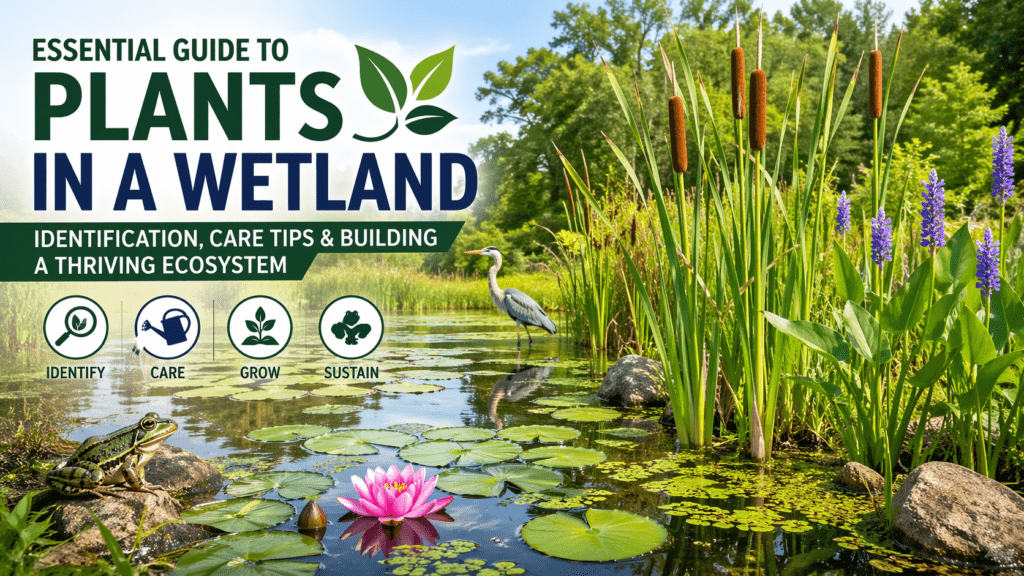
Wetlands are often overlooked, yet they are some of the most life-sustaining ecosystems on Earth 🌎. From filtering water naturally to providing habitat for countless species, these environments are powered by one essential element: plants in a wetland.
If you’ve ever struggled to identify wetland plants, wondered how they survive in waterlogged soil, or wanted to create your own thriving wetland garden, you’re in the right place 🌱
In this expert guide, you’ll learn:
- How to identify different types of wetland plants 🌿
- The science behind their unique adaptations 🧬
- Practical care tips for long-term success 💧
- Step-by-step guidance to build your own wetland ecosystem 🏡
Whether you’re a gardener, landowner, or nature enthusiast, this article will give you everything you need to confidently work with wetland plants—and do it right.
🌿 What Are Wetlands? Understanding the Environment
🌧️ Types of Wetlands
Wetlands are areas where water covers the soil or is present near the surface for at least part of the year. Each type supports different plant life:
- Marshes – Dominated by grasses and soft-stem plants 🌾
- Swamps – Characterized by woody plants like trees and shrubs 🌳
- Bogs – Acidic wetlands with mosses and low nutrients
- Fens – Less acidic, nutrient-rich wetlands
Understanding these categories helps you choose the right plants and care strategies.
💧 Unique Conditions That Shape Wetland Plants
Wetland plants grow in conditions most plants can’t tolerate:
- Waterlogged soil limits oxygen availability
- Fluctuating water levels (flooding and drying cycles)
- Nutrient imbalances depending on the wetland type
- Low oxygen (anaerobic) environments
These conditions force plants to develop specialized survival strategies.
🌎 Why Wetlands Are Ecologically Important
Wetlands aren’t just “wet areas”—they are ecological powerhouses:
- 🐸 Biodiversity hotspots supporting amphibians, birds, and insects
- 💧 Natural water filters that trap pollutants
- 🌊 Flood control systems that absorb excess rainwater
- 🌱 Carbon sinks that help combat climate change
By growing and maintaining wetland plants, you contribute directly to environmental health.
🌱 Common Plants in a Wetland (With Identification Tips)

Understanding plant categories is key to identification and care.
🌾 Emergent Plants (Rooted, Above Water)
These are the most recognizable wetland plants:
- Cattails – Tall, brown cylindrical flower spikes
- Reeds – Slender stems, often forming dense clusters
- Sedges – Grass-like with triangular stems
👉 Tip: Look for plants growing in shallow water with visible stems above the surface.
🌊 Submerged Plants (Underwater)
These grow entirely below the surface:
- Pondweeds – Thin leaves, often waving in currents
- Bladderwort – Carnivorous plant with tiny traps
👉 These plants help oxygenate water and support aquatic life 🐟
🍃 Floating Plants (On the Surface)
- Water lilies – Large, round leaves and beautiful flowers 🌸
- Duckweed – Tiny, fast-spreading green dots
👉 These reduce sunlight penetration, helping control algae.
🌿 Shrubs and Trees in Wetlands
- Willows – Flexible branches, thrive in moist soil
- Bald cypress – Known for “knees” that rise above water
- Mangroves – Found in coastal wetlands with salt tolerance 🌊
🔍 Quick Identification Checklist
When identifying plants in a wetland, check:
- Leaf shape and texture 🍃
- Stem structure
- Root visibility
- Water depth where it grows
🌼 How Wetland Plants Adapt to Harsh Conditions
Wetland plants are masters of survival.
🧬 Oxygen Transport Systems (Aerenchyma)
Many wetland plants develop aerenchyma tissue, which allows oxygen to move from leaves to roots—essential in oxygen-poor soils.
🌊 Flood Tolerance and Root Adaptations
- Shallow root systems
- Air-filled roots
- Ability to survive prolonged submersion
🌿 Salt Tolerance in Coastal Wetlands
Plants like mangroves filter salt through:
- Specialized roots
- Salt-excreting leaves
🍂 Seasonal Survival Strategies
- Dormancy during dry periods
- Rapid regrowth during flooding
🪴 How to Care for Plants in a Wetland (Practical Guide)

Proper care ensures long-term success 🌱
💦 Water Management Basics
- Maintain consistent water levels
- Avoid completely stagnant water
- Mimic natural fluctuations when possible
🌱 Soil and Nutrient Considerations
- Use organic-rich soil
- Avoid over-fertilizing (can cause algae blooms 🚫)
☀️ Light Requirements
Most wetland plants prefer:
- Full sun ☀️
- Some tolerate partial shade
✂️ Pruning and Maintenance
- Remove dead or decaying plant matter
- Control aggressive growers like cattails
⚠️ Common Mistakes to Avoid
- Overcrowding plants
- Introducing invasive species
- Ignoring water quality
🏡 How to Build Your Own Wetland Garden or Pond

Creating a wetland garden is easier than you think—and incredibly rewarding 🌿
📍 Choosing the Right Location
- Low-lying areas where water collects
- Spots with natural drainage
- Access to sunlight
🛠️ Step-by-Step Wetland Setup
- Prepare the site (dig shallow basin)
- Add a liner if needed
- Layer soil and gravel
- Fill with water
- Introduce plants gradually 🌱
🌱 Best Beginner-Friendly Wetland Plants
- Cattails
- Water lilies
- Pickerelweed
- Marsh marigold
🧩 Designing for Biodiversity
Encourage wildlife by adding:
- विविध plant layers
- Shallow and deep zones
- Natural shelter areas 🐸🐦
🌍 Benefits of Growing Plants in a Wetland
- 💧 Cleaner water
- 🐝 Increased biodiversity
- 🌱 Erosion control
- 🌸 Beautiful, natural landscape
- 🌎 Climate resilience
⚠️ Challenges and Solutions in Wetland Plant Care
🐛 Pest and Disease Issues
- Use natural predators
- Avoid chemical pesticides
🌿 Managing Invasive Species
- Regular monitoring
- Immediate removal
🌊 Water Imbalance Problems
- Adjust inflow/outflow
- Prevent drought or flooding extremes
🛠️ Practical Solutions
- Routine maintenance schedule
- Seasonal observation
🧠 Expert Tips for Thriving Wetland Ecosystems
- Choose native plants 🌾
- Mimic natural ecosystems
- Monitor seasonal changes
- Practice sustainable care
❓ Frequently Asked Questions (FAQs)
❓ What are the easiest plants in a wetland for beginners?
Cattails, water lilies, and marsh marigolds are low-maintenance and beginner-friendly.
❓ Can I grow wetland plants in containers?
Yes! Use water-tight containers or mini ponds.
❓ How do I prevent mosquitoes?
- Add fish 🐟
- Keep water moving
- Avoid stagnant conditions
❓ Are wetland plants low maintenance?
Generally yes, once established.
❓ What is the difference between aquatic and wetland plants?
- Aquatic plants grow fully in water
- Wetland plants grow in saturated soil or shallow water
📌 Final Thoughts: Create Your Own Wetland Paradise 🌿
Wetlands are not just ecosystems—they’re living, breathing environments that you can recreate in your own space. By understanding and properly caring for plants in a wetland, you’re not only enhancing your landscape but also contributing to a healthier planet 🌎
Start small, stay consistent, and let nature guide you 🌱











