
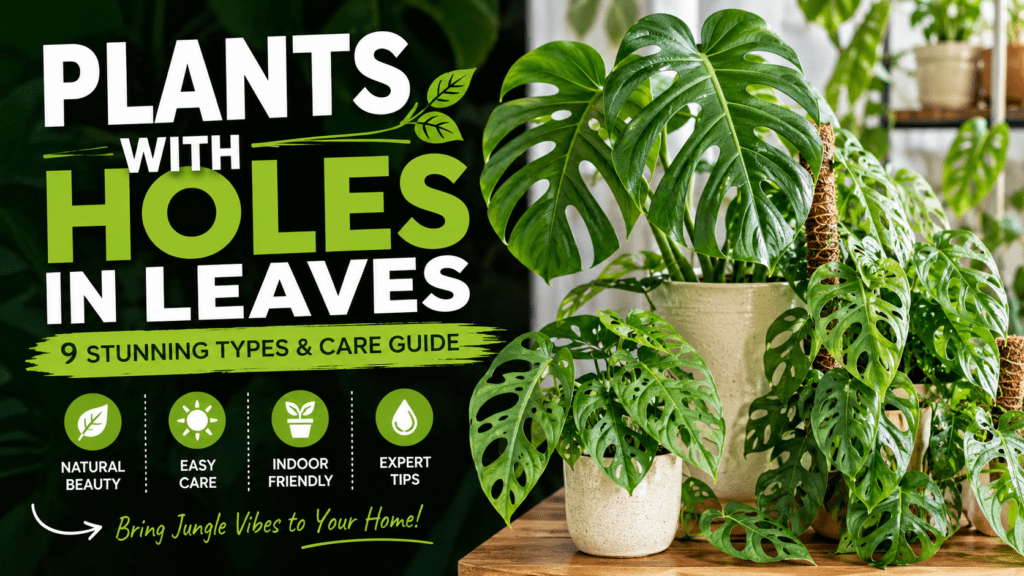
One glance at a lush Monstera or a trailing Swiss cheese vine is enough to understand why plants with holes in leaves have become some of the most desired houseplants in the world. 🌿 Their dramatic split foliage instantly transforms ordinary rooms into tropical sanctuaries, making them favorites among interior designers, plant collectors, and beginner plant parents alike.
But those beautiful holes and splits are more than just decoration.
In nature, these unique leaf patterns — known as fenestrations — help tropical plants survive heavy rain, strong winds, and low-light jungle conditions. Indoors, they create a bold architectural look while adding texture, movement, and vibrant greenery to your space. ✨
The problem is that many people buy fenestrated plants without understanding how to care for them properly. Some wonder why their leaves never split. Others mistake natural holes for pest damage or disease.
This expert guide will walk you through:
- 🌿 The science behind split-leaf plants
- 🪴 The best plants with holes in leaves for indoor growing
- ☀️ Proven care techniques for bigger fenestrations
- 🚫 Common mistakes to avoid
- 🏡 Styling ideas to create a stunning indoor jungle
Whether you’re a beginner or an experienced collector, this guide will help you grow healthier, more beautiful tropical houseplants with confidence.
🌿 What Are Plants With Holes in Leaves?
🪴 Understanding Fenestration in Houseplants
The holes, cuts, and dramatic splits found in certain tropical plants are called fenestrations. The term comes from the Latin word fenestra, meaning “window.”
Fenestrated plants naturally develop openings in their leaves as they mature. While these patterns may look exotic or even artificial, they serve important survival purposes in the wild.
Popular examples include:
- 🌱 Monstera deliciosa
- 🌿 Monstera adansonii
- 🍃 Rhaphidophora tetrasperma
- 🌴 Epipremnum pinnatum
These plants evolved in dense tropical rainforests where sunlight is limited beneath tall tree canopies.
🌞 Why Do Plants Develop Holes in Their Leaves?
Scientists believe fenestrations help tropical plants in several ways:
☀️ Better Light Distribution
Holes allow sunlight to pass through upper leaves so lower foliage can also receive light.
🌧️ Improved Rain Resistance
Split leaves help heavy tropical rain move through the plant instead of damaging large leaf surfaces.
💨 Wind Protection
Fenestrated leaves handle strong jungle winds better than solid leaves, reducing tearing.
🌿 Efficient Climbing Adaptation
Many split-leaf plants are climbers. Fenestrations allow them to grow larger leaves without becoming too heavy.
This natural adaptation is one reason tropical plants with holes appear so visually striking indoors.
⚠️ Natural Holes vs Damaged Leaves
Many beginners confuse natural fenestrations with pest damage.
Here’s how to tell the difference:
| Healthy Fenestration 🌿 | Pest or Damage 🚫 |
|---|---|
| Smooth, symmetrical holes | Irregular tears |
| Appears on mature leaves | Random chewing patterns |
| Clean edges | Brown or yellow edges |
| Consistent leaf shape | Distorted growth |
If your plant’s holes look random or damaged, inspect for:
- Spider mites 🕷️
- Thrips
- Caterpillars 🐛
- Physical tearing
- Low humidity stress
🌴 9 Stunning Plants With Holes in Leaves
🧀 1. Monstera Deliciosa (Swiss Cheese Plant)
The Monstera deliciosa is the king of fenestrated houseplants. Its enormous glossy leaves and dramatic splits make it one of the most recognizable tropical indoor plants worldwide.
Native to Central American rainforests, this climbing aroid can grow massive leaves indoors when given proper support and lighting.
🌿 Why People Love It
- Bold tropical appearance
- Easy care requirements
- Fast growth
- Excellent indoor statement plant
☀️ Light Requirements
Bright indirect light is ideal.
Too little light often causes:
- Small leaves
- Lack of fenestrations
- Leggy growth
Avoid harsh direct afternoon sun, which can scorch foliage.
💧 Watering Needs
Water when the top 2–3 inches of soil feel dry.
Monsteras dislike soggy soil and are highly vulnerable to root rot.
🌡️ Humidity Requirements
Monsteras thrive in:
- 60%+ humidity
- Warm indoor temperatures
- Good airflow
Using a humidifier can dramatically improve leaf size and health.
🪴 Best Soil Mix
Use chunky, well-draining aroid soil containing:
- Orchid bark
- Perlite
- Coco coir
- Potting mix
🌱 How to Encourage Bigger Holes
One of the biggest frustrations for plant owners is leaves without splits.
To encourage fenestration:
- Provide bright indirect light ☀️
- Use a moss pole
- Increase humidity
- Feed monthly during growing season
- Allow the plant to mature naturally
Young Monsteras rarely produce dramatic splits.
🚫 Common Problems
Yellow Leaves
Usually caused by overwatering.
Brown Crispy Edges
Often linked to low humidity or underwatering.
No Fenestration
Typically caused by insufficient light or immature growth.
🌿 2. Monstera Adansonii (Swiss Cheese Vine)

Unlike Monstera deliciosa, Monstera adansonii develops smaller leaves filled with oval-shaped holes instead of dramatic splits.
Its trailing vines create a softer, cascading jungle aesthetic perfect for shelves and hanging baskets. 🌿
✨ What Makes It Special
- Compact growth habit
- Faster fenestration development
- Beautiful trailing vines
- Easier for small spaces
☀️ Lighting Needs
Bright indirect light encourages healthy growth and stronger fenestrations.
Low light may cause:
- Sparse vines
- Tiny leaves
- Slower growth
💧 Watering Tips
Keep soil lightly moist but never soggy.
Allow partial drying between waterings.
🌡️ Humidity Preferences
Adansonii loves humidity levels above 60%.
Dry indoor air can cause:
- Crispy edges
- Curling leaves
- Slow growth
🪴 Display Ideas
This plant looks stunning:
- In hanging baskets
- Climbing trellises
- On floating shelves
- Near bright windows
🍃 3. Rhaphidophora Tetrasperma (“Mini Monstera”)

Despite its nickname, the Mini Monstera is not actually a Monstera. However, its deeply split leaves resemble a smaller version of Monstera deliciosa.
This fast-growing climber is ideal for beginners because it grows quickly and adapts well indoors.
🌿 Why Plant Lovers Love It
- Compact size
- Rapid growth
- Easier care
- Beautiful split foliage
☀️ Best Light Conditions
Bright filtered light produces fuller growth and larger leaves.
💧 Water Requirements
Water when the top layer of soil becomes dry.
Avoid constantly wet soil.
🌱 Growth Habits
Mini Monsteras grow aggressively with proper support.
A moss pole encourages:
- Larger leaves
- Stronger splits
- Faster vertical growth
🌡️ Ideal Environment
- Warm rooms
- Moderate-to-high humidity
- Consistent watering schedule
🌿 Mini Monstera vs Monstera Deliciosa
| Feature | Mini Monstera | Monstera Deliciosa |
|---|---|---|
| Leaf Size | Smaller | Much larger |
| Growth Rate | Faster | Moderate |
| Care Difficulty | Easy | Easy-Moderate |
| Fenestration Type | Deep splits | Splits + holes |
💎 4. Monstera Obliqua

Few plants create more excitement among collectors than Monstera obliqua.
This ultra-rare tropical plant is famous for its paper-thin leaves containing more holes than solid tissue. Some leaves appear almost skeletal. 👻
🌿 Why It’s So Rare
Monstera obliqua:
- Grows slowly
- Requires very high humidity
- Is difficult to propagate
- Is often misidentified online
True obliquas are extremely uncommon compared to Monstera adansonii.
☀️ Lighting Needs
Bright indirect light only.
Direct sunlight can destroy delicate foliage.
💧 Humidity Requirements
This plant demands:
- 80%+ humidity
- Stable warmth
- Excellent airflow
Most growers use greenhouse cabinets or terrariums.
🚫 Is It Beginner-Friendly?
Not really.
Monstera obliqua is best suited for experienced collectors who can maintain tropical conditions consistently.
🌴 5. Philodendron Bipinnatifidum (Tree Philodendron)

Although it doesn’t develop actual holes, the deeply lobed foliage of Philodendron bipinnatifidum creates a dramatic tropical appearance similar to fenestrated plants.
Its massive leaves instantly add jungle vibes to indoor spaces. 🌿
🌱 Why It’s Popular
- Huge tropical foliage
- Low-maintenance care
- Strong architectural shape
- Excellent floor plant
☀️ Best Lighting
Bright indirect light is ideal.
It tolerates medium light better than many Monsteras.
💧 Watering Needs
Allow the top few inches of soil to dry between waterings.
🌡️ Humidity Preferences
Moderate humidity works well, though higher humidity improves growth.
🪴 Maintenance Tips
- Rotate regularly for balanced growth
- Wipe leaves monthly
- Repot every 2–3 years
👻 6. Monstera Esqueleto
Known for its dramatic “skeleton-like” leaves, Monstera Esqueleto is one of the most visually striking plants with holes in leaves.
Its enormous fenestrations create a lace-like appearance that looks almost unreal. ✨
🌿 Unique Features
- Giant elongated leaves
- Massive fenestrations
- Fast climbing growth
☀️ Light Requirements
Bright indirect light is essential for mature fenestration development.
💧 Humidity Needs
High humidity helps prevent leaf damage and crispy edges.
🌱 Growth Tips
Provide:
- Moss poles
- Chunky soil
- Warm temperatures
- Monthly feeding
🌿 7. Epipremnum Pinnatum
At first glance, young Epipremnum pinnatum plants may not seem impressive. Juvenile leaves often appear small and solid, causing many beginners to overlook this incredible tropical climber.
But once mature, this plant transforms dramatically. 🌿 Mature leaves begin developing elegant splits and elongated fenestrations that rival even Monsteras.
✨ Why It Deserves More Attention
- Fast-growing climber
- Easier than many rare aroids
- Beautiful mature foliage
- Excellent adaptability indoors
🌞 How to Encourage Fenestration
Like many climbing aroids, Epipremnum pinnatum needs vertical support to mature properly.
Without support:
- Leaves remain small
- Splits may never appear
- Growth becomes leggy
Using a moss pole or wooden plank encourages larger mature foliage.
💧 Watering and Soil
This plant enjoys:
- Slightly moist soil
- Excellent drainage
- Chunky aroid mix
Overwatering is the most common issue.
🌡️ Temperature and Humidity
Ideal conditions include:
- Warm rooms
- Moderate-to-high humidity
- Bright indirect sunlight
🪴 Climbing vs Trailing Growth
Trailing vines stay juvenile much longer. Climbing growth triggers mature foliage and fenestrations faster.
For the best leaf development:
- Train vines upward
- Increase humidity
- Provide consistent light
✨ 8. Philodendron Florida Beauty

If you love colorful foliage and dramatic shapes, Philodendron Florida Beauty is a dream plant. 🌿
This rare hybrid combines:
- Deeply lobed leaves
- Elegant climbing growth
- Stunning variegation patterns
Each leaf can display unique splashes of cream, lime, or yellow, making every plant feel one-of-a-kind.
🌱 Why Collectors Love It
- Rare appearance
- Designer-plant aesthetic
- Tropical elegance
- Unique leaf shapes
☀️ Lighting Requirements
Bright indirect light is essential for maintaining strong variegation.
Low light may cause:
- Fading color
- Slower growth
- Smaller leaves
Avoid harsh direct sun, which may scorch pale variegated areas.
💧 Watering Needs
Keep soil evenly moist but not waterlogged.
Because variegated plants contain less chlorophyll, they often grow more slowly and require careful balance.
🌡️ Humidity Preferences
Florida Beauty thrives in:
- Warm indoor spaces
- 60%+ humidity
- Stable temperatures
🌿 Expert Tip
Use filtered water if possible. Mineral-heavy tap water may cause brown leaf edges on delicate variegated foliage.
🪴 9. Amydrium Medium

Often overlooked in mainstream plant care articles, Amydrium medium is an underrated tropical climber with impressive fenestrated foliage.
As it matures, this Southeast Asian aroid develops dramatic splits and elongated holes that resemble Monstera species.
🌿 Why It’s Worth Growing
- Unique mature foliage
- Fast climbing habit
- Easier than some rare Monsteras
- Excellent collector’s plant
☀️ Lighting Needs
Bright indirect light encourages larger, more mature leaves.
💧 Watering Requirements
Allow slight drying between waterings while avoiding prolonged dryness.
🌱 Growth Habit
Amydrium medium climbs aggressively in tropical conditions.
Providing support leads to:
- Faster maturation
- Bigger leaves
- Better fenestration
🌡️ Ideal Environment
- Warm temperatures
- Moderate humidity
- Good airflow
☀️ How to Encourage Plants to Develop Holes in Their Leaves

One of the biggest questions plant owners ask is:
“Why aren’t my leaves splitting?”
The truth is that fenestration depends on several important factors working together.
🌱 Understand Plant Maturity First
Most juvenile plants do not produce holes immediately.
Young plants focus on:
- Root development
- Basic leaf production
- Establishing stability
As plants mature, they gradually develop:
- Larger leaves
- Deeper splits
- More dramatic fenestrations
Patience matters. 🌿
Some Monsteras may take years before producing mature leaves indoors.
☀️ Provide Bright Indirect Light
Insufficient lighting is the #1 reason plants fail to fenestrate.
Signs of low light include:
- Small leaves
- Long stems
- Weak growth
- No splits
Place fenestrated plants:
- Near east-facing windows
- Near bright filtered south-facing windows
- Under grow lights if needed
🚫 Avoid:
- Dark corners
- Harsh direct afternoon sun
- Constant shade
🪴 Use Moss Poles or Climbing Support
Most split-leaf tropical plants are natural climbers.
In the wild, they climb trees to access brighter light.
Without support:
- Leaves stay juvenile
- Vines become leggy
- Fenestration slows dramatically
🌿 Best Support Options
- Moss poles
- Coco coir poles
- Wooden planks
- Trellises
Climbing encourages larger, healthier leaves.
💧 Increase Humidity
Tropical plants with holes in leaves evolved in humid rainforests.
Low humidity can cause:
- Crispy edges
- Slow growth
- Distorted leaves
🌡️ Ideal Humidity Levels
| Plant Type | Recommended Humidity |
|---|---|
| Monstera deliciosa | 60%+ |
| Monstera adansonii | 60–80% |
| Monstera obliqua | 80%+ |
| Philodendrons | 50–70% |
🌿 Easy Ways to Raise Humidity
- Use humidifiers
- Group plants together
- Place plants near bathrooms
- Use pebble trays
🌱 Feed During Active Growth
Fenestrated plants are heavy feeders during spring and summer.
Use balanced fertilizer:
- Once monthly
- At half strength
- During active growth season
Healthy nutrition supports:
- Larger foliage
- Faster maturation
- Stronger fenestrations
🪴 Best Growing Conditions for Plants With Holes in Leaves
🌿 The Ideal Soil Mix
Fenestrated tropical plants need airy, fast-draining soil.
A perfect aroid mix includes:
- Potting soil
- Orchid bark
- Perlite
- Coco coir
- Activated charcoal
This prevents compacted roots and improves airflow.
🌡️ Temperature Requirements
Most tropical split-leaf plants prefer:
- 65–85°F (18–29°C)
Avoid:
- Cold drafts
- Sudden temperature changes
- Air conditioner vents
Cold stress may cause:
- Yellowing
- Drooping
- Growth slowdown
💧 Watering Best Practices
Overwatering kills more houseplants than underwatering.
🌿 Best Rule:
Water deeply, then allow partial drying before watering again.
Always check soil moisture first.
🚫 Avoid:
- Constantly wet soil
- Pots without drainage
- Water sitting in saucers
🪴 Choosing the Right Pot
Good drainage is critical.
Best options:
- Terracotta pots
- Nursery pots with drainage holes
- Chunky breathable containers
Decorative cachepots should never trap standing water.
🚫 Common Problems and Solutions

🍂 Why Your Plant Isn’t Developing Holes
☀️ Problem: Insufficient Light
Low light prevents mature growth.
🌱 Problem: Immature Plant
Young plants naturally lack fenestration.
🪴 Problem: No Climbing Support
Many plants need vertical growth to mature.
💧 Problem: Dry Air
Low humidity may stunt leaf development.
🟡 Yellow Leaves
Usually caused by:
- Overwatering
- Poor drainage
- Root rot
🌿 Solution:
- Reduce watering frequency
- Improve soil drainage
- Inspect roots
🍁 Brown Crispy Edges
Often linked to:
- Low humidity
- Underwatering
- Mineral buildup
🌿 Solution:
- Raise humidity
- Water consistently
- Flush soil monthly
🐛 Pest Damage vs Natural Holes
Pests create:
- Ragged tears
- Tiny bite marks
- Discoloration
Inspect regularly for:
- Spider mites
- Mealybugs
- Thrips
🌿 Prevention Tips
- Wipe leaves regularly
- Isolate infected plants
- Improve airflow
🏡 Styling Ideas: Decorating With Fenestrated Plants
Plants with holes in leaves aren’t just beautiful — they’re powerful design elements.
Their bold shapes instantly create:
- Texture
- Height
- Tropical atmosphere
- Relaxing organic energy 🌿
🛋️ Best Rooms for Split-Leaf Plants
🌿 Living Rooms
Large Monsteras make stunning focal points beside sofas or windows.
🚿 Bathrooms
Humidity-loving plants thrive in bright bathrooms.
🪴 Home Offices
Fenestrated plants soften modern workspaces and improve mood.
✨ Best Interior Styles for Tropical Plants
🌴 Boho Decor
Pair with:
- Woven baskets
- Rattan furniture
- Natural textures
🖤 Minimalist Interiors
Use large green leaves as bold sculptural accents.
🌿 Tropical Modern Design
Mix split-leaf plants with:
- White walls
- Wood tones
- Neutral palettes
🌟 Expert Tips for Healthier Fenestrated Plants
🌿 Rotate Plants Regularly
Rotate every few weeks for balanced growth.
✨ Clean Leaves Often
Dust blocks sunlight and reduces photosynthesis.
Wipe leaves gently using:
- Soft microfiber cloth
- Lukewarm water
💧 Don’t Over-Mist
Light misting rarely increases humidity significantly.
Humidifiers work far better.
🪴 Repot Before Plants Become Rootbound
Repot every 1–2 years if roots overcrowd containers.
Signs include:
- Roots circling pot
- Rapid drying
- Slowed growth
🍃 Adjust Care Seasonally
During winter:
- Reduce watering
- Pause fertilizer
- Increase light exposure
📋 Quick Comparison Table: Best Plants With Holes in Leaves
🌿 Side-by-Side Care Comparison
| Plant 🌱 | Hole Type 🍃 | Light Needs ☀️ | Humidity 💧 | Growth Speed 🚀 | Beginner Friendly? ⭐ |
|---|---|---|---|---|---|
| Monstera deliciosa | Splits + holes | Bright indirect | Medium-High | Moderate | ⭐⭐⭐⭐⭐ |
| Monstera adansonii | Oval holes | Bright indirect | High | Fast | ⭐⭐⭐⭐ |
| Rhaphidophora tetrasperma | Deep splits | Bright indirect | Medium | Very Fast | ⭐⭐⭐⭐⭐ |
| Monstera obliqua | Extreme fenestration | Bright indirect | Very High | Slow | ⭐ |
| Philodendron bipinnatifidum | Deep lobes | Medium-Bright | Medium | Moderate | ⭐⭐⭐⭐ |
| Monstera Esqueleto | Large dramatic holes | Bright indirect | High | Fast | ⭐⭐⭐ |
| Epipremnum pinnatum | Mature splits | Bright indirect | Medium | Fast | ⭐⭐⭐⭐ |
| Philodendron Florida Beauty | Lobed foliage | Bright indirect | Medium-High | Moderate | ⭐⭐⭐ |
| Amydrium medium | Splits + holes | Bright indirect | Medium | Fast | ⭐⭐⭐ |
🌿 Beginner’s Guide: Choosing the Right Fenestrated Plant
Not all split-leaf plants fit every home or lifestyle. Some thrive with minimal care, while others require greenhouse-level humidity and close monitoring.
Choosing the right plant from the beginning dramatically improves your chances of success. 🌱
🪴 Best Choices for Beginners
If you’re new to indoor gardening, start with forgiving species that adapt well to average home conditions.
🌿 Recommended Beginner Plants
- Monstera deliciosa
- Rhaphidophora tetrasperma
- Monstera adansonii
- Philodendron bipinnatifidum
These plants tolerate:
- Occasional watering mistakes
- Average household humidity
- Minor lighting inconsistencies
They also grow relatively fast, which keeps beginners motivated.
🌡️ Best Plants for High-Humidity Homes
If your home naturally stays humid — or you use humidifiers regularly — you can grow more delicate species.
🌿 Great High-Humidity Choices
- Monstera obliqua
- Monstera Esqueleto
- Philodendron Florida Beauty
Bathrooms with bright windows are often excellent locations.
🏡 Best Fenestrated Plants for Small Spaces
Some tropical plants become enormous indoors, but others remain compact and manageable.
🌿 Space-Saving Options
- Monstera adansonii
- Rhaphidophora tetrasperma
- Epipremnum pinnatum
These work beautifully in:
- Apartments
- Dorm rooms
- Office spaces
- Small shelves
🌱 How Fenestrated Plants Improve Indoor Spaces
Beyond aesthetics, tropical split-leaf plants provide surprising emotional and environmental benefits.
🌿 They Create a Relaxing Atmosphere
Studies consistently show that indoor greenery may help:
- Reduce stress
- Improve mood
- Increase productivity
- Create calming environments
Large tropical leaves soften harsh indoor spaces and make homes feel more welcoming. ✨
💨 They Help Improve Air Quality
While houseplants shouldn’t replace air purifiers, many tropical species can contribute to cleaner indoor air by:
- Increasing humidity
- Trapping dust particles
- Supporting oxygen exchange
Healthy plants also create a fresher-feeling environment overall.
🖼️ They Instantly Elevate Interior Design
Few decor items create visual impact like mature fenestrated foliage.
Large split leaves add:
- Natural texture
- Height variation
- Organic movement
- Tropical luxury vibes 🌴
Even one healthy Monstera can transform an entire room.
🌿 Expert Care Routine for Thriving Split-Leaf Plants
Consistency matters more than perfection.
Many plant owners overcomplicate care routines when healthy tropical plants actually prefer stable conditions.
☀️ Daily Plant Care Checklist
🌱 Quick Daily Habits
✔️ Check leaf posture
✔️ Observe soil moisture
✔️ Monitor light exposure
✔️ Look for pests
✔️ Ensure airflow
Small observations prevent major problems later.
📅 Weekly Plant Care Tasks
🌿 Once Per Week
- Rotate plants
- Wipe dusty leaves
- Check moss poles
- Inspect for pests
- Remove dead foliage
🪴 Monthly Maintenance
🌱 Monthly Tasks
- Fertilize during growing season
- Flush excess salts from soil
- Inspect roots if growth slows
- Adjust support structures
❓ Frequently Asked Questions About Plants With Holes in Leaves
🌿 Why do some plants naturally have holes in their leaves?
These holes, called fenestrations, evolved to help tropical plants survive heavy rainfall, strong winds, and low-light jungle conditions.
Fenestrations also allow sunlight to reach lower leaves in dense rainforests.
🍃 Are holes in Monstera leaves healthy?
Yes — if they’re symmetrical and naturally formed.
Healthy fenestrations are completely normal and actually indicate plant maturity.
Irregular holes with discoloration may signal pest damage instead.
☀️ Why isn’t my Monstera developing splits?
Common causes include:
- Insufficient light
- Young plant age
- Lack of climbing support
- Low humidity
Bright indirect light and vertical growth support are especially important.
🌱 Which plant has the most dramatic fenestration?
Monstera obliqua is widely considered one of the most extreme fenestrated plants.
Its leaves may contain more empty space than solid tissue. 👻
🪴 Can fenestrated plants grow indoors successfully?
Absolutely.
Most popular split-leaf plants adapt very well indoors when provided:
- Bright indirect light
- Proper watering
- Good humidity
- Support for climbing
🐶 Are plants with holes in leaves toxic to pets?
Many popular aroids, including Monsteras and Philodendrons, contain calcium oxalate crystals that can irritate pets if ingested.
Keep them away from:
- Cats 🐱
- Dogs 🐶
- Curious children
Always research plant toxicity before bringing new plants home.
💧 Do tropical split-leaf plants need high humidity?
Most prefer moderate-to-high humidity, though some adapt surprisingly well to average homes.
Plants like Monstera deliciosa are generally forgiving, while Monstera obliqua requires extremely high humidity.
🌴 Common Myths About Plants With Holes in Leaves
🚫 Myth #1: Holes Mean the Plant Is Sick
This is one of the most common misconceptions.
In healthy tropical species, holes are completely natural and desirable.
🚫 Myth #2: Misting Alone Provides Enough Humidity
Occasional misting has only temporary effects.
For lasting humidity improvements:
- Use humidifiers
- Group plants together
- Improve airflow
🚫 Myth #3: Bigger Pots Help Plants Grow Faster
Oversized pots often cause overwatering and root rot.
Choose pots only slightly larger than the root system.
🚫 Myth #4: All Monsteras Need Direct Sunlight
Too much direct sun can scorch leaves.
Most tropical aroids prefer filtered or indirect light similar to rainforest conditions.
🌟 Final Thoughts: Why Plants With Holes in Leaves Are Worth Growing

Few houseplants create the same visual impact as plants with holes in leaves. 🌿 Their dramatic fenestrations, tropical beauty, and calming presence make them some of the most rewarding indoor plants you can grow.
Whether you choose a beginner-friendly Monstera deliciosa or a rare collector’s species like Monstera obliqua, these plants bring life, texture, and natural elegance into your home.
The key to success is understanding what these tropical plants truly need:
- Bright indirect light ☀️
- Proper watering 💧
- Humidity 🌡️
- Vertical support 🪴
- Patience 🌱
Once those needs are met, you’ll be rewarded with larger leaves, stronger fenestrations, and stunning jungle-like growth.
Start with one plant, learn its rhythms, and before long, you may find yourself building an entire indoor tropical oasis. 🌴✨











