
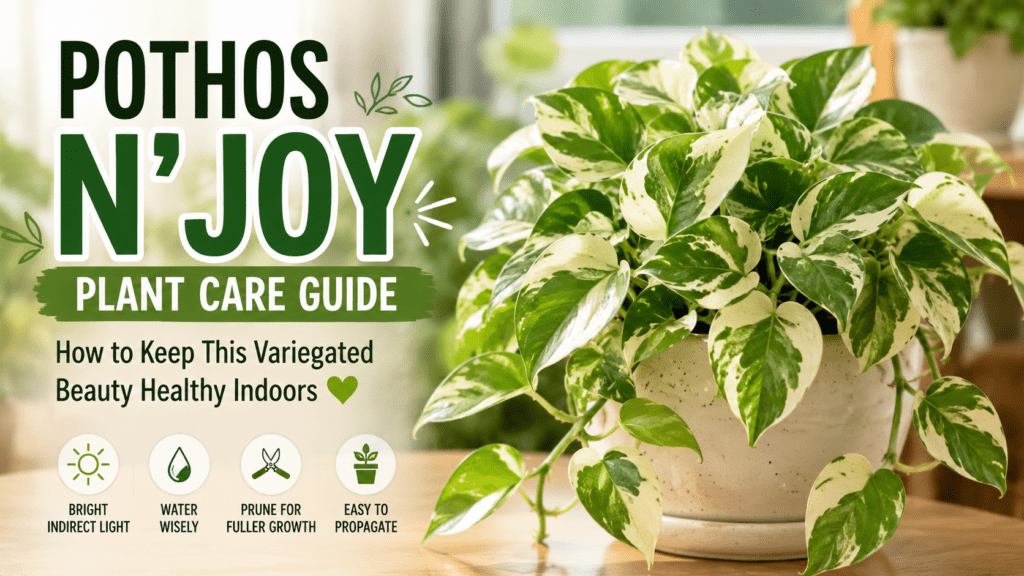
Indoor plants can completely transform a room, but few are as charming and easy to grow as the pothos n’joy plant 🌿. With its stunning green-and-white variegated leaves, compact trailing vines, and beginner-friendly nature, this beautiful houseplant has become a favorite among plant lovers worldwide.
But here’s the problem many people face: their Pothos N’Joy suddenly develops yellow leaves, brown tips, weak vines, or fading variegation 😟. Some plants stop growing entirely, while others suffer from root rot due to simple care mistakes.
The good news? Keeping a Pothos N’Joy healthy indoors is actually very easy once you understand its needs.
In this complete expert guide, you’ll learn everything about Pothos N’Joy plant care, including watering schedules, lighting requirements, soil mixes, propagation methods, pest prevention, pruning tips, and proven techniques to keep those gorgeous variegated leaves vibrant year-round ✨.
Whether you’re a beginner plant parent or an experienced indoor gardener, this detailed guide will help you grow a thriving, lush, and healthy Pothos N’Joy plant with confidence 🪴💚.
🌱 What Is a Pothos N’Joy Plant?
🌿 Origin and Botanical Background
The Pothos N’Joy is a cultivated variety of Epipremnum aureum, a tropical vine native to the warm forests of Southeast Asia and the Pacific Islands.
It belongs to the Araceae family, which includes other popular houseplants like:
- Monstera
- Philodendron
- Peace Lily
Unlike larger pothos varieties, the N’Joy cultivar is known for its compact growth and decorative foliage. Its leaves feature irregular white variegation mixed with rich green patterns, giving the plant a bright and elegant appearance 🌿🤍.
Because of its manageable size and low-maintenance nature, it’s ideal for:
- Apartments
- Offices
- Bedrooms
- Small indoor spaces
- Hanging baskets
✨ What Makes Pothos N’Joy Unique?
Many pothos varieties look similar at first glance, but the N’Joy stands out because of several distinct features.
💚 Compact Growth Habit
Unlike fast-growing Golden Pothos, N’Joy grows more slowly and stays tidier indoors.
🤍 Stunning Variegation
Its creamy white patches create a high-contrast appearance that brightens indoor spaces beautifully.
🪴 Easy Indoor Adaptation
It tolerates normal household conditions extremely well.
🌿 Beginner-Friendly Care
Even people new to indoor gardening can successfully grow this plant with minimal effort.
🌟 Benefits of Growing a Pothos N’Joy Indoors
Adding a Pothos N’Joy to your indoor plant collection offers more than just beauty.
🌬️ Helps Freshen Indoor Air
Like many pothos varieties, it may help improve indoor air quality by supporting a healthier environment.
😌 Reduces Stress
Studies consistently show that indoor plants can help create calming, relaxing spaces.
🏡 Enhances Home Decor
The white variegation pairs beautifully with modern, minimalist, boho, and Scandinavian interiors.
🪴 Requires Minimal Maintenance
Perfect for busy people who still want beautiful greenery indoors.
☀️ Ideal Growing Conditions for a Healthy Pothos N’Joy
🌤️ Best Light for Pothos N’Joy
Lighting is one of the most important factors in keeping your plant healthy.
✅ Ideal Light Conditions
Pothos N’Joy thrives in:
- Bright indirect light
- Filtered sunlight
- Moderate indoor brightness
Place it near:
- East-facing windows
- Bright north-facing windows
- Rooms with sheer curtains
🚫 Avoid Direct Harsh Sunlight
Strong afternoon sunlight can scorch the delicate white sections of the leaves.
Signs of too much sun include:
- Brown crispy spots
- Faded variegation
- Curling leaves
🌑 Signs Your Plant Needs More Light
If your plant isn’t receiving enough light, you may notice:
- Smaller leaves
- Long leggy vines
- Slower growth
- Reduced white variegation
Because variegated plants contain less chlorophyll, they generally require more light than fully green pothos varieties 🌿.
🌡️ Temperature and Humidity Requirements
The Pothos N’Joy prefers warm, stable indoor temperatures.
✅ Ideal Temperature Range
- 65°F–85°F (18°C–29°C)
Avoid exposing the plant to:
- Cold drafts
- Sudden temperature changes
- Air conditioners
- Heating vents
💧 Humidity Preferences
Although adaptable, this tropical plant enjoys moderate humidity.
Ideal Humidity:
- 50%–70%
If your indoor air is dry, especially during winter, try:
- Using a humidifier
- Grouping plants together
- Placing a pebble tray nearby
🏡 Best Placement Inside Your Home
Choosing the right location can dramatically improve growth.
🌿 Best Indoor Spots
- Bright bathrooms
- Kitchen shelves
- Living room corners
- Home offices
- Bedroom plant stands
🪴 Hanging Basket vs Shelf Placement
Hanging Basket Benefits
- Encourages trailing vines
- Creates dramatic visual appeal
- Saves floor space
Shelf Placement Benefits
- Easier monitoring
- Compact appearance
- Better for smaller plants
💧 How to Water a Pothos N’Joy Properly

Overwatering is the #1 reason pothos plants struggle indoors 🚫💦.
Many beginners assume tropical plants need constantly wet soil, but that mistake often leads to root rot.
🌱 How Often Should You Water?
The best approach is to water based on soil dryness — not a strict calendar schedule.
General Rule:
Water when the top 1–2 inches of soil feel dry.
Typical schedule:
- Spring/Summer: Every 7–10 days
- Fall/Winter: Every 10–14 days
However, watering frequency depends on:
- Light levels
- Temperature
- Pot size
- Humidity
- Soil type
👆 Use the Finger Test
Before watering:
- Insert your finger into the soil
- Check moisture level
- Water only if the soil feels dry
This simple habit prevents most watering problems 🌿.
🚫 Signs of Overwatering
Overwatering symptoms often appear gradually.
Common Warning Signs:
- Yellow leaves
- Mushy stems
- Soft roots
- Foul soil smell
- Wilting despite wet soil
If ignored, root rot can quickly kill the plant 😟.
🛠️ How to Fix Overwatering
- Stop watering immediately
- Remove damaged roots
- Repot into fresh well-draining soil
- Increase airflow and light
🌵 Signs of Underwatering
Although more forgiving than overwatering, underwatering can still stress the plant.
Symptoms Include:
- Curling leaves
- Dry crispy edges
- Wilted vines
- Lightweight potting soil
A severely dry plant may recover quickly after proper watering.
🪴 Best Soil and Potting Mix for Pothos N’Joy
Healthy roots require airy, fast-draining soil.
🌿 Ideal Soil Composition
The perfect mix should:
- Retain slight moisture
- Drain excess water quickly
- Allow oxygen to reach roots
Recommended DIY Mix:
- 2 parts indoor potting soil
- 1 part perlite
- 1 part orchid bark
This blend prevents compacted soil and reduces root rot risk.
🪴 Choosing the Right Pot
Always use pots with drainage holes.
Best Pot Materials
Terracotta Pots
✅ Excellent airflow
✅ Prevent overwatering
❌ Dry out faster
Plastic Pots
✅ Retain moisture longer
✅ Lightweight
❌ Higher overwatering risk
For beginners, terracotta is often safer 🌿.
🔄 When and How to Repot
Most Pothos N’Joy plants need repotting every 1–2 years.
Signs It’s Time to Repot
- Roots growing through drainage holes
- Water draining too quickly
- Stunted growth
- Root-bound soil
🪴 Repotting Steps
- Choose a pot 1–2 inches larger
- Remove old compacted soil
- Trim unhealthy roots
- Add fresh airy mix
- Water lightly after repotting
Avoid oversized pots because they hold excess moisture.
🌿 Fertilizing Your Pothos N’Joy for Faster Growth
While pothos plants are not heavy feeders, proper fertilization helps maintain vibrant foliage and healthy growth ✨.
🌱 Best Fertilizer Types
Use a balanced liquid houseplant fertilizer such as:
- 10-10-10
- 20-20-20
Organic options include:
- Worm castings
- Fish emulsion
- Compost tea
📅 How Often to Fertilize
Growing Season:
- Every 4–6 weeks during spring and summer
Dormant Season:
- Reduce or stop fertilizing during winter
Too much fertilizer can damage roots and reduce variegation.
🚫 Signs of Fertilizer Burn
Watch for:
- Brown leaf edges
- White crust on soil
- Weak roots
- Yellowing foliage
Flush the soil occasionally to remove excess salt buildup 💧.
✂️ How to Prune and Shape Your Pothos N’Joy

Pruning helps your plant stay compact, full, and visually attractive 🌿.
Without occasional trimming, vines may become sparse or leggy over time.
🌱 Why Pruning Matters
Benefits include:
- Fuller growth
- More branching
- Healthier leaves
- Better airflow
- Removal of damaged foliage
✂️ Step-by-Step Pruning Tips
- Use sterilized scissors
- Cut just above a node
- Remove yellow or damaged leaves
- Prune during active growth seasons
Never remove more than one-third of the plant at once.
🌿 How to Make Your Plant Fuller
To encourage bushier growth:
- Provide brighter light
- Rotate the plant weekly
- Trim long vines regularly
- Propagate cuttings back into the same pot
This creates a lush, dense appearance 🪴✨.
🌿 Pothos N’Joy Propagation Guide
One of the best things about pothos plants is how easy they are to propagate 💚.
Even beginners can successfully grow new plants from simple stem cuttings.
💦 Propagating in Water
Step-by-Step Method
- Cut below a node
- Remove lower leaves
- Place the node in clean water
- Keep in bright indirect light
- Change water weekly
Roots usually appear within:
- 2–4 weeks 🌱
🪴 Propagating in Soil
Direct soil propagation also works well.
Tips for Success
- Use moist airy soil
- Maintain humidity
- Avoid soggy conditions
Soil propagation often produces stronger roots initially.
🚫 Common Propagation Mistakes
Avoid:
- Using cuttings without nodes
- Dirty water
- Overwatering soil cuttings
- Placing cuttings in dark rooms
🚑 Common Pothos N’Joy Problems and Solutions

Even though the Pothos N’Joy is considered a low-maintenance indoor plant, it can still develop problems if its environment or care routine is off balance 😟.
The good news is that most issues are easy to identify and fix early.
💛 Why Are the Leaves Turning Yellow?
Yellow leaves are one of the most common complaints among pothos owners.
🌧️ Overwatering
The leading cause of yellowing leaves is excessive watering.
When roots sit in soggy soil:
- Oxygen levels decrease
- Roots begin rotting
- Leaves lose their healthy color
Signs of Overwatering:
- Wet soil for long periods
- Soft stems
- Musty smell
- Mushy roots
✅ Solution:
- Let the soil dry partially
- Improve drainage
- Reduce watering frequency
- Repot if root rot is severe
🌿 Natural Aging vs Problematic Yellow Leaves
Occasionally, an older leaf turning yellow is completely normal 🍂.
However, if multiple leaves yellow quickly, it usually signals:
- Watering problems
- Poor lighting
- Nutrient imbalance
- Stress from temperature changes
🤎 Brown Leaf Tips and Crispy Edges
Brown edges often indicate environmental stress.
🌵 Common Causes
Low Humidity
Dry indoor air can damage delicate variegated leaves.
Underwatering
If the soil stays bone dry too long, leaf edges become crispy.
Fertilizer Salt Buildup
Excess fertilizer can burn roots and leaf margins.
✅ How to Fix Brown Tips
- Increase humidity levels
- Water consistently
- Flush soil occasionally
- Avoid excessive fertilizer
Using filtered water may also help if your tap water contains heavy minerals 💧.
🌱 Leggy or Sparse Growth
A stretched, sparse-looking plant usually needs more light.
☀️ Why It Happens
When light is insufficient:
- Vines elongate searching for brightness
- Leaf spacing increases
- Growth becomes weak
✅ How to Fix Leggy Growth
Move to Brighter Indirect Light
This is often the fastest solution.
Prune Long Vines
Cutting encourages branching.
Rotate the Plant Weekly
This promotes even growth on all sides 🌿.
🐛 Common Pests That Affect Pothos N’Joy
Indoor plants can occasionally attract pests, especially in warm or dry conditions.
🕷️ Spider Mites
Signs:
- Tiny webbing
- Speckled leaves
- Weak foliage
Spider mites thrive in dry air.
Treatment:
- Increase humidity
- Wipe leaves
- Apply neem oil weekly
🐛 Mealybugs
These pests appear as fluffy white cotton-like clusters.
Common Hiding Areas:
- Leaf joints
- Stem crevices
- Undersides of leaves
Treatment:
- Dab with rubbing alcohol
- Use insecticidal soap
- Isolate infected plants
🪰 Fungus Gnats
These tiny flying insects are usually linked to overwatering.
Prevention Tips:
- Allow soil to dry partially
- Use sticky traps
- Improve drainage
🌿 Natural Pest Prevention Tips
Healthy plants resist pests more effectively.
Best Prevention Practices:
✅ Inspect new plants before bringing indoors
✅ Avoid overwatering
✅ Clean leaves monthly
✅ Maintain airflow
✅ Quarantine infected plants
Neem oil sprays are excellent for routine prevention 🌱✨.
🤍 How to Keep Variegation Bright and Beautiful

The gorgeous white-and-green foliage is the biggest reason people fall in love with the Pothos N’Joy 🌿🤍.
But variegation can fade if the plant isn’t receiving proper care.
🌑 Why Variegation Fades
Variegated sections contain less chlorophyll, making them more sensitive to environmental conditions.
Common causes include:
- Insufficient light
- Excess nitrogen fertilizer
- Poor overall plant health
☀️ Provide Bright Indirect Light
This is the most important factor for maintaining vivid variegation.
Best Locations:
- East-facing windows
- Bright rooms with filtered sunlight
- Areas near sheer curtains
Avoid deep shade whenever possible.
🌱 Use Balanced Fertilizer Carefully
Too much nitrogen can encourage excessive green growth and reduce white markings.
Best Practice:
Use diluted balanced fertilizer during the growing season only.
✂️ Prune Reverted Green Growth
Sometimes vines may start producing mostly green leaves.
Pruning these sections helps:
- Redirect energy
- Encourage variegated growth
- Maintain the plant’s decorative appearance
🍂 Seasonal Care Tips for Pothos N’Joy
Indoor plant care should change slightly throughout the year 🌦️.
🌸 Spring and Summer Care
This is the active growing season.
During Warmer Months:
✅ Water more frequently
✅ Fertilize regularly
✅ Prune for fuller growth
✅ Propagate cuttings successfully
Growth tends to accelerate during this period 🌿.
❄️ Fall and Winter Care
Growth naturally slows during cooler months.
Winter Care Essentials
Reduce Watering
The soil dries more slowly in winter.
Stop Heavy Fertilizing
Overfeeding during dormancy can damage roots.
Protect from Cold Drafts
Keep away from:
- Open windows
- Heaters
- Air conditioners
⚠️ Is Pothos N’Joy Toxic to Pets and Humans?
Like other pothos varieties, Pothos N’Joy contains calcium oxalate crystals.
🐶🐱 Toxicity Risks
If chewed or ingested, it may cause:
- Mouth irritation
- Drooling
- Swelling
- Vomiting in pets
Cats and dogs are especially vulnerable.
✅ Safety Tips for Pet Owners
Best Practices:
- Place plants on shelves
- Use hanging baskets
- Keep out of children’s reach
If ingestion occurs, contact a veterinarian immediately.
🏡 Styling and Decorating Ideas with Pothos N’Joy

Beyond plant care, Pothos N’Joy is also one of the best decorative indoor plants 🌿✨.
Its compact vines and bright variegation fit beautifully into many interior styles.
🪴 Best Decor Styles for Pothos N’Joy
Minimalist Homes
The white variegation complements clean neutral spaces beautifully.
Boho Interiors
Trailing vines pair perfectly with woven baskets and natural textures.
Modern Apartments
Compact growth makes it ideal for smaller urban homes.
🌿 Creative Display Ideas
Hanging Planters
Allow vines to cascade naturally.
Floating Shelves
Adds greenery without using floor space.
Wall Trellises
Train vines vertically for dramatic impact.
Office Desks
Brightens workspaces while remaining manageable.
🌟 Expert Tips to Keep Your Pothos N’Joy Thriving
These professional care tips can dramatically improve long-term plant health 💚.
🔄 Rotate the Plant Regularly
Turn the pot every 1–2 weeks for balanced growth.
🧽 Clean Leaves Monthly
Dust blocks sunlight absorption.
Use:
- Soft damp cloth
- Gentle wiping motions
This also helps prevent pests.
🌱 Avoid Sudden Environmental Changes
Rapid shifts in:
- Light
- Temperature
- Humidity
can shock the plant.
Always transition gradually.
🪴 Check Root Health Periodically
Healthy roots should appear:
- White
- Firm
- Fresh-smelling
Dark mushy roots signal root rot.
🌿 Pothos N’Joy vs Other Popular Pothos Varieties
Choosing the right pothos variety depends on your space and preferences.
💚 N’Joy vs Golden Pothos
Pothos N’Joy
- Compact growth
- Strong variegation
- Slower growing
Golden Pothos
- Faster vines
- Larger leaves
- Easier in low light
🤍 N’Joy vs Pearls and Jade
These two are commonly confused.
N’Joy:
- Larger white sections
- Sharper contrast
Pearls and Jade:
- More speckled variegation
- Smaller patterns
🌿 N’Joy vs Marble Queen
Marble Queen:
- Heavier marbling
- Larger leaves
- Faster growth
N’Joy:
- More compact
- Cleaner white patches
- Easier to style indoors
❓ Frequently Asked Questions
🌱 Why is my Pothos N’Joy growing slowly?
Common reasons include:
- Low light
- Root-bound conditions
- Winter dormancy
- Nutrient deficiency
Bright indirect light usually improves growth quickly.
☀️ Can Pothos N’Joy survive in low light?
Yes, but growth may slow and variegation may fade.
For best results, provide moderate to bright indirect light 🌿.
💦 How often should I mist my Pothos N’Joy?
Misting is optional.
Instead of heavy misting:
- Increase room humidity
- Use humidifiers
- Group plants together
🌿 Can Pothos N’Joy grow in water permanently?
Yes, it can survive in water long-term if:
- Water is changed regularly
- Nutrients are added occasionally
- Roots remain healthy
However, soil often supports stronger growth.
🪴 Why are my leaves curling?
Leaf curling usually signals:
- Underwatering
- Heat stress
- Low humidity
- Root problems
Check soil moisture first.
🌱 How long does propagation take?
Most cuttings root within:
- 2–4 weeks in water
- 3–5 weeks in soil
Warm temperatures speed up rooting.
🌿 Conclusion
The pothos n’joy plant is one of the most rewarding indoor plants you can grow 🪴💚. Its elegant variegated foliage, compact vines, and forgiving nature make it perfect for both beginners and experienced plant enthusiasts.
With proper care — including:
- Bright indirect light ☀️
- Careful watering 💧
- Well-draining soil 🌱
- Occasional pruning ✂️
- Seasonal adjustments 🍂
— your Pothos N’Joy can remain lush, vibrant, and healthy for many years.
The secret is consistency. Small habits like checking soil moisture, cleaning leaves, and monitoring lighting conditions make a huge difference over time.
Whether displayed in a hanging basket, styled on a floating shelf, or trailing gracefully across your workspace, this beautiful variegated pothos adds life, freshness, and natural beauty to any indoor space 🌿✨











