
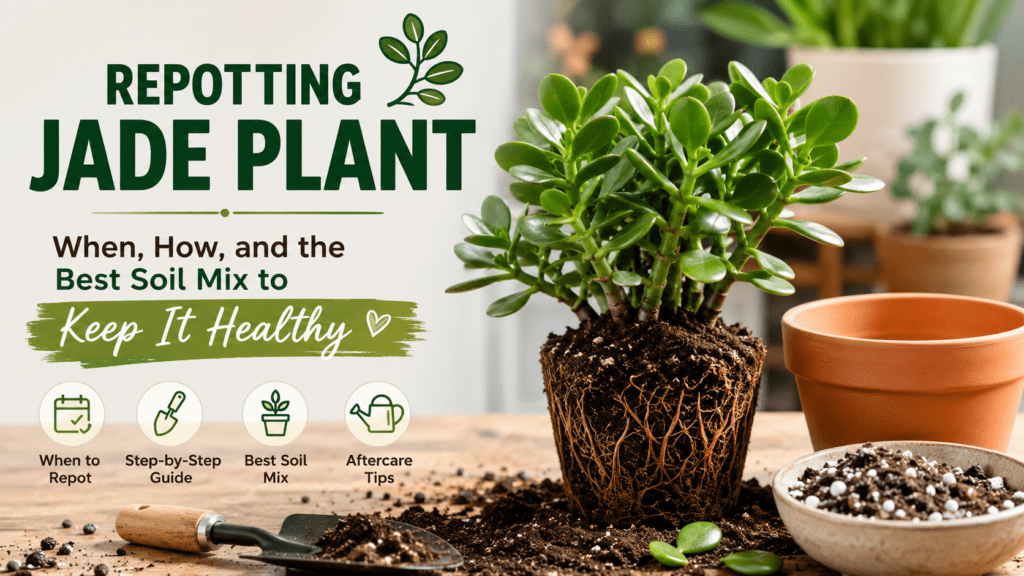
Few houseplants are as resilient, beautiful, and beginner-friendly as the jade plant 🌱. But even this hardy succulent can struggle when left in the wrong pot for too long. If your once-thriving jade plant suddenly looks droopy, top-heavy, wrinkled, or stops growing altogether, the problem may not be watering or sunlight — it may simply need repotting.
Repotting jade plant varieties correctly is one of the most important parts of long-term succulent care. Done properly, it encourages healthier roots, better drainage, stronger stems, and vibrant new growth. Done incorrectly, however, it can lead to transplant shock, root rot, leaf drop, and even permanent damage.
The good news? Repotting a jade plant is much easier than most people think 🪴.
In this complete expert guide, you’ll learn:
- When a jade plant actually needs repotting
- The best season for repotting succulents
- How to repot a jade plant step by step
- The ideal soil mix for healthy roots
- Common mistakes to avoid
- Expert aftercare tips for long-lasting growth
Whether you’re caring for a small indoor jade plant or a mature tree-like succulent, this guide will help you repot with confidence 💚.
🌵 Understanding Jade Plants Before Repotting
Table of Contents
Toggle🌿 What Is a Jade Plant?
The jade plant, scientifically known as Crassula ovata, is a popular succulent native to South Africa. Known for its thick fleshy leaves and woody stems, this low-maintenance houseplant is often associated with good luck, prosperity, and longevity 🍀.
Jade plants are loved because they:
- Tolerate drought well
- Live for decades with proper care
- Thrive indoors in bright light
- Require minimal maintenance
- Develop beautiful bonsai-like trunks over time
Because they store water in their leaves and stems, jade plants are especially sensitive to overwatering and poorly draining soil. That’s why choosing the right pot and soil mix during repotting is essential.
🪴 Why Jade Plants Need Repotting
Many plant owners assume succulents can stay in the same pot forever. While jade plants grow slowly, they still eventually outgrow their containers 🌱.
Here’s why repotting matters:
🌿 1. Roots Become Crowded
As roots expand, they begin circling inside the pot. This condition is called becoming “root-bound.” Eventually, roots struggle to absorb water and nutrients efficiently.
💧 2. Soil Breaks Down Over Time
Even high-quality succulent soil loses structure after repeated watering. Compacted soil traps moisture and reduces airflow around roots.
🪴 3. Drainage Problems Develop
Old soil often retains too much water — one of the biggest causes of root rot in jade plants.
🌱 4. Healthy Growth Slows Down
A cramped jade plant may stop producing new leaves or stems. Repotting refreshes the environment and stimulates new growth.
📅 How Often Should You Repot a Jade Plant?
The frequency depends on the age and size of your plant.
Young Jade Plants 🌱
- Repot every 2–3 years
- Grow faster and need more root space
Mature Jade Plants 🌳
- Repot every 4–5 years
- Often only need soil refreshing
Indoor vs Outdoor Plants ☀️
Outdoor jade plants may grow faster due to stronger light exposure and may require more frequent repotting.
💡 Expert Tip: If your jade plant still looks healthy and has room to grow, avoid unnecessary repotting. Succulents actually prefer being slightly snug in their pots.
📅 Best Time to Repot a Jade Plant
🌸 Why Spring and Early Summer Are Ideal
The best time for repotting jade plants is during spring or early summer 🌞.
Why? Because this is the plant’s active growing season. During this period:
- Roots recover faster
- New growth appears quickly
- The plant experiences less stress
- Soil dries more efficiently
Repotting during active growth gives your jade plant the best chance to establish healthy roots in fresh soil.
❄️ When You Should Avoid Repotting
Avoid repotting during:
- Winter dormancy
- Extreme heat waves
- Immediately after fertilizing
- Periods of visible stress
Repotting during dormancy slows recovery and increases the risk of root problems.
🚨 Emergency Situations That Require Immediate Repotting
Sometimes you shouldn’t wait for the “perfect” season.
Repot immediately if you notice:
- Mushy black roots
- A foul smell from the soil
- Severe overwatering
- Fungus gnats
- Mold growth
- Broken pots
- Root rot symptoms
In emergencies, protecting the roots matters more than seasonal timing.
🔍 Signs Your Jade Plant Needs Repotting
Your jade plant often gives clear signals when it’s time for a larger home 🪴.
🌱 Roots Growing Out of Drainage Holes
This is one of the clearest signs of a root-bound succulent.
If roots emerge from:
- Drainage holes
- Soil surface
- Pot edges
…it’s likely time to repot.
💧 Soil Dries Out Extremely Fast
Does water run straight through the pot?
Root-bound plants leave very little room for soil, causing moisture to disappear rapidly.
📉 Stunted Growth
If your jade plant hasn’t grown in months despite proper care, crowded roots may be limiting nutrient absorption.
⚠️ The Plant Becomes Top-Heavy
Mature jade plants often develop thick stems and dense foliage. A tiny pot may become unstable and tip over easily.
Repotting into a slightly wider terracotta container improves balance and support.
🍂 Wrinkled or Drooping Leaves
Wrinkled leaves don’t always mean underwatering.
Sometimes roots are so crowded they cannot absorb moisture effectively — even when watered properly.
💡 Expert Insight: Overwatering and root-bound stress can look surprisingly similar. Always inspect soil and roots before increasing watering frequency.
🧰 Supplies You’ll Need Before Repotting
🪴 Choosing the Right Pot

The right pot can make a huge difference in succulent health.
Best Pot Features:
✅ Drainage holes
✅ Breathable material
✅ Stable base
✅ Slightly larger than current pot
Best Pot Materials
🌿 Terracotta Pots
Best overall choice for jade plants because they:
- Absorb excess moisture
- Improve airflow
- Reduce root rot risk
🪴 Ceramic Pots
Beautiful but heavier and sometimes less breathable.
🌱 Plastic Pots
Lightweight and inexpensive, but retain more moisture.
📏 What Size Pot Should You Choose?
Avoid dramatically oversized containers 🚫.
Choose a pot:
- Only 1–2 inches wider than the current one
- Deep enough for roots
- Stable enough for heavy branches
A pot that’s too large holds excess moisture and increases the risk of root rot.
🌵 Best Soil Mix for Jade Plants
Jade plants require extremely well-draining soil 🌵.
The ideal soil mix should:
- Dry quickly
- Allow airflow
- Prevent compaction
- Avoid excess moisture retention
🧪 DIY Jade Plant Soil Recipe
Here’s a proven succulent mix used by many experienced growers:
- 2 parts cactus/succulent potting soil
- 1 part perlite
- 1 part coarse sand or pumice
This combination creates excellent drainage while still holding enough moisture for healthy roots.
🛒 Best Store-Bought Soil Options
Look for mixes labeled:
- Succulent soil
- Cactus mix
- Fast-draining potting mix
Avoid:
❌ Moisture-control soil
❌ Dense garden soil
❌ Peat-heavy mixes
✂️ Essential Tools and Materials
Before starting, gather:
- Fresh succulent soil 🌱
- Clean pot 🪴
- Gloves 🧤
- Pruning scissors ✂️
- Small trowel
- Newspaper or tray
- Mesh screen for drainage holes
Optional:
- Rooting hormone
- Decorative gravel top dressing
🪴 Step-by-Step Guide to Repotting a Jade Plant

🌿 Step 1 — Prepare the New Pot
Cover drainage holes with mesh or a coffee filter to prevent soil loss.
Add a shallow base layer of succulent soil.
Do not add rocks at the bottom — contrary to popular belief, this can actually worsen drainage problems.
🌱 Step 2 — Remove the Jade Plant Carefully
Gently tip the pot sideways while supporting the base of the plant.
If stuck:
- Squeeze plastic pots gently
- Tap clay pots lightly
- Use a knife around the edge if necessary
Avoid pulling directly on stems or leaves.
✂️ Step 3 — Inspect the Roots
Healthy jade roots are:
✅ Firm
✅ White or light brown
✅ Dry and odorless
Unhealthy roots are:
❌ Black
❌ Mushy
❌ Slimy
❌ Foul-smelling
Trim damaged roots using sterilized scissors.
Allow fresh cuts to dry for several hours before replanting.
🌵 Step 4 — Place the Plant Into Fresh Soil
Position the jade plant at the same depth as before.
Fill around roots gently with soil.
Do not bury stems too deeply — this can cause stem rot.
Lightly firm the soil without compacting it.
💧 Step 5 — Wait Before Watering
This is one of the most important succulent care tips 🌿.
After repotting:
⏳ Wait 3–7 days before watering
Why?
Tiny root injuries occur during repotting. Waiting allows roots to heal and prevents fungal infection or rot.
☀️ Aftercare Tips for a Healthy Jade Plant
🌞 Provide Bright Indirect Light
After repotting, avoid harsh direct afternoon sun for several days.
Ideal placement:
- Bright windowsill
- East-facing window
- South-facing room with filtered light
Too much direct sun immediately after repotting may stress the plant further.
💦 Adjust Your Watering Routine
Once established:
- Water deeply
- Allow soil to dry completely between waterings
Jade plants hate constantly wet soil 🚫
A good rule:
👉 “When in doubt, wait another day.”
🌡️ Ideal Temperature and Humidity
Jade plants prefer:
- 65–75°F (18–24°C)
- Low humidity
- Stable indoor temperatures
Protect from:
❌ Frost
❌ Cold drafts
❌ Sudden temperature drops
🌱 When to Fertilize Again
Wait at least:
⏳ 4–6 weeks after repotting
Fertilizing too soon can burn recovering roots.
Use:
- Diluted succulent fertilizer
- Balanced low-nitrogen formula
🚫 Common Repotting Mistakes to Avoid
❌ Using Regular Potting Soil
Dense soil suffocates roots and traps water.
Always use fast-draining succulent mixes.
❌ Choosing a Pot That’s Too Large
Oversized pots stay wet longer and increase root rot risk.
Bigger isn’t always better 🪴
❌ Watering Immediately After Repotting
Freshly disturbed roots are vulnerable to fungal infections.
Patience is key 🌱
❌ Damaging Healthy Roots
Aggressive root pruning weakens the plant unnecessarily.
Only remove:
- Rotten roots
- Dead roots
- Severely tangled roots
❌ Ignoring Drainage Holes
A beautiful pot without drainage can quickly become deadly for succulents.
Always prioritize function over appearance.
🦠 Troubleshooting Problems After Repotting a Jade Plant
Even when you repot carefully, jade plants can sometimes show signs of stress afterward 🌿. Don’t panic — mild transplant shock is common and usually temporary.
Understanding the difference between normal adjustment and serious problems can help you save your plant quickly.
🍂 Why Are the Leaves Falling Off?
Leaf drop after repotting is one of the most common concerns among plant owners.
Common Causes:
- Sudden environmental change
- Root disturbance
- Overwatering after repotting
- Low light conditions
- Temperature stress
What to Do:
✅ Keep the plant in bright indirect light
✅ Avoid fertilizing immediately
✅ Water sparingly
✅ Allow time for recovery
💡 Expert Tip: Losing a few lower leaves after repotting is often normal. Excessive leaf drop, however, usually points to watering or root problems.
🟤 What Causes Mushy Stems or Root Rot?
Soft stems are usually a sign of excess moisture 🚨.
Root Rot Often Happens Because Of:
- Poor drainage
- Heavy soil mixes
- Watering too soon after repotting
- Pots without drainage holes
How to Save the Plant:
- Remove the jade plant from soil immediately
- Cut away black or mushy roots
- Allow roots to dry for 24–48 hours
- Replant in dry succulent soil
- Wait before watering again
If caught early, jade plants can recover surprisingly well 🌱.
🌱 Why Isn’t My Jade Plant Growing?
Slow growth doesn’t always mean something is wrong.
However, growth may stall because of:
- Insufficient light
- Root stress
- Poor soil nutrients
- Cool temperatures
- Dormancy period
Encourage Healthy Growth:
☀️ Provide at least 4–6 hours of bright light
🌡️ Keep temperatures warm and stable
💧 Water only when soil dries fully
🌱 Fertilize lightly during active growth
☀️ Why Are the Leaves Wrinkled After Repotting?
Wrinkled leaves usually indicate dehydration — but not always from lack of watering.
Sometimes damaged roots temporarily struggle to absorb moisture.
Solution:
- Avoid overwatering immediately
- Allow roots time to recover
- Resume proper watering gradually
Most jade plants bounce back within a few weeks 💚.
🌿 Best Soil Mix Recipes for Jade Plants
🧪 Why Soil Quality Matters So Much
Unlike tropical houseplants, jade plants evolved in dry, rocky environments 🌵.
Their roots require:
- Excellent airflow
- Quick drainage
- Minimal moisture retention
Using the wrong soil is one of the fastest ways to kill a succulent.
🌱 DIY Succulent Soil Recipe
Here’s an expert-approved jade plant soil recipe:
Basic Mix:
- 2 parts succulent/cactus soil
- 1 part perlite
- 1 part coarse sand or pumice
This blend provides:
✅ Drainage
✅ Aeration
✅ Root stability
✅ Reduced fungal risk
🪨 Best Drainage Amendments
Adding inorganic materials improves airflow dramatically.
Excellent Additives:
- Pumice
- Perlite
- Lava rock
- Coarse horticultural sand
- Crushed granite
Avoid fine beach sand, which can compact easily.
🌿 Organic Ingredients That Work Well
Some organic matter is beneficial for nutrient retention.
Good options include:
- Coconut coir
- Pine bark fines
- Compost (small amounts only)
Too much organic material increases water retention.
🚫 Soil Ingredients to Avoid
Never use:
❌ Heavy clay soil
❌ Dense garden dirt
❌ Moisture-control mixes
❌ Pure peat moss
These materials suffocate succulent roots.
🌳 Repotting Large or Mature Jade Plants

Mature jade plants can become stunning tree-like specimens 🌳. Some live for decades and develop thick trunks resembling miniature bonsai trees.
Repotting older jade plants requires extra care because they are heavier, more fragile, and often top-heavy.
💪 Challenges of Repotting Mature Jade Plants
Older plants may:
- Have brittle branches
- Be extremely root-bound
- Tip over easily
- Experience more transplant stress
Take your time during the process.
✂️ Pruning Before Repotting
Light pruning before repotting can reduce stress and improve balance.
Remove:
- Dead stems
- Weak growth
- Crowded branches
- Broken sections
Avoid excessive pruning at the same time as aggressive root trimming.
🪴 Choosing the Right Pot for Large Jade Plants
For mature specimens:
✅ Use heavy terracotta pots
✅ Prioritize stability
✅ Ensure excellent drainage
✅ Avoid oversized containers
A wider pot often works better than a deeper one.
🌱 Refreshing Soil Without Full Repotting
Very large jade plants sometimes don’t need full repotting.
Instead:
- Remove the top few inches of old soil
- Replace with fresh succulent mix
- Resume normal care
This technique refreshes nutrients without disturbing major roots.
🐾 Is Jade Plant Toxic to Pets and Children?
⚠️ Jade Plant Toxicity Information
The jade plant is considered mildly toxic to:
- Cats 🐱
- Dogs 🐶
Symptoms may include:
- Vomiting
- Lethargy
- Mild stomach upset
Keep jade plants out of reach of curious pets.
🏡 Safe Indoor Placement Tips
Best placement ideas:
- High shelves
- Plant stands
- Bright windows inaccessible to pets
If you have heavy plant-chewers at home, consider safer alternatives.
❓ Frequently Asked Questions About Repotting Jade Plants
🌿 Can I Repot a Jade Plant in Winter?
It’s possible, but not ideal.
Winter repotting slows recovery because the plant is dormant. Only repot during winter if there’s an emergency like root rot or severe overwatering.
💧 Should I Water Before or After Repotting?
It’s best to repot dry or slightly dry jade plants.
After repotting:
⏳ Wait several days before watering.
This reduces the risk of root rot and fungal infections.
🪴 How Big Should the New Pot Be?
Choose a pot only:
- 1–2 inches larger in diameter
Oversized pots retain too much moisture.
🌱 Can I Use Cactus Soil for Jade Plants?
Yes 🌵.
High-quality cactus soil works very well for jade plants, especially when mixed with extra perlite or pumice for better drainage.
✂️ Can I Propagate Broken Jade Leaves?
Absolutely 💚.
Healthy jade leaves or stem cuttings can easily root in dry succulent soil.
Simple Propagation Steps:
- Allow cuttings to callous
- Place on dry soil
- Mist lightly after roots form
- Provide bright indirect light
☀️ Why Is My Jade Plant Turning Red?
Red leaf edges are often caused by:
- Bright sunlight
- Mild environmental stress
- Cool temperatures
In many cases, this is harmless and even attractive 🌞.
🌟 Expert Tips for Growing a Thriving Jade Plant Long-Term

Want your jade plant to thrive for decades instead of merely survive? These expert care tips make a huge difference 🌿.
☀️ Give Plenty of Bright Light
Jade plants love sunlight.
Ideal conditions:
- South-facing windows
- Bright indirect light
- Several hours of morning sun
Insufficient light causes:
❌ Weak stems
❌ Sparse growth
❌ Leggy appearance
💧 Follow the “Soak and Dry” Method
This is the golden rule of succulent care 🌵.
Correct Watering Method:
- Water deeply
- Let excess drain fully
- Wait until soil dries completely
Never keep soil constantly damp.
🔄 Rotate the Pot Regularly
Rotating your jade plant every few weeks promotes:
✅ Balanced growth
✅ Straighter stems
✅ Even sunlight exposure
🧽 Keep the Leaves Clean
Dust blocks sunlight absorption.
Use a soft damp cloth occasionally to clean leaves gently ✨.
Avoid commercial leaf shine products.
🦠 Watch for Common Pests
Jade plants can occasionally attract:
- Mealybugs
- Spider mites
- Scale insects
Inspect leaves and stems monthly.
Early treatment prevents major infestations.
🌱 Refresh Soil Every Few Years
Even if your jade plant doesn’t need a larger pot, refreshing old soil keeps roots healthier and improves nutrient availability.
📝 Conclusion: Repotting Your Jade Plant the Right Way Leads to Years of Healthy Growth
Repotting a jade plant may seem intimidating at first, but it’s actually one of the most rewarding parts of succulent care 🌿.
With the right timing, proper soil mix, careful root handling, and good aftercare, your jade plant can continue thriving for decades — developing thicker stems, healthier roots, and lush vibrant leaves over time.
Remember the most important takeaways:
✅ Use fast-draining succulent soil
✅ Choose pots with drainage holes
✅ Avoid overwatering after repotting
✅ Repot during active growing seasons
✅ Watch for signs of root stress early
Whether you’re caring for a tiny tabletop succulent or a mature tree-like jade plant, proper repotting gives it the foundation for long-term success 💚.
A healthy jade plant isn’t just another houseplant — it can become a beautiful living heirloom passed down for generations 🌳✨











