
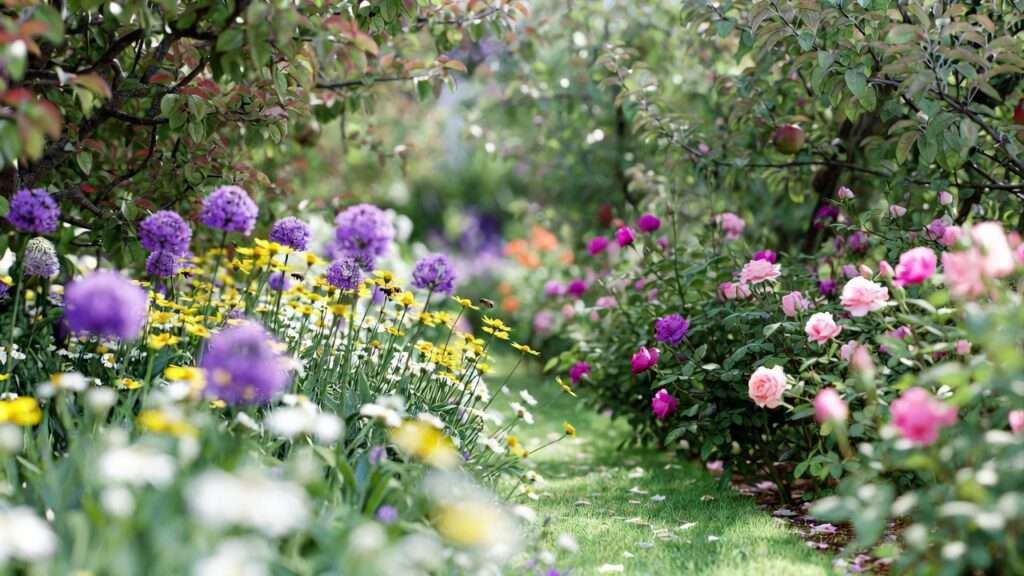
Imagine walking through your orchard in spring, expecting a bountiful harvest, only to find sparse fruit set and smaller yields year after year. 😔 This frustrating reality faces many fruit growers worldwide, including in regions like Bangladesh where mango, litchi, guava, and other tropical orchards thrive. Declining pollinator populations—due to habitat loss, pesticide use, and climate variability—threaten up to 35% of global food crops, with studies showing that inadequate pollination can reduce fruit yields by 20-50% in many tree fruits 🍎.
Pollinator-friendly garden plants near orchards offer a simple, natural solution to this problem. By strategically planting nectar- and pollen-rich flowers, shrubs, and ground covers around your fruit trees, you create continuous foraging resources that attract and sustain diverse pollinators like native bees, butterflies, hoverflies, and even efficient solitary species such as mason bees 🐝. These plants bridge bloom gaps (when fruit trees aren’t flowering), boost pollinator density, and enhance cross-pollination for better fruit set, size, quality, and overall yields.
As a plant and tree care expert with extensive experience in sustainable orchard management and biodiversity enhancement, I’ve witnessed firsthand how these strategies transform backyard gardens and small commercial orchards. In tropical climates like Khulna’s humid subtropical zone, where mango and litchi dominate, integrating local-adapted pollinator plants not only increases harvests but also supports ecosystem health, natural pest control, and long-term resilience 🌳. In this comprehensive guide, we’ll explore the science-backed benefits, top plant recommendations tailored for success, design tips, maintenance advice, and real-world insights to help you boost your fruit production naturally. Let’s turn your orchard edges into vibrant pollinator havens! ✨
Understanding Pollination in Orchards: The Basics You Need to Know 📊
Why Pollinators Matter More Than Just Honeybees
While honeybees (Apis mellifera and local species like Apis cerana, dorsata, and florea in Bangladesh) are vital managed pollinators, native and wild bees often outperform them in efficiency. For instance, mason bees (Osmia spp.) can be up to 100 times more effective at pollinating fruit trees because they visit more flowers per trip, carry dry pollen that transfers easily, and work reliably even in cooler or rainy conditions common during bloom periods 🐝💨.
In orchards, diverse pollinators overcome weather dependencies and short bloom windows. Research from sources like the Xerces Society and university extensions shows that greater pollinator diversity leads to higher fruit set, larger fruits, better shape, and improved quality (e.g., higher sugar content and antioxidants in fruits like apples, cherries, and tropicals).
How Nearby Plants Supercharge Pollination
Fruit trees often bloom intensely but briefly—mangoes and litchis in spring, for example—leaving pollinators hungry afterward. Pollinator-friendly garden plants near orchards provide “bridge” resources:
- Early blooms prep pollinators before tree flowering ⏰
- Mid- and late-season flowers sustain populations post-harvest 🍂
- Continuous nectar/pollen attracts more bees, hoverflies, and butterflies, creating “pollinator corridors” for movement across the landscape
This approach increases pollinator visitation rates, reduces pollen limitation, and can boost yields significantly—studies indicate 20-60% improvements in crops like almonds, apples, and cherries when diverse habitat is added.
Top Benefits of Pollinator-Friendly Plants Near Orchards 🌟
Planting these companions delivers multifaceted rewards:
- Boosted fruit yields & better fruit set — More efficient pollination means higher percentages of flowers turning into mature fruits, with larger, more uniform produce 🍑
- Natural pest management — Flowers attract beneficial insects like ladybugs, lacewings 🐞, and predatory wasps that control orchard pests
- Soil health improvements — Nitrogen-fixing plants (e.g., clovers) and dynamic accumulators (e.g., comfrey) enrich soil fertility
- Biodiversity & ecosystem resilience — Supports declining native pollinators, birds, and wildlife for a balanced farm ecosystem
- Low-maintenance beauty — Adds colorful, low-effort landscaping that enhances property value and enjoyment 🌺
In regions like Khulna, where intensive farming and pesticides challenge pollinators, these plants offer a sustainable way to reverse declines and secure consistent harvests.
Best Pollinator-Friendly Plants for Near Orchards: Our Expert Top Picks 🌺
Focus on plants with extended bloom times, native or well-adapted species, and minimal risk of hosting orchard pests. Prioritize natives for local pollinators (consult regional resources like Bangladesh Agricultural extensions or Xerces-inspired lists). Organize by season for year-round support.
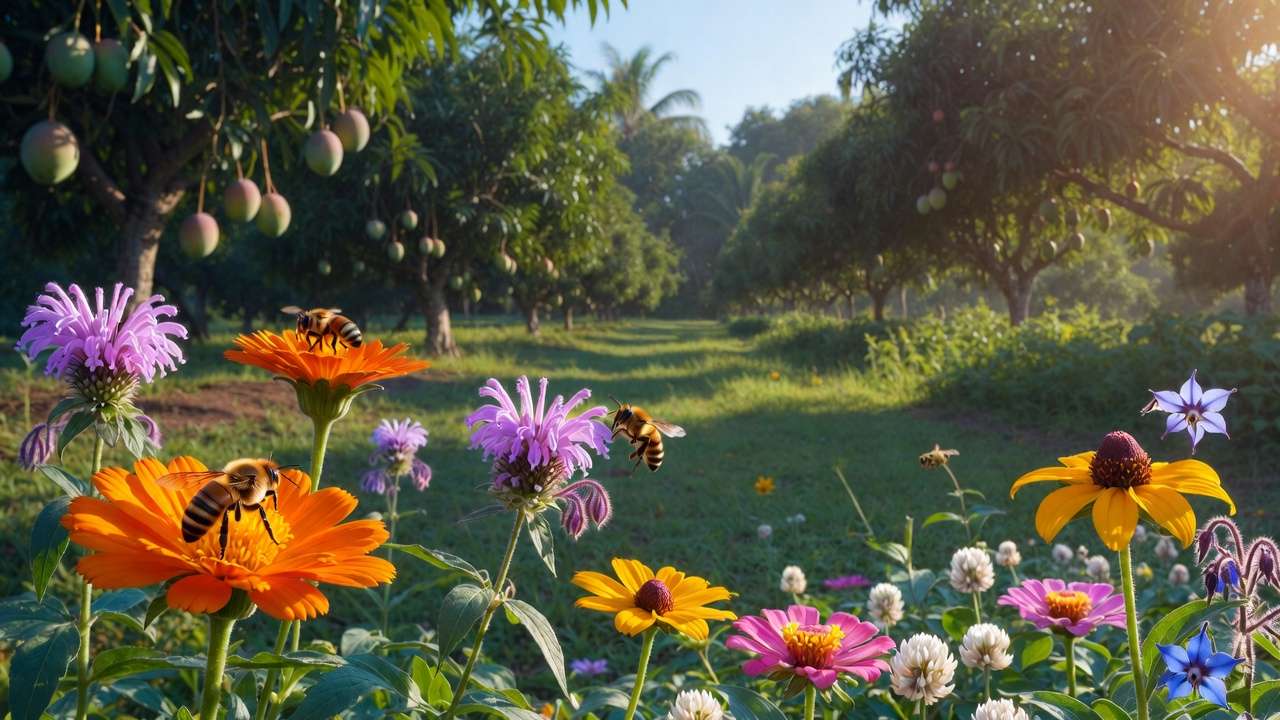
Early Spring Bloomers (Kickstart Pollination Before Fruit Trees) ⏰
These provide food when mango/litchi buds swell:
- Crocus and daffodils (Narcissus) — Deer-resistant bulbs with early nectar 🌼
- Local natives like wild mustard relatives or early-flowering herbs
- Serviceberry (Amelanchier spp.) or similar shrubs — Pollen-rich blooms
- In tropical zones: Early mustards, brassica family plants, or adapted annuals like calendula
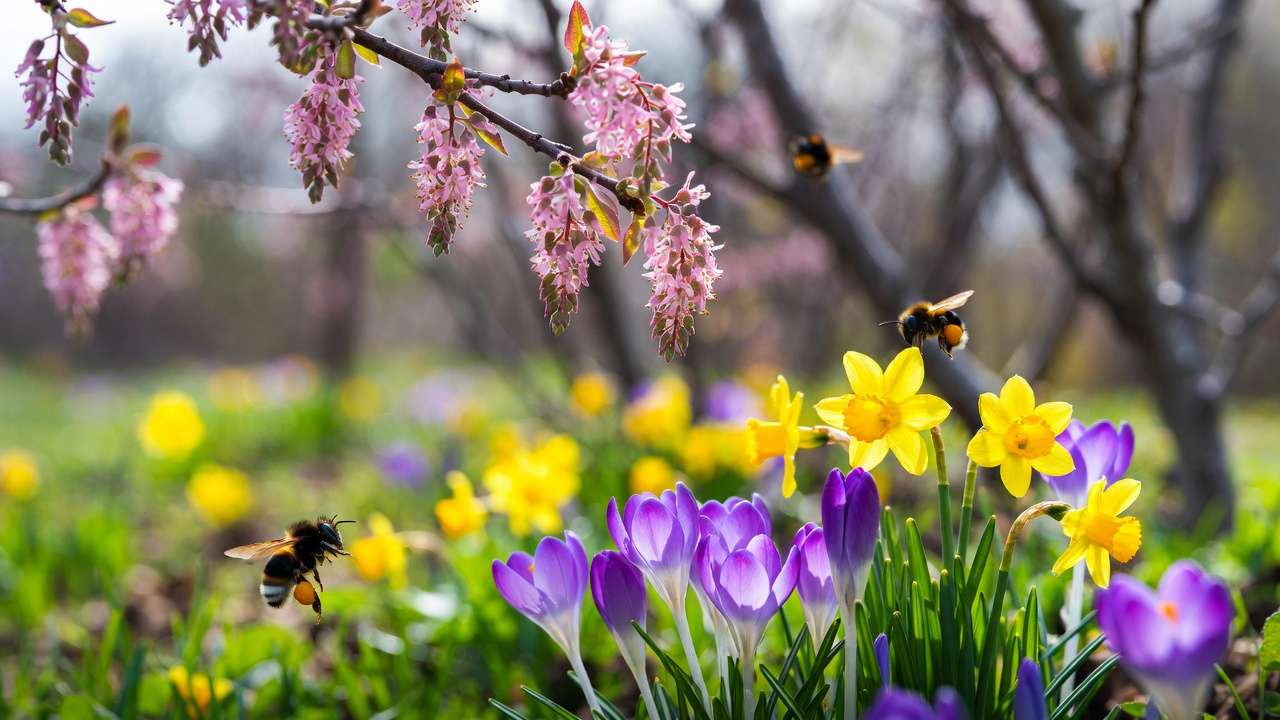
Mid-Season Stars (During & After Tree Bloom) 🌞
Support peak activity:
- Bee balm / Wild bergamot (Monarda fistulosa or local equivalents) — Bee and hummingbird favorite 🔥
- Borage — Star flowers, continuous bloomer, self-seeds easily ⭐
- Lavender, catmint (Nepeta), anise hyssop — Drought-tolerant and aromatic
- Echinacea (coneflower), black-eyed Susan (Rudbeckia) — Long-lasting daisy types
- Local options: Basil, marigolds, or tropical salvias for heat tolerance
Late-Season Heroes (Extend Resources Post-Harvest) 🍂
Prevent pollinator starvation:
- Goldenrod and asters — Essential for overwintering prep
- Milkweed (Asclepias spp., adapted tropical varieties) — Monarch host + bee magnet
- Yarrow (Achillea millefolium) — Pest-repellent with flat-topped blooms
Ground Covers & Understory Winners (Under Trees) 🌿
Low-growing for minimal competition:
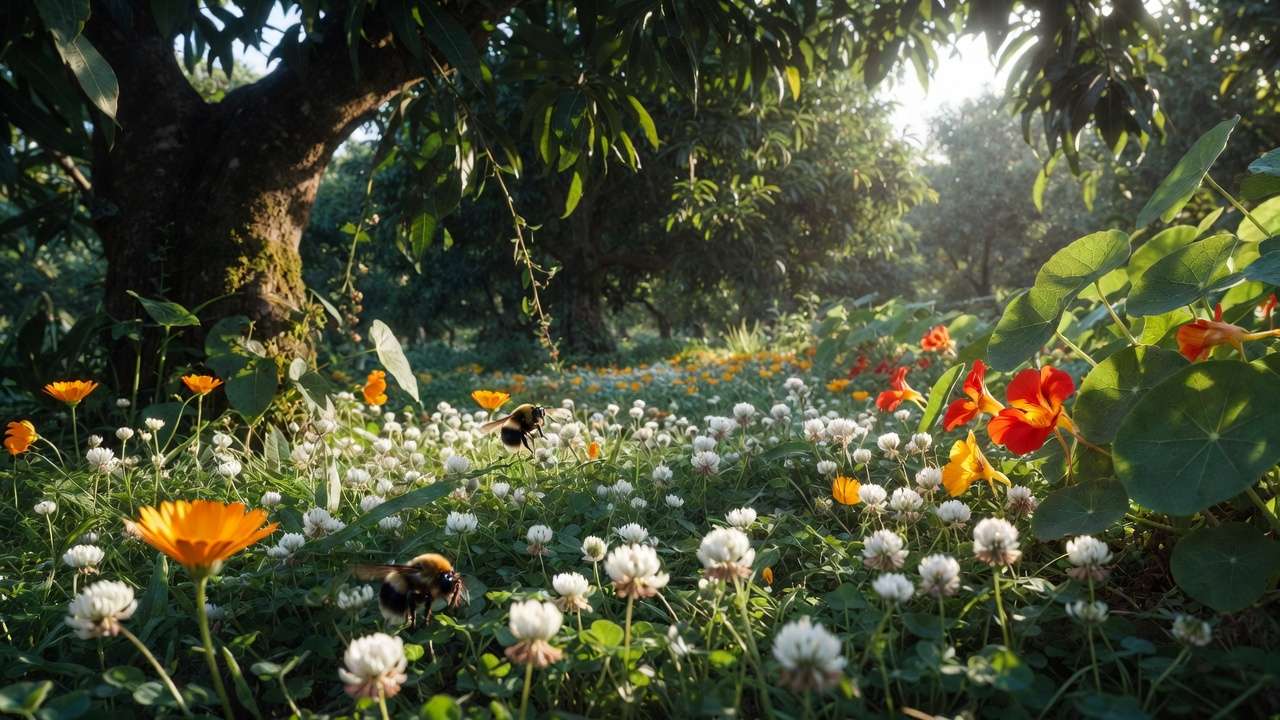
- Clover (white or red) — Nitrogen-fixing, bee lawn alternative
- Creeping thyme — Fragrant, drought-resistant ground cover
- Calendula and nasturtium — Quick annuals for color and pollinators
- Comfrey — Deep-rooted nutrient accumulator, mulch source
Trees & Shrubs for Windbreaks or Borders 🌳
Multi-functional edges:
- Lindens (Tilia spp.) or local basswood equivalents — Massive nectar
- Elderberry, viburnum — Berries + flowers
- Adapted natives: Neem edges or flowering hedges safe for orchards
Mid-Season Stars (During & After Tree Bloom) 🌞
These plants shine when mango, litchi, and guava trees are in full flower or just finishing, ensuring pollinators stay active and well-fed:
- Bee balm / Wild bergamot (Monarda fistulosa or local adapted varieties) — A top-tier magnet for bees, butterflies, and hummingbirds with tubular blooms rich in nectar. In tropical setups, similar native or adapted mint-family plants thrive 🔥
- Borage — Star-shaped blue flowers bloom continuously, self-seeds readily, and is loved by honeybees and native species ⭐
- Lavender, catmint (Nepeta), and anise hyssop — Aromatic, drought-tolerant perennials that provide steady pollen and nectar even in humid Khulna conditions
- Echinacea (coneflower) and black-eyed Susan (Rudbeckia) — Long-blooming daisy-like flowers that attract a wide range of pollinators
- Local tropical favorites — Marigolds (Tagetes spp.), basil varieties, and tropical salvias offer heat tolerance and reliable blooms in Bangladesh’s climate
Studies show that diverse mid-season flowers can increase pollinator visitation by 25% or more, directly supporting better fruit set in crops like mango during critical periods.
Late-Season Heroes (Extend Resources Post-Harvest) 🍂
After your main harvest, these keep pollinators nourished for the next cycle:
- Goldenrod and asters — Late bloomers critical for overwintering preparation and sustaining native bee populations
- Milkweed (Asclepias spp., including tropical-adapted varieties) — Hosts for monarch butterflies while feeding countless bees
- Yarrow (Achillea millefolium) — Flat-topped clusters repel some pests while attracting beneficial insects
In tropical orchards, allowing some native weeds or wildflowers (like certain brassicas or local herbs) to persist can mimic these benefits, as research in mango farms demonstrates higher pollinator diversity and fruit yields when floral resources remain.
Ground Covers & Understory Winners (Under Trees) 🌿
Low-growing options minimize root competition while maximizing habitat:
- Clover (white or red) — Excellent nitrogen-fixer that creates a living mulch and bee-friendly “lawn”
- Creeping thyme — Fragrant, low-maintenance ground cover tolerant of partial shade under trees
- Calendula and nasturtium — Fast-growing annuals for quick color, nectar, and trap-cropping pests
- Comfrey — Deep roots pull up nutrients; leaves make superb mulch or compost tea
These understory plants support ground-nesting bees (common in tropical regions) and improve soil health around orchard roots.
Trees & Shrubs for Windbreaks or Borders 🌳
Add structure and massive nectar sources:
- Lindens (Tilia spp.) or local equivalents — Produce abundant nectar during off-seasons
- Elderberry and viburnum — Multi-purpose with flowers and berries
- Adapted natives — Neem (safe edges), flowering hedges, or local fruiting shrubs like jamun for added biodiversity
Prioritize plants suited to Khulna’s humid subtropical climate—well-drained soil, high humidity, and hot summers. Consult local agricultural extensions (e.g., Bangladesh Agricultural Research Institute or Khulna University resources) for region-specific natives that won’t become invasive.
How to Design & Plant Your Pollinator Zone Near Orchards 🛠️
Step-by-Step Planting Guide
- Assess your site — Note sun exposure (most pollinator plants need 6+ hours), soil type (loamy, well-drained ideal), and orchard size. In Khulna, avoid waterlogged areas during monsoons.
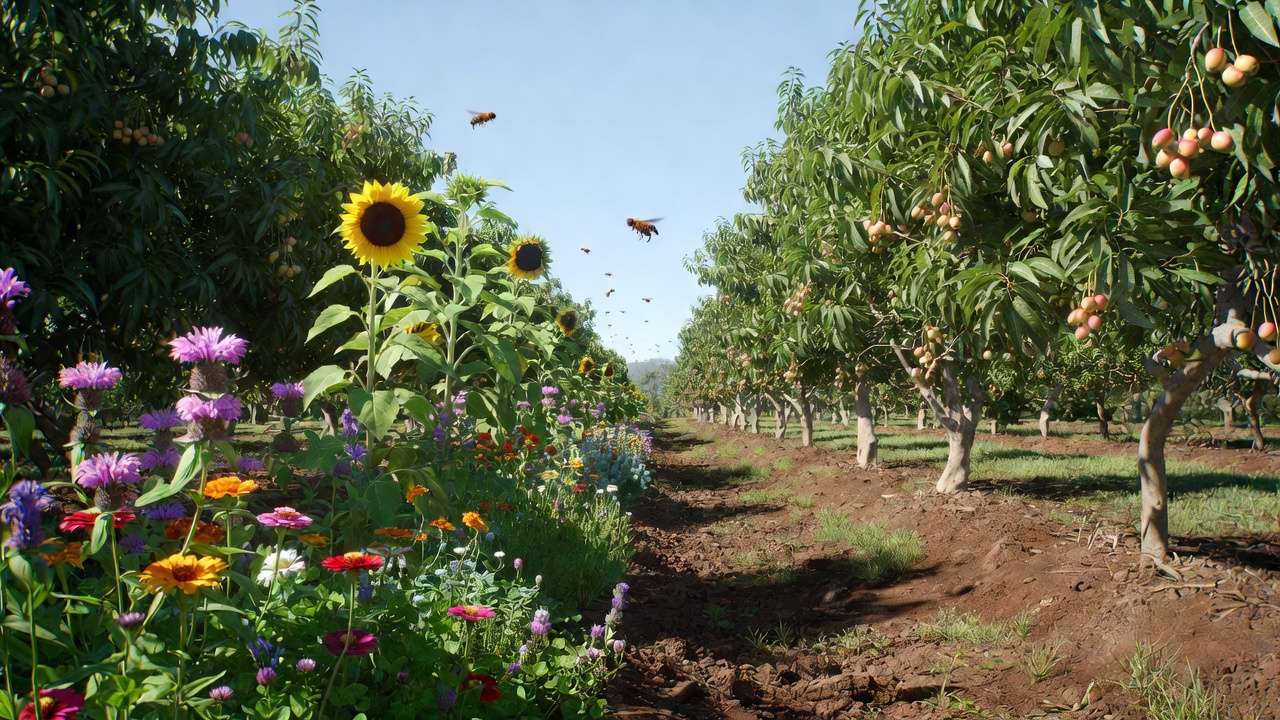
- Create pollinator strips or guilds — Plant 3–10 ft wide borders around orchard edges, or intersperse under trees. Clusters of 3+ same-species plants help pollinators forage efficiently.
- Spacing & layout tips — Group by height (tall at back, ground covers forward) and bloom time for succession. Aim for 50–70% flowering coverage from early spring to late fall.
- Planting timing — Early rainy season (post-monsoon prep) works best for establishment in tropical zones.
Native vs. Non-Native: What Works Best?
Native or locally adapted plants support regional pollinators best (e.g., Bangladesh’s native flies, stingless bees like Tetragonula, and hoverflies are key mango pollinators). They require less water/fertilizer and resist local pests. Safe non-natives like borage or marigolds add quick impact without invading. Avoid aggressive spreaders near orchards.
Maintenance Tips for Long-Term Success 🌱
- Watering & mulching — Deep, infrequent watering; organic mulch conserves moisture and suppresses weeds in humid climates.
- Avoid pesticides during bloom — Use Integrated Pest Management (IPM): encourage beneficials, hand-pick pests, or use neem-based sprays sparingly.
- Pruning & deadheading — Trim perennials to encourage more blooms; remove spent flowers for extended flowering.
- Monitoring pollinator activity — Spend 10–15 minutes weekly observing—count bee visits or install simple bee hotels for solitary species 🏠
Common Mistakes to Avoid When Planting Near Orchards ⚠️
- Planting too close (within 2–3 ft of trunks) causes root competition and disease risk.
- Choosing invasive species (e.g., some aggressive vines) that outcompete natives.
- Ignoring bloom succession—gaps leave pollinators hungry.
- Overlooking nesting habitat—add bare soil patches, bee hotels, or leave some dead wood for native bees.
Real-World Examples & Case Studies 📖
The power of pollinator-friendly garden plants near orchards becomes crystal clear when we look at real results from growers around the world—and closer to home in tropical and subtropical regions.
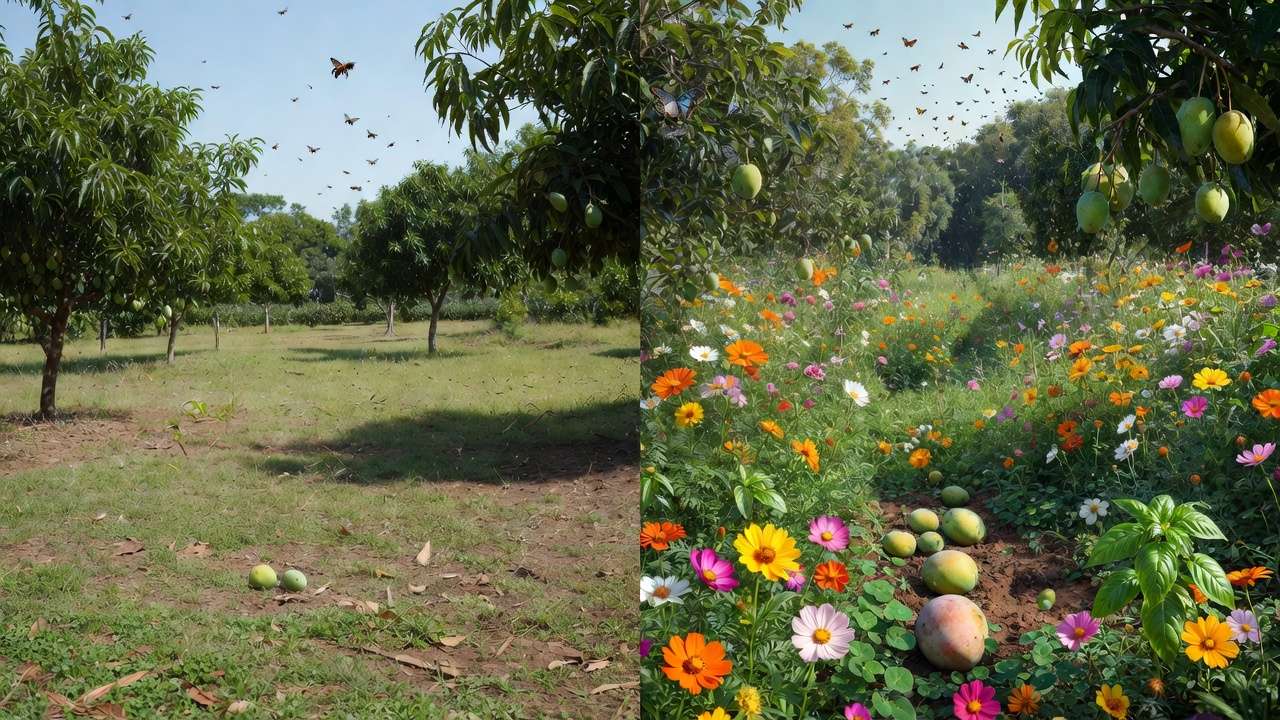
Case Study 1: Small backyard orchard transformation (tropical South Asia context) A home grower in a humid region similar to Khulna started with a 20-tree mango and litchi orchard that consistently produced only partial fruit set due to low bee activity during erratic spring weather. In year one, they planted 3-meter-wide border strips with marigolds, basil, borage, and local wild mustard relatives, plus patches of white clover under the trees. By year two, mason bees, stingless bees (Tetragonula spp.), and hoverflies were noticeably more abundant. Fruit set increased from ~45% to over 70%, with noticeably larger and sweeter mangoes. The grower reported spending far less time on hand-pollination or worrying about poor yields. Cost: minimal—just seeds and a few transplants.
Case Study 2: Commercial-scale pollinator strips in humid tropics Research conducted in mango orchards in South Florida and northern Australia (climatically comparable to parts of Bangladesh) showed that retaining or intentionally planting native weeds and wildflowers around orchard perimeters led to significantly higher pollinator diversity—including key mango visitors like stingless bees and syrphid flies. Orchards with diverse floral understory produced 20–45% more marketable fruit compared to clean-cultivated controls, with the biggest gains in years of poor weather. The added benefit? Natural enemies of fruit flies and scale insects increased, reducing pesticide needs.
Case Study 3: Bangladesh mango & litchi growers adopting floral enhancements Extension efforts and farmer trials in Khulna, Satkhira, and Bagerhat districts have begun encouraging border plantings of marigold, zinnias, sunflowers, and local nectar plants. Early feedback from participating farmers shows improved pollinator presence (especially during the critical February–April bloom window) and better fruit retention after cyclones or unseasonal rains. One cooperative reported an average 18–30% yield uplift across participating plots after two seasons of intentional pollinator habitat creation.
These examples illustrate a consistent pattern: even modest floral additions near orchards deliver measurable economic and ecological returns.
FAQs: Your Top Questions Answered ❓
How close can I plant pollinator flowers to my fruit trees? Aim for 1.5–3 meters from the trunk to avoid excessive root competition and reduce fungal disease risk from high humidity. Wider strips (3–10 m) are even better if space allows.
Do these plants attract pests or diseases to my orchard? Very rarely—if you choose wisely. Most recommended plants (marigolds, yarrow, borage, clover) actually deter or confuse common orchard pests while attracting beneficial predators. Avoid planting known alternate hosts of serious orchard diseases (e.g., certain brassicas near stone fruits if clubroot is a concern). Monitor and remove problem plants promptly.
What if I have very limited space around my trees? Start small! Even a few large pots of borage, marigolds, or basil placed strategically near the orchard edge, or a narrow 1-meter border strip of clover + creeping thyme under the canopy, can make a noticeable difference. Vertical gardening (hanging baskets of trailing nasturtiums) works too.
Are there region-specific recommendations for Khulna / southern Bangladesh? Yes! Prioritize heat-tolerant, humidity-loving plants: marigolds, zinnias, sunflowers, basil varieties, tropical salvias, lantana (non-invasive cultivars), cosmos, and local wildflowers. White/red clover and sunn hemp make excellent living mulches. Avoid very cold-sensitive perennials that struggle in the hot, wet summers. Check with local Krishi offices or Khulna University’s agriculture department for the latest native pollinator plant lists.
Will planting flowers reduce my fruit tree yields by competing for water/nutrients? Not if managed properly. Keep pollinator strips mulched, water deeply but infrequently, and avoid fertilizer-heavy annuals right against trunks. Nitrogen-fixers like clover actually benefit nearby trees. Most studies show the pollination gains far outweigh any minor competition.
How long until I see results? Noticeable increases in pollinator activity usually appear in the first full season after planting. Yield improvements are often clearest in year 2–3 once populations build and perennials mature.
Final Thoughts: Start Small, Impact Big! 🌍
You don’t need a huge budget or massive land transformation to make a real difference for your orchard and the pollinators that support it. Start with just one or two easy, high-impact plants—perhaps a cluster of marigolds and borage near your mango trees this coming season—and observe the changes 🐝.
Every additional flower you add creates another stepping stone for bees, butterflies, hoverflies, and stingless bees traveling through Khulna’s landscapes. Over time, you’ll likely enjoy:
- More consistent and higher fruit yields 🍋🥭
- Better fruit quality and size
- Fewer pest problems thanks to natural enemies
- A more beautiful, vibrant, and ecologically healthy property
The science is clear, the real-world results are promising, and the steps are straightforward. Your orchard—and the future of tropical fruit growing—will thank you.
Ready to get started? Grab a few seed packets or transplants, choose a sunny edge, and plant your first pollinator-friendly patch. Then come back and tell us in the comments how it’s going—we’d love to hear about your bees, your blooms, and your bigger harvests! 🌺✨











