
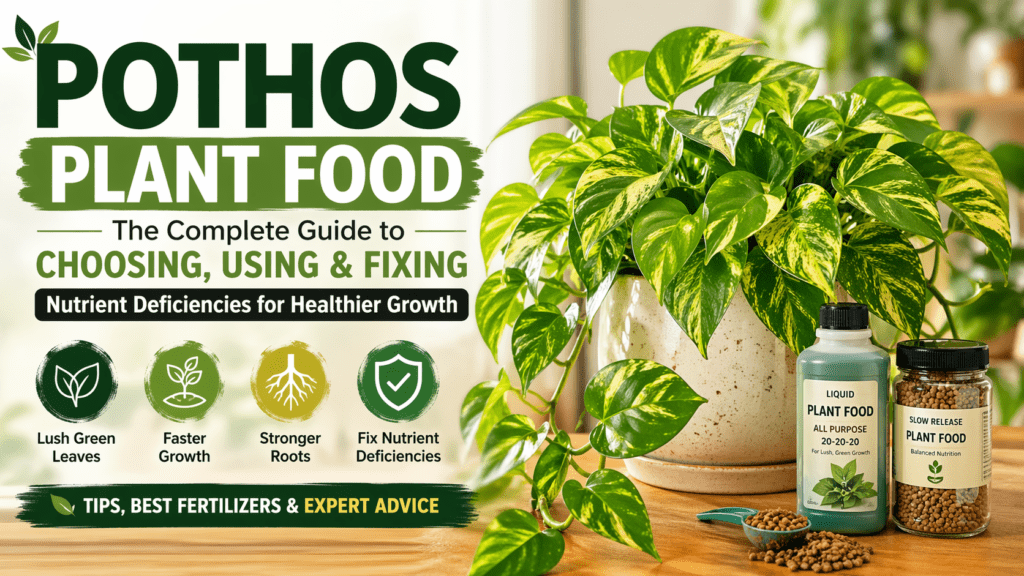
Your pothos looks… okay. Not dying, but not exactly thriving either. The vines are thin, the leaves are smaller than expected, and that rich, vibrant green? It’s starting to fade 😟
Here’s the truth most plant guides don’t emphasize enough: pothos plant food is the missing piece for turning a “surviving” plant into a lush, cascading beauty 🌿
Even though pothos is famously low-maintenance, it still depends on proper nutrition to grow faster, fuller, and healthier—especially indoors where soil nutrients get depleted quickly.
In this expert guide, you’ll learn:
- Exactly what pothos plant food your plant needs (and why)
- The best fertilizers for explosive growth 🌱
- How to fix yellow leaves, slow growth, and weak vines
- A simple feeding routine anyone can follow
If you’ve ever wondered “Why isn’t my pothos growing like the ones I see online?”—this guide will answer that completely.
🧠 Understanding Pothos Nutritional Needs (The Foundation of Healthy Growth)
🌿 What Nutrients Do Pothos Plants Need?
Like all houseplants, pothos relies on a balance of essential nutrients to thrive. These nutrients are divided into macronutrients and micronutrients.
🌱 Macronutrients (The Big 3)
- Nitrogen (N) – Drives leafy growth and vibrant green color 🍃
- Phosphorus (P) – Supports root development and overall plant strength
- Potassium (K) – Boosts disease resistance and regulates water balance
👉 For pothos, nitrogen is especially important, because it’s a foliage plant. More nitrogen = fuller, greener vines.
🧪 Micronutrients (Small but Essential)
- Iron – Prevents yellowing leaves (chlorosis)
- Magnesium – Helps with photosynthesis
- Calcium – Strengthens cell structure
Even though these are needed in smaller amounts, a lack of micronutrients can quickly show in leaf discoloration.
⚖️ How Pothos Differs From Other Houseplants
Many people assume pothos doesn’t need fertilizer because it’s “hard to kill.” That’s misleading.
🚫 The Myth:
“Pothos can grow anywhere without feeding.”
✅ The Reality:
- It survives in poor conditions—but doesn’t thrive
- Indoor soil loses nutrients over time
- Without feeding, growth becomes slow and leggy
In natural environments, pothos climbs trees and absorbs nutrients from organic debris. Indoors? You must replace those nutrients manually.
🌼 What Is Pothos Plant Food? (And Why It Matters)
🧪 Types of Plant Food Explained

Choosing the right pothos plant food can feel overwhelming—but it becomes simple once you understand the main types.
💧 Liquid Fertilizers (Best for Beginners)
- Fast-acting and easy to apply
- Mixed with water and used during watering
- Ideal for consistent feeding
👉 Best for: Quick results and control
⏳ Slow-Release Fertilizers
- Granules or pellets added to soil
- Release nutrients over weeks/months
- Low-maintenance option
👉 Best for: Busy plant owners
🌱 Organic Fertilizers
- Derived from natural sources (compost, worm castings)
- Improve soil health over time
- Lower risk of overfeeding
👉 Best for: Eco-conscious growers
⚗️ Synthetic Fertilizers
- Chemically formulated nutrients
- Immediate availability to plants
- Precise nutrient control
👉 Best for: Fast, measurable growth
🔍 Decoding Fertilizer Labels (NPK Ratios Made Simple)
Every fertilizer label shows numbers like 10-10-10 or 20-20-20. These represent:
- N = Nitrogen
- P = Phosphorus
- K = Potassium
🌿 Best NPK Ratios for Pothos
- Balanced (10-10-10 or 20-20-20) → General care
- Slightly nitrogen-heavy (like 3-1-2) → Faster leafy growth
⚠️ Common Mistakes
- Using high-phosphorus fertilizers (meant for flowering plants)
- Overfeeding with strong concentrations
- Ignoring dilution instructions
👉 Rule of thumb: Less is more with pothos feeding
🥇 Best Pothos Plant Food Options for Maximum Growth
🌟 Top Recommended Fertilizers
Here are expert-approved options based on real-world results:
✅ Balanced Liquid Fertilizer
- The safest and most effective choice
- Encourages even growth and color
🌿 Organic Options
- Worm castings (gentle and nutrient-rich)
- Compost tea (boosts soil microbes)
⏳ Slow-Release Pellets
- Great for consistent feeding
- Reduces the risk of forgetting
🏡 Homemade Pothos Plant Food (Natural Alternatives)

If you prefer natural solutions, these DIY options can work surprisingly well.
🍌 Banana Peel Fertilizer
- Rich in potassium
- Supports strong plant structure
👉 Tip: Soak peels in water for 24–48 hours
🌾 Rice Water
- Contains trace nutrients
- Mild and safe for regular use
🐟 Aquarium Water
- Packed with natural nitrogen
- Excellent for leafy growth
⚖️ Pros & Cons of DIY Feeding
Pros:
- Cost-effective 💰
- Eco-friendly 🌍
Cons:
- Nutrient levels are inconsistent
- Slower results than commercial fertilizers
👉 Expert insight: Use DIY options as a supplement, not a replacement.
📅 How Often to Feed Pothos (Seasonal Feeding Guide)
🌞 Spring & Summer Feeding Schedule
This is when your pothos grows actively 🌿
- Feed every 2–4 weeks
- Use diluted liquid fertilizer
- Increase frequency with brighter light
❄️ Fall & Winter Feeding Adjustments
Growth slows significantly in cooler months.
- Reduce feeding to once every 6–8 weeks (or stop completely)
- Avoid fertilizing in low light conditions
👉 Overfeeding in winter = root damage risk
🧴 How to Apply Pothos Plant Food Correctly (Step-by-Step Guide)
🪴 Liquid Fertilizer Application
- Dilute fertilizer to half strength
- Water the soil lightly first
- Apply evenly around the base
- Avoid splashing leaves
🌱 Slow-Release Fertilizer Use
- Sprinkle evenly on topsoil
- Lightly mix into soil
- Water thoroughly
⚠️ Common Feeding Mistakes to Avoid
- ❌ Over-fertilizing (causes salt buildup)
- ❌ Feeding dry soil (can burn roots)
- ❌ Using full-strength fertilizer
👉 Pro tip: If unsure, underfeed rather than overfeed
🚨 Signs Your Pothos Needs Plant Food (Nutrient Deficiency Guide)
🍂 Common Symptoms and What They Mean
- Yellow leaves → Nitrogen deficiency
- Brown edges → Potassium imbalance
- Small leaves → Lack of nutrients
- Slow or no growth → Feeding needed
🔧 How to Fix Nutrient Deficiencies Quickly
- Start a consistent feeding schedule
- Use balanced fertilizer
- Flush soil if over-fertilized
🌿 Advanced Tips for Lush, Fast-Growing Pothos
☀️ Light + Feeding Synergy (Why Fertilizer Alone Isn’t Enough)

One of the biggest mistakes plant owners make is expecting pothos plant food to compensate for poor lighting. It won’t.
🌞 Here’s the truth:
- Fertilizer provides nutrients
- Light provides energy (photosynthesis)
Without enough light, your pothos simply cannot use the nutrients effectively.
✅ Ideal Setup:
- Bright, indirect sunlight (near a window with sheer curtains)
- Avoid harsh direct sun (can scorch leaves)
👉 Expert tip: If your pothos is in low light, reduce feeding frequency to prevent nutrient buildup.
💧 Watering and Fertilizer Balance
Water and nutrients must work together—not against each other.
⚖️ The Right Balance:
- Soil should be slightly moist, not soggy
- Always water before fertilizing
- Ensure proper drainage (no standing water)
🚫 What Goes Wrong:
- Overwatering + fertilizer = root rot
- Underwatering + fertilizer = nutrient burn
👉 Rule: Healthy roots = better nutrient absorption 🌱
✂️ Pruning + Feeding for Fuller Growth
If your pothos looks long but sparse, pruning is your secret weapon ✂️
🌿 Why It Works:
- Encourages branching
- Produces bushier, fuller vines
🔄 Pro Strategy:
- Prune leggy vines
- Feed lightly within a week
- Provide good light
👉 Result: Faster regrowth + denser foliage
🧪 Organic vs. Synthetic Pothos Plant Food: Which Is Better?
🌱 Benefits of Organic Fertilizers
- Improves soil structure over time
- Supports beneficial microbes 🦠
- Lower risk of overfeeding
Best organic options:
- Worm castings
- Compost
- Fish emulsion
👉 Ideal for long-term plant health
⚗️ Advantages of Synthetic Fertilizers
- Immediate nutrient availability
- Precise NPK control
- Faster visible results
👉 Ideal for correcting deficiencies quickly
⚖️ Expert Recommendation
The best approach isn’t choosing one—it’s combining both strategically:
- Use synthetic fertilizer for quick growth boosts
- Use organic options for soil health and sustainability
👉 Think of it as: short-term results + long-term stability
🌍 Repotting and Soil Health: The Hidden Factor in Plant Nutrition
🪴 When to Repot Your Pothos

Even the best pothos plant food won’t help if your soil is exhausted.
🚨 Signs It’s Time to Repot:
- Roots growing out of drainage holes
- Soil dries out too quickly
- Stunted growth despite feeding
👉 Typically every 1–2 years
🌿 Best Soil Mix for Nutrient Retention
A good soil mix should be both nutrient-rich and well-draining.
🧪 Ideal Mix:
- Potting soil (base)
- Perlite (for drainage)
- Coco coir or compost (for nutrients)
👉 Healthy soil = better nutrient absorption
❓ Frequently Asked Questions About Pothos Plant Food
💬 Can pothos survive without fertilizer?
Yes—but it will grow slowly and may develop smaller leaves. Fertilizer helps it thrive, not just survive.
💬 What is the best homemade pothos fertilizer?
- Aquarium water 🐟 (best overall)
- Banana peel water 🍌 (good for potassium)
- Rice water 🌾 (mild and safe)
💬 How do I fix over-fertilized pothos?
- Flush the soil with clean water 🚿
- Let excess water drain completely
- Pause feeding for a few weeks
💬 Can I use general houseplant fertilizer?
Yes! As long as it’s balanced (like 10-10-10) and properly diluted.
💬 Why are my pothos leaves still yellow after feeding?
Possible reasons:
- Overwatering 💧
- Poor drainage
- Lack of light ☀️
- Severe nutrient imbalance
👉 Always diagnose the full environment—not just feeding.
🧾 Expert Tips & Quick Checklist (At-a-Glance Guide) ✅
✔ Feed every 2–4 weeks in growing season
✔ Use balanced liquid fertilizer
✔ Always dilute before use
✔ Reduce feeding in winter ❄️
✔ Watch for yellow leaves or slow growth
✔ Combine light + water + nutrients for best results
🌟 Conclusion: Build a Simple Feeding Routine for Thriving Pothos

At the end of the day, thriving pothos plants don’t come from complicated routines—they come from consistent, informed care 🌿
By understanding how pothos plant food works and applying it correctly, you can transform your plant from:
- Thin → full
- Pale → vibrant
- Slow-growing → fast and lush
🌱 Final Expert Insight:
You don’t need dozens of products or advanced techniques. Just focus on:
- The right fertilizer
- The right timing
- The right environment
Do that consistently—and your pothos will reward you with beautiful, cascading growth that completely transforms your space ✨











