
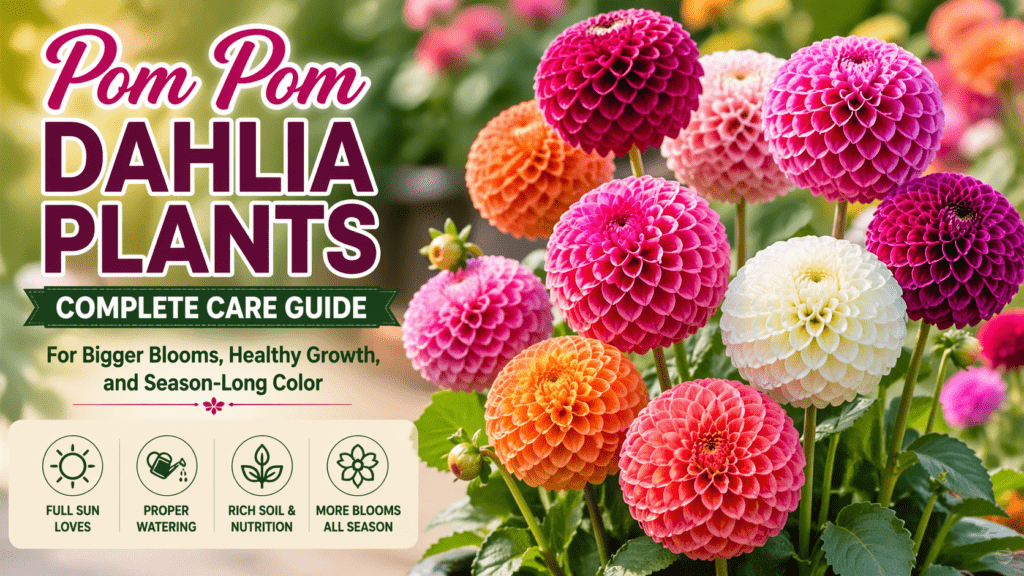
Imagine stepping into your garden and being greeted by perfectly round, jewel-like flowers that look almost too flawless to be real. That’s the magic of pom pom dahlia plants 🌼—compact, vibrant, and irresistibly symmetrical blooms that instantly elevate any garden space.
But here’s the reality many gardeners face: despite planting dahlias with excitement, they often end up with weak stems, fewer blooms, or plants that simply refuse to thrive. Sound familiar? 😟
This complete, expert-backed guide will walk you through everything you need to know—from planting and care to troubleshooting and pro-level techniques—so you can grow lush, healthy pom pom dahlia plants with abundant blooms all season long 🌸✨
🌺 What Are Pom Pom Dahlia Plants? (Understanding the Basics)
🌼 Key Characteristics
Pom pom dahlias are a unique group of dahlia varieties known for their:
- Perfectly spherical flower heads 🌐
- Tightly packed, rolled petals forming a honeycomb pattern
- Smaller bloom size (typically 2–3 inches wide)
- Strong stems ideal for cut flowers 💐
These features make them a favorite for both home gardeners and professional florists.
🌈 Popular Pom Pom Dahlia Varieties
Some standout varieties include:
- Franz Kafka – Soft lavender perfection 💜
- Noreen – Elegant pink tones 🌸
- Small World – Classic white blooms 🤍
- Mixed pompon dahlias – Ideal for colorful garden displays 🎨
🌍 Ideal Growing Zones and Climate
- Best suited for USDA zones 8–11 (perennial) 🌎
- Can be grown as annuals in cooler regions
- Thrive in warm weather with moderate humidity
- Bloom from mid-summer to the first frost ❄️
☀️ How to Grow Pom Pom Dahlia Plants Successfully
🌱 Choosing the Right Location

For optimal growth:
- Provide 6–8 hours of direct sunlight daily ☀️
- Choose a location sheltered from strong winds
- Ensure good airflow to prevent fungal diseases
🌿 Soil Requirements for Healthy Growth
Healthy soil = healthy blooms 🌱
- Well-draining soil is essential (avoid waterlogging!)
- Ideal pH: 6.0–7.0
- Enrich soil with:
- Compost 🪱
- Aged manure
- Organic matter
💡 Pro Tip: Raised beds or amended garden soil significantly improve drainage and root development.
💧 Watering Needs (Avoid Overwatering!)
Watering is where many gardeners go wrong 🚫
- Water deeply 2–3 times per week
- Keep soil moist, not soggy
- Reduce watering during rainy periods
- Add mulch to retain moisture and regulate temperature 🌿
⚠️ Overwatering can lead to tuber rot—one of the most common dahlia killers.
🌸 Planting Pom Pom Dahlia Tubers (Step-by-Step Guide)
🛠️ When to Plant
- Plant after the last frost when soil warms to at least 15°C (60°F) 🌡️
- In warmer climates, early spring planting works best
📏 How to Plant Correctly

Follow these steps:
- Dig a hole 4–6 inches deep
- Place tuber horizontally with the “eye” facing up 👀
- Space plants 12–18 inches apart
- Cover lightly with soil (don’t water immediately)
🌿 Container vs Ground Planting
Container Planting 🪴
- Great for small spaces
- Requires large pots (at least 12–16 inches deep)
- Needs excellent drainage
Ground Planting 🌍
- Better for larger, more robust plants
- Easier moisture regulation
- Ideal for mass displays
🌼 Essential Care Tips for Bigger, Healthier Blooms
✂️ Pinching and Pruning Techniques
- Pinch the central stem when plant reaches 12 inches tall
- Encourages bushier growth and more blooms 🌸
- Remove weak or overcrowded stems
🪵 Staking and Support
Pom pom dahlias may look compact, but they still need support:
- Use bamboo stakes or cages
- Tie stems gently as they grow
- Prevents bending or snapping in wind 🌬️
🌱 Fertilizing Schedule
Feed your plants like a pro 🍽️
- Use low-nitrogen fertilizer (e.g., 5-10-10)
- Apply every 3–4 weeks
- Avoid excess nitrogen—it promotes leaves, not flowers 🌿
🐛 Common Problems with Pom Pom Dahlia Plants (And How to Fix Them)
🍂 Poor or No Blooming
Causes:
- Too much nitrogen
- Lack of sunlight
- Overcrowding
Solutions:
- Increase sun exposure ☀️
- Adjust fertilizer
- Space plants properly
🐜 Pests to Watch Out For

Common pests include:
- Aphids 🐜
- Spider mites
- Slugs and snails
Control Methods:
- Neem oil spray 🌿
- Insecticidal soap
- Hand-picking pests
🍄 Diseases and Rot Issues
- Powdery mildew
- Root/tuber rot
Prevention Tips:
- Avoid overhead watering
- Improve air circulation
- Use fungicides if necessary
🌻 How to Encourage Continuous Blooms All Season
✂️ Deadheading Techniques
- Remove spent flowers regularly
- Redirects energy into new blooms 🌼
🌞 Maximizing Flower Production
- Maintain consistent feeding
- Ensure full sun exposure
- Harvest flowers frequently for more growth 💐













