
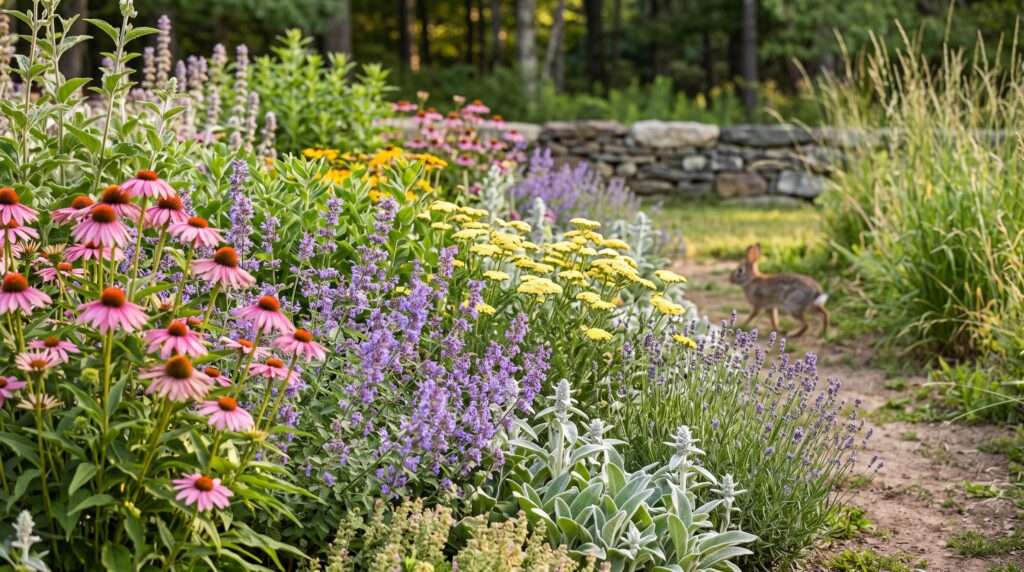
Every gardener knows the heartbreak. You spend hours meticulously planning your spring borders, amending the soil, and carefully planting your favorite blooms. Then, you step out one crisp morning, coffee in hand, only to find that your prized garden has been reduced to a buffet of chewed-down stems. If you are tired of losing your gorgeous landscaping to hungry bunnies, the secret isn’t necessarily building an unsightly fortress of wire fencing. The most effective, long-term solution is strategically designing your landscape with rabbit resistant perennial plants.
Over years of testing garden layouts, dealing with persistent local wildlife, and observing exactly which blooms survive the notorious “spring bunny buffet,” I’ve learned that you don’t have to sacrifice beauty for durability. By choosing flora with specific evolutionary defenses—like strong scents, fuzzy textures, or toxic compounds—you can create a stunning, vibrant yard that naturally repels garden pests.
In this comprehensive guide, we are going to dive deep into 15 proven, gorgeous rabbit resistant perennial plants. Complete with USDA hardiness zones, detailed care tips, and expert landscaping advice, this list will help you reclaim your garden peace and build a beautiful, bulletproof landscape. Let’s dig in! 🧤✨
🧠 Why Rabbits Eat Certain Plants (And Avoid Others) 🐇
To outsmart a rabbit, you have to understand how they forage. Rabbits are ground-dwelling herbivores with highly sensitive noses and specific textural preferences. They are drawn to tender, fleshy, smooth-leaved plants packed with moisture—think hostas, tulips, and fresh spring vegetable shoots.
However, they will actively avoid plants that trigger their natural defense mechanisms. Here is what keeps them away:
-
The Science of Taste & Smell 👃: Rabbits rely heavily on their olfactory senses. Plants with high concentrations of essential oils, strong herbal fragrances, or pungent odors (like the mint or onion families) overwhelm their sensitive noses.
-
Tactile Defenses 🌵: If a leaf is hairy, fuzzy, bristly, or leathery, a rabbit is highly likely to spit it out. They despise unpleasant textures in their mouths.
-
Toxicity ☠️: Many beautiful perennials contain natural alkaloids, sap, or compounds that are toxic or cause severe stomach upset. Local wildlife quickly learns to leave these alone.
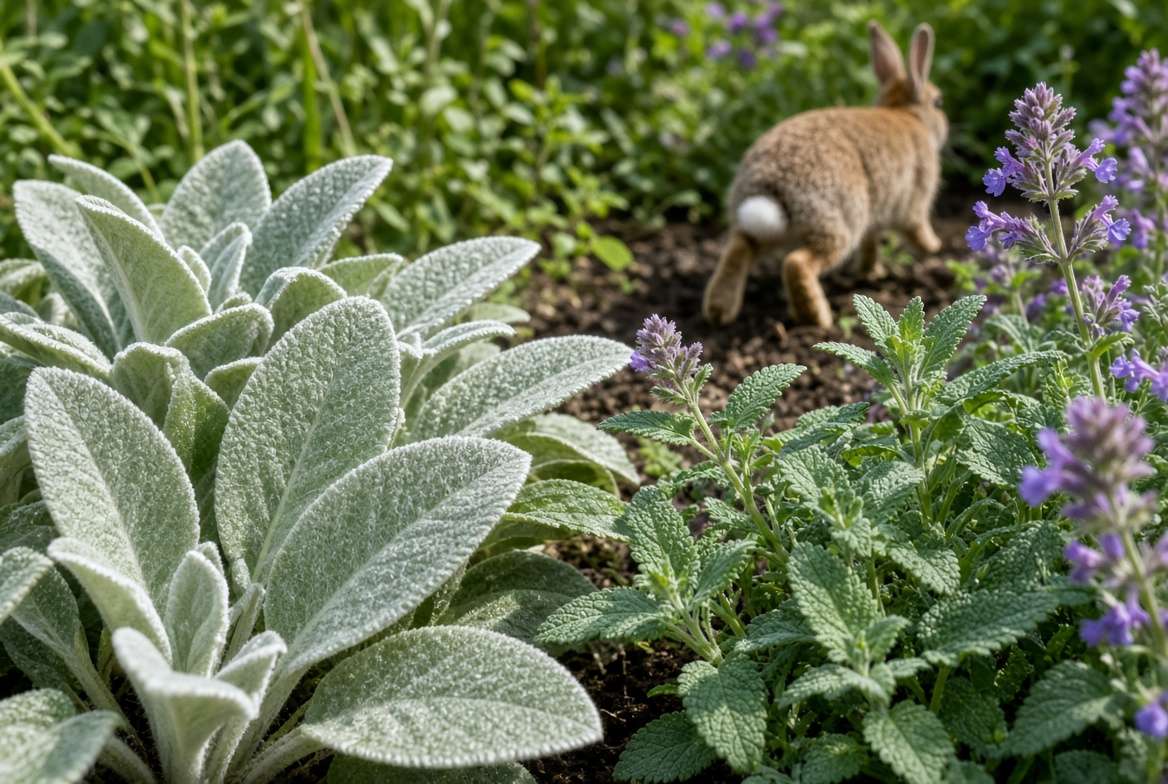
⚠️ The “Starvation Rule” (An Expert Insight): As a seasoned landscaper, I must emphasize a crucial rule of wildlife gardening: No plant is 100% “rabbit-proof.” In late winter or early spring, if natural forage is scarce and the animal is starving, a rabbit will eat almost anything to survive. The goal of using rabbit resistant perennial plants is to make your garden so unappetizing that they hop next door to find an easier, tastier meal.
📊 Quick Reference: The Rabbit’s Palate
☀️ Top Sun-Loving Rabbit Resistant Perennial Plants 🌻
If you have a sunny border that gets 6 to 8 hours of direct sunlight a day, these resilient, sun-worshipping perennials will provide season-long color without attracting unwanted furry guests.
1. Russian Sage (Perovskia atriplicifolia) 💜
-
USDA Hardiness Zones: 4-9
-
Bloom Time: Mid-summer to fall
-
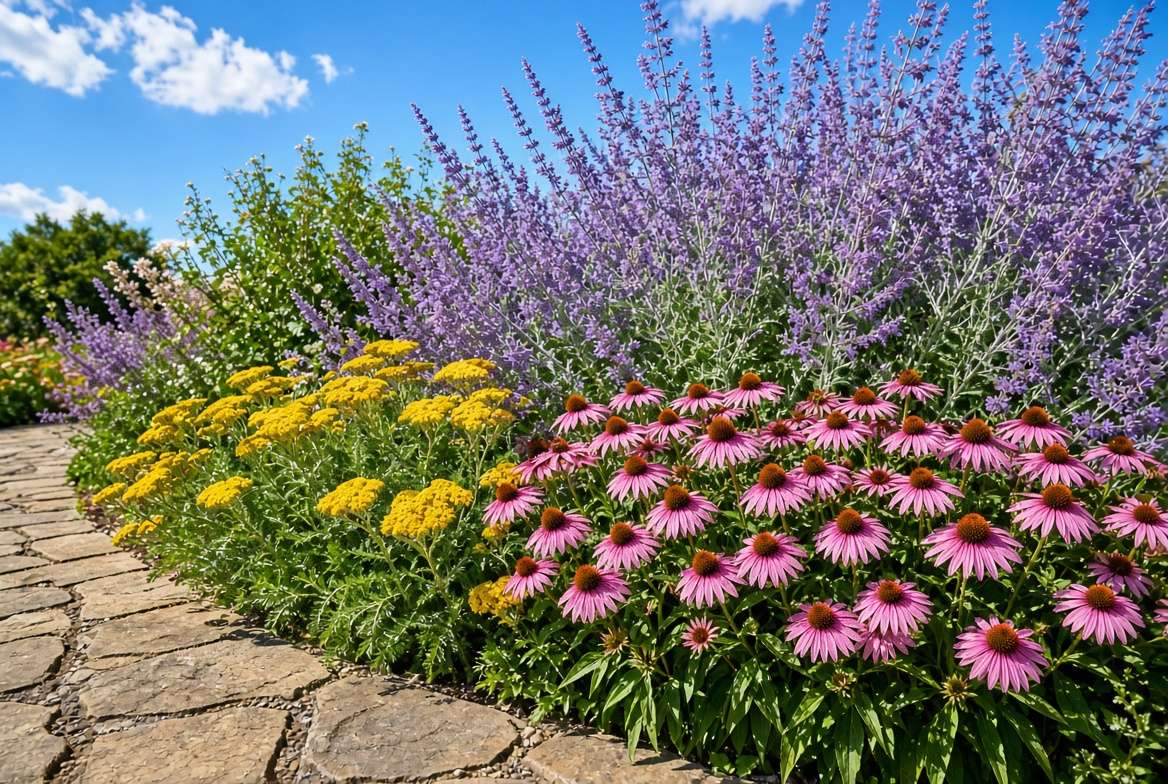
Why it works: Russian Sage is a powerhouse of defense. Its finely cut, silvery foliage emits a strong, medicinal, minty scent when brushed or bruised. Rabbits take one sniff and hop away.
-
Design & Care Tip: This plant is incredibly drought-tolerant once established. It grows up to 4 feet tall, making it an excellent structural plant for adding height, airy texture, and a cool-toned backdrop to the rear of your sunny borders.
2. Yarrow (Achillea millefolium) 🌼
-
USDA Hardiness Zones: 3-9
-
Bloom Time: Early summer to early fall
-
Why it works: Yarrow features highly aromatic, fern-like foliage. The spicy scent and the slightly rough texture of the leaves make it completely unpalatable to both rabbits and deer.
-
Design & Care Tip: Available in stunning shades of yellow, pink, red, and classic white, Yarrow thrives in poor, dry soils. It’s also a magnet for beneficial pollinators like butterflies and hoverflies, making it a must-have for an eco-friendly landscape.
3. Coneflower (Echinacea purpurea) 🌸
-
USDA Hardiness Zones: 3-9
-
Bloom Time: Mid-summer to early fall
-
Why it works: While the petals are beautiful, the stems of the Coneflower are slightly prickly, and the prominent, raised cone centers are hard and bristly. Rabbits generally find them too tough and scratchy to bother with.
-
Design & Care Tip: Echinacea is a North American native plant that is exceptionally rugged. Expert E-E-A-T Note: Resist the urge to deadhead all your coneflowers in the fall! Leaving the seed heads intact provides a crucial winter food source for local songbirds, like goldfinches. 🐦
4. Catmint (Nepeta racemosa) 🐈
-
USDA Hardiness Zones: 3-8
-
Bloom Time: Early summer to early fall
-
Why it works: Catmint contains a compound called nepetalactone. While this essential oil sends domestic felines into a state of euphoria, it acts as a highly effective, natural repellent for rabbits, deer, and even some pest insects.
-
Design & Care Tip: Catmint creates a beautiful, soft, billowing mound of purple-blue flowers that looks fantastic spilling over walkways or stone retaining walls. Pro Tip: Shear the plant back by about one-third immediately after its first major flush of blooms fades; this will force a beautiful second blooming period later in the summer!
5. Lavender (Lavandula angustifolia) 🌿
-
USDA Hardiness Zones: 5-9
-
Bloom Time: Early to mid-summer
-
Why it works: Humans adore the soothing, luxurious scent of lavender, but to a rabbit’s sensitive nose, the high concentration of essential oils is absolutely overwhelming and deeply offensive.
-
Design & Care Tip: The number one killer of Lavender isn’t pests—it’s “wet feet.” This Mediterranean native requires extremely well-draining soil. If you have heavy clay, plant your lavender in raised mounds or mix a generous amount of horticultural grit or pea gravel into the planting hole to prevent winter root rot.
🌳 Beautiful Shade-Loving Perennials Rabbits Ignore 🪴
Shade gardens present a unique challenge, as many of the classic woodland plants (like hostas) are absolute delicacies for wildlife. However, you can easily build a lush, textured shade oasis using these beautiful, rabbit-deterring alternatives.
6. Bleeding Heart (Dicentra spectabilis) 💖
-
USDA Hardiness Zones: 3-9
-
Bloom Time: Late spring to early summer
-
Why it works: Despite its delicate, romantic appearance, the Bleeding Heart is a tough survivor. The entire plant contains isoquinoline alkaloids, rendering it highly unpalatable and mildly toxic to rabbits, deer, and other foraging mammals.
-
Design & Care Tip: This herbaceous perennial thrives in partial to full shade and rich, moist woodland soil. It typically goes dormant and dies back in the heat of mid-summer, so plant it alongside late-emerging shade companions like ferns to fill the gap.
7. Astilbe (Astilbe spp.) ☁️
-
USDA Hardiness Zones: 4-9
-
Bloom Time: Early to late summer (depending on variety)
-
Why it works: Rabbits prefer smooth, fleshy leaves that are easy to chew. Astilbe features deeply cut, fern-like foliage and fuzzy, feathery flower plumes that completely lack the crisp, succulent texture bunnies crave.
-
Design & Care Tip: The secret to thriving Astilbe is consistent moisture. If your shade garden is dry, they will quickly crisp up and turn brown. Add a thick layer of organic mulch around the base to help retain vital soil moisture during hot summer weeks.
8. Hellebore / Lenten Rose (Helleborus) 🥀
-
USDA Hardiness Zones: 4-9
-
Bloom Time: Late winter to early spring
-
Why it works: Hellebores are among the first plants to bloom when the snow melts—a time when rabbits are often starving. Yet, they remain untouched. Why? Their thick, leathery, evergreen leaves and stems are highly toxic, containing alkaloids that animals instinctively avoid.
-
Design & Care Tip: Expert E-E-A-T Note: The sap of the Hellebore can cause mild to severe skin irritation in humans, too. Always wear your gardening gloves when pruning back the tattered winter foliage to make room for new spring blooms.
9. Japanese Painted Fern (Athyrium niponicum) 🌿
-
USDA Hardiness Zones: 3-8
-
Bloom Time: Grown for spring-to-fall foliage
-
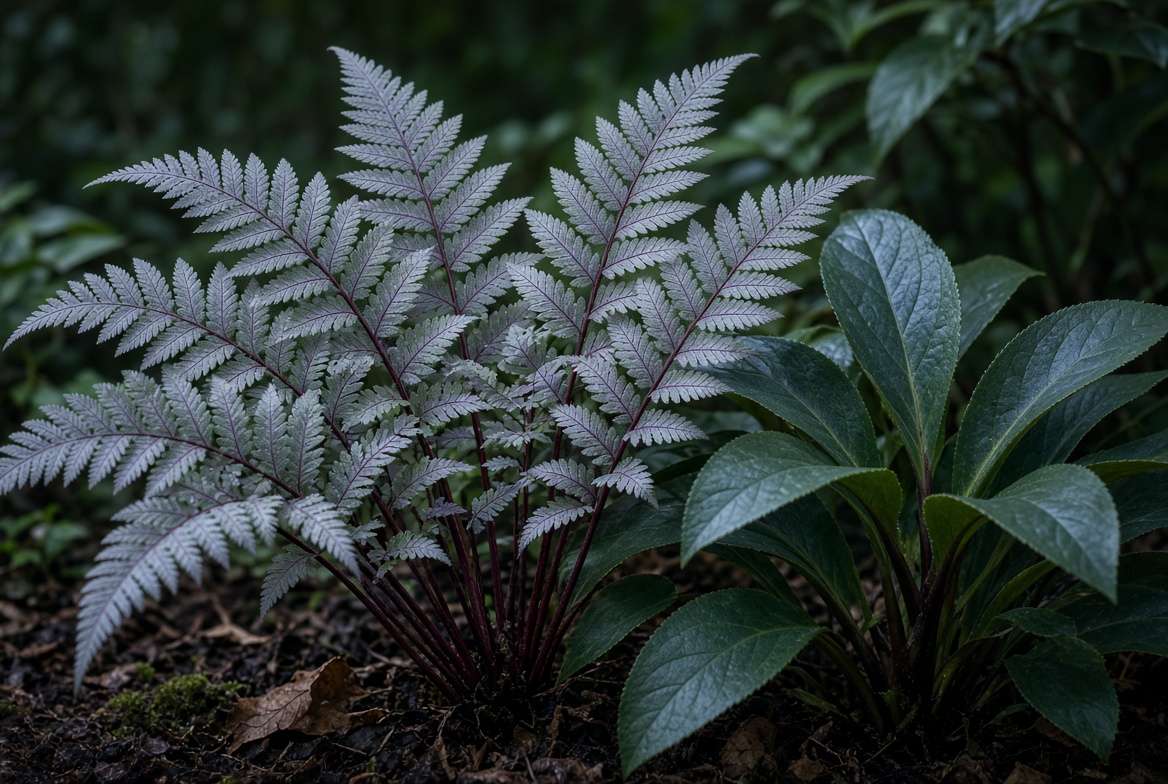
Why it works: Ferns reproduce via spores rather than flowers and seeds, and their ancient cellular structure makes them generally unappealing to modern mammalian herbivores. The tough, wiry fronds are rarely browsed.
-
Design & Care Tip: The striking silvery-green fronds with deep burgundy ribs add incredible illumination to dark, shady corners of your landscape. They pair beautifully with solid green shade-lovers, creating excellent visual contrast.
10. Lungwort (Pulmonaria) 🌸
-
USDA Hardiness Zones: 3-9
-
Bloom Time: Early to mid-spring
-
Why it works: Pulmonaria is a textural nightmare for a rabbit. The broad, speckled leaves are covered in coarse, stiff hairs that make them feel rough and abrasive. Mammals simply hate the way it feels in their mouths.
-
Design & Care Tip: Lungwort is a fantastic early nectar source for emerging bees. It thrives in dappled shade and prefers soil that is kept evenly moist but not waterlogged.
🛡️ The “Living Fortress”: Architectural & Foliage Perennials 🏰
Sometimes, the best defense is a good offense. These perennials act as a botanical forcefield, utilizing intense aromas, robust structures, and bizarre textures to guard themselves—and occasionally their neighboring plants—from nibbling teeth.
11. Ornamental Onion (Allium) 🧅
-
USDA Hardiness Zones: 3-9
-
Bloom Time: Late spring to early summer
-
Why it works: Alliums are members of the onion and garlic family. When brushed or bitten, they release a strong, sulfurous scent that repels almost all garden pests, including rabbits, deer, and voles.
-
Design & Care Tip: These striking globe-shaped blooms look best when planted in sweeping drifts or groupings of at least five to seven bulbs. Let the seed heads dry on the stalk for spectacular architectural winter interest.
12. Bee Balm (Monarda) ❤️
-
USDA Hardiness Zones: 4-9
-
Bloom Time: Mid to late summer
-
Why it works: As a proud member of the mint family, Bee Balm features square stems and highly aromatic foliage. The intense fragrance masks the scent of nearby, more vulnerable plants, confusing hungry foragers.
-
Design & Care Tip: Monarda is notorious for developing powdery mildew. To prevent this, plant them in an area with excellent air circulation, avoid overhead watering, and select newer, mildew-resistant cultivars like ‘Jacob Cline’.
13. Lamb’s Ear (Stachys byzantina) 🐑
-
USDA Hardiness Zones: 4-9
-
Bloom Time: Early summer (grown primarily for foliage)
-
Why it works: Touch a Lamb’s Ear leaf, and you’ll instantly understand why rabbits avoid it. The foliage is covered in dense, silvery-white woolly fuzz. For a rabbit, trying to eat this plant is like trying to eat a mouthful of dry cotton balls.
-
Design & Care Tip: This makes a phenomenal, drought-resistant edging plant for the front of a hot, sunny border. Avoid heavily mulching right up to the crown, as it is susceptible to rot in humid environments.
14. Peony (Paeonia) 🌺
-
USDA Hardiness Zones: 3-8
-
Bloom Time: Late spring to early summer
-
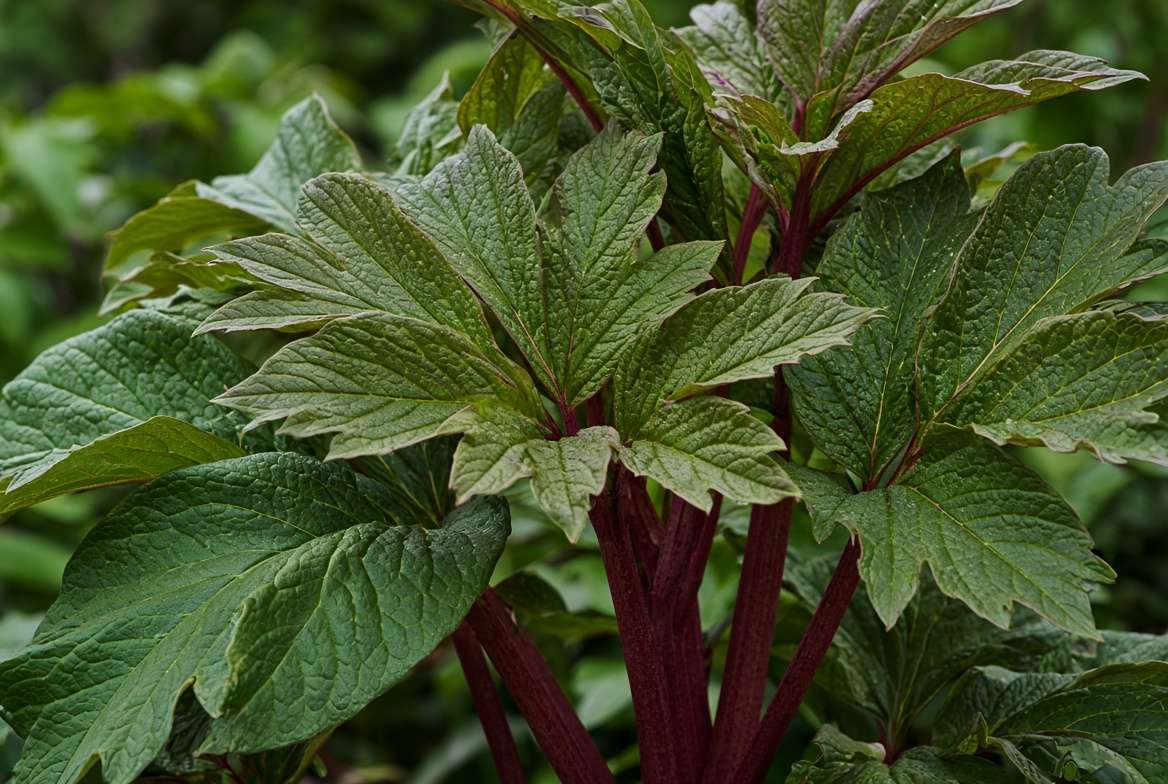
Why it works: Peonies produce thick, deeply lobed, leathery foliage that lacks the tenderness rabbits prefer. Furthermore, the intense fragrance of the massive blooms often deters highly scent-sensitive wildlife.
-
Design & Care Tip: Expert E-E-A-T Note: The most common reason peonies fail to bloom is improper planting depth. Ensure the “eyes” (the pink growth buds on the root) are planted no deeper than 1.5 to 2 inches below the soil surface.
15. Salvia (Salvia nemorosa) 🎆
-
USDA Hardiness Zones: 3-8
-
Bloom Time: Early summer to early fall
-
Why it works: Salvia (Woodland Sage) combines two powerful defense mechanisms: highly textured, slightly wrinkled leaves and a pungent, earthy aroma that intensifies when the sun hits it.
-
Design & Care Tip: Cut the entire plant back by half after the first wave of vibrant purple or pink flower spikes fade. This will encourage a dense, tidy habit and a strong second flush of blooms for late-season color.
🛠️ Pro Landscaping Strategies to Maximize Plant Survival 🏡
Even with a yard full of rabbit resistant perennial plants, a truly bulletproof garden requires a little strategic planning. Here are three professional landscaping techniques to ensure your garden thrives unbothered.
The Art of Companion Planting 🤝
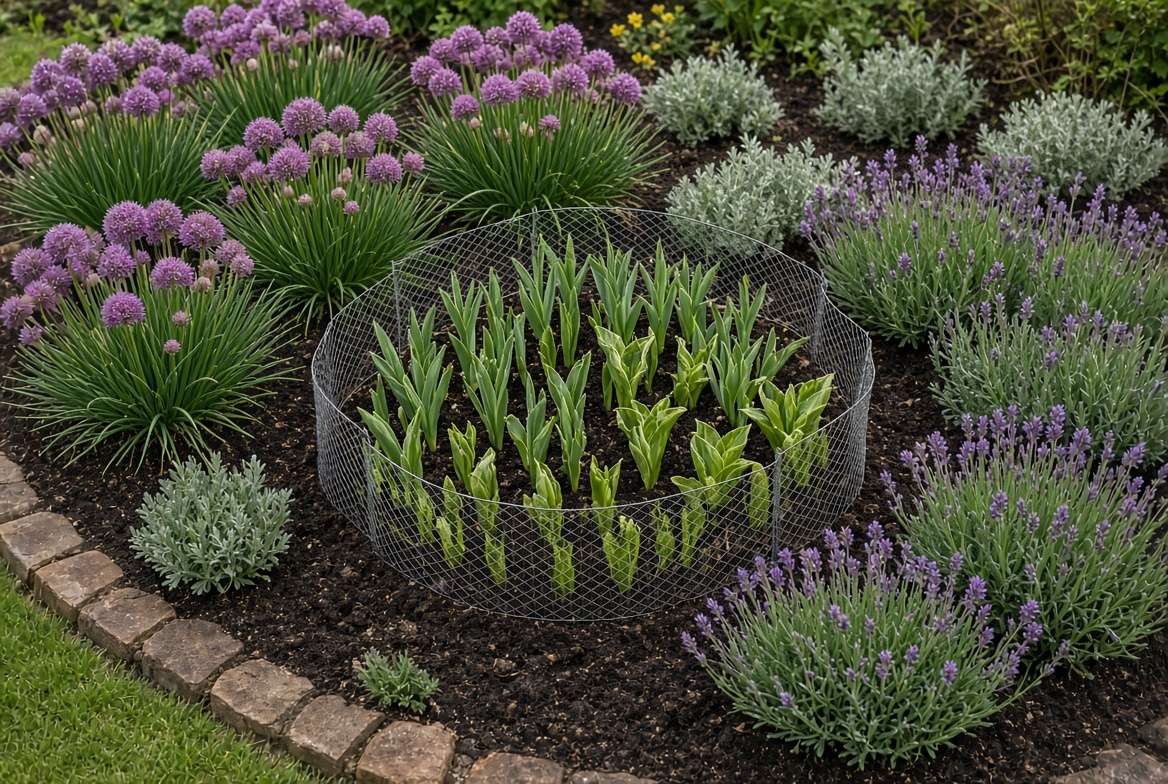
You can use highly resistant plants to act as “bodyguards” for your more vulnerable favorites. By interplanting strongly scented perennials (like Alliums, Lavender, or Catmint) in a dense ring around tender plants (like Lilies or young Phlox), you create an olfactory barrier. The overwhelming scent of the resistant plants masks the attractive smell of the vulnerable ones, causing rabbits to bypass the area entirely.
Temporary Spring Protection 🚧
Remember the “Starvation Rule.” The most dangerous time for your garden is early spring when new, tender green shoots first emerge from the soil. Even resistant plants are at risk when they are young and soft. Use simple cloches (wire or plastic covers) or a temporary ring of chicken wire around newly emerging crowns for the first 3 to 4 weeks of spring. Once the foliage matures, toughens up, and develops its natural fuzzy or leathery texture, you can safely remove the protection.
Natural Repellents That Actually Work 🌶️
If you have exceptionally aggressive wildlife, natural repellent sprays can bridge the gap until your perennials establish their mature defenses.
-
DIY Sprays: A heavily steeped mixture of cayenne pepper, crushed garlic, and a drop of dish soap (as a binder) sprayed on foliage makes plants taste awful.
-
Commercial Granules: Predator urine granules (often fox or coyote) tap into a rabbit’s biological fear.
-
Crucial Tip: Always reapply both sprays and granules immediately after heavy rain or intense overhead watering, as they wash away easily.
❓ Frequently Asked Questions (FAQs) About Rabbit Resistant Plants 🙋♀️
Are there any Hostas that are rabbit resistant?
Generally speaking, hostas are considered “rabbit candy.” However, thick-leaved, highly corrugated varieties (such as ‘Sum and Substance’ or ‘Blue Angel’) are more difficult for them to chew. While not truly resistant, these tougher varieties will slow them down compared to thin-leaved hostas.
Will rabbits eat perennials if they are desperate?
Yes. During extreme winters, severe droughts, or very early spring before wild forage grows, starving rabbits will bypass natural deterrents and eat plants they normally avoid. This is why temporary spring protection is so valuable.
Do rabbit-resistant plants also deter deer?
There is a massive overlap! Deer share similar aversions to fuzzy, strongly scented, and toxic plants. Almost all the plants on this list—especially Bleeding Heart, Yarrow, Allium, and Lavender—are highly rated as both deer and rabbit resistant.
What is the absolute most rabbit-proof flower?
If forced to pick the champions, Alliums (Ornamental Onions) and Hellebores (Lenten Rose) are virtually untouched. Their potent chemical defenses (sulfur scent and toxic alkaloids, respectively) make them the safest bets for heavily browsed gardens.
🌱 Conclusion: Reclaiming Your Garden Peace 🕊️
Gardening alongside local wildlife does not have to be a frustrating, losing battle. By outsmarting garden pests with science and biology, you can put away the ugly chicken wire and get back to enjoying your yard. Incorporating a diverse mix of these 15 rabbit resistant perennial plants will provide you with stunning textures, season-long color, and a garden that naturally defends itself.
This season, instead of fighting nature, work with it. Swap out your most heavily browsed casualties for a few tough, aromatic, or fuzzy defenders, and watch your landscape thrive.
Which of these rabbit resistant perennials are you planning to add to your garden this spring? Let us know your favorites—and your best bunny-battling tips—in the comments below!











