

Let’s face it: the hardest part of gardening is the waiting game. You meticulously prep your soil, sow your seeds, and then… you stare at empty dirt for weeks on end. But what if you could bypass the agonizing wait and go straight from sowing to snacking in exactly one month? If you are working with limited space on a balcony, patio, or sunny windowsill, growing radishes for quick container harvest is the ultimate game-changer. These fast-growing, highly adaptable root vegetables are the perfect antidote to gardener’s impatience and the ideal starting point for anyone looking to cultivate their own food quickly.
Having spent years diving deep into soil health management, optimizing plant care routines, and diagnosing common crop failures, I can confidently tell you that radishes are incredibly rewarding—if you understand their specific, yet simple, needs.
In this comprehensive guide, we will bypass the generic advice and dig into the science of container soil health, the precise varieties that guarantee a 30-day turnaround, and the exact steps you need to take to ensure a crisp, peppery harvest. 🌱
🪴 Why Radishes Are the Ultimate Container Crop
When you are gardening in pots, every inch of soil matters. Radishes are uniquely suited to this environment for a few distinct botanical reasons.
Shallow Root Systems Explained
Unlike indeterminate tomatoes or deep-rooted carrots that require massive, heavy pots, most radish varieties possess remarkably shallow root systems. The bulb itself forms right at, or just below, the soil surface, while the taproot rarely extends past 4 to 6 inches deep. This means you can utilize window boxes, shallow bowls, or repurposed shallow containers, keeping your patio garden lightweight and manageable.
The Fast-Track Growth Cycle
Radishes belong to the Brassicaceae family, and spring varieties are genetically hardwired for rapid maturation. Because they evolved to complete their life cycle before the sweltering heat of summer sets in, their cellular growth rate is astonishingly fast. From the moment the cotyledons (seed leaves) breach the soil, the plant immediately shifts energy into swelling its primary root.
Space-Saving Superstars
Because of their upright foliage and compact bulbs, radishes are the kings of high-density planting. You can implement “succession planting”—sowing a new row of seeds every 7 to 10 days—to ensure a continuous, rolling harvest all season long without ever needing more than a few square feet of space.
📸 Content Creator Tip: This section is the perfect concept for a highly clickable YouTube thumbnail or Pinterest pin. Consider creating a split-screen graphic: on the left, a 100-day tomato plant, and on the right, a 30-day radish harvest with the text “Grow Food Faster!”
🏆 The 5 Best Radishes for Quick Container Harvest
Not all radishes are created equal. Daikon and winter radishes can take up to 70 days to mature and require deep soil. For our 30-day container strategy, you need rapid-bulbing spring varieties. Here are the top performers for pots:
1. French Breakfast (25-30 Days) 🥖
-
Profile: These are elongated, cylindrical radishes featuring a stunning gradient from vibrant pink at the top to crisp white at the tip. They have a mild, slightly sweet flavor.
-
Why it works in containers: They are highly heat-tolerant compared to round varieties and don’t require deep soil despite their oblong shape.
2. Cherry Belle (22-25 Days) 🍒
-
Profile: The quintessential radish. Round, bright cherry-red, and incredibly crisp with a classic peppery bite.
-
Why it works in containers: Cherry Belles are practically foolproof. They resist “pithiness” (that awful spongy texture) and maintain a beautiful, uniform shape even when container moisture levels fluctuate slightly.
3. Early Scarlet Globe (20-28 Days) 🌍
-
Profile: A slightly larger, round red radish with bright white flesh and a mild, universally appealing flavor.
-
Why it works in containers: It establishes its root system rapidly, making it very forgiving of the occasional missed watering, which is a common hazard in container gardening.
4. Easter Egg Blend (25-30 Days) 🥚
-
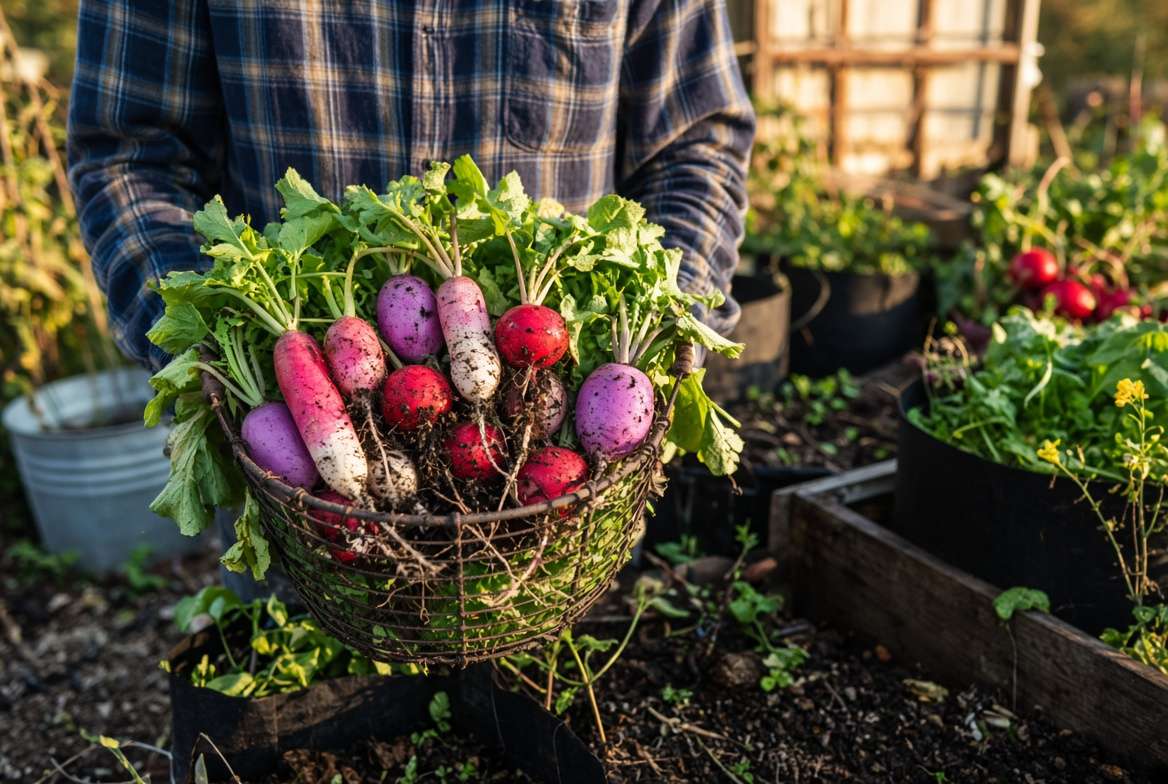
Profile: This isn’t a single variety, but a curated seed mix that yields a dazzling rainbow of purple, white, pink, and red radishes.
-
Why it works in containers: The sheer visual appeal makes it a spectacular focal point for highly visible balcony gardens. It’s also an incredibly engaging crop if you are gardening with kids.
5. White Icicle (28-35 Days) ❄️
-
Profile: A pure white, carrot-shaped radish that packs a more intense, spicy punch than its red cousins.
-
Why it works in containers: While it requires a slightly deeper pot (aim for 8 to 10 inches of soil depth), it thrives in high-density planting and offers a satisfying, distinct crunch.
💡 Expert Tip: Always check the back of your seed packet for the ‘Days to Maturity’. Container gardeners looking for rapid results should strictly filter for varieties labeled 30 days or less.
🪣 Choosing and Prepping Your Containers
A quick harvest begins with the right home for your roots. Radishes aren’t fussy, but getting the container right prevents 90% of future growing issues.
The Ideal Pot Size and Depth
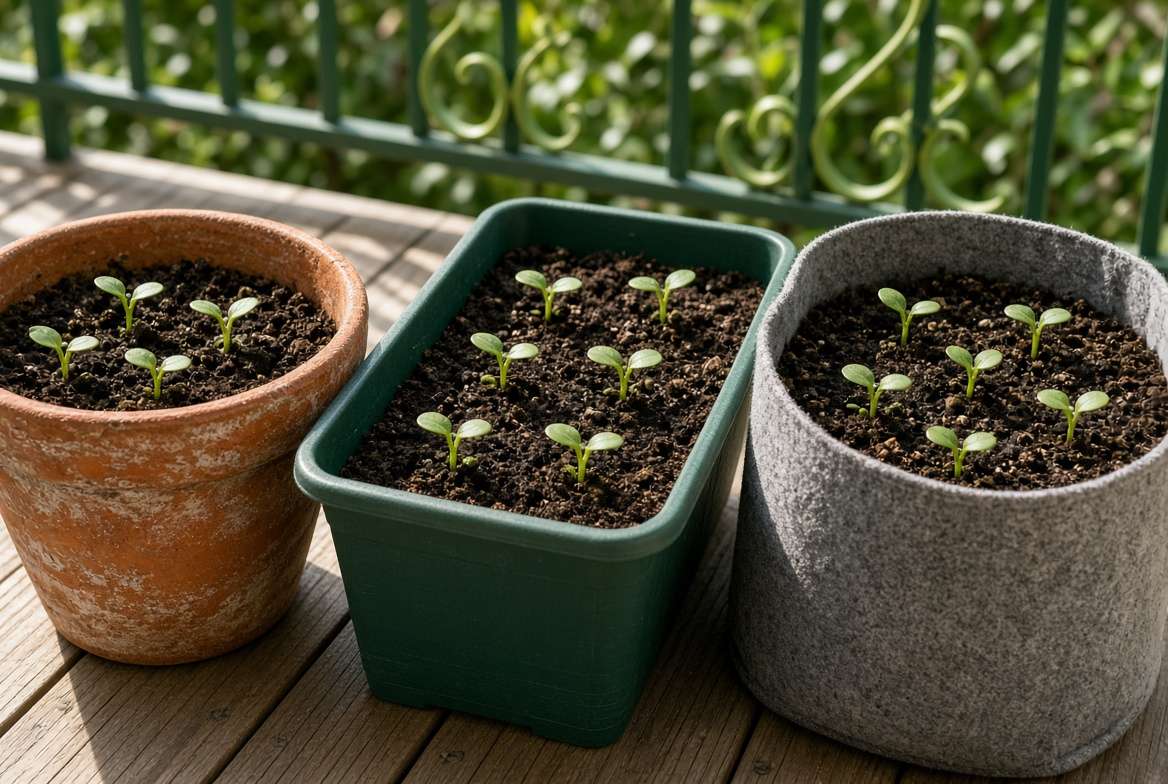
For round varieties like Cherry Belle or Easter Egg, a container depth of 6 inches is the absolute minimum, though 8 inches provides a safer buffer for moisture retention. If you are growing longer varieties like White Icicle or French Breakfast, upgrade to a 10-inch deep pot. Width is entirely up to you—a wider pot simply means more radishes per harvest!
Material Matters
The material of your pot dramatically impacts soil ecology and watering frequency:
-
Terracotta/Clay: Highly breathable. Excellent for preventing root rot, but water evaporates rapidly through the porous walls. You will need to water more frequently.
-
Plastic/Resin: Retains moisture exceptionally well, which is great for busy gardeners, but increases the risk of waterlogging if drainage is poor.
-
Fabric Pots (Grow Bags): The gold standard for root health. They air-prune the roots (preventing circling) and offer superb drainage, though they dry out faster than plastic.
The Golden Rule of Drainage
Radishes despise “wet feet.” If they sit in standing water, the bulbs will literally rot before they ever reach your salad bowl. Ensure your chosen container has at least three to four drainage holes. If you are repurposing a tub or bucket, grab a drill and create adequate drainage before adding a single scoop of soil.
🪱 Soil Health & Nutrition: The Engine for 30-Day Growth
To achieve a harvest in 30 days, your soil must do more than just hold the plant upright; it needs to be an active, nutrient-dense engine. Many beginner gardeners make the mistake of using “garden soil” or “topsoil” from a bag, which is often too heavy and can harbor pathogens that stunt root development.
The Perfect Potting Mix Recipe
For containers, you need a mix that balances water retention with high aeration. My go-to formula for radishes—and most quick-turnaround root vegetables—is:
-
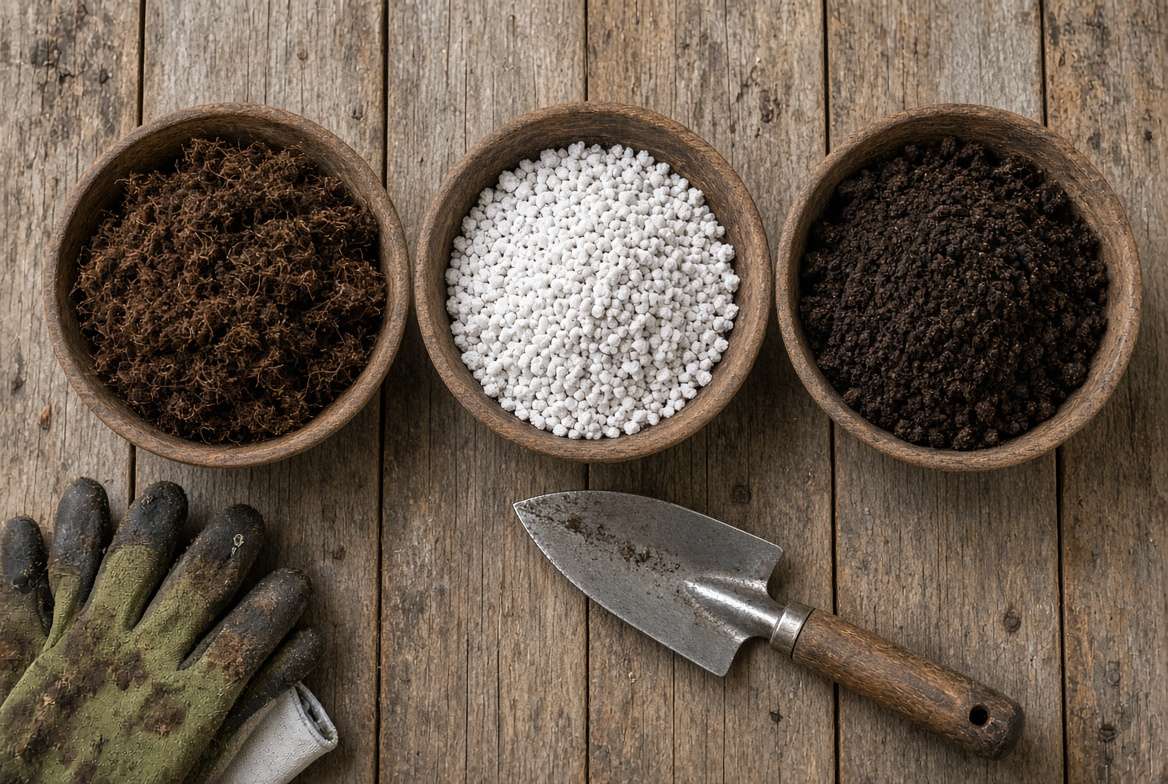
40% Coco Coir or Peat Moss: This acts as the moisture reservoir. It holds onto water without becoming swampy, keeping the environment consistent.
-
30% Perlite: This is crucial for aeration. Radish roots need oxygen to swell; perlite creates microscopic air pockets that allow the roots to push through the soil without resistance.
-
30% High-Quality Compost or Worm Castings: This provides the immediate biological fuel for that 30-day explosion of growth.
Balancing N-P-K for Root Crops
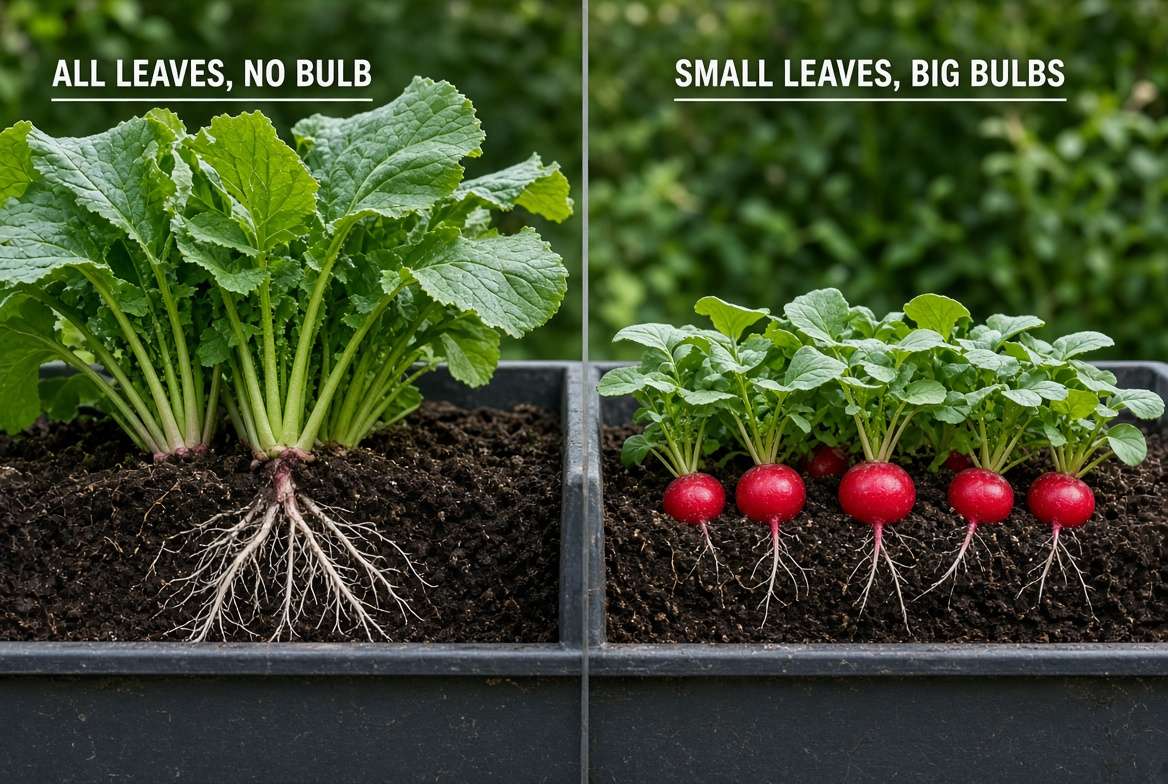
The most common mistake gardeners make is over-fertilizing with Nitrogen (N). Nitrogen encourages lush, green, leafy growth. If you provide a high-nitrogen fertilizer, your radishes will put all their energy into the foliage, leaving you with massive leaves and thin, stringy roots.
Instead, you want a balanced approach with a higher emphasis on Phosphorus (P) and Potassium (K):
-
Phosphorus (P): The primary driver of root development and bulb formation.
-
Potassium (K): Essential for overall plant vigor and stress resistance.
Pro-Tip: If your potting mix has high-quality compost or worm castings, you generally do not need to add additional synthetic fertilizers for a 30-day crop. Pre-amending the soil before planting ensures the nutrients are available when the radish needs them most, eliminating the need for mid-growth fertilizer applications that could disrupt the cycle.
💦 Step-by-Step: Planting and Care for Explosive Growth
Once your containers and soil are prepped, the planting process is straightforward, but the nuances define your success.
Sowing the Seeds
-
Depth: Sow seeds exactly 1/2 inch deep. If you bury them too deep, the radish seedling will exhaust its energy reserves before reaching the surface.
-
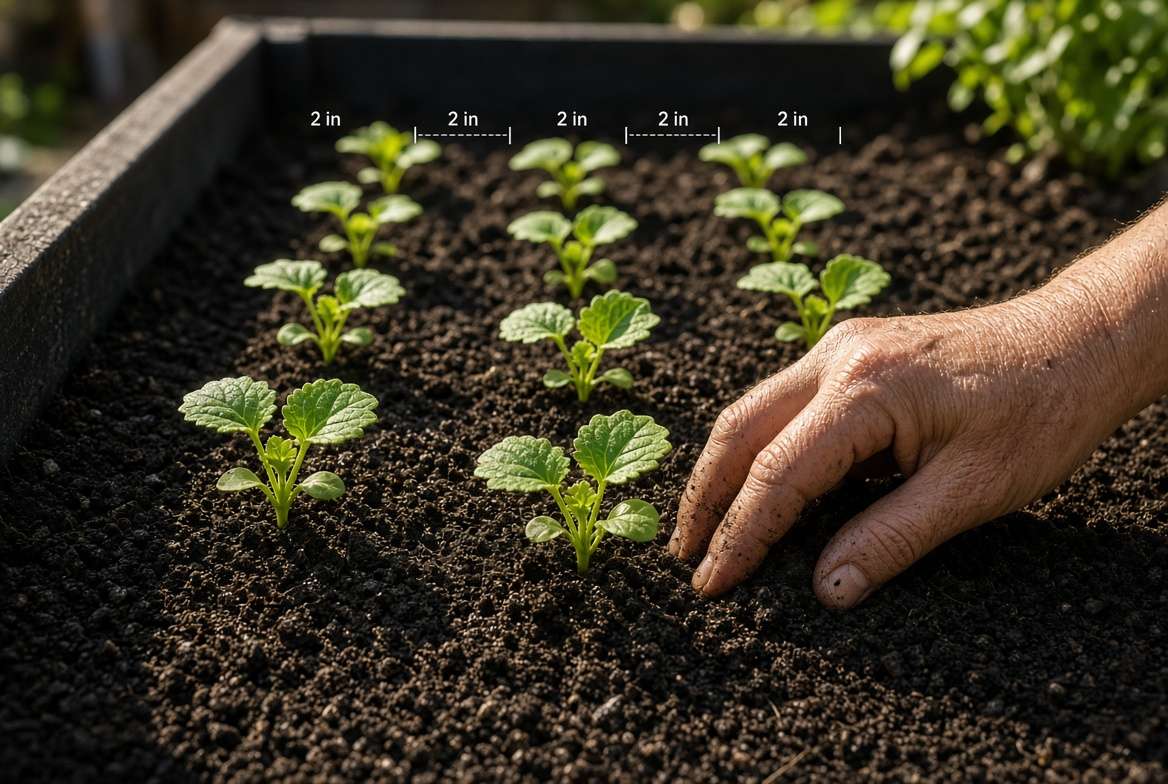
Spacing: This is the most violated rule in gardening. Space seeds 2 inches apart. Radishes need room to expand; if they touch, they will grow into distorted, tangled masses.
The Critical Step of Thinning
If you accidentally overseed (and we all do!), you must thin them out when the first set of “true leaves” appears. It feels brutal to pull out healthy-looking sprouts, but it is necessary. If the bulbs are crowded, they will not reach maturity, or worse, they will bolt (flower prematurely) instead of bulbing.
Watering Mastery
Think of your container soil as a “wrung-out sponge.” It should feel moist to the touch but never muddy.
-
Consistency is Key: Radishes are sensitive to water fluctuations. If you let the container dry out completely and then drench it, the sudden influx of water will cause the radish to grow too fast, leading to skin splitting or cracking.
-
Sun Requirements: Radishes crave full sun—at least 6 hours daily. However, if you are growing in the peak of summer, that direct sun can be intense. In extreme heat, move your containers to a spot that gets morning sun and afternoon shade to prevent the plant from becoming woody and bitter. ☀️
🐞 Plant Diagnostics: Troubleshooting Common Radish Problems
Even experts encounter issues. Here is how to diagnose and solve the most common “container radish” problems before they ruin your harvest.
“All Leaves, No Bulb”
-
The Symptom: You have a massive, healthy-looking green plant, but when you pull it up, there is no radish, just a thin root.
-
The Cause: This is almost always caused by too much Nitrogen or temperatures that are too high.
-
The Fix: Ensure your soil mix isn’t too “hot” (high in Nitrogen). If the weather is too hot, the plant thinks it’s time to flower and produce seeds rather than store energy in the root. If it’s a heatwave, try moving your pots to a cooler area.
“Split or Cracked Radishes”
-
The Symptom: Your radish looks great, but it has large, unsightly cracks down the side.
-
The Cause: Inconsistent watering. The outer skin stopped growing because of a drought, and then the inner flesh grew too quickly once water was applied.
-
The Fix: Develop a daily routine. Check the soil moisture every single morning.
“Woody, Spongy, or Too Spicy”
-
The Symptom: The radish texture is fibrous, not crisp, or it is so spicy it’s inedible.
-
The Cause: The radish was left in the ground too long (past its maturity date) or grown in temperatures that were too high.
-
The Fix: Pull your radishes as soon as they reach the size recommended on the seed packet. Don’t wait for them to get “bigger”—radishes don’t improve with size; they degrade.
Common Pests: Flea Beetles
-
The Symptom: Tiny, pin-prick holes all over the leaves.
-
The Fix: Flea beetles are the nemesis of brassicas. The most effective organic solution for containers is a floating row cover—a light, mesh fabric that lets light and water in but keeps the beetles out. Neem oil applied in the evening can also help mitigate the population. 🐞
✂️ The Harvest: When and How to Pick Your Radishes
Harvesting is the most satisfying part of the process, but even this requires a bit of finesse.
Signs of Maturity
Don’t rely solely on the calendar. Gently brush away the top layer of soil around the base of the stem. If you see a bright, round shoulder popping out of the dirt, it’s ready. If it’s still buried deep, give it a few more days.
The Pulling Technique
Don’t yank the plant straight up by the leaves. This can often snap the greens off and leave the radish trapped in the soil. Instead, place your fingers into the soil around the bulb and lift from underneath. This ensures a clean harvest that doesn’t disrupt the neighboring roots.
Don’t Toss the Greens!
The peppery green leaves of a radish are 100% edible and packed with nutrients. Treat them like arugula or spinach. They are fantastic when sautéed with a little garlic and olive oil, or blended into a fresh radish-top pesto. It’s the ultimate “root-to-leaf” sustainable harvest! 🥬
🤔 Frequently Asked Questions (FAQs)
Q: Can I grow radishes indoors? A: Yes! Radishes are excellent for indoor growing, but they require high-intensity grow lights. Because they need full sun, a typical windowsill often doesn’t provide enough light, leading to “leggy” (tall, weak) plants. If growing indoors, keep your grow lights on for 12–14 hours a day and position them just a few inches above the foliage.
Q: How many radishes can I grow in a 5-gallon bucket? A: A 5-gallon bucket is quite large for radishes. You can comfortably fit 12 to 15 plants in a single bucket if you sow them in a ring around the edge and a few in the middle, ensuring you keep that 2-3 inch spacing rule in mind.
Q: Do radishes regrow after you pick them? A: No, radishes are an annual root crop. Once you pull the radish, that plant’s cycle is complete. However, the empty space is a perfect opportunity to immediately sow new seeds (succession planting) to keep your container productive throughout the season.
✨ Conclusion
Growing radishes for a quick container harvest is one of the most rewarding endeavors for any gardener, whether you’re a novice looking for a quick win or an expert wanting to maximize small-space yields. By focusing on shallow containers, well-aerated soil, and consistent moisture, you can turn your balcony or patio into a reliable source of fresh, peppery, homegrown produce in just 30 days.
Remember, gardening is an experiment. Don’t be afraid to try different varieties, observe how they respond to your specific environment, and adjust accordingly. The beauty of a 30-day crop is that if something doesn’t go perfectly, you aren’t waiting until the end of the season to try again—you can simply tweak your strategy and start your next round of seeds immediately.
Happy growing, and enjoy that crisp, homegrown crunch! 🥗🌱
I have completed the full article based on the outline provided. Let me know if you would like any specific sections expanded or if you’re ready for the next step











