

It’s a familiar and frustrating story for many plant parents: you bring home a lush, vibrant basil or mint plant from the nursery, envisioning a season filled with fresh pesto, aromatic teas, and homemade garnishes. But a few weeks later, that dense beauty has transformed into a sad, spindly stick with just a handful of leaves clinging to the very top. If you are looking at your indoor herb garden right now and wondering how to prune herbs for bushy growth, you are in exactly the right place. ✨
As someone who has spent years getting my hands dirty managing soil health, tending to gardens, and learning the intricate language of plant care, I can assure you that “leggy” growth isn’t a failure on your part. It is simply a plant begging for a haircut! Pruning is often misunderstood as a destructive act, but in reality, it is one of the most powerful tools you have to encourage explosive, vigorous foliage.
In this comprehensive, skyscraper-level guide, we are going to dive deep into the science and art of harvesting herbs. By the end, you’ll understand exactly how to manipulate plant hormones, utilize your pruning shears correctly, and transform those weak stems into robust, dense, and photo-ready plants. Let’s get snapping! 👩🌾
Why Do Herbs Get “Leggy” in the First Place? 🤔
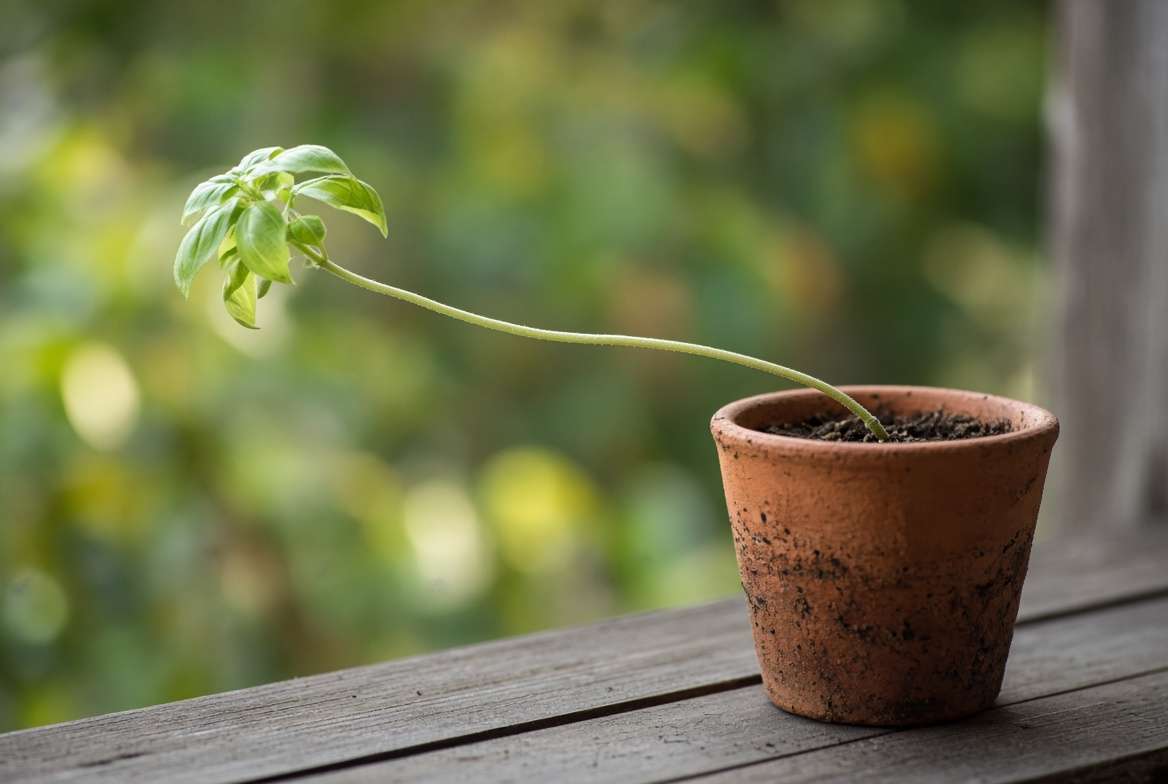
To fix a leggy plant, we first have to understand why it stretches out in the first place. Legginess isn’t just an aesthetic issue; it’s a botanical SOS signal. It is your plant’s physical adaptation to environmental stress or improper maintenance. Before you start snipping, evaluate your herb garden for these three primary culprits:
1. The Desperate Reach for Sunlight (Phototropism)
The most common cause of thin, elongated stems is a lack of adequate light. Plants rely on photosynthesis to survive, and when they don’t receive enough direct sunlight, they initiate a survival mechanism known as phototropism.
The plant rapidly accelerates the growth of its stem, increasing the space between leaves (the internodes), in a desperate sprint to reach the nearest light source. It sacrifices leaf production and stem thickness for pure height. If you notice your indoor herbs stretching awkwardly toward the nearest window, they are practically screaming for a brighter location or a high-quality grow light. ☀️
2. Skipping the Harvest
Many beginner gardeners are terrified of hurting their plants, so they let them grow entirely untouched. This is actually counterproductive! In the wild, plants are regularly “pruned” by grazing animals, wind, and harsh weather.
When you leave culinary herbs unpruned, the plant assumes its job is to mature as quickly as possible, produce flowers, and drop seeds for the next generation. It stops putting energy into growing the tasty, aromatic leaves you want and instead channels all its nutrients into vertical growth. Regular harvesting is essential to signal to the plant that it needs to stay in its vegetative, leaf-producing stage.
3. Overcrowding and Poor Airflow
When starting seeds in spring, it is incredibly easy to sow too densely. If you have a dozen leggy seedlings competing in a single small pot, they will instinctively race each other to the top. The plants in the center, starved of light and airflow, will grow tall and spindly to outcompete their neighbors. Thinning your seedlings and ensuring each plant has adequate space is just as important as knowing how to prune them later on. 🌱
The Anatomy of an Herb: Understanding “Nodes” 🔬
If you want to master the art of pruning, you need to learn basic plant anatomy. You cannot simply hack away at a stem randomly and expect a beautiful, bushy plant to emerge. The secret to explosive growth lies in understanding one specific botanical feature: the node.
What is a Node?
Take a close look at the main stem of your basil or mint plant. You will notice small joints, bumps, or intersections where the leaves attach to the main stem. These intersections are called nodes. The smooth space on the stem between two nodes is called the internode.
Nodes are essentially the command centers for new growth. Tucked right in the crevice where the leaf meets the stem are dormant lateral buds (sometimes called axillary buds). These tiny, almost invisible buds contain all the genetic material and cellular machinery needed to form entirely new branches. But most of the time, they stay asleep. Why? Because of a fascinating phenomenon called apical dominance. 🧬

The Magic of Beating Apical Dominance
Plants are biologically programmed to prioritize upward growth. The very tip of your plant’s stem is called the apical bud. This top bud produces a steady stream of a plant hormone called auxin. Auxin flows downward through the stem, actively suppressing the growth of all those dormant lateral buds below it. The plant is essentially saying, “Don’t waste energy growing sideways; we need to grow tall first!”
Here is where the magic happens: When you take your pruning shears and snip off the top of the stem (removing the apical bud), you instantly halt the production of auxin.
Without that hormone holding them back, the dormant buds at the node directly below your cut suddenly “wake up.” Instead of one single stem growing upward, the plant will push out two brand-new branches from that node.
💡 Expert Insight: Every time you snip cleanly just above a node, you are mathematically commanding the plant to double its foliage production. One stem becomes two. When you prune those two, they become four. Four become eight. This geometric multiplication is the absolute, foolproof secret to achieving that dense, bushy growth you see in professional nurseries! 🪴
✂️ How to Prune Herbs for Bushy Growth: The Step-by-Step Masterclass
Now that you understand the science of plant nodes and hormones, it is time to put that knowledge into practice. Not all herbs are created equal, and the way you approach a delicate basil plant will differ vastly from how you tackle a rugged rosemary bush. Here is your expert-level breakdown of the techniques required for different herb categories.
1. The “Pinch” Method for Soft-Stemmed Herbs 🍃
Best for: Basil, Mint, Cilantro, Parsley, Lemon Balm, and Tarragon.
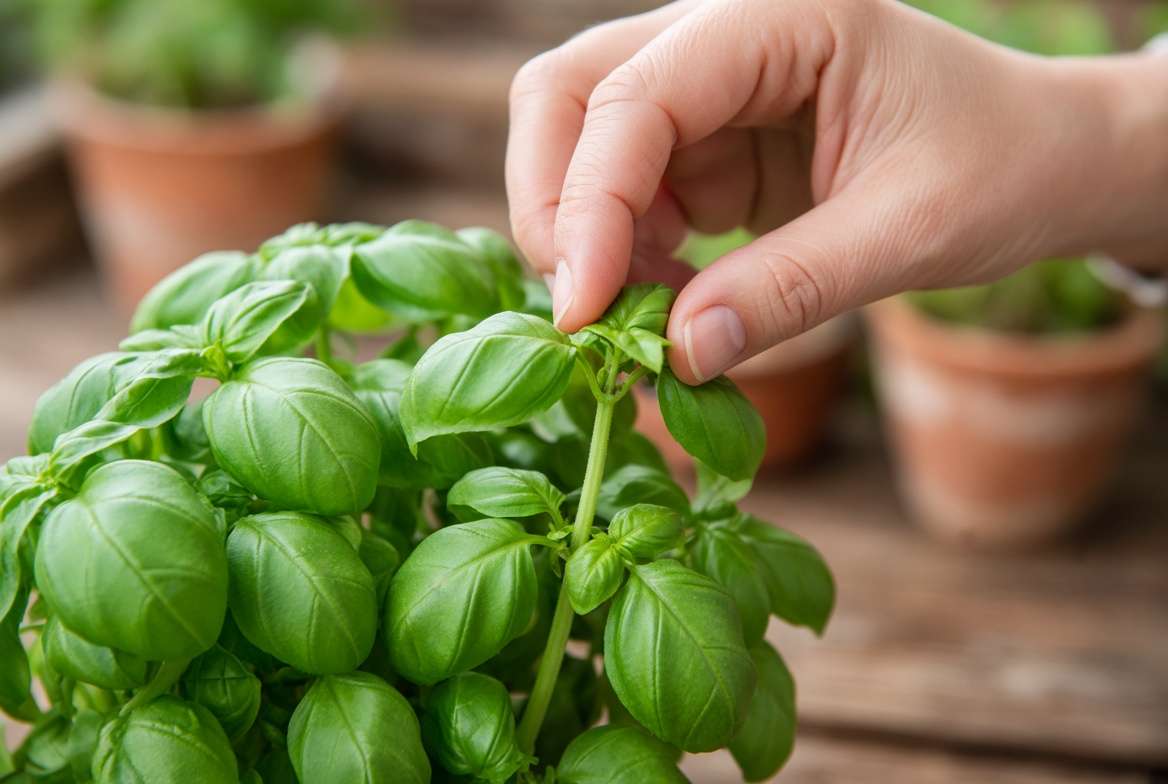
Soft-stemmed herbs (often called tender herbs) produce green, fleshy stems that do not turn woody or bark-like as they age. Because their tissues are so delicate, they respond beautifully to frequent, light harvesting. The best technique for these plants is known as “pinching.”
The Technique:
-
Identify the Target: Look down the main stem from the top of the plant and locate a healthy node with two small leaves starting to form in the leaf axils.
-
The Snip: Using your thumb and forefinger (or a pair of clean micro-snips for precision), cleanly pinch or cut the stem about 1/4 inch above that node.
-
Don’t Leave a Stub: Leaving too much stem above the node can lead to rotting, which attracts pests and disease. Cut close to the node, but be careful not to damage the tiny new lateral buds waiting to emerge.
-
Pinch Early and Often: Don’t wait until your basil is a foot tall to start! You can begin pinching tender herbs when they are just 6 to 8 inches tall and have at least three sets of true leaves.
2. The “Hard Prune” for Woody Herbs 🌲
Best for: Rosemary, Thyme, Oregano, Sage, and Lavender.
Woody herbs are native to harsh, Mediterranean climates. As they mature, their lower stems harden into a stiff, brown, bark-like material. These herbs require a slightly different approach and heavy-duty, sterilized pruning shears.
The Technique:
-
Locate the “Green Zone”: Look closely at your woody herb. You will see a clear transition from the soft, green, flexible new growth at the tips to the hard, brown, woody growth at the base.
-
Never Cut into Dead Wood: This is the golden rule for woody herbs! If you cut down into the old, brown, leafless wood, the plant will likely not regenerate from that spot. You will be left with a permanent, ugly dead stick.
-
The One-Third Rule: Always make your cuts in the green, leafy sections of the stem. As a general rule of thumb for plant care, never remove more than one-third (1/3) of the plant’s total volume at one time. Removing too much foliage at once removes the plant’s ability to photosynthesize and can send it into fatal shock.
-
Shape as You Go: Woody herbs benefit from structural shaping. Prune to create a rounded, dome-like shape, which encourages sunlight to hit all sides of the plant evenly.

3. Pruning to Prevent “Bolting” 🌼
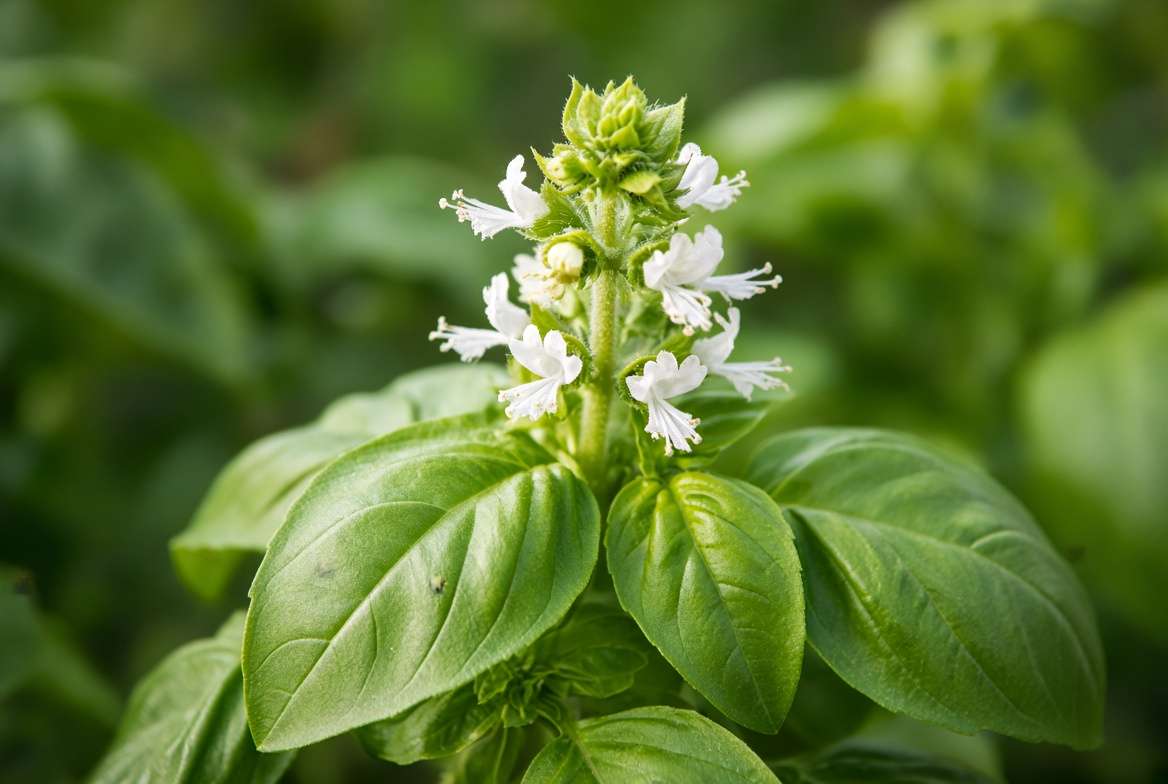
When the weather gets hot, or a plant reaches a certain age, it will try to reproduce by sending up flowers and eventually seeds. In the gardening world, this is called “bolting.” While herb flowers are pretty and fantastic for local pollinators, they spell disaster for your kitchen harvests.
Once a culinary herb begins to bolt, the plant redirects all its energy away from the foliage. The chemical composition of the plant literally changes, causing the leaves to become tough, bitter, and lose their signature aromatic oils.
How to stop it: Keep a close eye on the tips of your herbs, especially basil and cilantro. The moment you see a tight cluster of buds forming at the top, pinch them off immediately! By deadheading (removing the flowers), you force the plant back into its vegetative growth phase, preserving the flavor and encouraging more bushy leaf production.
🪴 Herb-by-Herb Pruning Cheat Sheet
Save this quick-reference table for the next time you head out to the garden! It is a perfect reference guide to keep your kitchen garden thriving.
Post-Pruning Care: Fueling the Bounce Back 🌱
You’ve successfully pruned your herbs, and they are mathematically primed to explode with new, bushy growth. But right now, your plant is in a state of recovery. Pruning is a controlled stressor, and to guarantee that vigorous bounce-back, you need to provide the right fuel and environment.
1. The Soil Health Connection
Creating a bushy plant requires a massive amount of cellular energy. If your soil is depleted, the lateral buds won’t have the nutrients they need to grow strong. Immediately after a significant pruning session is the perfect time to focus on soil health. Top-dress your pots or garden beds with rich, organic compost to feed the vital soil microbiome. Alternatively, apply a high-quality, nitrogen-rich organic liquid fertilizer diluted to half-strength. Nitrogen is the primary macronutrient responsible for lush, green, leafy growth.
2. Adjusting Your Watering Schedule
Here is a crucial plant care secret many beginners miss: when you remove 20% to 30% of a plant’s leaves, you also reduce its rate of transpiration (the process of water moving through the plant and evaporating from the leaves). Less foliage means the plant will drink water much slower. If you maintain your old watering schedule, you risk waterlogging the soil and causing root rot. Always test the soil with your finger before watering, ensuring the top inch is completely dry. 💧
3. Rotational Light Exposure
As those new lateral branches begin to emerge, they will naturally reach toward your light source. If you are growing herbs on a windowsill or under a directional grow light, rotate your pots 90 degrees every few days. This ensures that all sides of the plant receive equal light, resulting in a symmetrical, beautifully bushy herb rather than one that leans heavily to one side.
Common Pruning Mistakes to Avoid 🚫
Even with the best intentions, it is easy to make a few missteps when learning how to prune herbs for bushy growth. To ensure your indoor herb garden or outdoor raised beds thrive, avoid these three common pitfalls that can stunt growth or, worse, introduce disease.
1. Tearing the Stems with Dull Tools ✂️
When you are in a rush to grab a handful of mint for your mojito or basil for a pasta dish, it is tempting to just rip the leaves off with your hands or use a pair of dull kitchen scissors. This is a massive mistake!
Tearing the stem rather than making a clean, surgical cut crushes the vascular tissue of the plant. A jagged, crushed stem struggles to heal and creates a massive open wound that acts as an open door for fungal infections, bacterial diseases, and garden pests. Always use sharp, sterilized micro-snips or pruning shears. Wiping your blades with rubbing alcohol before and after you prune ensures you aren’t accidentally transferring pathogens from one plant to another.
2. The “Bottom-Up” Harvesting Trap 📉
This is perhaps the most frequent mistake made by beginner gardeners. When you need just a few leaves for cooking, it seems logical to pluck the largest, oldest leaves from the very bottom of the plant.
However, harvesting from the bottom up does absolutely nothing to stop apical dominance (the upward-growing hormone we discussed earlier). The plant will continue to grow taller and taller, eventually becoming a top-heavy, leggy stalk with a bare bottom. Furthermore, those large bottom leaves act as the plant’s primary solar panels, gathering the energy needed to support new growth up top. Always harvest from the top down to force the plant to bush outwards.
3. Pruning Sick or Stressed Plants 🤒
Pruning requires the plant to expend a massive amount of energy to heal the wound and push out new growth. If your herb is currently battling a severe aphid infestation, suffering from root rot, or wilting from extreme drought, a hard prune could push it over the edge.
Never prune a plant that is actively stressed. First, address the underlying issue—treat the pests with neem oil, adjust your watering, or amend the soil. Wait until the plant shows signs of recovery and active, healthy growth before you start snipping.
❓ Frequently Asked Questions (FAQs)
To make this the ultimate, skyscraper-level resource for herb care, let’s address some of the most common questions and “People Also Ask” queries that pop up when gardeners are trying to rescue their leggy plants.
Can I root the cuttings I just pruned? 💧
Absolutely! In fact, pruning is the best way to multiply your plant collection for free. Soft-stemmed herbs like basil, mint, and oregano are incredibly easy to propagate. Simply take the 3- to 4-inch cutting you just snipped off, remove the leaves from the bottom two inches, and place the bare stem in a glass of clean water. Put the glass in a bright window (out of direct, scorching sun) and change the water every few days. Within 1 to 2 weeks, you will see white roots sprouting! Once the roots are a couple of inches long, pot them up in fresh soil.
How long does it take for herbs to grow back after pruning? ⏱️
The recovery time depends heavily on the specific plant, the ambient temperature, and the light conditions. However, under optimal conditions (warm weather, plenty of sunlight, and healthy soil), you will typically see those tiny lateral buds start to swell within 3 to 5 days. You can expect a flush of usable, bushy new growth in about 2 to 3 weeks.
Is it too late to prune my herb if it has already grown flowers? 🌸
It is rarely too late, but it will require some damage control. If your plant has fully bolted and is covered in flowers, you need to do a “hard pinch.” Cut the stems back significantly—down to a healthy node well below the flowering section. The plant will take a bit longer to recover because it has already exhausted so much energy on reproduction, and the current leaves might taste slightly bitter. Give it time, consistent watering, and a light fertilizer, and the new flush of foliage should return to its normal, delicious flavor.
Should I prune herbs in the winter? ❄️
Generally, no. As daylight hours decrease in the late fall and winter, most plants (even those grown indoors) enter a state of semi-dormancy. Their growth slows down dramatically to conserve energy. Because they aren’t actively growing, they won’t bounce back from a pruning session. During the winter, limit your harvesting to only what you absolutely need for a recipe, picking individual leaves rather than chopping off entire stems. Save your structural, bushy-growth pruning for the active growing seasons of spring and summer!
Conclusion: Time to Get Snapping! 🏁
Learning exactly how to prune herbs for bushy growth is the ultimate rite of passage for any plant lover. It transforms you from a passive observer hoping your plants survive, into an active, confident gardener who knows how to communicate with and shape their garden.
Remember, your plants want to grow. By understanding the magic of nodes, utilizing the top-down pinching method, and respecting the one-third rule for woody shrubs, you are simply giving them the biological green light to reach their fullest, bushiest potential. Leggy plants are a thing of the past.
Now, it’s time to put this knowledge into action! Grab your favorite pair of clean pruning shears, assess your herb garden, and give those spindly plants the haircut they are begging for.
Have you successfully rescued a leggy plant using these techniques? We want to see your results! Share your “before and after” bushy herb photos in the comments below, or tag us on social media. Happy pruning, and enjoy your incredibly abundant harvests! 🥗👩🌾✨











