
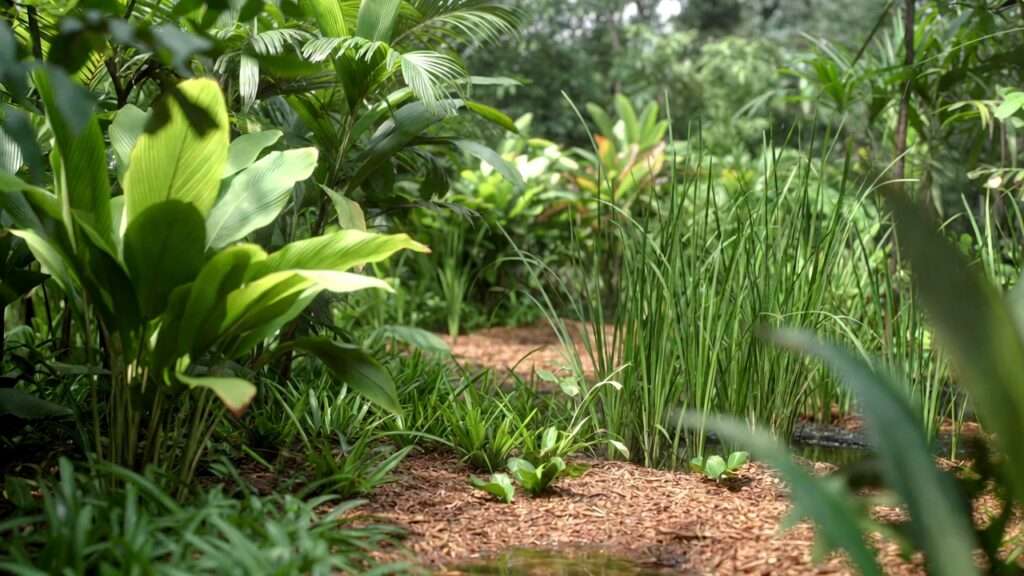
Imagine this: after a heavy monsoon downpour, your yard turns into a temporary pond, water rushes off roofs and driveways carrying soil, fertilizers, and pollutants straight into nearby drains or canals, and then… nothing. In the dry season, you’re out there watering plants constantly, racking up bills while precious rainwater is wasted. 😩 In places like Phuljhuri, Barisal Division, where heavy tropical rains alternate with hot, dry periods, this cycle is all too familiar.
But what if you could turn that problem into a stunning feature? Enter rain garden design for water conservation — a smart, natural way to capture stormwater, let it soak slowly into the ground, recharge groundwater, reduce flooding risks, and cut down on irrigation needs. 🌱 A well-designed rain garden can absorb up to 30-40% more water than a conventional lawn, filter pollutants (removing 80-90% of sediments and chemicals in many cases), and create a vibrant habitat for butterflies, birds, and beneficial insects. 🦋🐦
As a plant care and tree specialist passionate about sustainable landscaping in tropical monsoon climates like Bangladesh’s, I’ve helped homeowners transform soggy or eroded spots into low-maintenance oases. Drawing from guidelines by the EPA, university extensions, and studies on green infrastructure in tropical regions (like Puerto Rico and parts of Asia), this comprehensive guide walks you through everything: planning, planting with resilient natives or adapted species, installation, and ongoing care. Ready to save water beautifully? Let’s dive in! 🚀
What Is a Rain Garden and How Does It Conserve Water? 🌱🔄
A rain garden is a shallow, planted depression strategically placed to capture runoff from impervious surfaces like roofs, driveways, patios, or compacted lawns. Unlike a pond, it holds water temporarily (usually draining within 24-48 hours) so the soil, mulch, and plant roots can filter and absorb it slowly.
The magic happens through natural processes:
- Infiltration — Deep-rooted plants and amended soil allow water to percolate deeply, recharging groundwater instead of rushing away.
- Filtration — Layers of mulch, soil microbes, and plant roots trap sediments, oils, fertilizers, and chemicals, improving water quality before it reaches streams, canals, or groundwater.
- Evapotranspiration — Plants release moisture back into the air, cooling your yard and reducing overall water loss.
In tropical monsoon areas like Bangladesh, where annual rainfall often exceeds 2000 mm but is concentrated in a few months, rain gardens mimic natural wetlands and forests. They prevent erosion during heavy rains, reduce urban flooding, and conserve water by minimizing the need for supplemental watering during dry spells. Compared to traditional turf, rain gardens can infiltrate significantly more runoff — studies show reductions in runoff volume from 23% to 98% depending on design and soil. 📊
Infographic idea: Show a side-by-side water cycle — standard yard (runoff-heavy) vs. rain garden (absorption-focused).
The Key Benefits of Rain Gardens for Homeowners and the Environment 🌍❤️
Rain gardens deliver wins on multiple fronts, making them a top choice for eco-conscious gardeners:
- Water Conservation & Cost Savings 💰 — By capturing and storing rainwater onsite, they drastically cut irrigation needs. In monsoon-heavy regions, this means less reliance on municipal or well water during drier months.
- Flood & Erosion Prevention 🛡️ — Slowing and spreading runoff protects your home foundation, reduces soil loss, and eases pressure on local drainage systems.
- Improved Water Quality 🌊 — Filters out common pollutants like nutrients, pesticides, and sediments — up to 90% in well-designed systems — helping protect rivers, ponds, and the Bay of Bengal ecosystem.
- Biodiversity Boost 🐝 — Native or adapted plants attract pollinators, birds, and beneficial insects, creating a mini wildlife sanctuary in your yard.
- Aesthetic & Property Value Perks 🌸 — Turns problem wet spots into colorful, textured focal points with year-round interest from varied bloom times and foliage.
- Climate Resilience 🔥 — In a changing climate with more intense rains and droughts, rain gardens buffer extremes, support soil health, and contribute to cooler microclimates.
Homeowners often see these benefits compound: lower bills, healthier plants/trees nearby, and a yard that feels alive and purposeful.
Step-by-Step Planning: Site Selection and Sizing Your Rain Garden 📏🏡
Good planning prevents common issues like poor drainage or plant failure.
- Assess Runoff Sources — Map where water flows: roof downspouts, driveways, slopes. Direct clean roof water ideally.
- Choose the Right Location — Look for low-lying areas 10+ feet from foundations, septic systems, or wells. Avoid steep slopes (>12%), high water tables, or utility lines. Call local utilities before digging!
- Test Your Soil — Do a simple percolation test: Dig a hole 12 inches deep, fill with water, time how long it drains. Ideal: drains 1-2 inches per hour. In clay-heavy Barisal soils, amendments like sand/compost are often needed.
- Size It Right — Basic rule: Rain garden area = 20-30% of impervious catchment for sandy soils; up to 50% for clay. Example: 1000 sq ft roof → 200-500 sq ft garden. Adjust for intense tropical rains.
- Tools & Materials Checklist 🛠️ — Shovel, level, stakes/string, compost/sand for amendments, mulch, native/adapted plants.
Pro tip: Start small if you’re new — even a 100 sq ft garden makes a big difference!
Designing for Beauty and Functionality 🎨🌸
A great rain garden looks intentional and natural.
- Shape & Layout — Use gentle, organic curves to blend with your landscape. Integrate near trees for shade-tolerant designs.
- Three Planting Zones:
- Zone 1 (Center/Deepest): Tolerates temporary ponding — wet-loving species.
- Zone 2 (Slopes): Medium moisture — versatile perennials.
- Zone 3 (Berm/Edges): Drier transition — drought-tolerant once established.
- Berm & Overflow — Build a 6-12 inch earthen berm around the edge; add rock-lined outlet for heavy storms.
- Inflow — Pipe or swale from downspouts; add underdrain if soil drains slowly.
- Aesthetic Tips — Mix heights (tall grasses/backdrop, mid perennials, low groundcovers), textures, and bloom seasons for four-season appeal. Mulch heavily to suppress weeds and retain moisture.
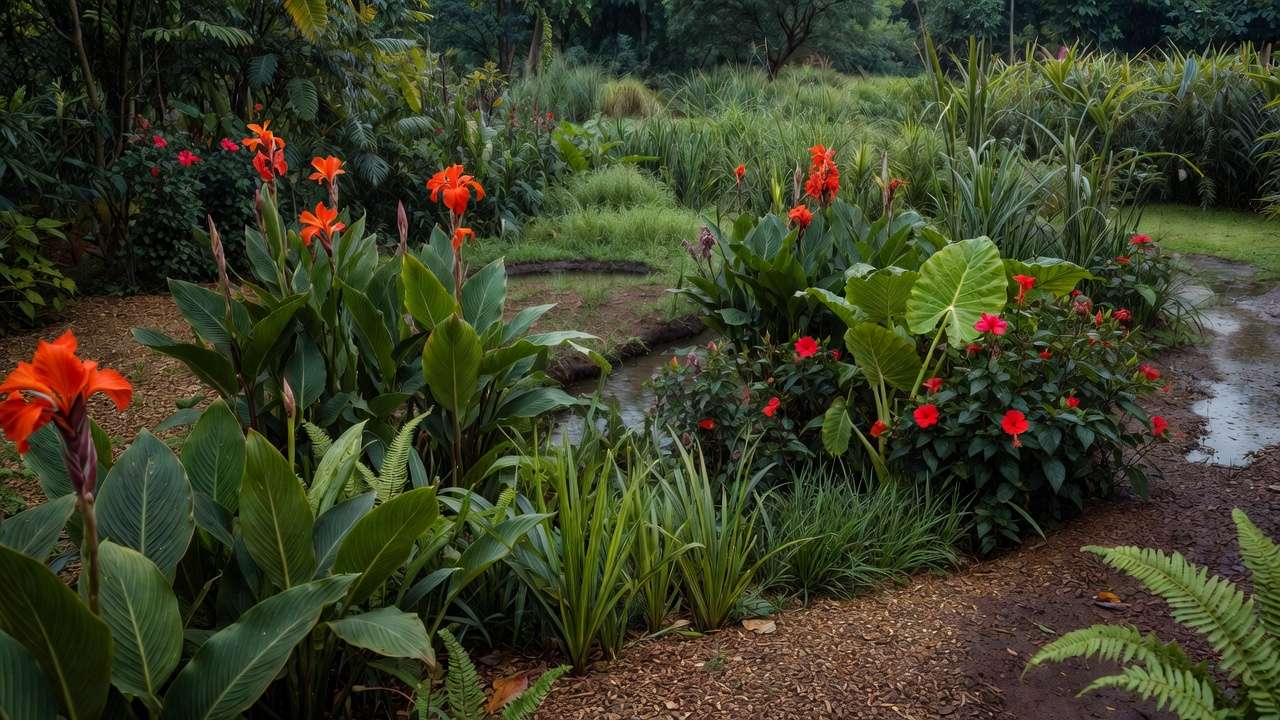
In tropical settings, emphasize lush, evergreen foliage for year-round beauty.
Choosing the Best Plants for Water Conservation and Low Maintenance 🌺🐦
The heart of any successful rain garden is the plants — they stabilize soil, enhance infiltration, filter water, and provide beauty while requiring minimal care once established. In humid tropical monsoon climates like Bangladesh’s (with heavy seasonal rains in Barisal Division often exceeding 2000-3000 mm annually), prioritize species that tolerate periodic flooding followed by drier periods. Native or well-adapted tropical plants excel here: deep roots improve water uptake and soil structure, many are pest-resistant, and they support local pollinators like butterflies and bees. 🐝
Why focus on natives/adapted plants?
- They thrive in local rainfall patterns without extra irrigation after establishment.
- Low maintenance — no frequent fertilizing or pesticides.
- Boost biodiversity in your yard, attracting birds and insects while helping the broader ecosystem (important in the Ganges-Brahmaputra delta region).
- Many offer year-round interest with lush foliage, even in the dry season.
Planting Zones Recap & Recommendations (tailored for tropical South Asian/monsoon conditions):
- Zone 1 (Center/Deepest – Tolerates temporary ponding, 6-12 inches water): Choose water-loving perennials that handle wet feet.
- Colocasia esculenta (Taro / Mukhi Kochu) 🌿 — Giant heart-shaped leaves, thrives in soggy soil; edible tubers; excellent for filtration.
- Canna indica (Indian Shot / Sarvajaya) 🌸 — Vibrant red/orange flowers, bold tropical look; tolerates wet-dry cycles.
- Hibiscus mutabilis / Hibiscus rosa-sinensis (local varieties) 🌺 — Large blooms, evergreen foliage; very resilient in Bangladesh gardens.
- Water lilies or lotus (if deeper micro-pond areas) — Ornamental aquatic plants that provide wildlife habitat.
- Zone 2 (Middle Slopes – Medium moisture, occasional standing water):
- Heliconia (Lobster Claw) 🌺 — Striking tropical flowers, loves humidity; attracts hummingbirds/butterflies.
- Turmeric (Curcuma longa) 🌱 — Lush broad leaves, medicinal/edible rhizomes; perfect for monsoon-loving spots.
- Ginger (Zingiber officinale) — Similar benefits, aromatic; low-growing filler.
- Swamp lily or Crinum species (adapted local bulbs) — Fragrant white/pink blooms.
- Zone 3 (Berm/Edges – Drier transition, well-drained once established):
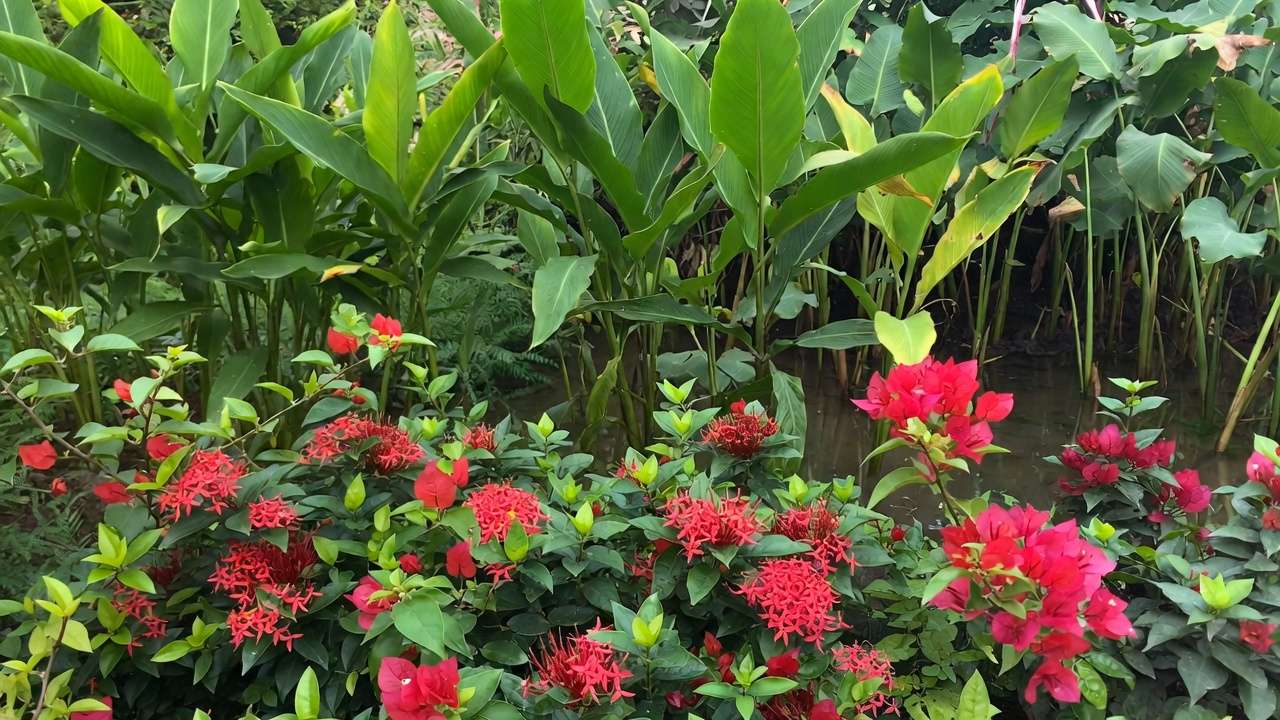
- Bougainvillea 🌸 — Colorful bracts, drought-tolerant after rain season; climbs or sprawls beautifully.
- Ixora 🌺 — Bright clusters of flowers, evergreen; thrives in Barisal’s climate.
- Marigold (Tagetes) or local annuals — Easy color pops; deter pests.
- Grasses like Vetiver (Chrysopogon zizanioides) — Deep roots prevent erosion; excellent for berms.
Regional Notes for Bangladesh/Barisal:
- Barisal’s delta soils are often clay-rich and fertile but can be waterlogged — amend with sand/compost for better drainage.
- Many local monsoon favorites (hibiscus, canna, colocasia) are already common in village gardens and floating farms (baira) — they’re proven survivors.
- Avoid true invasives; stick to culturally familiar, non-aggressive species.
- Plant densely (1 plant per 1-2 sq ft) for quick coverage and weed suppression.
Bloom & Interest Calendar:
- Monsoon (Jun-Oct): Explosive growth, flowers from canna, hibiscus, heliconia.
- Dry season (Nov-May): Evergreen foliage from bougainvillea, ixora; minimal watering needed.
Pro tip: Source plants from local nurseries in Barisal or Dhaka — they’re adapted and affordable. Start with 70-80% natives/adapted for best water conservation results! 🌟
Installation Guide: Build It Right the First Time 🛠️💪
Follow these steps for a durable, effective rain garden.
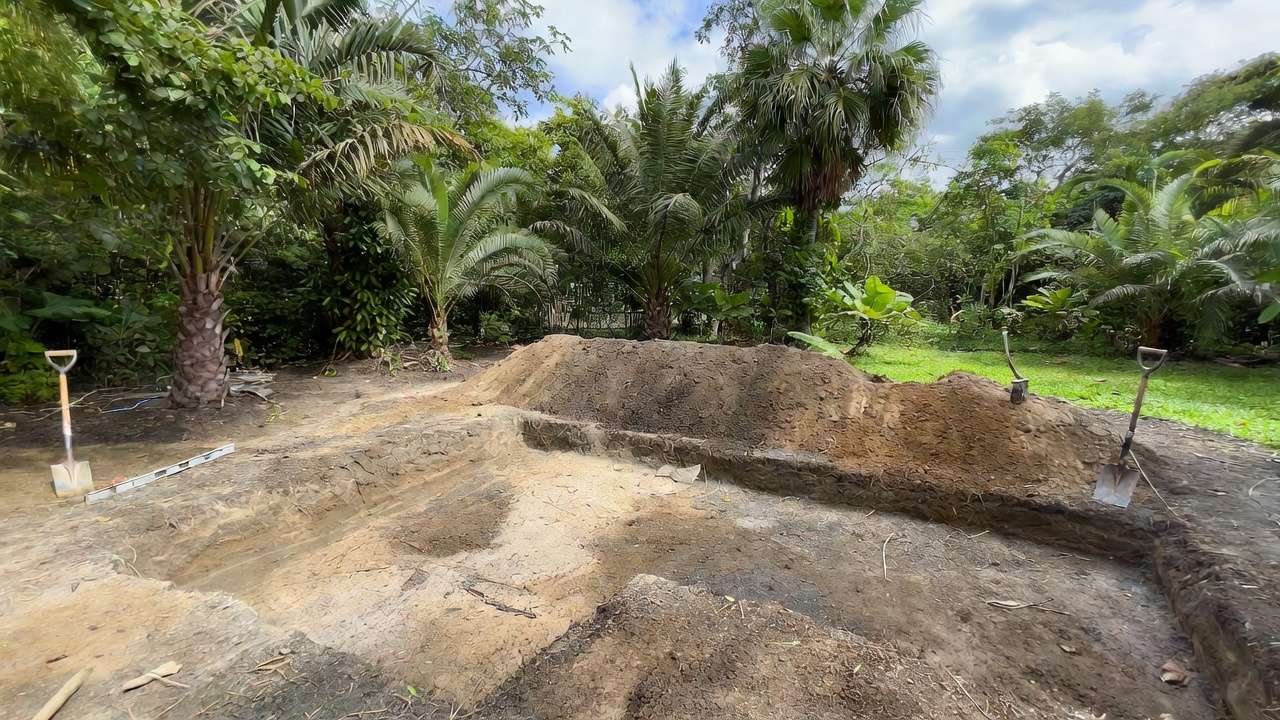
- Mark & Excavate — Outline shape with stakes/string. Dig 6-12 inches deep (deeper in center), slope gently inward. Save topsoil separately.
- Build the Berm — Use excavated soil to create a 6-12 inch high, rounded berm around edges (leave a low point for overflow).
- Test Levels — Ensure basin is level side-to-side; add rock outlet if needed for heavy rains.
- Amend Soil — Mix in 30-50% compost + coarse sand to improve drainage (critical in clay soils). Avoid pure topsoil compaction.
- Add Mulch — 2-3 inches organic mulch (coconut coir, leaf litter, or rice straw common in BD) — retains moisture, suppresses weeds.
- Plant — Install in fall (post-monsoon) or early spring for root establishment. Water deeply initially.
Cost Estimates (DIY in Bangladesh context):
- Small 100-200 sq ft garden: BDT 5,000-15,000 (plants ~40%, amendments/mulch ~30%, tools ~30%).
- Professional install: 2-3x more, but worth it for larger sites.
Common Pitfalls & Fixes:
- Poor drainage → Test percolation first; add underdrain pipe if <0.5 inch/hour.
- Erosion → Rock mulch at inflow; plant densely.
- Plant failure → Choose right zone; mulch well.
Maintenance Tips for Long-Term Success & Maximum Water Savings 🌿🛡️
Rain gardens are famously low-maintenance — that’s part of their appeal!
- First Year — Water during dry spells if no rain (1-2x/week); weed regularly; monitor drainage.
- Ongoing — Prune dead stems in late winter; refresh mulch annually; divide perennials every 3-4 years.
- Seasonal Checklist:
- Spring: Clean debris, add compost.
- Monsoon: Check overflow, enjoy blooms!
- Dry season: Minimal — plants go semi-dormant.
- Troubleshooting:
- Mosquitoes? Drains in 24-48 hrs normally; add fish to any permanent micro-pond.
- Standing water >48 hrs → Improve soil or add underdrain.
- Plant health → Adjust zones if needed.
Healthy plants mean superior absorption — your rain garden will save more water over time!
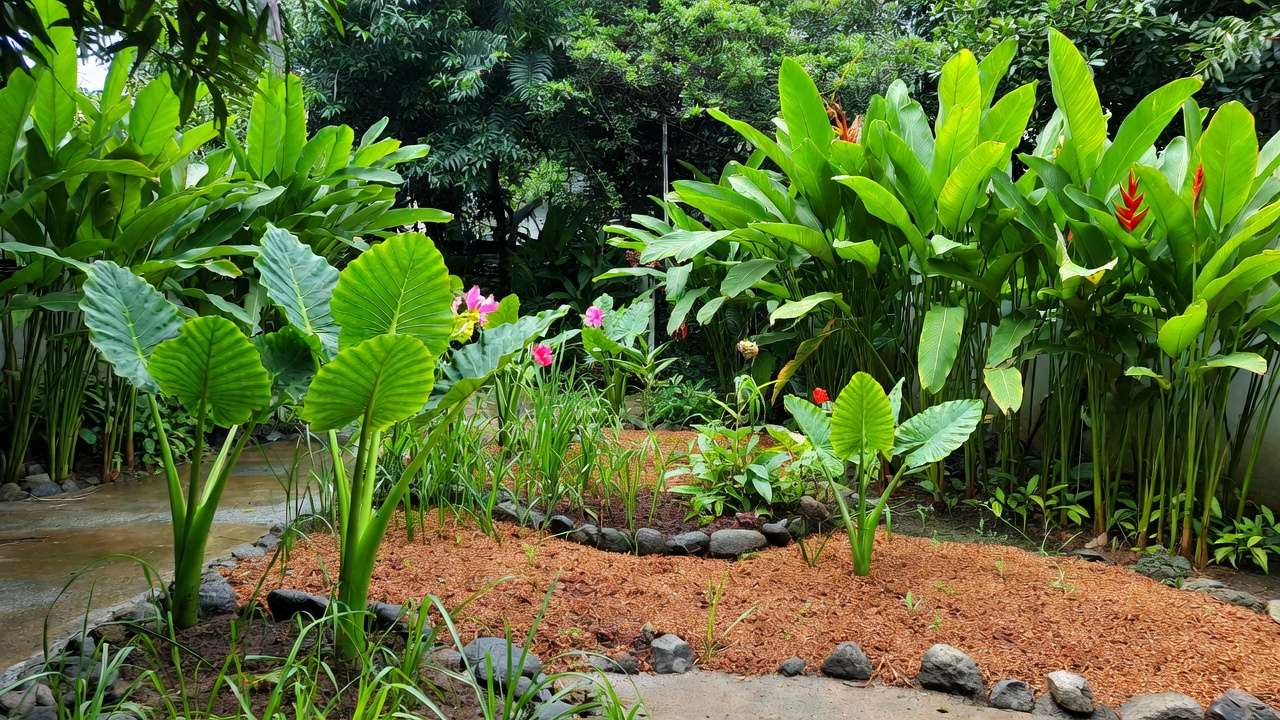
Real-Life Examples and Case Studies 📸🏡
- Urban Dhaka backyard → Small roof-downspout garden with canna and colocasia reduced local flooding, added color.
- Barisal village edge → Larger setup near paddy fields using vetiver berms and hibiscus; integrated with fruit trees.
- Tree-friendly design → Shade-tolerant under mango/papaya with ginger/turmeric — supports tree roots while conserving water.
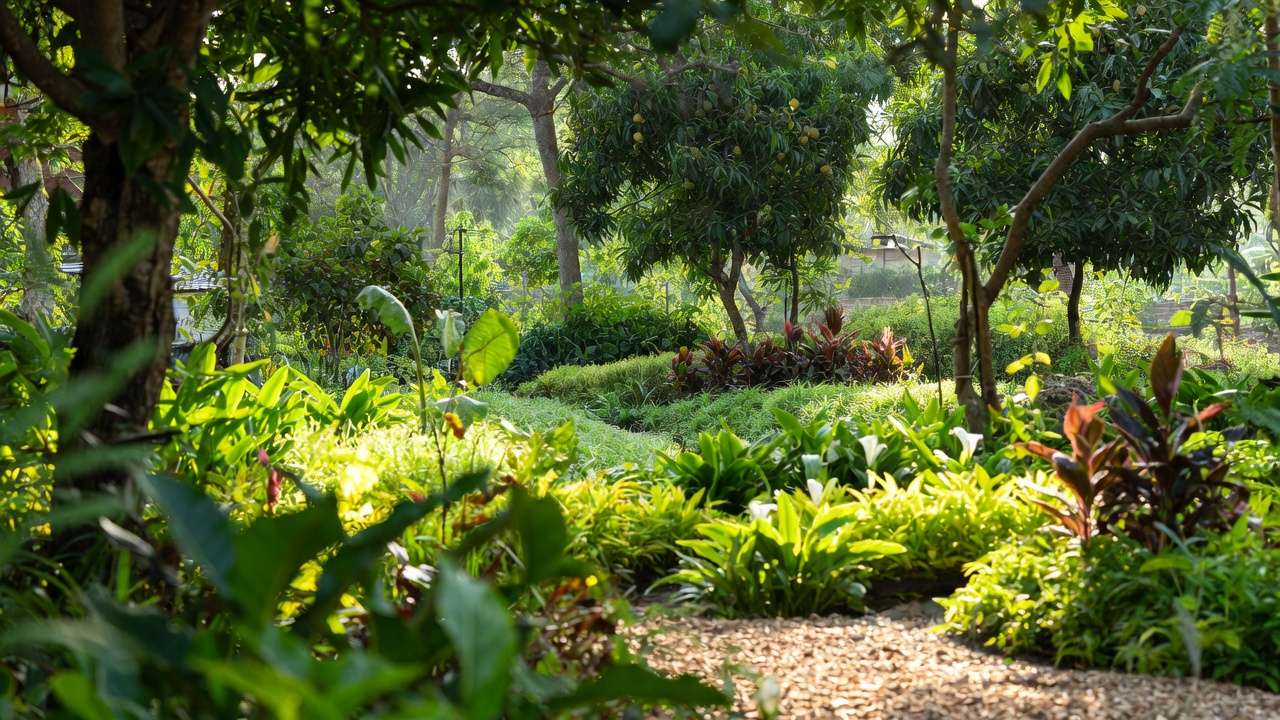
(Visual inspiration: Imagine lush green canna spikes against bright hibiscus blooms after rain — pure tropical paradise!)
FAQs: Answering Your Top Rain Garden Questions ❓💡
- How long to build? A weekend DIY for small; 1-2 weeks planning + install.
- Mosquito risk? Rare if drains quickly; design avoids permanent water.
- Include trees/shrubs? Yes — river birch analogs or local figs on edges.
- Clay soils or heavy rain? Amend well; size larger for intense monsoons.
- Water savings? One medium garden can capture thousands of liters per storm, reducing irrigation by 20-50% yearly.
Conclusion: Start Your Rain Garden Journey Today & Save Water Beautifully 🌈🌳
A rain garden isn’t just landscaping — it’s a powerful act of plant care, tree support, and environmental stewardship. In Phuljhuri and beyond, these gardens turn challenges into beauty, conserve precious water, and create resilient, vibrant yards. Assess your runoff this weekend, start small, and watch your landscape thrive. You’ve got this — happy gardening! 🌱✨











