
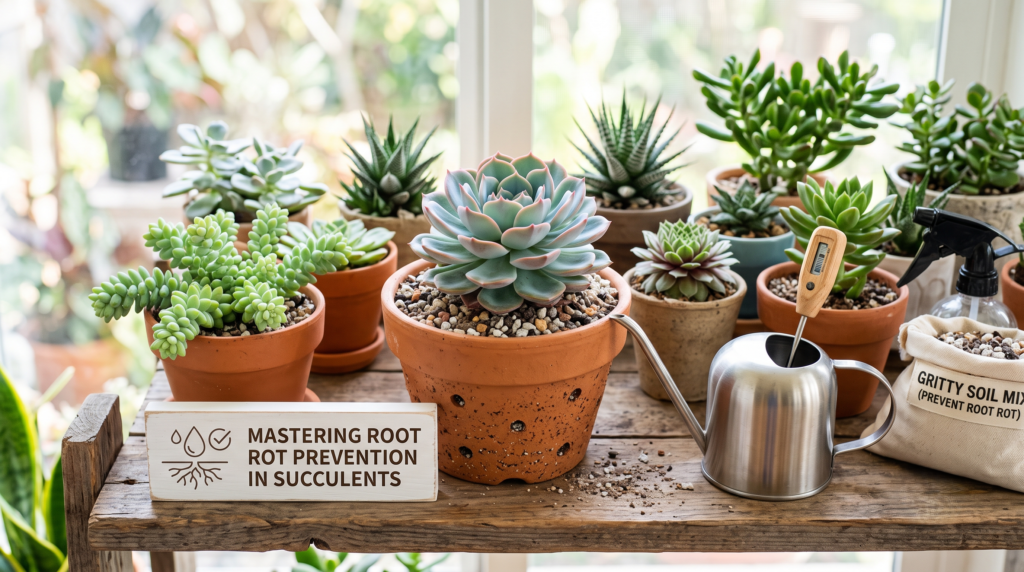
We have all been there. You bring home a stunning, plump succulent, place it on your favorite windowsill, and give it all the love and water you think it needs. Then, seemingly overnight, those beautiful, firm leaves turn into a yellowing, mushy, collapsing mess. It is heartbreaking, frustrating, and incredibly common.
If you are struggling to keep your desert beauties alive, you are not alone. Overwatering and poor drainage are the leading causes of indoor succulent death, leading straight to a devastating condition that suffocates your plant from the bottom up. Mastering root rot prevention in succulents is the single most important skill you can develop as a plant parent.
As a horticulturist and long-time succulent rescuer, I have seen hundreds of plants succumb to this entirely preventable condition. Through years of trial, error, and studying plant biology, I have developed a foolproof system to keep succulents thriving. In this comprehensive guide, we will dive deep into the science of succulent care, helping you create an environment where your plants will flourish for years to come.
What You’ll Learn in This Guide: 📋
-
The underlying biological causes of root rot and why succulents are so vulnerable.
-
How to identify the early, silent symptoms before it is too late.
-
The ultimate DIY succulent soil recipe for maximum aeration.
-
The “Soak and Dry” watering method that mimics nature.
-
Step-by-step instructions for performing emergency surgery on a rotting plant.
Understanding the Enemy: What Exactly is Root Rot? 🦠🔬
To defeat the enemy, you must first understand it. Root rot is not a single disease; rather, it is a condition caused by a combination of environmental failures and opportunistic pathogens.
The Biology Behind the Rot
When you water a plant, the roots absorb moisture, but they also need to breathe. Plant roots require oxygen to function and convert nutrients into energy. When succulent soil is kept constantly wet, the water fills all the tiny air pockets in the soil, effectively suffocating the root system.
Once the roots die from a lack of oxygen, they begin to decay. This decaying organic matter, combined with a damp, warm environment, creates the perfect breeding ground for destructive soil-borne fungi and water molds, such as Phytophthora and Pythium. These pathogens feast on the dead root tissue and quickly spread upward into the healthy stem and leaves of the succulent, turning the plant’s internal structure to mush.

Succulent Anatomy 101: Why Are They So Vulnerable? 🐪💧
Succulents have evolved over millions of years to survive in some of the harshest, most arid environments on Earth. From the rocky cliffs of South Africa to the deserts of Mexico, these plants are survival experts.
Their evolutionary superpower is water storage. The thick, fleshy leaves and swollen stems are designed to gorge on water during rare desert rainstorms and store that moisture to survive months of drought. Because their tissues are already heavily saturated with water, exposing them to constant moisture in a standard indoor pot causes their cells to literally burst from over-hydration. They simply do not have the biological mechanisms to handle “wet feet.”
Spotting the Silent Killer: Early Signs of Root Rot 👀🛑
The trickiest thing about root rot is that it happens underground. By the time you notice symptoms above the soil, the disease has often progressed significantly. Early detection is crucial for survival.
Above-Ground Symptoms to Watch For
-
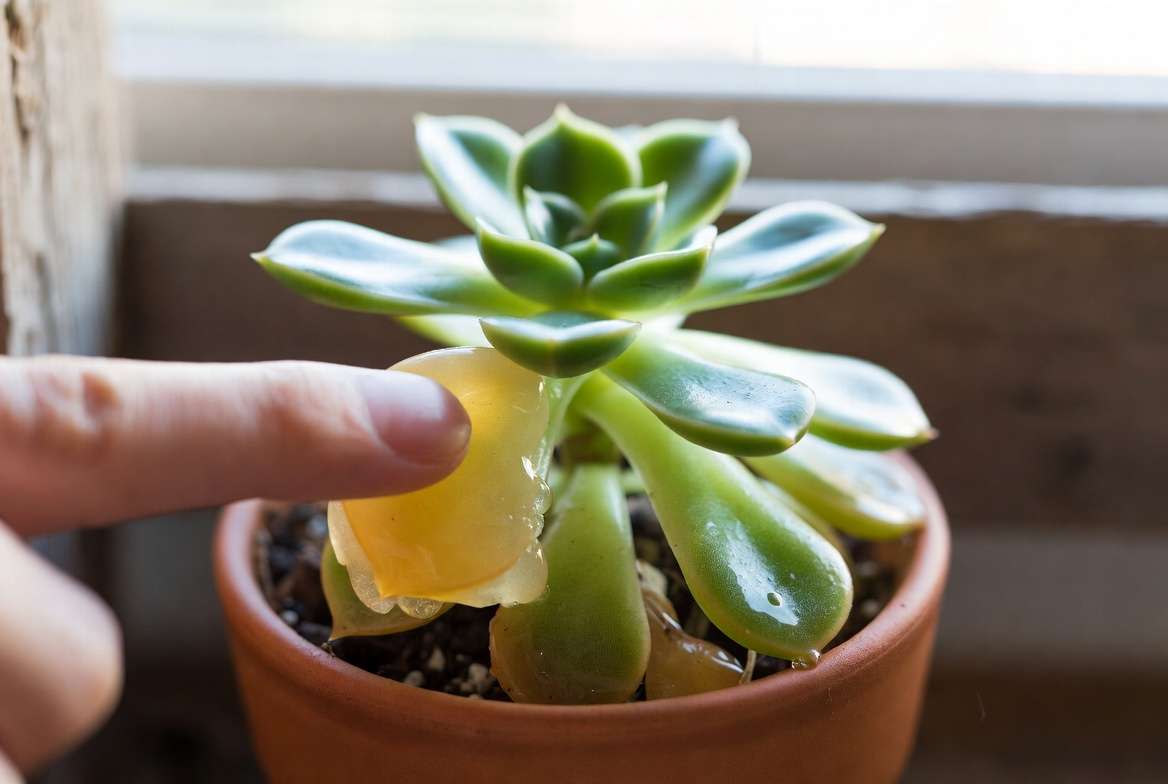
Yellowing, Translucent Leaves: Unlike the dry, crispy yellow leaves of an underwatered plant, an overwatered succulent will develop leaves that look slightly transparent, wet, and pale yellow.
-
The “Mush” Factor: The leaves will feel squishy to the touch, like an overripe grape, rather than firm and springy.
-
Spontaneous Leaf Drop: If you gently bump your succulent and plump, seemingly healthy leaves shatter or drop off the stem instantly, rot is likely traveling up the vascular system.
-
Blackening Stem: A shriveled, blackened, or squishy stem right at the soil line is a massive red flag. This indicates the rot has breached the roots and is actively killing the main plant body.
Under-the-Soil Investigation 🔍
If you suspect rot, you must act fast. Do not wait for the soil to dry out.
-
Gently squeeze the sides of the pot and slide the succulent out.
-
Carefully massage the soil away from the root ball.
-
Assess the Roots:
-
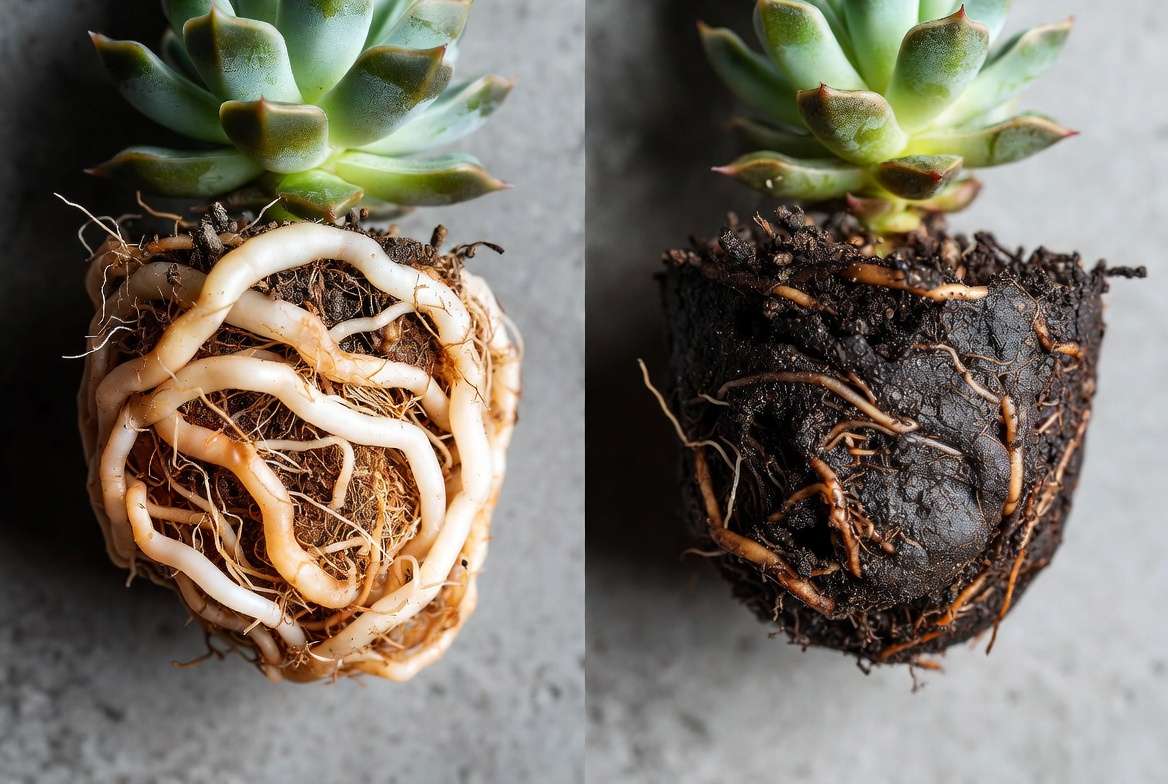
Healthy Roots: Firm, pliable, and usually white, light tan, or pale yellow.
-
Rotting Roots: Dark brown or black, slimy, mushy, and often emit a foul, swampy odor. They will easily break or disintegrate when touched.
-
The Foundation: Soil & Potting Best Practices for Root Rot Prevention in Succulents 🪨🪴
Prevention starts long before you even pick up a watering can. It begins with the environment you build for the roots.
Ditch the Standard Potting Soil
The biggest mistake new succulent owners make is bringing a plant home and repotting it into standard, all-purpose indoor potting soil. These soils are engineered to retain moisture, often containing heavy amounts of peat moss and coco coir. For tropical plants, this is great. For a desert succulent, it is a death sentence.

The Ultimate Succulent Soil Recipe 👩🍳
To prevent rot, you need a substrate that drains rapidly and provides massive amounts of aeration. While commercial “cactus mixes” are a good start, they often still need amending. Here is the foolproof recipe I use for almost all my indoor succulents:
-
1 Part Organic Potting Soil: (For basic nutrients and structure).
-
1 Part Coarse Sand or Poultry Grit: (Provides weight and prevents soil compaction. Avoid fine play sand, which can clump and act like cement).
-
1 Part Perlite or Pumice: (The magic ingredient for aeration. These porous volcanic rocks create essential air pockets for the roots to breathe).
Mix these thoroughly. When you water this mix, the water should pour through it in seconds, not pool on the top.
The Golden Rule of Pots: Drainage, Drainage, Drainage! 🕳️
You can have the best soil in the world, but if your pot does not have a drainage hole, root rot is almost guaranteed.
-
The Terracotta Advantage: Unglazed terracotta is porous, meaning it breathes. It allows moisture to evaporate not just from the soil surface, but through the walls of the pot itself, dramatically speeding up drying time.
-
Myth-Busting 🚫: Have you been told to put a layer of gravel at the bottom of a pot without holes to “create drainage”? Stop doing this immediately. Science shows this creates a perched water table. The water does not drain into the rocks; instead, it pools in the soil just above the rocks, keeping the roots soaking wet and actually raising the rot zone closer to the plant. Always use a pot with a hole!
Watering 101: The “Soak and Dry” Method 🚿🏜️
If you want to master root rot prevention in succulents, you must change how you think about watering. You are not keeping the soil lightly moist; you are simulating a desert drought and flash flood cycle.
How to Water Like a Desert Rainstorm
The “Soak and Dry” method is exactly what it sounds like.
-
The Soak: When it is time to water, take your plant to the sink. Pour water heavily over the soil until it is completely drenched and water runs freely out the drainage hole. This deep watering encourages roots to grow downward and robustly.
-
The Dry: Place the plant back on its windowsill and completely ignore it. Do not water it again until the soil is 100% bone dry all the way to the bottom of the pot.
Tools to Prevent Overwatering 🛠️
Not sure if the soil is dry? Don’t guess.
-
The Skewer Method: Insert a bare wooden chopstick or skewer into the soil down to the bottom. Leave it for 5 minutes. If it comes out dark and damp, do not water.
-
The Weight Test: Lift the pot after you water it and feel how heavy it is. Check it again a week later. A dry pot will feel shockingly light.
-
Leaf Wrinkling: Let the plant tell you it’s thirsty. Succulent leaves will slightly pucker or lose their rigid firmness when they are ready for a drink.
Seasonal Adjustments: Summer vs. Winter Care ☀️❄️
Succulents respond to the changing seasons. Most indoor succulents go into a state of dormancy or semi-dormancy during the cold, dark days of winter. Because they are not actively growing, their water requirements plummet. You may find yourself watering every 7-10 days in the summer, but only once a month (or less!) during the winter. Adjusting your watering schedule seasonally is a vital component of prevention.
Environmental Factors: Airflow, Light, and Temperature 🌬️☀️
While soil and watering get the most attention, your home’s microclimate plays a massive role in how quickly soil dries.
The Role of Sunlight in Drying Soil
Sunlight and heat cause evaporation. A succulent sitting in a south-facing, sunny window will dry out its soil significantly faster than a succulent sitting on a shady desk in the center of a room. If your plant is in a lower-light situation, you must adjust your soil mix to be even grittier (more pumice/perlite) to compensate for the lack of evaporation.
Why Airflow is the Unsung Hero of Plant Care 💨
Stagnant air is a fungus’s best friend. Good ventilation helps wick moisture away from the soil surface and plant foliage. In nature, succulents are exposed to constant breezes. Indoors, placing a small oscillating fan near your plant collection can drastically reduce the chances of fungal and bacterial infections taking hold.
The Emergency Room: Can You Save a Rotting Succulent? 🚑✂️
If you are reading this because your plant is already showing signs of rot, do not panic. Depending on how far the infection has spread, you can often perform emergency surgery to save your plant baby.
Step-by-Step Surgical Rescue
-
Unpot and Clean: Remove the plant from the wet soil immediately. Wash the roots under room-temperature water to get a clear view of the damage. Discard the old, contaminated soil—do not reuse it.
-
Amputation: Sterilize a sharp pair of pruning shears or a knife with rubbing alcohol. Ruthlessly cut away all brown, black, mushy, or foul-smelling roots. If the rot has traveled up the stem, you must cut the stem above the rot line. Keep slicing upward until the inside of the stem is completely clean, green, and firm, with zero dark spots. (Even a speck of rot left behind will spread).
-
Callousing: This is the most crucial step. Do not put the freshly cut plant back into soil. Leave it sitting out on a paper towel in a dry place away from direct sunlight for 3 to 7 days. The wound must dry out and form a hard “callous” (like a scab).
-
Repotting: Once calloused, place the plant into a fresh batch of dry, gritty succulent soil. Do not water it. The plant has no roots to absorb water anyway. Wait a few weeks for new, pink roots to sprout before beginning a very light watering regimen.

Propagation: The Last Resort 🌱
If the stem is completely rotted all the way to the top, the main plant cannot be saved. However, you can carefully twist off any remaining healthy, firm leaves from the top of the plant. Lay these leaves on top of dry succulent soil. Over a few weeks, many of them will sprout tiny pink roots and baby rosettes, giving you a brand new generation of plants!
Frequently Asked Questions (FAQs) 🤔💬
How often should I water my indoor succulents to prevent root rot? There is no set schedule (e.g., “every Tuesday”). You should only water when the soil is 100% dry down to the bottom of the pot, and the plant’s leaves show slight signs of thirst (slight wrinkling or softness). This could be every 10 days in summer or every 6 weeks in winter.
Can a succulent recover from root rot on its own? No. Once root rot takes hold, it is a progressive, terminal condition. If left untreated in soggy soil, the fungi and bacteria will continue to consume the plant until it collapses. Intervention is mandatory.
Does cinnamon cure root rot in plants? Cinnamon has mild natural antifungal properties and can be lightly dusted on the healthy stem after you have surgically cut away the rot to help prevent new infections while callousing. However, sprinkling cinnamon on top of wet, rotting soil will not cure the disease.
Why does my succulent soil stay wet for so long? If your soil is still wet after 3-5 days, you have a drainage problem. This is usually caused by using a pot without drainage holes, using dense, peat-heavy potting soil, or placing the plant in a dark corner with zero airflow and sunlight. Repot immediately into a gritty mix!
Conclusion: Becoming a Confident Succulent Parent 🌟🌵
Losing a plant to overwatering is a rite of passage for almost every indoor gardener. Do not beat yourself up if you have turned a few Echeverias to mush in the past.
Root rot prevention in succulents ultimately comes down to respecting the plant’s natural origins. By providing them with incredibly gritty, fast-draining soil, pots that breathe, and a “drought and flood” watering cycle, you are mimicking the desert environment they crave.
Observation is your best tool. Pay attention to the weight of your pots, the firmness of the leaves, and the changing of the seasons. With these foundational practices in place, you can finally banish root rot from your windowsill and enjoy a thriving, vibrant succulent collection for years to come.











