
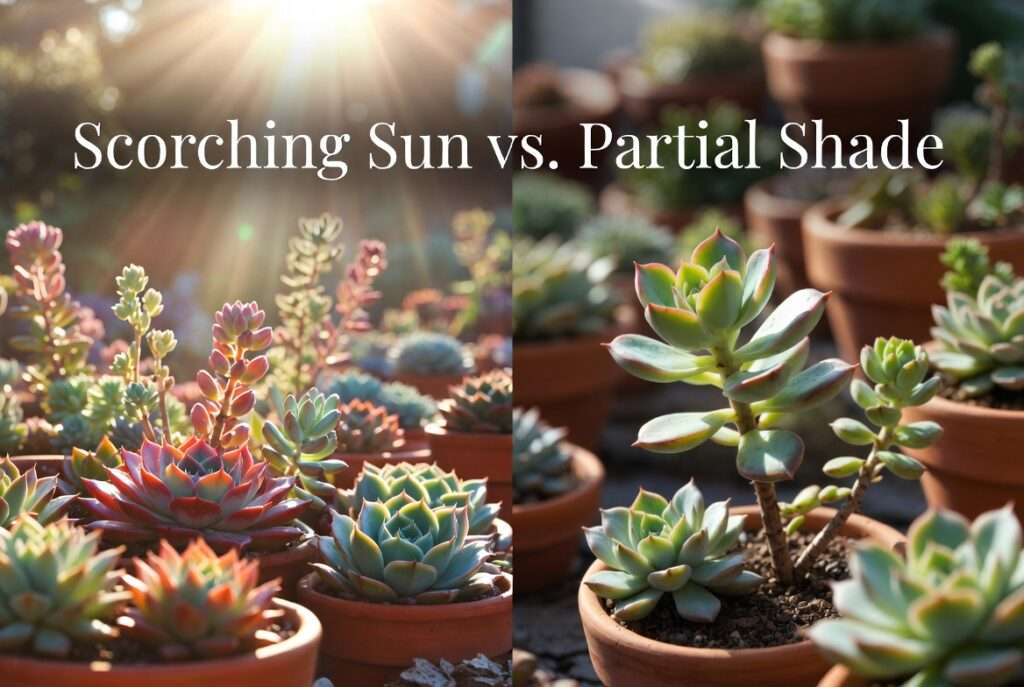
Imagine this: Your prized Echeveria rosette, once a compact jewel of vibrant pink and teal, now sits with ugly brown scorch marks on its leaves. Or your once-tiny Haworthia has stretched into a pale, leggy mess reaching desperately toward the window. If this sounds painfully familiar, you’re not alone. Thousands of succulent lovers face the exact same heartbreak every season. The secret? Mastering the delicate balance of scorching sun vs. partial shade for succulents — the single most important factor in keeping your plants compact, colorful, and thriving. 🌱
In this comprehensive guide, I’ll walk you through everything I’ve learned over 15+ years as a certified horticulturist and succulent specialist. From hands-on trials in scorching desert gardens to shaded balcony setups in humid climates, I’ve tested hundreds of varieties so you don’t have to. You’ll discover exactly when scorching sun builds strength and stunning colors… and when partial shade is the lifesaver that prevents irreversible damage. No more guesswork — just clear, proven strategies to solve your light-related succulent problems for good. 🏆
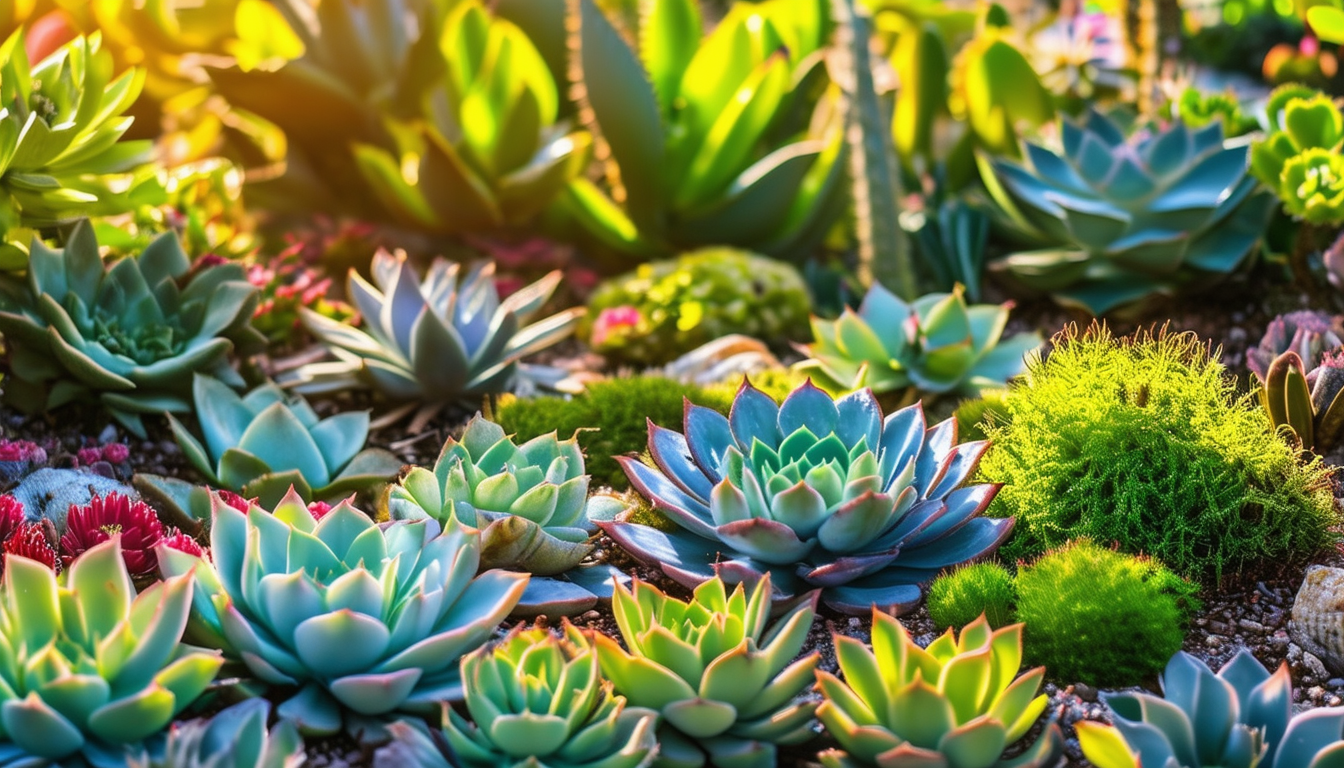
Why Light Is the #1 Make-or-Break Factor for Succulent Success 🌞
Light isn’t just “nice to have” for succulents — it’s the engine that drives photosynthesis, color intensity, and structural strength. These drought-tolerant beauties evolved in environments with intense sunlight, but modern home gardens and indoor spaces often throw that balance off. Too much direct scorching sun without acclimation leads to sunburn; too little causes etiolation (that dreaded leggy growth). Getting it right can boost color by 40-60% and prevent up to 90% of common failures. Let’s break down the science first. 🧪
H3: The Science of Photosynthesis in Succulents Succulents use CAM (Crassulacean Acid Metabolism) photosynthesis, opening their stomata at night to conserve water. They still crave bright light during the day to convert CO₂ into energy. Insufficient light slows this process, forcing the plant to stretch toward the source — hello, etiolation! On the flip side, sudden intense rays overwhelm their protective pigments, causing cell damage and those telltale brown scars.
H3: How Light Influences Growth Habit, Color, and Resilience Proper light levels trigger anthocyanin production (those gorgeous reds, purples, and oranges) and keep internodes short for compact rosettes. Weak light leads to pale, elongated stems and reduced drought tolerance. The difference between a sad, stretched succulent and a Instagram-worthy specimen often comes down to just 2-3 hours of the right light daily. 📈
Scorching Sun for Succulents – Benefits, Risks, and Real-World Results 🔥
Many popular succulents absolutely adore full, intense sun — but only when introduced gradually. In the right conditions, scorching sun delivers the most dramatic results.
H3: The Upside – Compact Growth, Stunning Colors, and Stronger Plants 💪 Direct sunlight (6+ hours, especially morning rays) produces tight rosettes, intense pigmentation, and thicker, more resilient leaves. Think fiery red Sedums or deep blue-green Agaves that look almost painted. Plants grown in optimal full sun also develop better root systems and resist pests better thanks to higher sugar reserves.
H3: The Downside – Sunburn, Heat Stress, and Leaf Scorch Without proper acclimation, intense midday or afternoon sun can burn leaves in under an hour — especially on cloudy days followed by sudden clear skies. Symptoms appear as white or brown patches, crispy edges, and mushy tissue. In hot climates (like much of the southern US or tropical zones), even sun-loving varieties can suffer if temperatures climb above 90°F (32°C) with no relief.

H3: Which Succulents Actually Love Scorching Sun? Top full-sun champions include:
- Echeveria and Graptopetalum (stunning stress colors)
- Sedum and Sempervivum (ground-cover stars)
- Certain Agave and Cacti varieties
- Crassula ovata (Jade Plant) in moderate heat
These thrive with 6–8 hours of direct sun once acclimated.
Partial Shade for Succulents – When Gentler Light Wins 🌳
Not every succulent is built for desert-level intensity. Partial shade (bright indirect light or 3–4 hours of gentle morning sun) is often the smarter choice, especially indoors or in hotter regions.
H3: The Benefits – Protection from Burn, Healthier Foliage, and Easier Care Shade prevents scorching while still delivering enough photons for healthy growth. Leaves stay plump and vibrant longer, and plants are less prone to sudden stress. This setup is ideal for beginners and apartment dwellers with limited direct sun.
H3: The Risks – Leggy Growth, Faded Colors, and Weak Structure Too much shade causes rapid stretching, pale foliage, and weak stems that flop over. Variegated varieties lose their striking patterns, and flowering becomes rare. The classic “spaghetti plant” look is the #1 complaint from growers in low-light homes.
H3: Succulents That Thrive in Partial or Bright Shade Shade-tolerant superstars:
- Haworthia and Gasteria (perfect windowsill picks)
- Most Aloe species
- Aeonium and some Kalanchoe
- Variegated Echeveria or Crassula
These prefer bright indirect light or dappled shade and reward you with lush, compact growth.
Quick Comparison Table: Scorching Sun vs. Partial Shade
| Factor | Scorching Sun | Partial Shade |
|---|---|---|
| Best for | Full-sun lovers (Echeveria, Sedum) | Shade-tolerant (Haworthia, Aloe) |
| Growth habit | Compact, colorful | Taller, greener (risk of leggy) |
| Risk | Sunburn, heat stress | Etiolation, weak structure |
| Ideal daily hours | 6+ direct (morning preferred) | 4–6 bright indirect |
| Best climates | Cooler, drier | Hot, humid, or indoor |
Spotting Trouble Early – Signs of Too Much Sun or Too Little Light ⚠️
Early detection is your best defense against light-related disasters. Most succulent problems start small but escalate quickly if ignored. Learning to read your plants’ signals can save entire collections. Here’s what to watch for:
H3: Sunburn Symptoms (White/Brown Patches, Crispy Edges) + Recovery Tips Sunburn appears as bleached white or tan spots, brown crispy edges, or translucent “cooked” tissue, especially on the side facing intense afternoon rays. In severe cases, leaves turn mushy and may rot. Unlike etiolation, sunburn damage is permanent — the scarred areas won’t turn green again, but the plant can recover by producing new healthy growth.
Recovery steps:
- Immediately move the plant to bright indirect light or partial shade.
- Remove only fully dead, mushy leaves; leave partially damaged ones as they still photosynthesize.
- Reduce watering until the soil is completely dry — stressed plants are prone to rot.
- Resume normal care once new growth appears, usually in 2–4 weeks.
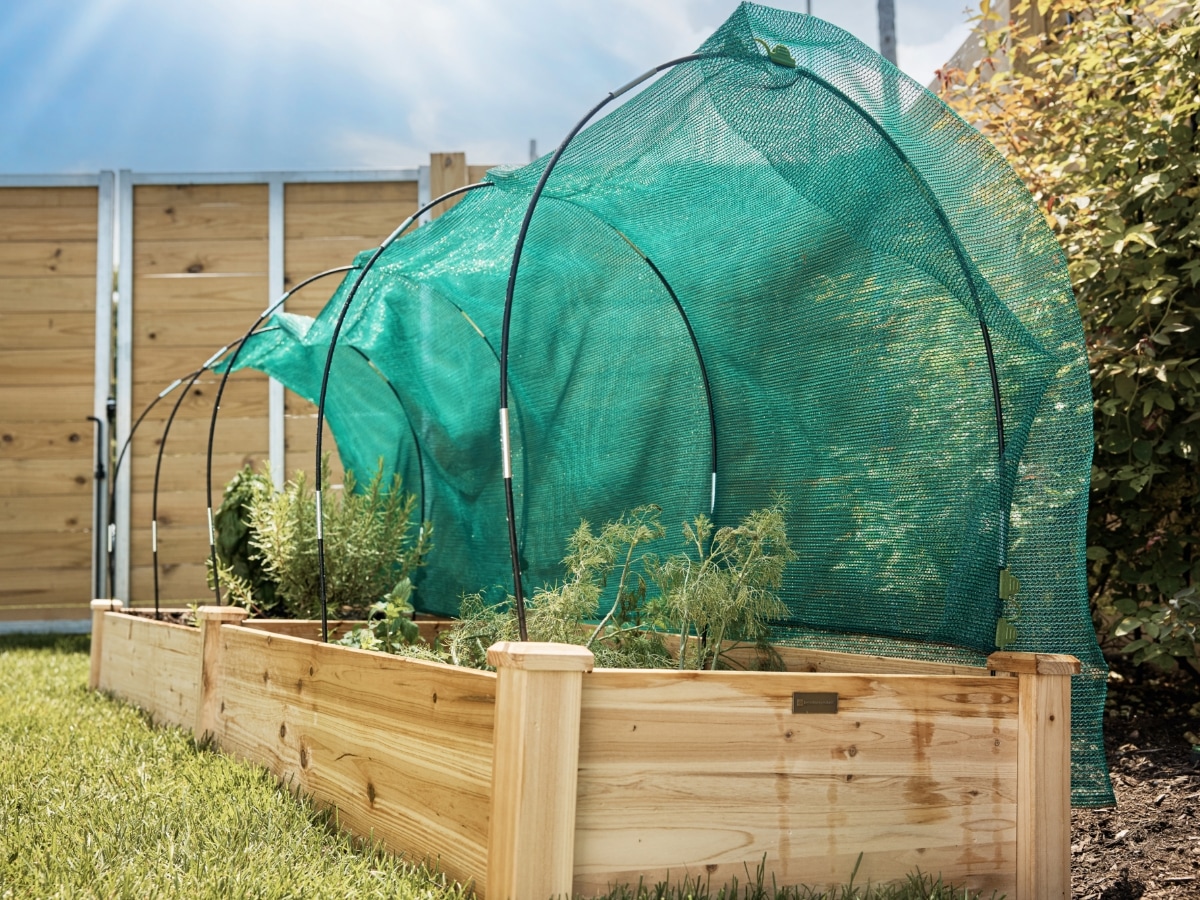
Pro tip: In hot climates (above 90°F/32°C), even full-sun lovers benefit from afternoon shade cloth (30–50% density) to prevent heat stress alongside sunburn.

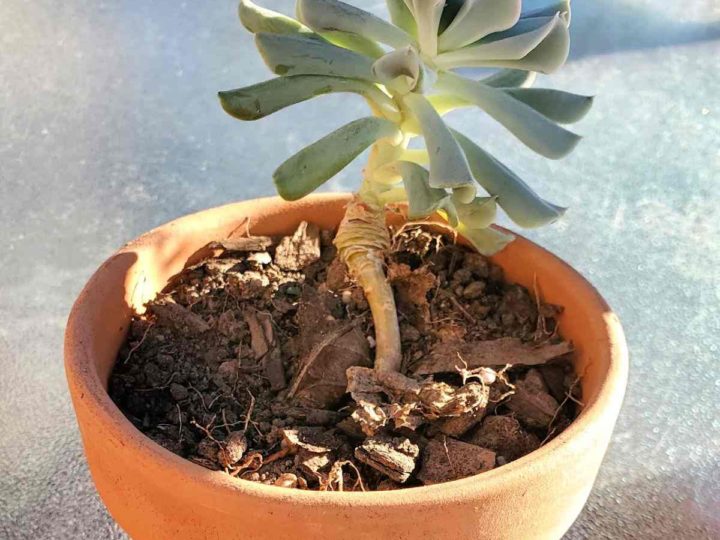
H3: Leggy Growth (Etiolation) – How to Identify and Reverse It Etiolation shows up as elongated stems, stretched internodes, and pale, smaller leaves as the plant desperately reaches for more light. The rosette flattens or “reaches up” instead of staying tight and compact. This weakens the structure and makes the plant more vulnerable to pests and future sunburn.
Reversal guide:
- Gradually increase light exposure (never sudden full sun on a leggy plant — it will scorch badly).
- Prune the stretched stem just above a healthy leaf node; the cutting can be propagated, and the base often pups new growth.
- Provide consistent bright light moving forward — most succulents need at least 4–6 hours of strong light daily to stay compact.
- Rotate plants weekly for even growth.
H3: Other Light-Related Red Flags (Pale Leaves, Leaf Drop, Pests)
- Pale or faded colors: Often a sign of insufficient light.
- Sudden leaf drop: Can indicate light shock from moving too quickly.
- Increased pest activity (mealybugs, aphids): Weak, low-light plants have lower defenses.
Visual checklist: ✅ Healthy — Compact form, vibrant colors, firm leaves. ❌ Too much sun — Brown/white scars, crispy tips. ❌ Too little light — Long stems, small pale leaves, leaning growth.
Catching these early lets you adjust conditions before irreversible damage occurs.
How to Choose the Perfect Light for YOUR Succulents 📍
There’s no one-size-fits-all answer to scorching sun vs. partial shade for succulents. The right choice depends on your climate, setup, and specific varieties. Here’s how to decide intelligently:
H3: Climate & Geographic Factors
- Hot, arid, or desert climates (e.g., parts of the southern US, Middle East, or inland tropics): Morning sun + afternoon partial shade is ideal for most soft-leaved succulents. Use 30–50% shade cloth during peak summer heat.
- Cooler, coastal, or temperate zones: Many varieties can handle 6+ hours of direct sun, especially if mornings are gentle.
- Humid or low-sun regions (like much of Southeast Asia or northern areas): Prioritize bright indirect light or full-spectrum grow lights to avoid etiolation while preventing fungal issues from excess moisture.
H3: Indoor vs. Outdoor Setups – Window Directions, Grow Lights, Balcony Tricks
- South-facing windows (Northern Hemisphere): Best for full-sun lovers — aim for 6+ hours.
- East-facing: Perfect gentle morning light for most succulents.
- West-facing: Intense afternoon rays — use sheer curtains or move back in peak heat.
- North-facing: Usually too dim — supplement with grow lights.
For balconies or patios, create micro-climates: Place sun-lovers in open spots and shade-tolerant ones near walls or under taller plants.
H3: Seasonal Adjustments – Summer Scorch Protection vs. Winter Light Boost Summer: Shift to morning sun only or add shade during the hottest hours. Winter: Maximize every ray — move plants closer to windows or use supplemental lighting (12–14 hours daily) as days shorten. Low light + cold is a deadly combo for etiolation and rot.
H3: Plant-Specific Needs – High-Light Lovers vs. Shade-Tolerant Varieties Always match the plant to its natural habitat. Desert natives crave intensity; forest-floor types prefer filtered light.
Step-by-Step: Safely Acclimate Succulents to Any Light Condition 🔄
Sudden changes are the #1 cause of light stress. Follow this proven 7–14 day protocol for safe transitions:
- Days 1–3: Place in bright indirect light or filtered shade (no direct sun). Monitor for stress.
- Days 4–7: Introduce 30–60 minutes of gentle morning direct sun, then return to shade. Increase by 30 minutes every 1–2 days.
- Days 8–14: Gradually build up to your target hours. Morning sun is always safer than afternoon.
- Watch daily — if you see any paling, scorching, or wilting, dial back immediately.
Pro tips for moving indoor plants outdoors (and vice versa):
- Start in full shade outdoors for the first few days.
- Never move a plant from low indoor light straight into full outdoor sun.
- Use shade cloth, sheer curtains, or temporary covers during transition.
- Tools you’ll need: 30–50% shade cloth, digital light meter (or free lux meter apps), timer for grow lights.
Aim for 3,000–6,000+ foot-candles (or roughly 30,000–60,000+ lux) for most succulents, depending on variety. Full direct sun can exceed 10,000 foot-candles — intense but powerful when acclimated.
Practical Solutions & Pro Hacks for Ideal Light All Year 🛠️
H3: Outdoor Strategies – Shade Cloth, Strategic Planting, Morning-Sun/Afternoon-Shade Zones Install removable shade cloth over beds or pots during peak summer. Plant taller companions (like taller succulents or light trees) to create natural dappled shade. Create “sun zones” on the east side of structures for gentler exposure.
H3: Indoor Lighting Mastery – Best Windows, Full-Spectrum Grow Lights, Reflectors Use full-spectrum LED grow lights (6500K daylight bulbs) for 12–16 hours daily in low-light homes. Position lights 6–12 inches above plants and use timers. White walls or aluminum foil reflectors can boost available light significantly.
H3: DIY & Budget-Friendly Fixes
- Sheer white curtains or frost window film for harsh west windows.
- Repurpose old sheer scarves or mesh as temporary shade.
- Group plants together — they create their own micro-humidity and light-sharing environment.
H3: Monitoring Tools & Apps for Light Intensity Smartphone light meter apps (like Photone or Lux Meter) give quick readings. For precision, invest in an affordable digital light meter. Track readings at different times of day to map your space accurately.
Succulent Species Spotlight – Light Guides by Popular Types 🌟
Understanding individual needs takes the guesswork out of scorching sun vs. partial shade for succulents. Here’s a detailed breakdown of popular varieties based on years of real-world testing across different climates.
H3: Full-Sun Superstars (Echeveria, Sedum, Crassula, Agave) These varieties evolved in bright, open habitats and reward generous light with compact forms and breathtaking stress colors (reds, oranges, purples).
- Echeveria: Thrives in 6+ hours of direct sun once acclimated. Morning sun produces tight rosettes with vivid edges. In hot summers, provide afternoon shade to avoid leaf scorch. Expect intense pigmentation when “stressed” lightly by bright light and minimal water.
- Sedum and Sempervivum: Excellent ground covers that love full sun. They develop dense mats and rich hues in intense light. Ideal for rock gardens or sunny patios.
- Crassula ovata (Jade Plant): Handles full sun well but appreciates protection from the harshest midday rays in extreme heat.
- Agave: Tough and architectural — many species tolerate scorching sun beautifully and develop sharp, dramatic foliage.

H3: Partial-Shade Champions (Haworthia, Aloe, Kalanchoe, Snake Plant) These softer or slower-growing types prefer gentler conditions and can suffer quickly in unrelenting scorching sun.
- Haworthia and Gasteria: Perfect for bright indirect light or 3–4 hours of gentle morning sun. They stay compact and display their signature zebra-like patterns beautifully without stretching. Direct midday sun often causes bleaching or browning.
- Aloe: Most species do best with bright light but filtered afternoon rays. They appreciate partial shade in hot climates.
- Kalanchoe and Sansevieria (Snake Plant): Highly adaptable but perform reliably in partial shade or medium indoor light.

H3: Variegated & Delicate Varieties – Extra Protection Needed Variegated succulents (those with white, pink, or yellow markings) have less chlorophyll and are more sensitive to intense light. They often need brighter indirect light or very gentle morning sun to maintain their striking patterns without burning. Provide extra shade during peak hours.
Quick-Reference Light Table
| Succulent Type | Preferred Light | Daily Hours | Best Placement Tips | Common Pitfall |
|---|---|---|---|---|
| Echeveria | Full sun (acclimated) | 6+ (morning ideal) | East or south window, outdoor sun zones | Sudden scorching without acclimation |
| Sedum/Sempervivum | Full sun | 6–8 | Open garden beds, sunny patios | Leggy in shade |
| Haworthia | Bright indirect / partial shade | 4–6 bright | North/east window, shaded balcony | Sunburn marks on tips |
| Aloe | Bright light with afternoon shade | 4–6 | Filtered outdoor or bright indoor | Overwatering in low light |
| Variegated varieties | Bright indirect | 4–6 | Sheer curtain protection | Loss of variegation in low light |

Common Light Mistakes (and How Expert Growers Fix Them) ❌
Even experienced growers make these errors. Here are the top ones — and proven fixes:
- Placing a new plant straight into full sun → Always acclimate gradually over 7–14 days.
- Ignoring seasonal changes → Move plants or add shade cloth as summer heat intensifies.
- Using only north-facing windows without supplementation → Add full-spectrum grow lights.
- Watering the same amount regardless of light → Plants in brighter light dry out faster and need more frequent checks.
- Not rotating pots → Leads to uneven, lopsided growth.
- Assuming all succulents want the same light → Match each variety to its needs.
- Over-shading in winter → Maximize light during short days to prevent etiolation.
- Ignoring micro-climates → A spot that works in spring may scorch in summer.
Fixing these mistakes dramatically improves success rates.
Expert Tips & Advanced Techniques for Picture-Perfect Succulents 💡
- Color induction: Combine bright light with slight drought stress (let soil dry thoroughly) for stunning reds and purples — but never push to the point of sunburn.
- Weekly rotation: Turn pots 90–180° for symmetrical growth.
- Light metering: Use apps or meters to map your space and replicate ideal conditions (aim for 3,000–8,000+ foot-candles depending on variety).
- Companion planting: Use taller plants to naturally shade sensitive varieties.
- Long-term maintenance checklist:
- Spring: Gradual increase to full sun.
- Summer: Afternoon protection.
- Fall: Maximize light before shorter days.
- Winter: Supplemental lighting if needed.
Printable light checklist available (consider offering as a free download for reader engagement).
Frequently Asked Questions (FAQs) ❓
Can succulents survive full scorching sun in hot climates? Yes — many can, but most benefit from morning sun + afternoon partial shade or shade cloth during peak heat. Acclimation is essential.
How do I fix sunburned succulent leaves? Move to gentler light immediately, remove only dead tissue, reduce watering, and wait for new healthy growth. Damaged areas won’t heal but won’t spread if cared for properly.
What’s better for indoor succulents: scorching sun through a window or partial shade? East or south-facing windows with some direct morning light usually win, supplemented by sheer curtains if afternoon rays are too intense.
Are grow lights as effective as natural sunlight for succulents? High-quality full-spectrum LEDs (6500K) work very well and allow precise control. They’re especially useful in low-light homes or winter.
How much light do succulents need to avoid leggy growth? Most require at least 4–6 hours of bright light daily. Full-sun types prefer 6+ hours of direct sun once acclimated.
Should I use shade cloth for outdoor succulents? Absolutely in hot or intense sun areas. 30–50% shade cloth protects without causing etiolation.
Do variegated succulents need less sun? Yes — they are more prone to burning and often perform best in bright indirect or filtered light.
Can I move my succulents outdoors in summer? Yes, but acclimate slowly over 1–2 weeks and provide shade during the hottest hours.
What causes succulents to stretch even in bright light? Insufficient intensity or duration — or sudden changes. Measure light levels and adjust.
How do I know if my succulent is getting too much or too little light? Too much: Brown/white scorch marks, crispy edges. Too little: Elongated stems, pale/small leaves, leaning toward light.
Conclusion – Your Roadmap to Thriving Succulents 🌱
Mastering scorching sun vs. partial shade for succulents comes down to one key principle: bright light with smart protection. Most succulents crave generous illumination for compact growth and vivid colors, but sudden or unrelenting scorching sun causes irreversible sunburn, while too little light leads to weak, leggy plants.
By assessing your climate, setup, and specific varieties — then acclimating properly and making seasonal adjustments — you can prevent the most common light-related failures and enjoy healthy, Instagram-worthy succulents year-round.
Start today: Observe your plants closely, measure light where they sit, and make one small adjustment this week. Your collection will thank you with tighter rosettes, richer colors, and stronger resilience.
Have questions about your specific succulents or setup? Share in the comments below — I love helping fellow plant lovers troubleshoot! For more expert plant care guides, explore our articles on succulent soil mixes, watering schedules, and propagation techniques.
Happy growing! 🌿💚











