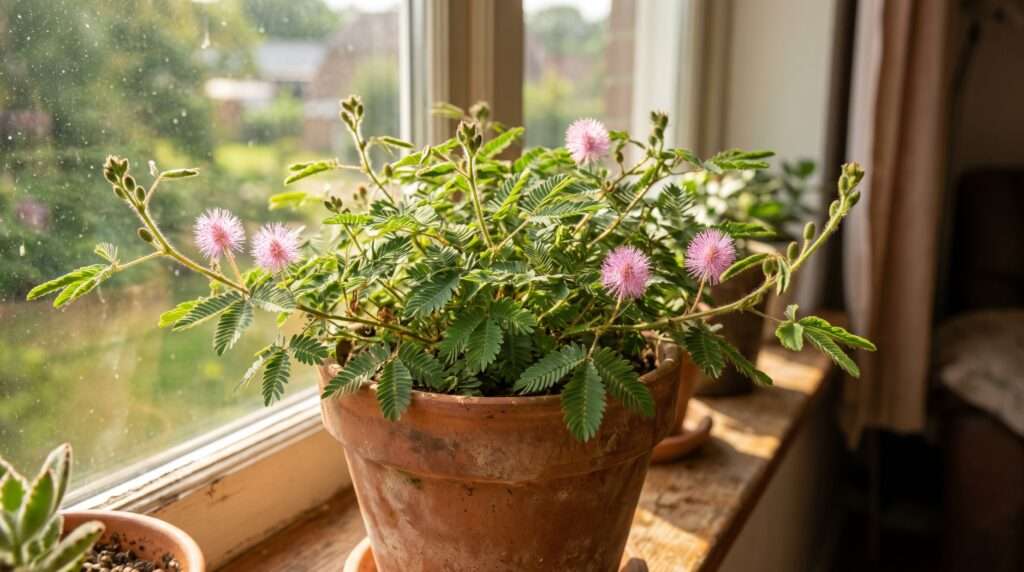
There is a unique kind of magic in bringing home a sensitive plant for the first time. You gently tap a leaf, and like clockwork, the delicate, fern-like leaflets fold inward in a shy, mesmerizing display. It is a botanical party trick that delights houseplant beginners and seasoned collectors alike. But then, the heartbreak inevitably sets in. A week or two later, those same magical leaves start turning yellow, curling up, and dropping all over your windowsill.
If you are watching your touch-me-not slowly wither away, you are not alone. While Mimosa pudica is widely sold as a fun, novelty houseplant, it is actually a tropical weed with highly specific indoor environmental requirements.
This guide skips the generic, unhelpful advice. Drawing on years of horticultural troubleshooting, we are diving deep into the exact humidity levels, watering techniques, and soil mixtures needed to keep your plant thriving long-term. Whether you need immediate emergency resuscitation for a dying plant or just want to perfect your daily care routine, here is everything you need to know to master the sensitive plant. 🪴
🌿 What is a Sensitive Plant (Mimosa pudica)?
To properly care for any plant, you first need to understand how it operates. Mimosa pudica (Latin for “shy” or “shrinking”) is a creeping annual or perennial herb belonging to the pea family (Fabaceae). While you might know it as the sleepy plant, action plant, or touch-me-not, its famous movements are actually a fascinating evolutionary survival tactic.
The Science Behind the Magic (Thigmonasty) 🔬
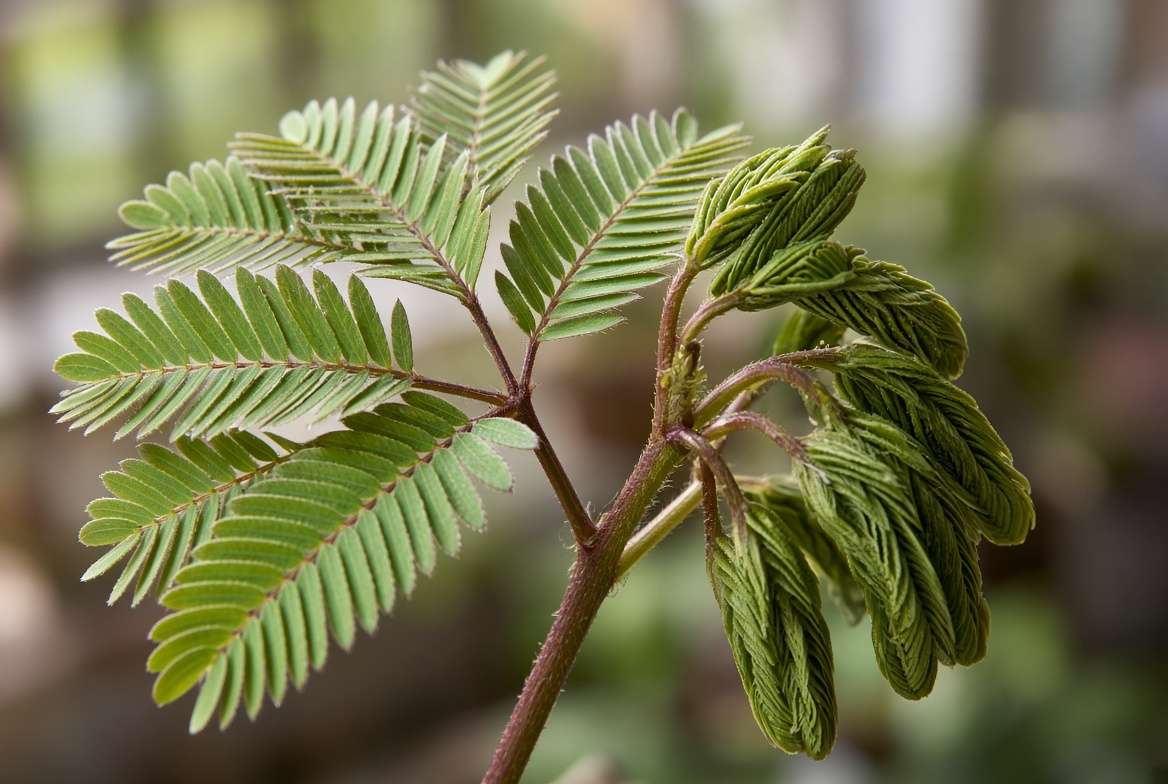
The rapid leaf-folding action you see when you touch a sensitive plant is a biological process called thigmonasty (or seismonasty). When a leaf is touched, shaken, or exposed to sudden heat, the plant releases chemicals, including potassium ions, that force water out of specific cells located at the base of the leaflets (an area called the pulvinus).
This sudden loss of water pressure (turgor pressure) causes the cells to collapse, folding the leaf shut. Scientists believe this is a defense mechanism designed to scare off hungry herbivores or shake off destructive insects.
💡 Expert Tip: Do not constantly touch your sensitive plant! It is incredibly tempting to show off the folding leaves to every guest who visits your home, but this movement requires a massive amount of the plant’s cellular energy (ATP). If you trigger the leaves too often, the plant will literally exhaust itself to death, leading to premature leaf drop and stunted growth.
Natural Habitat & Why It Matters 🌍
Native to the warm, humid regions of Central and South America, Mimosa pudica thrives as an understory weed in tropical climates. It is used to heavy tropical downpours followed by rapid drainage, dappled sunlight filtering through larger trees, and thick, muggy air.
When we bring them into our dry, climate-controlled, air-conditioned homes, they immediately experience environmental shock. Recreating this tropical microclimate is the absolute secret to keeping them alive.
☀️ The 4 Pillars of Sensitive Plant Care (How to Help It Thrive)
Forget the vague instructions on the back of the nursery tag. To grow a skyscraper-sized Mimosa pudica indoors, you need to master these four foundational pillars of care.
Pillar 1: Light Requirements – Finding the Sweet Spot 🌤️
Sensitive plants are notorious Goldilocks plants when it comes to light: they want a lot of it, but it cannot be too harsh.
In their native habitat, they receive bright, dappled sunlight. Indoors, your goal is to provide bright, indirect light for at least 8 to 10 hours a day.
-
The Best Placement: An East-facing window is usually perfect. The plant will soak up the gentle morning sun without getting scorched. If you only have South or West-facing windows, you must filter the intense afternoon rays with a sheer white curtain to prevent sunburn.
-
Signs of Too Much Light: The delicate leaves will look bleached, develop crispy brown edges, or feel paper-thin and scorched.
-
Signs of Too Little Light: The plant will become “leggy,” producing long, weak, stretched-out stems with very few leaves. More importantly, if a sensitive plant doesn’t get enough light, it simply won’t have the energy to open its leaves during the day, remaining in a permanently closed, “sleepy” state.
Pillar 2: Watering – The Trick to “Consistently Moist” 💧
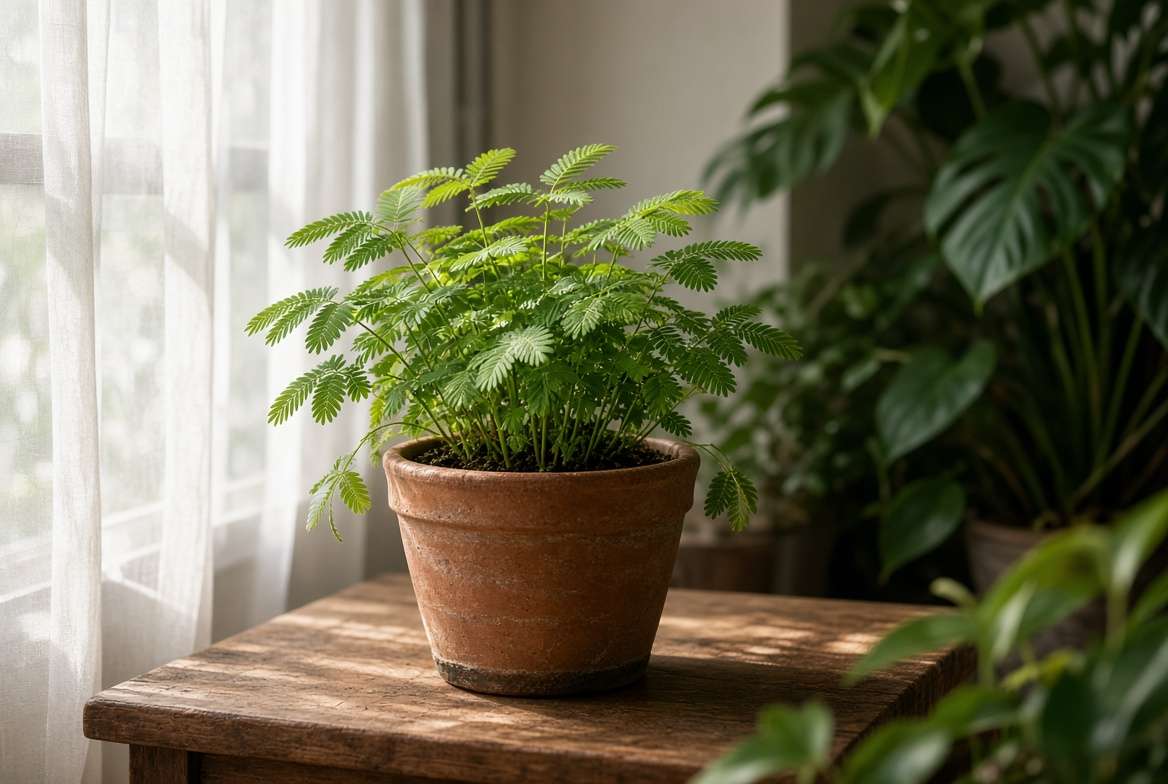
Improper watering is the number one reason sensitive plants die indoors. They have incredibly fragile, fine root systems that are highly susceptible to both drought and root rot. They cannot tolerate drying out completely, but if they sit in a puddle of water, they will drown.
-
When to Water: Do not follow a strict weekly calendar schedule. Instead, check the soil with your finger. You should water your Mimosa pudica the moment the top half-inch to one inch of the soil feels dry to the touch. The root ball below should remain barely moist.
-
The Bottom-Watering Technique: Because top-watering can compact the soil and expose the delicate upper roots to rot, bottom-watering is highly recommended. Fill a bowl with room-temperature water, place your nursery pot in it, and let the soil soak up moisture through the drainage holes for about 20–30 minutes. Remove the pot and let the excess drain completely.
-
Water Quality Matters: Sensitive plants are highly reactive to heavy chemicals. If your municipal tap water is heavily treated with chlorine or fluoride, switch to filtered water, distilled water, or collected rainwater. Cold tap water will also shock the roots—always use room-temperature water.
Pillar 3: Humidity and Temperature – Recreating the Tropics 🌡️
If watering is the most common cause of death, a lack of humidity is a close second. The air inside the average home hovers around 30% to 40% humidity, which feels like a barren desert to a tropical plant adapted to the muggy jungles of South America.
-
The Ideal Temperature: Mimosa pudica prefers consistent warmth. Keep your indoor temperatures strictly between 65°F and 85°F (18°C–29°C). They despise cold shock. A draft from a winter window or a blast of air from an AC vent is often enough to cause sudden, massive leaf drop.
-
The Humidity Sweet Spot: Aim for 50% to 70% ambient humidity. If the air is too dry, the leaflets will shrivel, turn brown at the edges, and refuse to open.
-
How to Boost Humidity Effectively:
-
Humidifiers: A small ultrasonic humidifier placed a few feet away is the most reliable method for maintaining a tropical microclimate.
-
Pebble Trays: Place the plant’s pot on a shallow tray filled with pebbles and water (ensuring the bottom of the pot sits above the water line, not in it). As the water evaporates, it creates a localized pocket of humidity.
-
Why You Shouldn’t Mist: Resist the urge to spray your sensitive plant with a water bottle. Misting only raises humidity for a few minutes, and water sitting on the delicate leaflets often leads to fungal infections or powdery mildew.
-
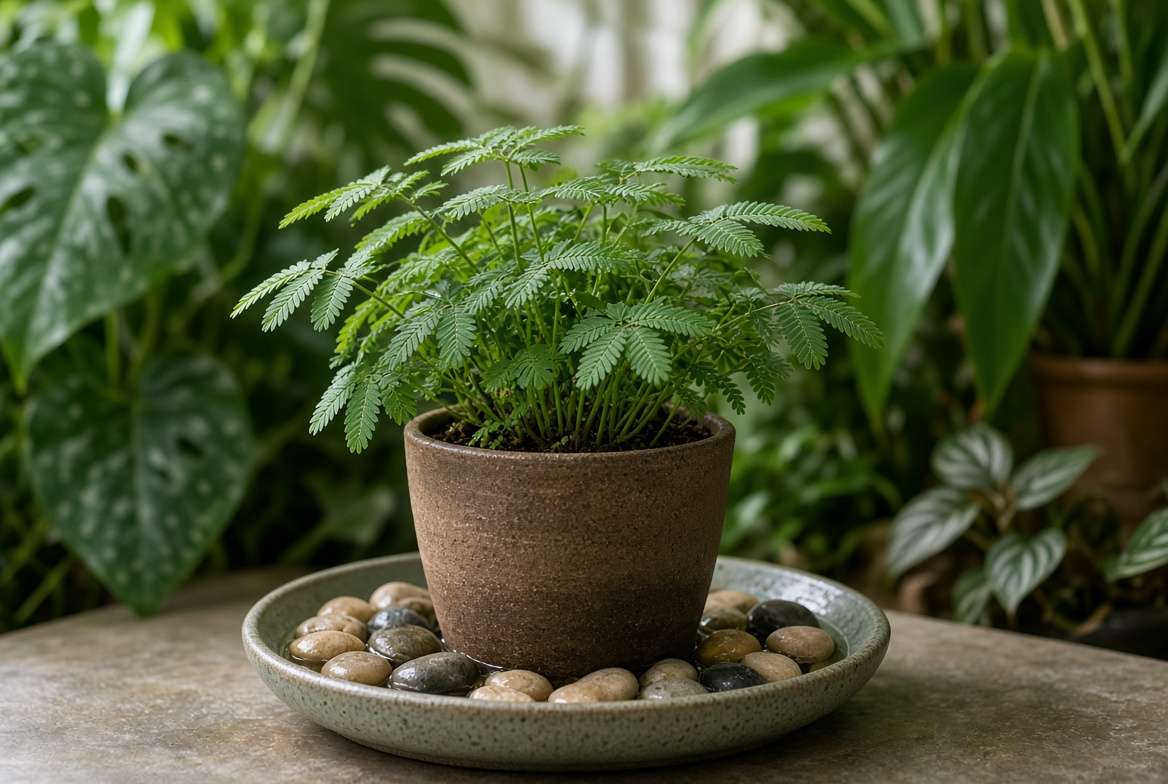
Pillar 4: The Perfect Soil Recipe for Mimosa pudica 🪴
Standard, out-of-the-bag indoor potting soil is usually too dense for a sensitive plant. It compacts over time, choking the plant’s incredibly fine, hair-like root system and leading to root rot. You need a soil matrix that strikes a delicate balance: it must retain moisture like a sponge but drain excess water instantly.
The Expert DIY Soil Recipe:
-
2 Parts Peat Moss or Coco Coir: For moisture retention and a slightly acidic pH (which they love).
-
1 Part Perlite or Pumice: To create aeration pockets so the roots can breathe.
-
1 Part Loam or Worm Castings: To provide rich, gentle organic nutrients.
When potting, do not pack the soil down tightly. Leave it loose and airy. This allows the roots to expand without resistance and prevents the soil from turning into a dense, suffocating brick.
🚑 Troubleshooting: Why is My Sensitive Plant Dying?
Even with the best intentions, indoor gardening comes with challenges. Mimosa pudica communicates its distress very clearly. Here is how to diagnose and fix the most common problems before it is too late.
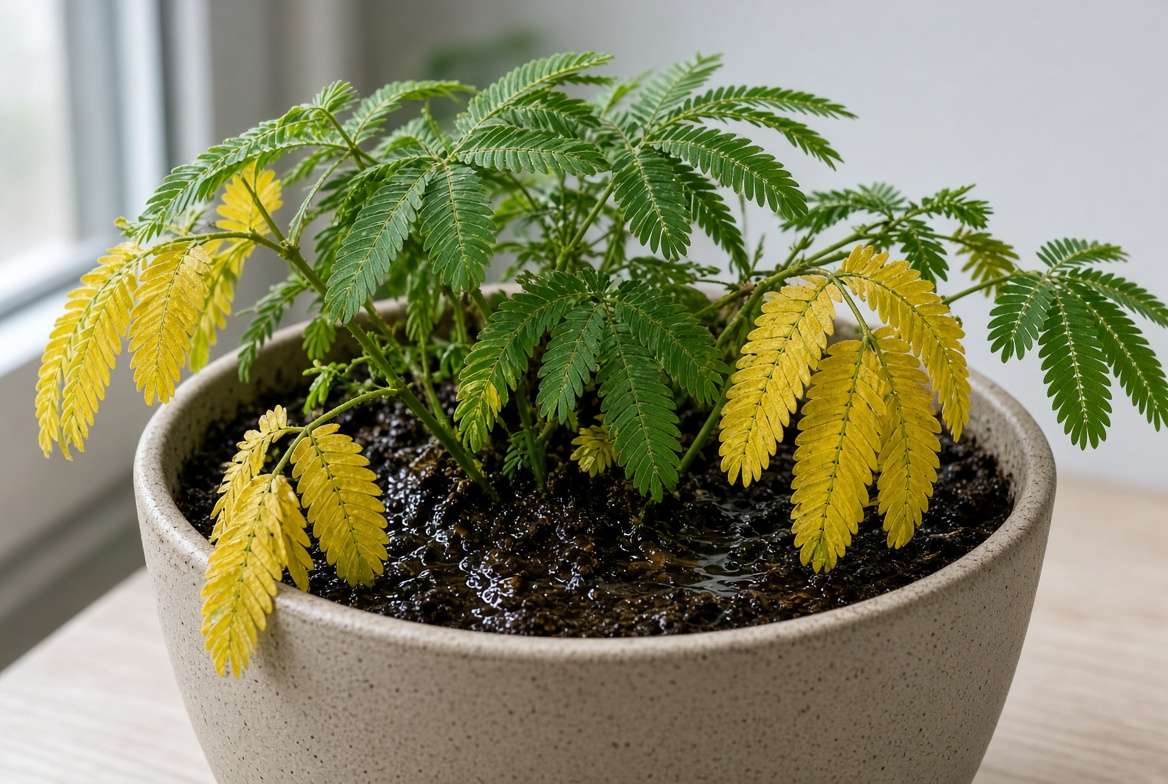
Symptom: Leaves are Turning Yellow and Dropping 🍂
-
The Cause: This is almost always a sign of overwatering, poor soil drainage, or cold shock. When roots sit in soggy soil, they cannot absorb oxygen, leading to root rot.
-
The Solution: Stop watering immediately. Gently lift the root ball out of the nursery pot and inspect the roots. If they are mushy, dark brown, and smell like rotting vegetables, you have root rot. Carefully trim away the dead roots with sterilized shears and repot the plant in fresh, dry, aerated soil. If the soil is just a bit too wet, place the plant in a warmer, brighter spot and let the top inch of soil dry out before your next watering.
Symptom: Leaves are Crispy, Brown, and Curling 🤎
-
The Cause: This points directly to underwatering or drastically low humidity. If the soil has become completely bone-dry, it may become hydrophobic (repelling water).
-
The Solution: The “Emergency Soak.” If water runs straight down the sides of the pot without soaking in, bottom-water the plant by submerging the pot in a basin of lukewarm water for 45 minutes until the soil rehydrates. Afterward, invest in a hygrometer to monitor your room’s humidity and implement a pebble tray immediately.
Symptom: The Leaves Won’t Close Anymore 🛑
-
The Cause: Exhaustion, age, or cold temperatures. If you, your kids, or your pets have been poking the leaves constantly, the plant has depleted its energy reserves. Alternatively, as the plant matures and stems become woody, older leaves naturally lose their thigmonastic response.
-
The Solution: Enforce a strict “no touching” rule for at least two weeks. Ensure the ambient temperature is above 70°F (21°C). Give the plant time to rest and photosynthesize to rebuild its cellular energy.
Symptom: White Webs or Sticky Spots (Pest Alert!) 🕷️
-
The Cause: Spider mites absolutely love the sensitive plant, especially when the indoor air is too dry. You might notice tiny, dust-like specks crawling on the undersides of the leaves or fine, silken webs near the stems.
-
The Solution: Isolate the plant immediately. Because the leaflets are so delicate, harsh chemical insecticidal soaps can burn them. Instead, gently rinse the foliage in the shower with lukewarm water to physically knock the pests off. Follow up with a light, highly diluted spray of cold-pressed Neem oil applied in the evening (never in direct sunlight, which can fry the oil-coated leaves).
🌱 How to Propagate and Grow Sensitive Plants from Seed
Buying a mature Mimosa pudica from a garden center can be risky because they despise being transported and often suffer severe shock when acclimating to a new home. For this reason, horticulturists highly recommend growing them from seed. They germinate rapidly and grow incredibly fast.
Preparing the Seeds (Scarification) 🌰
Sensitive plant seeds have a hard outer shell designed to survive harsh conditions. To guarantee a high germination rate, you must break down this seed coat.
-
The Hot Water Soak: Place your seeds in a heat-safe cup and pour warm (not boiling) water over them. Let them soak for 24 hours. You will notice the seeds swell up as they absorb moisture.
-
Alternative Method: Gently nick the outer shell of the seed with a nail file or sandpaper before planting.
Planting and Sprouting ươ
Fill a shallow nursery tray with a moist seed-starting mix (mostly peat moss and perlite). Place the swollen seeds on top and cover them with a very thin layer of soil (about 1/8 inch deep).
-
Create a Greenhouse: Cover the tray with a clear plastic humidity dome or plastic wrap.
-
Apply Heat: Sensitive plant seeds need heat to wake up. Place the tray on a seedling heat mat set to 75°F (24°C).
-
The Timeline: With high humidity and bottom heat, you should see sprouts emerge in just 7 to 14 days. The first two leaves (cotyledons) will be simple and oval-shaped. Don’t panic! The true, fern-like, folding leaves will develop a week or two later.
✂️ Pruning, Repotting, and Routine Maintenance 🛠️
Once your sensitive plant is established, keeping it looking lush and vibrant requires a gentle touch. Unlike hearty aroids that tolerate heavy pruning and frequent repotting, Mimosa pudica requires a much more delicate maintenance routine.
How to Prune for a Bushier Plant
Left to its own devices, a sensitive plant will naturally grow like a creeping vine, resulting in long, sprawling, “leggy” stems with wide gaps between the leaves. If you prefer a compact, bushy, tabletop plant, you must prune it regularly.
-
Wait until the active growing season (Spring and Summer).
-
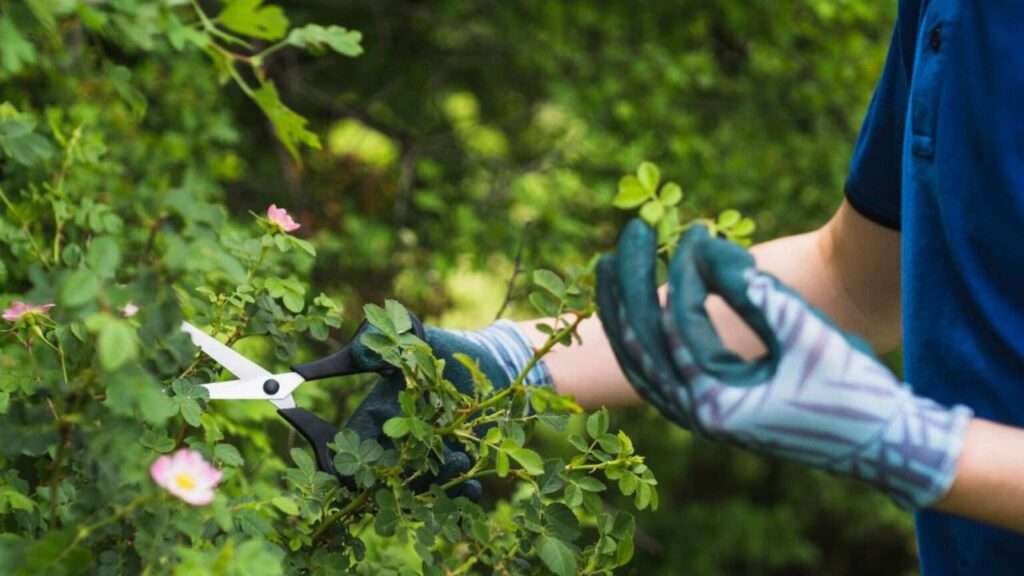
Using sterilized pruning shears, snip the stems just above a leaf node (the little bump where a leaf joins the main stem).
-
This cut forces the plant to branch out from that node, creating two new stems instead of one, leading to a much fuller canopy.
The Art of Repotting (Without Killing It)
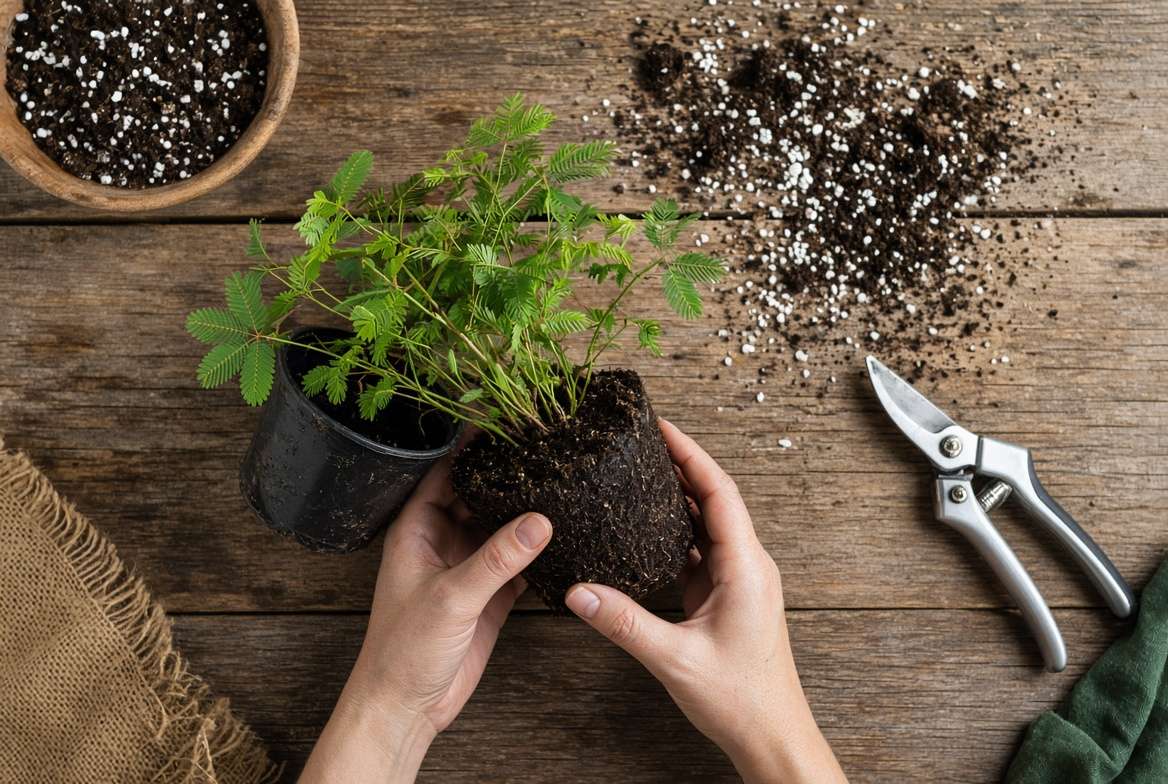
If there is one thing Mimosa pudica hates more than cold air, it is root disturbance. Their fine root systems are highly prone to transplant shock, and aggressively breaking up the root ball during a repot will almost certainly kill the plant. You should only repot when absolutely necessary—typically when roots are growing out of the bottom drainage holes or the soil is drying out completely within 24 hours.
The “Slide and Drop” Repotting Method:
-
Choose a new pot that is only 1 to 2 inches wider than the current one. Ensure it has large drainage holes.
-
Fill the bottom of the new pot with an inch of your custom, well-aerated potting mix.
-
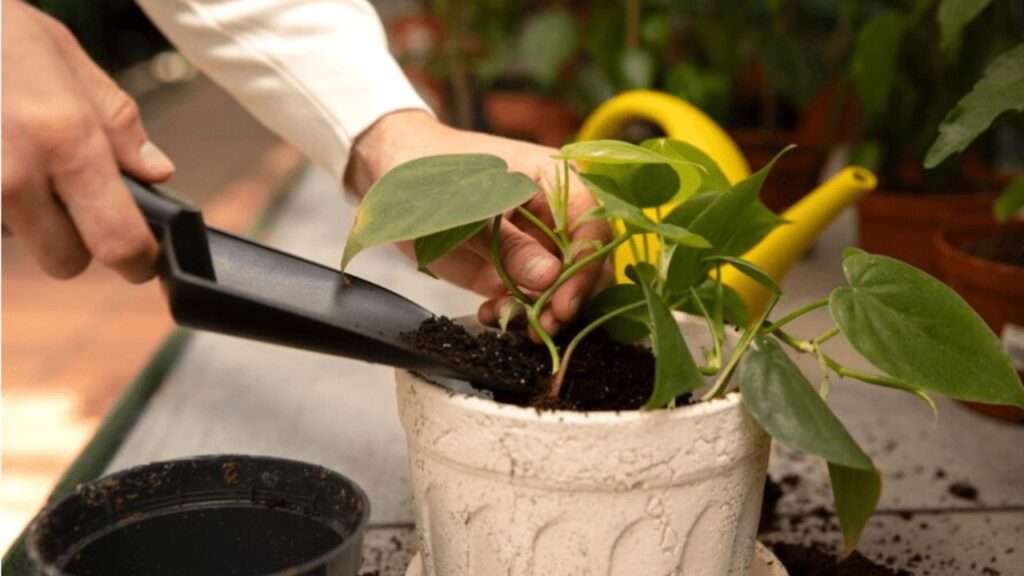
Do not pull the plant by its stem. Instead, gently squeeze the sides of the old plastic nursery pot to loosen the soil, tip it sideways, and slide the entire root ball out completely intact.
-
Do not tease or untangle the roots.
-
Place the intact root ball directly into the center of the new pot and gently backfill the sides with fresh soil. Water thoroughly to settle the soil and eliminate air pockets.
Fertilizing for Vibrant Growth
Because they are technically weeds, sensitive plants are not heavy feeders. However, a little nutrient boost during the spring and summer will encourage brilliant green foliage and those adorable, fluffy pink puffball flowers.
-
Feed your plant once every two to three weeks using a balanced, water-soluble indoor plant fertilizer (like a 10-10-10 ratio).
-
Crucial Step: Always dilute the fertilizer to half-strength. A full-strength dose of liquid fertilizer can easily burn the delicate roots and cause rapid leaf drop. Stop fertilizing entirely during the fall and winter when the plant’s growth naturally slows down.
❓ Frequently Asked Questions (FAQs)
1. Is the Sensitive Plant toxic to cats and dogs? 🐾 Yes, Mimosa pudica is considered mildly toxic to pets. It contains an alkaloid called mimosine. If ingested in small amounts, it may cause mild stomach upset or vomiting in cats and dogs. However, its folding nature makes it an irresistible toy for curious pets, so it is best kept on a high shelf or in a hanging basket entirely out of reach.
2. How long do Sensitive Plants live? ⏳ In their natural tropical habitat, they can be short-lived perennials, surviving for a few years. Indoors, however, they are often grown as annuals. With perfect humidity, lighting, and watering, a houseplant Mimosa pudica will typically live for 1 to 2 years before its stems become excessively woody and its foliage begins to naturally decline. Once it starts producing its pink flowers and seeds, you can easily harvest the seeds to grow the next generation!
3. Why does my Sensitive Plant close up at night? 🌙 While folding from touch is called thigmonasty, folding up at night is a different biological process called nyctinasty (or “sleep movement”). As the sun sets and light levels drop, the plant naturally folds its leaves inward and droops its stems to conserve moisture and protect itself from nighttime temperature drops. It will naturally reopen with the morning sun.
4. Can I grow Mimosa pudica outside? 🏡 Yes, but only under specific conditions. They are hardy only in USDA Zones 9 through 11, where temperatures never dip below freezing. In colder climates, you can move your potted sensitive plant to a shady outdoor patio during the hot, humid summer months, but you must bring it back indoors well before the first autumn chill hits.
💚 Conclusion: Mastering the Touch-Me-Not
Seeing a sensitive plant wither and drop its leaves is a rite of passage for many houseplant enthusiasts. Because they are sold as easy, novelty items, it is incredibly easy to underestimate their care requirements.
However, armed with the right knowledge, keeping your Mimosa pudica alive and thriving is entirely achievable. Remember the three golden rules of sensitive plant care:
-
Keep it consistently moist, but never soggy.
-
Provide high humidity and warmth to recreate the tropics.
-
Resist the urge to touch the leaves constantly!
By upgrading its soil, finding the perfect bright window, and letting it conserve its energy, you will be rewarded with a lush, bushy plant that might even treat you to a display of its iconic pink, puffball flowers.
Have you successfully grown a sensitive plant indoors, or are you currently trying to save one from the brink? Share your experiences, soil recipes, and troubleshooting questions in the comments below! If you are struggling with keeping the air moist enough for your Mimosa pudica, be sure to check out our comprehensive guide to the Best Humidifiers for Indoor Tropical Plants to create the ultimate indoor jungle.