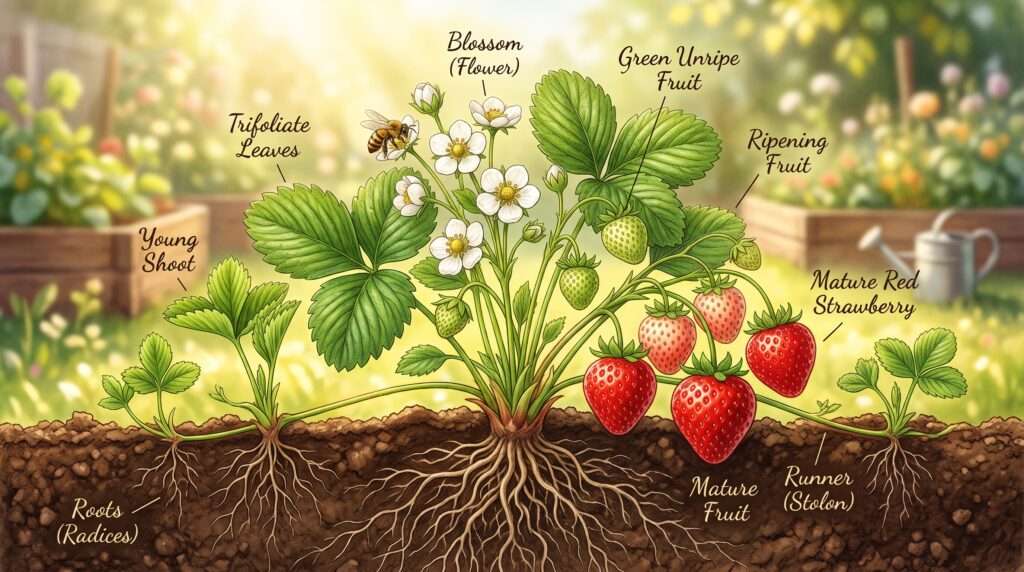
Every gardener dreams of carrying baskets overflowing with sweet, ruby-red berries from their own backyard. Yet, many enthusiastic growers are left staring at disappointing yields, deformed fruit, or plants that mysteriously die off over the winter. Why does this happen? Most often, it is because well-meaning gardeners treat their plants the exact same way all year round. To truly unlock your garden’s potential and guarantee a bumper crop, you must intimately understand the complete strawberry plant life cycle.
When you know exactly what your plant is experiencing biologically—from the first root push in early spring to its deep winter dormancy—you can perfectly time your watering, fertilizing, and pruning. By aligning your care routine with the plant’s natural growth stages, you stop fighting against nature and start working with it. This comprehensive guide will walk you through every single phase of strawberry growth, showing you exactly what your plant needs at every step. 🌱
Why Understanding the Strawberry Plant Life Cycle Matters
Treating a flowering strawberry plant the same way you treat a dormant one is a recipe for crop failure. A plant’s requirements for macronutrients (like nitrogen, phosphorus, and potassium), water volume, and sunlight exposure drastically shift as it moves from its vegetative stage into its fruiting stage.
Think of a strawberry plant as having a strict “energy budget.” It only has so much energy to spend at any given time, and it must choose between building an expansive root system, pushing out lush green leaves, sending out runners to clone itself, or swelling blossoms into juicy fruits. When you understand its life cycle, you can manipulate this energy budget. For instance, applying heavy nitrogen fertilizer at the wrong time forces the plant to spend all its energy growing massive leaves at the expense of developing fruit—resulting in a gorgeous, bushy green plant with absolutely no berries.
💡 Expert Insight: Timing is everything in horticulture. By synchronizing your organic fertilizer applications and pruning schedules to specific biological life stages, you completely eliminate the dreaded “all leaves, no fruit” syndrome and protect your perennials for years to come.
The 6 Stages of the Strawberry Plant Life Cycle 🌿
To maximize your harvest, you need to know what is happening beneath the soil and above the canopy. Here is the step-by-step breakdown of how a strawberry grows and exactly what you should do during each phase.
Stage 1: Planting and Establishment (Roots & Crown) 🪴
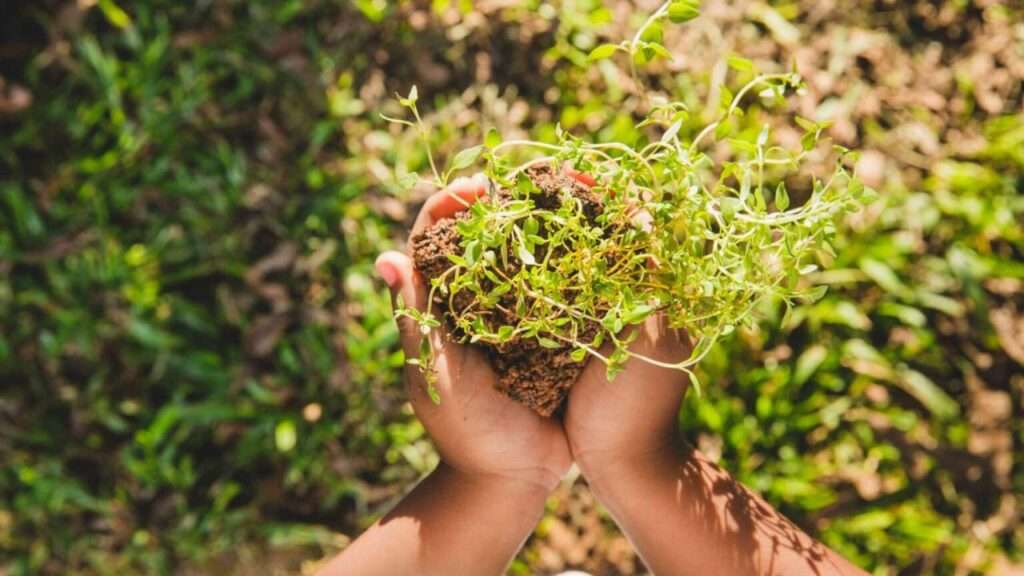
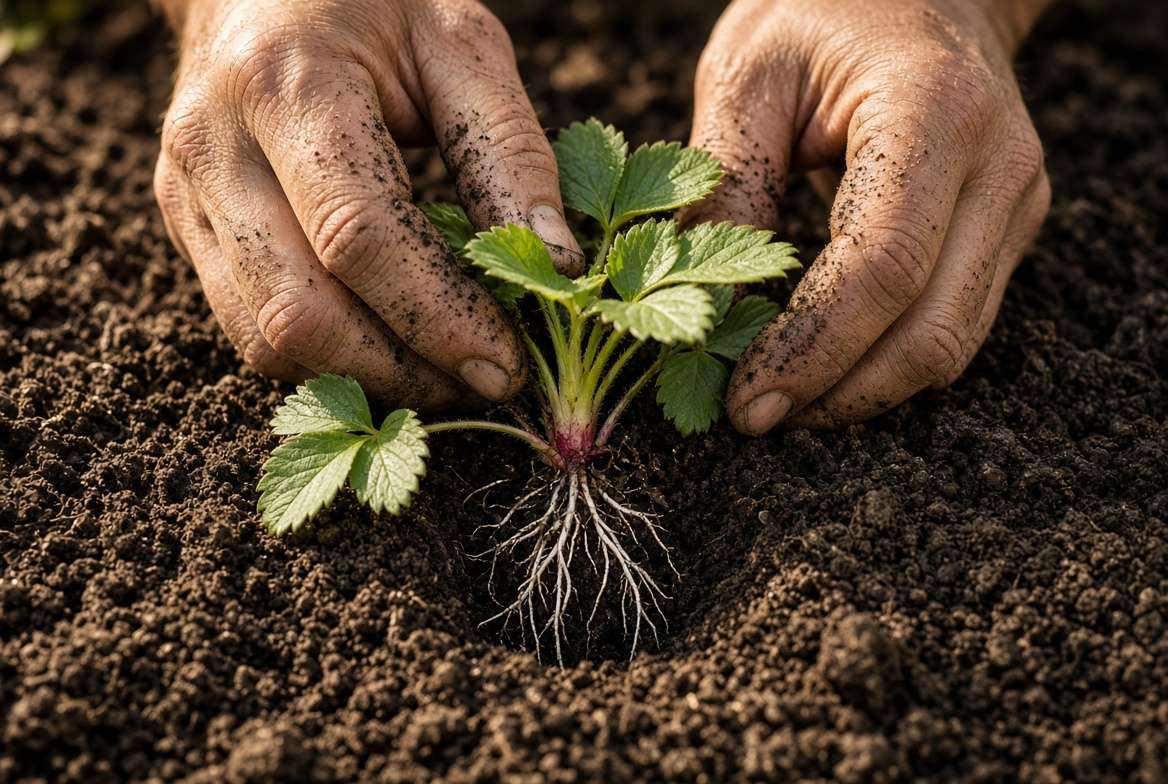
What’s Happening: Whether you are starting with a dormant bare-root crown, a seed, or a rooted runner (daughter plant), this initial phase is all about survival and foundation. During establishment, the plant focuses nearly 100% of its energy budget downward into the soil, anchoring a robust root system. Above ground, you might only see a few tiny, folded green leaves slowly emerging from the central crown.
Timeline: Typically 2 to 4 weeks after planting in early spring, as soon as the soil is workable and has warmed to around 50°F (10°C).
Actionable Care Tips:
-
Planting Depth is Critical: The most common mistake at this stage is burying the crown (the thick central base where roots and stems meet). If the crown is buried beneath the soil line, it will quickly rot. If it is planted too high, the roots will dry out. It must sit perfectly level with the soil surface.
-
Moisture Management: Keep the soil consistently moist but never soggy. The young, shallow roots are highly susceptible to drying out, but standing water will invite fungal pathogens.
-
Hold the Fertilizer: Avoid using heavy, fast-release nitrogen fertilizers at this stage. You want the plant to focus on root establishment, not rapid leaf growth that the immature roots cannot support.
Stage 2: Vegetative Growth (Building the Factory) 🍃
What’s Happening: Once the root system is securely established, the plant shifts its energy upward. It begins rapidly pushing out lush, serrated green foliage. Think of these leaves as the plant’s biological solar panels. The broader and healthier the canopy grows during this vegetative stage, the more energy the plant can photosynthesize and store for the grueling work of making fruit later on.
Timeline: Late spring to early summer, heavily dependent on your local climate and rising ambient temperatures.
Actionable Care Tips:
-
Feed the Growth: Now is the time to apply a balanced, organic fertilizer or top-dress your soil with rich compost. A gentle boost of nitrogen here helps build a strong, leafy canopy.
-
Early Pest Scouting: Tender new growth is a magnet for sap-sucking insects. Inspect the undersides of the leaves weekly for aphids or early signs of spider mites. Treat early with neem oil or insecticidal soap before blossoms appear. 🐛
Stage 3: Flowering and Pollination (The Make-or-Break Stage) 🌼
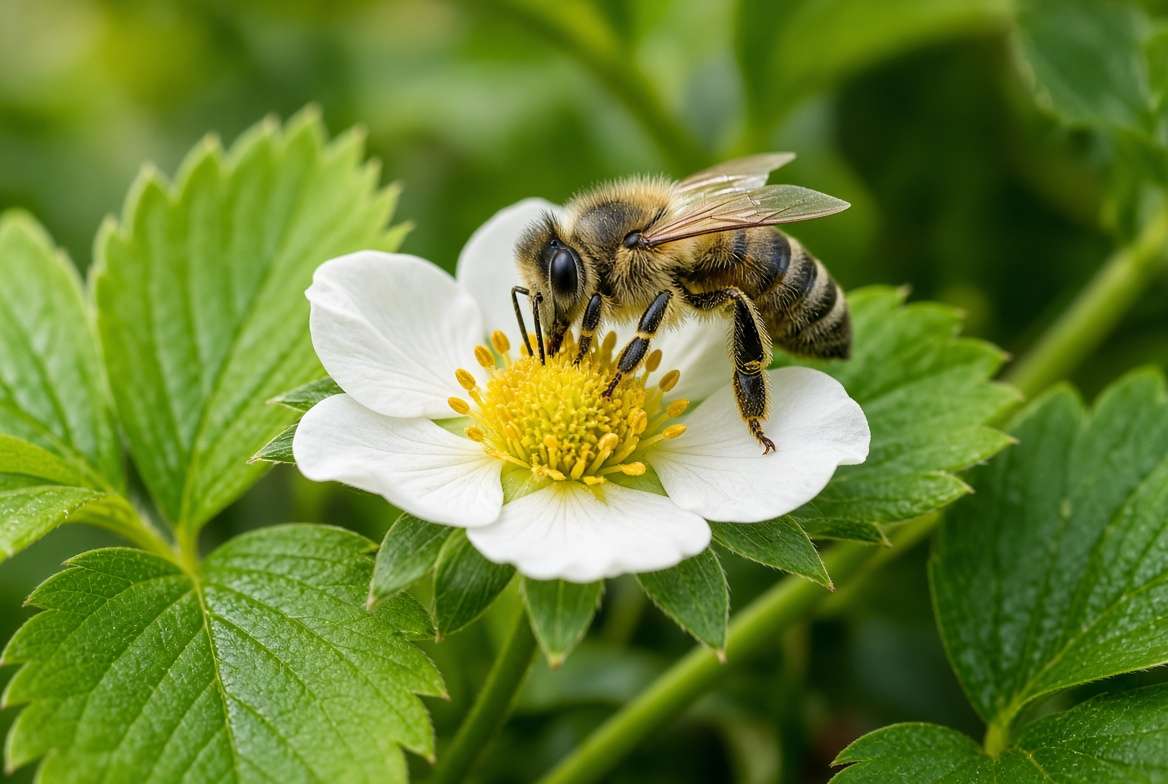
What’s Happening: The plant makes a dramatic shift, diverting its energy away from producing new leaves and towards reproductive growth. Small, tightly clustered green buds emerge from the crown on slender stalks, eventually opening into delicate white (or sometimes pink) five-petaled flowers with bright yellow centers.
This is the most critical juncture of the strawberry plant life cycle. Every yellow center contains hundreds of tiny pistils. For a perfectly shaped, large strawberry to form, every single one of those pistils must be pollinated.
Timeline: For traditional June-bearing varieties, this happens in mid-spring. For Everbearing and Day-Neutral types, flowers will appear in spring and continue in waves throughout the summer.
Actionable Care Tips:
-
Protect the Pollinators: Never spray broad-spectrum chemical pesticides or even heavy organic oils during this stage. You need bees, hoverflies, and gentle breezes to visit these blossoms. 🐝
-
Prevent Drought Stress: A flowering strawberry plant is incredibly thirsty. If the plant experiences drought stress during this stage, its survival mechanism will kick in, causing it to prematurely drop its blossoms to save energy. Ensure deep, consistent watering at the base of the plant.
Stage 4: Fruit Development and Ripening (The Payoff!) 🍓
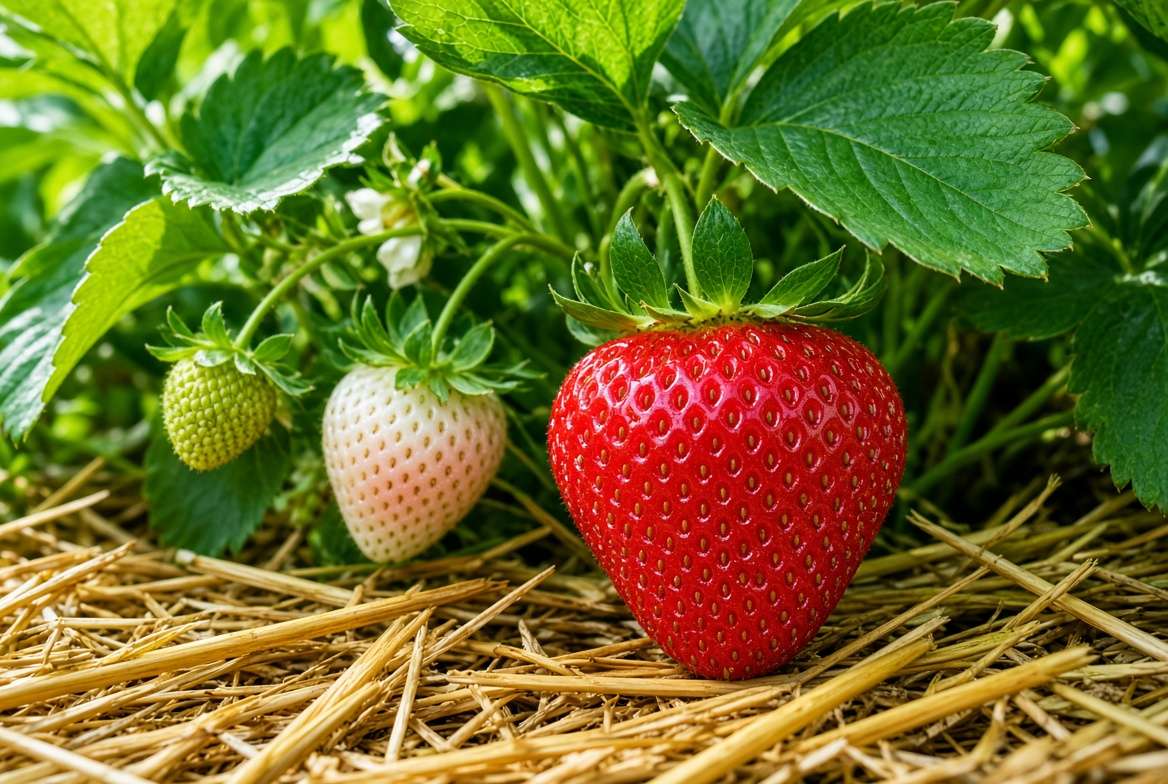
What’s Happening: Once a flower is successfully pollinated, the delicate petals drop off, and the central receptacle (the part holding the pistils) begins to swell. This is the physiological start of fruit development. Over the coming weeks, these hard, tiny green nodules will expand rapidly. As they reach their mature size, they will transition from dark green to a pale, translucent white, and finally develop their rich, signature red coloration. Sugars concentrate in the fruit during this final color shift.
Timeline: Typically 4 to 6 weeks after blossoming, peaking in early-to-mid summer depending on the variety.
Actionable Care Tips:
-
The Mulch Buffer: As the heavy fruits develop, their weight will pull the stems down toward the soil. Berries resting directly on damp earth are highly prone to fungal rot, mold, and slug damage. Apply a thick layer of clean straw mulch directly under the foliage canopy to lift the berries off the wet ground.
-
Maximum Hydration: Strawberries are approximately 90% water. During the fruiting stage, the plant’s water demands skyrocket. Provide 1 to 2 inches of water per week, ideally via drip irrigation to keep the foliage and berries dry while soaking the root zone. 💧
Stage 5: Runner Production (Multiplication) 🏃
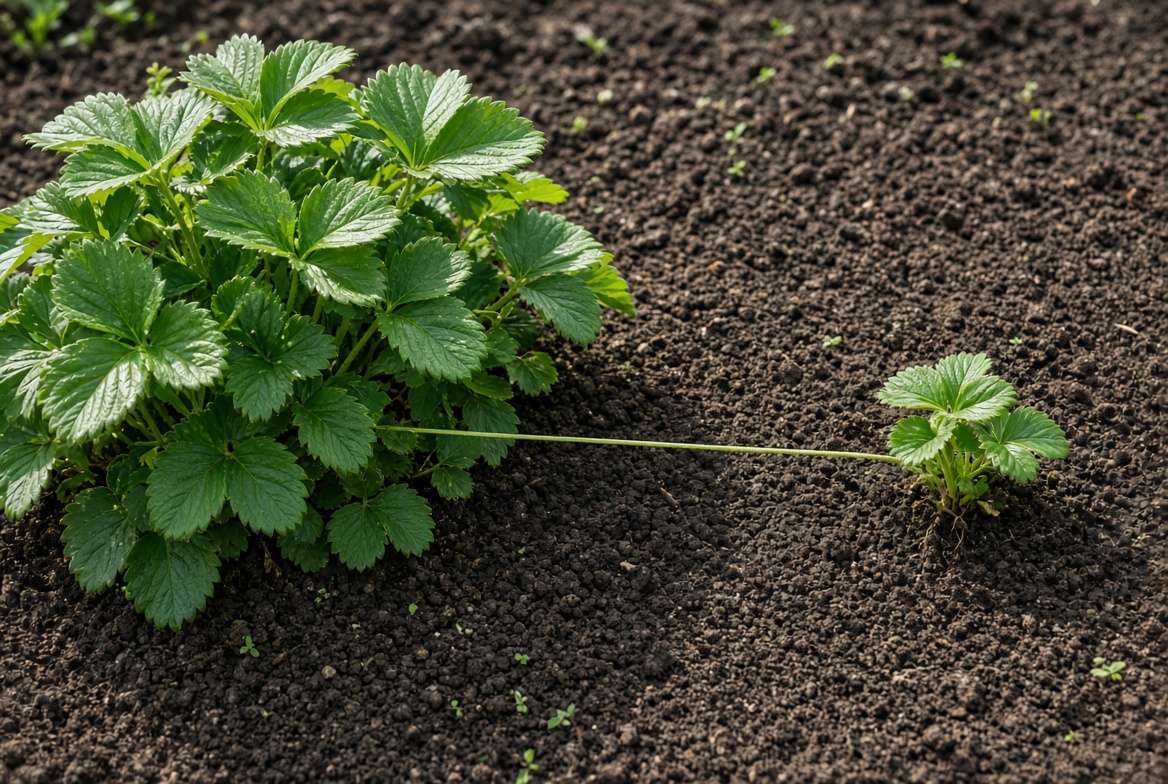
What’s Happening: After the primary exertion of fruiting is over, the mother plant switches survival tactics from sexual reproduction (seeds/fruit) to asexual reproduction (cloning). The plant sends out long, horizontal, leafless stems called stolons, commonly referred to as “runners.” At the end of these runners, tiny duplicate plants (daughter plants) form. Once a daughter plant touches bare soil, it will root and establish itself as a brand new, genetically identical strawberry plant.
Timeline: Mid-to-late summer, usually immediately following the primary June harvest.
Actionable Care Tips:
-
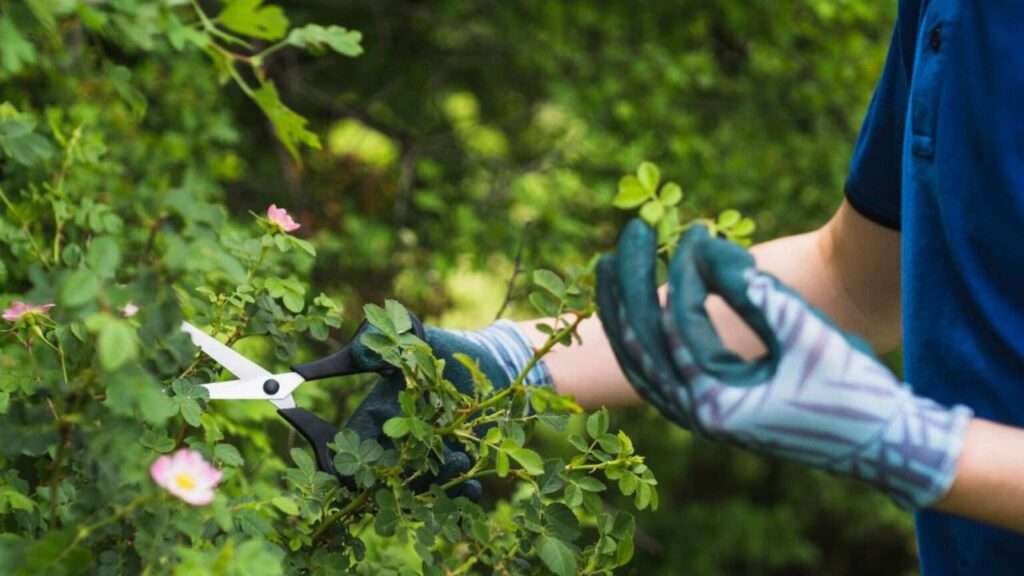
Energy Management: Allowing a mother plant to produce endless runners drains her stored energy, significantly reducing your fruit yield for the following year. If your goal is maximum berry production, mercilessly snip these runners off at the base as soon as you see them. ✂️
-
Strategic Propagation: If you want to expand your strawberry patch for free, allow the mother plant to produce 1 or 2 healthy runners. Let them root into small pots placed next to the mother plant. Once they establish strong roots (about 3-4 weeks), cut the umbilical cord and transplant them! 🪴
Stage 6: Winter Dormancy (Rest and Recharge) ❄️
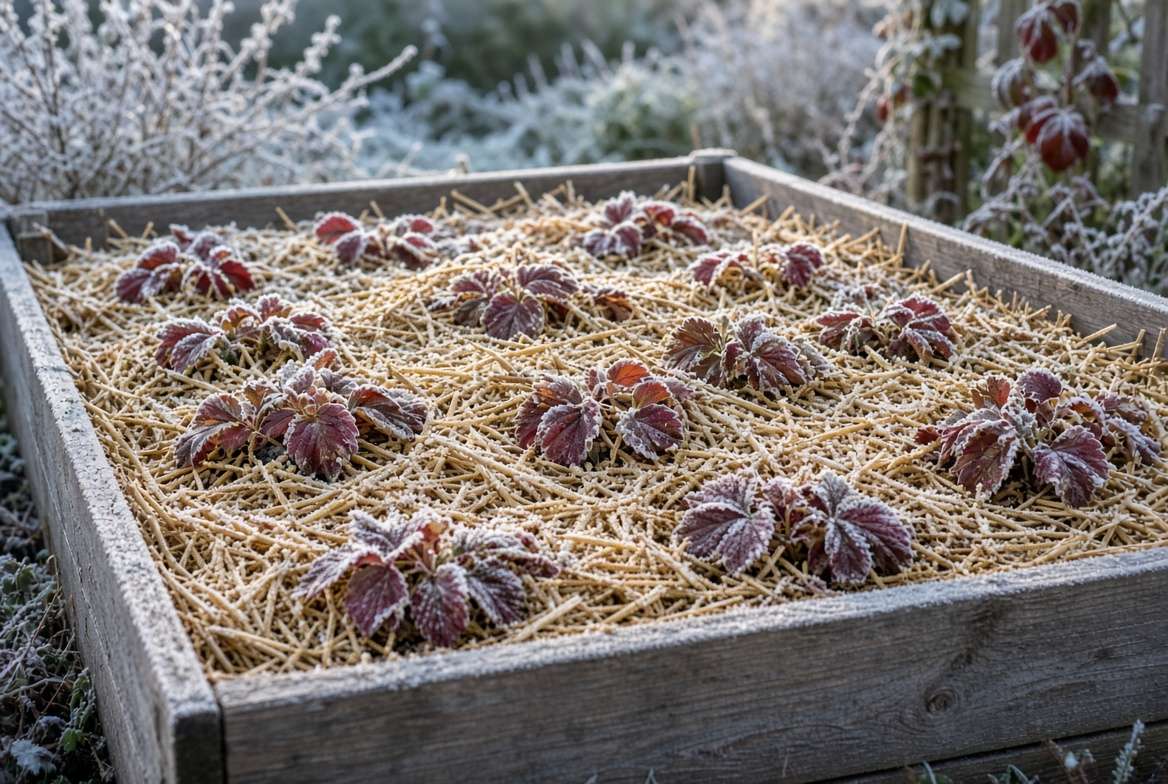
What’s Happening: As the days grow shorter and autumn temperatures plummet, the strawberry plant senses the impending freeze. It halts all new vegetative growth and runner production. The existing green leaves often turn brilliant shades of red, purple, or brown as the plant pulls all of its remaining carbohydrates and energy downward, storing them safely inside the thick, woody crown. The plant is essentially going to sleep to survive the freezing winter temperatures.
Timeline: Late fall through the deep winter months.
Actionable Care Tips:
-
Sanitation: Once the plant is fully dormant and the foliage has died back, gently clean up the dead, crispy leaves. Leaving decaying foliage in the garden bed over winter creates a perfect overwintering habitat for fungal spores and pests. 🍂
-
Winter Protection: The strawberry crown can survive extreme cold, but it cannot survive repeated freezing and thawing cycles, which cause “frost heave” (pushing the plant completely out of the soil). Once the ground has solidly frozen, cover your plants with a thick, 3-to-4-inch layer of loose straw or pine needles to insulate the bed until spring.
How Strawberry Types Alter the Life Cycle Timeline 🧬
One of the biggest sources of confusion for beginner gardeners is why their neighbor’s strawberry plant life cycle looks completely different from theirs. The answer lies in genetics. There are three main classifications of strawberries, and they handle their biological stages very differently:
June-Bearing Strawberries
These are the traditional heavy-hitters. June-bearers go through one massive, synchronized cycle per year. They dedicate spring to flowering, early summer to one explosive, giant harvest of very large berries, and late summer entirely to vegetative growth and aggressive runner production.
Everbearing & Day-Neutral Strawberries
Unlike June-bearers, these varieties do not rely on day length to trigger their life stages. Day-neutrals and Everbearers will repeat Stages 2 (Vegetative), 3 (Flowering), and 4 (Fruiting) in a continuous, rolling cycle from late spring all the way until the first hard frost of autumn. Because they are constantly pouring energy into making fruit, they produce far fewer runners.
Troubleshooting: When the Life Cycle Stalls 🚨
Even with excellent care, you might hit a roadblock in your plant’s development. Here is how to diagnose and fix common life cycle interruptions:
-
Problem 1: Lots of Flowers, but Small, Deformed Fruit.
-
The Cause: This is almost always an issue during Stage 3. If bees are inactive due to cold, rainy weather, or if Tarnished Plant Bugs feed on the blossoms, the flowers experience poor, incomplete pollination.
-
The Fix: Encourage pollinators by planting companion flowers like borage or marigolds nearby. If weather is poor, gently brush the inside of the strawberry flowers with a soft paintbrush to hand-pollinate. 🖌️
-
-
Problem 2: Massive, Lush Plants, but No Flowers.
-
The Cause: Over-fertilizing with heavy nitrogen during Stage 2. The plant got “stuck” in vegetative mode, prioritizing leaves over reproductive buds.
-
The Fix: Switch to a fertilizer with higher phosphorus and potassium (the “P” and “K” in N-P-K ratios) which promotes blooming and fruiting, and dial back the nitrogen.
-
-
Problem 3: Crowns Rotting Before Dormancy.
-
The Cause: Usually traced back to Stage 1 errors—planting the crown too deep beneath the soil line, or planting in heavy, compacted clay soil that doesn’t drain.
-
The Fix: Always plant on raised mounds or in raised beds to ensure excess water drains rapidly away from the delicate crown.
-
Pro Grower Tips for a Healthier Life Cycle 🏆
To truly elevate your strawberry patch and grow like an expert horticulturist, incorporate these advanced E-E-A-T backed techniques into your yearly routine:
-
First-Year Flower Pinching: It requires immense willpower, but if you are planting bare-root June-bearing strawberries, you should pinch off every single blossom that appears during their first year in the ground. By preventing the plant from entering the fruiting stage, it redirects 100% of that energy into building a massive root system and a thick, robust crown. The reward? Your Year 2 and Year 3 harvests will be exponentially larger and more resilient to drought. 🧑🌾
-
Crop Rotation & Patch Renewal: A strawberry plant is a perennial, but it is not immortal. The life cycle begins to lose vigor after 3 to 4 years. The fruit will become smaller, and the plant will become more susceptible to disease. Plan to cycle out old mother plants every 3 years, replacing them with freshly rooted daughter plants to keep your berry patch youthful and highly productive.
Frequently Asked Questions (FAQs) 🙋
How long does a complete strawberry plant life cycle take? From a newly planted bare-root crown or rooted runner to its first winter dormancy, the cycle takes about 8 to 9 months (spring through late fall). However, the plant is a perennial and will repeat this cycle annually for 3 to 4 years before its yields naturally decline.
Can a strawberry plant survive the winter? Yes! Strawberries are hardy perennials that survive winter by entering a state of deep biological dormancy. By storing energy in their crowns and utilizing a protective layer of winter mulch (like straw), they can easily survive temperatures well below freezing.
How many times a year do strawberries fruit? This depends entirely on the variety. June-bearing strawberries fruit exactly once per year in a massive 2-to-3-week window. Everbearing varieties usually produce two distinct smaller crops (one in early summer, one in early fall). Day-neutral varieties will produce fruit continuously in small batches from spring until the first fall frost.
Why are my strawberry plant’s leaves turning red in the fall? Red leaves in late autumn are a perfectly natural part of the life cycle! It signals that the plant is winding down its vegetative growth and pulling nutrients down into the crown to prepare for winter dormancy.
Conclusion 🎯
Understanding the strawberry plant life cycle is the ultimate secret weapon for any home gardener or homesteader. Moving away from a “one-size-fits-all” gardening approach and transitioning into a stage-by-stage care routine changes everything. By giving your plants deep hydration when they are swelling with fruit, heavy mulch when they are bracing for winter cold, and the right nutrients when they are pushing out new leaves, you guarantee a healthier, more resilient garden.
Don’t let your plants struggle through their natural development phases without the right support. Pay attention to the subtle cues your plants are giving you—whether it’s the sudden emergence of runners or the drooping of thirsty blossoms—and adjust your care accordingly.
What stage are your strawberries currently in right now? Are they just pushing out their first spring leaves, or are they sending out a tangled web of summer runners? Let us know in the comments below, and if you’re growing in containers, be sure to check out our comprehensive guide on The Best Soil Mix for Potted Strawberries to give those young roots the perfect head start! 🪴