
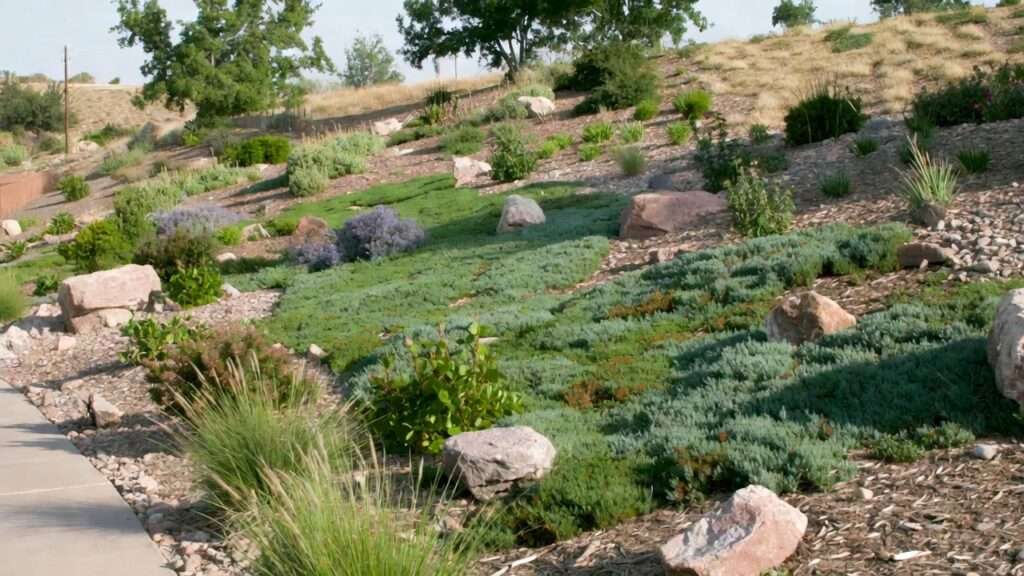
Imagine this: after a heavy rain, you watch helplessly as rivulets of water carve ugly gullies down your hillside yard, washing away precious topsoil and threatening the foundation of your home. Mowing that steep slope feels dangerous, your water bill skyrockets from trying to keep grass alive, and the whole area looks neglected despite your best efforts. If this sounds familiar, you’re not alone — sloped yards present unique challenges, but they also offer incredible opportunities for beautiful, sustainable transformation.
Sloped yard xeriscape solutions provide the perfect answer: a thoughtful approach to landscaping that uses drought-tolerant plants, smart design techniques, and natural erosion control methods to stabilize soil, slash water usage, and create a stunning, low-maintenance landscape you’ll love year-round. Xeriscaping — derived from the Greek word “xeros” meaning dry — isn’t about a barren desert look; it’s about working with nature to conserve water while preventing erosion, supporting pollinators, and boosting curb appeal. 🌱💧
In this comprehensive guide, we’ll walk you through proven strategies drawn from landscape experts, university extension resources, and real-world hillside projects. Whether your slope is gentle or steep, sunny or shaded, these solutions will help you reclaim your yard with confidence.
Why Slopes Need Special Xeriscape Attention ⚠️🏞️
Sloped terrain amplifies common landscaping problems. Gravity pulls water downhill rapidly during rainstorms, leading to soil erosion, nutrient loss, and even structural issues over time. Traditional lawns exacerbate the problem: grass roots are shallow, mowing is hazardous on inclines, and frequent watering causes more runoff instead of absorption.
Xeriscaping flips the script. Deep-rooted, drought-tolerant plants bind soil like natural anchors, reducing erosion by up to 90% compared to bare ground (according to studies from sources like university extension programs and erosion control research). Mulch layers slow water velocity, while strategic hardscaping directs flow safely. The result? A yard that requires far less upkeep, uses 50-75% less water, and thrives in drought conditions — perfect for water-conscious homeowners facing restrictions or high utility costs.
Bonus perks include habitat for birds and butterflies, increased property value through eco-friendly appeal, and the peace of mind that comes from a resilient landscape. 😊
Assessing Your Sloped Yard: The First Step to Success 📏🔍
Success starts with understanding your specific site — skipping this leads to plant failures and wasted effort.
- Measure slope steepness — Use a level and string line or smartphone app. Gentle slopes (<15%) allow flexible designs; moderate (15-30%) need more erosion focus; steep (>30%) often require terracing or professional help.
- Test your soil — Grab a kit from a local garden center or extension service. Check texture (clay holds water but drains poorly; sandy drains fast but erodes easily), pH, and nutrients. Most xeriscape plants prefer well-drained, slightly alkaline to neutral soil.
- Map sun, shade, and microclimates — South/west-facing slopes get hot and dry; north/east sides stay cooler and moister. Note wind patterns and existing trees.
- Evaluate water access — Check local drought rules, rainfall averages, and whether you can install efficient drip irrigation.
- Set realistic goals — Budget $5–15 per square foot for DIY (plants + mulch); factor in time (full transformation may take 1–3 seasons as plants establish).
A quick sketch or photo journal helps plan zones and spot problem areas early.
Core Principles of Sloped Xeriscape Design 🏗️🌵
Xeriscaping follows seven core principles (developed by Denver Water and widely adopted), adapted here for slopes:
- Plan and design thoughtfully — Group plants by water needs (hydrozoning): drought-lovers at the top, moderate users lower down.
- Improve soil — Add organic compost to boost water retention without sogginess.
- Limit turf — Replace grass with groundcovers or gravel paths — no more dangerous mowing!
- Irrigate efficiently — Use drip lines or soaker hoses zoned by plant type.
- Choose appropriate plants — Prioritize natives or adapted species with deep/fibrous roots.
- Use mulch generously — 3–4 inches of organic or gravel mulch conserves moisture and prevents splash erosion.
- Maintain appropriately — Focus on establishment watering, then taper off.
For slopes, add contouring: create subtle swales (shallow ditches along contour lines) or berms to capture and infiltrate runoff slowly.
Top Low-Maintenance Plants for Erosion Control on Slopes 🌿🛡️
Plant selection is the heart of sloped xeriscape success. Focus on species with aggressive, soil-binding roots, drought tolerance once established, and low care needs. Here’s a curated list (adapt to your USDA zone; many work in zones 5–9):
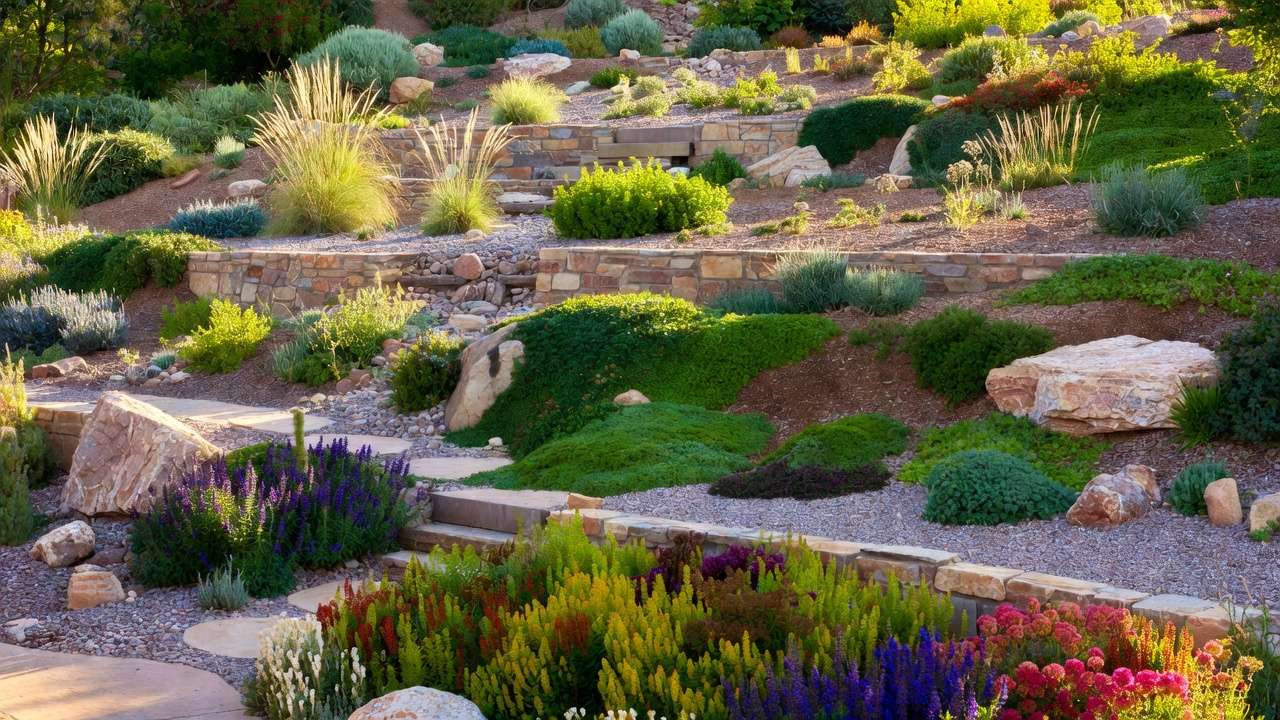
Groundcovers (fast-spreading, mat-forming for quick coverage) 😍
- Creeping juniper (Juniperus horizontalis) — Evergreen, tough, spreads widely; excellent for sunny slopes.
- Sedum/stonecrop varieties (e.g., ‘Angelina’, ‘Dragon’s Blood’) — Succulent, colorful, thrives in poor soil.
- Ice plant (Delosperma) — Vibrant daisy-like flowers, super drought-proof.
- Creeping phlox — Early spring color, good for moderate slopes.
- Native options: Bearberry (Arctostaphylos uva-ursi) or wild strawberry — Pollinator-friendly and hardy.
Ornamental Grasses & Sedges (fibrous roots excel at holding soil)
- Little bluestem — Native prairie grass, blue-green foliage turns red in fall.
- Blue fescue — Compact, silvery-blue tufts for texture.
- Switchgrass or deer grass — Tall, deep roots for steeper areas.
Shrubs & Small Trees (structure + deep anchoring)
- Manzanita or ceanothus (California lilac) — Evergreen, blooms beautifully, top-tier erosion fighters.
- Dwarf yaupon holly or cotoneaster — Dense growth, berries for wildlife.
- Forsythia (weeping varieties) — Branches root where they touch ground for extra stability.
Perennials for Color & Pollinators
- Yarrow, catmint, Russian sage — Tough, aromatic, long-blooming.
- Black-eyed Susan, coneflower — Native favorites that attract butterflies.
Pro tip: Start with 60–70% groundcovers for coverage, then layer in shrubs and accents. Native plants often outperform exotics in local conditions and support biodiversity.
Smart Design Ideas & Layouts for Sloped Xeriscape Yards 🏡✨
Once you’ve selected your plants, the magic happens in how you arrange them. Thoughtful layout turns a problematic slope into a functional, eye-catching feature. Here are some of the most effective and beautiful design approaches for sloped xeriscape yards:
Gentle Terracing with Natural Materials Instead of tall, expensive retaining walls, create soft, stepped levels using large flat stones, logs, or low timber edging. Each “terrace” can be 1–3 feet high and planted with groundcovers at the front edge to spill over softly. This slows water, creates flat planting pockets, and looks organic rather than engineered.
Rock Gardens & Strategic Boulders Place medium-to-large boulders partially buried into the slope — they act as natural anchors and break up water flow. Surround them with succulents, sedums, and low-growing natives. The rocks absorb heat during the day and release it at night, creating microclimates that benefit certain plants. Bonus: they require zero maintenance!
Dry Creek Beds & Swales Design shallow, meandering channels (lined with river rock or gravel) that follow contour lines to catch and direct runoff. At the base, create a small rain garden depression filled with moisture-loving (but still drought-tolerant) natives like rushes or irises. This prevents destructive gullying and recharges soil moisture.
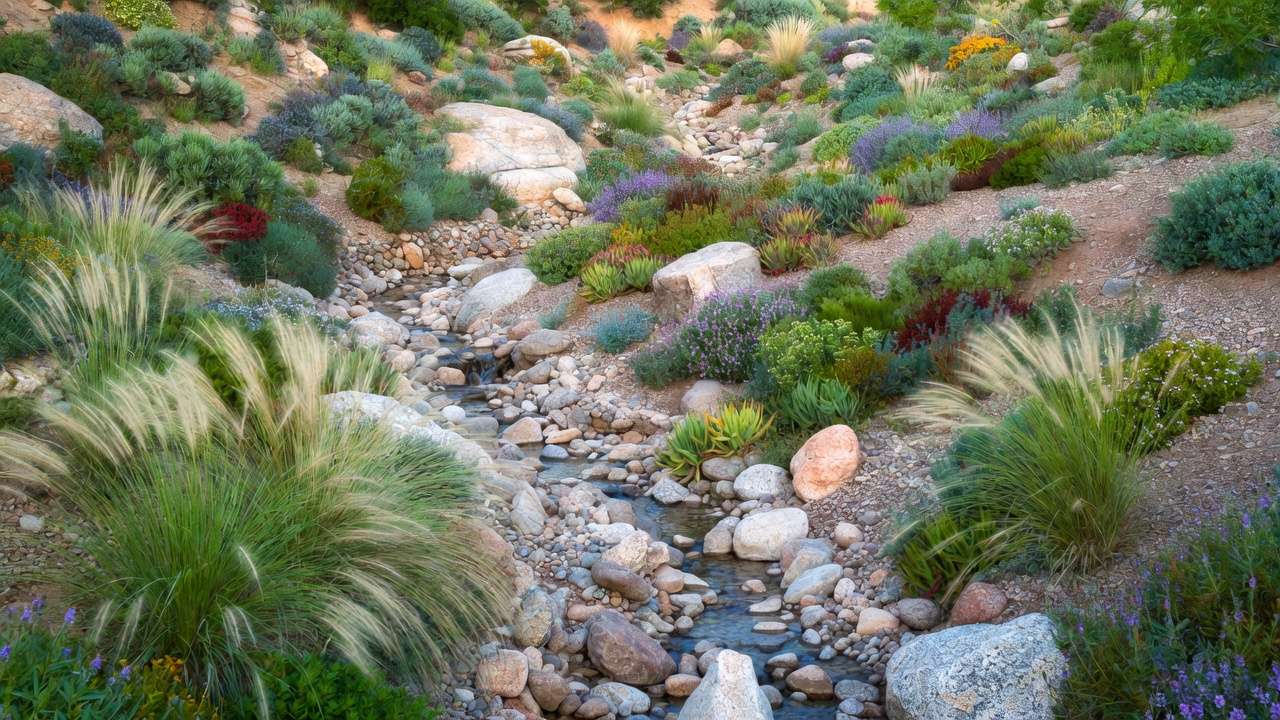
- Layered Planting Zones
- Top of slope: Taller shrubs and small trees (e.g., manzanita, serviceberry) for windbreak and deep anchoring.
- Middle zone: Mid-height perennials and bunch grasses (yarrow, little bluestem) for color and texture.
- Lower third & edges: Spreading groundcovers (creeping juniper, ice plant) to catch and hold any remaining runoff. This mimics natural hillside plant communities and maximizes erosion control.
- Pathways & Access Points Install stepping stones, decomposed granite paths, or simple railroad-tie steps zigzagging across the slope. These provide safe access for maintenance without creating straight-down water channels.
- Accent Features Add a small dry-stacked stone bench, a birdbath on a level pad, or a cluster of solar lights along a path. These details make the space feel finished and inviting.
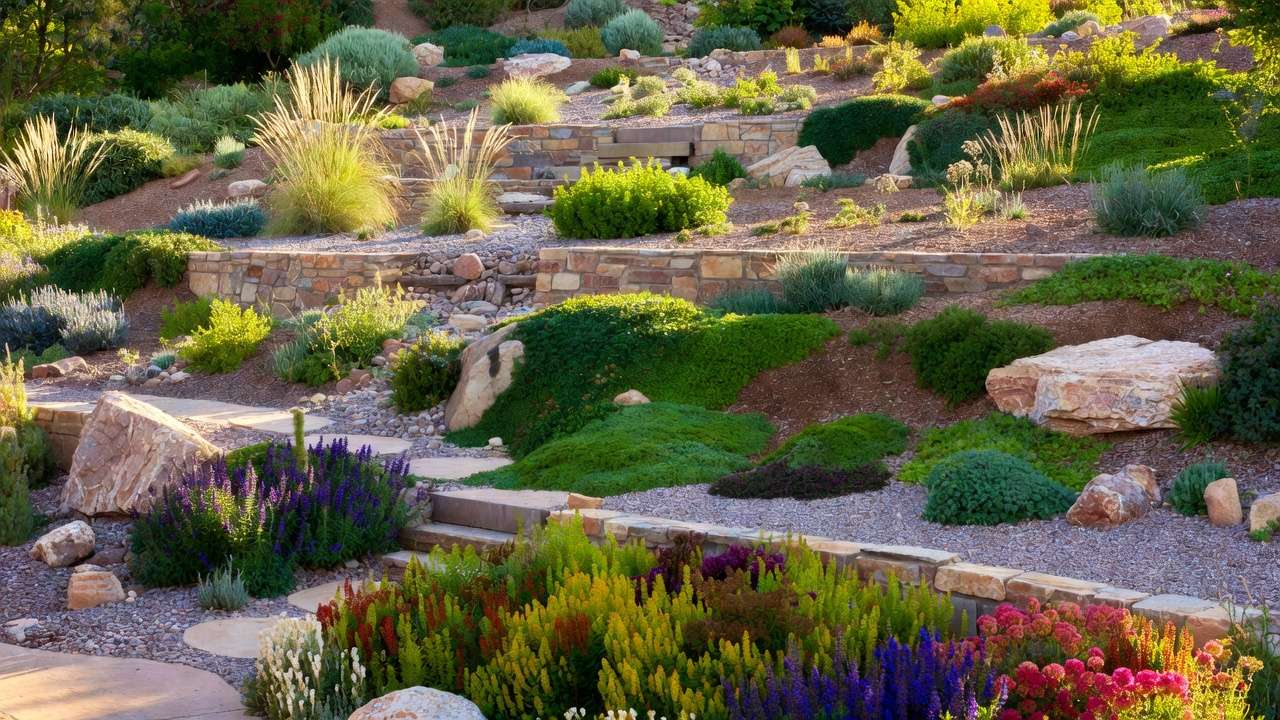
Real inspiration examples:
- A steep Los Angeles hillside transformed with ceanothus, manzanita, and boulders — now a fire-resistant, low-water showpiece.
- A gentle Colorado front yard using blue fescue, sedum carpets, and curved gravel paths — modern yet natural.
- A Midwest moderate slope featuring native prairie plants layered with switchgrass — supports monarch butterflies and zero summer watering after year two.
Step-by-Step: How to Install Your Sloped Xeriscape 🌱🛠️
Here’s a practical, phased plan that thousands of homeowners have successfully followed:
- Plan & Mark Contours (1–2 days) Use string lines and stakes to mark level contour lines across the slope. This guides swales, planting zones, and terracing.
- Prepare the Soil (2–5 days) Remove existing grass/turf (sheet mulching or solarization works well). Loosen top 6–12 inches with a fork (avoid rototilling steep slopes — it increases erosion risk). Mix in 2–3 inches of compost or aged manure to improve structure and water-holding capacity.
- Install Erosion Control (if needed) (1 day) On slopes >25%, lay biodegradable erosion-control blankets or jute netting. Pin securely; plants will grow through it.
- Set Up Irrigation (1–2 days) Run drip tubing or soaker hoses along contour lines. Use pressure-compensating emitters for even distribution on slopes. Add a smart controller with rain/freeze sensors.
- Plant in Stages (1–4 weekends) Start at the top and work down to avoid trampling new plants. Dig holes twice as wide as the root ball, plant slightly high to account for mulch settling. Space according to mature size (crowding causes competition later).
- Mulch Thoroughly (1 day) Apply 3–4 inches of shredded bark, wood chips, gravel, or pine needles. Keep mulch 2 inches away from plant stems to prevent rot.
- Add Finishing Touches Place rocks, stepping stones, and any hardscape elements last.
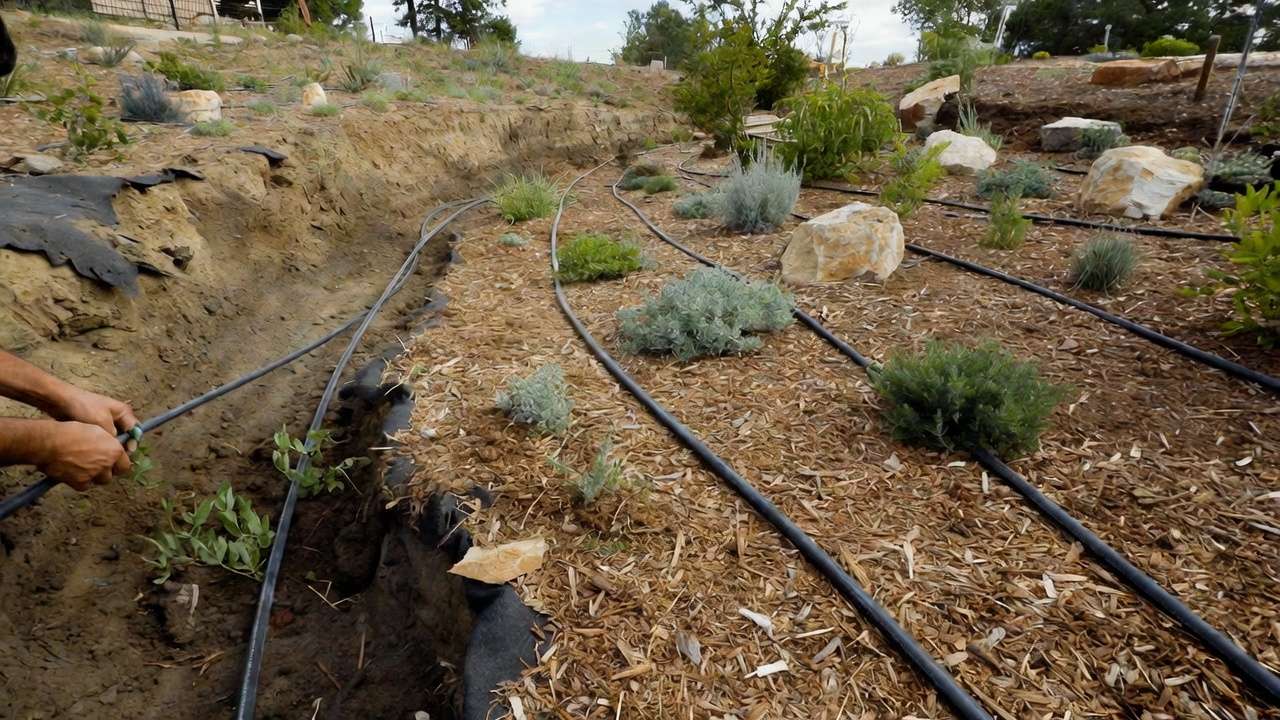
Timeline tip: Plant in fall or early spring when temperatures are moderate and rainfall helps establishment. Water deeply but infrequently during the first summer (1–2 times per week), then reduce dramatically in year two.
DIY vs. Professional: Gentle-to-moderate slopes are very DIY-friendly. For steep (>35%) or eroding sites, consult a landscape designer or erosion-control specialist to avoid safety risks and costly mistakes.
Water-Wise Irrigation & Maintenance Tips 💦🔧
- Best system: Pressure-compensating drip irrigation laid on contour. Zone separately for sun vs. shade plants.
- Establishment phase: Deep water 1–2×/week for first 6–12 months (less in rainy climates).
- Long-term: Most natives and xeriscape plants need little to no supplemental water after year two.
- Maintenance checklist:
- Year 1–2: Weed weekly, check irrigation, prune lightly.
- Ongoing: Refresh mulch annually, remove dead material in spring, occasional shaping of shrubs.
- Monitor for erosion after big storms — add more mulch or plants if needed.
Common Mistakes to Avoid & Pro Fixes 🚫✅
- Mistake: Planting grass or thirsty annuals → Fix: Stick to drought-tolerant, deep-rooted species.
- Mistake: Flat grading instead of contouring → Fix: Always create level planting pockets.
- Mistake: Too little mulch → Fix: Never skimp — 3–4 inches minimum.
- Mistake: Overwatering after establishment → Fix: Trust the plants; they’re adapted to dry conditions.
- Mistake: Planting too close together → Fix: Follow mature spacing guidelines.
Real Homeowner Success Stories & Case Studies 📖🏆
Nothing builds confidence like seeing real results. Here are a few inspiring examples of sloped yard xeriscape transformations (drawn from homeowner reports, extension service case studies, and landscape professional portfolios):
Case 1: Steep Southern California Hillside (Zone 10a, very dry climate) A family in Pasadena had a 35–40% grade backyard that was eroding badly after winter rains, with soil washing onto the patio below. They removed the patchy lawn, installed contour swales with gravel, and planted a mix of native ceanothus, manzanita, lemonade berry, and trailing rosemary groundcover, plus large accent boulders.
- Result after 3 years: Zero supplemental watering needed after year 1, erosion completely stopped, vibrant spring blooms attracted hummingbirds and bees, water bill dropped ~60%, and the once-dangerous slope became a favorite low-maintenance hangout spot. Fire-resistant plants also improved wildfire safety.
Case 2: Moderate Midwest Slope (Zone 6b, humid summers) A homeowner in Colorado Springs tackled a 20% front-yard slope that was hard to mow and looked bare. They used native bunch grasses (little bluestem, side-oats grama), yarrow, penstemon, and creeping sedum, with decomposed granite paths and low rock edging.
- Result: After establishment (about 18 months), the yard needs only occasional weeding and one deep watering every 3–4 weeks in summer. Fall color from the grasses is stunning, pollinators are abundant, and neighbors frequently ask for plant sources.
Case 3: Gentle East Coast Slope (Zone 7a, moderate rainfall) In North Carolina, a retiree converted a shady 12–15% backyard slope from invasive English ivy to a native woodland xeriscape using foamflower, wild ginger, Pennsylvania sedge, and dwarf fothergilla shrubs. They added a simple dry creek bed at the base to handle occasional heavy storms.
- Result: Erosion issues vanished, the area now supports native birds and butterflies, maintenance is minimal (mostly leaf cleanup in fall), and the naturalistic look blends beautifully with surrounding trees.
These stories show one universal truth: starting small, using regionally appropriate plants, and prioritizing soil stabilization during installation leads to dramatic, lasting success.
FAQs: Answering Your Top Sloped Xeriscape Questions ❓🌟
Q: How steep is too steep for xeriscape? A: You can xeriscape almost any slope with the right techniques. Slopes over 30–35% often benefit from professional input for terracing or erosion blankets, but many homeowners successfully handle 40%+ grades with natives and contouring.
Q: Will my yard look like a desert or boring rock pile? A: Not at all! Thoughtful plant selection (especially flowering natives, grasses, and colorful succulents) creates lush, textured, seasonal interest. Layering heights and colors prevents a monotonous look.
Q: What’s the most budget-friendly way to start? A: Begin with one manageable section (e.g., 200–400 sq ft). Sheet-mulch to kill grass, add inexpensive natives from local nurseries or propagation, and use free/cheap mulch (local arborist chips, gravel). Total starter cost can be $300–800 for a small area.
Q: How long until erosion control really kicks in? A: Groundcovers and grasses usually provide good coverage and root binding within 1–2 growing seasons. Deep-rooted shrubs and trees add major stability by year 3–5.
Q: Are there pet- and child-friendly options? A: Yes! Avoid sharp or toxic plants (e.g., some junipers have prickly foliage). Soft-textured choices like creeping thyme, sedum, wild strawberry, and bunch grasses are safe and durable. Use rounded rocks and gentle paths.
Q: Can I do this if I’m in a rainy climate, not a desert? A: Absolutely. Xeriscaping is about water-wise design, not zero water. In wetter areas, focus on excellent drainage, natives adapted to periodic dry spells, and rain-capturing features like swales.
Final Thoughts: Enjoy Your Beautiful, Resilient Slope Forever 🌅🍃
Transforming a challenging sloped yard into a thriving, low-maintenance xeriscape isn’t just about solving problems — it’s about creating a landscape that works smarter, looks better, and supports the environment around you. With the right plants, smart contours, generous mulch, and patient establishment watering, your hillside can become one of the most beautiful and functional parts of your property.

Start small if the whole slope feels overwhelming: pick one section, test a few favorite plants, observe how water moves during the next rain, and expand from there. You’ll be amazed at how quickly nature responds when given the right foundation.
Ready to get started? Grab a notebook, walk your slope, and sketch your first planting zone today. Your future self (and your water bill) will thank you! 🌱💚











