
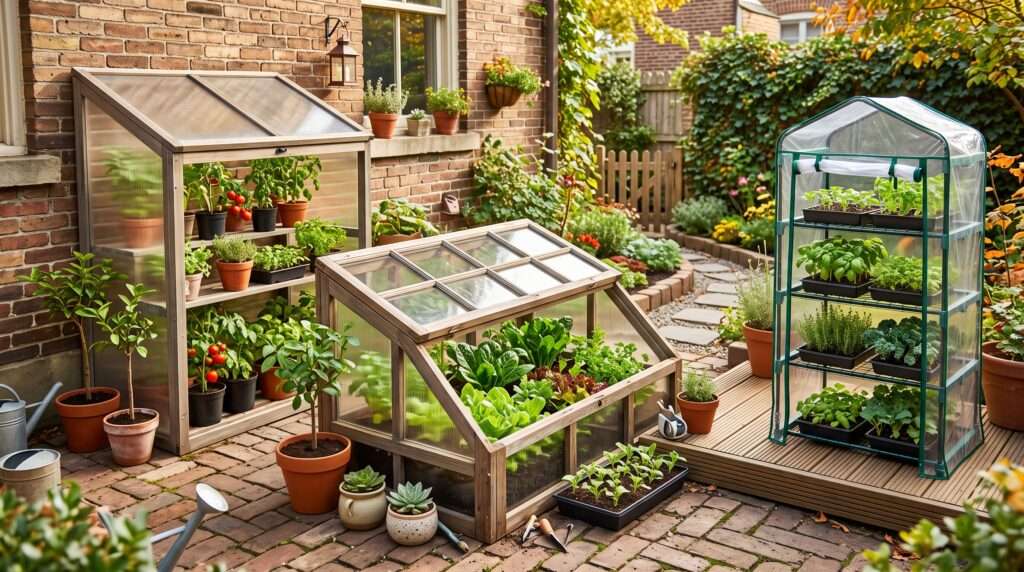
Have you ever stared at a tiny patio as winter approaches and wished you could safely overwinter your delicate tropicals or start seeds in January? You are not alone. As plant care specialists, we know that limited square footage shouldn’t force you to surrender your garden to the frost. Whether you are nurturing fragile saplings or cultivating urban vegetables, exploring small-space greenhouse or cold frame ideas is the key to transforming a balcony, deck, or compact backyard into a year-round botanical oasis. ❄️
Let’s dive into the first few expert-approved structures that utilize microclimates and thermal retention to protect your plants. 🌱
1. The Upcycled Window Cold Frame 🪟
For small patios and raised beds, an upcycled window cold frame provides exceptional frost protection. By utilizing old, heavy glass panes, this structure creates a robust greenhouse effect.
-
Thermal Mass: Line the bottom with dark stones to absorb solar radiation during the day and release it slowly at night.
-
Best For: Hardening off seedlings and overwintering dormant bonsai or small shrubs.
-
Expert Tip: Angle the glass lid at 30 to 45 degrees facing directly south to maximize winter light transmission.
2. The Lean-To Wall Greenhouse 🧱
A lean-to greenhouse attaches directly to the side of your house, utilizing existing structural walls to save immense space while benefiting from shared radiant heat.
-
Heat Sink: Brick or masonry walls act as an incredible heat sink, leaching ambient warmth into the greenhouse during freezing nights.
-
Best For: Potted citrus trees, sensitive aroids, and early spring cuttings.
-
Expert Tip: Seal the connecting edges with high-grade exterior silicone to prevent trapped moisture from damaging your home’s siding.
3. The Tiered Pop-Up Greenhouse ⛺
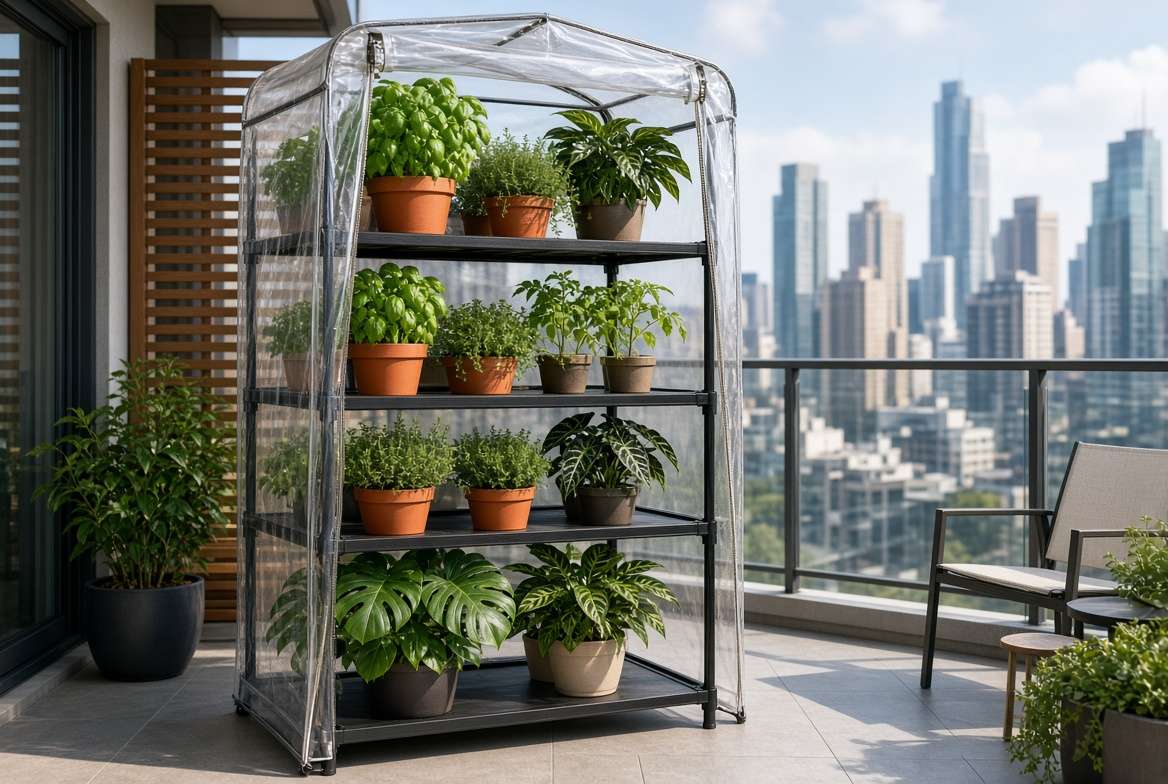
When you are restricted to a high-rise balcony, a tiered pop-up greenhouse with a durable, UV-treated PVC cover is a highly efficient, vertical solution.
-
Wind Resistance: High-rise balconies experience severe wind tunnels. Always anchor the bottom tier with heavy concrete pavers or sandbags.
-
Best For: Seed starting trays, culinary herbs, and humidity-loving tropicals.
-
Expert Tip: Unzip the front flap during peak afternoon hours; even in late winter, rapid solar heat gain in a sealed plastic unit can accidentally cook enclosed plants.
4. The Raised Bed Hoop House 🥬
If you already have a raised garden bed in your urban yard, converting it into a hoop house is one of the most cost-effective ways to achieve season extension. By bending flexible PVC piping over the bed and securing it with pipe straps, you create a sturdy, arched canopy.
-
Material Selection: Always opt for 6-mil UV-resistant greenhouse plastic rather than standard hardware store tarps. Standard plastic degrades rapidly under UV exposure and becomes brittle in freezing temperatures.
-
Best For: Winter crops like kale, spinach, and root vegetables, as well as protecting early spring tree saplings.
-
Expert Tip: Incorporate horticultural fleece as a secondary inner layer during severe cold snaps. This double-layering technique creates an insulating dead-air space, significantly boosting frost protection.
5. The Straw Bale Cold Frame 🌾
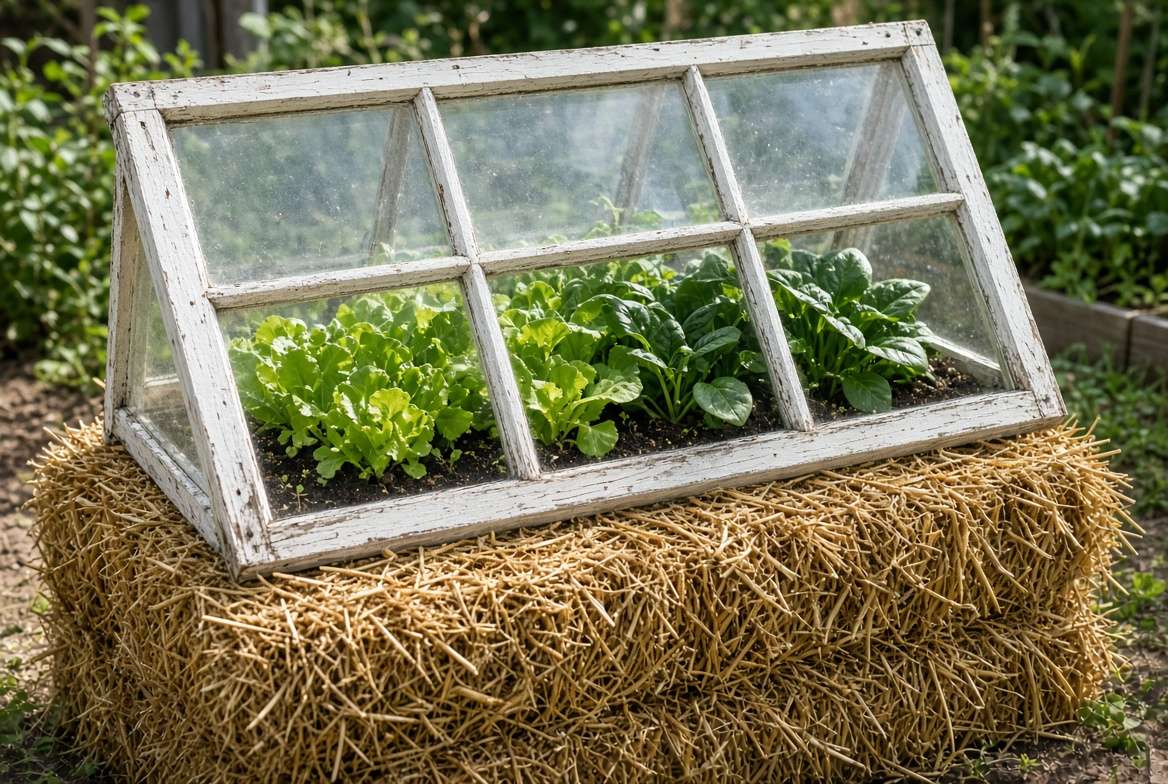
For a budget-friendly and temporary winter setup, the straw bale cold frame is an ingenious method that utilizes the natural laws of biology for passive heating. Simply arrange four straw bales in a rectangle and top them with an old windowpane or a sheet of clear acrylic.
-
Organic Heat Generation: As the bottom layers of the straw slowly decompose and absorb moisture from the ground, they undergo a mild exothermic reaction, releasing a gentle, continuous bottom heat that keeps the interior soil from freezing.
-
Best For: Overwintering root vegetables, stratifying tree seeds, and protecting dormant perennials.
-
Expert Tip: Make sure to purchase straw bales, not hay bales. Hay contains seeds that will sprout inside your cold frame and compete with your plants for nutrients and moisture!
6. The Clear Storage Bin Cloche 📦
When space is limited to a mere windowsill or a tiny apartment balcony, repurposing a large, transparent plastic storage bin acts as an instant humidity dome and miniature greenhouse. This is the ultimate micro-climate hack for urban gardeners.
-
Micro-Climate Ventilation: Plants exhale moisture, and a sealed bin will quickly become a breeding ground for fungal diseases like powdery mildew. Drill several small holes along the upper sides to allow for cross-ventilation.
-
Best For: Rooting indoor plant cuttings, nursing sick aroids back to health, and starting warm-weather seeds like tomatoes.
-
Expert Tip: Place the bin on top of a horticultural seedling heat mat with a thermostat. This mimics the precise conditions of a professional nursery right on your apartment floor.
7. The Polycarbonate Pallet Frame 🪵
For renters who cannot build permanent structures, upcycling heavy-duty shipping pallets into a cold frame provides a durable, elevated solution. By lining the interior with landscape fabric and constructing a slanted lid from twin-wall polycarbonate, you create a robust, temporary growing environment.
-
Soil Hygiene: Elevating the cold frame on pallets keeps your potting soil away from ground-dwelling pests and minimizes the risk of soil-borne pathogens splashing onto delicate foliage during heavy winter rains.
-
Best For: Cultivating mixed salad greens and protecting vulnerable patio fruit trees from root freeze.
-
Expert Tip: Twin-wall polycarbonate offers superior thermal resistance compared to single-pane glass. Seal the open flutes (the edges of the polycarbonate) with aluminum tape to prevent algae growth and insect infestations inside the panels.
8. The Umbrella & Clear Tarp Tent ☔
When an unexpected late-spring frost threatens your newly potted patio containers, you need a rapid-deployment solution. A standard patio umbrella draped with a heavy-duty, clear polyethylene tarp serves as an excellent, temporary emergency greenhouse.
-
Structural Integrity: While this is a temporary fix, securing the tarp tightly to the umbrella’s ribs with bungee cords prevents wind from catching the plastic and lifting the entire structure like a sail.
-
Best For: Emergency frost protection for tender annuals, blossoming fruit trees in large pots, and newly transplanted spring vegetables.
-
Expert Tip: Do not leave the tarp fully sealed once the sun comes out. The volume of air inside this makeshift tent is small, and temperatures can easily spike above 100°F (38°C) in direct sunlight, scorching delicate foliage in a matter of hours.
9. The Acrylic Window Box Frame 🏙️
For apartment dwellers lacking floor space entirely, enclosing a standard exterior window box with custom-cut acrylic panels turns a simple sill into a productive micro-greenhouse.
-
Urban Heat Island Effect: Cities naturally retain more heat than rural areas. By installing an acrylic frame directly against your apartment window, you capture this ambient heat, plus the thermal leakage from your own heated living space.
-
Best For: Year-round culinary herbs, miniature succulents, and propagating small plant cuttings.
-
Expert Tip: Acrylic is lighter and more shatter-resistant than glass, making it much safer for high-rise ledges. Ensure you install a small, adjustable hinge on the top panel so you can crack it open on unusually warm winter days.
10. The Geodesic PVC Mini Dome 🌐
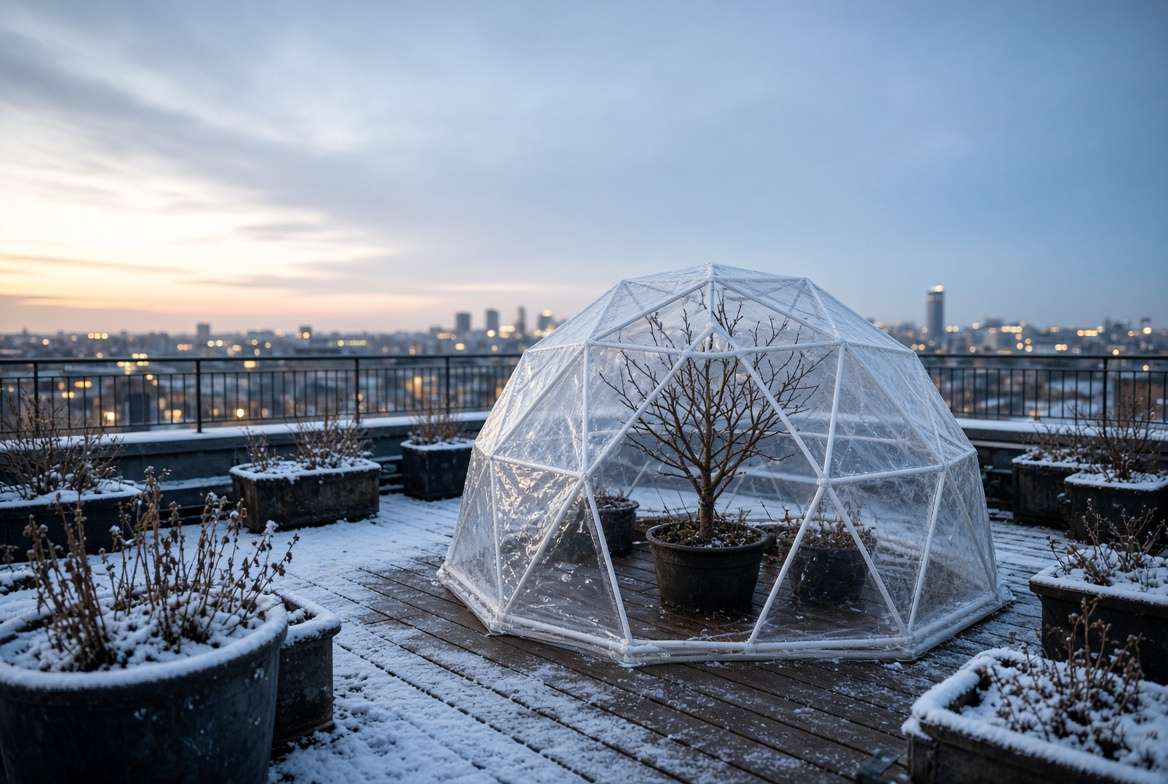
Rooftop gardens and exposed urban decks face a unique challenge: extreme wind shear. A miniature geodesic dome, constructed from measured PVC struts and UV-resistant plastic, is an aerodynamic marvel that diffuses high winds flawlessly.
-
Light Distribution: The multi-faceted geometry of a geodesic dome means that sunlight hits the structure at a 90-degree angle at all times of the day, maximizing solar gain and light transmission during dark winter months.
-
Best For: Protecting tall, structured plants like overwintering fig trees, heavy fruit-bearing shrubs, or large, established perennials.
-
Expert Tip: Use specialized geodesic hub connectors (widely available online) to snap the PVC pipes together. This ensures mathematical precision and structural strength that can withstand heavy snow loads without buckling.
11. The Indoor Display Cabinet Greenhouse 🪴
Bringing the greenhouse indoors is a massive trend for houseplant collectors. By retrofitting a metal-and-glass display cabinet (like the popular Ikea greenhouse hacks) with weather stripping and grow lights, you create an immaculate, climate-controlled environment right in your entryway or living room.
-
Humidity Control: Most homes have an ambient humidity of 30-40% in the winter, which is detrimental to tropical plants. A weather-stripped cabinet can easily maintain 70-90% ambient humidity, creating a perfect jungle microclimate.
-
Best For: Rare aroids (like Anthuriums and Philodendrons), delicate ferns, and expensive variegated tropicals that require flawless environmental stability.
-
Expert Tip: Stagnant, humid air is a recipe for fungal rot. Install small computer cooling fans in the top corners of the cabinet to ensure constant air circulation, mimicking natural gentle breezes.
12. The Cinderblock Winter Frame 🧊
For regions that experience brutal, sub-zero winters, standard above-ground cold frames might not offer enough insulation. A cinderblock frame, dug several inches beneath the soil line, acts as a fortress against the cold.
-
Below-Grade Frost Line Protection: By sinking the floor of the cold frame slightly below grade and building the walls with dense concrete blocks, you tap into the earth’s natural geothermal heat. The soil below the frost line remains relatively warm, regulating the internal temperature.
-
Best For: Deep-winter root vegetables (like carrots and parsnips), alpine plants, and extreme cold-stratification for hardwood tree seeds.
-
Expert Tip: Fill the hollow cores of the cinderblocks with gravel or sand. This drastically increases the thermal mass of the walls, allowing them to absorb weak winter sunlight and radiate that warmth straight into the plant beds overnight.
Expert Blueprint for Mini Greenhouse Success 🌿
Building your small-space greenhouse or cold frame is only the first step. To truly succeed as a year-round grower, you must master the environmental controls inside these miniature ecosystems. Because small enclosures lack the vast air volume of commercial greenhouses, their internal climates fluctuate rapidly.
Here are the horticultural best practices you need to thrive:
-
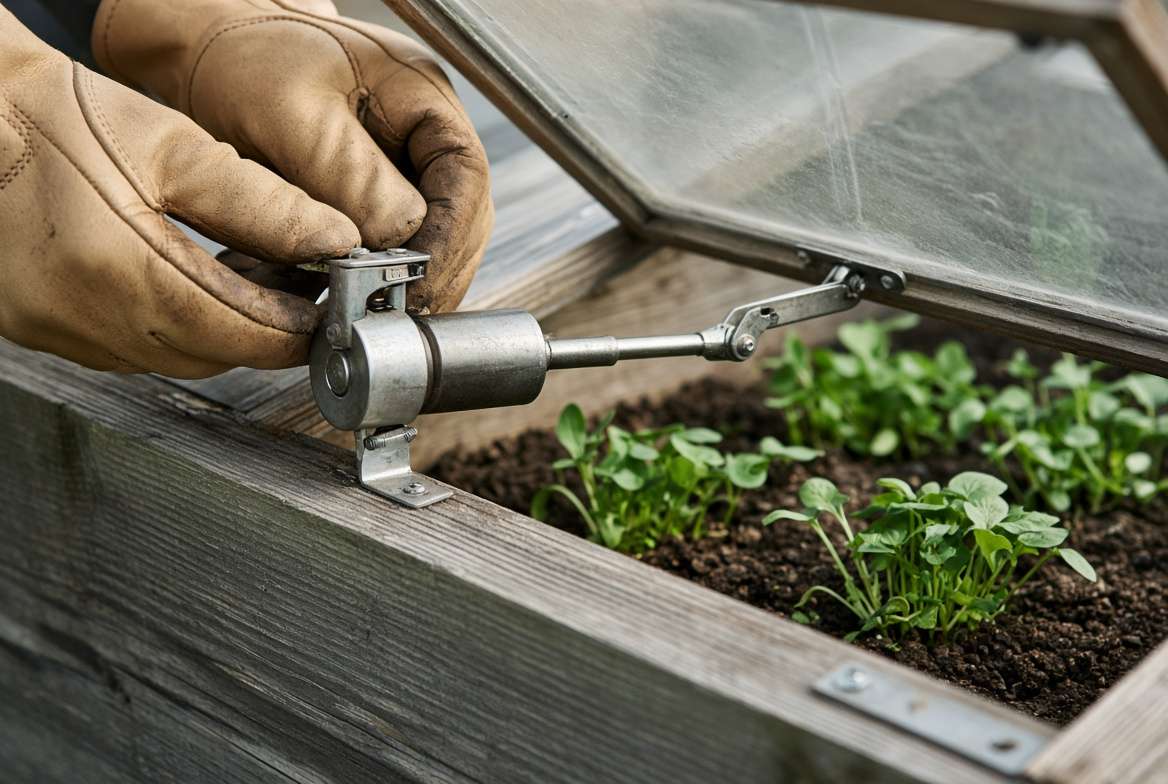
Ventilation Mastery: The number one killer of plants in a cold frame isn’t the cold—it’s the heat. A sunny winter day can raise the internal temperature of a closed frame to lethal levels. Install automatic vent openers. These brilliant, electricity-free devices contain a wax cylinder that expands as it warms, gently pushing the lid open to release excess heat and closing it as the sun sets.
-
Strategic Sunlight Tracking: The sun sits much lower on the horizon during winter. A patio spot that receives full sun in July might be completely shaded by a fence in December. Track your seasonal sun angles and orient your cold frame’s sloped lid to face true south (in the Northern Hemisphere) for maximum light exposure.
-
Advanced Humidity Management: Pick up a digital hygrometer. If humidity inside your mini greenhouse stays above 85% with dropping temperatures, you invite botrytis (gray mold). Regulate humidity by watering only early in the morning, allowing the soil surface to dry slightly before the cold night sets in.
Frequently Asked Questions (FAQs) ❓
When you are pushing the boundaries of season extension, questions are bound to pop up. As plant care experts, we field hundreds of questions about winterizing plants. Here are the most common inquiries regarding small-scale frost protection, answered to help you grow with confidence.
SEO Pro Tip for Webmasters: If you are building a site around this topic, wrapping these questions in FAQ Schema markup helps search engines like Google pull these exact answers into featured snippets!
What is the main difference between a cold frame and a greenhouse? The primary difference lies in size, walkability, and heat source. A greenhouse is typically a walk-in structure that can utilize active heating systems (like electric or gas heaters). A cold frame is a smaller, low-to-the-ground box with a transparent lid that relies purely on passive solar energy to create a microclimate. If you can stand inside it, it’s a greenhouse; if you have to reach into it, it’s a cold frame. 🪴
Can a mini cold frame protect young tree saplings in freezing temperatures? Yes, but with a caveat regarding your USDA Hardiness Zone. A well-constructed cold frame will keep the internal temperature about 5°F to 10°F warmer than the outside air. While this is plenty to protect a hardy oak or maple sapling from harsh wind desiccation, it will not protect a tropical citrus tree if ambient temperatures drop to 15°F (-9°C). For added protection, pack the empty space inside the cold frame with dry autumn leaves or straw to insulate the delicate root systems of young trees. 🌳
How do you passively heat a small greenhouse without electricity? Thermal mass is your best friend when you lack an electrical outlet! Water holds heat significantly better than air or soil. Paint several one-gallon milk jugs flat black, fill them with water, and line the north wall of your mini greenhouse. The black jugs will absorb solar radiation all day and slowly release that trapped heat throughout the night, stabilizing the internal climate. ☀️
Do I need to water my plants during the winter if they are in a cold frame? Yes, but drastically less than in the summer. Cold temperatures and lower light levels mean your plants’ metabolic rates have slowed to a crawl. The enclosed space also traps evaporating moisture. Check the soil every two weeks; water only when the top two inches are completely dry, and always water in the morning so the foliage has time to dry before the freezing night temperatures set in. 💧
Can I use a small-space greenhouse indoors? Absolutely! In fact, indoor greenhouse cabinets (like modified glass display cases) are incredibly popular for rare houseplant collectors. Just remember that indoor greenhouses need grow lights to supplement the lack of natural sun, and small fans to maintain airflow. Because your home is already warm, an indoor setup is primarily about controlling humidity, not temperature. 🌿
Conclusion: Big Harvests in Tiny Spaces 🌻
Having a small patio, a tiny balcony, or an odd-shaped urban yard is no longer an excuse to pack away your gardening gloves in October. By utilizing these small-space greenhouse or cold frame ideas, you can successfully outsmart the frost, protect your prized perennials, and harvest fresh greens while your neighbors are shoveling snow.
Whether you opt for a sleek, acrylic window box or a rugged, upcycled pallet frame, the key to success is understanding your microclimate. Start small, monitor your temperatures diligently, and don’t be afraid to experiment with thermal mass and passive heating.
Your little patch of green is ready for its year-round glow-up. Which of these space-saving structures are you planning to build this weekend? Let us know in the comments below, and happy growing! 🌱✨











