
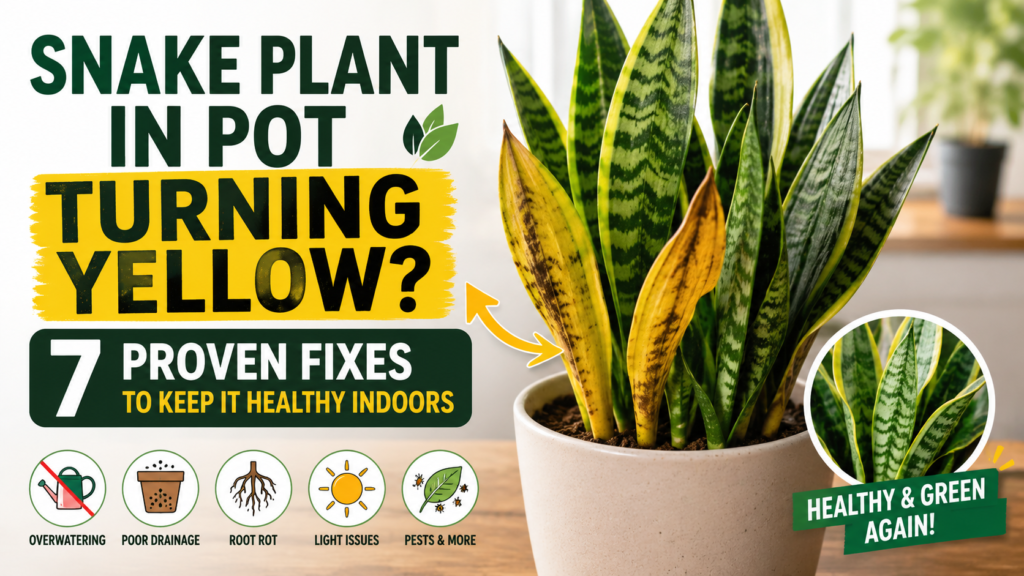
One day your snake plant looks lush, upright, and beautifully green 🌱 — and the next, you notice yellow leaves spreading across the plant. If your snake plant in pot is turning yellow, soft, or droopy, it’s trying to tell you something important.
The good news? Most yellowing problems are completely fixable when caught early.
Snake plants are famous for being one of the easiest indoor plants to grow, but even these hardy houseplants can struggle when their watering, lighting, soil, or drainage conditions aren’t right. In my experience caring for indoor plants over the years, yellow leaves almost always point to one of a few common problems — and once you identify the cause, recovery becomes much easier. 🌿
In this complete guide, you’ll learn:
- Why snake plant leaves turn yellow
- How to identify the exact cause quickly
- The best fixes for overwatering, root rot, and poor drainage
- How to revive a dying snake plant
- Expert tips to keep your plant healthy year-round 🪴
Whether you’re a beginner plant parent or an experienced indoor gardener, this guide will help you save your snake plant before the damage gets worse.
🌵 Understanding Why a Snake Plant in Pot Turns Yellow
Yellow leaves are not the actual problem — they’re a symptom. Your snake plant is signaling stress caused by environmental or care-related issues.
The most common causes include:
- Overwatering 💧
- Poor drainage
- Root rot
- Incorrect light exposure ☀️
- Temperature shock
- Nutrient imbalance
- Pest infestations 🐛
Understanding the root cause is essential because the wrong solution can make the problem worse.
For example:
- Watering more when the roots are already rotting can kill the plant faster.
- Moving a low-light-stressed plant into harsh direct sun can scorch the leaves.
That’s why proper diagnosis matters.
🌿 What Healthy Snake Plant Leaves Should Look Like
A healthy snake plant typically has:
✅ Firm upright leaves
✅ Deep green coloration
✅ Strong variegated patterns
✅ Dry, well-aerated soil
✅ Steady upright growth
Healthy snake plants are naturally resilient and can tolerate occasional neglect. However, prolonged stress eventually appears through leaf discoloration.
⚠️ When Yellowing Is Normal vs. Dangerous
Not all yellow leaves mean disaster.
Normal Yellowing
Sometimes older leaves near the base naturally yellow and die off as the plant matures. This is usually harmless if:
- Only one or two lower leaves are affected
- The rest of the plant looks healthy
- Growth continues normally
Dangerous Yellowing
You should act quickly if you notice:
- Multiple yellow leaves spreading rapidly
- Mushy or soft foliage
- Brown or black roots
- Wet soil that never dries
- Foul odor from the pot
These are warning signs of root damage or overwatering.
💦 1. Overwatering — The #1 Cause of Yellow Snake Plant Leaves
If there’s one mistake that kills more snake plants than anything else, it’s overwatering.
Snake plants are drought-tolerant succulents. Their thick leaves store water, meaning they need far less watering than most indoor plants.
Unfortunately, many owners water them too often out of good intentions.
🚨 Signs Your Snake Plant Is Overwatered
Here are the clearest warning signs:
🌱 Yellow Mushy Leaves
The leaves lose firmness and become soft or squishy.
🌱 Wet Soil for Days
Healthy snake plant soil should dry out between watering.
🌱 Drooping or Falling Leaves
Roots damaged by excess water cannot support upright growth.
🌱 Foul Smell
A sour or rotten odor often indicates root rot beneath the soil.
💧 How Often Should You Water a Snake Plant in Pot?
There’s no perfect universal schedule because watering depends on:
- Pot size
- Indoor temperature
- Humidity
- Season
- Soil type
However, a general rule works well:
🌞 Spring & Summer
Water every 2–3 weeks
❄️ Fall & Winter
Water every 4–6 weeks
Always check the soil first.
Expert Tip 🌿
Insert your finger 2–3 inches into the soil:
- If it feels dry → water
- If it feels moist → wait
This simple method prevents most watering problems.
🛠️ Proven Fixes for Overwatering
If overwatering is causing yellow leaves, act quickly.
✅ Stop Watering Immediately
Allow the soil to dry fully before watering again.
✅ Improve Airflow
Move the plant to a brighter, well-ventilated area.
✅ Remove Severely Damaged Leaves
Yellow mushy leaves won’t recover.
✅ Repot if Necessary
If the soil smells rotten or stays soggy, repot the plant into fresh dry soil.
🪴 2. Poor Drainage and the Wrong Pot Can Kill Your Snake Plant
Even perfect watering habits won’t help if your pot traps water.
Poor drainage slowly suffocates roots and creates ideal conditions for fungal disease.
🏺 Why Drainage Holes Matter
A pot without drainage holes is risky for snake plants.
When excess water cannot escape:
- Roots stay wet too long
- Oxygen decreases in the soil
- Root rot develops
Decorative cachepots are fine only if the inner nursery pot has drainage holes.
🌿 Best Pot Types for Snake Plants
Choosing the right container makes a huge difference.
🪴 Terracotta Pots
Best overall choice because they:
- Absorb excess moisture
- Improve airflow
- Reduce overwatering risk
🪴 Plastic Pots
Retain moisture longer and require more careful watering.
🪴 Ceramic Pots
Work well if drainage holes are present.
📏 Pot Size Matters Too
One major mistake is using oversized pots.
Large pots hold too much wet soil around the roots, increasing the risk of rot.
Best Rule:
Choose a pot only 1–2 inches larger than the root ball.
🌱 Best Soil Mix for Snake Plant in Pot
Snake plants need fast-draining soil.
Ideal Soil Characteristics
✅ Loose
✅ Airy
✅ Fast-draining
✅ Low moisture retention
Recommended Mix
- 2 parts cactus soil
- 1 part perlite
- 1 part coarse sand
This mixture prevents waterlogging while allowing healthy root growth.
⚡ How to Improve Drainage Quickly
Easy solutions include:
- Adding perlite or pumice
- Elevating nursery pots
- Emptying drainage saucers
- Avoiding compact garden soil
Healthy roots need oxygen just as much as water.
🦠 3. Root Rot: How to Identify and Save a Dying Snake Plant
Root rot is one of the most serious problems affecting a snake plant in pot.
It usually develops after prolonged overwatering and poor drainage.
The dangerous part? Root rot often spreads invisibly beneath the soil before leaves show symptoms.
🚨 Symptoms of Root Rot
Watch for these warning signs:
⚠️ Rapid Yellowing
Leaves turn yellow quickly over several days.
⚠️ Black or Brown Roots
Healthy roots are firm and white.
⚠️ Mushy Rhizomes
Snake plant underground stems become soft.
⚠️ Foul Odor
Rotting roots smell unpleasant and sour.
✂️ Step-by-Step Root Rot Treatment
1️⃣ Remove the Plant From the Pot
Carefully inspect the roots.
2️⃣ Cut Away Rotten Roots
Use sterilized scissors to remove:
- Black roots
- Mushy sections
- Damaged rhizomes
3️⃣ Let Roots Dry
Allow the plant to air dry for several hours.
4️⃣ Repot Into Fresh Soil
Use dry, fast-draining succulent soil.
5️⃣ Delay Watering
Wait several days before watering again.
🌱 Can a Snake Plant Recover From Root Rot?
Yes — if treated early.
Snake plants are surprisingly resilient. Even heavily damaged plants can often recover when healthy roots remain.
If the roots are severely destroyed, propagation may save the plant.
🌿 How to Propagate a Snake Plant as a Backup
If your plant is struggling badly, propagation can preserve healthy sections.
Easy Water Propagation Method
Step 1
Cut a healthy leaf section.
Step 2
Allow the cut edge to dry overnight.
Step 3
Place the cutting in shallow water.
Step 4
Wait for roots to develop.
Step 5
Transfer to soil once roots grow several inches long 🌱
Propagation is especially useful when root rot has spread too far.
☀️ 4. Incorrect Light Conditions Can Cause Yellowing
Snake plants tolerate low light better than many houseplants, but they still need proper lighting to stay healthy.
Too much or too little light can both trigger yellow leaves.

☀️ Signs of Too Much Direct Sunlight
Excessive direct sun can scorch the leaves.
Symptoms Include:
- Yellow patches
- Brown crispy edges
- Bleached appearance
- Curling leaves
This commonly happens near hot south-facing windows during summer.
🌑 Signs of Too Little Light
Low light stress develops more slowly.
Watch For:
- Faded green color
- Weak floppy growth
- Slow growth
- Smaller new leaves
Snake plants survive in low light, but they thrive in bright indirect light.
💡 Best Indoor Lighting for Snake Plants
The ideal setup includes:
✅ Bright indirect sunlight
✅ Filtered morning sun
✅ Several hours of ambient light daily
Best Placement Ideas
- East-facing window
- Bright office corner
- Living room with filtered sunlight
If natural light is limited, LED grow lights can help maintain healthy growth indoors.
🌡️ 5. Temperature and Humidity Stress
Snake plants prefer stable indoor temperatures.
Sudden environmental changes can stress the plant and cause leaf discoloration.
🌡️ Ideal Temperature Range for Snake Plants
Best indoor temperature:
- 65°F–85°F (18°C–29°C)
Avoid exposing your plant to temperatures below 50°F (10°C).
❄️ Signs of Cold Damage
Cold stress often causes:
- Yellow soft leaves
- Leaf collapse
- Water-soaked spots
- Sudden decline after cold drafts
This commonly happens near:
- Drafty windows
- Air conditioning vents
- Winter entryways
🏡 How to Protect Snake Plants During Winter
Helpful Winter Tips
✅ Reduce watering
✅ Keep away from cold windows
✅ Avoid sudden temperature shifts
✅ Maintain steady indoor warmth
Snake plants handle dry indoor air fairly well, making them excellent winter houseplants.
🧪 6. Nutrient Deficiencies and Fertilizer Problems
Many people assume yellow leaves automatically mean the plant needs fertilizer.
Sometimes that’s true — but overfertilizing can also damage snake plants.
🧪 6. Nutrient Deficiencies and Fertilizer Problems
Although snake plants are low-maintenance houseplants, they still need occasional nutrients to support healthy leaf growth and strong roots. When nutrients become imbalanced — either too little or too much — yellow leaves can begin to appear.
The tricky part is that many plant owners accidentally overfertilize while trying to “help” the plant grow faster 🌱
🌿 Signs of Nutrient Deficiency
A nutrient-starved snake plant may show:
- Pale yellow leaves
- Weak or stunted growth
- Thin new leaves
- Fading variegation
- Slow recovery after repotting
This problem is more common in:
- Older depleted soil
- Plants that haven’t been repotted for years
- Fast-growing indoor environments
⚠️ Signs of Fertilizer Burn
Too much fertilizer is often worse than too little.
Excess salts build up in the soil and damage delicate roots.
Symptoms Include:
- Brown crispy leaf tips
- Yellow edges
- White crust on soil surface
- Wilting despite moist soil
Fertilizer burn is especially common when:
- Feeding too often
- Using strong synthetic fertilizer
- Fertilizing during winter dormancy
🌱 Best Fertilizer for Snake Plants
Snake plants are light feeders.
Best Options:
✅ Balanced liquid houseplant fertilizer
✅ Succulent fertilizer
✅ Organic compost tea (diluted)
Recommended Feeding Schedule
- Spring: once monthly
- Summer: once monthly
- Fall/Winter: little to none
Expert Tip 🌿
Always dilute fertilizer to half strength. Snake plants prefer gentle feeding.
🐛 7. Pests and Fungal Issues You Shouldn’t Ignore
Although snake plants are tougher than many indoor plants, they can still attract pests — especially when stressed by poor care conditions.
A weakened plant becomes much more vulnerable to insects and fungal diseases.

🕷️ Common Snake Plant Pests
🐛 Spider Mites
Tiny pests that create:
- Fine webbing
- Yellow speckled leaves
- Dry appearance
🐛 Mealybugs
White cotton-like insects found near leaf bases.
🐛 Fungus Gnats
Usually caused by overly wet soil conditions.
🌿 Natural Pest Control Methods
Many minor infestations can be treated naturally.
✅ Neem Oil Spray
A highly effective organic solution for most houseplant pests.
✅ Rubbing Alcohol Treatment
Use a cotton swab dipped in alcohol to remove mealybugs.
✅ Improve Airflow
Better ventilation discourages fungal growth and pests.
✅ Isolate Infected Plants
Prevent pests from spreading to other houseplants.
🦠 When to Use Fungicides
If fungal infections continue spreading despite improved care, fungicides may help.
Use them when:
- Black spots spread rapidly
- Rot continues despite dry soil
- Fungal patches reappear repeatedly
Always follow label instructions carefully.
✂️ How to Remove Yellow Leaves Correctly
Pruning damaged leaves helps:
- Improve appearance
- Prevent disease spread
- Redirect energy toward healthy growth
However, improper pruning can stress the plant further.
✂️ Best Tools for Pruning
Always use:
✅ Sterilized scissors
✅ Sharp pruning shears
✅ Clean cutting tools
Dirty tools can spread bacteria or fungal spores.
🌿 Step-by-Step Pruning Guide
1️⃣ Identify Damaged Leaves
Remove:
- Fully yellow leaves
- Mushy leaves
- Severely bent foliage
2️⃣ Cut Near the Soil Base
Trim leaves cleanly at the base.
3️⃣ Avoid Over-Pruning
Never remove more than one-third of the plant at once.
4️⃣ Monitor Recovery
Healthy new growth should appear gradually.
🪴 How to Repot a Snake Plant in Pot Without Stressing It
Repotting can dramatically improve a struggling snake plant when done correctly.
Fresh soil improves:
- Drainage
- Aeration
- Root health
- Nutrient availability
🚨 Signs Your Snake Plant Needs Repotting
Watch for these indicators:
- Roots circling the pot
- Cracked containers
- Soil drying extremely fast
- Stunted growth
- Persistent yellowing despite proper watering
🌱 Best Time to Repot Snake Plants
The ideal season is:
🌸 Spring or early summer
Avoid repotting during winter dormancy whenever possible.
🪴 Beginner-Friendly Repotting Steps
Step 1
Choose a slightly larger pot with drainage holes.
Step 2
Prepare fresh succulent soil mix.
Step 3
Remove the plant gently.
Step 4
Inspect roots for damage.
Step 5
Trim rotten sections if necessary.
Step 6
Repot without burying leaves too deeply.
Step 7
Wait several days before watering.
🏡 Expert Tips to Keep Your Snake Plant Healthy Year-Round
Healthy snake plants are surprisingly easy to maintain once you understand their basic needs.
Here are the care principles I consistently follow to keep indoor snake plants thriving 🌿
🌟 Golden Rules for Snake Plant Care
💧 Water Less Than You Think
Overwatering remains the most common mistake.
☀️ Prioritize Bright Indirect Light
Balanced lighting supports stronger leaves and healthier roots.
🪴 Always Use Drainage Holes
Proper drainage prevents most serious plant problems.
🌿 Rotate the Pot Occasionally
This encourages even growth and balanced leaf development.
🧽 Clean Dust From Leaves
Dust blocks sunlight absorption indoors.
✅ Monthly Snake Plant Care Checklist
Every Month:
✔️ Inspect leaves for pests
✔️ Check soil moisture
✔️ Rotate the plant
✔️ Remove dead foliage
✔️ Wipe dust from leaves
✔️ Monitor drainage performance
Consistent observation prevents small issues from becoming major problems.
🏠 Best Locations Inside Your Home
Snake plants adapt well to many indoor spaces.
🌞 Best Indoor Locations
- Bedrooms
- Offices
- Living rooms
- Bright hallways
- Bathrooms with indirect light
They’re especially popular because they tolerate indoor conditions better than many tropical plants.
⚠️ Common Snake Plant Care Mistakes to Avoid
Many yellowing problems happen because of a few repeated mistakes.
Avoid these common issues:
❌ Watering on a Strict Schedule
Plants don’t follow calendars.
Always check soil moisture first.
❌ Using Heavy Garden Soil
Dense soil traps excess moisture and suffocates roots.
❌ Ignoring Drainage Holes
Decorative pots without drainage can slowly kill roots.
❌ Overfertilizing
More fertilizer does not equal faster healthy growth.
❌ Leaving Water in Saucers
Standing water keeps roots constantly wet.
🌟 Frequently Asked Questions (FAQ)
❓ Why are my snake plant leaves yellow and soft?
This usually indicates overwatering or root rot. Check the roots and allow the soil to dry fully before watering again.
❓ Can yellow snake plant leaves turn green again?
Unfortunately, fully yellow leaves usually do not recover. However, correcting the underlying issue can protect healthy new growth.
❓ Should I cut off yellow leaves?
Yes 🌿
Removing severely damaged leaves helps the plant focus energy on healthy growth.
❓ How do I know if my snake plant has root rot?
Signs include:
- Mushy roots
- Foul odor
- Rapid yellowing
- Soft leaf bases
❓ What is the best pot for a snake plant?
Terracotta pots with drainage holes are usually the best choice.
❓ How often should I water a snake plant indoors?
Typically every 2–6 weeks depending on season, humidity, and lighting conditions.
❓ Can snake plants survive in low light?
Yes, but they grow healthier and stronger in bright indirect light.
❓ Why is my snake plant yellow after repotting?
Mild transplant shock can temporarily stress the plant. Proper drainage and gentle watering usually help recovery.
🌿 Final Thoughts: Save Your Snake Plant Before It’s Too Late
A yellowing snake plant in pot may look alarming, but in most cases, recovery is absolutely possible 🌱
The key is identifying the problem early.
Most yellow leaves are caused by:
- Overwatering
- Poor drainage
- Root rot
- Improper lighting
- Environmental stress
Once you correct these issues, snake plants often bounce back surprisingly well.
Remember:
✅ Water less frequently
✅ Use fast-draining soil
✅ Choose pots with drainage holes
✅ Provide balanced indirect light
✅ Inspect roots before problems worsen
With proper care, your snake plant can remain healthy, vibrant, and beautiful for many years indoors 🪴











