
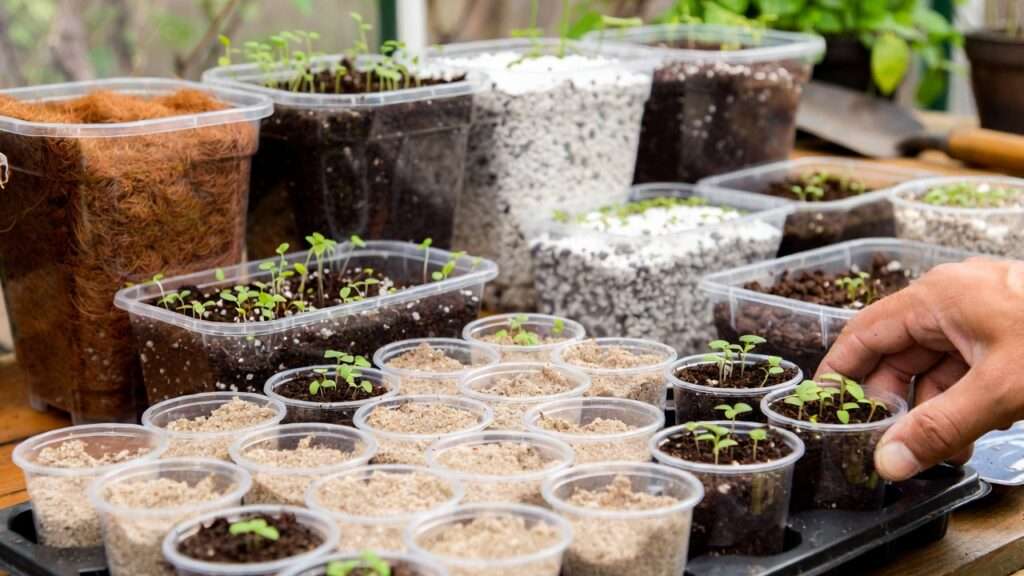
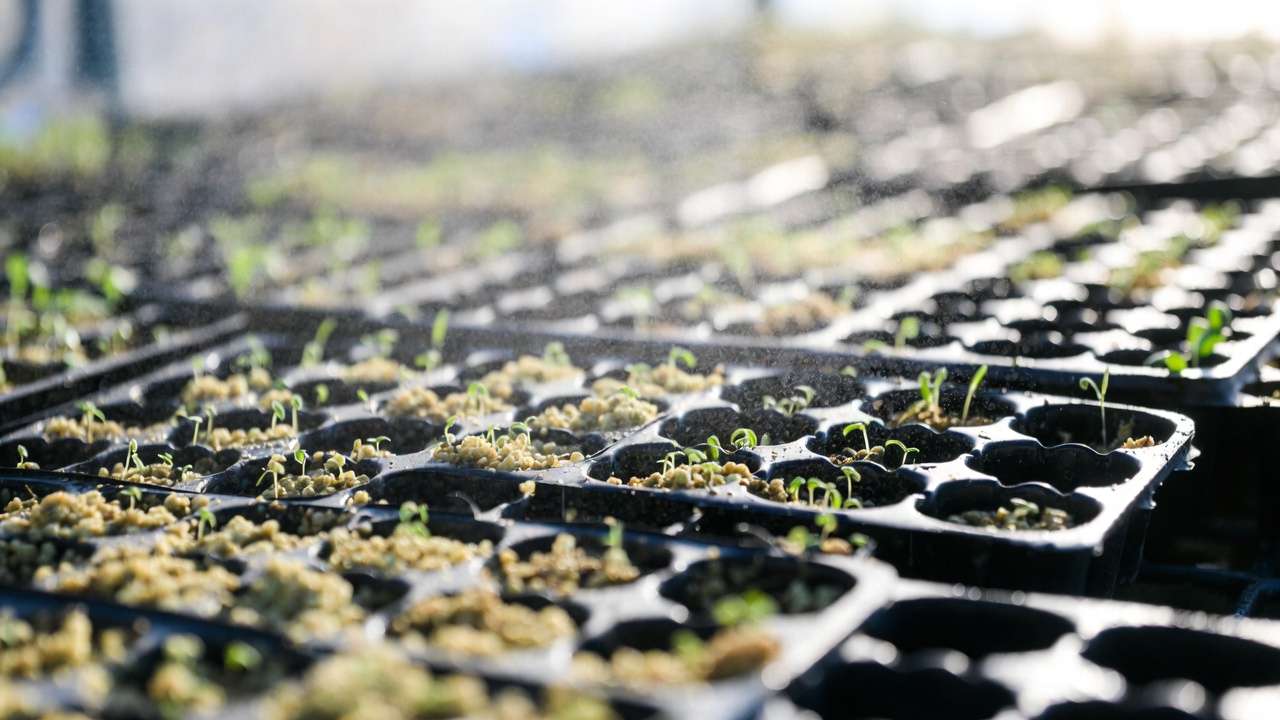
Picture this: It’s early spring, your seed trays are filled, and instead of the usual disappointment—mushy stems collapsing from damping-off, tiny sprouts struggling through heavy, crusty soil, or leggy seedlings stretching desperately toward the light—you see strong, upright baby plants with plump white roots already reaching confidently through a fluffy, airy medium.
That dream scenario becomes reality when you switch to soilless mixes for seed starting. These lightweight, sterile, perfectly balanced growing mediums give seeds exactly what they need to germinate reliably and grow vigorously: excellent drainage, superior aeration, consistent moisture without sogginess, and almost zero risk of soil-borne diseases.
In over 15 years of starting thousands of vegetable, flower, and tree seedlings (from heirloom tomatoes to slow-germinating oak and maple seeds), I’ve learned one hard truth: regular garden soil—even the “good” stuff—is almost never the best choice for seed starting. It compacts, harbors pathogens, drains poorly, and often leads to heartbreaking seedling losses.
In this in-depth guide, we’ll cover everything you need to know: why soilless mixes outperform garden soil and even many commercial potting mixes, the science behind their success, my most reliable DIY recipes (including fully peat-free options 🌍), step-by-step preparation instructions, pro-level usage tips, troubleshooting for common failures, and expert tweaks for specific plants. By the end, you’ll have the knowledge to achieve germination rates of 85–95%+ and produce sturdy, transplant-ready seedlings every single season.
Ready to give your future garden the strongest possible start? Let’s dive in! 🌿💚
What Are Soilless Mixes for Seed Starting? 🤔
A soilless mix for seed starting is exactly what the name implies: a growing medium that contains no actual soil. Instead, it is composed of lightweight, processed organic and inorganic materials carefully chosen for four critical properties:
- Exceptional drainage — excess water flows away quickly, preventing root rot and fungal issues
- Superior aeration — tiny roots get plenty of oxygen, leading to faster, healthier root development
- Excellent moisture retention — the mix holds just enough water to keep seeds and roots consistently moist without becoming waterlogged
- Sterility — free from weed seeds, pathogens, insects, and harmful fungi that commonly live in garden soil
The most common base ingredients include:
- Coco coir or peat moss — provides water-holding capacity and a slightly acidic pH ideal for most seeds
- Perlite — expanded volcanic glass that improves drainage and aeration
- Vermiculite — heat-expanded mica that holds water and nutrients while keeping the mix light
Optional but popular additions include finely screened compost, worm castings, horticultural charcoal, mycorrhizal fungi, and trace mineral amendments like azomite.
Because there is no mineral soil, these mixes are often called “soilless seed-starting media,” “peat-lite mixes,” or simply “seed-starting mix” in gardening circles.
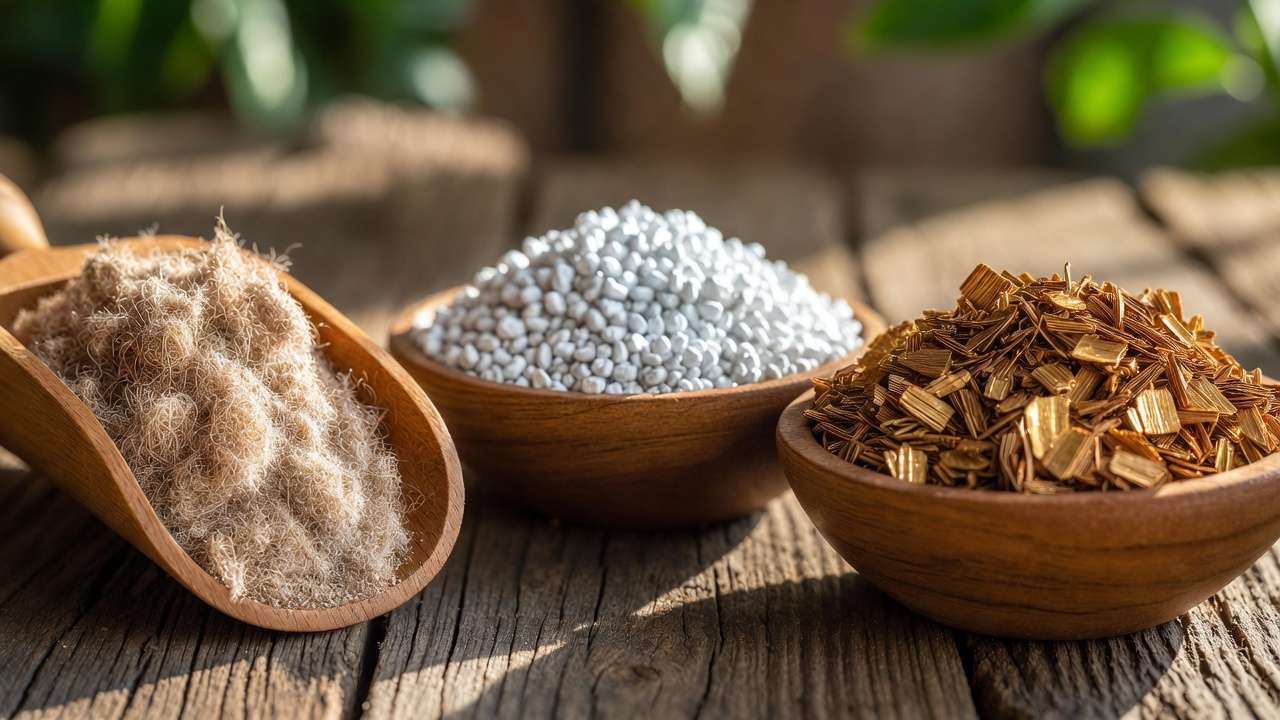
Why Soilless Mixes Beat Garden Soil and Standard Potting Mixes 🏆
Advantages Over Garden Soil and Standard Potting Soil
After testing dozens of combinations side-by-side over multiple seasons, here’s why soilless mixes consistently outperform:
- Drastically reduced damping-off disease Garden soil frequently contains Pythium, Rhizoctonia, and Fusarium fungi. Soilless mixes are naturally sterile (or easily sterilized), cutting damping-off losses by 80–95% in my experience.
- Better oxygen availability for roots Seedlings develop fibrous root systems much faster in airy mixes. Roots literally “breathe” better, leading to stronger stems and faster growth after transplant.
- No surface crusting Heavy soils form a hard crust after watering and drying cycles, making it difficult for delicate cotyledons to emerge. Soilless mixes stay loose and fluffy.
- Consistent moisture without sogginess The combination of water-holding and fast-draining components creates the “Goldilocks” moisture level seeds love—not too wet, not too dry.
- Lighter weight = easier handling Especially important when starting hundreds or thousands of seedlings for market gardens, community projects, or large reforestation efforts.
- Customizable nutrition Seeds carry their own food supply for the first 2–3 weeks. After true leaves appear, you control exactly when and how much fertilizer is introduced—avoiding the burn risk common with nutrient-rich garden compost or potting soil.
Disadvantages and Realistic Expectations
Soilless mixes aren’t perfect for every situation:
- They contain almost no inherent nutrients → you must begin light feeding after the first true leaves appear.
- They can dry out faster on hot, sunny windowsills or under grow lights → daily checks are essential.
- Quality ingredients (especially coco coir and vermiculite) have become more expensive in recent years.
Still, for the critical 3–8 week seed-starting phase, the benefits far outweigh these manageable drawbacks.
Quick Comparison Table
| Feature | Garden Soil | Standard Potting Mix | Soilless Seed Mix |
|---|---|---|---|
| Drainage | Poor–Fair | Fair–Good | Excellent |
| Aeration | Low | Medium | Very High |
| Disease Risk | High | Medium | Very Low |
| Weight | Heavy | Medium | Very Light |
| Crust Formation | Common | Occasional | Rare |
| Initial Nutrients | Variable/High | Medium–High | Very Low (controlled) |
| Best For Seed Starting? | Rarely | Sometimes | Almost Always |
The Science Behind Perfect Seed Germination in Soilless Media 🔬
Successful germination depends on four main factors: moisture, oxygen, temperature, and (for some species) light. Soilless mixes are engineered to optimize the first two while allowing you to easily control the others.
- Coco coir / sphagnum peat moss — holds 8–10 times its weight in water yet releases it slowly. Maintains consistent moisture around the seed without creating anaerobic (low-oxygen) conditions.
- Perlite — creates large pore spaces filled with air. Studies show oxygen diffusion rates in perlite-based mixes can be 5–10× higher than in garden soil.
- Vermiculite — acts like a tiny sponge, holding both water and exchangeable cations (nutrients). It also helps buffer pH swings.
Most seed-starting mixes target a pH of 5.5–6.5 — slightly acidic — which matches the sweet spot for availability of key micronutrients (iron, manganese, zinc) that seedlings need in tiny amounts.
The result? Roots grow straight down and branch profusely instead of circling or stalling in compacted zones. You end up with seedlings that transplant with minimal shock and establish quickly in the garden.
Best DIY Soilless Mix Recipes: Proven & Customizable 🍃
Here are my four most battle-tested soilless seed-starting recipes. These have delivered excellent results across hundreds of plant species — from fast-germinating lettuce and basil to slower tree seeds like oak, maple, dogwood, and fruit tree rootstocks.
All recipes are given by volume (using the same measuring container — a 1-gallon bucket, yogurt tub, or even a large coffee can works perfectly). Scale up or down as needed.
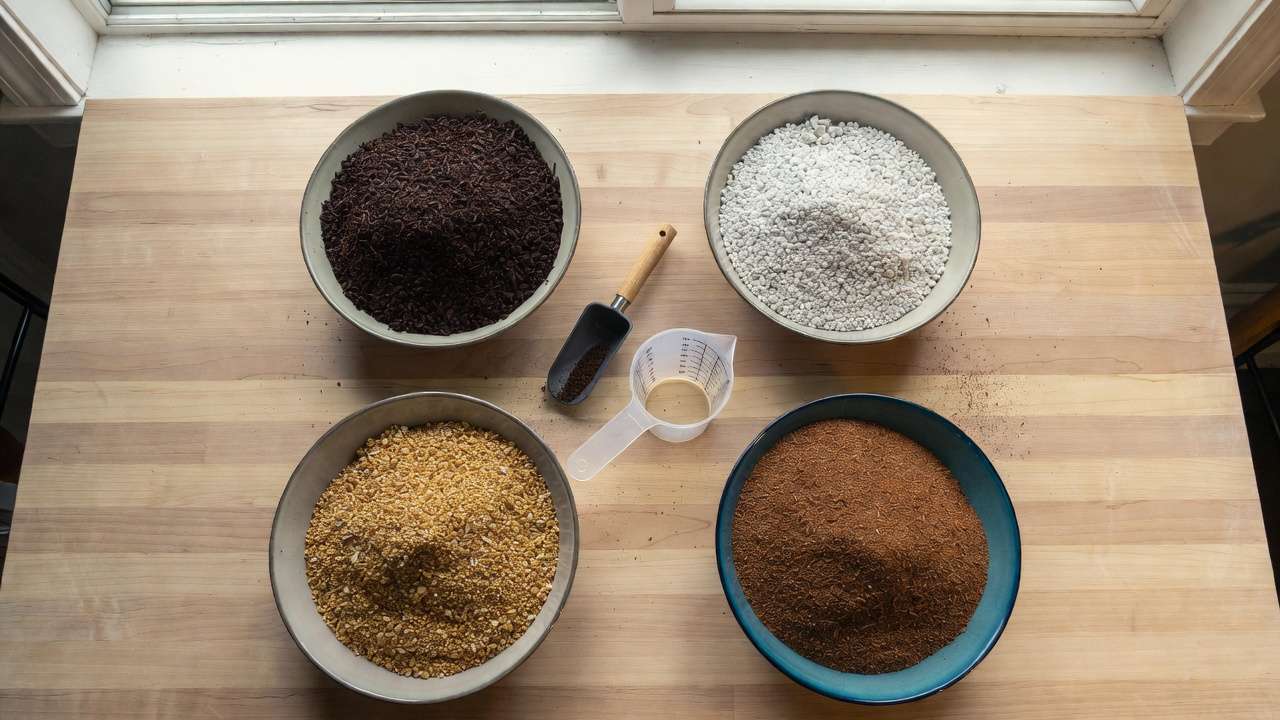
1. Classic Basic Soilless Seed Starting Mix (Most Popular & Reliable) ⭐
This is the gold-standard recipe used by many commercial growers and serious home gardeners. It’s simple, affordable, and performs consistently year after year.
Ingredients (by volume):
- 1 part coco coir (pre-moistened and fluffed) OR sphagnum peat moss
- 1 part horticultural perlite (medium grade, #2 or #3)
- 1 part horticultural vermiculite (medium-fine grade)
Why this ratio works so well:
- Equal parts create the ideal balance of water retention, aeration, and drainage.
- Seeds pop up quickly and roots develop rapidly without rot.
- pH naturally falls in the 5.8–6.3 range — perfect for most vegetables, flowers, and trees.
Best for: Tomatoes, peppers, eggplant, brassicas, herbs, annual flowers, most tree seedlings.
2. Peat-Free Eco-Friendly Version (Sustainable Choice) 🌍
With peat harvesting under increasing environmental scrutiny, this coco coir-based mix is my go-to recommendation for eco-conscious gardeners.
Ingredients (by volume):
- 2 parts coco coir (hydrated and rinsed if it came as a compressed brick)
- 1 part perlite
- 1 part vermiculite
- Optional boost: ½ part finely sifted worm castings or high-quality compost (adds gentle slow-release nutrients and beneficial microbes)
Hydration tip for coco coir bricks:
- Break brick into chunks, place in a large tub.
- Pour warm water (about 5–6 times the brick volume) and let soak 20–30 minutes.
- Fluff aggressively with hands or a cultivator until it’s dark, moist, and crumbly — no dry pockets.
- Squeeze out excess water so it feels like a wrung-out sponge.
Best for: Anyone wanting to reduce peat use, organic gardeners, or starting large quantities of seedlings.
3. Enriched Mix for Longer-Term Seedling Growth (Potting-Up Ready)
Use this when you want seedlings to stay happy in cells or small pots for 6–10 weeks before transplanting — especially useful for slower-growing species or when weather delays outdoor planting.
Ingredients (by volume):
- 4 parts coco coir or peat moss
- 2 parts well-aged, sifted compost or worm castings
- 1 part perlite
- 1 part vermiculite
Important notes:
- Use only finely screened compost/worm castings (pass through ¼-inch mesh) to avoid chunks that can harbor pathogens or impede roots.
- This mix has slightly higher nutrient levels, so delay liquid feeding by 1–2 weeks compared to the basic mix.
Best for: Slow-to-mature vegetables (onions, leeks, celery), perennial flowers, woody ornamentals, fruit tree seedlings.
4. Budget & Minimalist 3-Ingredient Recipe (Beginner-Friendly)
When supplies are limited or you’re starting small batches, this streamlined version still outperforms garden soil dramatically.
Ingredients (by volume):
- 2 parts coco coir (or peat moss)
- 1 part perlite
- Optional: skip vermiculite entirely if unavailable — the mix will be slightly drier but still very effective.
Pro tip: If vermiculite is hard to find, increase coco coir slightly and water more frequently — the trade-off is minimal for most seeds.
How to Make Your Soilless Mix: Step-by-Step Tutorial 🛠️
- Gather tools & materials
- Large mixing tub or wheelbarrow
- Measuring container (same size for all parts)
- Garden trowel or gloved hands
- Dust mask (especially when handling dry peat or perlite) 😷
- Spray bottle or watering can with fine rose
- Pre-hydrate coco coir or peat
- If using compressed bricks, hydrate fully as described above.
- If using bagged peat moss, moisten lightly until evenly damp but not sopping.
- Measure and layer
- Add your base (coir/peat) first.
- Sprinkle perlite and vermiculite evenly over the top.
- Mix thoroughly
- Fold and turn the materials like you’re kneading dough.
- Continue until you see no streaks of unmixed color — usually 3–5 minutes of steady mixing.
- The finished texture should feel light, fluffy, and springy when squeezed.
- Test moisture
- Grab a handful and squeeze: a few drops of water should come out, but it shouldn’t drip steadily.
- Adjust with small amounts of water or dry material if needed.
- Store properly
- Use immediately for best results.
- If storing, place in sealed plastic bins or heavy-duty trash bags.
- Keep in a cool, dark place — good for 6–12 months.
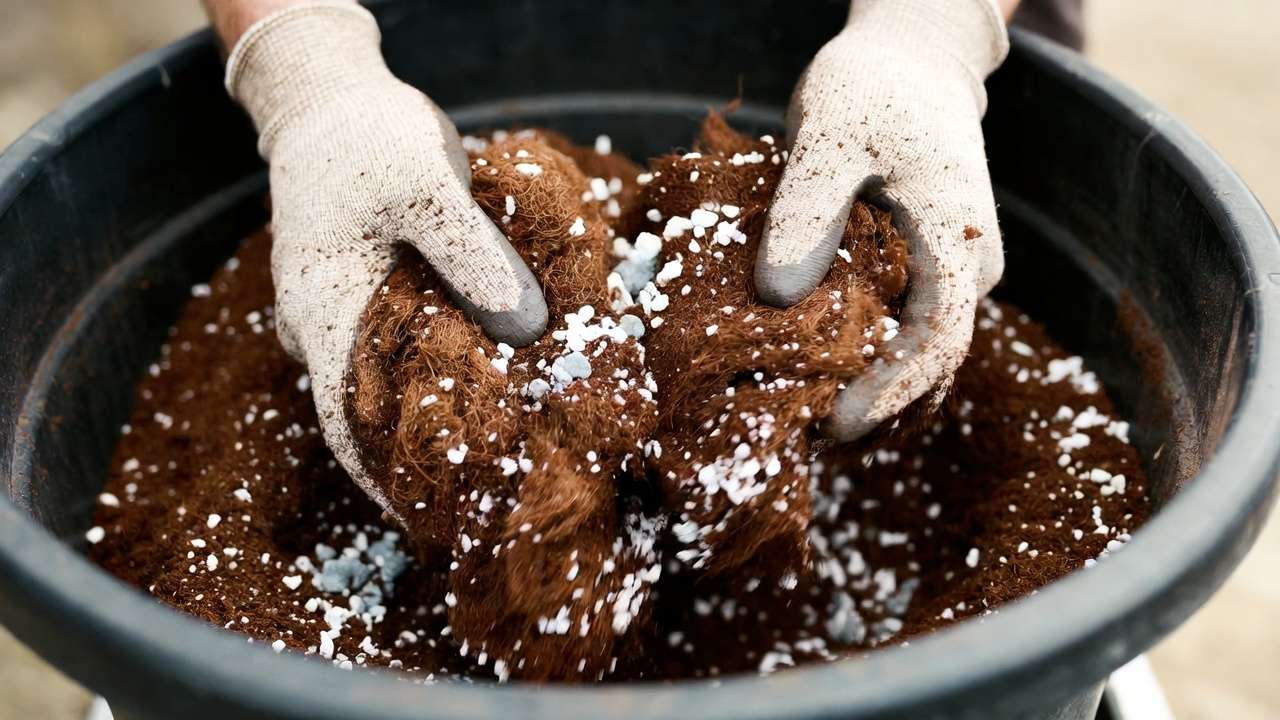
Safety note: Always mix outdoors or in a well-ventilated area. Perlite and dry peat create dust that can irritate lungs.
Using Your Soilless Mix: Best Practices for Success 🌱
- Filling containers — Gently pack mix into cells, trays, or pots. Tap lightly to settle without compacting. Leave ¼–½ inch space at the top for watering.
- Sowing depth — Follow packet instructions, but general rule: plant seeds 2–3 times their diameter deep. Very tiny seeds (begonia, petunia) need only a light dusting of mix on top.
- Watering method — Bottom watering is king! Set trays in shallow water until mix surface darkens, then remove. Avoid overhead watering until seedlings are up to reduce damping-off risk. 💦
- Environment — Aim for 70–80°F (21–27°C) soil temperature for most seeds. Use heat mats if your space is cool. Provide bright light (14–16 hours) immediately after germination to prevent legginess.
- Fertilizing — Wait until first true leaves appear. Start with ¼-strength balanced liquid fertilizer (e.g., 20-20-20 or fish emulsion) every 7–10 days.
Common Problems & Solutions: Troubleshooting Damping-Off & More ⚠️
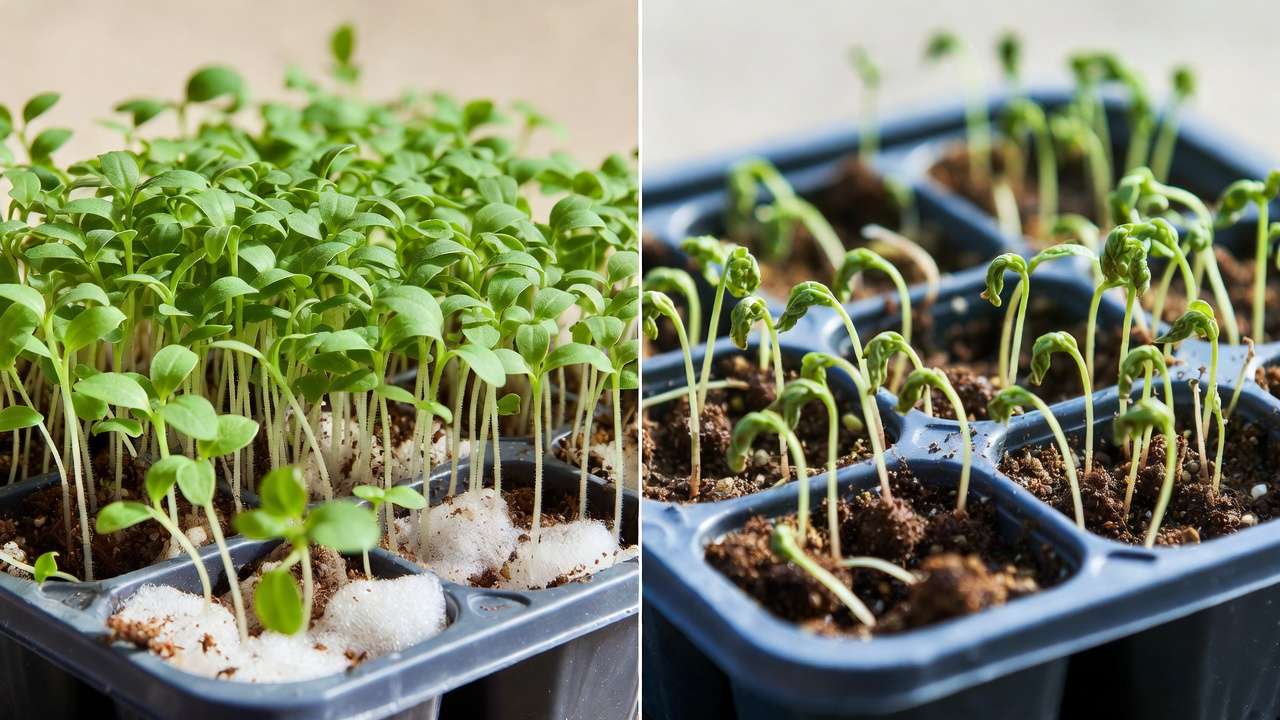
Problem: Damping-off (seedlings collapse at soil line, stem pinched and brown)
- Cause: Fungal pathogens in overly wet, poorly aerated conditions.
- Fix: Improve airflow (small fan), reduce watering, ensure sterile tools and trays. In severe cases, top-dress with a thin layer of dry sand or vermiculite.
Problem: Leggy, stretched seedlings
- Cause: Insufficient light.
- Fix: Move closer to grow lights (2–4 inches above canopy) or south-facing window + supplemental LEDs.
Problem: Mold on surface
- Cause: High humidity + poor air circulation.
- Fix: Increase airflow, bottom-water only, scrape off mold gently, and reduce humidity dome time after germination.
Problem: Uneven germination
- Cause: Inconsistent moisture or old seed.
- Fix: Ensure even mix moisture before planting, label everything, and test seed viability in advance.
Expert Insights & Pro Tips from Seasoned Gardeners 👩🌾
After more than a decade and a half of obsessive seed-starting (and failing spectacularly a few times early on), here are the tweaks and advanced techniques that separate good germination from exceptional results:
- Tailoring mixes for specific plant families
- Heavy feeders / warm-season crops (tomatoes, peppers, eggplants, cucurbits): Stick with the Classic Basic or Enriched Mix. These plants respond beautifully to the slight nutrient bump after week 3.
- Tree and woody perennial seeds (maple, oak, dogwood, serviceberry, fruit rootstocks): Use the Peat-Free version with added 10–20% finely milled pine bark or horticultural charcoal. The extra structure helps mimic forest floor conditions and prevents overly dense root balls.
- Acid-loving species (blueberries, azaleas, rhododendrons from seed): Increase peat moss or use straight sphagnum peat + 30% perlite. Keep pH below 5.0 if possible.
- Boosting with beneficial microbes Add a pinch (about 1 tsp per gallon of mix) of mycorrhizal inoculant powder or a compost tea soak right after mixing. Many studies (and my own side-by-side trays) show 15–30% faster root colonization and better transplant success, especially for trees and perennials.
- Mineral magic for micronutrients A light dusting of azomite (volcanic mineral powder) or rock dust at 1–2 tbsp per gallon of finished mix provides trace elements without pushing fast growth. Seedlings look noticeably greener and more robust by week 4.
- Reusing and refreshing mixes Yes, you can reuse soilless mix 1–2 times if you didn’t have disease issues.
- Solarize used mix in black plastic bags in full sun for 4–6 weeks.
- Or bake small batches at 180°F (82°C) for 30 minutes (stir halfway).
- Refresh by adding 30–50% fresh perlite/vermiculite and a bit more coir. Never reuse if damping-off occurred.
- Humidity dome strategy Use clear domes or bags for the first 3–7 days after sowing. Once 50% of seeds have germinated, prop the dome open or remove entirely — high humidity past that point invites mold far more than it helps.
FAQs: Answering Your Top Questions About Soilless Mixes ❓
Q: Can I reuse soilless mix for multiple seasons? A: Yes, 1–2 times with proper sterilization (solarization or heat). After that, nutrients deplete and texture breaks down. Always start fresh for high-value or disease-prone seeds.
Q: Is coco coir really better than peat moss? A: For most people today, yes — it’s renewable, has a more neutral pH buffer, re-wets more easily when dry, and supports beneficial microbes better. Peat is still excellent if sustainability isn’t your top concern and you already have it.
Q: How long can seedlings stay in a soilless mix before transplanting? A: 4–8 weeks for most vegetables and flowers; up to 12–16 weeks for slower trees and perennials if using the Enriched Mix and fertilizing properly. Watch for roots circling the bottom of cells — that’s your cue.
Q: What if I can’t find vermiculite? A: Skip it and increase coco coir slightly (e.g., 2:1 coir to perlite). You’ll just need to water a bit more often. Perlite alone still beats garden soil dramatically.
Q: Do I really need to bottom-water? A: It’s strongly recommended until seedlings have 2–3 sets of true leaves. Overhead watering can compact the surface, splash pathogens, and encourage mold. Bottom-watering keeps foliage dry and roots happy.
Q: Are commercial soilless mixes worth the extra cost? A: Brands like Pro-Mix, Sunshine Mix #3, or Black Gold are excellent and consistent — but DIY versions cost 40–70% less and let you customize. If you start fewer than 200–300 seedlings per season, buying may be simpler.
Conclusion: Start Strong, Grow Stronger! 🌳💚
Mastering soilless mixes for seed starting isn’t just a technique — it’s a mindset shift that dramatically improves your success rate, reduces heartbreak, saves money, and produces noticeably healthier transplants. Whether you’re growing rows of vegetables for the table, starting trays of native wildflowers for pollinators, or nurturing baby trees for a future food forest or windbreak, the right mix gives your plants the strongest possible foundation.
Grab a bucket, hydrate some coir, measure your perlite and vermiculite, and mix up your first batch. Watch those first cotyledons lift through the fluffy medium, and you’ll understand why so many experienced gardeners never go back to plain garden soil for seed starting.
Here’s to strong roots, sturdy stems, and gardens that thrive from the very beginning. Happy sowing — you’ve got this! 🌱✨











