
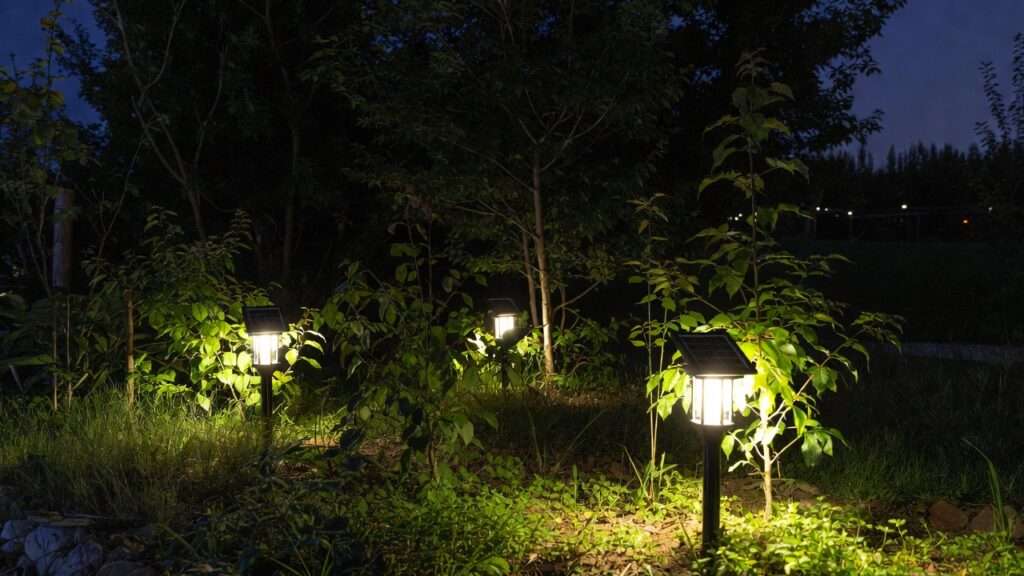
Imagine stepping out into your garden as the sun sets over Khulna, the warm evening breeze rustling through your mango tree leaves, and soft, glowing lights gently revealing the curves of your favorite rose bushes and the majestic trunk of your prized coconut palm. No harsh wires snaking across the lawn, no spike in your electricity bill, and no guilt about your carbon footprint. Just pure, magical ambiance that lets you enjoy your green oasis long after dusk—while your plants and trees stay happy and healthy. 💚
If you’re a plant lover tired of dark evenings limiting your garden time, frustrated by high energy costs from traditional outdoor lights, or worried about complicated installations in a humid tropical climate like ours in Bangladesh, solar-powered garden lighting solutions are the game-changer you’ve been waiting for. These eco-friendly wonders harness free sunlight during the day to provide gentle, automatic illumination at night—perfect for highlighting specimen trees, bordering flower beds, guiding pathways through your veggie patch, or creating a serene spot for evening tea under the stars. 🌟
In this comprehensive guide, we’ll dive deep into why solar lights are ideal for plant care enthusiasts, the best types for gardens and trees, how to choose reliable ones (updated for 2025–2026 trends), smart placement tips to avoid any plant stress, easy installation and maintenance advice tailored to humid, rainy regions, creative ideas to make your space glow, and answers to common questions. By the end, you’ll have everything you need to transform your garden sustainably and affordably—no more energy bill surprises! ☀️
Why Choose Solar-Powered Garden Lighting for Your Plants and Trees? 🌍💡
Solar-powered garden lighting solutions stand out for plant and tree care lovers because they solve real problems while adding beauty and functionality.
Eco-Friendly & Cost-Saving Magic 🌱💰 These lights charge via built-in solar panels during the day, storing energy in rechargeable batteries to power efficient LEDs at night. Once installed, they cost virtually nothing to run—ideal in areas with rising electricity prices. Over time, they pay for themselves while slashing your household’s carbon footprint. In tropical climates with abundant sunshine (even on partly cloudy days), they recharge reliably, making them a smart, green choice for sustainable gardening.
Gentle on Plants: Debunking Myths About Night Lighting 🪴 A common worry among gardeners is whether artificial light disrupts plants’ natural cycles. Plants rely on photoperiodism—the response to day/night length—for flowering, dormancy, and growth. Bright, constant lights (like high-wattage security floods) can interfere, potentially delaying dormancy or stressing sensitive species.
The good news? Modern solar garden lights use low-intensity, cool-running LEDs (typically warm white at 2700–3000K) that emit minimal heat and light levels far below what’s needed to disrupt most plants. Horticultural experts agree: unless lights are extremely bright and placed inches from foliage 24/7, solar options have negligible impact. In fact, subtle illumination can help you spot early pests, diseases, or wilting during evening checks—enhancing overall plant care without harm. For nocturnal pollinators like moths, soft garden lights are far less disruptive than glaring alternatives. 🌙
Enhanced Plant & Tree Care 🌳🔍 Well-placed solar lights let you admire your garden after dark, extend family time outdoors, and improve safety on paths near beds or around trees. Uplighting highlights tree bark textures and canopy shapes, making focal points pop. Downlighting or angled path lights showcase flower colors without washing them out. Plus, better visibility means easier monitoring—catch fungal issues on leaves or bark damage early. In humid Khulna summers, this nighttime inspection can prevent small problems from becoming big ones!
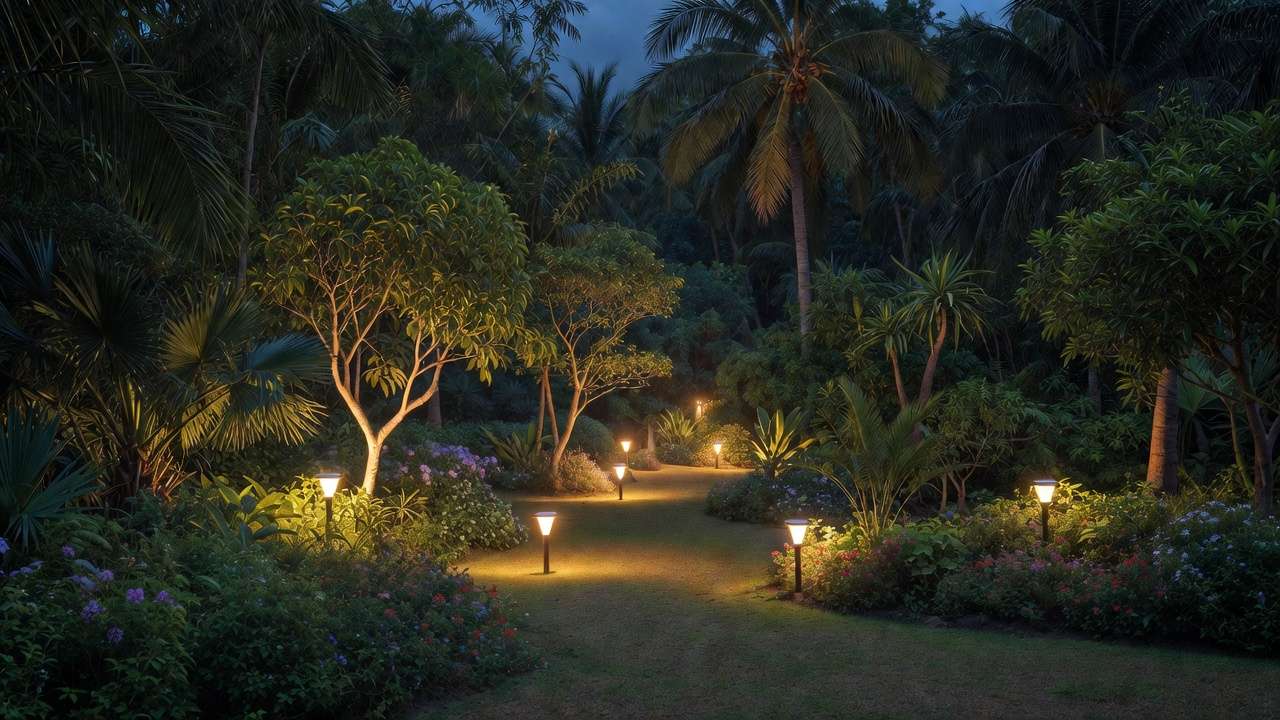
Types of Solar-Powered Garden Lights Perfect for Plant Lovers 🌸
Choosing the right type ensures your lights complement—not compete with—your plants.
Pathway & Stake Lights 🚶♂️ These stake into the ground along borders, beds, or paths. They provide soft, downward or diffused light to guide footsteps safely through garden areas without blinding glare. Great for lining rose paths or veggie rows—warm white options keep the natural feel.
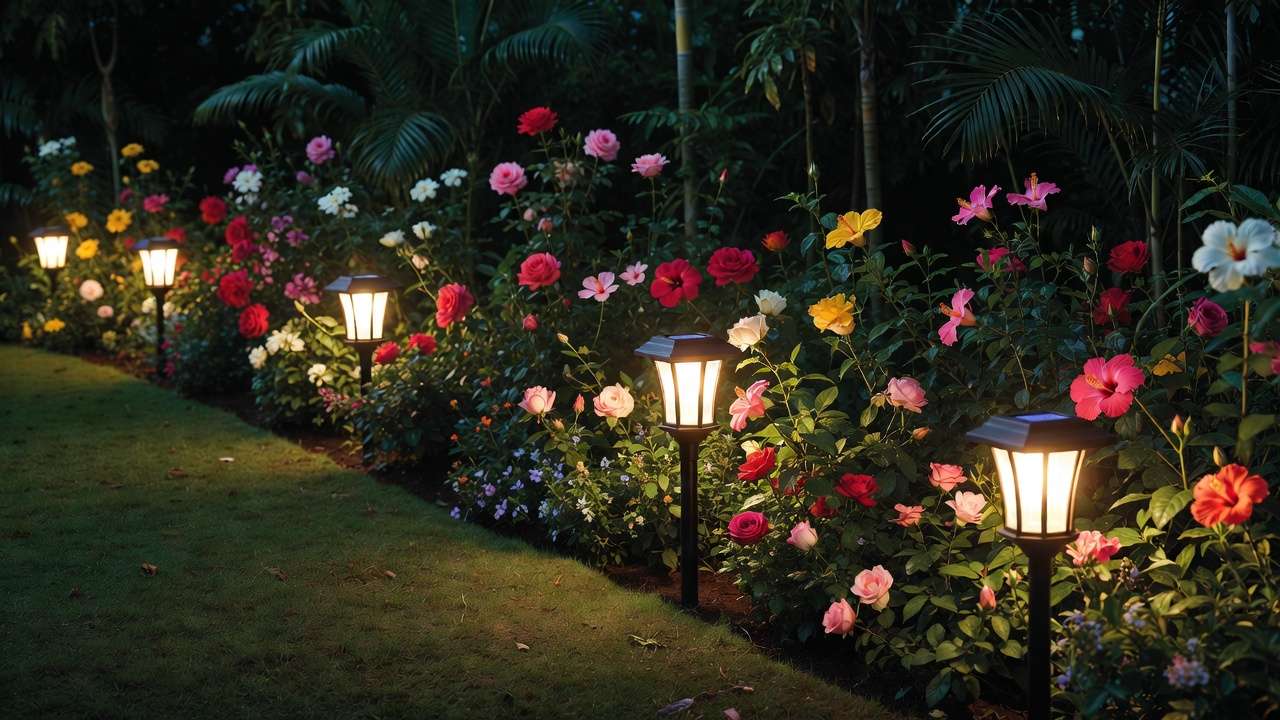
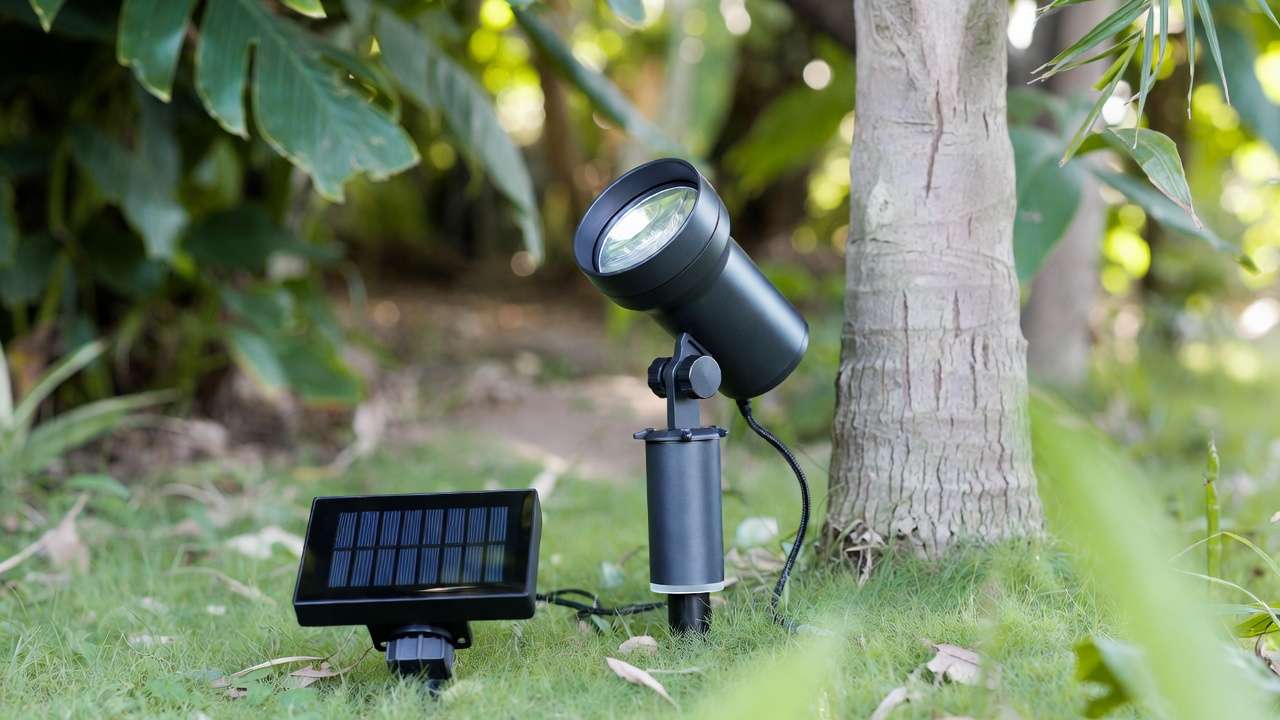
Spotlights & Uplights 🔦 Adjustable heads make these ideal for dramatic tree highlighting. Place them at the base to graze trunks and illuminate branches upward, creating stunning silhouettes. Perfect for accenting mango, coconut, or jackfruit trees common in our region.
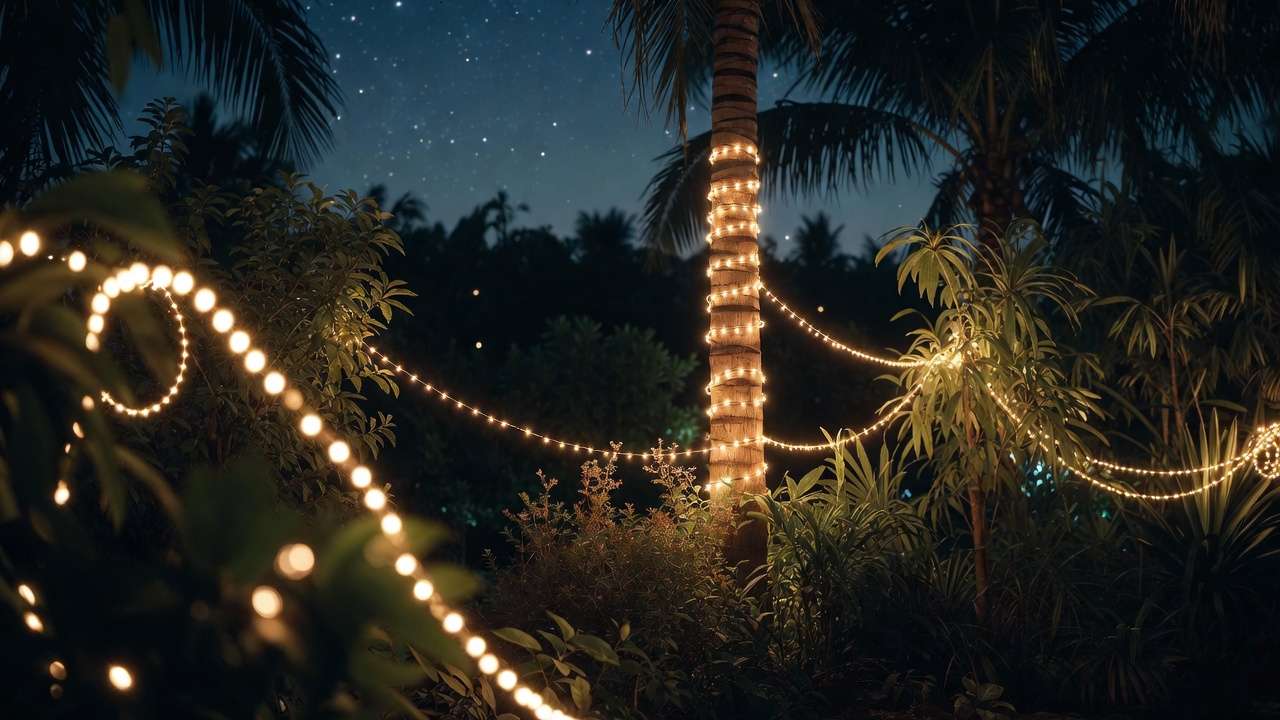
String & Fairy Lights ✨ Wrap around tree trunks, drape over shrubs, or hang from pergolas for whimsical glow. Solar versions with timers add fairy-tale charm to potted plants or arbors—without extension cords.
Lanterns & Decorative Options 🏮 Hanging or ground lanterns offer ambient light for seating areas near planters. Flame-effect or color-changing models add fun, but stick to warm tones for a natural plant vibe.
Quick comparison: Pathway lights suit safety + borders; spotlights excel at tree drama; strings/fairies for decor; lanterns for cozy spots. Aim for 8–12+ hours runtime for full-night coverage. 🌟
How to Choose the Best Solar Lights for Your Garden (H2 – Buyer’s Guide – 400+ words) ☀️🛒
Selecting reliable solar-powered garden lighting solutions means focusing on features that deliver consistent performance in real-world conditions—especially in humid, rainy tropical areas like Khulna where monsoons can challenge cheaper models.
Key Factors to Consider 🔍
- Solar Panel Size & Quality — Larger monocrystalline panels (higher efficiency, up to 26% conversion) recharge faster even on cloudy days. Look for separate or adjustable panels for flexible placement in shaded garden spots.
- Battery Quality & Capacity — Li-ion or upgraded NiMH batteries hold charge longer (8–15+ hours runtime). Avoid old Ni-Cd types that degrade quickly in heat/humidity.
- Lumens & Color Temperature — 50–300 lumens per light suits garden use. Warm white (2700–3000K) feels natural, enhances plant colors, and avoids harsh blue tones that could subtly affect nocturnal insects or plant perception. Cool white (5000K+) is brighter but less plant-friendly for aesthetics.
- Weatherproof Rating — IP65 or IP67 is essential for rain, dust, and humidity—prevents water ingress in our monsoon season.
- Runtime & Smart Modes — Dusk-to-dawn auto-on, motion sensors (great for saving battery), or timers. Motion-activated spotlights conserve energy while providing security around trees.
- Build & Durability — Stainless steel or high-grade ABS plastic resists rust/corrosion in salty coastal air near Khulna. Adjustable heads/angles are a must for precise tree/plant highlighting.
2025–2026 Top Recommendations (Based on lab-tested reviews from The Spruce, Consumer Reports, Gardeners’ World, and more) 🏆
- Best Overall / Motion-Sensor Spotlights — AloftSun Motion Sensor Solar Landscape Spotlights (often 2-pack around $25–$40). These top many 2026 lists for bright output (up to 30 LEDs), reliable motion detection, long runtime, and waterproof build—perfect for uplighting trees or spotting pests at night. 🌟
- Best for Pathways & Borders — Hampton Bay Parkwood or Clermont Solar Pathway Lights (sets of 4–8, vintage bulb style). Soft 14–20 lumens, bronze finish blends with gardens, excellent in humid conditions per Home Depot tests.
- Best Uplights for Trees — Linkind or Varmtalys Adjustable Solar Spotlights (2-pack, 100–650 lumens options). 120–180° adjustable heads, separate panels for sun optimization, warm/daylight switchable—ideal for dramatic mango or coconut tree silhouettes without glare.
- Best Budget/Value Packs — Better Homes & Gardens or Greluna/Oulonger 12-packs (under $40). Reliable for large beds, 10+ hour runtime, waterproof—great starter sets for veggie patches or rose borders.
- Best Decorative/Fairy — Westinghouse or Brightech Solar String Lights. Warm white, long-lasting, timer-equipped for wrapping shrubs or arbors whimsically.
Pro tip: Read recent Amazon/Reddit reviews for real-user feedback in tropical climates—avoid ultra-cheap no-name brands with tiny panels that fail after one season. Invest in quality for 3–5+ years of glow! 💡
Smart Placement Tips: Lighting Plants and Trees Without Harm (H2 – 400+ words) 🌲✅
Proper placement maximizes beauty and safety while keeping plants happy—here’s expert guidance from horticulture pros.
Uplighting Trees the Right Way 🌳 Position spotlights 1–3 feet from the trunk base, angled 30–45° upward to graze bark and create stunning canopy silhouettes (grazing technique). This highlights textures on mango, jackfruit, or palm trunks without blasting leaves directly. Avoid placing lights too close or straight-on—intense direct exposure can cause minor heat stress or leaf scorch in sensitive young shoots. Use 2–4 lights per medium tree for balanced effect.
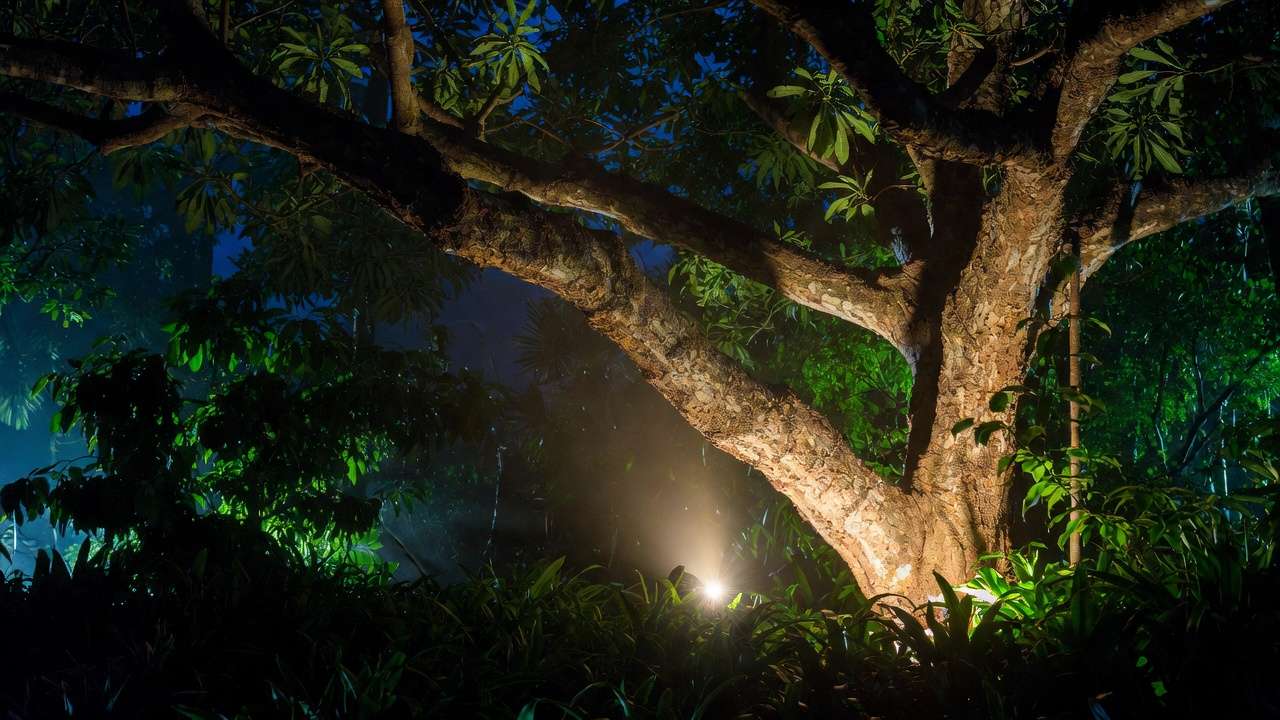
Highlighting Flower Beds & Shrubs 🌸 Use pathway stakes or low-wattage downlights angled softly toward blooms. Warm white enhances rose pinks/reds and hibiscus vibrancy without washing out colors. Space lights 2–4 feet apart along beds for even glow—prevents dark pockets while allowing you to inspect for aphids or powdery mildew during evening walks.
Path Lighting Around Plants 🛤️ Install stake lights along walkways near veggie rows or tree bases—diffused downward light guides steps safely without tripping hazards. Keep lights 1–2 feet from foliage to avoid any potential (though minimal) photoperiod disruption.
Dos and Don’ts for Plant Health ✅❌ ✅ Do: Use warm tones, motion/timers to limit exposure, place 1+ feet away from sensitive plants. ❌ Don’t: Blast bright cool lights directly on foliage 24/7 (rare with solar, but possible with high-lumen models); overload young seedlings. Experts (e.g., from Homes & Gardens, Tom’s Guide horticulturalists) confirm: Low-intensity solar LEDs cause negligible harm—unlike bright security floods. They even aid care by improving visibility for nighttime checks in humid climates where fungal issues thrive after dark.
Visual example: Before—your garden vanishes at dusk. After—soft uplights make your favorite coconut palm a nighttime focal point, roses glow invitingly, and you spot wilting early!
Installation & Maintenance Guide (H2 – Step-by-Step – 300+ words) 🔧🧹
Getting your solar-powered garden lighting solutions up and running is surprisingly simple—no electrician needed, no digging trenches. Here’s a practical, tropical-climate-friendly walkthrough.
Easy No-Wire Setup Tutorial
- Choose the Spot — Pick locations with at least 6–8 hours of direct sunlight daily. In Khulna’s humid, partly cloudy weather, prioritize south-facing open areas (avoid dense tree shade or building overhangs). For uplights near trees, place the panel in sun while the light head angles toward the trunk.
- Assemble & Stake — Most lights come pre-assembled. For stakes/pathway types, push firmly into soft soil (add sand if ground is hard). Spotlights often have ground spikes or bases—secure with included screws if needed.
- Initial Charge — Turn the switch to “ON” (or remove tab) and let charge fully in sunlight for 1–2 days before first night use.
- Test at Dusk — Walk your garden after sunset to check coverage, adjust angles, and ensure auto-on works.
Troubleshooting Common Issues 🌧️
- Lights Dim or Short Runtime? — Clean solar panels monthly with a soft cloth (dust/pollen buildup in humid air reduces charging). Relocate to sunnier spot during monsoon if needed.
- Not Turning On? — Check battery (replace after 2–3 years), ensure switch is on, or test in full sun. Motion models may need sensitivity tweak.
- Water Damage? — Use IP65+ rated only; wipe dry after heavy rain if condensation appears.
Longevity Tips for Tropical Climates ☔ In high-humidity Khulna, opt for corrosion-resistant stainless steel or treated plastic. Store removable batteries indoors during extreme monsoons if lights aren’t fully waterproof. Clean panels after dust storms. Quality models last 3–7 years; budget ones 1–2. Regular checks keep them glowing reliably!
Creative Ideas to Make Your Garden Glow (H2 – Inspiration – 250+ words) 🎨✨
Elevate your plant care haven with fun, low-effort designs:
- Fairy-Tale Tree Wrapping — Drape warm white solar string lights around mango or coconut trunks (loose spiral, not tight to avoid bark damage). Add a timer for 6–8 hour glow—perfect for evening family photos!
- Illuminated Planters & Focal Points — Nestle small stake lights inside large pots with hibiscus or bougainvillea for a magical “floating” effect. Use flame-effect lanterns near seating areas for cozy vibes.
- Seasonal Themes — Swap to color-changing strings for Pohela Boishakh accents or soft whites for winter evenings. Highlight your veggie patch paths to make nighttime harvesting safer and enjoyable.
- Moon Garden Bonus — Pair lights with white-flowering plants (jasmine, moonflower) that bloom at night—solar glow enhances their ethereal look without overpowering.
These ideas blend beauty, functionality, and sustainability—turning your garden into a year-round retreat. 🌙
Frequently Asked Questions (FAQ) (H2 – Schema-Friendly – 300+ words) ❓
Are solar lights bad for plants? No—modern low-intensity LED solar garden lights have negligible impact on plant health. Experts confirm they don’t disrupt photoperiodism unless extremely bright and constant (unlike security floods). Warm white tones and motion/timers keep exposure minimal. In fact, they help by improving nighttime pest/disease checks!
How long do solar garden lights last? Quality models run 8–15+ hours per charge and last 3–7 years overall. Batteries degrade first (replaceable in better ones). In sunny Khulna, expect strong performance even in monsoon if panels stay clean.
Do they work in cloudy/rainy areas like Bangladesh? Yes—efficient panels charge on diffused light. Monocrystalline types excel in partial sun. Runtime may shorten during heavy overcast, but good batteries store enough for several nights.
Best lights for trees vs. small plants? For trees: Adjustable spotlights/uplights (e.g., AloftSun or Linkind) for dramatic effect. For small plants/beds: Pathway stakes or low-lumen strings/fairies for soft highlighting without overwhelming.
Can I leave them on all night? Most auto-dusk-to-dawn or timer models do. Motion-sensor ones save battery for peak times. No harm to plants from typical solar levels.
How to clean solar panels? Wipe gently with damp cloth monthly—avoid abrasives. In humid/dusty areas, more frequent cleaning boosts efficiency.
Conclusion (200–300 words) 🌙💚
Solar-powered garden lighting solutions truly are a win-win for plant lovers in places like Khulna: they let you extend the magic of your garden well into the evening, highlight the beauty of your mango trees, rose bushes, hibiscus, and veggie patches, improve nighttime safety around paths and beds, and support better plant care through easier evening inspections—all without adding a single extra taka to your electricity bill or complicating your setup with wires.
The beauty lies in their simplicity and sustainability. By harnessing free sunlight (plentiful even in our partly cloudy monsoon months with the right placement and quality panels), these lights deliver gentle, warm illumination that complements rather than competes with your plants’ natural rhythms. No more dark gardens cutting short your relaxation time, no guilt over energy use, and no worries about harming foliage when you choose low-intensity, warm-white LEDs positioned thoughtfully.
Start small if you’re new to this: Pick 2–4 adjustable solar spotlights to uplight your favorite tree, add a few pathway stakes along a bed, or drape fairy lights over an arbor. Watch how the soft glow transforms your space into an inviting nighttime retreat—and notice how much easier it becomes to spot early signs of pests, wilting, or fungal spots in the humid evenings.
Sustainable gardening isn’t just about soil, water, and sunlight during the day; it’s about creating a year-round haven that respects the environment. Solar garden lights are one of the easiest, most rewarding upgrades you can make.
Ready to make your garden glow? Grab a few quality solar lights, follow the placement and maintenance tips here, and enjoy the magic. Share your before-and-after photos or your favorite illuminated tree in the comments—I’d love to see how your green oasis lights up! 🌟✨
What’s the first spot in your garden you’ll illuminate? Let me know below. Happy gardening, and happy glowing! 🌿











