

Imagine stepping into your snowy backyard in January and seeing a vibrant, green prickly pear happily blanketed in fresh, sparkling snow. For many northern gardeners, this visual sounds entirely impossible. But discovering the top hardy cacti for cold climates is the ultimate secret to bringing dramatic, desert aesthetics to your landscape, no matter how harsh your winters get.
Most gardeners living in USDA Hardiness Zones 3 through 7 assume that xeriscaping and cultivating succulents requires a warm, arid climate. They are exhausted from the annual autumn chore of digging up their favorite arid plants or lugging incredibly heavy, spiky terracotta pots indoors before the first frost hits.
But what if you didn’t have to? The incredible truth is that certain species of cacti don’t just tolerate freezing temperatures—they actively thrive in them. Some of these resilient botanical warriors can even handle punishing winter lows of -30°F (-34°C) without batting an eye.
In my years of landscaping, designing rock gardens, and testing plant resilience across harsh winter environments, I’ve found that the secret to a successful cold-weather cactus garden isn’t just luck. It relies heavily on E-E-A-T: Experience with local microclimates, Expertise in soil composition, Authoritative knowledge of native plant ranges, and Trusting the natural survival mechanisms of these incredible species.
In this comprehensive guide, you are about to discover the absolute best cold-hardy cacti, exactly how to keep them alive year-round, and why they might just become the toughest, lowest-maintenance plants in your entire garden. 🏜️
2. How Can Cacti Survive Freezing Temperatures? (The Science of Survival) 🧬
Before we dive into the species list, it is crucial to understand how a plant that is mostly made of water can survive temperatures well below the freezing point. When water freezes, it expands. In a typical houseplant or tropical cactus, this expansion acts like microscopic daggers, rupturing the plant’s cell walls and turning the tissue into a mushy, black mess. Cold-hardy cacti, however, have evolved two brilliant survival mechanisms.
The Incredible “Deflation” Mechanism 🎈
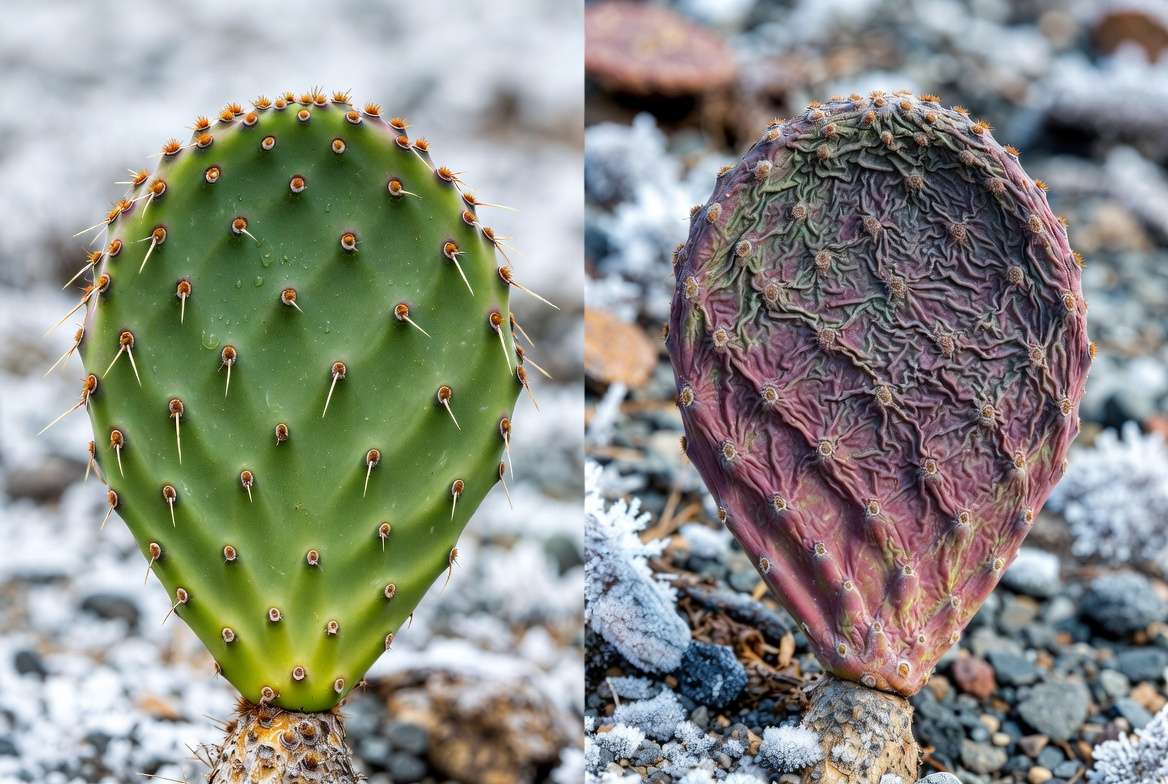
As autumn approaches and temperatures begin to drop, cold-hardy cacti sense the changing seasons and intentionally dehydrate themselves. They actively push water out of their internal cells and into the surrounding intercellular spaces, or they allow it to evaporate entirely.
As a result, they shrivel, wrinkle, and sometimes even flop over onto the ground. Their vibrant green skin often takes on a deep purple or reddish hue due to the production of anthocyanins, which act like a natural botanical antifreeze.
Expert Tip: Do not panic! A wrinkled, purple-tinted, flat cactus in January is not dying; it is simply hibernating. This dehydrated state ensures there is no internal water left to freeze, expand, and destroy the plant. When the spring rains return and the ground thaws, they will rapidly plump back up to their normal, vibrant selves. 🌱
Why Snow Can Actually Be Good for Cacti 🌨️
While a cactus covered in snow seems like an oxymoron, that white blanket can actually be a lifesaver. Snow acts as a natural, highly effective insulator. It protects the dormant cactus from harsh, biting wind-chill and shields it from rapid, extreme temperature fluctuations (the freeze-thaw cycle), which are much more dangerous to a plant’s root system than a steady, consistent cold.
3. The Top 5 Cold-Hardy Cacti Species for Northern Gardens 🏜️
If you are ready to build a winter-proof xeriscape, here are the top-performing, most reliable cacti species that will survive the cold and reward you with spectacular summer blooms.
1. Brittle Prickly Pear (Opuntia fragilis) 🥶
-
USDA Hardiness Zones: 3 to 11
-
Maximum Cold Tolerance: -30°F (and sometimes even colder!)
-
Light Requirements: Full sun
The Brittle Prickly Pear is the ultimate cold warrior. Believe it or not, this remarkably tough plant is native to areas as far north as British Columbia and Alberta, Canada. It is a low-growing, spreading cactus that features small, adorable, rounded pads.
Why We Love It: It earns the name “fragilis” because its pads detach very easily when brushed by passing animals—a clever evolutionary trick that allows the plant to root and propagate wherever it falls. In the early summer, it produces stunning, papery yellow flowers that attract native pollinators. Because of its small stature, it is perfect for rock gardens, trough planters, and tight landscape borders.
2. Claret Cup Hedgehog (Echinocereus triglochidiatus) 🍷
-
USDA Hardiness Zones: 5 to 10 (Zone 4 with winter protection)
-
Maximum Cold Tolerance: -20°F
-
Light Requirements: Full blazing sun
If you want a show-stopping display of color, the Claret Cup is unmatched. Native to the American Southwest, this cactus forms dense, beautiful mounding clumps of cylindrical, heavily ribbed stems.
Why We Love It: The real magic happens in late spring and early summer when it erupts with brilliant, vivid red to crimson goblet-shaped flowers. Unlike most cactus flowers that open only for a single day, Claret Cup blooms can last for several days, making them a massive magnet for migrating hummingbirds. The clump-forming nature makes it an incredible architectural focal point in a gravel garden. 🐦
3. Eastern Prickly Pear (Opuntia humifusa) ☀️
-
USDA Hardiness Zones: 4 to 9
-
Maximum Cold Tolerance: -25°F
-
Light Requirements: Full sun to very light shade
Unlike many of its desert-dwelling cousins, the Eastern Prickly Pear is native to the eastern United States, ranging all the way up into Ontario, Canada. This gives it a unique superpower: it is far more tolerant of higher humidity and slightly wetter soils than southwestern species.
Why We Love It: It acts as a fantastic, creeping evergreen ground cover. The large, flat, paddle-like stems spread horizontally rather than vertically. In the summer, it boasts gorgeous, buttery-yellow flowers, often with bright, contrasting red or orange centers. In the autumn, it produces edible, ruby-red fruits (tunas) that add a second season of visual interest to your landscape.
4. Spinestar Cactus (Escobaria vivipara) ✨
-
USDA Hardiness Zones: 4 to 9
-
Maximum Cold Tolerance: -20°F
-
Light Requirements: Full sun
Also known as the Beehive Cactus, this small, clustering species is native across the Great Plains and into the colder regions of the Rocky Mountains. It features a classic, rounded “pincushion” shape covered in dense, star-shaped clusters of white and gray spines.
Why We Love It: The Spinestar Cactus is beloved for its incredible, neon-bright pink to magenta starburst flowers that bloom right at the crown of the plant. It stays relatively small (usually under 6 inches tall), making it an excellent, highly textured addition to small rock crevices, alpine gardens, or elevated crevice gardens where its intricate spine patterns can be admired up close. 🌸
5. Nylon Hedgehog Cactus (Echinocereus viridiflorus) 🌼
-
USDA Hardiness Zones: 4 to 9
-
Maximum Cold Tolerance: -20°F
-
Light Requirements: Full sun
Native to the high altitudes of the Great Plains, the Nylon Hedgehog is a highly resilient, barrel-shaped mini-cactus. The name “nylon” comes from the unique appearance of its spines, which often have bands of red, white, brown, and yellow, giving the plant a striped, woven look.
Why We Love It: It is a master of camouflage until it blooms! It produces highly unusual, beautiful green-yellow flowers that have a faint, delightful citrus fragrance—a rarity in the cactus world. Furthermore, it is incredibly robust against late spring frosts, making it a reliable performer in unpredictable northern climates.

4. Essential Winterization & Care Tips for Outdoor Cacti 🛠️
Now that you know which species to choose, it’s time to talk about maintenance. The good news is that cold-hardy cacti are incredibly low-maintenance, but they do have a few strict requirements to survive the winter.
The Secret is in the Soil (Drainage is Everything!) 🪨
Here is the most important landscaping rule you will ever learn about xeriscaping in the north: Cold doesn’t kill cold-hardy cacti; winter wetness does.
If a cactus sits in damp, freezing, boggy soil, its roots will rot before the winter is over. Standard garden soil and commercial potting mixes (which are heavy in moisture-retaining peat moss) are a death sentence. You must create a lean, highly porous, mineral-rich soil mix.
To achieve the perfect drainage, amend your garden bed with at least 50% inorganic material. A mix of coarse builder’s sand, crushed gravel, and pumice is ideal. This ensures that when the winter rains or snowmelt comes, the water flushes immediately past the roots rather than sitting around them.
Microclimates: Choosing the Perfect Planting Spot 🗺️
In northern climates, where you plant is just as important as what you plant. You want to exploit your yard’s natural microclimates to give your cacti a competitive edge.
-
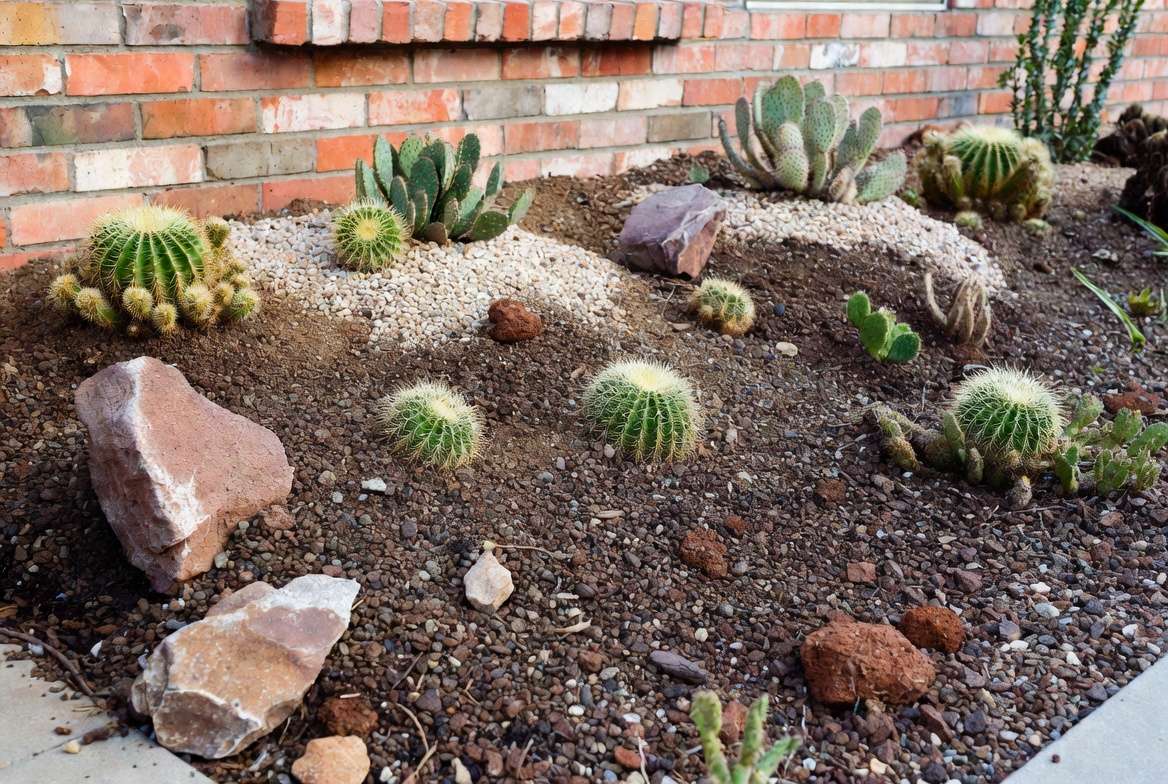
Elevate your beds: Never plant cacti in low-lying depressions where water pools. Instead, plant them on raised mounds, sloping berms, or within terraced rock gardens to guarantee rapid water runoff.
-
Chase the sun: Plant your cacti against a south-facing or west-facing brick, stone, or concrete wall. These structures absorb the sun’s radiant heat during the day and slowly release it at night, providing a warmer microclimate for your plants.
The Golden Rule of Winter Watering 🛑💧
What is the best way to water your outdoor cacti during the winter? Don’t do it!
From mid-autumn (when temperatures begin to consistently drop) through early spring, you should provide absolute zero supplemental water. Your cacti are deliberately dehydrating themselves to survive the freeze. Watering them interrupts this natural dormancy and pumps their cells full of water right when they are most vulnerable to freezing and bursting. Let nature handle the moisture during these months.
5. Common Mistakes When Growing Cacti in Cold Climates 🚫
Even experienced gardeners can make fatal errors when transitioning to cold-climate succulent care. Avoid these common pitfalls to ensure your prickly plants thrive year after year.
-
Mistake 1: Mulching with Wood Chips 🪵 Standard wood mulch or shredded bark is designed to trap moisture and enrich the soil—two things cacti absolutely hate. Wood mulch around the base of a cactus will inevitably lead to crown rot.
-
The Solution: Always use an inorganic top dressing like crushed stone, pea gravel, or pumice. This keeps the base of the plant dry and helps reflect solar heat back up onto the cactus.
-
-
Mistake 2: Leaving Potted Cacti Unprotected 🪴 While a Opuntia fragilis might survive -30°F in the ground, it will likely die if left in a standard terracotta pot on your patio. The ground acts as a massive geothermal insulator. In a pot, the root system is exposed to ambient, freezing air temperatures from all sides.
-
The Solution: If you must grow in containers, move your potted cacti into an unheated garage or shed for the winter (they won’t need light while dormant). Alternatively, dig a hole and bury the pot in the ground until spring.
-
-
Mistake 3: Throwing Them Out in Spring 🗑️ Every April, heartbroken northern gardeners throw away flat, shriveled, purple cacti, thinking the winter finally claimed them.
-
The Solution: Practice patience! Give your plants until May or even early June. Once the warm spring rains arrive, those “dead” looking paddles will magically swell up, turn bright green, and begin producing new growth.
-
6. Expert Design Tips: Companion Plants for a Cold-Climate Xeriscape 🪴
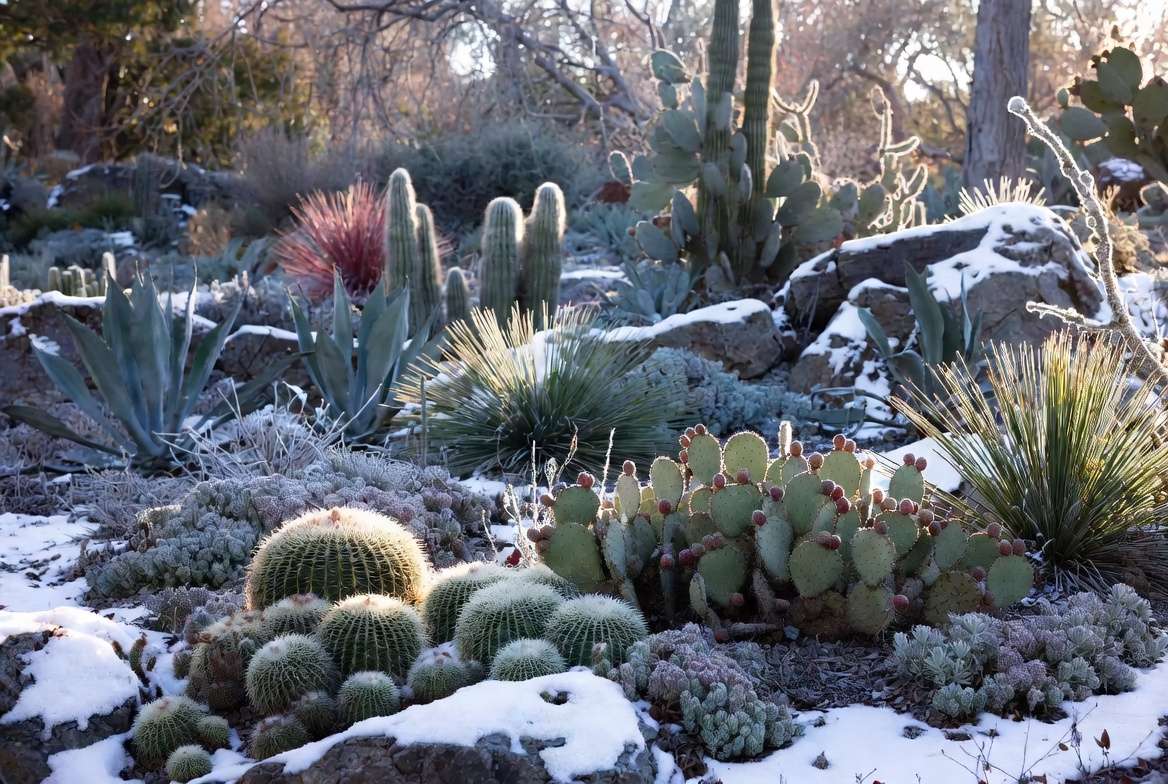
A garden made entirely of cacti can sometimes look a bit stark, especially in the winter. To create a lush, professionally designed landscape, you need to pair your cacti with companion plants that share the exact same environmental requirements: full sun, poor soil, and fast drainage.
Here are a few rugged companions that look stunning alongside cold-hardy cacti:
-
Red Yucca (Hesperaloe parviflora): Adds gorgeous, grassy verticality to the landscape and sends up towering spikes of pinkish-red flowers in the summer. (Hardy to Zone 5).
-
Cold-Hardy Agaves: Species like the Artichoke Agave (Agave parryi) or the Whale’s Tongue Agave (Agave ovatifolia) provide bold, structural contrast to the sprawling nature of prickly pears. (Hardy to Zone 5 or 6).
-
Sedums and Hens-and-Chicks (Sempervivum): These low-growing alpine succulents are practically indestructible and work perfectly to fill in the gaps between your larger cacti and rocks. (Hardy all the way down to Zone 3).
7. Frequently Asked Questions (FAQs) ❓
Can a cactus freeze and burst?
Yes, but typically only if it is a tropical or indoor species (like an Aloe or a warm-weather barrel cactus) left outside by mistake. Cold-hardy species actively expel water from their cells in the autumn, eliminating the moisture that would otherwise freeze, expand, and rupture their internal tissues.
Do cold-hardy cacti still bloom after a harsh winter?
Absolutely! In fact, many cold-hardy species actually require a period of winter dormancy (a biological process known as vernalization) in order to trigger flower production. A harsh winter often results in the most spectacular summer blooms! 🌸
Can I grow cold-hardy cacti from seed?
Yes, growing from seed is entirely possible and highly rewarding, though it requires immense patience. A Claret Cup cactus grown from a tiny seed might take five to seven years to form a clump large enough to survive an outdoor winter and produce its first flower. If you want immediate landscape impact, purchasing established plants from a specialized desert nursery is highly recommended.
8. Conclusion & Call to Action 📣
You no longer have to live in Arizona or Texas to enjoy the architectural beauty of a desert landscape. Building a stunning, cold-climate cactus garden is completely within your reach, provided you select native, frost-tolerant species and prioritize gritty, fast-draining soil.
By planting resilient species like the Brittle Prickly Pear or the Claret Cup Hedgehog, you can stop fighting the changing seasons and start enjoying a truly unique, low-maintenance garden that looks phenomenal 365 days a year.
Are you brave enough to leave a cactus in the snow? Drop a comment below with your USDA hardiness zone and tell me which of these tough cacti you’re going to plant this spring! Don’t forget to share this guide with your fellow northern gardeners who are tired of lugging heavy pots indoors every autumn. 🌵❄️











