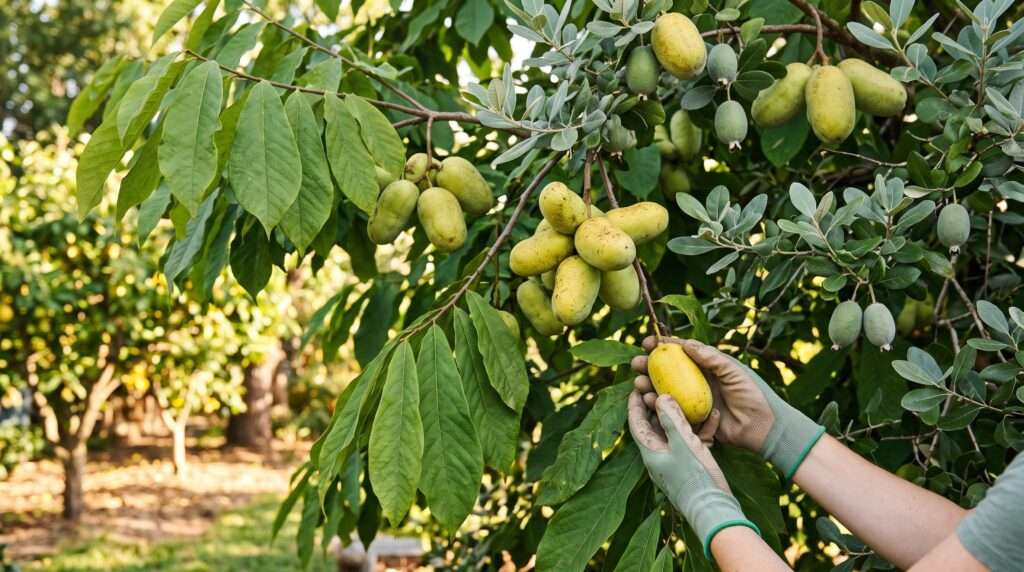
Have you recently moved into a new home or taken a walk through your local neighborhood, only to stumble upon a beautiful, mysterious plant laden with strange, potato-shaped fruits? If you are staring at a tree with oblong yellow-green fruit and wondering, “Is this edible? What exactly is growing in my yard?“, you are not alone. Many homeowners and foraging enthusiasts encounter these enigmatic fruiting trees every year.
Identifying a mystery fruit tree is critical not just for your own safety—as you should never consume a fruit without 100% positive identification—but also for providing the correct horticultural care to help the plant thrive. As an arborist and plant care specialist, I frequently get asked to identify these specific types of fruits.
In this comprehensive, expert-backed guide, we will solve your backyard mystery. We will break down the top botanical suspects that match this description, teach you how to identify them definitively, and provide a masterclass in caring for, pruning, and harvesting your unique tree. Let’s dig in! 🌱
II. 🔍 Step 1: Identifying Your Tree With Oblong Yellow-Green Fruit
When you encounter a tree with an oblong yellow-green fruit, your plant is highly likely to be one of three popular botanical candidates. By examining the leaf structure, bark, and climate, we can narrow down the identity of your mystery tree.
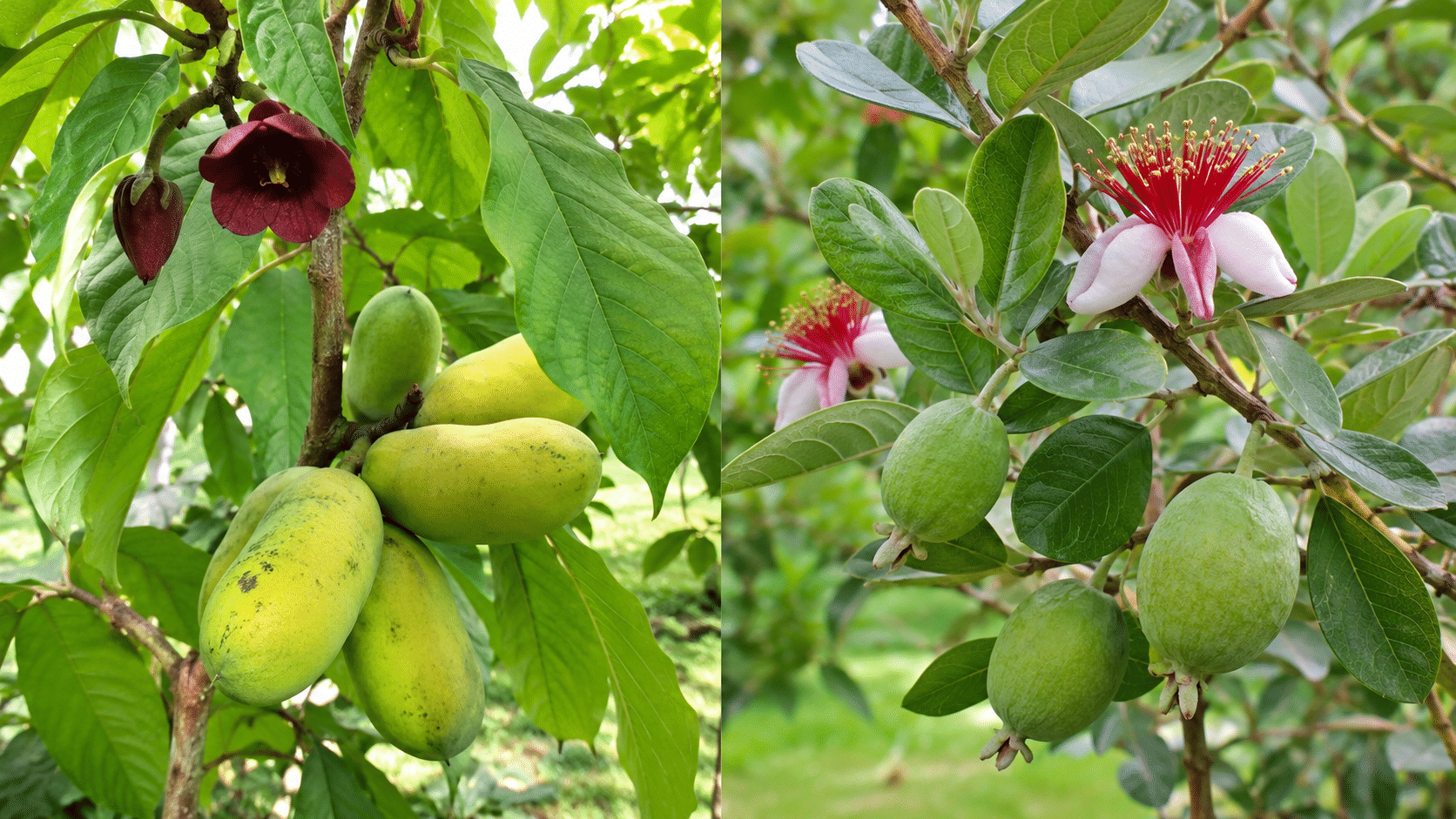
Candidate 1: The Pawpaw Tree (Asimina triloba) 🥭
The Pawpaw is North America’s largest native edible fruit, and it is the most common answer to this botanical mystery in temperate climates.
-
Fruit Appearance: The fruits look remarkably like green, stubby bananas or oblong potatoes. They usually grow in clusters. As they ripen in late summer to early fall, the green skin takes on a yellowish-green hue, often developing brown speckles similar to a ripening banana.
-
Leaf Structure: Pawpaws have large, drooping, tropical-looking leaves that can reach up to 12 inches long.
-
Flowers: In the spring, they produce unique, dark maroon or purple bell-shaped blossoms.
-
Climate: Native to the eastern United States and parts of Canada, thriving in USDA Hardiness Zones 5 through 9.
Candidate 2: Pineapple Guava (Acca sellowiana / Feijoa) 🥝
If you live in a warmer climate and the tree looks more like a large, dense shrub, you likely have a Pineapple Guava, also known as Feijoa.
-
Fruit Appearance: The fruit is egg-shaped or oblong, roughly the size of a small chicken egg. The skin is a matte, slightly textured, deep green to yellowish-green.
-
Leaf Structure: Unlike the Pawpaw’s massive leaves, Feijoa leaves are small, oval-shaped, dark green on top, and a stunning silvery-white underneath.
-
Flowers: They produce spectacular edible flowers with fleshy white/pink petals and striking bright red stamens in the center.
-
Climate: A subtropical plant that prefers USDA Zones 8 through 10.
Candidate 3: Bilimbi (Averrhoa bilimbi) 🌟
If you reside in a strictly tropical environment (like South Florida or Hawaii), your tree might be a Bilimbi, a close relative of the starfruit.
-
Fruit Appearance: The fruits are distinctly oblong, resembling small cucumbers that grow directly on the trunk and main branches (a trait called cauliflory). They are pale green, turning yellowish-green when ripe.
-
Leaf Structure: The tree features pinnate, feathery leaves made up of multiple small leaflets.
-
Climate: Strictly tropical; USDA Zones 10-11.
Checklist for Proper ID ✅ To confirm your tree, check the leaves (Large and droopy = Pawpaw; Small and silvery = Feijoa) and note your local climate. Expert Tip: If you cut the fruit open and find large, dark brown, bean-like seeds nestled in yellow custard pulp, you definitively have a Pawpaw!
III. 🌱 Step 2: Optimal Growing Conditions & Site Selection
Once you have identified your tree—with Pawpaws and Feijoas being the most common for home gardeners—you need to understand their environmental preferences. Even established trees benefit from tailored soil and light management.
Sunlight Requirements ☀️
-
Pawpaws: Young Pawpaw saplings (under 2 years old) are highly sensitive to UV rays and require partial to full shade, just as they would grow in the forest understory. However, once mature, they require full sun (at least 6-8 hours a day) to produce an abundant fruit yield.
-
Feijoas: Pineapple Guavas thrive in full sun from day one. The more sun they get, the better they will flower and fruit.
Soil Chemistry & Drainage 🪨
Both trees despise “wet feet” (waterlogged roots). They require well-draining soil to prevent root rot.
-
Ideal pH: Aim for slightly acidic to neutral soil (pH 5.5 to 7.0).
-
Soil Texture: A loamy soil rich in organic matter is perfect. If you have heavy clay, amend the area heavily with compost and pine bark, or consider planting your tree on a slight mound to encourage water runoff.
-
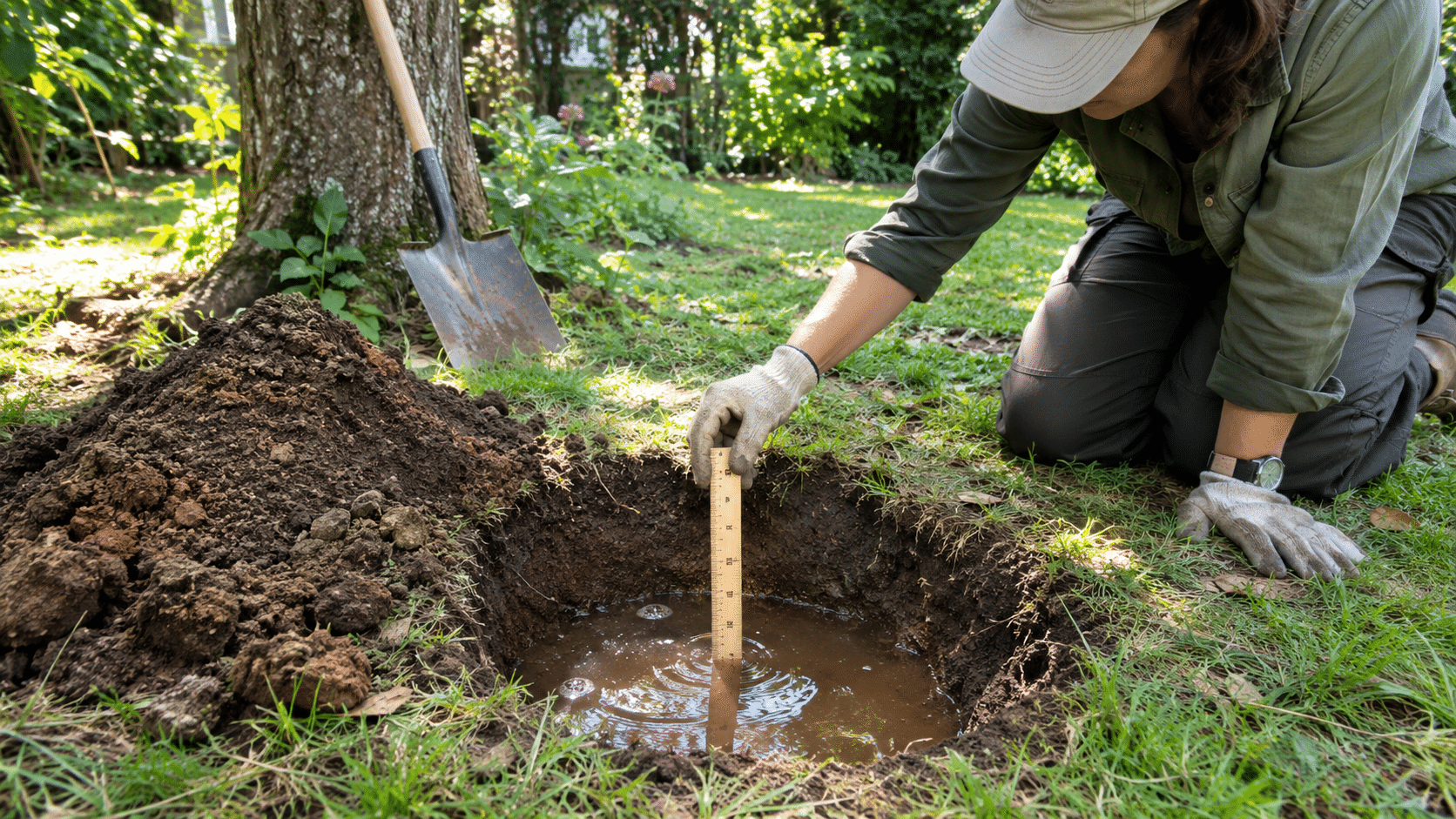
Pro Tip: Perform a percolation test before planting. Dig a hole 12 inches deep, fill it with water, let it drain, and fill it again. If the water drains slower than 1 inch per hour, your drainage is too poor for these trees.
Climate & Protection 🌡️
While Pawpaws are incredibly cold-hardy (surviving down to -20°F or -29°C), their early spring blossoms can be damaged by late frosts. Planting them in a sheltered area, such as near a windbreak or a warm south-facing wall, can protect the delicate flowers that eventually become your oblong yellow-green fruit.
IV. 💧 Step 3: The Arborist’s Care Routine: Watering & Fertilizing
Proper hydration and nutrition are the secrets to transforming a struggling tree into a heavy-producing centerpiece of your garden.
Mastering the Watering Schedule 🚿
-
Establishment Phase: During the first two years, water your tree deeply once or twice a week. Deep watering encourages the tree (especially the Pawpaw, which has a sensitive taproot) to send roots far into the earth, making it drought-tolerant later in life.
-
Mature Trees: Once established, these trees generally rely on natural rainfall, but during extended summer droughts, provide 1-2 inches of water per week.
-
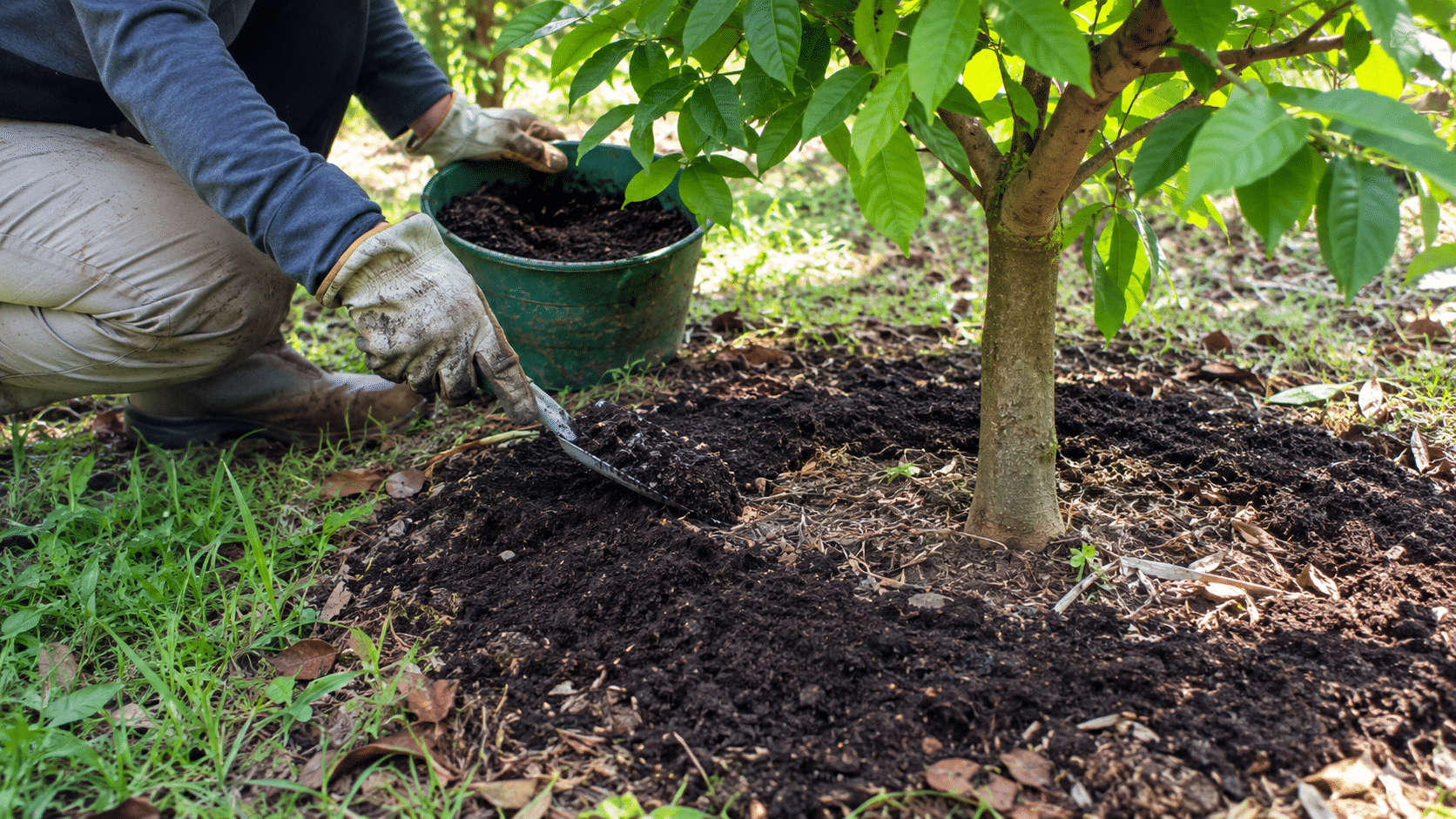
Mulching: Apply a 3-inch layer of organic mulch (wood chips or leaf mold) around the base of the tree. Keep the mulch pulled a few inches away from the trunk to prevent bacterial bark rot.
Feeding for Maximum Yield 🌿
-
Spring Feeding: Apply a balanced, slow-release organic fertilizer (like an 8-8-8 NPK blend) in early spring just as the buds begin to swell.
-
Compost Tea: Supplementing with compost tea or liquid kelp in the early summer provides vital micronutrients like magnesium and iron.
-
Warning Signs: If the leaves of your tree are turning pale green or yellow during the growing season (and it isn’t autumn), the tree may be experiencing a nitrogen or iron deficiency. A soil test will confirm exactly what amendments are needed.
V. ✂️ Step 4: Pruning, Shaping, and Maintenance
To ensure your tree with oblong yellow-green fruit remains structurally sound and produces a bountiful harvest year after year, proper pruning is essential. Many homeowners skip this step, leading to overgrown canopies and reduced fruit yields.
Why Pruning Matters 🪵
Fruit trees need sunlight and airflow reaching their inner branches to thrive. A dense, tangled canopy creates a damp, shaded environment—the perfect breeding ground for fungal spores and pests. By selectively thinning the branches, you encourage robust fruit development and protect the overall health of the tree.
When to Prune ❄️
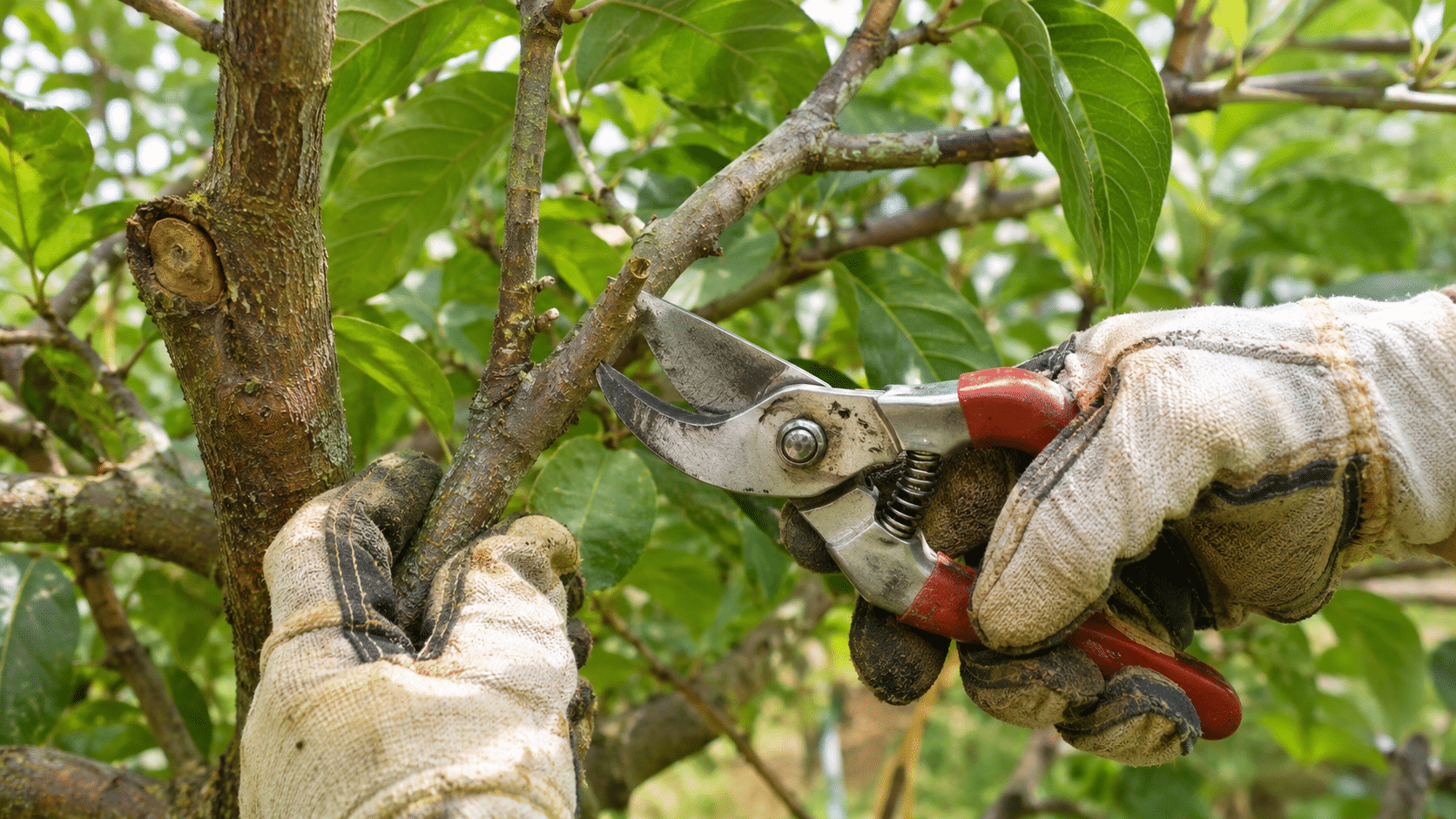
The golden rule for most fruit trees, including Pawpaws and Feijoas, is to prune during their winter dormancy. Aim for late winter or early spring (usually February or March), well after the harshest freezes have passed but before the tree breaks its dormancy and pushes out new spring buds.
Techniques for Oblong-Fruiting Trees ✂️
-
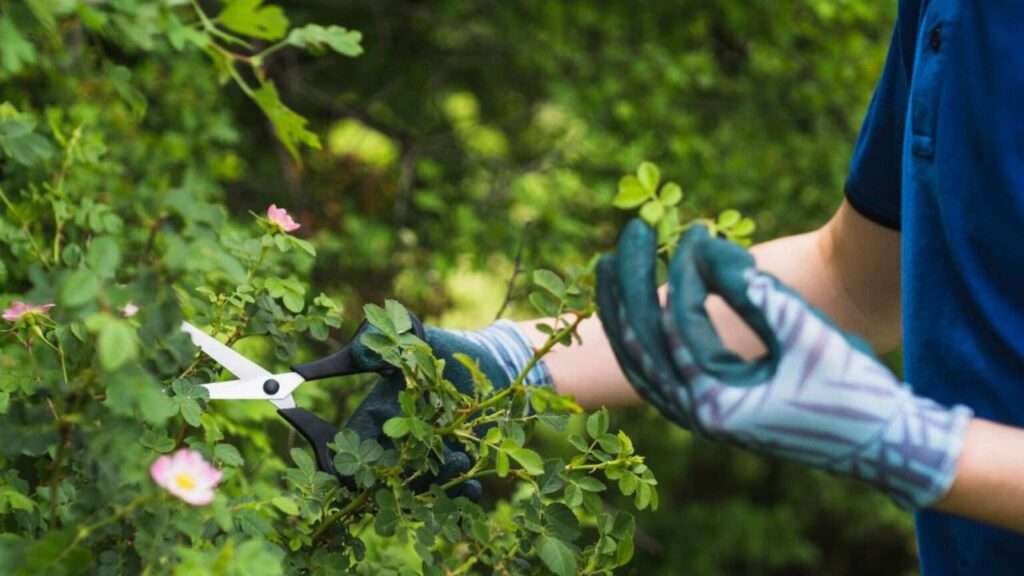
Remove the “Three Ds”: Always start by cutting away any Dead, Damaged, or Diseased wood.
-
Clear the Clutter: Snip off “water sprouts” (vigorous, straight-up shoots growing from main branches) and “suckers” (shoots springing up from the root base). Pawpaws, in particular, are notorious for sending up suckers and forming dense thickets if left unchecked.
-
Open the Center: For Feijoas, thin out crossing branches in the middle of the shrub/tree to allow sunlight to penetrate.
-
Sanitize Your Tools: Expert Insight 💡: Always wipe your pruning shears with rubbing alcohol between trees to prevent the spread of bacterial pathogens! 🧽✨
VI. 🐛 Step 5: Troubleshooting Pests and Diseases
Even the most resilient trees can fall victim to local pests or fungal infections. Fortunately, Pawpaws and Pineapple Guavas are generally low-maintenance compared to fussy apples or peaches, but you should still keep an eye out for these common issues.
Common Pests 🪲
-
Pawpaw Peduncle Borer: If you notice your beautiful oblong fruits prematurely blackening and dropping, this small moth larva might be burrowing into the flower stems.
-
Aphids and Scale: These sap-sucking insects love the tender new growth of Feijoa trees. They excrete a sticky honeydew that can lead to sooty mold.
-
Organic Solutions: Treat aphids with a gentle blast from the garden hose or a spray of organic Neem oil. Introduce beneficial insects like ladybugs to your garden to act as your personal pest-control army! 🐞🛡️
Fungal & Bacterial Threats 🍄
-
Powdery Mildew: Presents as a white, dusty coating on the leaves, usually during humid, stagnant weather.
-
Black Spot: Causes unsightly dark blemishes on the foliage.
-
Prevention: As mentioned in the pruning section, your best natural defense against fungal spores is proper spacing and canopy thinning to ensure excellent air circulation. Avoid overhead watering; instead, water directly at the base of the trunk.
VII. 🧺 Step 6: Harvesting, Storing, and Enjoying the Fruit
The moment you have been waiting for! Harvesting your oblong yellow-green fruit requires a bit of finesse, as these tropical-tasting delights are famously delicate.
How to Tell When the Fruit is Ripe 👃
Color alone is not a reliable indicator, as both Pawpaws and Feijoas often remain green or yellowish-green even when fully mature.
-
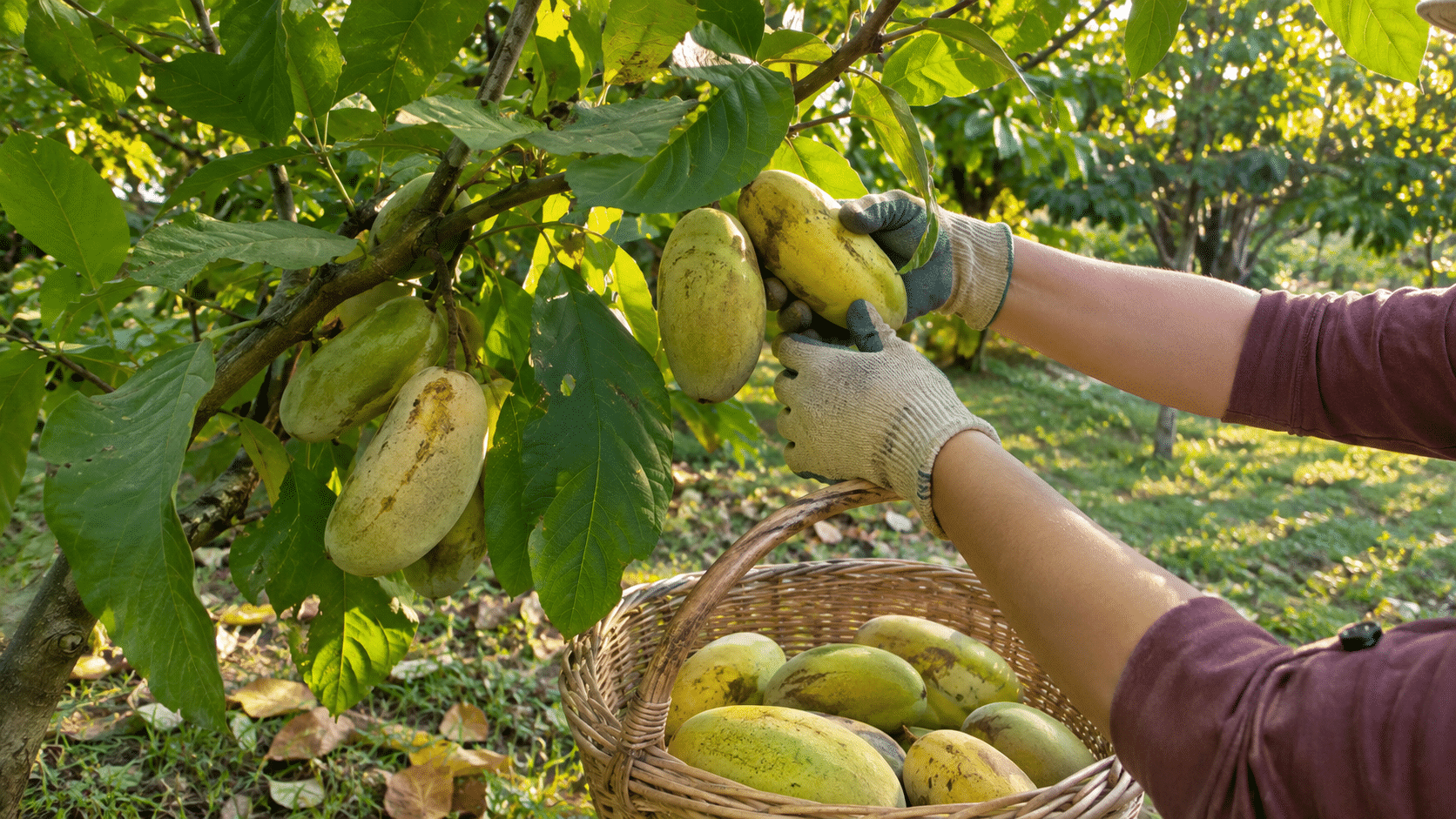
The Squeeze Test: Give the fruit a very gentle squeeze. It should yield slightly to pressure, similar to a ripe peach or avocado.
-
The Fragrance: Ripe fruits will emit a heavy, intoxicating, tropical aroma. If your yard smells like a blend of banana, mango, and pineapple, it’s harvest time! 🍍🍌
-
The Drop: Often, the best way to know a fruit is ripe is when it naturally falls from the tree.
Harvesting Best Practices 🧤
Because these fruits bruise incredibly easily, you shouldn’t let them hit the hard ground.
-
The Shake Method: Gently shake the branches. Catch the falling fruits with your hands or place a soft tarp or blanket beneath the canopy to cushion their fall. 🧺
Culinary Uses & Storage 🥧
-
Short Shelf Life: Pawpaws and Feijoas do not last long. At room temperature, they will overripen in just a few days. Store them in the refrigerator crisper drawer to extend their life by about a week.
-
Eating Fresh: Simply slice the fruit in half and scoop out the creamy, custard-like pulp with a spoon (spitting out the seeds). 🥄
-
Preserving: Because they perish quickly, pureeing and freezing the pulp is the best way to preserve your harvest. Use the pulp to bake incredible tropical breads, churn into ice cream, or blend into morning smoothies! 🍹
VIII. ❓ Frequently Asked Questions (FAQ)
Do I need two trees to produce fruit? 🐝 Yes, usually! Both Pawpaws and most varieties of Feijoa are self-incompatible. This means they require cross-pollination from a genetically different tree of the same species to set fruit. Ensure you plant at least two different varieties (or two trees grown from different seeds) within 15-20 feet of each other. Interestingly, Pawpaws are pollinated by flies and beetles, not bees! 🪰
Why are the fruits falling off before they turn yellow-green? 🍂 Premature fruit drop is usually a sign of stress. The most common culprits are severe drought, erratic watering, or a lack of proper nutrients in the soil. Ensure you are watering deeply during dry spells.
Are the seeds toxic? 🚫 Yes. The large, dark bean-like seeds of the Pawpaw contain trace amounts of neurotoxins (annonacin). They are perfectly safe to handle, but you should never crush, blend, or eat the seeds. The skin of the Pawpaw can also cause stomach upset. Stick to eating the delicious, creamy pulp! (Note: Feijoa seeds, however, are tiny and completely safe to eat along with the flesh).
Can I grow this tree in a pot or container? 🪴 Pineapple Guavas (Feijoas) do wonderfully in large containers and can be pruned to stay compact. Pawpaws, however, develop a deep, sensitive taproot that makes long-term container growing very difficult; they belong in the ground.
IX. Conclusion: Bringing the Tropics to Your Backyard 🌅
Discovering a tree with oblong yellow-green fruit in your landscape is like finding hidden treasure. Whether it turns out to be a cold-hardy Pawpaw offering a taste of custard in the northern woods, or a gorgeous Pineapple Guava brightening up a southern garden, these trees are a joy to cultivate.
By following the expert identification tips, providing the right soil and sunlight, mastering your pruning techniques, and harvesting with care, you can transform your mystery tree into a stunning, highly productive focal point in your yard.
Now it is your turn to enjoy the literal fruits of your labor! Don’t forget to share your tropical harvest with neighbors—they will be amazed at what you are growing.
Call to Action: Still not 100% sure what tree you have? We love a good botanical mystery! Snap a few clear photos of the leaves, bark, and the oblong yellow-green fruits, and share them in the comments below. Our community of plant experts will help you identify it! 📸👇