
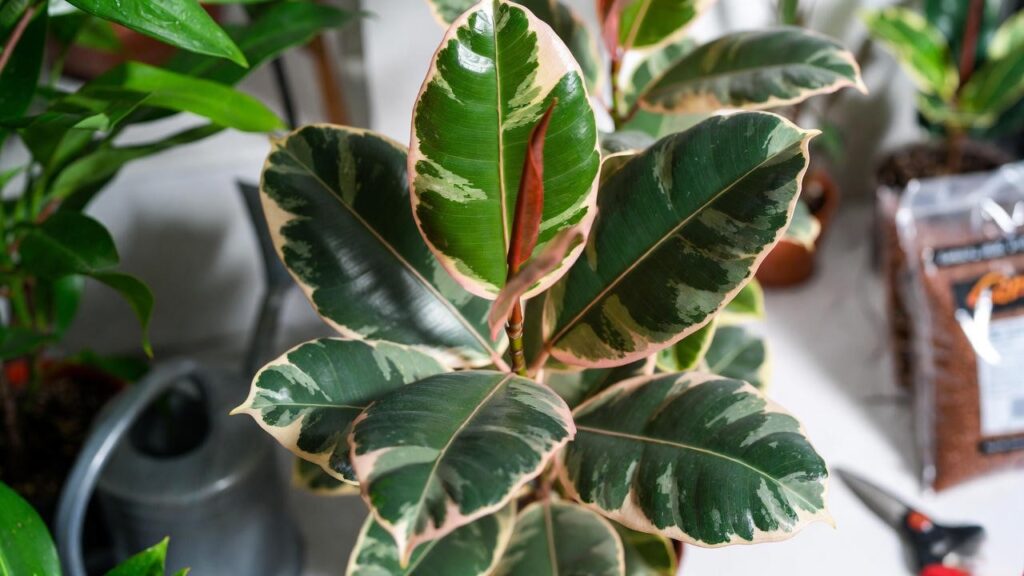
Imagine scrolling through your favorite plant Instagram accounts, drooling over those stunning variegated rubber tree plants with their creamy white, pink, and green leaves glowing in perfect light… only to look at your own and see faded colors, droopy stems, or worse—leaves turning solid green and dropping one by one. 😱 If this sounds painfully familiar, you’re not alone. Thousands of houseplant enthusiasts struggle with keeping their variegated rubber tree plant vibrant and healthy.
The good news? With the right care, your variegated rubber tree plant (Ficus elastica variegata cultivars) can thrive indoors, producing jaw-dropping new growth that makes it the centerpiece of any room. In this essential guide, I’ll share proven strategies based on years of hands-on experience growing over 100 rubber trees, combined with science-backed advice to help you maintain that gorgeous variegation and prevent common pitfalls.
Whether you’re a beginner who just brought home a ‘Tineke’ or ‘Ruby’, or an experienced plant parent dealing with reversion, this comprehensive resource covers everything you need for long-term success. Let’s dive in and turn your plant into the envy of every plant lover! 🌱
What Makes the Variegated Rubber Tree So Special? 🌈
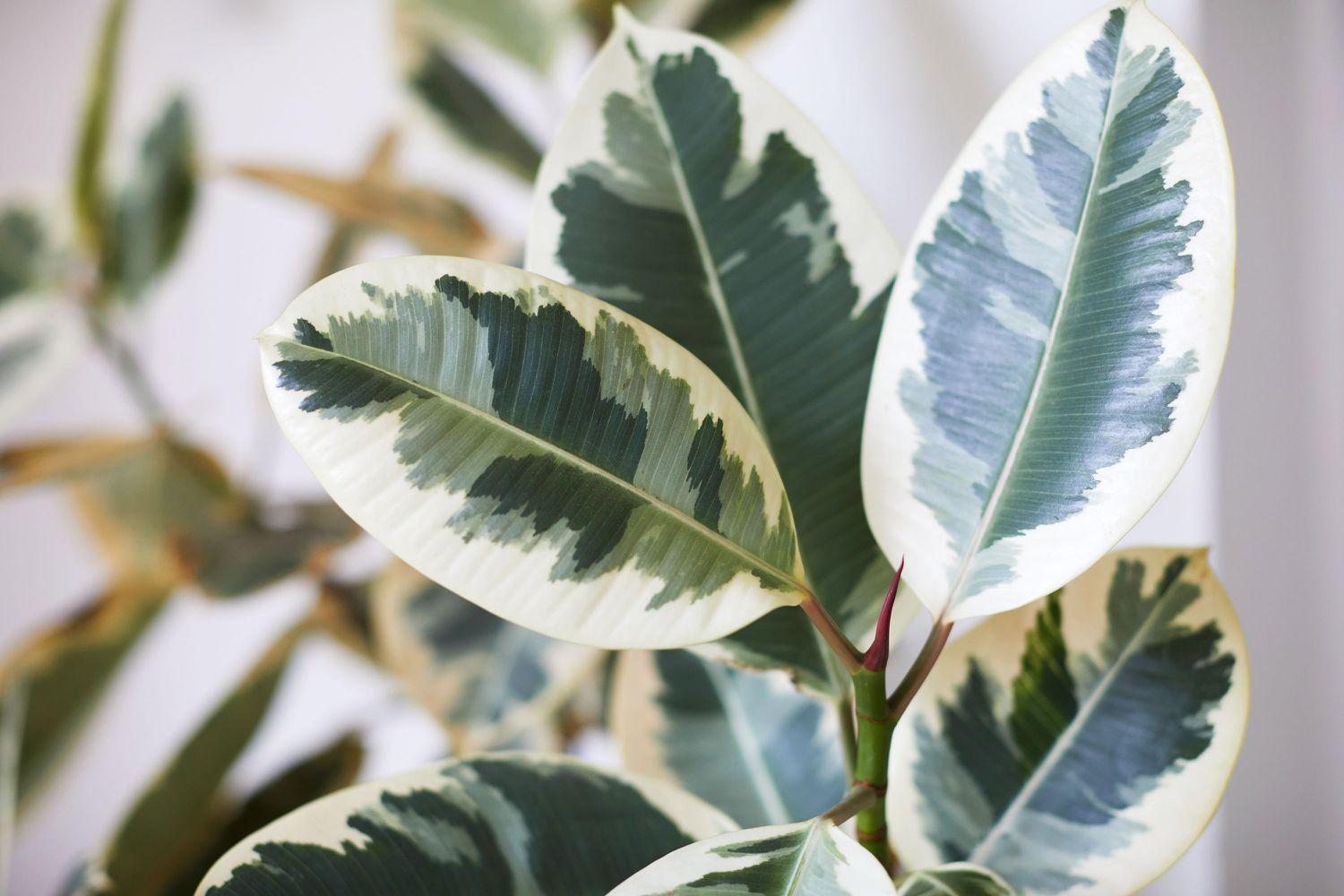
The variegated rubber tree plant stands out in the houseplant world for good reason. Unlike the classic dark green Ficus elastica, variegated varieties boast stunning patterns of cream, white, pink, and even blush tones on their glossy, leathery leaves. This variegation isn’t just for show—it’s a genetic mutation that reduces chlorophyll in certain areas, creating those eye-catching splashes.
Understanding Variegation: Chimera vs. Stable Types
Variegation in rubber trees is typically chimeric, meaning it’s unstable and can revert if conditions aren’t optimal. Chimeral variegation occurs when some plant cells lack chlorophyll, leading to lighter sections. Stable variegated cultivars have been selectively bred, but even they require specific care to express their colors fully.
Popular types include sectoral (stripes), marginal (edges), and blotchy patterns. The challenge? Variegated leaves produce less energy through photosynthesis, making these plants slightly more demanding than their all-green cousins.
Popular Cultivars: ‘Tineke’, ‘Ruby’, ‘Belize’, and ‘Doescheri’
Here’s a quick comparison to help you identify and choose:
- Ficus elastica ‘Tineke’: Cream and green variegation with pink new growth. Most common and forgiving.
- Ficus elastica ‘Ruby’: Intense pink/red variegation that needs bright light to “blush.”
- Ficus elastica ‘Belize’ (sometimes called ‘Red Ruby’): Similar to ‘Ruby’ but with more pronounced pink edges.
- Ficus elastica ‘Doescheri’: Yellow-cream variegation with speckles—rarer and more subtle.
These cultivars can grow into impressive tree-like specimens indoors, reaching 6–10 feet with proper support. Their air-purifying qualities (backed by NASA’s Clean Air Study) make them functional as well as beautiful.

Ideal Light Requirements – The Key to Vibrant Variegation ☀️
Light is the single most important factor for your variegated rubber tree plant. Without enough, variegation fades; too much, and leaves scorch. Getting this right prevents 90% of common issues.
Why Light is Make-or-Break for Variegated Leaves
Variegated sections have fewer chloroplasts, so the plant relies heavily on green parts for energy. Low light forces it to produce more chlorophyll—resulting in reversion to solid green leaves. Bright conditions encourage stable or enhanced variegation, especially pinks in ‘Ruby’.
Best Light Conditions Indoors
Aim for bright indirect light—think east or west-facing window with sheer curtains, or 3–6 feet from a south-facing one. Direct midday sun can burn leaves, causing brown patches.
In practice:
- Place near a window where it gets morning sun but afternoon shade.
- Rotate the pot quarterly for even growth.
If natural light is limited (common in winter), supplement with grow lights.
Signs of Too Little Light
- Leggy growth (stretched internodes)
- New leaves emerging mostly green
- Slow growth and small leaves
- Leaning toward light source
Signs of Too Much Light
- Faded or bleached variegation
- Brown crispy edges or spots
- Scorched patches on leaves
Expert Tip: Recommended Grow Light Specs
Use full-spectrum LED grow lights:
- PPFD (Photosynthetic Photon Flux Density): 200–400 µmol/m²/s for variegated ficus
- Distance: 12–24 inches above canopy
- Duration: 12–14 hours daily
Top recommendations include Sansi or Spider Farmer bulbs—affordable and effective. I’ve used these to maintain pink tones on ‘Ruby’ plants in low-natural-light homes with great success.
:max_bytes(150000):strip_icc()/ficus-tineke-growing-guide-5270992-hero-29f28c12b44d433fa350f34a1b00af3a.jpg)
Watering Your Variegated Rubber Tree the Right Way 💧
Overwatering is the #1 killer of rubber trees, variegated or not. These plants are drought-tolerant thanks to their thick leaves, but inconsistent watering leads to stress and leaf drop.
How Often to Water
Water when the top 2–3 inches of soil are dry. This could be every 7–10 days in summer, 14–21 days in winter. Factors like humidity, pot size, and light affect frequency—always check soil first.
The “Soak and Dry” Method Step-by-Step
- Water thoroughly until it drains from bottom holes.
- Empty saucer to prevent root rot.
- Wait until soil partially dries before repeating.
This mimics natural rainfall and encourages deep roots.
Common Watering Mistakes That Cause Leaf Drop
- Watering too frequently → soggy soil and root rot
- Using cold water → shock and drop
- Inconsistent schedule → stress response (lower leaves yellow and fall)
Variegated varieties are more sensitive due to reduced photosynthesis efficiency.
Best Water Type
Use room-temperature filtered or rainwater. Tap water is okay if left overnight to off-gas chlorine, but high minerals can cause tip burn over time.
Soil, Potting, and Repotting Secrets 🪴
A well-draining soil mix is crucial for your variegated rubber tree plant. These ficus species hail from tropical rainforests but hate sitting in waterlogged soil—root rot is a common demise for many beautiful specimens.
Perfect Soil Mix Recipe
Variegated rubber trees thrive in a chunky, aerated mix that retains just enough moisture while allowing excess water to drain quickly. Avoid standard potting soil alone; it’s often too dense and compact over time.
My go-to recipe (tested on dozens of Ficus elastica cultivars):
- 40% high-quality indoor potting soil (peat or coco coir-based)
- 30% orchid bark or pine bark fines (for aeration and drainage)
- 20% perlite or pumice (prevents compaction)
- 10% charcoal or activated horticultural charcoal (optional, for sweetness and fungal prevention)
This mix mimics their epiphytic tendencies, promoting healthy roots and preventing soggy conditions. Adjust slightly for humidity: add more perlite in dry climates.

When and How to Repot
Repot every 1–2 years or when you notice these root-bound signs:
- Roots circling the bottom or poking out drainage holes
- Water runs straight through without absorbing
- Slow growth despite good conditions
- Soil dries out unusually fast
Best time: Early spring, just before the growing season kicks in.
Step-by-step repotting guide:
- Water the plant a day before to reduce stress.
- Choose a new pot 2–4 inches wider with drainage holes.
- Gently remove from old pot—tease out circling roots if needed.
- Trim any black or mushy roots.
- Add fresh mix to the bottom, position plant at same depth.
- Fill around sides, firm gently, and water thoroughly.
Pro tip: Variegated varieties are more prone to shock, so avoid repotting in winter.

Choosing the Right Pot
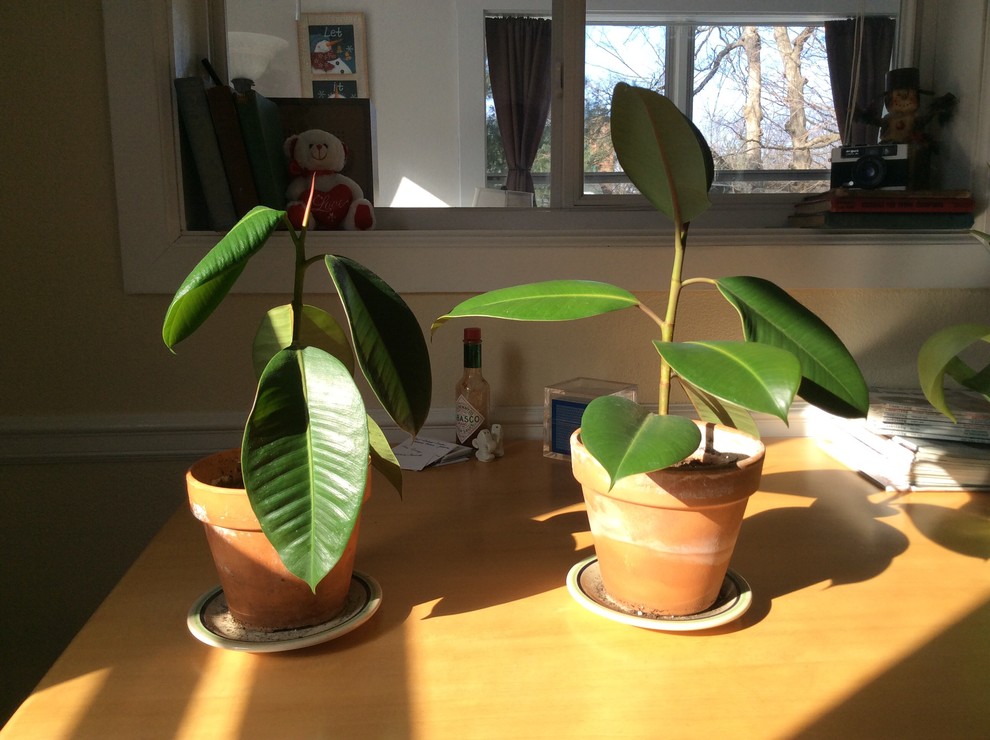
Terracotta pots are excellent—they’re porous, allowing soil to dry evenly and reducing overwatering risk. Plastic or glazed ceramic holds moisture longer, which can be useful in dry homes but increases rot potential.
Always prioritize drainage holes. Use a saucer but empty it promptly. For large specimens, self-watering pots can work if monitored carefully.
Temperature, Humidity, and Air Circulation 🌡️
Variegated rubber trees are tropical natives and prefer conditions that mimic their natural habitat—warm, humid, and stable.
Ideal Temperature Range & Cold Draft Warnings
Keep temperatures between 65–85°F (18–29°C) during the day, no lower than 60°F (15°C) at night. Sudden drops below 55°F can cause leaf drop or damage.
Avoid cold drafts from windows, doors, or AC vents—ficus are notoriously dramatic about temperature swings. In winter, move away from drafty windows; I’ve seen perfectly healthy plants lose half their leaves overnight from a leaky sill.
Boosting Humidity for Lush Growth
Aim for 50–60% relative humidity. Dry air leads to brown leaf tips and crispy edges, especially on variegated leaves.
Effective methods:
- Pebble trays: Fill a saucer with pebbles and water, set pot on top (bottom not touching water).
- Humidifiers: Cool-mist models are safest and most effective for multiple plants.
- Grouping plants together to create a microclimate.
- Misting: Temporary boost only—don’t rely on it solely.
In my experience, a small humidifier running near a collection makes the biggest difference during heating season.
:max_bytes(150000):strip_icc()/SPR-how-to-make-a-pebble-tray-7371481-Hero-C-5d303cbb85744594b59e9839a63d5abd.jpg)
Why Good Airflow Prevents Pests and Disease
Stagnant air invites spider mites and fungal issues. Gentle circulation from a ceiling fan (on low) or oscillating fan keeps leaves dry and deters pests without creating drafts.
Fertilizing for Maximum Color and Growth 🍽️
Fertilizing plays a key role in keeping your variegated rubber tree plant vibrant, but it’s easy to overdo it—especially with these slower-energy producers. Too much nitrogen can push all-green growth, diluting those beautiful variegated patterns.
Best Fertilizer Types
Choose a balanced, water-soluble fertilizer with an N-P-K ratio close to 10-10-10 or 20-20-20 for general health. For enhanced color (especially pinks in ‘Ruby’), opt for formulas slightly higher in phosphorus and potassium during the growing season.
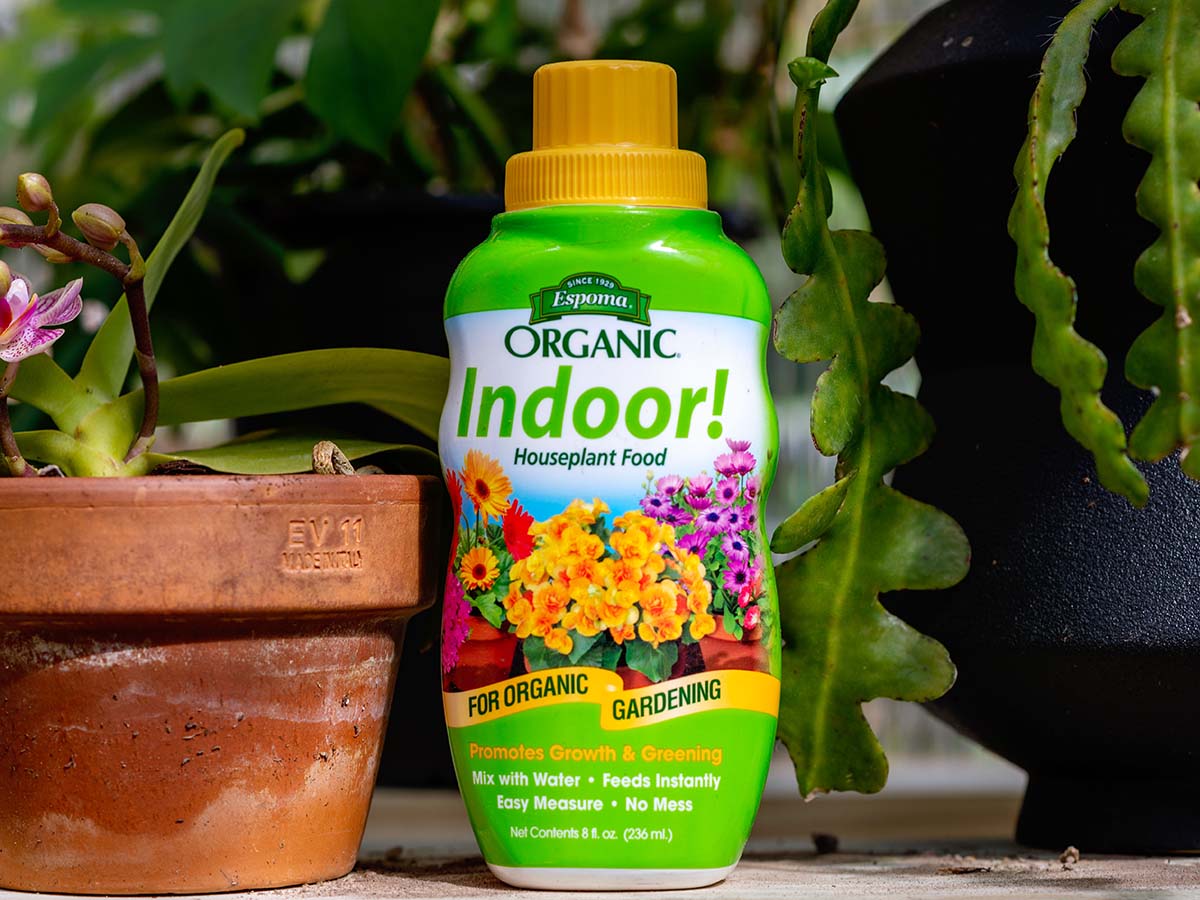
Organic options I recommend from experience:
- Liquid seaweed or fish emulsion (gentle and micronutrient-rich)
- Slow-release pellets for fuss-free feeding
Avoid high-nitrogen “foliage” fertilizers—they encourage reversion to green.
Feeding Schedule
- Growing season (spring–summer): Fertilize every 4–6 weeks at half-strength.
- Fall: Reduce to every 8 weeks.
- Winter: Skip entirely—plants are dormant and excess salts build up.
Always water thoroughly before and after fertilizing to prevent root burn.
Signs of Over- vs. Under-Fertilizing
- Over-fertilizing: Brown leaf tips, salt crust on soil, sudden leaf drop, faded variegation.
- Under-fertilizing: Pale new growth, slow progress, smaller leaves.
Flush the soil with plain water every few months to remove buildup.
Pruning and Propagation – Keep It Bushy and Multiply Your Collection ✂️
Rubber trees naturally grow tall and leggy indoors, but strategic pruning turns them into full, stunning specimens while preserving (and even enhancing) variegation.
How to Prune for Fuller Shape and More Variegation
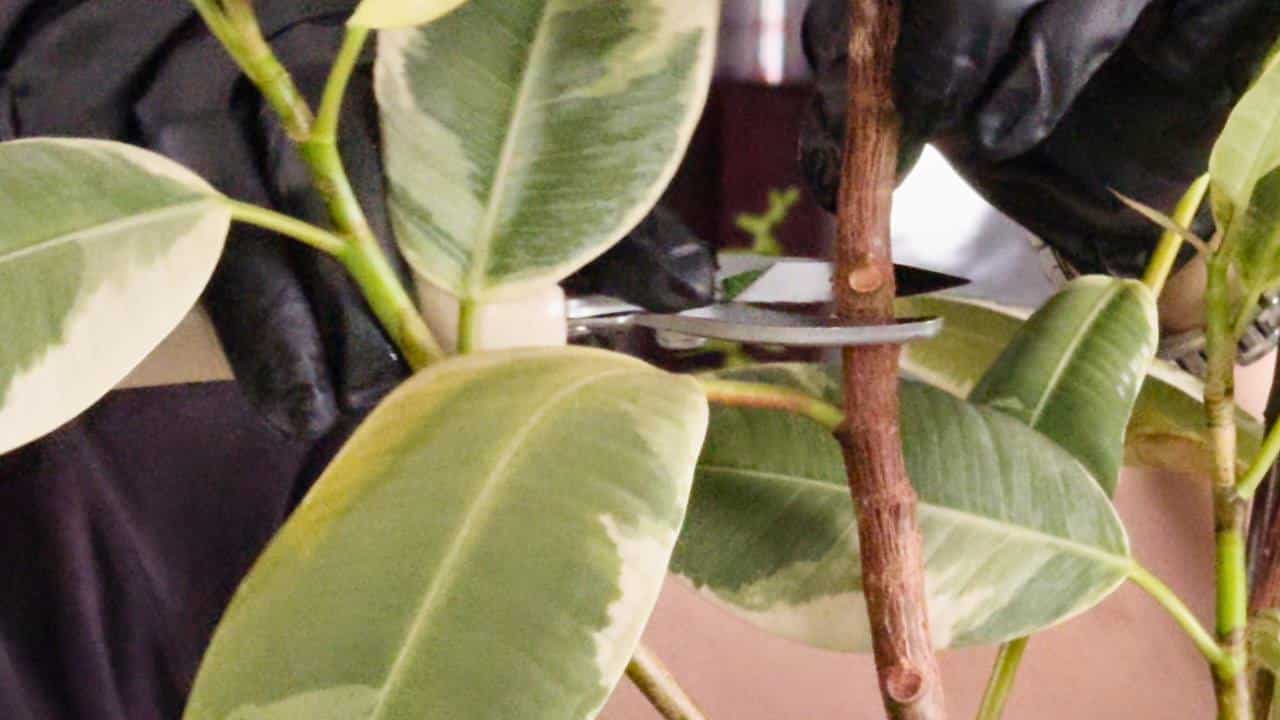
Prune in early spring when new growth is imminent. Use clean, sharp shears—rubber tree sap is sticky and irritating, so wear gloves.
Steps:
- Identify the main stem (or stems if already branched).
- Cut just above a leaf node at your desired height—usually 6–12 inches from the top.
- Remove any leggy, all-green branches entirely to encourage variegated shoots.
Notching technique: For bushier growth without topping, make a small upward cut halfway through the stem above a node. This stimulates branching.
Step-by-Step Air Layering (Best Method for Variegated Cultivars)
Air layering ensures new plants retain the exact variegation—stem cuttings can sometimes revert.
- Choose a healthy stem section with good variegation.
- Make two circular cuts 1 inch apart, remove bark ring.
- Dust with rooting hormone.
- Wrap with damp sphagnum moss, cover with plastic, secure.
- Roots appear in 6–12 weeks—then cut below and pot up.
Success rate is near 100% with this method on mature plants.

Stem Cutting Propagation Tips
For quicker results: Take 6-inch tip cuttings, remove lower leaves, dip in hormone, plant in moist perlite mix. Keep warm and humid—roots in 4–8 weeks. Note: Variegation stability varies by cultivar (‘Tineke’ reliable, ‘Ruby’ trickier).
Bonus: How to Encourage Pink/Red Tones in ‘Ruby’
Bright light + cooler nights (60–65°F) in fall trigger anthocyanin production for deeper pinks.
Common Problems and Quick Fixes 🛠️
Even with perfect care, issues arise. Here’s how to diagnose and treat the most frequent variegated rubber tree problems.
Leaves Falling Off – Causes & Solutions
Sudden drop (especially lower leaves) is usually environmental shock:
- Over/under watering → Adjust schedule and check roots.
- Cold draft or temperature swing → Relocate.
- Repotting shock → Be patient; new growth resumes in weeks.
Variegation Fading or Reverting to Green
Low light is almost always the culprit. Move closer to a window or add grow lights immediately—new leaves should regain color.
Yellow Leaves, Brown Tips, Crispy Edges
- Yellow lower leaves: Natural aging or overwatering.
- Brown tips: Low humidity or fertilizer salts.
- Crispy edges: Dry air or underwatering.
Leggy/Stretched Growth
Insufficient light—prune and relocate.
Pest Prevention & Treatment
Variegated leaves attract pests more due to stress. Common invaders:
- Spider mites: Fine webbing, stippled leaves → Rinse, neem oil weekly.
- Mealybugs: Cottony spots → Dab with alcohol, systemic insecticide if severe.
- Scale: Brown bumps → Scrape off, horticultural oil.
Inspect weekly, quarantine new plants, and maintain airflow.
Advanced Care Tips from Years of Experience ⭐
- Rotate quarterly for even variegation on all sides.
- Dust leaves monthly—shiny surfaces absorb more light.
- Stake tall plants early to prevent tipping.
- Encourage colorful flushes by slightly stressing (not watering fully dry) before growth seasons.
- In winter, reduce water and stop fertilizing completely.
Frequently Asked Questions (FAQs) ❓
Is a variegated rubber tree harder to care for than a regular one? Yes, slightly—due to lower chlorophyll, they need brighter light and are more sensitive to changes.
Can a variegated rubber tree live in low light? No. Low light causes reversion and weak growth. Medium to bright indirect is essential.
Why is my ‘Ruby’ not turning pink? Insufficient bright light or warmth. Move to a south-facing window and ensure consistent care.
How big do variegated rubber trees get indoors? With pruning, 6–8 feet tall. Unpruned, easily 10+ feet.
Are variegated rubber trees toxic to pets? 🐱🐶 Yes—mildly toxic if ingested (causes oral irritation). Keep out of reach.
How fast do they grow? 1–2 feet per year in optimal conditions, slower in winter.
Conclusion
Your variegated rubber tree plant has the potential to be a breathtaking, long-lived houseplant that rewards consistent care with stunning new leaves season after season. Focus on bright indirect light, proper watering rhythm, and stable conditions—and you’ll avoid most problems while enjoying vibrant variegation for years.
Remember: Patience is key. These ficus respond dramatically to changes, but with the strategies in this guide, you’ll have a thriving, colorful beauty that makes every plant parent jealous. 🌿✨
Happy growing! Share your progress photos in the comments—I’d love to see your success stories.











