
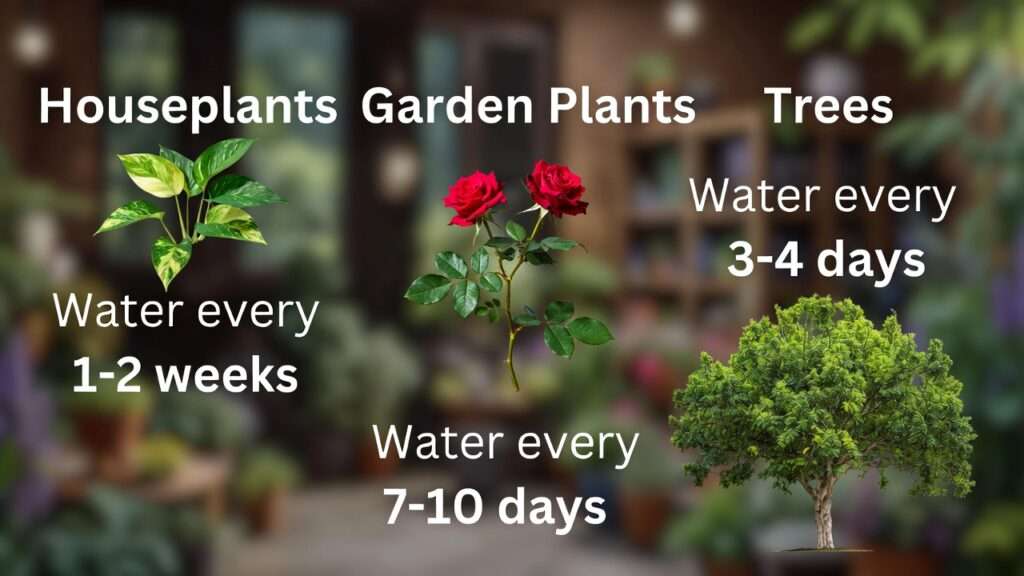
Overwatering kills more houseplants than underwatering ever will—yet most plant parents still guess their watering schedule and end up with yellow leaves, mushy roots, or sad, droopy foliage. 😩 If you’ve ever wondered, “Am I drowning my Monstera or starving my succulents?” you’re not alone. In fact, improper watering is the #1 reason indoor and outdoor plants struggle or die prematurely.
The good news? There’s no one-size-fits-all timer. The watering frequency guide by plant type depends on light, soil, pot size, humidity, season, and more—but once you understand the patterns for each category, keeping your green friends happy becomes second nature.
In this ultimate guide, we’ll break it down comprehensively: from low-maintenance succulents 🌵 to thirsty tropicals 💦, vibrant garden veggies 🥕, and majestic backyard trees 🌳. You’ll get seasonal adjustments (especially useful in humid subtropical climates like Dhaka’s, where monsoons bring heavy rain and dry winters demand caution), pro techniques, troubleshooting tips, and a handy reference chart. By the end, you’ll water smarter, save plants, conserve water, and enjoy lusher growth year-round. Let’s dive in! 🚀
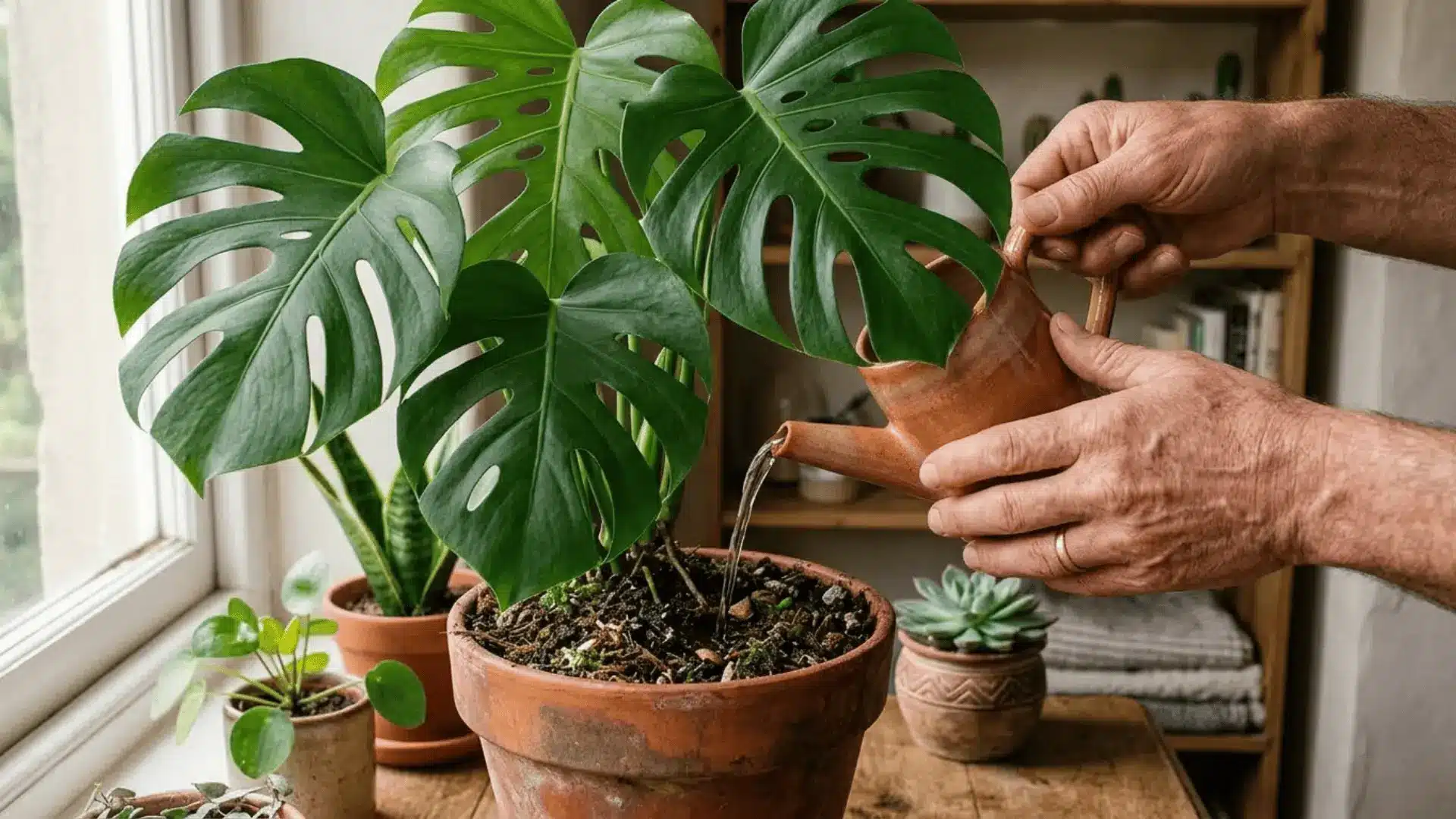
(Here’s a beautiful Monstera deliciosa getting a careful pour—notice how the soil is allowed to dry slightly between waterings for healthy roots!)
Why Watering Frequency Matters So Much 🔍
Plants aren’t just decorative; they’re living organisms with precise needs. Roots absorb water and nutrients but also require oxygen from air pockets in the soil. Too much water floods those pockets (leading to root rot), while too little causes drought stress, wilting, and stunted growth.
Common mistake? Sticking to a rigid “water every Sunday” schedule. Instead, adopt the “listen to your plant” mindset: observe signs, test soil, and adjust. Get it right, and you’ll see vibrant leaves, faster growth, fewer pests (like fungus gnats from soggy soil), better disease resistance, and even water savings—important in urban areas facing variable rainfall.
Key Factors That Change Watering Needs ⚙️
No plant lives in a vacuum. These variables shift how quickly soil dries:
- Light exposure 🌤️: Brighter spots speed evaporation—south-facing windows dry pots faster than low-light corners.
- Pot size & material 🪴: Small pots dry quicker; terracotta breathes and dries faster than plastic or glazed ceramic.
- Soil type & drainage — Cactus mix for succulents drains fast; dense potting soil holds moisture longer. Always ensure pots have holes!
- Humidity & temperature — Dhaka’s high humidity (especially monsoon season) slows drying indoors, while dry winter air accelerates it.
- Seasonal shifts 🍂 — Active growth in spring/summer needs more; dormancy in winter means less.
Quick checklist: Use the finger test (stick finger 1–2 inches deep—if dry, water), a cheap moisture meter, or lift the pot (light = thirsty). These beat calendars every time! ✋
How to Tell When Your Plants Actually Need Water 👀
Don’t wait for dramatic wilting—catch it early:
- Visual cues — Drooping leaves, curling edges, crispy brown tips (under), yellow lower leaves or mushy stems (over).
- Touch & weight — Top 1–2 inches dry? Pot feels lighter than usual after watering?
- Pro insight: It’s almost always safer to underwater slightly than overwater. Most plants recover from thirst faster than rot.
Tools to love: Digital moisture meters for precision, wooden skewers (pull out—if dry and clean, water), or self-watering pots for forgetful days.
(Check soil moisture like this infographic suggests—succulents thrive on “soak and dry” cycles!)
Watering Frequency Guide by Plant Type 📊
Here’s the heart of the guide—categorized with real examples, seasonal notes, and Dhaka-specific tweaks (humid summers mean slightly less frequent indoors; dry winters more monitoring).
Houseplants (Indoor Favorites) 🏠🌱
Succulents & Cacti 🌵 — Every 10–21 days (or 2–4 weeks). Soak thoroughly, then let soil dry completely. In summer (active growth), lean toward 10–14 days; winter, stretch to 3–4 weeks or more. Dhaka’s humidity helps prevent over-drying indoors.
Examples: Snake Plant (every 2–3 weeks), Aloe Vera (similar), Echeveria (check for wrinkled leaves as thirst cue).
Low-Water / Drought-Tolerant 🪴 — Every 2–4 weeks.
Examples: ZZ Plant (super forgiving—every 3–4 weeks), Pothos (wait till top dry), Rubber Plant.
Tropical / Moisture-Loving 💦 — Every 5–10 days (keep top inch barely dry; never soggy).
Examples: Monstera deliciosa (weekly in bright light/summer), Peace Lily (droops dramatically when thirsty—great indicator), Philodendron, Ferns (higher humidity lovers).
Special Cases — Orchids (weekly with ice cubes or soak 10–15 min—let drain fully ❄️), African Violets (bottom water to avoid leaf spots).

(Love those water droplets on Monstera leaves—nature’s way of saying humidity is just right!)
Garden Plants & Perennials 🌼
Outdoor plants face more variables—sun, wind, rain, soil depth—so consistent deep watering encourages strong roots over shallow frequent sprinkles.
Annuals & Vegetables 🥕 — Every 2–4 days in peak summer (aim for 1–2 inches of water per week total, including rain). Keep soil evenly moist but not waterlogged, especially during fruiting/flowering.
Examples: Tomatoes (consistent moisture prevents blossom end rot—deep soak 2–3 times/week in heat), Lettuce & leafy greens (every 2–3 days to avoid bolting), Petunias & marigolds (similar, check soil daily in pots).
In Dhaka’s monsoon (June–September), you may water less or skip entirely during heavy rains—monitor for drainage to prevent fungal issues.
:strip_icc()/bhg-flower-vegetable-garden_7hisOaBM4AB9-RP4j76n6R-f5746e1a7be04193b4c681c09244bac2.jpg)
(This vibrant raised-bed vegetable garden shows companion planting with tomatoes, herbs, and flowers—perfect for consistent watering zones!)
:max_bytes(150000):strip_icc()/how-to-grow-tomatoes-5180791_30-293598f5727e4f9098e43e2428f04658.jpg)
(Tomatoes on stakes in rows—deep watering at the base helps deliver moisture straight to roots without wetting foliage.)
Herbaceous Perennials 🌸 — Deep soak 1–2 times per week in growing season; reduce in dormancy.
Examples: Lavender & rosemary (dry-loving—every 7–14 days once established), Hostas & astilbe (prefer consistently moist soil—weekly in summer).
High vs. Low Water-Use Plants — Group by needs: Drought-tolerant (Texas sage, yarrow) every 10–21 days; thirsty bloomers (roses, hibiscus) 2–3 times/week in heat.
Pro tip for gardens: Use drip irrigation or soaker hoses for efficient, even moisture—saves time and water! 🚿
Trees & Shrubs 🌳
Trees need infrequent but deep watering to reach deep roots—especially critical in the first 1–3 years after planting.
Newly Planted — Deep water 2–3 times per week (20–30 gallons for small trees, more for larger) during the first growing season. Slowly taper in year 2.
Established Trees — Every 7–14 days in summer (30–100+ gallons depending on size/canopy). Water slowly over 1–2 hours to penetrate 12–18 inches deep.
Examples: Fruit trees (mango, guava—common in Dhaka—need regular deep soaks during fruit set), Shade trees (neem, banyan), Evergreens (junipers—less frequent).
Shrubs — 5–15 gallons per plant, frequency varies: Drought-tolerant (bougainvillea) every 10–14 days; flowering (hibiscus, gardenia) weekly in heat.
In Dhaka’s climate: Monsoon provides natural deep watering—supplement only in dry spells. Winter (dry & cooler) means checking soil before watering established plants.

(Deep watering a newly planted young tree—slow pour builds a watering basin around the root zone for better absorption!)
Outdoor Succulents & Xeriscape Plants 🌞
These thrive on neglect once established: Every 7–14 days in summer, monthly (or less) in winter. Use the soak-and-dry method—water deeply, then wait until soil is bone-dry.
Examples: Agave, sedum, lantana—perfect for low-water Dhaka gardens or balconies.
Seasonal Watering Adjustments 🌦️
Seasons dramatically shift needs—here’s a quick guide tailored to subtropical climates like Dhaka:
- Spring 🌷: Increase gradually as growth resumes and temperatures rise. Start checking more often mid-February.
- Summer 🔥: Peak demand—most frequent watering due to heat, evaporation, and active growth. Monsoon rains (June–Sept) often cover much of it outdoors.
- Fall 🍁: Taper off as days shorten and growth slows. Reduce frequency by 30–50%.
- Winter ❄️: Lowest needs—dormancy mode. Indoor plants may need slightly more if heating dries air; outdoors, rely on occasional checks.
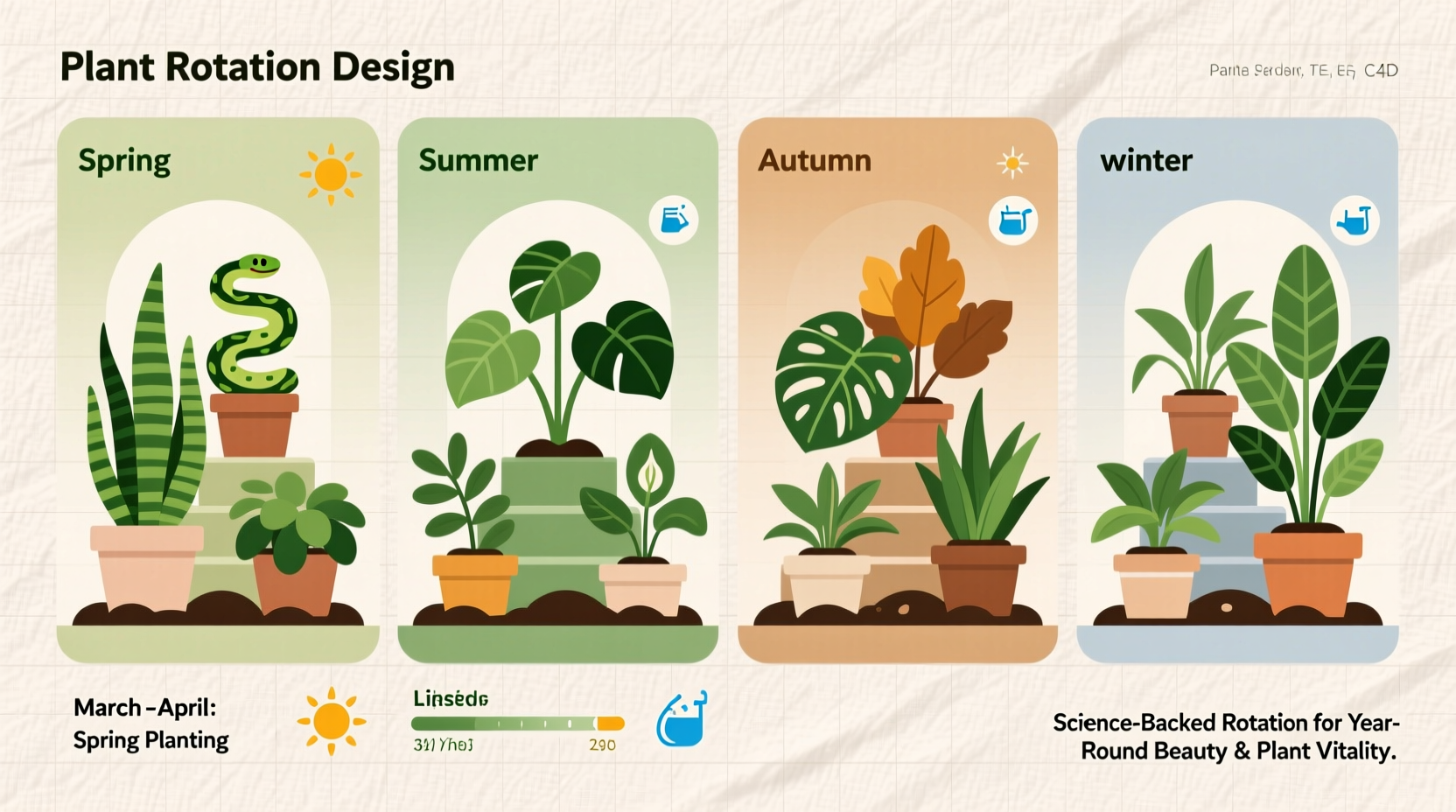
(This cute seasonal rotation infographic shows how plant needs shift—spring growth, summer lushness, autumn colors, winter rest!)
Regional Dhaka note: High monsoon humidity keeps indoor soil moist longer; dry nor’wester winds in March–April can dry pots fast—adjust accordingly.
Best Watering Techniques & Pro Tips from Experts 💡
Mastering how you water is just as important as when. Here are battle-tested methods used by professional horticulturists and experienced plant parents in subtropical regions like Dhaka:
- Deep & infrequent watering — Encourages roots to grow downward for drought resistance. Water until it runs out the drainage holes (for pots) or saturates the top 12–18 inches of soil (for garden beds/trees).
- Water in the morning 🌅 — Allows foliage to dry before nightfall, reducing fungal diseases like powdery mildew. Evening watering can leave plants wet overnight—especially risky during humid monsoons.
- Use room-temperature water — Cold tap water shocks tropical roots. Let water sit 24 hours to off-gas chlorine (common in municipal supplies).
- Bottom watering — Ideal for African violets, peace lilies, and some succulents. Place pot in a saucer of water for 10–30 minutes; roots pull up what they need without wetting leaves or crown.
- Mulching for garden plants & trees — Add 2–3 inches of organic mulch (coconut coir, bark, dried leaves) around the base. It retains moisture, moderates soil temperature, and suppresses weeds.
- Fertilizer tie-in — Only fertilize when plants are actively growing and soil is moist. Dilute liquid fertilizer in water during regular watering cycles (every 4–6 weeks in growing season).
- Myth busting:
- Ice cubes for orchids ❄️: Works in small doses for phalaenopsis but can cause cold damage in cooler months—better to use lukewarm water.
- Daily misting: Great for humidity-loving ferns and calatheas, but doesn’t replace soil watering.
Pro hack for busy plant parents: Group plants by water needs in “hydration zones” — low-water succulents together, thirsty tropicals near a humidifier or bathroom.
(Beautiful bottom-watering setup for an African violet—leaves stay dry and spot-free while roots drink happily!)
Troubleshooting Watering Problems ⚠️
Even experts misjudge sometimes. Here’s how to diagnose and fix the most common issues:
- Overwatering signs 😓 Yellowing lower leaves, mushy/soft stems, black/brown roots (root rot), fungus gnats, mold on soil surface. Fix: Stop watering immediately. Repot in fresh, well-draining soil if rot is present. Trim damaged roots. Improve airflow and light. Let soil dry out completely before next watering.
- Underwatering signs 🏜️ Wilting/drooping (even after watering sometimes), crispy brown leaf edges/tips, slow growth, leaf drop. Fix: Water deeply and slowly. Increase frequency gradually. Mist foliage for tropicals. Move to higher humidity if indoors.
- Yellow leaves? Brown tips? Yellow lower leaves + wet soil = overwatering Yellow between veins = nutrient deficiency (often tied to overwatering blocking uptake) Brown crispy tips = underwatering or low humidity/low fluoride tap water Brown soft spots = overwatering + poor drainage
Always check roots when repotting—healthy roots are white/firm; brown/black/slippery = trouble.
Quick Reference Watering Chart 📊
Save this table for your phone home screen or print it for your gardening notebook!
| Plant Type | Summer Frequency (Dhaka) | Winter Frequency | Signs Ready for Water | Pro Notes |
|---|---|---|---|---|
| Succulents & Cacti | Every 10–14 days | Every 3–5 weeks | Leaves wrinkled, soil bone-dry | Soak & dry completely |
| Snake Plant / ZZ Plant | Every 2–4 weeks | Every 4–6 weeks | Top 2–3 inches dry | Extremely forgiving |
| Monstera / Philodendron | Every 5–7 days | Every 10–14 days | Top inch dry, slight droop | Loves bright indirect light |
| Peace Lily | Every 5–10 days | Every 10–14 days | Dramatic droop (tells you clearly!) | Prefers consistently moist |
| Tomatoes (garden) | Every 2–3 days (or 1–2″/wk) | N/A (seasonal) | Top 1–2 inches dry | Prevent blossom end rot with even moisture |
| Roses / Hibiscus | Every 3–5 days in heat | Every 7–14 days | Wilting buds/leaves | Deep soak; mulch heavily |
| Newly Planted Tree | 2–3 times/week (20–50 gal) | Every 10–14 days | Soil dry 4–6 inches down | Build watering basin |
| Established Shade Tree | Every 7–14 days (deep) | Every 14–21 days | Soil dry 6–12 inches | Slow hose or drip system |
(Adjust for your microclimate—balconies dry faster than shaded gardens!)
Frequently Asked Questions (FAQ) ❓
How often should I water a Monstera deliciosa? Every 5–10 days in summer (top inch dry), 10–14 days in winter. Bright indirect light + good drainage = happiest plant. 🌿
Can you overwater succulents? Yes—very easily! Root rot is their #1 killer. Always let soil dry completely between waterings.
What’s the best way to water large outdoor trees in Dhaka? Use a slow hose or soaker for 30–60 minutes to reach deep roots. Water in a wide ring around the drip line, not just at the trunk.
Does pot size affect watering frequency? Absolutely—smaller pots dry out faster. Repotting into a slightly larger pot reduces watering frequency.
How does Dhaka’s humidity affect indoor plants? Monsoon humidity keeps soil moist longer (water less often indoors). Dry winter air + air conditioning speeds drying—check more frequently.
Should I use tap water or filtered? Room-temp tap water is usually fine after sitting 24 hours to release chlorine. If you notice tip burn, consider filtered or rainwater.
Is misting enough for tropical plants? No—misting boosts humidity but doesn’t hydrate roots. Combine with proper soil watering.
How do I revive an overwatered plant? Repot in dry, fresh mix. Trim rotten roots. Place in bright, airy spot. Water sparingly until new growth appears.
Conclusion & Final Expert Advice 🌟
There’s no magic watering schedule that works for every plant—but there is a perfect rhythm once you know your plant types, observe their signals, and adjust for seasons and your local Dhaka climate.
The golden rule: Water less often, but more deeply—and always check before you pour. Over time, you’ll develop that green-thumb intuition where lifting a pot or glancing at a leaf tells you everything.
Bookmark this guide, pin the chart, and come back whenever you welcome a new plant home. Your succulents, Monsteras, tomatoes, and mango trees will thank you with vibrant growth, beautiful blooms, and years of joy. 🌱❤️
Happy watering—and happy planting! 🪴✨











