
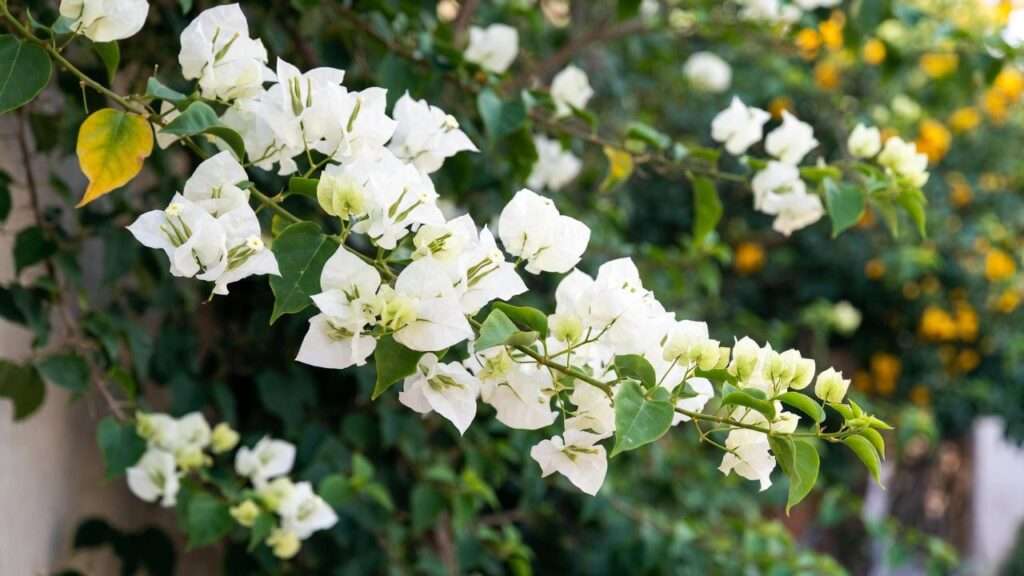
Imagine a cascading waterfall of pure white bracts shimmering under the sun, transforming a plain wall or trellis into a breathtaking living masterpiece ☀️. That’s the magic of a thriving white bougainvillea plant – elegant, bright, and endlessly captivating. Yet, many gardeners struggle with sparse blooms, yellowing leaves, or leggy growth, wondering why their white bougainvillea plant isn’t delivering the non-stop floral show they dreamed of.
As a certified horticulturist with over 15 years of hands-on experience growing Mediterranean and tropical plants, including countless bougainvilleas in diverse climates, I’ve helped hundreds achieve vibrant, year-round displays. In this ultimate guide, we’ll dive deep into expert care for the white bougainvillea plant, covering everything from ideal conditions to troubleshooting – ensuring your plant bursts with stunning blooms season after season.

What Makes the White Bougainvillea Plant So Special? 🌿
White bougainvillea stands out for its pure, crisp bracts that bring a sense of elegance and serenity to any garden. Unlike bolder colored varieties, white cultivars offer a soft, luminous glow that brightens shady corners and contrasts beautifully with greenery.
Understanding White Bougainvillea Varieties
Popular white bougainvillea cultivars include:
- ‘Jamaica White’: Vigorous and robust, with large clusters of snowy bracts. Ideal for covering walls or arbors.
- ‘White Madonna’: Features clear white bracts, often with variegated green-and-white foliage for added interest.
- ‘Ms. Alice’ or ‘Alba’: Compact options perfect for containers, producing profuse pure white blooms.
- ‘White Stripe’: Variegated leaves paired with elegant white bracts – a sophisticated choice for patios.
These are hybrids primarily from Bougainvillea glabra and Bougainvillea spectabilis, bred for improved flowering and adaptability.
Differences Between White Bracts and True Flowers
The “flowers” you admire are actually papery bracts surrounding tiny, creamy-white true flowers in the center. This structure helps attract pollinators while providing long-lasting color.
Why White Bougainvillea Stands Out in Landscaping
White varieties excel in creating bright, airy spaces. They reflect light, making gardens feel larger and cooler – perfect for hot climates.
Native Habitat and Natural Growth Habits
Native to South America, bougainvillea thrives in hot, dry conditions with poor soil. This drought tolerance and vigorous vining habit (up to 30-40 feet) make it a low-maintenance powerhouse once established.
Essential Growing Conditions for Thriving White Bougainvillea 🌞
Success starts with mimicking its native environment.
Sunlight Requirements
White bougainvillea demands full sun – at least 6-8 hours daily for maximum blooms. Less light leads to leggy growth and few bracts.
Minimum Daily Sun Hours for Maximum Blooms
Aim for 8+ hours; morning sun with afternoon shade in extreme heat prevents scorching.
What Happens in Partial Shade (and How to Compensate)
In shade, expect fewer blooms. Compensate with reflective surfaces or supplemental grow lights indoors.
Ideal Temperature and Hardiness Zones
Hardy in USDA zones 9-11, tolerating down to 30-40°F briefly. In zone 9, provide frost protection ❄️.
Best Soil Types and Drainage
Well-draining, slightly acidic to neutral soil (pH 5.5-7.0) is key. Avoid heavy clay.
Recommended Soil Mix Recipe (DIY)
Mix 1 part potting soil, 1 part perlite or sand, and 1 part compost for perfect drainage.
Common Soil Mistakes That Kill Bougainvillea
Poor drainage causes root rot – the #1 killer.
Planting Your White Bougainvillea Plant Successfully 🏡
Getting your white bougainvillea off to a strong start is crucial for long-term health and prolific blooming. Poor planting leads to stress, stunted growth, or failure to establish.
When and Where to Plant
Plant in spring or early summer when soil temperatures reach at least 60°F (15°C). This allows roots to establish before extreme heat or cold.
Choose a location with full sun and protection from strong winds, which can damage bracts. For in-ground planting, ensure space for vines to spread 10-20 feet.
Step-by-Step Planting Guide
- Dig the hole: Twice as wide as the root ball and just as deep. Avoid planting too deep – the top of the root ball should sit level with the soil surface.
- Amend the soil: Mix native soil with perlite or coarse sand for improved drainage. Add a handful of slow-release fertilizer.
- Remove from container: Gently tease roots if pot-bound.
- Place the plant: Center it in the hole, backfill, and firm the soil gently.
- Water thoroughly: Soak to settle soil, then mulch with 2-3 inches of organic material (keep away from stem).
- Stake if needed: For trellis training, install support immediately.
Pro tip from my experience: Slightly disturb the roots during transplant – this encourages faster establishment in bougainvillea.
Container Growing Tips for Patios and Balconies
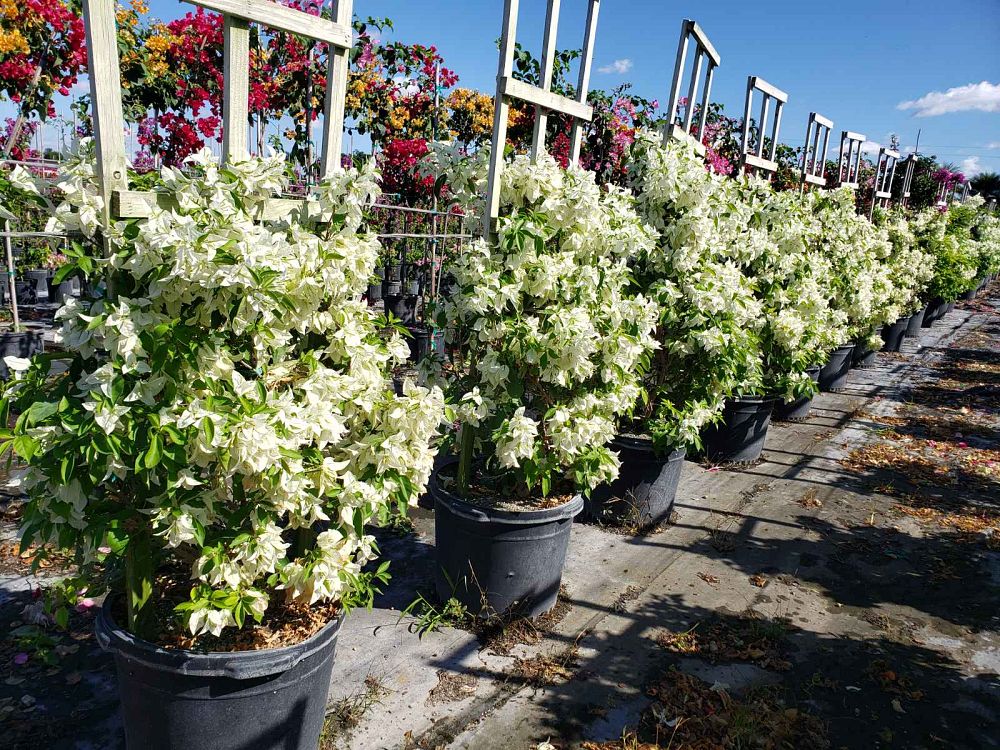
White bougainvillea excels in pots, making it ideal for small spaces or cooler climates where pots can be moved indoors.
- Choose a container at least 18-24 inches in diameter with drainage holes.
- Use a terracotta or lightweight pot – terracotta helps prevent overwatering.
- Repot every 2-3 years or when root-bound (root pruning encourages more blooms – see tips below).
- Elevate pots on feet for better drainage.
Compact varieties like ‘Ms. Alice’ are perfect for containers, reaching 4-6 feet with proper training.
Watering and Feeding: The Secrets to Non-Stop Blooms 💧
Bougainvillea’s bloom trigger is unique – it flowers best under slight stress.
Watering Schedule and Techniques
Established plants are highly drought-tolerant. Overwatering is the most common mistake I see in client gardens.
“Stress for Success” – Controlled Drought Method Explained
Allow the top 2-3 inches of soil to dry completely between waterings. Deep, infrequent watering encourages deep roots and more bracts. In summer, this might mean weekly; in winter, every 2-4 weeks.
Newly planted specimens need consistent moisture for the first 6-12 months – water every 3-5 days until established.
Signs of Overwatering vs. Underwatering
- Overwatering: Yellow leaves, mushy stems, root rot, few blooms.
- Underwatering: Wilting bracts, leaf drop – but quick recovery after watering.
In containers, check weight – light pot means it’s time to water.

Fertilizer Guide
Feed sparingly – too much nitrogen promotes leaves over flowers.
Best NPK Ratios for Bloom Boosting
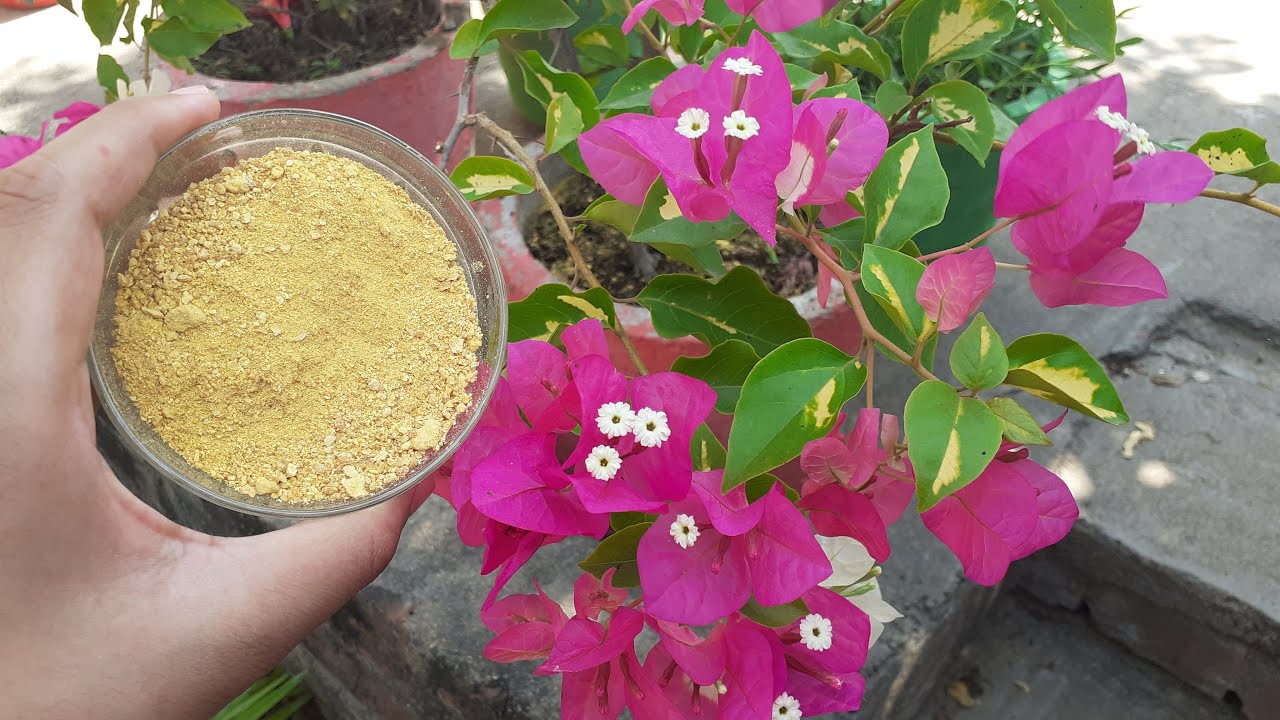
Use a high-phosphorus, low-nitrogen formula like 6-30-30 or 10-30-20 for blooming plants.
Organic vs. Synthetic Options
- Synthetic: Water-soluble bloom boosters every 4-6 weeks during growing season.
- Organic: Bone meal, rock phosphate, or compost tea for slower release.
Seasonal Feeding Calendar
- Spring: Start with balanced fertilizer to kickstart growth.
- Summer: Switch to bloom booster every 4 weeks.
- Fall: Reduce to once a month.
- Winter: No feeding in dormancy.
Pruning and Training for Spectacular Shape and Blooms ✂️
Pruning is non-negotiable for dense growth and maximum white bracts.
Why Pruning Is Critical for White Bougainvillea
It controls size, encourages branching (where new blooms form), and maintains shape.
When and How to Prune
Prune after each bloom cycle – typically 3-4 times per year in warm climates.
Light Tip Pruning vs. Hard Pruning
- Light tip pruning: Pinch new growth by 1-2 inches throughout season for bushiness.
- Hard pruning: In late winter/early spring, cut back up to 2/3 of growth for rejuvenation.
Always prune to an outward-facing bud.
Training on Trellises, Arbors, and Walls
Tie young shoots loosely with soft ties. Guide main vines first, then fill in with laterals.
After-Bloom Maintenance
Remove spent bracts to encourage the next flush – this can extend blooming periods.
Expert Insight Box: My Favorite Pruning Hack for Double Blooms
In containers, root prune during repotting: Trim 1/3 of roots and top growth proportionally. This mild stress often triggers an explosion of white bracts 6-8 weeks later – a trick I’ve used successfully on client patio displays.

Common Problems and Solutions 🐛
Even with perfect care, issues can arise. Early diagnosis prevents major setbacks—I’ve rescued many “hopeless” white bougainvilleas by addressing problems promptly.
Pests and Diseases
White bougainvillea is relatively pest-resistant, but vigilance is key in humid or overcrowded conditions.
Aphids, Scale, Caterpillars
- Aphids: Small, soft-bodied insects clustering on new growth, causing curled leaves and honeydew.
- Scale: Armored bumps on stems/bracts, leading to yellowing.
- Caterpillars/Loopers: Chewed bracts and leaves—common bougainvillea looper.
Control: Start with strong water spray, then insecticidal soap or neem oil weekly. For severe infestations, use systemic insecticides sparingly.

Root Rot and Leaf Spot Prevention
Root rot (from overwatering) shows as wilting despite wet soil, yellow leaves, and mushy roots. Leaf spot appears as brown/black spots.
Prevention: Excellent drainage, avoid overhead watering, apply fungicides if needed.

Why Your White Bougainvillea Isn’t Blooming (Top 8 Reasons + Fixes)
- Insufficient sun → Move to brighter spot.
- Overwatering → Let dry out.
- Too much nitrogen → Switch to bloom fertilizer.
- No pruning → Prune after blooms.
- Root-bound (pots) → Repot or root prune.
- Young plant → Wait 1-2 years.
- Cold damage → Protect from frost.
- Nutrient deficiency → Soil test and amend.
Yellow Leaves, Dropping Bracts, Leggy Growth – Diagnose and Treat
- Yellow leaves: Often overwatering or iron deficiency (chlorosis)—treat with chelated iron.
- Dropping bracts: Natural after bloom or stress—reduce water temporarily.
- Leggy growth: Lack of light/pruning—relocate and prune hard.
Overwintering and Year-Round Care in Cooler Climates ❄️🌸
White bougainvillea isn’t fully hardy below zone 9, but with protection, you can enjoy it anywhere.
Protecting from Frost
Bringing Containers Indoors
Move pots inside when temps drop below 50°F. Place in bright, cool spot (60-70°F) with south-facing window. Water sparingly—dormancy is normal.
Mulching and Covering In-Ground Plants
Mulch roots heavily, wrap stems in burlap or frost cloth. Use Christmas lights for gentle warmth on cold nights.
Encouraging Winter Blooms in Mild Climates
In zones 9-10, reduce water slightly in fall to trigger holiday blooms—many white varieties shine brightest in winter!
Propagation: Grow More White Bougainvilleas for Free! 🌱
Propagating is rewarding and cost-effective—success rates exceed 80% with my method.
Step-by-Step Cutting Propagation
- Take 6-8 inch semi-hardwood cuttings in spring/summer.
- Remove lower leaves, dip in rooting hormone.
- Plant in well-draining mix (perlite/sand).
- Cover with plastic for humidity, place in bright indirect light.
- Roots form in 6-8 weeks—pot up when new growth appears.
Layering Technique
Bend low branch to soil, wound stem, bury section—roots in months without cutting.
Success Rates and Best Timing
Best in warm seasons with bottom heat—I’ve rooted dozens this way for clients.

Design Ideas and Companion Planting 🌼
White bougainvillea elevates any landscape with its clean elegance.
Stunning Landscape Uses for White Bougainvillea
- Espalier on walls for formal look.
- Cascading over arbors/trellises.
- Hedges or ground cover on slopes.
- Hanging baskets for patios.
Best Companion Plants (color contrasts and care matches)
- Lantana, salvia, or verbena for colorful underplanting.
- Agaves, yuccas for drought-tolerant contrast.
- Hibiscus or plumeria for tropical vibe.

Expert Tips for Show-Stopping Results ✨
- Boost phosphorus with banana peel tea for extra bracts.
- Cycle “stress” periods: Dry out slightly every 2-3 months.
- Use reflective mulch to increase light exposure.
- Pinch tips monthly for bushier growth.
- Monitor pH—slightly acidic soil enhances white purity.
Frequently Asked Questions (FAQ) ❓
How often should I water white bougainvillea? Established plants: Deep water every 7-14 days in summer, less in winter. Always let soil dry.
Can white bougainvillea grow in pots? Yes—thrives in containers with drainage. Use compact varieties.
Why are the bracts turning pink or losing color? Sun stress or age—normal fading. New growth restores white.
Is white bougainvillea toxic to pets? Mildly toxic (thorns and sap irritate)—keep away from curious pets.
How fast does white bougainvillea grow? 5-10 feet per year in ideal conditions.
Does it need full sun? Absolutely—minimum 6 hours direct.
How to make it bloom more? Prune regularly, use bloom fertilizer, controlled drought.
Can it survive indoors? Temporarily, but needs maximum light—grow lights help.
Conclusion 🌟
Your white bougainvillea plant can deliver stunning, year-round blooms with the right care: full sun, well-draining soil, strategic watering, and consistent pruning. Follow this ultimate guide, and you’ll enjoy cascading white bracts that transform your space into a serene paradise.
Ready to see yours thrive? Start implementing these tips today—share your progress in the comments or subscribe for more expert plant care advice. Happy gardening! 🌺











