You walk up to your beloved indoor desert garden, coffee in hand, ready to admire your prickly companions. But as you look closer, your heart sinks. There it is: a strange, cotton-like growth clinging to the ribs of your favorite succulent. Let’s be honest, spotting what looks like white fuzzy mold on cactus surface is enough to send any plant parent into a panic. Is your plant doomed? Is it contagious?
Take a deep breath. While this alarming discovery requires immediate action, it is rarely a death sentence for your plant if caught early. More importantly, what you are looking at might not even be mold at all. In the vast majority of cases, this “fuzz” is a case of mistaken identity.
In this comprehensive guide, we are going to dive deep into exactly what is growing on your plant, how to correctly diagnose it, and the step-by-step eradication methods needed to restore your succulent’s health. We will also cover how to optimize your indoor environment so this never happens again.
Expert’s Note 📝: Over my years of rescuing and propagating desert plants, this is the number one issue anxious plant owners ask me about. Misdiagnosing a pest issue as a fungal disease—and treating it with the wrong chemicals—is a common mistake that can severely damage a stressed plant. Follow the diagnostic steps below carefully, and we will get your cactus thriving again! 🪴
The Diagnostic Guide: What Is That White Fuzz? 🔍🪴
Before you reach for the chemical sprays or the pruning shears, you must properly identify the enemy. Treating a fungal infection with an insecticide, or vice versa, will only waste time while your plant deteriorates. Let’s look at the four most common culprits behind that mysterious white fluff.
1. Mealybugs: The Master of Disguise (Most Common!) 🐛
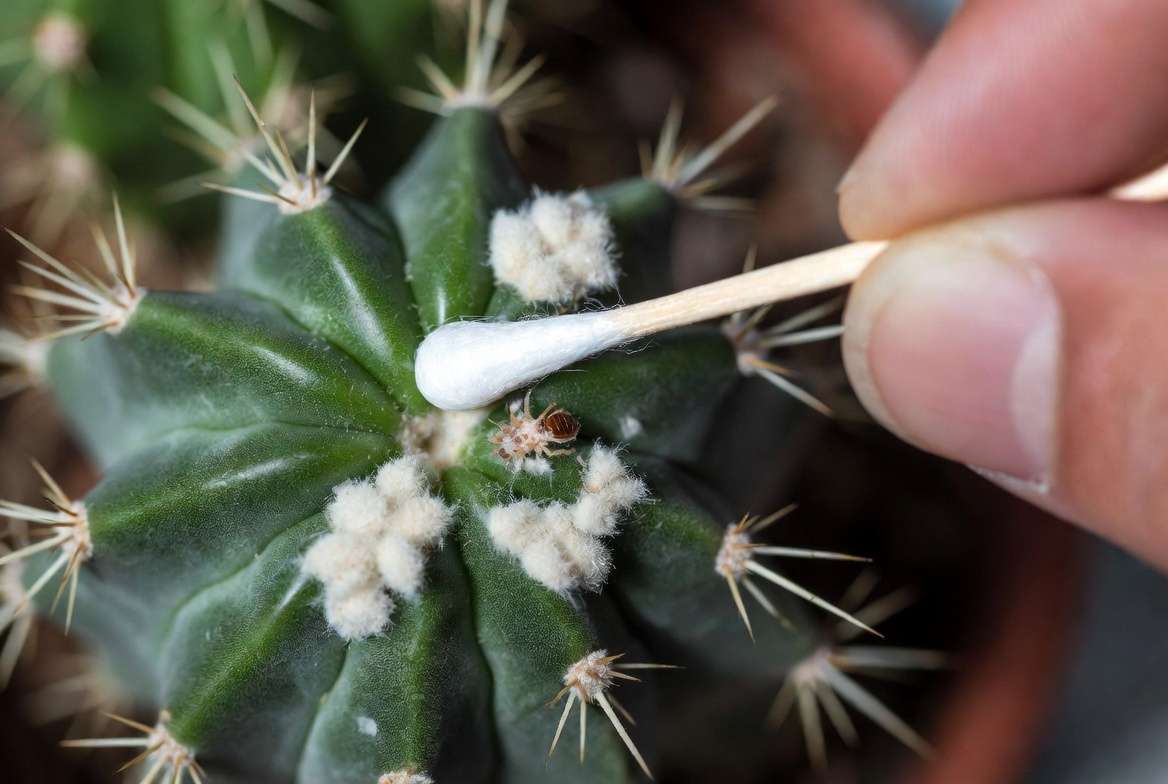
If you see white fluff on your houseplant, 90% of the time, you are looking at mealybugs. These devastating houseplant pests are tiny, soft-bodied insects that secrete a powdery, waxy white substance to protect themselves from predators and the elements.
-
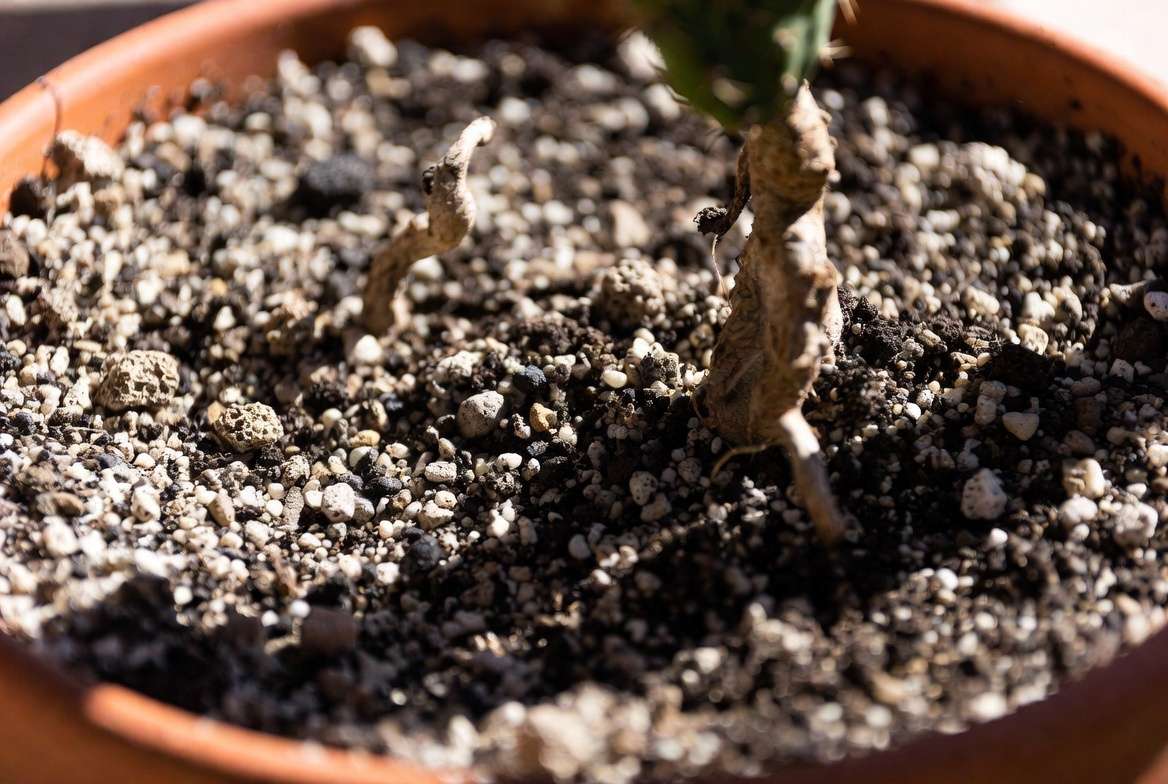
What it looks like: Mealybug infestations look like tiny, sticky wads of cotton wool. They love to hide in the tightest crevices of your plant, particularly in the crown, between the ribs, or at the base near the soil line.
-
The damage: These are sap-sucking insects. They pierce the tough skin of your cactus and drain its vital fluids. Left unchecked, mealybugs will cause stunted growth, yellowing, shriveling, and eventually, the death of the plant. They also excrete a sticky substance called honeydew, which can attract a secondary black sooty mold infection.
-
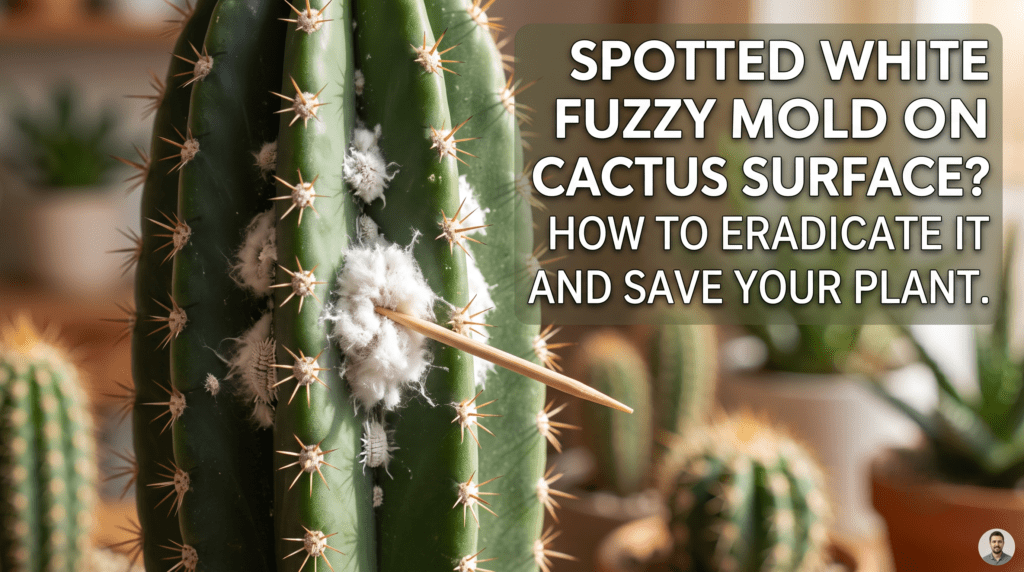
Expert Tip 💡 (The Toothpick Test): Not sure if it’s a bug or mold? Take a wooden toothpick and gently poke the white fuzz. If the fuzz squishes, leaves a sticky residue, or if you can see a tiny grayish-pink bug underneath the white armor, you have a mealybug infestation.

2. Powdery Mildew & True Fungi 🍄
While less common on desert succulents than on tropical houseplants, true fungal diseases do occur, especially in poorly ventilated homes.
-
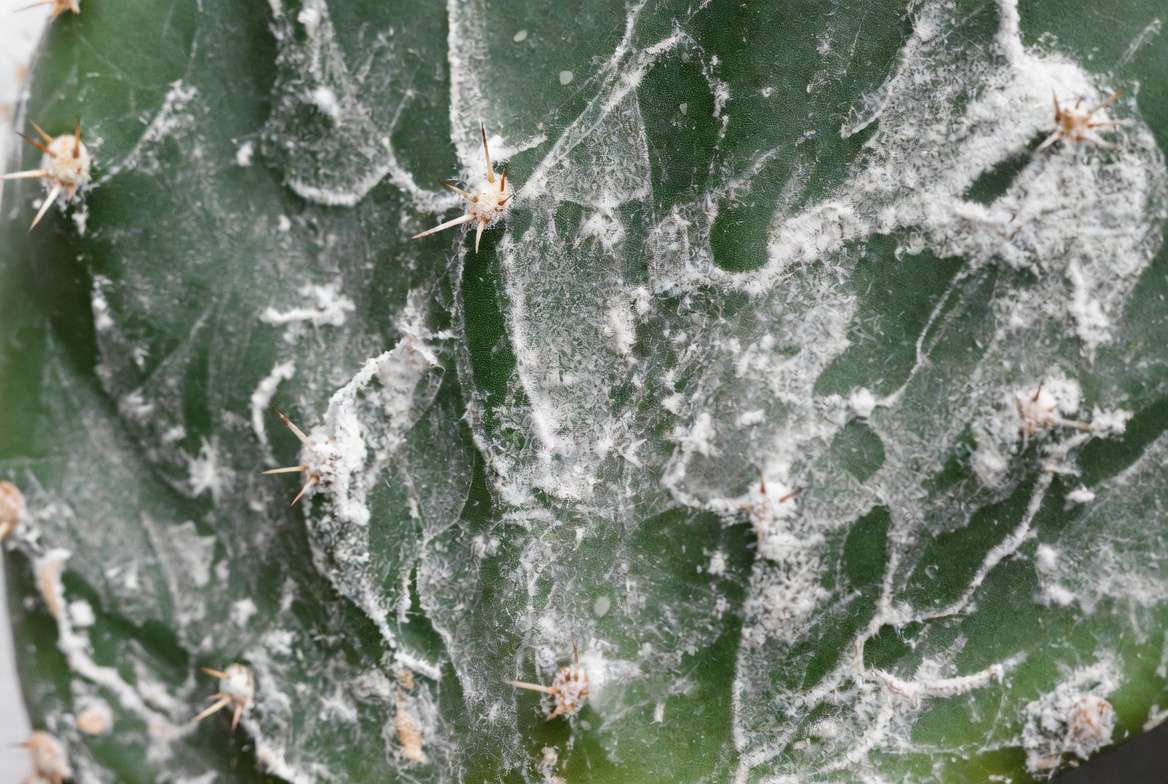
What it looks like: Unlike the clumpy, cotton-ball appearance of mealybugs, powdery mildew presents as a flat, dusty, white or light gray powder spreading across the green epidermis (skin) of the cactus. It looks as though someone lightly dusted your plant with flour.
-
The cause: Fungal spores are always present in the air, but they only germinate and attack your plant when the conditions are just right. For powdery mildew, this usually means a combination of stagnant air, low light, and excessively high humidity—the exact opposite of a natural desert habitat.
3. Cochineal Scale (Outdoor & Specific Cacti) 🐞
If you are growing cacti outdoors, particularly Prickly Pear (Opuntia species), you might encounter the cochineal scale insect.
-
What it looks like: Similar to mealybugs, these scale insects create fluffy, white, web-like structures to protect themselves. They cluster heavily on the flat pads of the cactus.
-
The crucial difference: Cochineal bugs are famous for their defense mechanism. If you squish one of these white tufts, it will produce a highly pigmented, bright crimson-red liquid. (In fact, this exact bug has been used for centuries to create natural red dyes!).
4. Natural Cactus Fluff (Areoles/Cephalium) – Don’t Kill Your Plant! 🌵❤️
Before you panic, we must rule out the plant’s natural anatomy. Many beginner plant parents mistake normal botanical growth for a dangerous mold and accidentally mutilate their healthy plants trying to scrub it off.
-
What it looks like: Look at the distribution of the white fuzz. Are the tufts symmetrical? Are they evenly spaced along the ridges of the cactus? Do the sharp spines grow directly out of these fluffy spots? If so, these are areoles. Every single cactus has them; they are the specialized growth nodes where spines, flowers, and new branches emerge.
-
The Cephalium: Some mature cactus species (like Melocactus or Cephalocereus senilis, the “Old Man Cactus”) naturally grow thick, dense mats of white woolly hair. This is designed to protect them from extreme desert sun and frost.
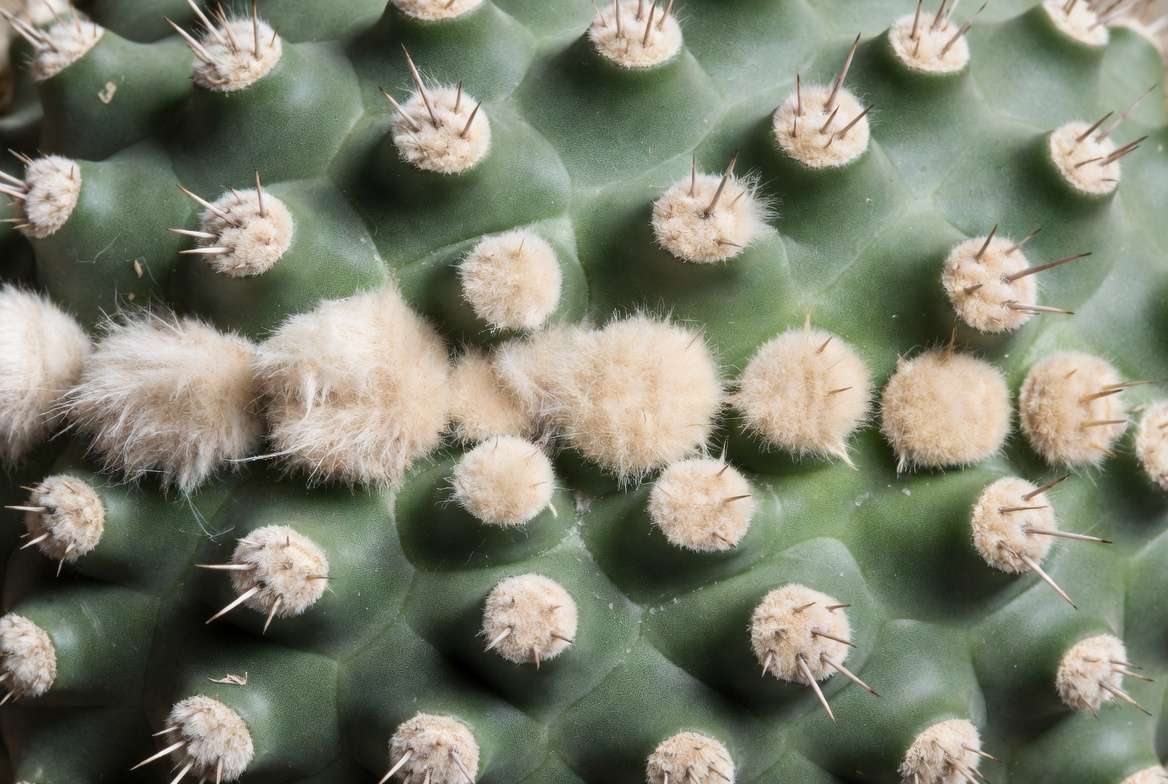
Quick Diagnostic Reference Table:
| Feature | Mealybugs / Pests 🐛 | True Mold / Fungus 🍄 | Natural Anatomy (Areoles) 🌵 |
|---|---|---|---|
| Texture | Sticky, cotton-like, clumpy | Flat, dusty, powdery | Woolly, dry, hairy |
| Placement | Random, hiding in crevices | Spreading patches on skin | Symmetrical, evenly spaced |
| Toothpick Test | Squishes, reveals a tiny bug | Smudges like dust/flour | Firmly attached, spines emerge from it |