
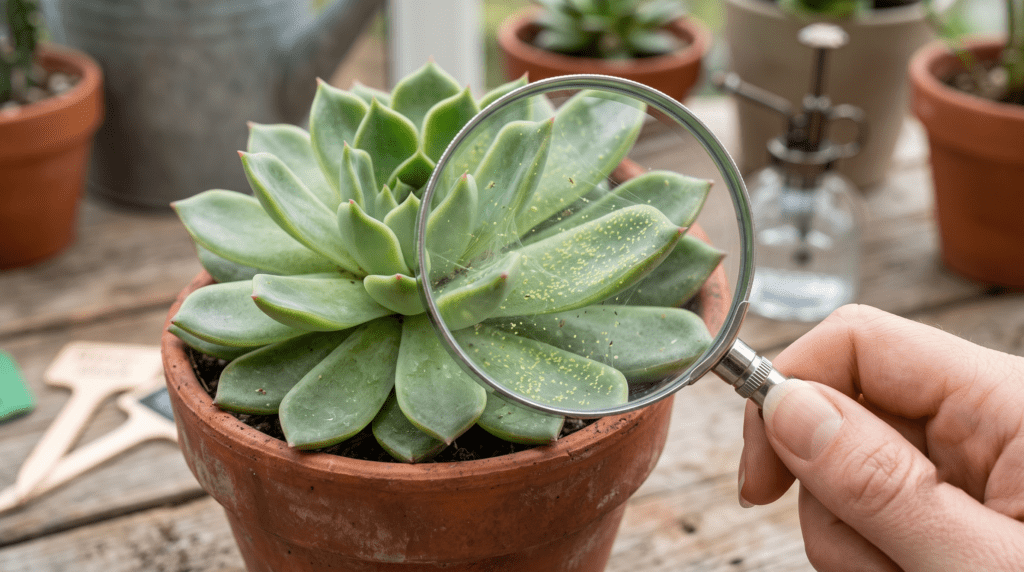
Succulents are famously celebrated as low-maintenance, resilient desert beauties. But what happens when their signature plump, vibrant leaves suddenly start looking dull, dusty, or sickly? You might be watering them perfectly, providing the ideal amount of sunlight, and using the best well-draining soil, yet your plant still seems to be declining.
After years of rehabilitating hundreds of distressed houseplants, I’ve learned that the culprit is often invisible to the naked eye. Recognizing the signs of spider mites on succulents early is the absolute difference between saving your prized plant and throwing away a crispy, web-covered casualty.
These microscopic pests are insidious. Because they are so small, plant parents usually don’t realize there is a problem until the infestation is severe. By the time you see the classic webbing, the damage is already extensive. In this comprehensive expert guide, we are going to dive deep into exactly how to identify, confirm, treat, and prevent spider mite infestations on your beloved succulents—before it’s too late.
What Are Spider Mites (and Why Do They Love Succulents)? 🔬
To defeat the enemy, you must first understand it. Despite their name and the fact that they live on plants, spider mites are not actually insects.
The Biology of a Houseplant Menace 🧬
Spider mites belong to the Tetranychidae family, meaning they are arachnids, closely related to spiders and ticks. Adult mites typically have eight legs, an oval-shaped body, and are unfathomably tiny—often measuring less than 1 millimeter in length.
Because they are so minuscule, they look like nothing more than moving specks of dust to the human eye. Spider mites feed by using specialized piercing mouthparts to puncture the plant’s epidermal cells and suck out the nutrient-rich sap inside. When thousands of these pests are feeding on a single succulent leaf simultaneously, the plant quickly loses its ability to photosynthesize and retain moisture.
The Ideal Environment for Spider Mites 🌡️
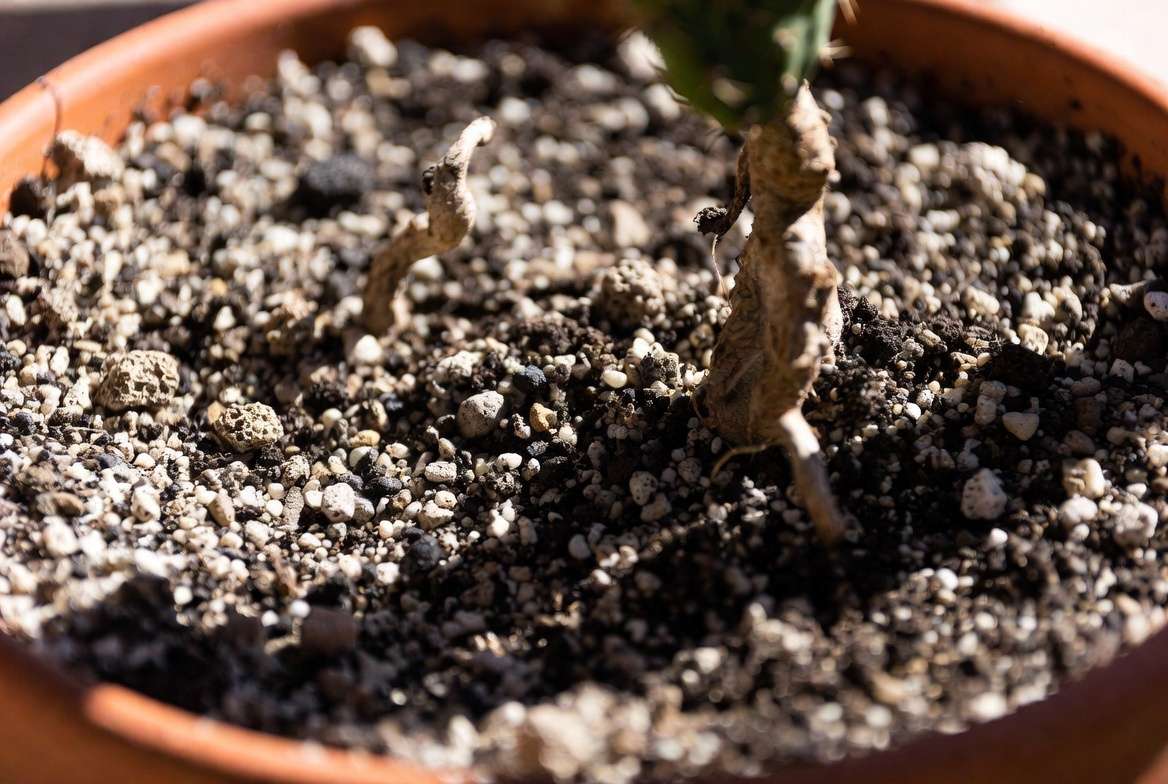
You might be wondering: Why are my succulents being targeted? The unfortunate truth is that spider mites and succulents share a love for the exact same environment.
Most houseplant pests, like fungus gnats, thrive in damp, soggy soil. Spider mites are the exact opposite. They flourish in hot, dry, and low-humidity conditions. Because we purposefully keep our succulent soil dry and place them in warm, sunny windowsills, we are inadvertently creating a five-star resort for spider mites.
🪴 Expert Insight: Spider mites reproduce at an alarming rate in warm, dry indoor air. A single female spider mite can lay hundreds of eggs in her short lifetime, and in ideal conditions, a new generation can mature from egg to reproducing adult in just 5 to 7 days! This rapid life cycle is exactly why proactive monitoring is crucial for indoor plant care.
Early Warning: The First Signs of Spider Mites on Succulents 🔍
The secret to saving your plants is catching the infestation in its early stages, long before the infamous webs appear. Here is exactly what you need to look out for during your routine watering schedule.
Tiny Yellow or White Specks (Stippling) 🟡
The most common early indicator of sap-sucking pests is a symptom called “stippling.” Every time a mite pierces the plant tissue and drains a cell, it leaves behind a microscopic dead spot. As these bite marks accumulate, they look like tiny, discolored dots on the surface of the leaf.
-
On dark green succulents: (like Haworthia or Aloe) stippling often looks like tiny yellow, silvery, or white flecks scattered across the leaf surface.
-
On pastel succulents: (like pale pink or ghost-blue Graptopetalum) the stippling might appear as faint brown or rusty-red micro-scars.
If your succulent’s leaves start looking like they have a bad case of freckles, it is time to investigate further.

The “Dusty” Appearance Illusion 🌬️
Have you ever wiped a succulent leaf thinking it just accumulated household dust, only for the dust to return a few days later?
Spider mites produce waste (frass) and constantly shed their tiny exoskeletons as they grow. When this debris mixes with unhatched eggs and the mites themselves, it creates a fine, gritty, almost sandy layer on the plant. If your succulent constantly looks “dirty” or lacks its usual glossy or pristine matte finish, you aren’t dealing with bad housekeeping—you are looking at an active mite colony.
Loss of Plumpness and Dull Color 🥀
Succulents store water in their fleshy leaves, giving them their characteristic plump, firm texture. Because spider mites literally suck the moisture and sap out of the plant, an infected succulent will begin to look deflated.
Even if you have recently watered the plant, the leaves may feel slightly soft, pliable, or wrinkled. Additionally, the overall color of the plant will become muted, matte, and washed out as the chlorophyll is continuously destroyed by the feeding pests.
Advanced Infestation: When the Hidden Becomes Obvious 🕸️
If the early signs are missed, the mites will multiply exponentially. Once they exhaust the resources on one part of the plant, they begin to spread, and this is when the horrifying, unmistakable symptoms of a late-stage infestation appear.
Fine Webbing Around Leaves and Spines 🧶
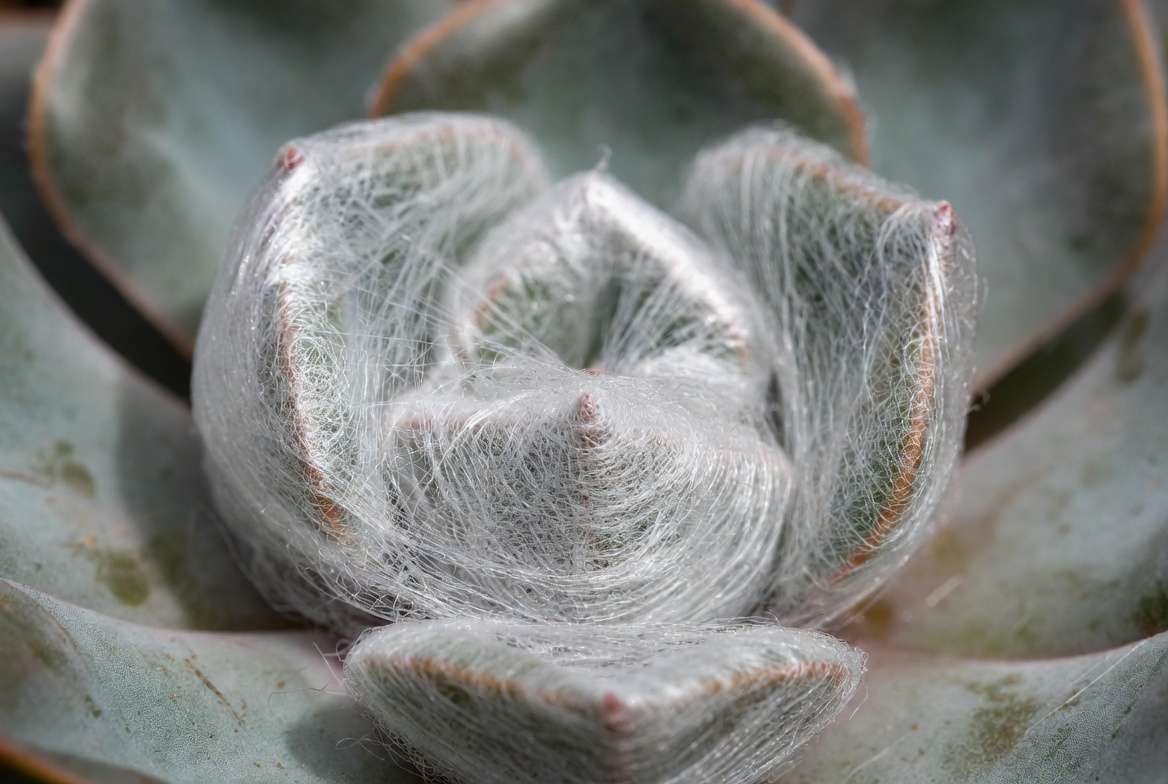
This is the hallmark sign that gives spider mites their name. To protect themselves and their eggs from predators, and to travel easily from leaf to leaf, they spin ultra-fine silk webs.
Unlike regular spider webs, which are usually large and spun between distinct anchor points, spider mite webbing is incredibly dense, delicate, and clings tightly to the plant. You will most commonly find this webbing:
-
Tucked tightly into the center of a rosette.
-
Spanning the tiny gaps between closely growing leaves.
-
Wrapped around the spines or fuzzy hairs of cacti and certain succulents.
If you lightly mist your succulent with water, these hidden webs will instantly catch the droplets and become highly visible.
Severe Discoloration and Leaf Drop 🍂
When spider mites are allowed to feast undisturbed, the minor stippling merges into massive patches of dead tissue. The succulent leaves will begin to turn completely yellow, brown, or even a sickly gray.
Because succulents rely on their leaves for water storage, this massive cell death causes the leaves to dry out completely. They will crisp up, die, and eventually drop off the stem. While normal succulent shedding happens at the bottom of the stem (the oldest leaves), spider mite damage will cause healthy, middle-level leaves to suddenly shrivel and fall.
Stunted Growth and Deformed Rosettes 🚫
Spider mites are opportunistic and always seek out the most tender, nutrient-dense parts of the plant. On a succulent, this is usually the very center of the rosette where the new growth emerges.
If you notice that your succulent has completely stopped growing during its active growing season, or if the new leaves emerging from the crown are stunted, twisted, scarred, or deformed, a severe mite infestation is likely choking out the plant’s life force.
The “White Paper Test”: A Foolproof Diagnostic Trick 📄
Because spider mites are so incredibly small, diagnosing them by sight alone can be frustrating. If you suspect an issue but can’t quite see any webbing, you need to rely on the industry-standard “White Paper Test.” It is quick, free, and completely foolproof.
Here is how to perform the test like a plant care expert:
-
Grab your tools: Take a clean, crisp sheet of plain white printer paper.
-
Position the paper: Hold the paper directly underneath the suspect succulent’s leaves or trailing stems.
-
Shake it up: Gently but firmly tap the plant’s leaves or flick the stem with your finger. Do this a few times over different sections of the plant.
-
Examine the evidence: Pull the paper away into a bright light. At first, it may just look like you knocked some dirt or pepper onto the page. Watch closely for 10 to 15 seconds. If those tiny “specks of dust” start slowly crawling across the white surface, you have just positively identified live spider mites!
🪴 Expert Insight: If you smear the crawling specks on the paper and they leave a tiny green, red, or brown streak, that confirms they are active, feeding mites.
Which Succulents Are Most Vulnerable? 🪴
While spider mites can attack almost any indoor plant, they definitely have their preferences in the succulent world. They gravitate toward plants that provide excellent hiding spots or have thinner, easily pierced cuticles (the outer skin of the leaf).
-
String of Pearls, Turtles, & Bananas: These trailing succulents are spider mite magnets. The intricate vines and thousands of tiny crevices provide the ultimate camouflage for a growing colony.
-
Echeverias: Echeverias have tightly packed rosettes. The tiny spaces where the leaves meet the central stem offer dark, protected environments where mites can breed undisturbed by the elements.
-
Aeoniums and Sempervivums: Compared to ultra-chunky succulents like Lithops or thick Aloes, Aeoniums have relatively thin leaves. This makes it incredibly easy for spider mites’ piercing mouthparts to access the sap.
How to Treat Spider Mites on Succulents (Fast & Effective Solutions) 🚑
If your white paper test came back positive, take a deep breath. A spider mite infestation is highly treatable if you take immediate, deliberate action. Here is the step-by-step plant rescue protocol I use to eradicate these pests without harming the succulent.

Step 1: Immediate Isolation (The First Rule of Plant Club) 🛑
Spider mites are the ultimate hitchhikers. They can ride on gentle indoor breezes, pet hair, or your own clothing to travel from pot to pot. The very second you suspect mites, you must move the infected succulent to a completely different room, far away from your other houseplants. Do not skip this step!
Step 2: The Physical Wash 🚿
Your first line of defense is a physical removal of the pests. Take your isolated succulent to the kitchen sink or bathroom tub. Using lukewarm (never hot) water, gently spray the foliage to wash away the webs, adults, and eggs.
Crucial tip: Tilt the pot at a 45-degree angle while spraying so the water and the dislodged mites wash down the drain, not into the soil. Succulents hate overwatering, so try to keep the soil as dry as possible during this process.
Step 3: Natural and Gentle Remedies 🌿
Once the plant is dry from its wash, it is time to treat the remaining invisible stragglers.
-
Rubbing Alcohol (Isopropyl): This is the holy grail for succulent pest control. Mix one part 70% isopropyl alcohol with one part water in a spray bottle. Mist the plant thoroughly, ensuring it gets into the crevices. The alcohol dissolves the mites’ exoskeletons on contact and evaporates quickly before it can cause succulent rot. You can also use a Q-tip dipped in pure alcohol to meticulously clean tight rosettes.
-
Neem Oil & Horticultural Oils: While neem oil is a fantastic organic pest control, use extreme caution with succulents. Many succulents (like Echeverias and Graptopetalums) possess a powdery white coating called farina that acts as a natural sunscreen. Oils will strip this protective farina right off, leaving the plant permanently scarred and vulnerable to sunburn. Only use oils on smooth, glossy succulents (like Jade plants or Haworthias) and keep them out of direct sunlight while treating.
Step 4: Chemical Controls for Severe Cases (Miticides) 🧪
Standard insecticides often do not work on spider mites because they are arachnids, not insects. If natural remedies are failing after a few weeks, you will need to purchase a dedicated miticide (a spray specifically formulated to kill mites). Look for products containing ingredients like Bifenazate or Spinosad. Apply according to the package directions, ensuring you treat outdoors or in a well-ventilated area.
Long-Term Prevention: Keeping Your Succulents Mite-Free 🛡️
Eradicating an infestation is satisfying, but preventing one is much easier. By tweaking your indoor gardening routine just slightly, you can make your home incredibly inhospitable to these tiny terrors.
Air Circulation and Mild Humidity 🌬️
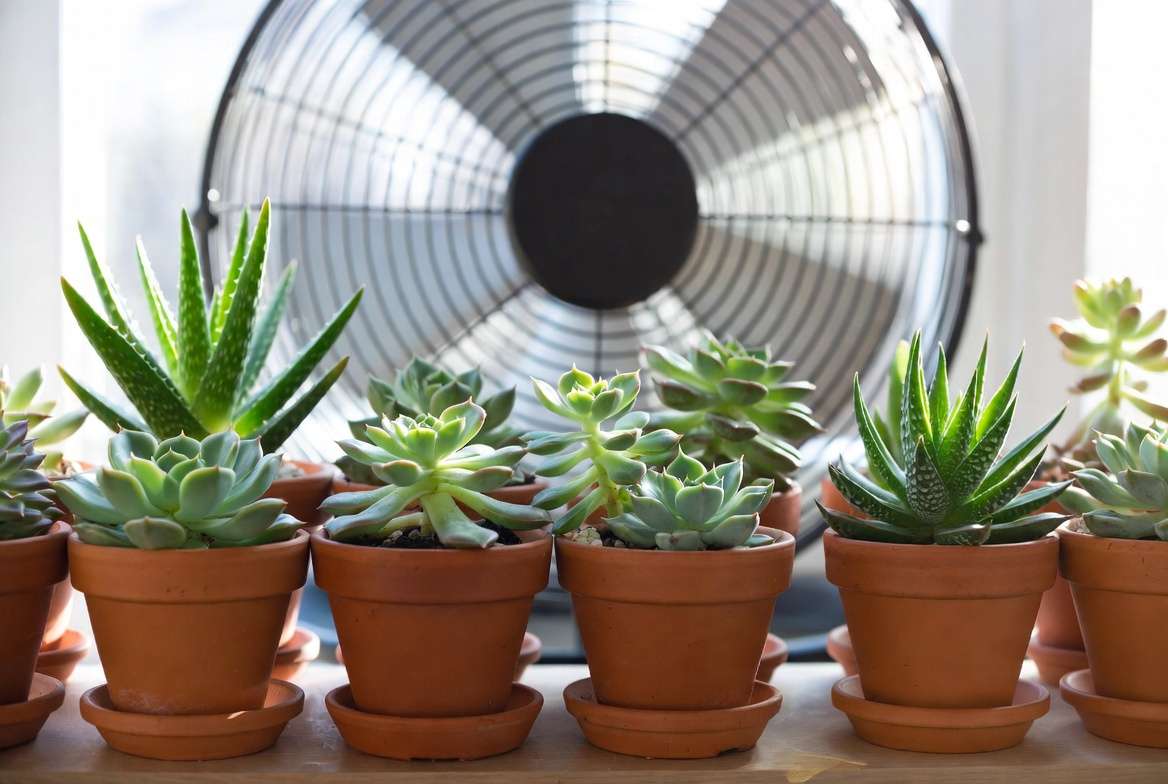
Spider mites hate high humidity and flowing air. While you obviously shouldn’t mist succulents (as this invites fungal infections and rot), you can improve air circulation. Keep a small oscillating fan in your plant room to keep the air moving. If your home is extremely dry in the winter due to central heating, keeping a humidifier in the general vicinity (but not pointed directly at the succulents) can deter mites without harming the plants.
Quarantine New Arrivals 📦
Never bring a new plant home from a nursery or big box store and immediately place it next to your collection. Nurseries are notorious breeding grounds for pests. Always quarantine new arrivals in a separate room for at least 14 days. This gives any hidden eggs time to hatch so you can spot the problem before it spreads.
Routine Inspections 🕵️♀️
Make pest checks a mandatory part of your weekly watering routine. Keep a magnifying glass near your watering can. Look under the leaves, inspect the stems, and keep an eye out for that telltale dusty appearance or fine webbing.
Expert FAQs: Your Spider Mite Questions Answered 🙋♀️
To round out your knowledge, let’s address the most common questions panicked plant parents ask when dealing with this microscopic menace.
Can spider mites live in succulent soil? Generally, no. Spider mites feed on living plant tissue, so they reside on the leaves and stems. However, severely infested plants may have mites dropping onto the topsoil to travel or hide. This is why wiping the rim of the pot and removing any fallen dead leaves from the soil surface is a good hygiene practice.
Will spider mites spread to my other houseplants? Yes, and very rapidly! They are incredibly adept at spreading. They can drop from hanging planters, catch a ride on a watering can, or even travel on your hands. Strict isolation is absolutely mandatory.
Are spider mites harmful to humans or pets? Thankfully, no. While they might look creepy under a microscope, spider mites do not bite humans, dogs, or cats. They strictly crave plant sap. They are an aesthetic and biological threat to your indoor garden, not your health.
Why did spider mites appear out of nowhere? It often feels like a spontaneous generation, but spider mites always hitch a ride from somewhere. They can blow in through an open window on a dry, windy day. They can ride in on a bouquet of cut flowers, unwashed produce, your clothing after a hike, or most commonly, on a newly purchased houseplant.
Conclusion: Don’t Panic, Take Action! 💚
Discovering the signs of spider mites on succulents can be a heart-sinking moment for any plant lover. Seeing the delicate webs and the stippled, dull leaves might make you want to throw the plant directly into the trash bin. But don’t panic!
Spider mites are an incredibly common rite of passage in the houseplant community. By understanding their biology, recognizing the early signs like stippling and the “dusty” illusion, utilizing the white paper test, and acting swiftly with alcohol treatments, you can absolutely save your desert beauties.
Your succulents are resilient survivors by nature. Give them a little help, clear away the invaders, and they will bounce back, rewarding you with beautiful, plump, vibrant growth for years to come.











