
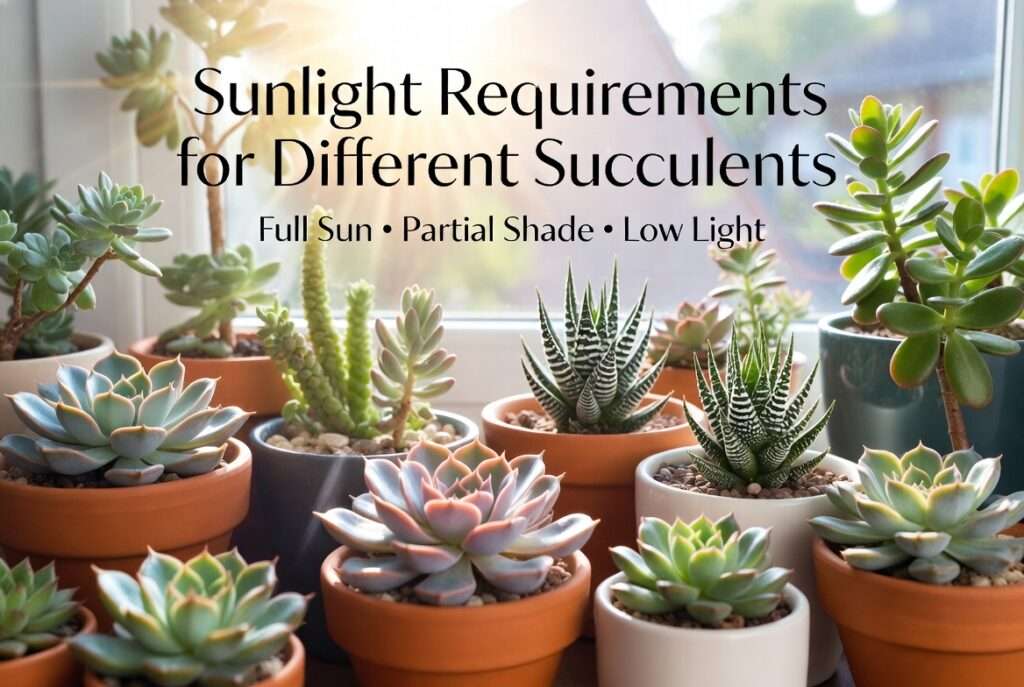
Picture this: You just brought home a stunning new Echeveria or a vibrant Sedum, placed it proudly on your windowsill, and a few weeks later it looks completely different — stretched out, pale, and sad. Or perhaps it developed mysterious brown spots after a sunny afternoon. The most common culprit? Incorrect sunlight requirements for different succulents.
If you’re searching for “sunlight requirements for different succulents,” you’re in the right place. Getting the light levels right is the #1 factor in growing healthy, colorful, and compact succulents that thrive rather than just survive. Too little light causes etiolation (leggy growth), while too much intense sun without proper acclimation can lead to sunburn and permanent scarring.
In this ultimate guide, we’ll cover everything you need to know: the sunlight needs of popular varieties across full sun, partial shade, and low light categories, how to measure light in your home, troubleshooting common problems, and pro tips from years of hands-on succulent cultivation. Whether you’re a beginner or seasoned plant parent, this comprehensive resource will help you create the perfect lighting setup for your succulent collection — and keep them looking Instagram-worthy year-round! 🌱
Why Sunlight Matters for Succulent Health & Happiness 🌱
Sunlight is the lifeblood of your succulents. These plants have evolved in some of the harshest environments on Earth, from arid deserts to rocky cliffs, using a special photosynthesis process called CAM (Crassulacean Acid Metabolism). They open their stomata at night to conserve water, making them drought-tolerant champions.
However, light directly affects:
- Compact growth and rosette shape: Sufficient bright light keeps stems short and leaves tightly packed.
- Vibrant colors: Many succulents “blush” with reds, pinks, and purples when exposed to the right amount of sun.
- Overall health: Adequate light strengthens the plant, improves disease resistance, and encourages blooming.
Without enough sunlight, succulents become etiolated — stretched and weak. Too much direct sun, especially sudden exposure, can cause sunburn, leading to white or brown patches on leaves that don’t heal. Real example: Many new plant parents lose their first succulents because they underestimate how much bright light these plants crave. Understanding individual variety needs solves this problem once and for all.
Understanding Sunlight Types: Direct, Indirect, Bright, and Low Light Explained ☀️
Not all light is created equal. Here’s a clear breakdown to help you match your space to the right succulents:
- Full Sun / Direct Sun: 6+ hours of direct sunlight per day. Ideal for desert-adapted varieties. South-facing windows or outdoor spots with no obstruction work best.
- Partial Sun / Bright Indirect Light: 3-6 hours of direct sun, preferably morning light, or bright filtered light all day. Perfect “happy medium” for most home growers.
- Low Light / Bright Indirect: No direct sun but bright ambient light (e.g., north-facing window or well-lit room). Suitable for shade-tolerant succulents.
How to Measure Light at Home:
- Use a free light meter app on your smartphone.
- The shadow test: Sharp, defined shadows = bright/direct light. Fuzzy shadows = indirect light.
- General rule: Most succulents need at least 10,000–20,000 lux for optimal growth.
Indoor vs outdoor lighting differs significantly due to glass filtering UV rays and seasonal changes. South-facing windows offer the brightest light indoors, while east-facing provides gentle morning rays perfect for partial-shade lovers.

🌞 Full Sun Succulents: Varieties That Thrive in 6+ Hours of Direct Sunlight
These tough beauties love intense light and will reward you with stunning colors and tight forms. They evolved in open, exposed habitats, so they handle heat, drought, and full exposure like pros.
Top full sun succulents include:
- Sedum (Stonecrop) 🌵 – Extremely hardy, great for ground cover or rock gardens. Their tiny leaves turn fiery reds and oranges in strong sun.
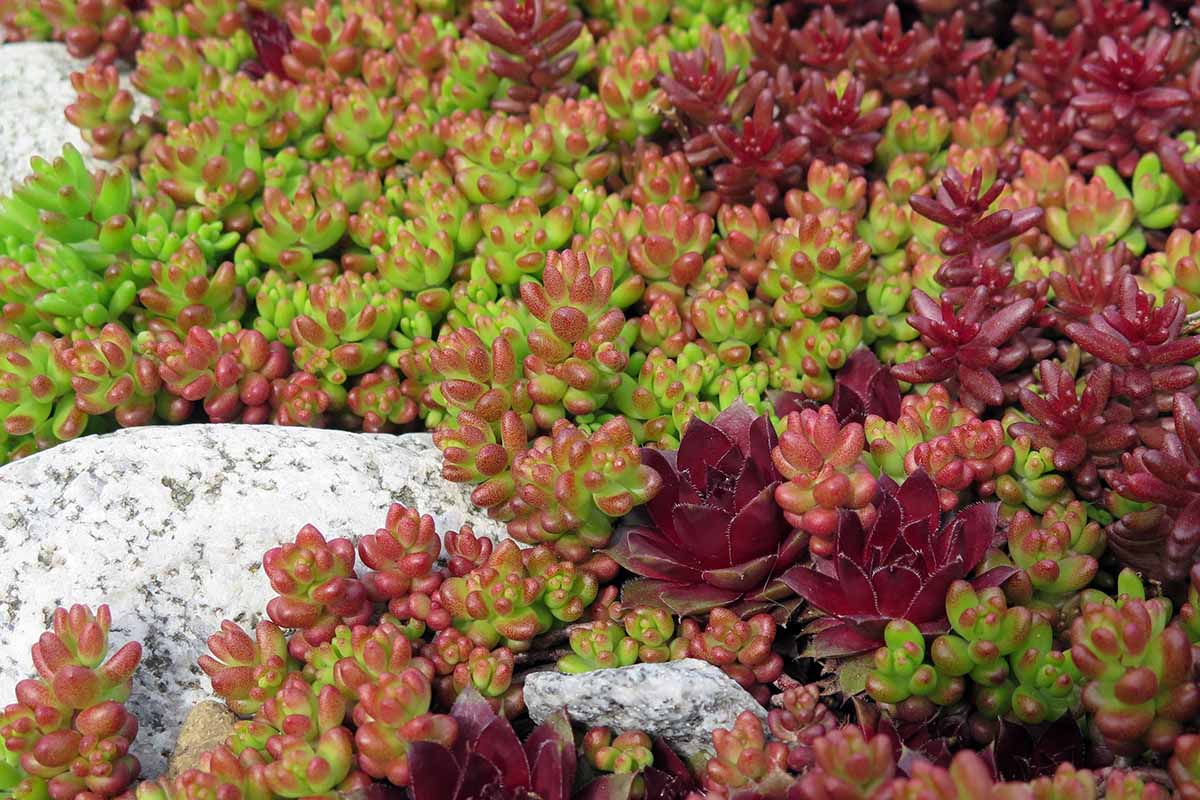
- Sempervivum (Hens and Chicks) – Cold hardy and loves full exposure; perfect for rockeries.
- Agave – Dramatic architectural plants that handle heat and sun beautifully.
- Echeveria (many species like E. agavoides, E. ‘Perle von Nurnberg’) – Famous for colorful rosettes that intensify in direct light.
- Aloe vera and other Aloes – Classic choice, though protect from extreme afternoon sun in very hot climates.
- Graptopetalum – Beautiful trailing or rosette forms with pastel hues that deepen beautifully.
- Cacti (Opuntia, Barrel Cactus) – True sun lovers with incredible spines and blooms.
Pro Tip Box: Always acclimate new plants gradually over 7-14 days to prevent shock and sunburn. Start with 1-2 hours of morning sun and increase slowly. In hot climates (like Dhaka summers!), provide afternoon shade during peak heat waves to avoid scorching.
🌤️ Partial Shade & Bright Indirect Succulents: The Happy Medium (3–6 Hours)
Ideal for most home growers in hot or tropical climates where full sun can be too intense. These varieties appreciate bright light but need protection from harsh midday rays.
Popular varieties with specific needs:
- Crassula ovata (Jade Plant) 💎 – Thrives with morning sun and bright indirect light; develops beautiful red edges with the right exposure.

- Aeonium – Striking rosettes that prefer filtered light in summer.
- Kalanchoe – Long-blooming and forgiving in bright indirect spots.
- Some Echeveria & Graptoveria hybrids – Hybrids often handle partial shade better than pure species.
- Lithops (Living Stones) – Mimic stones and do best with morning sun followed by shade.
Window Orientation Guide: East-facing windows are gold for these plants — gentle morning rays without the burn. Use sheer curtains on south or west windows to diffuse intense afternoon light.
🪴 Low Light Tolerant Succulents: Perfect for Offices, Bathrooms & Low-Sun Homes
Many plant lovers in apartments, offices, or homes with limited natural light still dream of a thriving succulent collection. The good news? Several resilient varieties tolerate lower light conditions while remaining healthy and attractive, though growth may slow down and colors stay more muted.
Best Low-Light Performers:
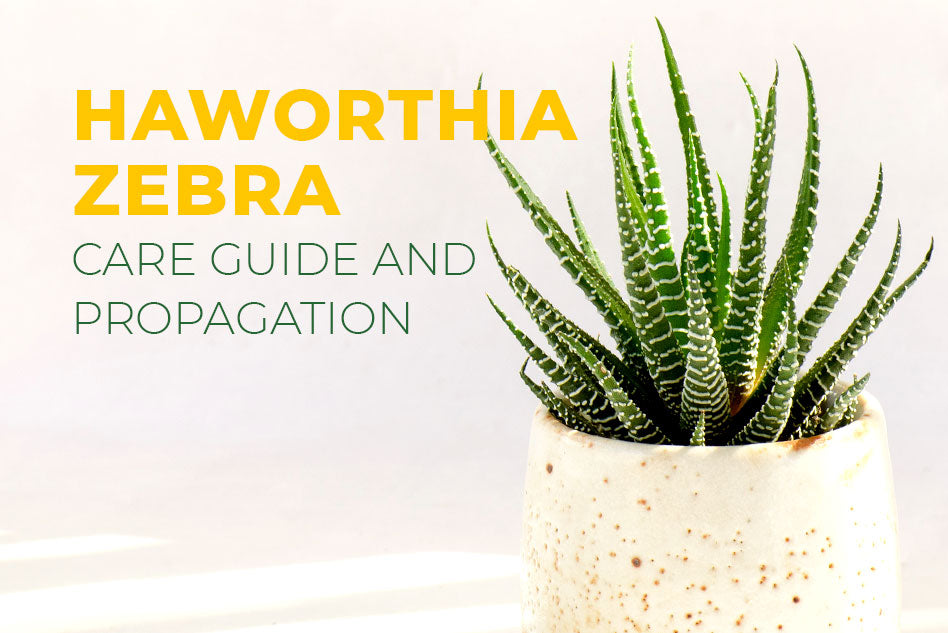
- Haworthia (Zebra Plant) 🦓 – These charming striped succulents are among the most forgiving. They prefer bright indirect light but can handle north-facing windows or shaded corners without stretching badly. Their unique patterns make them a favorite for desks and shelves.
- Gasteria – Often called “ox tongue” due to their thick, tongue-shaped leaves, these plants are slow growers that adapt well to lower light.
- Sansevieria (Snake Plant) – A near-indestructible classic that tolerates very low light while purifying the air. It’s excellent for beginners and busy households.
- Rhipsalis (Mistletoe Cactus) – A trailing jungle-type cactus that actually prefers indirect or filtered light rather than intense direct sun.
- Schlumbergera (Christmas Cactus) 🎄 – This holiday favorite blooms reliably in bright indirect light and is perfect for hanging baskets in living rooms with moderate illumination.
Realistic Expectations for Low-Light Setups: Your succulents won’t develop the intense “blush” colors seen in full sun, and they may grow more slowly. However, with proper watering (less frequent in low light) and well-draining soil, they will stay compact and pest-resistant. Rotate plants every few weeks for even growth.
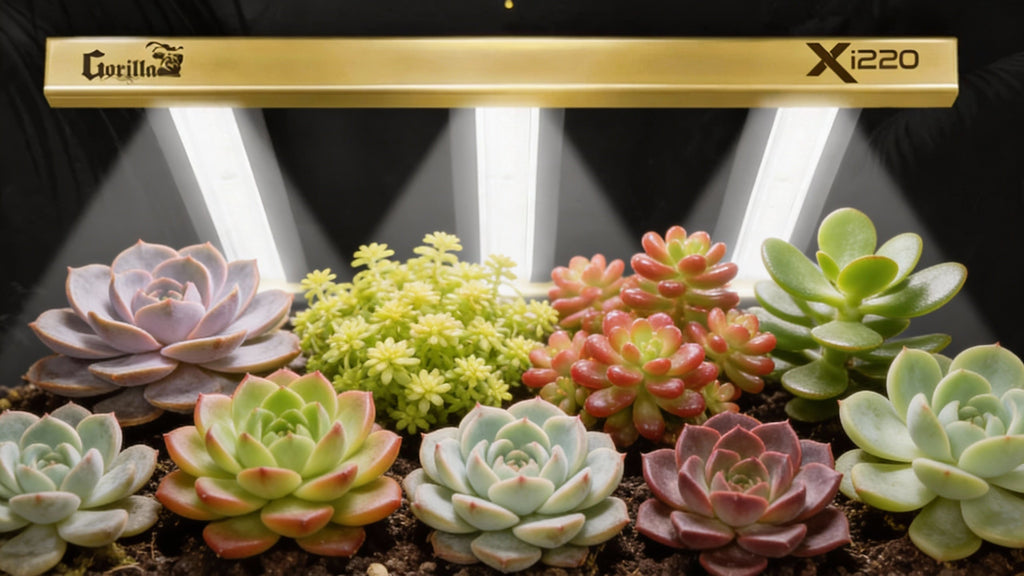
Pro Tip: During darker winter months or in rooms with poor natural light, supplement with full-spectrum LED grow lights for 12–14 hours daily to mimic ideal conditions without overdoing heat.
📊 Quick-Reference Comparison Table: Sunlight Needs at a Glance
Here’s a practical, easy-to-scan table covering 20+ popular succulents. Use it as your go-to cheat sheet when planning placements or shopping for new plants.
| Succulent Variety | Ideal Light Level | Minimum Hours | Best Location | Risk if Light is Wrong |
|---|---|---|---|---|
| Sedum (Stonecrop) | Full Sun | 6+ | South-facing / Outdoor | Leggy growth if too shady |
| Sempervivum (Hens & Chicks) | Full Sun | 6+ | Rock garden / Full exposure | Weak rosettes, poor color |
| Agave | Full Sun | 6+ | Outdoor or bright south window | Stretching, weak structure |
| Echeveria (most species) | Full to Partial Sun | 4–6 | Morning sun + afternoon shade | Etiolation or sunburn |
| Aloe vera | Full to Partial | 5+ | Bright windowsill | Leggy or scorched leaves |
| Crassula ovata (Jade) | Partial / Bright Indirect | 3–5 | East or west window | Weak stems, leaf drop |
| Aeonium | Partial Shade | 3–6 | Filtered morning light | Leggy in low light |
| Kalanchoe | Partial / Bright Indirect | 3–5 | Indoors near window | Poor blooming if too dark |
| Lithops (Living Stones) | Partial Morning Sun | 3–4 | Bright but protected | Rot if too shady |
| Haworthia (Zebra) | Low to Bright Indirect | 2–4 | North window / Office | Minimal stretching |
| Sansevieria (Snake Plant) | Low Light | 1–3 | Any indoor spot | Very slow growth |
| Rhipsalis | Low to Indirect | 2–4 | Hanging in bright room | Sunburn if suddenly moved to direct sun |
| Schlumbergera | Bright Indirect | 3–5 | East window | Fewer blooms in full sun |
Bonus Mini-Tables for Beginners:
- Top 5 for Full Sun: Sedum, Sempervivum, Agave, Graptopetalum, Barrel Cactus
- Top 5 for Low Light: Haworthia, Sansevieria, Gasteria, Rhipsalis, Christmas Cactus
Save or print this table — it’s one of the most requested tools by our readers!
🔍 How to Diagnose Sunlight Problems: Etiolation vs. Sunburn
Even experienced growers occasionally face light-related issues. Here’s how to identify and fix them quickly.
Etiolation (Too Little Light):
- Symptoms: Long, stretched stems; pale or yellowish leaves; widely spaced leaves; weak, floppy growth.
- Fix: Gradually move the plant to brighter light. Prune stretched parts and propagate healthy leaves or cuttings. Increase light over 7–10 days to avoid shock.
Sunburn (Too Much Direct Sun):
- Symptoms: White, brown, or black crispy patches on leaves; scorched edges; transparent or mushy spots.
- Fix: Move immediately to partial shade. Remove severely damaged leaves with sterilized scissors. Allow the plant to recover in bright indirect light for several weeks before reintroducing stronger sun. Damaged areas won’t turn green again but new growth will be healthy.

Other Clues:
- Sudden leaf drop often signals light stress combined with overwatering.
- Pests (like mealybugs) frequently attack weakened, light-stressed plants.
Step-by-Step Troubleshooting:
- Assess current light with a phone app or shadow test.
- Observe symptoms for 1–2 weeks while making small adjustments.
- Adjust watering — plants in low light need far less water.
- Monitor new growth as the ultimate indicator of success.
🏡 Best Practices: Indoor & Outdoor Sunlight Setups That Work
Indoor Placement Guide by Window Orientation:
- South-facing: Ideal for full-sun varieties (use sheer curtains in peak summer).
- East-facing: Perfect gentle morning light for partial-shade succulents.
- West-facing: Strong afternoon sun — great for hardy types but watch for heat buildup.
- North-facing: Best for low-light tolerant varieties.
Outdoor & Balcony Tips: Group full-sun succulents together in rock gardens or raised beds with excellent drainage. In hot tropical climates like Dhaka, provide afternoon shade cloth or move pots during the hottest hours from March to June.
Seasonal Adjustments:
- Summer: Increase ventilation and watch for intense midday sun.
- Winter: Maximize light by cleaning windows and moving plants closer to sources. Consider grow lights in shorter days.
Acclimation Schedule: Always transition new plants slowly — 1–2 hours of direct sun on day 1, increasing gradually over 10–14 days.
💡 Grow Lights for Succulents: When & How to Use Artificial Light
When natural sunlight falls short (common in apartments or during monsoon seasons), full-spectrum LED grow lights become essential. Look for lights with a color temperature of 5000–6500K and PPFD suitable for succulents (around 200–400 µmol/m²/s at plant level).
Recommended Setup:
- Position lights 6–12 inches above plants.
- Run on a timer for 12–14 hours per day.
- Start with affordable clip-on or panel lights for small collections.
Many growers report dramatic improvements in color and compactness after adding consistent artificial lighting.
✅ Expert Tips, Common Mistakes & Pro Hacks
From over a decade of cultivating thousands of succulents, here are my top insights:
- Rotate regularly for even exposure.
- Never move a plant from shade to full sun overnight — acclimate slowly.
- Combine light with proper soil — fast-draining cactus mix prevents root issues in bright conditions.
- Monitor micro-climates — a sunny windowsill can get much hotter than the rest of the room.
- Use reflective surfaces (white walls or aluminum foil behind plants) to boost ambient light naturally.
Common Mistakes to Avoid:
- Placing all succulents in the same spot regardless of variety.
- Ignoring seasonal changes.
- Overwatering low-light plants (they dry out much slower).
Climate-Specific Advice: In tropical regions with high humidity and intense sun, prioritize morning light and excellent airflow to prevent rot and fungal issues.
Bonus Free Resource: Download our printable Succulent Sunlight Tracker checklist to log your plants’ positions and progress monthly.
❓ Frequently Asked Questions (FAQs)
Can succulents survive in low light? Yes — varieties like Haworthia, Sansevieria, and Rhipsalis do well, though growth slows and colors remain subtler.
How many hours of sun do Echeveria need? Most prefer 4–6 hours of bright light, with some direct morning sun for best color and compact form.
What if my succulent gets too much sun? Move it to shade immediately, trim damaged leaves, and allow recovery time. New leaves will grow healthy.
Which succulents are best for north-facing windows? Haworthia, Gasteria, Sansevieria, and Christmas Cactus are excellent choices.
Do succulents need direct sunlight every day? Not necessarily. Many thrive with a mix of direct and bright indirect light, as long as total exposure meets their needs.
Other popular questions: How do I prevent etiolation? Can I use regular household lights? What’s the difference between sunburn and edema?
🎯 Conclusion: Give Your Succulents the Light They Deserve
Mastering sunlight requirements for different succulents transforms your collection from struggling to spectacular. Whether you have a sunny balcony full of vibrant Sedum and Sempervivum, a cozy indoor setup with Jade Plants and Aeoniums, or a low-light corner brightened by Zebra Plants and Snake Plants, the key is matching each variety to its ideal light level.
Remember: Observe your plants closely — they will tell you what they need through their growth and color. Start with small adjustments, be patient during acclimation, and enjoy the rewarding process of growing healthier, more beautiful succulents.
Have a specific succulent struggling with light? Drop its name and your current setup in the comments below — I’m happy to give personalized advice!
For more expert plant care, explore our complete guides on watering succulents, best soil mixes, and propagation techniques.
Thank you for reading this comprehensive guide. Your succulents will thank you with compact growth, stunning colors, and long-lasting beauty! 🌵✨











