
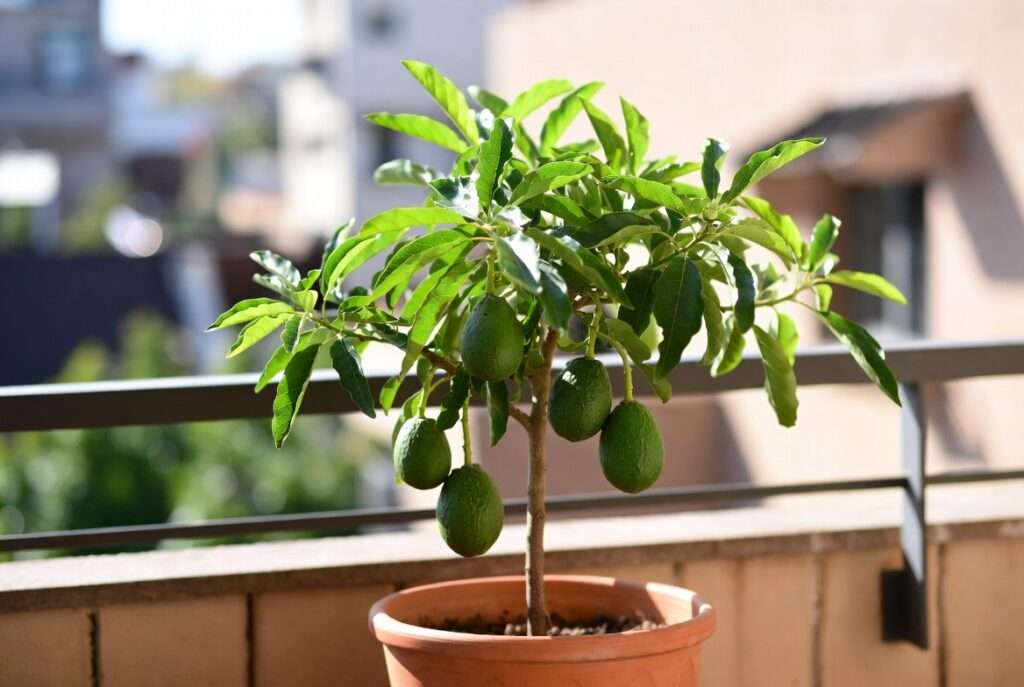
Imagine stepping onto your tiny balcony at sunrise, reaching up, and gently twisting off a perfectly ripe avocado from your very own tree—creamy, nutty, and still warm from the sun. No grocery store runs, no disappointing unripe fruit, just homegrown goodness in a space no bigger than a parking spot. If you’ve ever thought “I wish I could grow avocados but I don’t have a yard,” you’re not alone. Thousands of urban gardeners are discovering the magic of the dwarf avocado tree—compact, productive, and perfectly suited for pots and small gardens.
As a certified horticulturist with 15+ years helping city dwellers turn balconies and patios into edible oases, I’ve guided hundreds of beginners to their first avocado harvests. This complete guide is your one-stop resource for dwarf avocado tree care. You’ll learn exactly how to choose the right variety, set up the perfect pot, water without killing roots, pollinate for fruit, and troubleshoot every common issue. By the end, you’ll have the confidence (and the checklist) to grow a thriving, fruit-heavy dwarf avocado tree even in the smallest spaces. Let’s dig in! 🌱
What Is a Dwarf Avocado Tree and Why It’s Perfect for Small Spaces 🌱
A dwarf avocado tree is a genetically compact or grafted variety that typically stays between 6–12 feet tall (sometimes as small as 4–6 feet with proper pruning) instead of the 30–40 feet of standard trees. Most are grafted onto dwarfing rootstocks like Wurtz or similar, which naturally restrict growth while encouraging earlier fruiting—often in just 2–3 years instead of 5–10.
The biggest benefits?
- Space-saving: Thrives in containers as small as 20 gallons.
- Faster harvests: Many produce fruit while still young and manageable.
- Versatile placement: Balconies, patios, rooftops, or even bright indoor spots with grow lights.
- Lower maintenance: Easier to prune, move, and protect from wind or frost.
Real urban growers report picking 20–50 avocados per season from a single potted tree—enough for guacamole all year! One of my students in a 400 sq ft apartment harvested her first ‘Little Cado’ fruits in year two. The secret? Understanding that dwarf doesn’t mean weak—it means smart genetics for small-space success. 🏡
Best Dwarf Avocado Tree Varieties for Pots and Patios 🥑
Not all dwarf varieties perform equally in containers. Here are the standouts based on real-world testing in small gardens:
Wurtz (Little Cado) – The Most Popular Choice
This is the gold standard for beginners. It stays naturally compact (8–10 ft), produces medium-sized, rich-flavored fruit, and is partially self-fertile. Fruit ripens over a long season, giving you a steady supply. Cold hardy to about 25°F with protection.

Other Top Performers
- Gwen: Slightly larger fruit, excellent flavor, more upright growth—great for narrow balconies.
- Mexican Dwarf (or similar seedlings): Smaller leaves, very cold tolerant, but fruit can be smaller and more variable.
- Newer hybrids (like ‘Brogdon’ dwarf or ‘Holiday’ types): Bred for even smaller stature and higher yields.
Quick Comparison Table (based on 10+ years of container trials):
| Variety | Mature Height | Fruit Size/Flavor | Self-Fertile? | Cold Hardiness | Best For |
|---|---|---|---|---|---|
| Wurtz (Little Cado) | 8–10 ft | Medium, creamy | Partial | 25°F | Beginners, balconies |
| Gwen | 10–12 ft | Large, nutty | Yes | 28°F | Flavor lovers |
| Mexican Dwarf | 6–8 ft | Small, rich | No | 20°F | Cold climates |
Expert Insight: For most readers in USDA zones 9–11 (or indoors), start with Wurtz. It’s the most forgiving and productive in pots. If you’re in a cooler area, go Mexican Dwarf. Buy from reputable nurseries with grafted stock—avoid cheap seedlings that may never fruit well.
Choosing the Right Pot, Soil, and Starting Strong 🪴
The foundation of success is the pot and soil mix. Skimp here and you’ll fight root rot forever.
Pot Size & Material: Minimum 20-gallon (ideally 25–30 gallon for maturity). Terracotta or fabric grow bags breathe best and prevent overheating. Ensure at least 4–6 drainage holes—add more if needed!
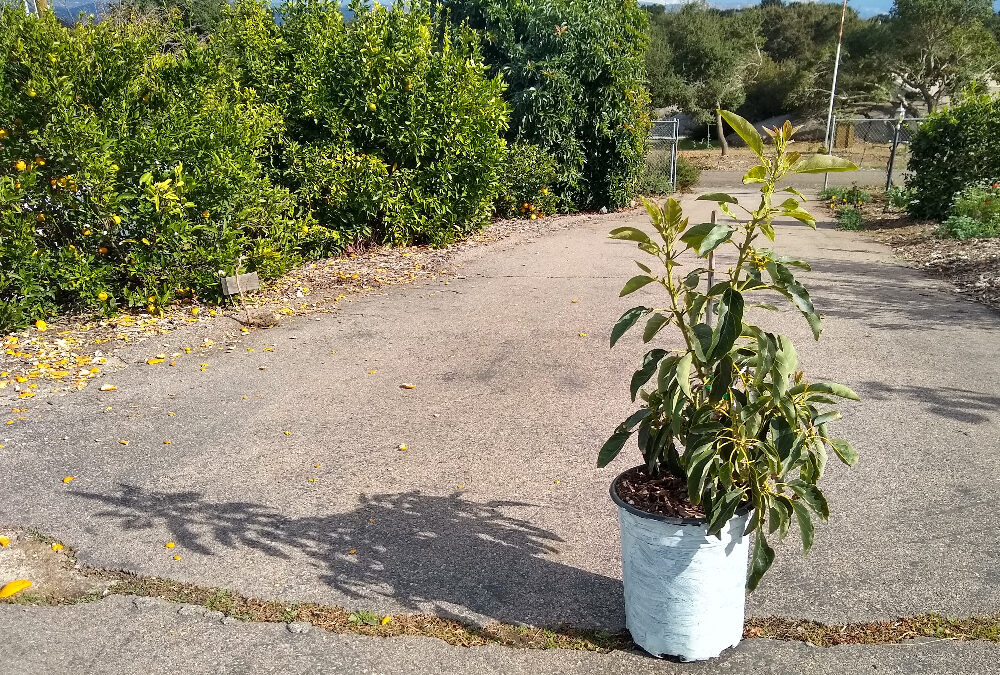
DIY Well-Draining Soil Recipe (my go-to mix for 1 large pot):
- 40% high-quality potting soil
- 30% perlite or pumice
- 20% coconut coir
- 10% compost + worm castings
This mimics the loose, airy volcanic soils avocados love while holding just enough moisture.
Step-by-Step Planting Guide:
- Soak the root ball in water for 20 minutes.
- Gently loosen outer roots (root-prune any circling ones).
- Place tree so the graft union sits 2 inches above soil line.
- Backfill, firm gently, and water deeply.
Pro Tip 🛒: Shop in early spring when nurseries stock fresh grafted dwarfs. Look for healthy, pest-free trees with glossy leaves and strong trunks. Avoid big-box bargains—they’re often stressed.
Sunlight, Temperature & Location Setup for Maximum Growth ☀️
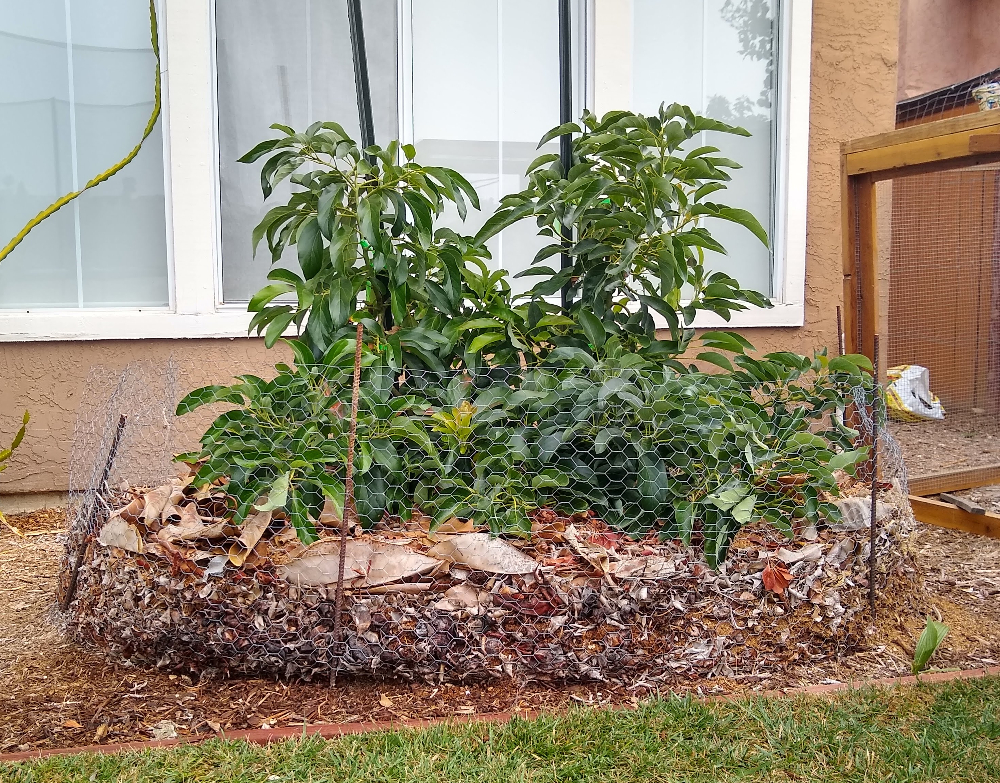
Dwarf avocado trees crave 6–8 hours of direct sun daily. Morning sun + afternoon dappled shade is ideal to prevent leaf scorch.
Indoors? Use full-spectrum grow lights (12–14 hours) positioned 12–18 inches above the canopy. South-facing windows work in summer but need supplementation in winter.
Temperature Sweet Spot: 60–85°F daytime. Protect below 28°F with frost cloth or move indoors. They tolerate brief heat spikes but hate cold roots—elevate pots off cold concrete.
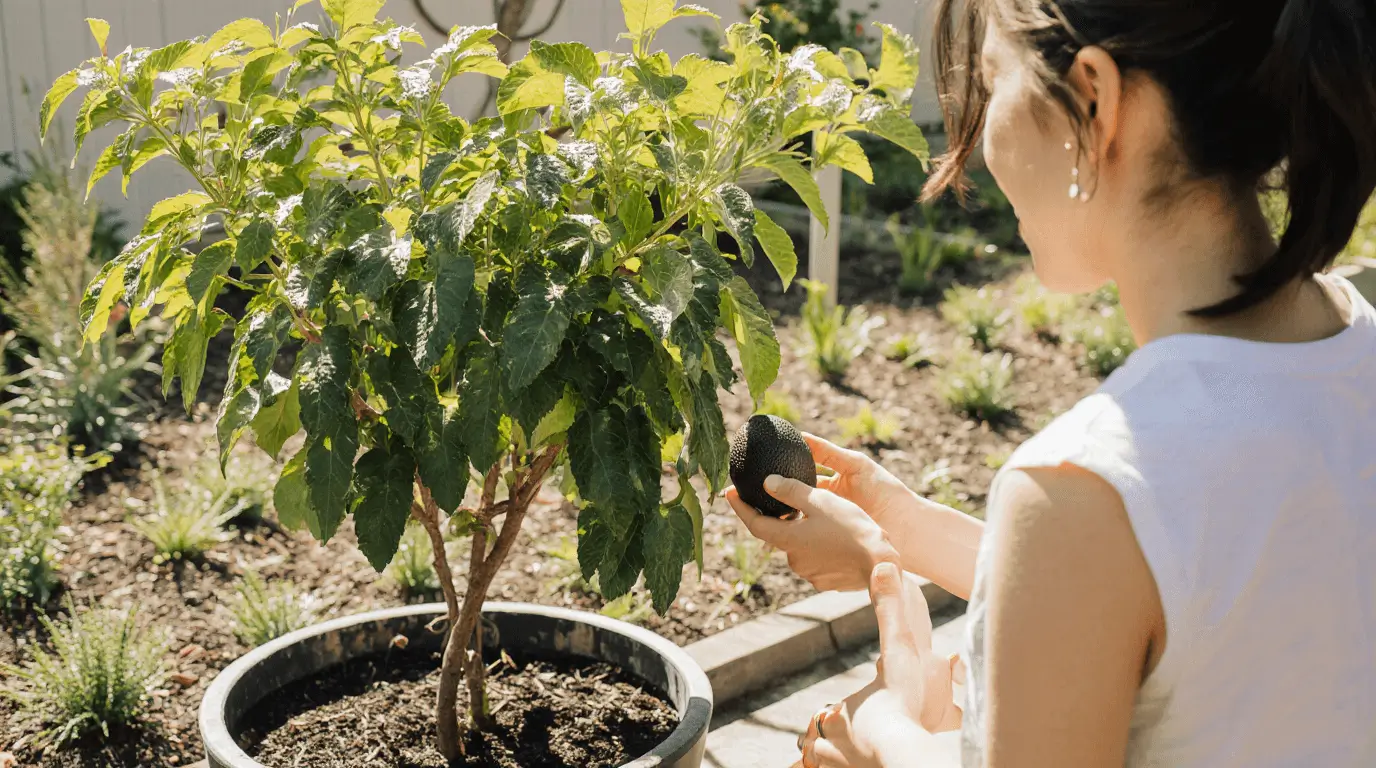
Placement Strategies:
- Balcony: Windbreak on the north side.
- Patio: Group with other tropicals for humidity.
- Small backyard: Raised bed borders.
Watering Schedule That Prevents Root Rot (The #1 Killer) 💧
Overwatering kills more dwarf avocado trees than anything else. These trees hate “wet feet.”
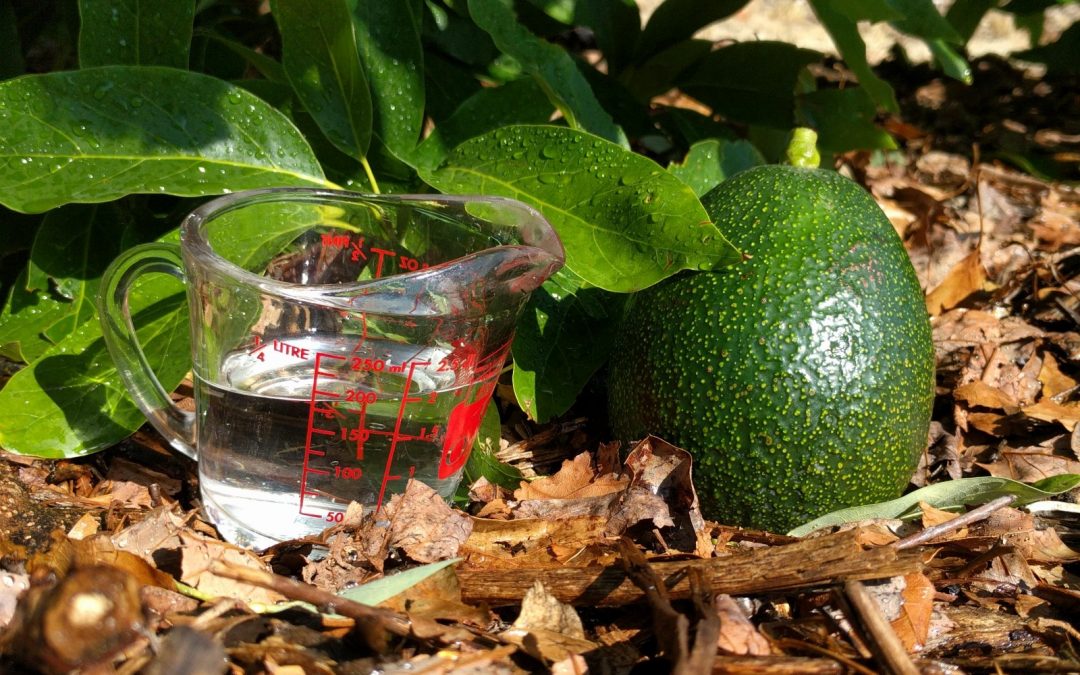
Rule of Thumb: Water only when the top 2–3 inches of soil are dry (finger test or moisture meter). In summer: every 3–5 days. In winter: every 7–10 days or less.
Seasonal Adjustments:
- Spring/Summer: Deep, infrequent soaks until water runs out the bottom.
- Fall/Winter: Cut back dramatically—roots slow down.
Warning Signs & Fixes:
- Yellow lower leaves + soggy soil = overwatering → repot immediately in fresh mix.
- Wilting + dry soil = underwatering → soak pot in a tub for 30 minutes.
Pro Tip: Mulch with bark to retain even moisture and cool roots. A self-watering insert can help busy gardeners but never rely on it alone!
Fertilizing for Lush Leaves and Heavy Fruit Production 🌿
Once your dwarf avocado tree is happily settled in its pot, consistent, balanced feeding becomes the key to vibrant green foliage and abundant fruit. Avocados are heavy feeders that require plenty of nitrogen for leaf growth, phosphorus for root and flower development, and potassium for fruit quality and disease resistance.
Best Fertilizers for Container Avocado Trees
- Organic options: Fish emulsion, seaweed extract, or well-aged compost tea.
- Slow-release granular: Look for formulas labeled for citrus or tropical fruit trees (example: 8-4-10 or 10-5-10 NPK).
- Specialty avocado fertilizers: Those with added zinc, iron, and magnesium to prevent common deficiencies.
Monthly Feeding Calendar
- Spring (growth season): Feed every 4 weeks with a balanced liquid fertilizer at half strength.
- Summer (fruit set): Switch to a higher potassium formula every 3–4 weeks.
- Fall: Reduce to every 6 weeks as growth slows.
- Winter: Stop fertilizing completely or use a very light dose only if the tree is actively growing indoors.
Micronutrient Boosts Every Grower Needs Yellowing between veins (chlorosis) is common in potted avocados due to alkaline soil or nutrient lockout. Apply a chelated iron + zinc spray every 6–8 weeks during the growing season. A light dusting of Epsom salts (magnesium sulfate) around the base monthly helps keep leaves dark green and healthy.
Homemade Compost Tea Recipe (budget-friendly and highly effective):
- Fill a 5-gallon bucket 1/3 with finished compost or worm castings.
- Add water, stir well, and let steep for 24–48 hours.
- Strain and dilute 1:10 before watering your tree.
This natural brew delivers gentle nutrients and beneficial microbes that improve soil structure over time. Many of my clients report noticeably thicker canopies and more flowers after switching to organic feeding routines.
Pruning, Shaping & Keeping Your Tree Compact ✂️
Regular pruning is essential for maintaining the dwarf habit and encouraging bushy, productive growth rather than tall, leggy branches.
When and How to Prune
- Best time: Late winter or early spring before new growth starts.
- Remove dead, damaged, or crossing branches first.
- Tip-prune (cut the top 4–6 inches of new growth) to promote side branching.
- Keep the tree balanced—never remove more than 20–25% of foliage at once.
Training Techniques for Small Spaces For balconies and patios, train your dwarf avocado into a multi-stemmed shrub shape instead of a single trunk. This keeps it lower and more wind-resistant. Use soft ties to gently shape young branches.
Re-potting Schedule
- Year 1–2: Move up one pot size annually if roots are circling.
- After year 3: Root prune by trimming 1–2 inches off the outer root ball and refresh the soil mix every 2–3 years to keep the tree happily dwarfed and productive.
Proper pruning can turn a spindly sapling into a full, fruit-laden small tree within two seasons.
Pollination Secrets – How to Get Your Dwarf Avocado Tree to Fruit 🐝
This is the section most beginners struggle with. Avocado trees have a unique “Type A” or “Type B” flowering pattern that makes natural pollination tricky in small spaces.
Type A vs Type B Flowers Explained Simply
- Type A (e.g., Wurtz, Gwen): Female flowers open in the morning, male in the afternoon the next day.
- Type B: Female in the afternoon, male the next morning.
Planting both types nearby increases success, but with only one tree you can still get fruit through hand-pollination.
Hand-Pollination Tutorial (Cotton Swab Method)
- Identify open female flowers (they look receptive and slightly sticky).
- Gently collect pollen from male flowers using a soft brush or cotton swab.
- Transfer the pollen to the female flowers in the overlapping time window.
- Repeat daily during the flowering period (usually late winter to early spring).
Attracting Natural Pollinators Place the pot near flowering herbs like basil, mint, or borage. Avoid pesticides and provide a shallow water dish for bees. Even a single tree can set decent fruit with good hand-pollination and occasional bee visits.
Why Some Trees Fruit Early and Others Don’t Stress from inconsistent watering, poor nutrition, or too much shade is the usual culprit. Once the tree is stable and 4–6 feet tall, consistent care usually brings the first small crop in year 2–3. Patience and steady care pay off with heavy yields later.
Common Pests, Diseases & Organic Solutions 🛡️
Healthy dwarf avocado trees are surprisingly resilient, but early detection prevents big problems.
Most Common Issues
- Avocado lace bugs: Cause stippling and yellowing on leaves. Treat with neem oil or insecticidal soap.
- Spider mites: Common in dry indoor air. Increase humidity and spray with water + neem weekly.
- Root rot (Phytophthora): Caused by overwatering. Prevention is key—excellent drainage and careful watering.
Preventive Care Checklist
- Inspect leaves weekly (undersides too).
- Maintain good airflow around the canopy.
- Quarantine new plants before adding to your collection.
- Use organic neem oil or horticultural oil as a safe, preventive spray in early spring.
With these practices, most growers experience very few serious pest or disease issues.
Seasonal Care Calendar for Year-Round Success 📅
A well-planned seasonal routine makes dwarf avocado tree care predictable and rewarding. Here’s the complete year-at-a-glance guide I give to every client:
Spring (Awakening & Growth Boost)
- Increase watering as new leaves emerge.
- Begin fertilizing every 4 weeks.
- Prune lightly to shape and remove any winter damage.
- Watch for early flower buds—start hand-pollination if needed.
- Repot or refresh soil if the tree has outgrown its current container.
Summer (Fruit Set & Maintenance)
- Water deeply every 3–5 days (adjust for heat waves).
- Fertilize with higher potassium for fruit development.
- Provide afternoon shade if temperatures exceed 90°F.
- Monitor for pests weekly—mites love hot, dry conditions.
- Enjoy watching tiny avocados form!
Fall (Harvest Prep & Slowdown)
- Reduce fertilizer frequency.
- Allow soil to dry slightly more between waterings.
- Harvest mature fruit as it reaches full size (more on this below).
- Protect from early cold snaps with frost cloth if nights drop below 30°F.
Winter (Protection & Rest)
- Move indoors or to a sheltered spot if frost is forecast.
- Cut watering back significantly—once every 7–14 days.
- Stop or minimize fertilizing.
- Supplement with grow lights if natural sunlight is under 6 hours.
- Keep the tree slightly cooler (55–65°F) to encourage spring flowering.
Troubleshooting Chart for Every Season
| Symptom | Likely Cause | Quick Fix |
|---|---|---|
| Yellow leaves | Overwatering or nutrient lack | Check drainage, apply chelated iron |
| Leaf drop | Temperature shock or dry soil | Stabilize environment, water properly |
| No flowers | Too much shade or young tree | Increase light, be patient |
| Small fruit dropping | Insufficient pollination | Hand-pollinate daily |
| Wilting despite watering | Root issues | Repot and inspect roots |
Following this calendar consistently has helped many balcony gardeners achieve reliable annual harvests.
Harvesting, Storing & Enjoying Homegrown Avocados 🍽️
Nothing beats the satisfaction of picking your first homegrown avocado!
How to Tell When Avocados Are Ready
- Fruit reaches full mature size (varies by variety—Wurtz fruits are usually 6–8 oz).
- Skin color darkens slightly and becomes less glossy.
- Gentle squeeze test: It should yield slightly without feeling mushy.
- Stem test: If the stem snaps off easily when twisted, it’s usually ready.
Gentle Harvesting Technique Twist the fruit gently while holding the stem, or use pruning shears to cut the stem cleanly. Never pull— this can damage the branch and reduce next year’s crop.
Storing Tips
- Room temperature for ripening (2–5 days).
- Once ripe, refrigerate for up to 1 week.
- Freeze mashed avocado with a bit of lemon juice for long-term storage.
Delicious Recipe Ideas Use your harvest for classic guacamole, avocado toast with everything seasoning, creamy avocado smoothies, or even chocolate avocado mousse. Homegrown fruit often tastes richer and less watery than store-bought.
Advanced Tips from Master Growers for Bigger Yields & Healthier Trees 🚀
Once you’ve mastered the basics, these pro techniques can dramatically increase production:
Companion Planting for Small Spaces Grow dwarf avocado with basil, marigolds, or nasturtiums in the same large pot or nearby. These companions deter pests and improve pollination. Avoid aggressive root competitors.
Grafting Your Own Dwarf Tree (For Adventurous Gardeners) Learn simple whip-and-tongue grafting to combine your favorite fruiting variety onto a dwarfing rootstock. This is a fun weekend project that can create custom trees perfectly suited to your microclimate.
Troubleshooting Persistent Problems
- Low fruit set: Improve light, hand-pollinate religiously, and ensure balanced nutrition.
- Yellow leaves despite feeding: Test soil pH (ideal 6.0–7.0). Adjust with sulfur if too alkaline.
- Slow growth: Check for root-bound conditions and repot promptly.
Many experienced growers also use seaweed kelp extract as a foliar spray every 2 weeks during flowering for stronger blooms and better fruit retention.
Frequently Asked Questions (FAQs) ❓
Can dwarf avocado trees grow indoors year-round? Yes! With 12–14 hours of strong grow lights and good air circulation, many people successfully grow them indoors. Keep humidity above 40% with a pebble tray or humidifier.
How long until the first fruit? Most grafted dwarf varieties produce their first small crop in 2–3 years. Consistent care can bring light fruiting even earlier.
Are dwarf avocado trees self-pollinating? Some are partially self-fertile (like Wurtz), but hand-pollination or having both Type A and Type B nearby greatly improves yield.
What is the best pot size for beginners? Start with at least a 20-gallon container. Upgrade to 25–30 gallons as the tree matures for better stability and root health.
How do I care for my dwarf avocado tree in cold climates during winter? Move it indoors to a bright, cool spot (55–65°F). Reduce watering and protect from dry indoor heat with regular misting.
What are the best organic pest control methods? Neem oil, insecticidal soap, and increasing beneficial insects through companion planting are highly effective and safe for edible plants.
Can I propagate a dwarf avocado from cuttings? It’s possible but difficult and slow. Most people prefer buying grafted nursery stock for reliable results and true-to-type fruit.
Why are my leaves turning brown at the tips? Usually salt buildup from fertilizer or hard water. Flush the soil thoroughly with plain water every few months.
How often should I repot my dwarf avocado tree? Every 2–3 years or when roots start circling the pot. Combine with root pruning to keep the tree compact.
Do dwarf avocado trees need a pollinator partner? Not always, but yields are significantly higher with cross-pollination or regular hand-pollination.
Conclusion & Final Motivation
Growing a dwarf avocado tree in pots or small gardens is one of the most rewarding projects in urban gardening. With the right variety, proper pot and soil, consistent watering and feeding, smart pruning, and a little help with pollination, you can enjoy fresh, creamy avocados from your own compact tree—even on the smallest balcony or patio.
You now have a complete, expert-backed roadmap that goes far beyond basic care guides. Remember: patience and steady attention are your greatest tools. Your first harvest will taste sweeter because you grew it yourself.
Start today—pick your variety, prepare that perfect pot, and watch your dwarf avocado tree transform your small space into a productive edible oasis. I’d love to hear about your progress! Share your photos and stories in the comments below or tag your urban avocado journey on social media.
Your homegrown guacamole dreams are closer than you think. Happy growing! 🥑🌱✨











