
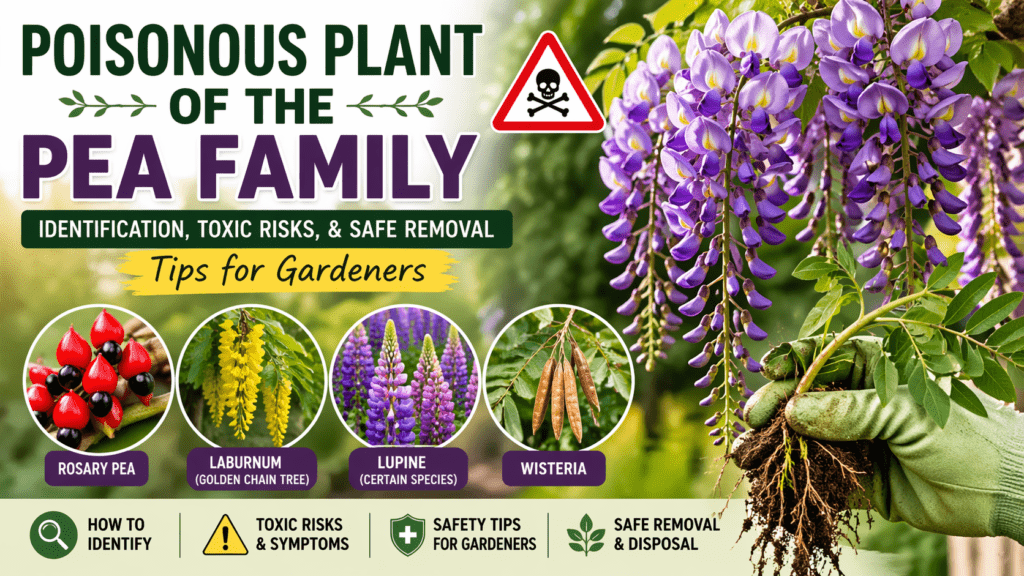
Imagine this: you’re admiring a stunning flowering vine or a tree dripping with golden blossoms in your garden. It looks harmless—maybe even beneficial for pollinators. But what if that plant is actually a poisonous plant of the pea family hiding in plain sight?
Many gardeners are surprised to learn that the same plant family that gives us nutritious beans and peas also includes highly toxic species capable of harming humans, pets, and livestock. 🌱☠️
The real danger? These plants are often grown for their beauty, not their safety.
In this expert guide, you’ll learn how to:
- Identify toxic pea family plants with confidence 🔍
- Understand the real risks they pose ⚠️
- Remove them safely without putting yourself at risk 🧤
- Replace them with safer, garden-friendly alternatives 🌼
Whether you’re a home gardener, plant enthusiast, or someone responsible for a family-friendly yard, this guide will help you protect what matters most—without sacrificing beauty.
🌱 What Is a Poisonous Plant of the Pea Family?
🌿 Understanding the Fabaceae (Pea Family)
The Fabaceae family, also known as the pea or legume family, is one of the largest plant families in the world 🌍. It includes over 19,000 species, ranging from edible crops to ornamental plants.
Common members include:
- Peas 🟢
- Beans 🌱
- Lentils
- Clover 🍀
- Wisteria 🌸
Most people associate this family with food—but here’s the twist:
👉 Some of the most toxic ornamental plants belong to this same group.
⚠️ Why Are Some Pea Family Plants Poisonous?
Plants in this family produce natural chemical defenses to deter animals and pests. These include:
- Alkaloids – affect the nervous system
- Lectins – disrupt digestion
- Toxalbumins (like abrin) – extremely dangerous even in tiny amounts
These compounds are not just mildly irritating—they can be life-threatening if ingested.
🌸 Common Poisonous Plants in the Pea Family You Should Know
Understanding which plants pose a risk is your first line of defense. Below are some of the most dangerous yet commonly encountered species.
🌺 Rosary Pea (Abrus precatorius)

- 🔴 Bright red seeds with a black spot
- Commonly used in jewelry (which is extremely dangerous!)
- Contains abrin, one of the most toxic plant compounds known
⚠️ Just one crushed seed can be fatal if ingested.
🌼 Laburnum (Golden Chain Tree)

- Stunning cascading yellow flowers 🌼
- Popular ornamental tree in gardens
- Toxic parts:
- Seeds
- Bark
- Flowers
⚠️ Often mistaken as harmless due to its beauty.
🌿 Lupine (Certain Species)

- Tall, colorful flower spikes 🌸
- Some varieties are safe—but others are toxic
- Contains alkaloids harmful to:
- Livestock 🐄
- Pets 🐕
⚠️ Toxicity varies by species—making identification crucial.
🌸 Wisteria

- Elegant climbing vine 🌿
- Produces fragrant purple or white flowers
- Toxic components:
- Seeds
- Pods
⚠️ Ingestion can cause serious digestive distress.
💡 Expert Tip:
Not all plants in the pea family are dangerous—but assuming they’re safe without verification is a common (and risky) mistake.
🔍 How to Identify a Poisonous Plant of the Pea Family
Correct identification is the most important step in preventing exposure.
👀 Key Visual Features to Look For
Many Fabaceae plants share similar characteristics:
- Seed Pods
- Long, bean-like structures
- Butterfly-shaped Flowers 🦋
- Distinctive petal arrangement
- Compound Leaves
- Multiple small leaflets on one stem
👉 However, these features alone don’t confirm toxicity.
📱 Tools for Accurate Identification
To avoid dangerous mistakes, use:
- Plant identification apps (AI-based recognition) 📱
- Local horticulture experts 🌿
- Botanical field guides 📚
- Extension services or nurseries
⚠️ Common Misidentification Mistakes
- Assuming all pea-like plants are edible ❌
- Judging safety based on appearance alone
- Ignoring seed pods (often the most toxic part)
☠️ Toxic Risks and Symptoms of Exposure
Understanding the risks helps you act quickly—and potentially save lives.
🧍 Effects on Humans
Symptoms vary depending on the plant and exposure level:
- Nausea and vomiting 🤢
- Abdominal pain
- Diarrhea
- Difficulty breathing
- Severe poisoning (in rare cases)
⚠️ Children are especially vulnerable due to accidental ingestion.
🐕 Effects on Pets
Dogs and cats are naturally curious—making them high-risk.
Common symptoms include:
- Drooling excessively 🤤
- Weakness
- Loss of appetite
- Seizures
⚠️ Even small amounts can be dangerous.
🐄 Risks to Livestock
In rural or semi-rural areas:
- Grazing animals may ingest toxic plants unknowingly
- Leads to:
- Illness
- Reduced productivity
- In severe cases, death
🚨 What to Do If Exposure Occurs
Quick action can make all the difference.
🆘 Immediate First Aid Steps
- Remove any plant material from the mouth
- Rinse thoroughly with clean water 💧
- Do NOT induce vomiting unless instructed
- Keep the affected person or pet calm
📞 When to Seek Professional Help
Call a medical professional or veterinarian immediately if:
- Symptoms appear within hours
- You suspect ingestion of seeds or pods
- The person is a child or the pet is small
🧤 Safe Removal Tips for Gardeners
Removing toxic plants requires care—not just effort.
🪓 When Should You Remove Toxic Plants?
Consider removal if:
- You have children 👶
- You own pets 🐾
- The plant is easily accessible
🧤 Protective Measures Before Removal
Always wear:
- Gloves 🧤
- Long sleeves 👕
- Eye protection 👓
Avoid direct skin contact.
🌱 Step-by-Step Safe Removal Process
- Confirm identification 🔍
- Water the soil (loosens roots)
- Pull from the base carefully
- Remove entire root system
- Place in sealed bag immediately 🚮
♻️ Proper Disposal Guidelines
- ❌ Do NOT compost toxic plants
- ✅ Use municipal green waste programs
- ✅ Follow local disposal regulations
🌼 Safe Alternatives to Poisonous Pea Family Plants
You don’t have to sacrifice beauty to maintain a safe garden 🌸✨. If you’ve removed a poisonous plant of the pea family, replacing it with non-toxic, visually appealing alternatives is the smartest next step.
🌿 Non-Toxic Ornamental Alternatives
Here are safer options that still deliver stunning color and structure:
- 🌸 Camellia – Elegant blooms, perfect for shaded gardens
- 🌼 Marigold – Bright, pest-repelling flowers
- 🌺 Hibiscus – Tropical beauty with large, vibrant blooms
- 🌷 Snapdragon – Similar vertical flower spikes to lupines
- 🌿 Bougainvillea – A climbing alternative to wisteria (non-toxic to most pets)
💡 These plants provide aesthetic appeal without introducing toxic risks.
🐾 Pet-Friendly Garden Options
If you share your garden with pets, safety becomes even more critical.
Consider:
- 🌱 Basil & Mint – Edible and safe herbs
- 🌼 Sunflowers – Non-toxic and pollinator-friendly 🌻
- 🌿 Spider Plant – Safe and low-maintenance
- 🌸 Zinnias – Colorful and pet-safe
👉 Always cross-check plant safety with trusted horticultural or veterinary sources.
🧠 Expert Tips for Preventing Toxic Plant Risks in Your Garden
Prevention is always better than emergency action. As a plant care expert, here are proven strategies to keep your garden safe long-term.
🏷️ Label Your Plants Clearly
- Especially important if you grow a variety of species
- Helps family members and visitors identify plants safely
👨👩👧 Educate Everyone in Your Household
- Teach children not to touch or eat unknown plants 🚫
- Inform family members about toxic species in your garden
🔍 Conduct Regular Garden Inspections
- Check for:
- New growth
- Volunteer plants (self-seeded)
- Unknown species
👉 Many toxic plants spread unnoticed if left unchecked.
🌱 Avoid Planting Unknown Species
- Never plant something you can’t confidently identify
- Be cautious with:
- Gifted plants 🎁
- Wild transplants
- Online purchases without proper labeling
📍 Be Strategic with Plant Placement
If you choose to keep certain ornamental plants:
- Place them out of reach of pets and children
- Avoid planting near:
- Walkways 🚶
- Play areas 🛝
- Entry points
❓ Frequently Asked Questions (FAQs)
❓ Are all plants in the pea family poisonous?
No—not at all. Many are safe and edible, including:
- Peas 🟢
- Beans
- Lentils
However, some ornamental and wild species are highly toxic, which is why identification is crucial.
❓ Which part of a poisonous pea family plant is most dangerous?
In most cases:
- Seeds and pods are the most toxic ⚠️
- Leaves and bark may also contain harmful compounds
👉 Always assume the entire plant could pose a risk unless confirmed safe.
❓ Can touching these plants cause poisoning?
Generally:
- Most require ingestion to cause serious harm
- However, some may cause:
- Skin irritation
- Allergic reactions
💡 Wearing gloves is always a smart precaution.
❓ How do I know if my garden is safe?
Perform a simple plant safety audit:
- Identify every plant species 🌿
- Remove unknown or toxic plants
- Replace with safe alternatives
👉 This is especially important for households with kids or pets.
❓ What makes some pea family plants more toxic than others?
The level of toxicity depends on:
- Type of chemical compounds (e.g., abrin vs. mild alkaloids)
- Concentration of toxins
- Plant part consumed
⚠️ For example, rosary pea seeds are far more dangerous than lupine leaves.
📌 Final Thoughts: A Safer Garden Starts with Awareness 🌿✨
Gardening is meant to be peaceful, rewarding, and life-enhancing—but hidden dangers like a poisonous plant of the pea family can turn that experience into a serious risk if ignored.
The good news? You now have the knowledge to:
- Identify toxic plants with confidence 🔍
- Understand the real risks they pose ⚠️
- Take safe, effective action 🧤
- Build a garden that is both beautiful and safe 🌸
🌱 Remember: The most stunning garden is one that protects the people and pets who enjoy it.











