
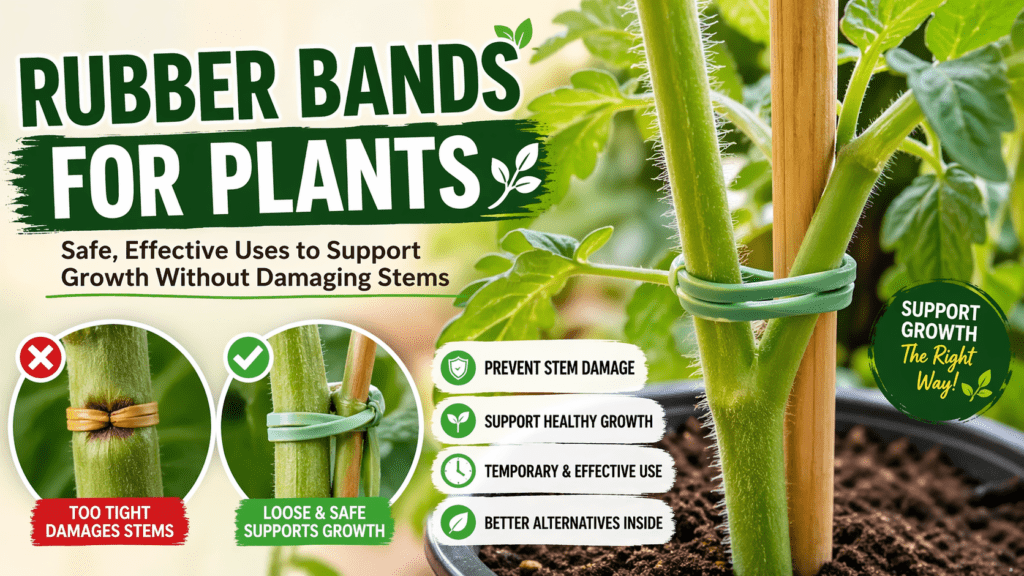
It might surprise you, but one of the most commonly used “quick fixes” in gardening can quietly damage your plants. Many home gardeners reach for rubber bands for plants when they need a fast way to support stems, bundle growth, or guide vines. It’s convenient, cheap, and always within reach.
But here’s the truth: rubber bands can either help your plants thrive—or slowly choke them. 🌿
As someone experienced in plant care and tree management, I’ve seen both outcomes. Used properly, rubber bands can temporarily stabilize delicate growth. Used incorrectly, they can restrict nutrient flow, scar stems, and even kill sections of a plant.
This in-depth guide will show you:
- ✅ When rubber bands are safe to use
- ⚠️ The hidden risks most gardeners overlook
- 🌱 Expert-approved methods to prevent damage
- 🔄 Better alternatives for long-term plant health
Let’s break it down so you can protect your plants while still using practical solutions.
Table of Contents
Toggle🌿 Are Rubber Bands Safe for Plants?
🌱 How Rubber Bands Interact with Plant Growth
Plants are living, expanding organisms. As stems grow, they increase in thickness (secondary growth) and require space to transport water and nutrients through vascular tissues (xylem and phloem).
Rubber bands, by nature, apply constant pressure. Even though they stretch, they don’t always expand fast enough to match plant growth.
👉 This creates a serious issue known as girdling—when a tight band constricts the stem, cutting off circulation.
⚠️ Potential Risks of Using Rubber Bands
Here’s what can go wrong if rubber bands are misused:
❌ 1. Stem Damage and Girdling
- Rubber bands can dig into soft plant tissue
- Over time, they may cut into the stem, leaving permanent scars
❌ 2. Restricted Nutrient Flow
- Plants rely on uninterrupted flow of water and sugars
- Constriction can weaken or kill upper plant sections
❌ 3. Heat and Sunlight Damage 🌞
- Rubber heats up in direct sunlight
- This can “burn” delicate stems or accelerate degradation
❌ 4. Sudden Snapping
- Old rubber bands become brittle
- They can snap unexpectedly, causing plants to fall or break
✅ When Rubber Bands Can Be Used Safely
Despite the risks, rubber bands aren’t entirely off-limits. They can be useful when:
- 🌱 Supporting very young seedlings temporarily
- 🌿 Guiding lightweight vines for short periods
- 🛠️ Fixing broken stems in emergencies
- 🪴 Organizing plant clusters briefly
💡 Key rule: Think of rubber bands as a temporary solution—not a permanent support system.
🌼 Practical Uses of Rubber Bands for Plants (Done Right)
🌱 Supporting Young Seedlings

Young seedlings often struggle with weak stems, especially indoors or in low light.
✔️ How to Use Rubber Bands Safely:
- Loop loosely around a stake and plant
- Never tie directly tight against the stem
- Leave room for movement and growth
💡 Expert Tip: If the seedling sways slightly, that’s good—it builds strength.
🌸 Training Climbing Plants
Climbing plants like pothos, beans, or peas often need guidance early on.
✔️ Safe Method:
- Use rubber bands to lightly guide vines onto a trellis
- Avoid wrapping tightly—anchor loosely instead
⚠️ Remove once the plant attaches naturally.
🌳 Organizing Plant Stems and Branches
Sometimes plants grow messy—especially herbs or bushy indoor plants.
✔️ When Rubber Bands Help:
- Gently grouping stems together
- Keeping plants compact in small spaces
💡 Use a loose bundle technique—never compress the plant tightly.
🪴 Temporary Garden Fixes
Rubber bands can act as a quick emergency tool:
- 🏷️ Securing plant labels
- 🌿 Holding a broken stem in place temporarily
- 🪢 Fast fixes when proper materials aren’t available
👉 But always replace them with better solutions later.
⚠️ Common Mistakes to Avoid When Using Rubber Bands
❌ Wrapping Too Tightly

This is the #1 mistake gardeners make.
A tight rubber band may:
- Cut into the stem
- Leave permanent scars
- Stop growth entirely
👉 If you can’t easily slide the band—it’s too tight.
❌ Leaving Rubber Bands on Too Long
Plants grow daily—even if you don’t notice.
- A loose band today can become tight in days
- Long-term use almost always leads to damage
💡 Always treat rubber bands as short-term tools (days to weeks max)
❌ Using Old or Brittle Rubber Bands
- They lose elasticity
- Break without warning
- Can injure plants suddenly
👉 Always use fresh, flexible rubber bands
❌ Ignoring Plant Growth Changes
Plants are dynamic. What works today may not work tomorrow.
- Rapid growers (like tomatoes) can outgrow supports quickly
- Regular monitoring is essential
🌿 Best Practices for Using Rubber Bands on Plants
✅ Use Loose, Flexible Loops
Follow the “two-finger rule”:
- You should fit two fingers between the band and the stem
This ensures:
- Proper airflow
- No constriction
- Room for growth
🔄 Check and Adjust Regularly
Create a simple routine:
- Inspect every 5–7 days
- Adjust or remove as needed
💡 This single habit can prevent most plant damage.
🌞 Consider Environmental Factors
Rubber bands behave differently outdoors:
- Sunlight weakens elasticity
- Heat can damage stems
👉 Use extra caution in hot climates.
🧪 Choose High-Quality Rubber Bands
Not all rubber bands are equal.
Look for:
- Non-toxic materials
- Strong elasticity
- Resistance to UV damage
🌱 Better Alternatives to Rubber Bands (Expert Recommendations)
🌿 Soft Plant Ties
- Gentle on stems
- Flexible and reusable
- Ideal for long-term use
🧵 Garden Twine and Jute String
- प्राकृतिक (natural) and biodegradable 🌍
- Allows airflow
- Safer for most plants
🪢 Velcro Plant Ties
- Adjustable and reusable
- Easy to reposition
- Widely used by professionals
🌳 Plant Clips and Support Rings
- Perfect for structured support
- Ideal for tomatoes and vines
🧠 Expert Insight
Professional gardeners rarely rely on rubber bands because:
- They lack adjustability
- They pose long-term risks
- Better tools are easily available
👉 Rubber bands are best kept as a backup option only
🌼 When You Should Avoid Rubber Bands Completely
Avoid using rubber bands for:
- 🍅 Fast-growing plants (like tomatoes, cucumbers)
- 🌳 Woody stems or tree saplings
- 🌿 Long-term plant support
- 🌸 Sensitive or delicate species
👉 In these cases, rubber bands can do more harm than good.
🛠️ Step-by-Step Guide: How to Use Rubber Bands Safely on Plants
🪴 Step 1 – Assess Your Plant
- Is it fast-growing?
- Is the stem soft or woody?
🌿 Step 2 – Choose the Right Rubber Band
- Flexible, not brittle
- Medium thickness
🔗 Step 3 – Apply Gently
- Loop loosely
- Avoid direct pressure points
🔄 Step 4 – Monitor Weekly
- Check tightness
- Watch for signs of stress
✂️ Step 5 – Remove or Replace

- Replace with safer alternatives
- Never leave indefinitely
🌟 Pro Tips from Plant Care Experts

After years of hands-on experience in plant care and tree maintenance, here are some expert-level insights that can make a real difference in how you use (or avoid) rubber bands in your garden:
🌱 1. Always Prioritize Plant Health Over Convenience
Rubber bands are quick—but plant damage is slower and often invisible at first.
👉 If a method feels “too easy,” double-check that it’s also plant-safe.
🧠 2. Think of Rubber Bands as Temporary Tools
Even when used correctly, rubber bands are not designed for long-term plant care.
- Use them for days, not months
- Replace them with proper supports as soon as possible
🔄 3. Rotate Support Methods as Plants Grow
What works for a seedling won’t work for a mature plant.
- 🌱 Early stage → light support
- 🌿 Growth stage → adjustable ties
- 🌳 Mature stage → structured supports
📆 4. Create a Simple Maintenance Routine
Professional growers don’t leave things to chance.
- Check plant ties weekly
- Look for:
- Tightness
- Stem swelling
- Signs of stress
💡 This habit alone can prevent 90% of support-related damage.
🌿 5. Use the “Movement Test”
A properly supported plant should still:
- Move slightly in the breeze 🌬️
- Not be rigidly fixed
👉 Movement encourages stronger, healthier stems.
❓ Frequently Asked Questions About Rubber Bands for Plants
❓ Can rubber bands kill plants?
Yes—if used incorrectly.
A tight rubber band can:
- Restrict water and nutrient flow
- Cut into the stem
- Eventually kill the upper part of the plant
👉 This is especially dangerous for fast-growing plants.
❓ How long can I leave a rubber band on a plant?
- Ideally: A few days to 1–2 weeks maximum
- Always check regularly
💡 If you forget about it, it’s already been on too long.
❓ Are rubber bands better than string?
Not really.
- Rubber bands → good for temporary fixes
- String/twine → better for long-term support
👉 Rubber bands lack adjustability, which makes them riskier.
❓ What plants tolerate rubber bands best?
Rubber bands are safer for:
- 🌱 Small seedlings
- 🌿 Slow-growing plants
- 🌸 Flexible, soft-stem species
Avoid using them on:
- 🍅 Tomatoes
- 🌳 Woody plants
- 🌿 Fast-growing vines
❓ Are there eco-friendly rubber band options?
Yes—but with limitations.
- Natural rubber is more eco-friendly 🌍
- Still not ideal for long-term plant use
👉 Biodegradable ties or jute twine are better overall.
📊 Rubber Bands vs Other Plant Support Methods
| Feature | Rubber Bands ⚠️ | Soft Plant Ties 🌿 | Twine/Jute 🧵 | Velcro Ties 🪢 |
|---|---|---|---|---|
| Safety for Plants | Low–Moderate | High | High | Very High |
| Adjustability | Low | Medium | Medium | High |
| Durability | Low | Medium | Medium | High |
| Cost | Very Low | Low | Low | Medium |
| Best Use Case | Temporary fix | General support | Natural tying | Long-term use |
👉 Verdict: Rubber bands are the least reliable option for ongoing plant care.
🌿 Final Thoughts: Should You Use Rubber Bands for Plants?

So, should you use rubber bands for plants?
👍 Yes—But With Caution
They can be helpful when:
- You need a quick, temporary solution
- You’re supporting very small or delicate plants
- You monitor them closely
⚠️ But They Come With Real Risks
- Stem damage
- Restricted growth
- Long-term plant health issues
🌱 The Bottom Line
Rubber bands are a short-term convenience—not a long-term strategy.
If you truly want healthy, thriving plants:
- Choose flexible, adjustable supports
- Check your plants regularly
- Upgrade your tools as your plants grow
👉 Your plants will reward you with stronger stems, better growth, and long-term vitality 🌿
📣 Bonus: Let’s Grow Together!
💬 Have you ever used rubber bands in your garden? Did it help—or cause problems?
🌱 Share your experience in the comments!
📌 Want to improve your plant care skills even more?
Explore related topics like:
- Plant training techniques
- Proper pruning methods
- Best support systems for indoor and outdoor plants
🌿 Healthy plants don’t happen by accident—they grow from informed care.











