
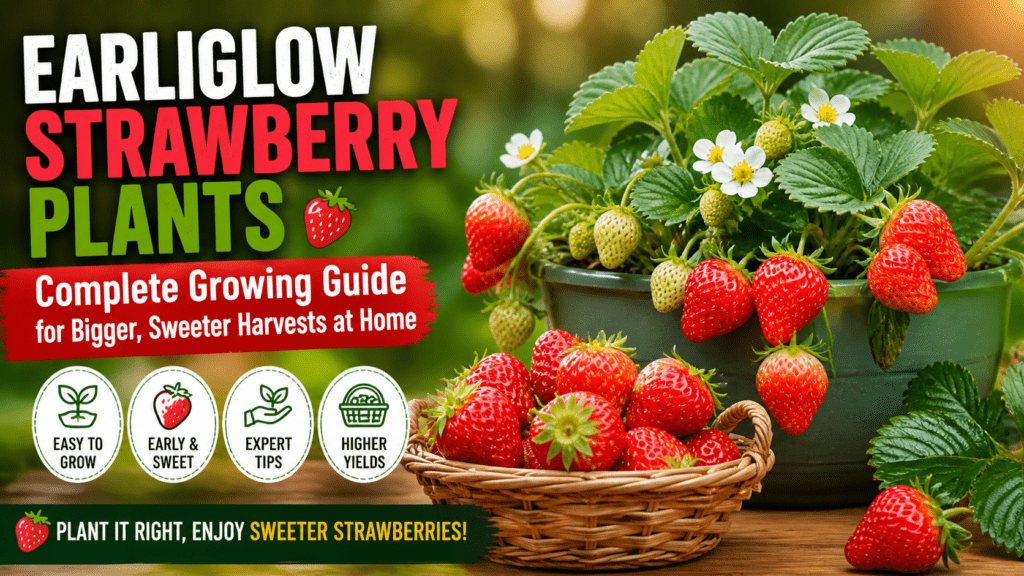
Imagine stepping into your garden early in the season and picking sun-ripened, sweet strawberries while others are still waiting for theirs to grow 🌞🍓. That’s the magic of earliglow strawberry plants—a beloved variety known for producing incredibly flavorful berries earlier than most other types.
If you’ve ever struggled with bland strawberries, low yields, or plants that just won’t thrive, this guide is built specifically for you. As someone deeply experienced in plant care and fruit cultivation, I’ll walk you through everything—from planting and soil prep to harvesting and troubleshooting—so you can grow healthier plants and enjoy bigger, sweeter harvests at home.
Whether you’re a beginner gardener, a container grower, or someone looking to improve your strawberry crop, this comprehensive guide will help you avoid costly mistakes and achieve consistent success 🌿✨.
🌿 What Are Earliglow Strawberry Plants?
🍓 Key Characteristics
Earliglow strawberries are a June-bearing variety, meaning they produce one large harvest early in the growing season.
Here’s what makes them special:
- 🌟 Exceptional flavor – Rich, sweet, and slightly tangy (far superior to store-bought berries)
- 🔴 Medium-sized fruits – Bright red with a glossy finish
- 🌱 Strong plant vigor – Hardy and adaptable
- 🛡️ Disease resistance – Especially resistant to red stele and leaf spot
Unlike hybrid supermarket strawberries bred for shelf life, Earliglow is grown for taste and reliability, making it a favorite among home gardeners.
🌍 Ideal Growing Zones & Climate
Earliglow performs best in:
- USDA Zones 4–8
- Cooler climates with mild summers
- Areas with well-defined spring seasons
💡 Pro Insight: These plants thrive in regions where spring temperatures allow gradual fruit development—this is what enhances their signature sweetness.
⭐ Why Choose Earliglow Over Other Varieties?
Many gardeners ask: “Why not grow everbearing or day-neutral strawberries?”
Here’s why Earliglow stands out:
- 🍓 Earlier harvest than most varieties
- 💪 More reliable yields in home gardens
- 😋 Superior flavor (often rated among the best-tasting strawberries)
- 🌿 Lower maintenance due to disease resistance
If your goal is quality over quantity, Earliglow is one of the best choices you can make.
🌞 Best Growing Conditions for Earliglow Strawberry Plants
☀️ Sunlight Requirements
Strawberries are sun lovers!
- Minimum: 6–8 hours of full sun daily
- Ideal: Morning sun with good airflow
🚫 Lack of sunlight leads to:
- Smaller berries
- Reduced sweetness
- Increased disease risk
🌱 Soil Requirements
Healthy soil = healthy strawberries 🌿
- Preferred soil: Well-draining, loamy soil
- Ideal pH: 5.5–6.5 (slightly acidic)
💡 Expert Tip: Before planting, mix in:
- Compost or aged manure
- Organic matter to improve drainage
Avoid heavy clay soil unless amended—it can suffocate roots.
💧 Watering Needs
Consistency is key!
- Provide 1–1.5 inches of water per week
- Keep soil moist but not soggy
Best methods:
- 💧 Drip irrigation (prevents fungal diseases)
- 🌿 Water at the base, not on leaves
🌼 How to Plant Earliglow Strawberry Plants (Step-by-Step Guide)

🪴 When to Plant
- 🌱 Early spring (best option)
- 🍂 Fall (in mild climates)
Planting early allows roots to establish before fruiting.
📏 Spacing & Layout
Proper spacing prevents disease and improves yield:
- Plants: 12–18 inches apart
- Rows: 2–3 feet apart
This ensures good airflow and sunlight exposure ☀️
🛠️ Step-by-Step Planting Process
- Prepare soil with compost
- Dig a shallow hole
- Place plant with crown at soil level
- Spread roots outward
- Cover lightly with soil
- Water immediately 💧
- Add mulch (straw works best 🌾)
⚠️ Common Planting Mistakes to Avoid
- ❌ Planting too deep (causes rot)
- ❌ Leaving roots exposed
- ❌ Overcrowding plants
🌿 Caring for Earliglow Strawberry Plants
💦 Watering Schedule
- Weekly deep watering
- Increase frequency during fruiting
💡 Keep soil evenly moist—fluctuations can affect fruit quality.
🌱 Fertilizing Tips
- Use balanced fertilizer (10-10-10)
- Apply:
- At planting
- After harvest
🌿 Organic options:
- Compost tea
- Fish emulsion
🌾 Mulching Benefits
Mulch is essential for strawberry success:
- Retains moisture 💧
- Prevents weeds 🌱
- Keeps fruit clean 🍓
- Protects roots in winter ❄️
Best mulch: Straw (hence the name “strawberries”)
✂️ Pruning & Runner Management
Strawberry plants produce runners (baby plants):
- Remove runners for bigger fruit 🍓
- Allow runners if you want propagation
💡 First-year tip: Remove flowers to strengthen plants for future harvests.
🐞 Common Problems & How to Fix Them
🍂 Pests
Common pests include:
- Aphids
- Slugs
- Spider mites
🌿 Natural solutions:
- Neem oil spray
- Diatomaceous earth
- Hand-picking pests
🍄 Diseases
Watch for:
- Leaf spot
- Powdery mildew
Prevention tips:
- Proper spacing
- Avoid overhead watering
- Remove infected leaves
⚡ Troubleshooting Poor Yields
If your plants aren’t producing well:
Possible causes:
- Lack of sunlight ☀️
- Poor soil nutrition 🌱
- Overcrowding
- Too many runners
✅ Fix:
- Improve soil with compost
- Thin plants
- Increase sunlight exposure
🍓 How to Harvest Earliglow Strawberries for Maximum Flavor

⏰ When to Harvest
- Fully red and ripe
- Slightly soft to touch
🌞 Best time: Morning (cooler temperatures preserve flavor)
🧺 Harvesting Tips
- Gently twist or cut stem
- Avoid pulling (can damage plant)
- Harvest every 2–3 days
❄️ Storage & Preservation
- Refrigerate immediately
- Do not wash until ready to eat
Preservation methods:
- Freezing 🍓
- Jam making
- Drying
🪴 Growing Earliglow Strawberry Plants in Containers (Perfect for Small Spaces)

Don’t have a large garden? No problem! Earliglow strawberry plants adapt beautifully to container gardening, making them ideal for balconies, patios, and even sunny windowsills 🌞.
🏡 Best Containers & Setup
To grow successfully in containers:
- Choose pots that are at least 8–12 inches deep
- Ensure excellent drainage holes
- Use high-quality potting mix (not garden soil)
💡 Expert Tip: Mix in compost and a bit of perlite for better aeration and drainage.
🌞 Care Differences for Container Plants
Container-grown strawberries need slightly different care:
- 💧 Water more frequently (containers dry out faster)
- 🌱 Fertilize every 2–3 weeks during growing season
- ☀️ Rotate pots for even sunlight exposure
🌟 Maximizing Yield in Small Spaces
Even with limited space, you can boost your harvest:
- Try vertical planters or stacked pots
- Use hanging baskets for trailing runners
- Practice companion planting (like with basil or marigolds 🌼 to deter pests)
🌸 Expert Tips for Bigger, Sweeter Strawberries
Want to grow strawberries that taste better than anything from the store? These expert-backed techniques make a real difference 🍓✨
- 🔄 Rotate crops every 2–3 years to prevent soil diseases
- 🌿 Add organic compost regularly to enrich soil
- ❄️ Protect flowers from late frost using row covers
- 🐝 Encourage pollinators (bees = bigger berries!)
- ✂️ Remove first-year flowers to strengthen root systems
- 🌱 Avoid over-fertilizing nitrogen (it grows leaves, not fruit)
💡 Pro Insight: Slightly stressing plants with controlled watering near harvest can concentrate sugars—resulting in sweeter fruit.
📊 Earliglow vs Other Strawberry Varieties
Choosing the right variety can make or break your success. Here’s how Earliglow compares:
| Feature | Earliglow 🍓 | Everbearing 🌿 | Day-Neutral ☀️ |
|---|---|---|---|
| Harvest Time | Early season | Multiple waves | Continuous |
| Flavor | ⭐⭐⭐⭐⭐ Excellent | Good | Moderate |
| Yield | Medium | Medium | Lower but steady |
| Disease Resistance | High | Moderate | Moderate |
| Best For | Fresh eating | Extended harvest | Small gardens |
💡 Conclusion: If flavor is your priority, Earliglow wins every time.
🌍 Sustainable & Organic Growing Practices
Growing strawberries doesn’t have to harm the environment 🌎💚
♻️ Eco-Friendly Gardening Tips
- Use homemade compost instead of synthetic fertilizers
- Collect rainwater for irrigation
- Reuse organic mulch like straw or leaves
🌿 Natural Pest Control Methods
Avoid chemicals by using:
- Neem oil sprays
- Garlic or chili sprays 🌶️
- Beneficial insects like ladybugs 🐞
💧 Water Conservation Strategies
- Install drip irrigation
- Water early morning to reduce evaporation
- Mulch heavily to retain moisture
❓ Frequently Asked Questions (FAQ)
🍓 How long do Earliglow strawberry plants take to produce fruit?
Typically, they produce fruit in early summer, about 60–90 days after planting.
🌱 Do Earliglow strawberries come back every year?
Yes! They are perennial plants and can produce for 3–5 years with proper care.
☀️ Can they grow in partial shade?
They can survive, but full sun is essential for sweet, abundant fruit.
🪴 Are they suitable for balcony gardening?
Absolutely! They thrive in containers and are perfect for small-space gardening.
💧 How often should I water them?
About 1–1.5 inches per week, adjusted for weather and soil conditions.
📝 Conclusion: Start Growing Sweeter, Earlier Strawberries Today
Growing your own earliglow strawberry plants isn’t just about gardening—it’s about enjoying fresher, healthier, and more flavorful fruit right from your backyard (or balcony!) 🍓🌿
By following this expert guide, you’ll:
- Avoid common beginner mistakes ❌
- Grow stronger, healthier plants 🌱
- Harvest sweeter, juicier strawberries earlier than ever 🌞
Whether you’re planting your first strawberry bed or improving your current setup, Earliglow offers one of the most rewarding experiences for any home gardener.
👉 Now is the perfect time to start—prepare your soil, plant with care, and enjoy the sweet rewards in just a few short months!











