
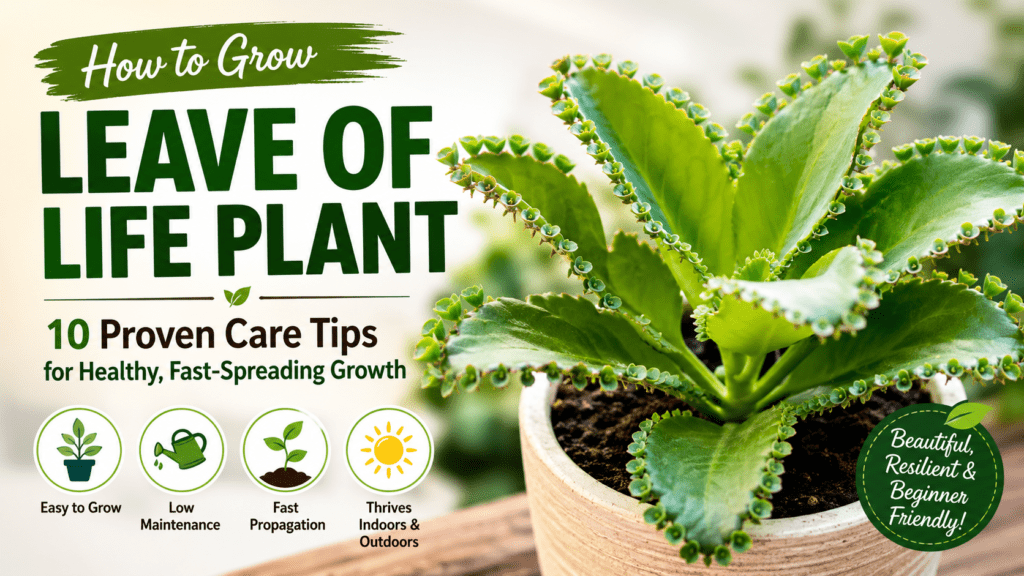
Imagine owning a plant so resilient that it can grow tiny baby plants directly from its leaves. Sounds unbelievable, right? 🌱 The leave of life plant is one of the most unique and beginner-friendly plants you can grow at home. Known for its fast growth, low-maintenance care, and fascinating self-propagating ability, this tropical succulent has become a favorite among indoor gardeners and plant lovers worldwide.
Whether you’re a beginner searching for an easy-care houseplant or an experienced gardener looking to expand your succulent collection, the leave of life plant offers beauty, simplicity, and impressive growth. But while this plant is hardy, many people still struggle with issues like overwatering, leggy growth, yellow leaves, or poor propagation success.
In this comprehensive guide, you’ll learn everything you need to know about growing a healthy leave of life plant indoors and outdoors — from sunlight and watering to expert propagation techniques and common problem fixes. 🌿✨
🌱 What Is the Leave of Life Plant?

The leave of life plant is a fast-growing succulent famous for producing baby plantlets along the edges of its leaves. Scientifically known as Bryophyllum pinnatum or Kalanchoe pinnata, this plant belongs to the Crassulaceae family.
It’s admired not only for its unusual appearance but also for its ability to thrive with minimal care.
🌿 Common Names of the Leave of Life Plant
Depending on your region, you may hear this plant called:
- Miracle Leaf Plant
- Life Plant
- Air Plant
- Cathedral Bells
- Resurrection Plant
- Mexican Love Plant
Its many names reflect its popularity across different cultures and gardening communities.
🌎 Origin and Natural Habitat
The leave of life plant is native to tropical regions such as:
- Madagascar
- Africa
- Parts of Asia
- Caribbean climates
Because it naturally grows in warm environments, it loves sunlight, warmth, and well-draining soil.
In tropical and subtropical climates, the plant often grows outdoors year-round. In cooler regions, it thrives beautifully as an indoor succulent plant. 🪴
✨ Why Is It Called the “Leave of Life” Plant?
The plant gets its name from its remarkable ability to create new life directly from its leaves. Tiny baby plants develop along the leaf margins and eventually fall into the soil, where they root and grow independently. 🌱
This natural propagation process makes it one of the easiest plants to multiply, even for complete beginners.
☀️ Ideal Growing Conditions for Leave of Life Plant
Providing the right growing conditions is the key to achieving healthy leaves, faster growth, and stronger propagation.
🌞 Light Requirements

The leave of life plant grows best in:
✅ Bright indirect sunlight
✅ Partial direct morning sun
✅ Warm indoor locations near windows
Indoor Lighting Tips 🏡
Place your plant near:
- East-facing windows
- South-facing windows with filtered light
- Bright balconies
If the plant does not receive enough light, you may notice:
- Leggy stems
- Pale leaves
- Slower growth
Outdoor Lighting Tips 🌳
Outdoors, provide:
- Morning sunlight
- Afternoon shade in hot climates
Too much harsh afternoon sun may scorch the leaves.
🌡️ Temperature and Humidity Needs
This tropical succulent prefers warm temperatures between:
- 60°F to 85°F (15°C to 29°C)
Important Temperature Notes ⚠️
- Frost can damage the plant quickly
- Temperatures below 50°F (10°C) may slow growth
- Bring outdoor plants inside during winter in colder regions
Humidity is generally not a major issue because succulents tolerate average indoor conditions well.
🪴 Best Soil for Leave of Life Plant
The most important soil requirement is excellent drainage.
Ideal Soil Mix 🌱
Use:
- Succulent soil mix
- Cactus potting mix
- Sandy, airy soil
DIY Soil Recipe 🧪
Mix:
- 2 parts potting soil
- 1 part coarse sand
- 1 part perlite
This prevents root rot and improves airflow around the roots.
💧 How to Water the Leave of Life Plant Properly

One of the biggest mistakes plant owners make is overwatering.
The leave of life plant stores moisture in its thick leaves, making it drought-tolerant.
🚿 Correct Watering Schedule
Spring and Summer 🌸
Water when the top 1–2 inches of soil feels dry.
Usually:
- Once every 7–10 days
Fall and Winter 🍂
Reduce watering frequency.
Usually:
- Once every 2–3 weeks
🌊 Use the “Soak and Dry” Method
This method works best for succulents.
How It Works:
- Water deeply until water drains out
- Allow the soil to dry completely
- Repeat only when dry
This keeps roots healthy and prevents fungal diseases.
⚠️ Signs of Overwatering
Overwatering is the number one killer of succulent plants.
Symptoms Include:
- Yellow leaves
- Mushy stems
- Black spots
- Root rot smell
- Drooping plant
Quick Fix ✅
- Stop watering immediately
- Remove damaged roots
- Repot into dry, fresh soil
🍂 Signs of Underwatering
Although drought-tolerant, the plant still needs occasional moisture.
Symptoms Include:
- Wrinkled leaves
- Dry leaf edges
- Slow growth
- Curling foliage
Simply increase watering slightly while avoiding soggy soil.
🌿 10 Proven Care Tips to Grow a Healthy, Fast-Spreading Leave of Life Plant
✅ 1. Provide Bright Indirect Light
Light directly affects growth speed and leaf health.
The brighter the indirect light, the healthier your plant becomes.
✅ 2. Never Let the Soil Stay Soggy
Wet soil leads to root rot very quickly.
Always use containers with drainage holes. 🪴
✅ 3. Use Terracotta Pots
Terracotta absorbs excess moisture and helps prevent overwatering problems.
This is especially useful for beginners.
✅ 4. Prune Leggy Growth Regularly

If stems become long and weak:
- Trim the top growth
- Encourage branching
- Improve airflow
Pruning helps the plant look fuller and healthier.
✅ 5. Fertilize Lightly During Active Growth
Feed monthly during spring and summer using:
- Diluted succulent fertilizer
- Balanced liquid fertilizer
Avoid overfertilizing because it may weaken the plant.
✅ 6. Rotate the Plant Every Few Weeks
Indoor plants naturally lean toward sunlight.
Rotate the pot regularly for:
- Even growth
- Balanced shape
- Better appearance
✅ 7. Remove Dead or Damaged Leaves Quickly
Dead leaves can attract pests and fungal diseases.
Inspect your plant weekly and remove unhealthy foliage.
✅ 8. Protect It From Frost
Cold temperatures can severely damage tropical succulents.
If temperatures drop:
- Move outdoor containers indoors
- Keep away from cold windows
✅ 9. Encourage Natural Propagation
The plant naturally produces baby plantlets.
Allow healthy leaf babies to:
- Fall into soil
- Develop roots naturally
This is one of the easiest propagation methods in gardening. 🌱
✅ 10. Repot When Root-Bound
If roots start circling the pot:
- Upgrade to a slightly larger container
- Refresh the soil
- Inspect root health
Repotting boosts overall growth.
🌱 How to Propagate the Leave of Life Plant Successfully

Propagation is where this plant truly shines.
Even beginners can successfully grow multiple new plants from one mature specimen.
👶 Propagation Through Leaf Plantlets
This is the easiest method.
Step-by-Step Guide 🪴
- Gently remove mature plantlets
- Prepare moist succulent soil
- Place plantlets on top of soil
- Keep in bright indirect light
- Mist lightly until rooted
Roots usually develop within 1–2 weeks.
✂️ Propagation Through Stem Cuttings
You can also propagate using stem cuttings.
Steps:
- Cut a healthy stem
- Let it dry for 24 hours
- Plant in dry succulent soil
- Water lightly after several days
This method works well for large or leggy plants.
❌ Common Propagation Mistakes
Avoid these beginner mistakes:
- Overwatering fresh cuttings
- Using heavy soil
- Placing cuttings in dark areas
- Ignoring drainage
Proper lighting and patience are essential.
🏡 Growing Leave of Life Plant Indoors vs Outdoors
🛋️ Indoor Growing Tips
Indoor growing is ideal for colder climates.
Best Indoor Locations:
- Sunny windowsills
- Bright balconies
- Home offices with filtered light
Indoor plants generally need:
- Less watering
- More sunlight exposure
- Better airflow
🌳 Outdoor Growing Tips
Outdoor plants often grow larger and faster.
Ideal Outdoor Conditions:
- Warm temperatures
- Partial sun
- Fast-draining soil
Container gardening works especially well because you can easily move the plant during weather changes.
⚖️ Indoor vs Outdoor Growth Comparison
| Feature | Indoors 🏡 | Outdoors 🌳 |
|---|---|---|
| Growth Speed | Moderate | Fast |
| Plant Size | Smaller | Larger |
| Water Needs | Lower | Higher |
| Sun Exposure | Controlled | Variable |
| Maintenance | Easier | Moderate |
🍃 Common Problems and How to Fix Them
Even hardy plants experience occasional issues.
🐛 Common Pests

Watch for:
- Mealybugs
- Aphids
- Spider mites
Treatment Options ✅
- Neem oil spray
- Insecticidal soap
- Cotton swab with alcohol
Inspect leaves regularly for early detection.
🍂 Why Are the Leaves Turning Yellow?
Yellow leaves usually indicate:
- Overwatering
- Poor drainage
- Lack of sunlight
Correcting watering habits often solves the issue quickly.
🧫 Preventing Root Rot
Root rot is caused by excess moisture.
Prevention Tips:
- Use airy soil
- Avoid standing water
- Never use pots without drainage
Healthy roots equal healthy plants. 🌱
🌸 Benefits of Growing the Leave of Life Plant
The leave of life plant offers much more than simple decoration.
🏡 Beautiful Indoor Decor
Its thick green leaves and unusual plantlets create a fascinating visual display.
Perfect for:
- Modern homes
- Balcony gardens
- Office desks
- Minimalist plant collections
🌿 Extremely Low Maintenance
This plant is ideal for:
- Beginners
- Busy homeowners
- Forgetful waterers
It tolerates occasional neglect better than many houseplants.
🌎 Eco-Friendly Greenery
Indoor plants contribute to a calming environment and add natural beauty to living spaces.
The leave of life plant also multiplies quickly, making it easy to share with friends and family. 💚
⚠️ Is the Leave of Life Plant Toxic?
While beautiful, this plant should be handled carefully around pets and small children.
🐶 Pet Safety

The plant may be mildly toxic if ingested in large amounts.
Safety Tips:
- Keep out of reach of pets
- Avoid accidental chewing
- Wash hands after handling sap
🚫 Important Precautions
Always:
- Use gloves if sensitive to plant sap
- Avoid ingestion
- Place plants responsibly indoors
🪴 Best Companion Plants for Leave of Life Plant
Pairing compatible plants improves both aesthetics and care simplicity.
🌵 Best Succulent Companions
Great companion plants include:
- Aloe vera
- Jade plant
- Echeveria
- Zebra haworthia
These plants enjoy similar watering and lighting conditions.
🎍 Creative Display Ideas
Try:
- Succulent bowls
- Balcony arrangements
- Decorative terracotta collections
- Minimal indoor plant shelves
These combinations create beautiful low-maintenance displays. 🌿✨
📅 Seasonal Care Guide for Year-Round Growth
🌸 Spring and Summer Care
During active growth:
- Water more frequently
- Fertilize monthly
- Increase sunlight exposure
This is also the best propagation season.
🍂 Fall and Winter Care
During cooler months:
- Reduce watering
- Avoid cold drafts
- Stop fertilizing temporarily
Dormant plants require less attention.
❌ Biggest Mistakes Beginners Make
🚫 Overwatering
Too much water kills more leave of life plants than anything else.
🚫 Poor Lighting
Insufficient light causes weak, stretched growth.
🚫 Heavy Soil
Dense soil traps moisture and suffocates roots.
🚫 Ignoring Drainage
Always prioritize drainage holes and airy soil.
👨🌾 Expert Tips for Faster Growth and Healthier Leaves
Experienced gardeners recommend:
✅ Bright morning sunlight
✅ Terracotta pots
✅ Occasional pruning
✅ Proper airflow
✅ Balanced watering schedule
For fuller growth, pinch off stem tips regularly.
This encourages branching and creates a bushier plant. 🌱
❓ Frequently Asked Questions About Leave of Life Plant
🌿 How fast does the leave of life plant grow?
Under proper conditions, it grows very quickly and can double in size within one growing season.
🌞 Can it grow in full sun?
Morning sun is beneficial, but harsh afternoon sunlight may burn the leaves.
💧 How often should I water it?
Only water when the soil becomes dry. Frequency varies by climate and season.
🪴 Why are baby plants growing on the leaves?
This is the plant’s natural propagation method and one of its most unique features.
🐾 Is it safe for pets?
It’s best to keep the plant away from curious pets because ingestion may cause mild toxicity.
🌟 Conclusion: Why the Leave of Life Plant Deserves a Spot in Your Home

The leave of life plant is more than just another succulent — it’s one of the easiest, most fascinating, and rewarding plants you can grow. From its self-propagating leaves to its low-maintenance nature, this plant offers something special for both beginners and experienced gardeners alike. 🌿
By following the care tips in this guide, you can enjoy:
- Faster healthy growth
- Stronger roots
- Beautiful green foliage
- Successful propagation
- A thriving indoor or outdoor plant collection
Whether you place it on a sunny windowsill, balcony, or garden corner, the leave of life plant adds natural beauty and effortless greenery to any space. 🌱✨











