
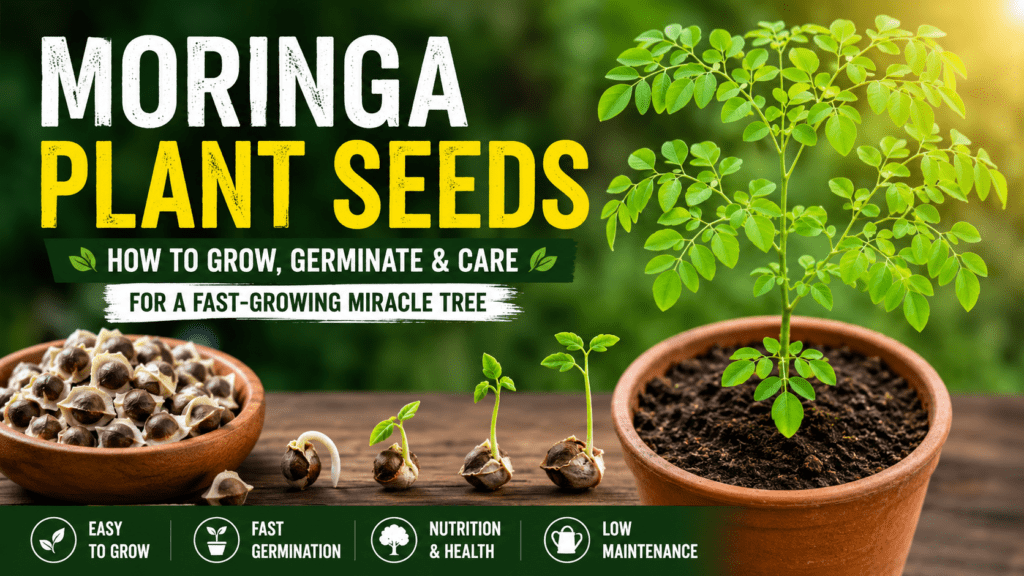
Known as the “Miracle Tree,” moringa is one of the easiest and most rewarding plants you can grow from seed. In the right conditions, moringa seeds germinate quickly and can develop into thriving trees within just a few months. Whether you want fresh edible leaves, natural shade, drought-resistant greenery, or a low-maintenance backyard tree, moringa delivers exceptional value.
But here’s the challenge many gardeners face: poor germination, weak seedlings, yellow leaves, or stunted growth. The good news? Most of these problems are completely avoidable with the right planting and care methods. 🌱
In this complete expert guide, you’ll learn:
- How to choose high-quality moringa seeds
- The best germination techniques for fast success
- Proper watering, sunlight, and soil care
- Common mistakes that kill moringa seedlings
- Expert tips for growing healthy moringa trees indoors or outdoors
Whether you’re a beginner gardener or an experienced plant lover, this guide will help you grow strong, healthy moringa plants successfully from seed to harvest. 🌳✨
🌿 What Are Moringa Plant Seeds?
🌱 Understanding the Moringa Tree

Moringa plant seeds come from Moringa oleifera, a fast-growing tropical tree native to parts of South Asia and Africa. Over the years, moringa has spread worldwide because of its incredible adaptability, nutritional value, and low-maintenance nature.
The tree is commonly called:
- The Miracle Tree 🌟
- Drumstick Tree 🌿
- Horseradish Tree 🌱
Moringa is prized for nearly every part of the plant:
- Leaves are rich in vitamins and antioxidants
- Pods are edible and commonly used in cooking
- Seeds can be replanted or used for water purification
- Flowers attract pollinators like bees 🐝
One reason gardeners love moringa is its rapid growth rate. Under ideal conditions, some moringa trees can grow several feet in a single season.
🌰 What Do Moringa Seeds Look Like?
Moringa seeds are small, round to triangular seeds with thin wing-like structures attached. Healthy seeds are usually:
- Dark brown or black
- Firm to the touch
- Dry but not brittle
Fresh moringa seeds typically germinate much faster than old seeds. If seeds feel soft, moldy, or cracked, they may have poor viability.
🪴 Types of Moringa Seeds
There are several varieties of moringa available, but Moringa oleifera remains the most popular for home gardening.
Common options include:
- Organic moringa seeds 🌿
- Heirloom moringa seeds 🌱
- Hybrid varieties for faster pod production
For most home gardeners, organic heirloom seeds are ideal because they:
- Produce strong plants
- Adapt naturally to local conditions
- Allow seed saving for future planting
☀️ Benefits of Growing Moringa From Seeds
💚 Extremely Fast Growth
One of moringa’s most impressive qualities is its speed. Unlike many trees that take years to mature, moringa develops rapidly.
In warm climates:
- Germination may occur within 1–2 weeks 🌱
- Seedlings grow quickly in full sunlight ☀️
- Trees may reach several feet tall in months
This makes moringa perfect for impatient gardeners or beginners seeking quick gardening success.
🥗 Exceptional Nutritional Value
Moringa leaves are considered nutrient-dense superfoods. They contain:
- Vitamin A
- Vitamin C
- Potassium
- Calcium
- Protein
- Iron
Many gardeners grow moringa specifically for:
- Smoothies 🥤
- Herbal teas 🍵
- Fresh salads 🥗
- Traditional wellness remedies
🌎 Environmentally Friendly and Sustainable
Moringa trees are highly sustainable because they:
- Tolerate drought conditions 💧
- Improve soil health
- Require relatively little maintenance
- Grow well in poor soil
Their deep root systems also help reduce soil erosion in some climates.
🏡 Perfect for Home Gardens
Moringa adapts surprisingly well to:
- Backyard gardens
- Raised beds
- Containers and pots
- Small urban spaces
Because it responds well to pruning, you can even maintain moringa as a compact edible shrub instead of a tall tree.
🌱 How to Choose the Best Moringa Plant Seeds
🛒 What to Look for When Buying Seeds

Choosing quality moringa seeds dramatically improves germination success.
Look for seeds that are:
✅ Dark and healthy-looking
✅ Dry but firm
✅ Free from mold or cracks
✅ Recently harvested
Fresh seeds usually have the highest germination rates.
⚠️ Signs of Poor-Quality Seeds
Avoid seeds that:
- Smell musty
- Appear shriveled
- Have visible mold
- Feel lightweight or hollow
Old moringa seeds often struggle to sprout and may produce weak seedlings.
📦 Best Places to Buy Moringa Seeds
Reliable sources include:
- Organic seed companies 🌿
- Reputable online gardening stores
- Local nurseries
- Specialty tropical plant suppliers
Whenever possible, buy from sellers with verified reviews and detailed seed information.
🧪 Simple Germination Test Before Planting
Not sure if your seeds are viable? Try a quick float test.
Here’s how:
- Fill a bowl with room-temperature water
- Drop seeds into the bowl
- Wait 15–20 minutes
Generally:
- Sinking seeds are more likely viable ✅
- Floating seeds may have lower success rates ⚠️
This isn’t always 100% accurate, but it helps identify poor-quality seeds.
🌤️ Best Time and Climate for Planting Moringa Seeds
🌡️ Ideal Temperature for Germination

Moringa thrives in warmth. The ideal temperature range for germination is:
🌡️ 77°F to 95°F (25°C to 35°C)
Cold temperatures slow growth and may damage seedlings.
If you live in a cooler region:
- Start seeds indoors
- Use grow lights
- Keep soil warm
☀️ Sunlight Requirements
Moringa loves sunlight and performs best in:
- Full sun exposure ☀️
- At least 6–8 hours daily
Without enough light, plants may become:
- Leggy
- Weak
- Slow-growing
Indoor growers should place moringa near south-facing windows or use supplemental lighting.
🌧️ Best Season to Plant Moringa Seeds
Tropical and Warm Climates
Plant during:
- Spring 🌸
- Early summer ☀️
Cooler Climates
Start indoors before the last frost.
Avoid planting during prolonged cold or extremely wet conditions.
🪴 Step-by-Step Guide to Germinating Moringa Plant Seeds
🧼 Step 1: Prepare the Seeds
Many gardeners soak moringa seeds before planting to encourage faster germination.
To soak:
- Place seeds in lukewarm water
- Soak for 12–24 hours
- Remove and plant immediately
Soaking softens the outer shell and may speed up sprouting.
🌱 Step 2: Prepare the Right Soil Mix

Moringa dislikes soggy soil. Use a well-draining mix such as:
- Garden soil
- Compost
- Sand or perlite
A loose soil structure prevents root rot and improves airflow.
Avoid:
❌ Heavy clay soil
❌ Waterlogged containers
❌ Compact garden beds
🕳️ Step 3: Plant the Seeds Properly
Plant seeds:
- About 1 inch deep
- In moist soil
- With adequate spacing
If planting multiple seeds:
- Leave 2–3 feet between plants for long-term growth 🌳
💦 Step 4: Water Carefully
This is where many beginners make mistakes.
Keep soil:
✅ Slightly moist
❌ Not soaking wet
Overwatering is one of the most common reasons moringa seeds fail.
A spray bottle or gentle watering can works best during early growth.
⏳ Step 5: Wait for Germination
Under ideal conditions, moringa seeds typically germinate within:
🌱 7–14 days
Healthy sprouts appear quickly and begin developing small green leaves soon after.
Signs of successful germination include:
- Upright stems
- Bright green leaves
- Steady daily growth
🏡 Growing Moringa in Pots vs Ground
🪴 Growing Moringa in Containers

Container gardening is excellent for moringa, especially in small spaces or colder regions.
Choose:
- A pot at least 12–18 inches deep
- Drainage holes
- Lightweight well-draining soil
Container-grown moringa benefits from regular pruning to control size.
🌳 Growing Moringa Directly in the Ground
Outdoor planting allows moringa roots to spread naturally.
Select a location with:
☀️ Full sunlight
💧 Good drainage
🌬️ Protection from strong winds
Avoid low areas where water collects after rain.
🔄 When to Transplant Seedlings
Transplant seedlings when they:
- Reach 8–12 inches tall
- Have several mature leaves
- Show strong root development
Water thoroughly after transplanting to reduce stress.
💧 Essential Moringa Plant Care Tips
☀️ Sunlight for Healthy Growth
Moringa thrives with abundant sunlight.
Best practice:
- Provide full sun daily
- Rotate indoor pots regularly
Poor light often leads to thin, weak stems.
💦 Proper Watering Schedule
Young seedlings need more consistent moisture than mature trees.
General watering tips:
- Water deeply but infrequently
- Allow topsoil to dry slightly between watering
- Reduce watering during cool weather
Mature moringa trees become drought-tolerant over time. 🌿
🌿 Natural Fertilizing Tips
Organic feeding encourages healthier growth.
Great natural fertilizers include:
- Compost
- Worm castings
- Fish emulsion
- Aged manure
Avoid excessive chemical fertilizers, which can damage roots.
✂️ Why Pruning Matters
Pruning encourages:
- Bushier growth 🌳
- Easier harvesting
- Stronger branching
Without pruning, moringa may become tall and difficult to manage.
🐛 Common Problems When Growing Moringa Plant Seeds
🚫 Seeds Not Germinating
Common causes include:
- Old seeds
- Cold soil
- Excess water
- Poor drainage
Always use fresh seeds and warm growing conditions.
🍂 Yellow Leaves and Weak Growth
Yellowing often indicates:
- Overwatering
- Nutrient deficiency
- Insufficient sunlight
Adjust watering and provide better light exposure.
🐜 Common Pests and Diseases
Potential issues include:
- Aphids
- Spider mites
- Caterpillars
Neem oil and proper airflow usually help prevent infestations naturally. 🌿
🌧️ Root Rot Problems
Root rot occurs in soggy conditions.
Warning signs:
⚠️ Mushy stems
⚠️ Wilting despite wet soil
⚠️ Foul-smelling roots
Improve drainage immediately if symptoms appear.
🌳 How Fast Does Moringa Grow?
Moringa is famous for rapid development.
Under ideal conditions:
- Seedlings emerge within 2 weeks 🌱
- Plants may grow several feet in months 🌳
- Leaves can often be harvested within 2–3 months
Warm weather, sunlight, and proper pruning dramatically increase growth speed.













