
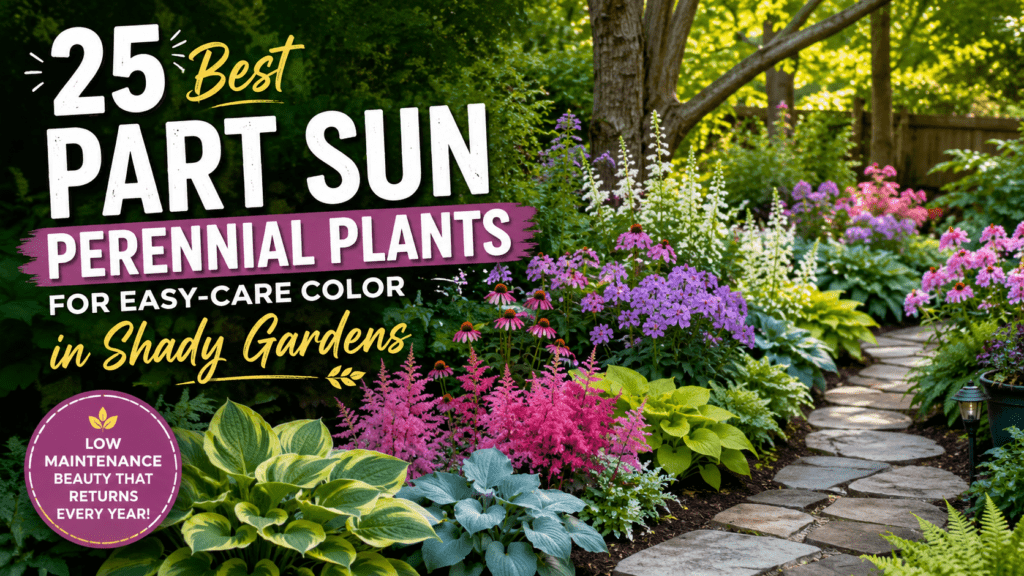
The good news? The right part sun perennial plants can completely transform those dim garden corners into colorful, low-maintenance landscapes bursting with texture, blooms, and pollinator activity. 🌸🐝
Whether you’re gardening beneath trees, along a fence line, or in an east-facing yard, there are countless hardy perennials that flourish in partial sunlight. Better yet, many of these plants return year after year with minimal effort, making them perfect for beginners and experienced gardeners alike.
In this expert guide, you’ll discover:
- 🌿 The best perennial plants for part sun conditions
- 💧 Easy-care varieties that require less maintenance
- 🌸 Long-blooming flowers for season-long color
- 🐝 Pollinator-friendly plants for bees and butterflies
- 🪴 Professional growing tips to help your garden thrive
Let’s turn your partially shaded garden into a stunning outdoor retreat. 🌼
🌤️ What Are Part Sun Perennial Plants?
Before choosing plants, it’s important to understand what “part sun” actually means. Many gardening problems happen simply because plants are placed in the wrong lighting conditions.
🌞 Understanding Part Sun Conditions
Part sun refers to areas that receive around 3 to 6 hours of direct sunlight daily. Morning sunlight is generally gentler, while afternoon sun tends to be hotter and more intense.
Gardens with part sun conditions often include:
- 🌳 Spaces under tall trees
- 🏡 East-facing flower beds
- 🌿 Woodland garden borders
- 🪴 Areas beside fences, walls, or buildings
Some perennials naturally prefer filtered or indirect light because intense afternoon heat can scorch their leaves and flowers.
🌿 Why Perennials Thrive in Partial Sun
Many flowering perennials actually perform better in partial sunlight because:
- Soil stays moist longer 💧
- Plants experience less heat stress ☀️
- Blooms last longer 🌸
- Foliage remains healthier 🍃
- Watering needs are reduced 🚿
Part sun gardens can also create a cooler, more relaxing outdoor environment during hot summers.
🧑🌾 How to Choose the Best Part Sun Perennial Plants
Choosing the right plants involves more than simply checking the light label. Professional gardeners also consider climate, soil, moisture, and bloom cycles.
🌎 Know Your USDA Hardiness Zone
Always select plants suited to your climate. Hardiness zones determine whether a perennial can survive winter temperatures in your region.
For example:
- ❄️ Hellebores tolerate colder climates well
- 🌺 Bee Balm prefers warmer summer regions
- 🌿 Ferns thrive in humid woodland conditions
💧 Check Soil Moisture and Drainage
Partial shade gardens often have unique moisture conditions.
Dry Shade
Common under mature trees where roots absorb moisture quickly.
Moist Shade
Typically found near downspouts or shaded low areas.
Adding compost improves drainage and enriches soil naturally. 🌱
🌸 Plan for Continuous Blooms
The best gardens provide color from spring through fall.
A smart planting strategy includes:
- 🌷 Spring bloomers
- 🌼 Summer flowering perennials
- 🍂 Late-season color plants
Layering bloom times keeps your garden visually appealing for months.
🌺 25 Best Part Sun Perennial Plants for Easy-Care Color
💜 1. Hosta

Hostas are among the most reliable shade-loving perennials available. Their lush foliage instantly adds texture and elegance to any garden.
Why Gardeners Love Hostas
- Thrive in partial shade 🌤️
- Extremely low maintenance
- Available in countless colors and sizes
- Excellent for borders and containers
Growing Tips
- Keep soil consistently moist
- Protect from slugs 🐌
- Divide every few years for healthier growth
🌼 2. Astilbe

Astilbe produces feathery flower plumes that brighten shaded gardens beautifully.
Best Features
- Elegant blooms in pink, white, red, and lavender
- Attracts pollinators 🐝
- Deer-resistant
- Adds vertical interest
Care Requirements
Astilbe prefers moist, rich soil and performs especially well near ponds or shaded borders.
💗 3. Bleeding Heart
The romantic heart-shaped flowers of Bleeding Heart make it a favorite for cottage gardens.
Why It’s Special
- Unique dangling flowers 💕
- Early spring bloomer
- Thrives in cool partial shade
Expert Tip
Pair with ferns and hostas to hide fading foliage after blooming ends.
🌿 4. Coral Bells (Heuchera)
Coral Bells are grown mainly for their colorful foliage, which ranges from lime green to deep burgundy.
Benefits
- Year-round visual interest 🍃
- Compact and versatile
- Excellent edging plant
Growing Advice
Avoid soggy soil and provide good airflow to prevent crown rot.
🌸 5. Black-Eyed Susan
Although often associated with sunny gardens, many varieties tolerate part sun surprisingly well.
Highlights
- Bright golden blooms 🌼
- Long flowering season
- Excellent pollinator plant
Best Use
Combine with ornamental grasses for a prairie-inspired garden design.
💙 6. Brunnera
Brunnera is loved for its heart-shaped leaves and delicate blue flowers resembling forget-me-nots.
Why It Works in Shade
- Beautiful foliage patterns
- Excellent ground cover
- Thrives in cooler climates
Care Tip
Keep soil evenly moist during summer heat.
🌺 7. Coneflower (Echinacea)

Coneflowers are resilient native perennials that attract butterflies and bees all summer long. 🐝🦋
Advantages
- Drought tolerant
- Long blooming
- Excellent cut flowers
Expert Insight
Deadheading spent blooms encourages additional flowering.
🤍 8. Foamflower
Foamflower is a woodland native prized for its airy flower spikes and attractive leaves.
Perfect For
- Woodland gardens 🌳
- Shady borders
- Ground cover planting
Maintenance
Minimal pruning is needed beyond removing old leaves in spring.
💜 9. Japanese Anemone
Japanese Anemones provide valuable late-season color when many other plants fade.
Key Benefits
- Elegant pink or white flowers
- Late summer through fall blooms 🍂
- Great for cottage gardens
Important Note
Provide mulch in colder regions to protect roots during winter.
🌼 10. Daylily

Daylilies are among the easiest perennials to grow.
Why Gardeners Choose Daylilies
- Adaptable to many soil types
- Low maintenance 🌱
- Excellent bloom production
Pro Growing Tip
Divide overcrowded clumps every 3–5 years for stronger flowering.
🌿 More Beautiful Part Sun Perennials for Stunning Gardens
🌿 11. Ferns
Ferns bring graceful texture and movement to shaded spaces.
Best Features
- Elegant foliage
- Thrive in humid environments
- Excellent companion plants
Popular varieties include:
- Japanese Painted Fern
- Ostrich Fern
- Lady Fern
💕 12. Lungwort
Lungwort offers spotted leaves and charming spring flowers.
Why It’s Valuable
- Early nectar source for pollinators 🐝
- Attractive foliage all season
- Tolerates cool shade
🌸 13. Columbine

Columbine produces delicate, nodding flowers adored by hummingbirds.
Best Qualities
- Unique flower shape
- Self-seeding ability
- Spring color boost 🌷
Expert Tip
Allow some seed heads to mature for natural reseeding.
💛 14. Tickseed (Coreopsis)
Tickseed adds cheerful yellow blooms that last for months.
Advantages
- Heat tolerant ☀️
- Long flowering season
- Easy for beginners
💚 15. Solomon’s Seal
This elegant perennial thrives in woodland settings.
Why It Stands Out
- Arching stems
- Delicate hanging flowers
- Excellent shade tolerance
💜 16. Salvia
Salvia attracts bees, butterflies, and hummingbirds in large numbers.
Benefits
- Fragrant foliage 🌿
- Drought tolerant
- Long-lasting flowers
🌷 17. Hellebore

Hellebores, also called Lenten Roses, bloom when little else does.
Why Gardeners Love Them
- Winter to early spring flowers ❄️
- Evergreen foliage
- Extremely hardy
Growing Advice
Plant in rich, well-drained soil with organic matter.
🌺 18. Bee Balm
Bee Balm adds vibrant color while supporting pollinators.
Key Benefits
- Attracts hummingbirds 🐦
- Aromatic foliage
- Bold summer blooms
Care Tip
Ensure good airflow to reduce powdery mildew.
🤍 19. Goat’s Beard
Goat’s Beard creates dramatic feathery plumes in shaded landscapes.
Best Uses
- Woodland borders
- Moist garden beds
- Naturalized areas
🌿 20. Siberian Iris
Siberian Iris combines elegance with durability.
Why It Performs Well
- Grass-like foliage
- Disease resistant
- Tolerates moist soil
🌸 More of the Best Part Sun Perennial Plants for Easy-Care Color
💙 21. Jacob’s Ladder
Jacob’s Ladder is prized for its fern-like foliage and clusters of blue-purple flowers that brighten shaded borders beautifully.
Why Gardeners Love It
- Unique ladder-shaped leaves 🌿
- Early spring blooms
- Excellent for woodland gardens
Growing Tips
- Prefers cool climates
- Keep soil consistently moist
- Mulch during summer to retain moisture 💧
🌸 22. Phlox
Garden Phlox delivers large clusters of fragrant blooms throughout summer.
Top Benefits
- Sweetly scented flowers 🌺
- Pollinator magnet 🐝
- Long-lasting color
Best Growing Conditions
Phlox grows best in fertile, well-drained soil with good airflow to reduce mildew problems.
Expert Tip
Deadhead faded blooms regularly for extended flowering.
💜 23. Catmint

Catmint is an incredibly durable perennial known for its lavender-blue flowers and aromatic silver foliage.
Why It’s a Favorite
- Drought tolerant 🌞
- Extremely low maintenance
- Long bloom period
Ideal Garden Use
Plant along pathways or borders where the fragrant foliage can be enjoyed up close.
🌼 24. Yarrow
Yarrow adds bold texture and flat-topped blooms to perennial gardens.
Why Yarrow Performs Well
- Heat and drought resistant ☀️
- Excellent cut flower
- Attracts beneficial insects
Care Recommendations
Avoid overwatering, as yarrow prefers slightly drier conditions once established.
🌿 25. Woodland Phlox

Woodland Phlox is perfect for naturalized landscapes and shady cottage gardens.
Best Features
- Fragrant spring flowers 🌸
- Excellent ground cover
- Supports pollinators
Expert Growing Advice
Provide mulch annually to enrich soil and preserve moisture.
🎨 Best Ways to Design a Stunning Part Sun Perennial Garden
Creating a visually balanced garden involves more than selecting beautiful plants. Strategic design helps your landscape look lush, layered, and colorful all season long.
🌈 Layer Plants by Height
Professional gardeners use layering to create depth and structure.
Back Layer (Tall Plants)
Use taller perennials at the rear:
- Goat’s Beard
- Bee Balm
- Japanese Anemone
Middle Layer (Medium Height)
These provide fullness:
- Coneflower
- Astilbe
- Phlox
Front Layer (Low Growers)
Great for edging and pathways:
- Coral Bells
- Lungwort
- Foamflower
This layered approach gives gardens a polished, professional appearance. 🌿
🍃 Mix Foliage and Flower Texture
Combining different leaf shapes and flower forms creates visual contrast.
Great Texture Pairings
- Ferns + Hostas
- Coral Bells + Astilbe
- Salvia + Daylilies
Even when flowers fade, contrasting foliage keeps the garden attractive year-round.
🪻 Plan for Continuous Seasonal Blooms
A truly exceptional perennial garden offers color across multiple seasons.
Spring Bloomers 🌷
- Hellebore
- Columbine
- Bleeding Heart
Summer Stars ☀️
- Coneflower
- Bee Balm
- Daylily
Fall Interest 🍂
- Japanese Anemone
- Phlox
- Yarrow
Succession planting ensures your garden never looks empty.
🐝 Creating a Pollinator-Friendly Part Sun Garden
Many part sun perennial plants are valuable nectar sources for bees, butterflies, and hummingbirds.
Best Pollinator Plants
- Bee Balm 🐦
- Coneflower 🦋
- Salvia 🐝
- Phlox 🌸
Pollinator Garden Tips
- Avoid chemical pesticides 🚫
- Plant flowers in clusters
- Include water sources
- Use native perennials when possible
Supporting pollinators improves both biodiversity and garden health.
💦 Essential Care Tips for Part Sun Perennial Plants
Even low-maintenance gardens need proper care to remain healthy and vibrant.
🚿 Watering Best Practices
Many gardeners accidentally overwater shade plants.
Smart Watering Tips
- Water deeply but less frequently
- Check soil moisture before watering
- Mulch around plants to reduce evaporation 🌱
Morning watering helps prevent fungal diseases.
🌱 Fertilizing Tips
Healthy soil produces healthier plants.
Best Fertilizer Options
- Compost
- Aged manure
- Slow-release organic fertilizer
Avoid excessive nitrogen, which encourages leafy growth but fewer flowers.
✂️ Pruning and Deadheading
Regular pruning improves appearance and flowering.
Benefits of Deadheading
- Encourages reblooming 🌸
- Prevents unwanted self-seeding
- Keeps plants tidy
Cut back damaged foliage to improve airflow and reduce disease risk.
❄️ Winter Care and Seasonal Maintenance
Most perennial plants benefit from light winter protection.
Winter Preparation Tips
- Add mulch after the first frost
- Leave some seed heads for birds 🐦
- Divide overcrowded perennials every few years
Proper seasonal care improves longevity and vigor.
⚠️ Common Mistakes to Avoid When Growing Part Sun Perennials
Avoiding common gardening mistakes can save both time and money.
☀️ Mistaking Part Shade for Deep Shade
Many flowering perennials still require several hours of sunlight to bloom properly.
Too little light can lead to:
- Weak growth
- Fewer flowers
- Increased disease problems
💧 Overwatering Shade Plants
Shaded soil stays moist longer.
Overwatering may cause:
- Root rot
- Fungal diseases
- Yellowing foliage
Always check soil moisture before watering.
🌿 Overcrowding Plants
Crowded gardens reduce airflow and increase pest issues.
Proper Spacing Benefits
- Better air circulation
- Healthier roots
- Stronger blooming
Remember that perennials expand over time.
🐌 Ignoring Slugs and Pests
Hostas and other shade plants are especially attractive to slugs.
Natural Pest Control Ideas
- Crushed eggshells
- Copper barriers
- Hand-picking at dusk
Healthy gardens usually experience fewer severe pest outbreaks.
🏡 Best Companion Plants for Part Sun Gardens
Strategic companion planting creates more beautiful and resilient gardens.
🌸 Beautiful Plant Pairings
Hosta + Astilbe
A classic shade garden combination with bold foliage and feathery blooms.
Coral Bells + Ferns
Excellent texture contrast for woodland gardens.
Coneflower + Salvia
Perfect for attracting pollinators while adding vibrant summer color.
🐝 Pollinator-Friendly Combinations
Planting pollinator favorites together creates a wildlife-friendly landscape.
Great Combos
- Bee Balm + Phlox
- Salvia + Catmint
- Coneflower + Yarrow
These combinations support beneficial insects throughout the growing season.
📅 Seasonal Care Calendar for Part Sun Perennial Plants
🌱 Spring Tasks
- Remove winter mulch
- Divide overcrowded plants
- Apply compost
☀️ Summer Maintenance
- Water during dry periods
- Deadhead flowers regularly
- Watch for pests
🍂 Fall Cleanup
- Cut back diseased foliage
- Plant new perennials
- Add mulch
❄️ Winter Preparation
- Protect tender roots
- Avoid heavy foot traffic on frozen soil
- Leave seed heads for wildlife 🐦
🌟 Expert Tips for Healthier and Longer-Blooming Perennials
🌿 Improve Soil Naturally
Adding organic matter yearly dramatically improves plant health.
Best Organic Amendments
- Compost
- Leaf mold
- Aged bark mulch
Healthy soil retains moisture while improving drainage.
🌸 Encourage Repeat Blooms
Many perennials rebloom when properly maintained.
Repeat Bloom Tips
- Deadhead faded flowers
- Avoid excessive fertilizer
- Divide mature plants every few years
🌎 Choose Native Perennials When Possible
Native plants typically:
- Require less maintenance
- Support local pollinators 🐝
- Resist regional pests better
They’re often the smartest long-term choice for sustainable gardening.
❓ Frequently Asked Questions About Part Sun Perennial Plants
What is the difference between part sun and part shade?
Part sun usually means 4–6 hours of direct sunlight, while part shade often refers to filtered or gentler sunlight, especially in the afternoon.
Which perennial blooms the longest in part sun?
Coneflower, Catmint, and Phlox are among the longest-blooming perennials for partial sunlight conditions. 🌸
Are part sun perennials low maintenance?
Many are extremely easy to grow and require less watering than full-sun plants, making them ideal for beginner gardeners.
Can I grow part sun perennials in containers?
Yes! Hostas, Coral Bells, Ferns, and Heuchera perform especially well in containers. 🪴
Which part sun plants attract pollinators?
Bee Balm, Salvia, Coneflower, and Phlox are excellent pollinator-friendly choices.
How often should I water part sun perennial plants?
Most established perennials need watering only during prolonged dry periods. Always check soil moisture first.
🌼 Conclusion
A garden with partial sunlight doesn’t have to feel dull or limited. In fact, many of the most beautiful, low-maintenance landscapes are built around carefully selected part sun perennial plants that thrive in filtered light and cooler conditions. 🌿
From lush Hostas and elegant Astilbe to pollinator-friendly Coneflowers and fragrant Phlox, the possibilities for creating a vibrant, colorful garden are nearly endless.
By choosing the right plants for your climate, improving your soil, and planning for year-round interest, you can build a thriving perennial garden that returns stronger and more beautiful every season. 🌸
Start small, experiment with different textures and bloom times, and enjoy the rewarding process of transforming your shaded spaces into a stunning outdoor retreat. 🏡✨











