
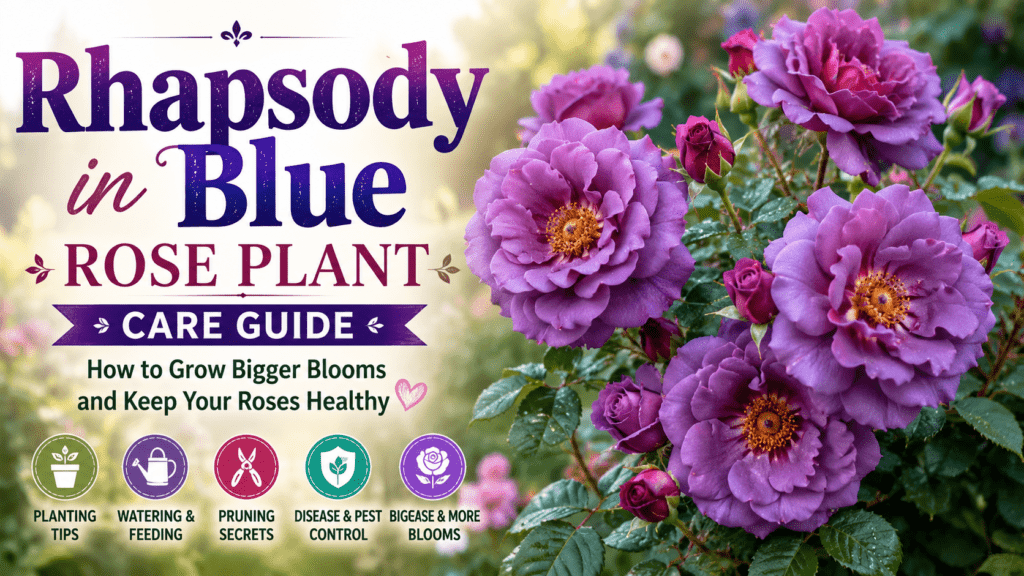
Few roses stop gardeners in their tracks quite like the rhapsody in blue rose plant. With its smoky purple petals, golden centers, and rich fragrance, this extraordinary rose variety looks almost magical in the garden. But while its dramatic blooms are breathtaking, many gardeners struggle to keep the plant healthy, blooming, and disease-free throughout the season.
If your rose isn’t producing vibrant flowers, develops yellow leaves, or seems weak despite your efforts, you’re not alone. The good news? With the right care routine, the Rhapsody in Blue rose can become one of the most rewarding plants in your landscape. 🌸
In this complete expert guide, you’ll learn everything you need to know about:
- Proper planting techniques
- Watering and fertilizing schedules
- Pruning for larger blooms
- Preventing common rose diseases
- Seasonal care tips
- Expert secrets for deeper purple flowers 💜
Whether you’re a beginner gardener or an experienced rose enthusiast, this detailed care guide will help you grow healthier plants and enjoy stunning blooms year after year.
What Is the Rhapsody in Blue Rose Plant? 💜🌹

The Rhapsody in Blue rose plant is one of the most unique modern shrub roses available today. Famous for its rare purple-blue appearance, this rose variety stands out instantly among traditional red, pink, and white roses.
Despite its name, the flowers are not truly blue. Instead, they feature deep violet-purple petals with smoky undertones that can appear bluish under certain lighting conditions. This unusual coloring is one reason gardeners worldwide adore it.
Origin and Background 🌱
The Rhapsody in Blue rose was bred in the United Kingdom by renowned rose breeder Frank R. Cowlishaw and introduced in 1999. It quickly gained popularity because of its:
- Distinctive flower color
- Strong fragrance
- Repeat blooming habit
- Cottage-garden charm
It belongs to the shrub rose category and performs beautifully in borders, mixed flower beds, and even large containers.
Key Characteristics 🌸
Here are the standout features of this stunning rose variety:
| Feature | Details |
|---|---|
| Bloom Color | Purple-violet with smoky blue tones |
| Fragrance | Strong and sweet |
| Bloom Size | Medium clusters |
| Height | 4–6 feet |
| Spread | 3–5 feet |
| Blooming Season | Late spring through fall |
| Sun Requirement | Full sun |
| Growth Habit | Upright shrub |
One fascinating feature is how the flower color changes slightly with temperature. Cooler weather often produces deeper purple blooms, while hot summer conditions may create lighter shades.
Why Gardeners Love This Rose 🌼
Gardeners appreciate the Rhapsody in Blue rose for more than just its color.
Pollinator-Friendly Beauty 🐝
The semi-open blooms expose golden stamens that attract:
- Bees
- Butterflies
- Beneficial insects
Long Blooming Season 🌞
Unlike old-fashioned roses that bloom once, this repeat-flowering shrub continues producing flowers through much of the growing season.
Incredible Garden Contrast 🎨
Its purple blooms pair beautifully with:
- Lavender
- White flowers
- Silver foliage plants
- Pink perennials
This makes it an excellent focal point in ornamental gardens.
Ideal Growing Conditions for Rhapsody in Blue Rose Plant ☀️🌱
Growing healthy roses starts with choosing the right environment. Even the best rose care routine cannot fully compensate for poor planting conditions.
Best Climate Zones 🌍
The Rhapsody in Blue rose grows best in USDA hardiness zones 5–9.
It performs especially well in:
- Mild climates
- Areas with good airflow
- Regions with moderate humidity
While the plant tolerates heat reasonably well, extremely hot climates may reduce flower color intensity and increase disease pressure.
Cold Weather Tolerance ❄️
This rose is moderately cold-hardy but benefits from winter protection in colder regions.
Sunlight Requirements ☀️
Like most roses, the Rhapsody in Blue thrives in full sun.
Ideal Sun Exposure
Aim for:
- 6–8 hours of direct sunlight daily
Morning sunlight is particularly important because it helps dry moisture from leaves quickly, reducing fungal diseases like black spot and powdery mildew.
Can It Grow in Partial Shade?
Yes, but flowering may decrease. Too much shade often causes:
- Fewer blooms
- Leggy growth
- Increased disease problems
For the deepest flower color, provide plenty of morning sun with slight afternoon protection in extremely hot climates.
Soil Requirements 🌿
Healthy soil is one of the biggest secrets to growing vigorous roses.
Best Soil Type
The Rhapsody in Blue rose prefers:
- Rich loamy soil
- Well-draining conditions
- Organic matter-rich ground
Ideal Soil pH
Maintain a pH between:
- 6.0 and 6.5
This slightly acidic range helps the plant absorb nutrients efficiently.
Improve Heavy Soil
If your garden has clay soil:
- Add compost
- Mix in aged manure
- Use coarse sand sparingly
Good drainage is essential because soggy roots can lead to root rot.
Choosing the Perfect Planting Location 🏡
Where you plant your rose matters just as much as how you care for it.
Choose a Spot With:
✅ Good air circulation
✅ Full sun exposure
✅ Protection from harsh winds
✅ Enough room for mature growth
Avoid planting too close to walls or crowded shrubs because poor airflow increases fungal diseases.
How to Plant a Rhapsody in Blue Rose Plant Properly 🌼🪴

Proper planting creates the foundation for a healthy rose that thrives for years.
Best Time to Plant 🌸
The ideal planting seasons are:
- Early spring
- Early fall
These cooler periods allow roots to establish before extreme temperatures arrive.
Bare-Root vs Potted Roses
Bare-Root Roses
- More affordable
- Best planted while dormant
Potted Roses
- Easier for beginners
- Can be planted throughout the growing season
Step-by-Step Planting Guide 🛠️
Step 1: Dig the Planting Hole
Make the hole:
- Twice as wide as the root ball
- Deep enough for roots to spread comfortably
Step 2: Improve the Soil
Mix:
- Compost
- Aged manure
- Organic rose fertilizer
into the backfill soil.
Step 3: Position the Plant Correctly
Place the crown slightly above soil level in warm climates.
In colder climates, position the graft union slightly below the soil surface for winter protection.
Step 4: Water Thoroughly 💧
After planting:
- Water deeply
- Eliminate air pockets
- Help roots settle quickly
Step 5: Mulch Around the Base 🌱
Apply 2–3 inches of mulch to:
- Retain moisture
- Suppress weeds
- Regulate soil temperature
Keep mulch slightly away from the stem to prevent rot.
Watering and Feeding Schedule for Healthy Blooms 💧🌸
One of the biggest mistakes gardeners make is inconsistent watering. Roses thrive on balance — not drought and not soggy soil.
How Often to Water 🚿
Newly Planted Roses
Water:
- 2–3 times weekly during establishment
Mature Roses
Generally need:
- 1–2 inches of water weekly
Deep watering is better than shallow daily watering because it encourages stronger root systems.
Best Watering Method
Always water:
- At soil level
- Early in the morning
Avoid wetting the leaves whenever possible.
Signs of Overwatering vs Underwatering 🚨
Overwatering Symptoms
- Yellow leaves
- Wilting despite wet soil
- Root rot smell
Underwatering Symptoms
- Dry crispy leaves
- Drooping blooms
- Reduced flowering
Checking soil moisture regularly helps prevent both problems.
Best Fertilizers for Rhapsody in Blue Roses 🌿
Roses are heavy feeders and benefit from regular fertilization.
Ideal Fertilizer Ratio
Look for balanced rose fertilizers such as:
- 10-10-10
- 5-7-5 organic blends
Feeding Schedule 📅
| Season | Feeding Recommendation |
|---|---|
| Early Spring | Balanced fertilizer |
| After First Bloom | Light feeding |
| Mid-Summer | Bloom booster |
| Late Summer | Stop fertilizing |
Avoid late-season fertilizing because it encourages tender new growth before winter.
Organic Feeding Options 🌱
Many experienced gardeners prefer organic rose care methods.
Excellent choices include:
- Compost tea
- Fish emulsion
- Bone meal
- Worm castings
These improve soil health while feeding the plant naturally.
Mulching Tips for Stronger Growth 🍂
Mulch is often overlooked, but it plays a major role in rose health.
Best Mulch Materials
Choose:
- Bark mulch
- Pine straw
- Compost
- Shredded leaves
Benefits of Mulching
✅ Conserves moisture
✅ Prevents weeds
✅ Protects roots
✅ Improves soil structure
Refresh mulch yearly for best results.
Pruning Tips to Encourage Bigger Blooms ✂️🌹
Pruning is one of the most important parts of successful rose care. Done correctly, it encourages:
- More flowers
- Better airflow
- Stronger stems
- Healthier growth
Many gardeners feel nervous about pruning roses, but once you understand the basics, it becomes simple and rewarding.
Why Pruning Is Essential 🌿
Without regular pruning, roses can become:
- Overcrowded
- Diseased
- Weak
- Less productive
Pruning removes old or damaged growth so the plant can focus its energy on producing healthy new stems and vibrant blooms.
Best Time to Prune ⏰
Major Pruning
The best time for heavy pruning is:
- Late winter
- Early spring before new growth starts
Light Summer Pruning
During the blooming season:
- Remove faded flowers
- Trim weak stems
- Deadhead regularly
This encourages repeat flowering throughout the season.
Step-by-Step Pruning Method ✂️
1. Remove Dead or Diseased Wood
Cut away:
- Brown stems
- Blackened branches
- Weak or damaged growth
Use clean, sharp pruning shears.
2. Open the Center of the Plant
Aim for a vase-like shape to improve airflow and sunlight penetration.
3. Cut Above Outward-Facing Buds
Make cuts:
- About ¼ inch above the bud
- At a slight angle
This encourages outward growth instead of crowded inward stems.
4. Remove Crossing Branches
Branches rubbing together can create wounds that invite disease.
Common Pruning Mistakes 🚫
Avoid these beginner errors:
❌ Pruning too late in spring
❌ Leaving dead wood on the plant
❌ Using dull pruning tools
❌ Cutting too close to buds
❌ Removing too much healthy growth
Proper pruning dramatically improves bloom quality and overall plant vigor.
Common Problems With Rhapsody in Blue Rose Plant (And How to Fix Them) 🚨🌹
Even healthy roses occasionally face problems. Early identification is the key to preventing serious damage.
Why Leaves Turn Yellow 🍂
Yellow leaves are one of the most common rose issues.
Possible Causes
- Overwatering
- Nutrient deficiency
- Poor drainage
- Lack of sunlight
Quick Fixes
✅ Improve drainage
✅ Feed with balanced fertilizer
✅ Water consistently
✅ Remove affected leaves
Sometimes a few yellow leaves are normal, especially near the base of mature plants.
Black Spot Disease ⚫
Black spot is a fungal disease that causes:
- Black leaf spots
- Yellowing foliage
- Premature leaf drop
Humid conditions increase the risk significantly.
How to Prevent Black Spot
- Water at soil level
- Improve airflow
- Avoid overcrowding
- Remove infected leaves immediately
Organic Treatment Options 🌱
Many gardeners use:
- Neem oil
- Baking soda sprays
- Copper fungicides
Preventive care works better than treating severe infections later.
Powdery Mildew 🌫️
Powdery mildew appears as a white dusty coating on leaves and buds.
Causes
- Poor airflow
- High humidity
- Inconsistent watering
Prevention Tips
✅ Space plants properly
✅ Avoid overhead watering
✅ Prune regularly
Mild cases can often be managed naturally with neem oil or sulfur sprays.
Pests That Attack Roses 🐛
Roses attract several common garden pests.
Aphids
Tiny green insects that cluster on new growth.
Solution:
- Spray with water
- Use insecticidal soap
- Encourage ladybugs 🐞
Spider Mites
Cause speckled leaves and webbing.
Solution:
- Increase humidity
- Spray undersides of leaves
Japanese Beetles
These pests chew flowers and foliage aggressively.
Solution:
- Handpick early morning
- Use beetle traps cautiously
Why Your Rose Isn’t Blooming 🌸❓
Poor flowering frustrates many gardeners.
Common Reasons
- Too much shade
- Excess nitrogen fertilizer
- Improper pruning
- Lack of nutrients
How to Boost Blooms
✅ Provide more sunlight
✅ Use bloom fertilizer
✅ Deadhead regularly
✅ Water deeply but consistently
Healthy roses reward good care with continuous flowering.
Seasonal Care Guide for Year-Round Health 🍁❄️☀️🌸
Roses need different care throughout the year. Seasonal maintenance keeps plants strong and productive.
Spring Care Routine 🌷
Spring is the most important season for rose care.
Tasks to Complete
- Remove winter mulch
- Prune damaged stems
- Feed with balanced fertilizer
- Refresh mulch layer
This is also the ideal time to inspect for early pests or fungal diseases.
Summer Maintenance Tips ☀️
Summer heat can stress roses if not managed properly.
Essential Summer Care
✅ Water deeply during dry spells
✅ Deadhead faded flowers
✅ Watch for spider mites
✅ Provide mulch for moisture retention
In extremely hot climates, light afternoon shade may help preserve bloom color.
Fall Preparation 🍂
As temperatures cool:
- Reduce fertilizing
- Stop heavy pruning
- Clean fallen leaves
Removing diseased foliage helps reduce fungal spores overwintering in the garden.
Winter Protection ❄️
In colder climates, winter care becomes essential.
Protecting Your Rose
- Add extra mulch around roots
- Wrap with burlap if needed
- Avoid heavy pruning before frost
Winter protection helps prevent cane damage and improves spring recovery.
Companion Plants That Pair Beautifully With Rhapsody in Blue 🌿💐

The unique purple tones of the Rhapsody in Blue rose combine beautifully with many companion plants. Thoughtful plant pairing not only improves aesthetics but also supports pollinators and overall garden health.
Best Flower Companions 🌸
Lavender 💜
Lavender complements purple roses perfectly while helping repel some garden pests.
Salvia 🔵
Tall blue salvia creates dramatic contrast and attracts pollinators.
Catmint 🌿
Catmint softens garden edges and blooms for long periods.
White Coneflowers 🤍
White flowers help intensify the smoky purple color of the rose blooms.
Shrubs and Perennials That Complement Purple Roses 🌿🌸
Pairing the Rhapsody in Blue rose plant with the right shrubs and perennials creates a layered, professional-looking landscape design.
Silver Foliage Plants ✨
Silver-toned foliage creates beautiful contrast against purple blooms.
Excellent choices include:
- Dusty miller
- Artemisia
- Lamb’s ear
These plants also enhance the cool-toned elegance of the rose garden.
White Flowering Plants 🤍
White flowers help brighten darker purple roses and create a classic cottage-garden appearance.
Great options:
- Shasta daisies
- White phlox
- Alyssum
- White petunias
The combination looks especially stunning during evening hours.
Plants to Avoid Nearby 🚫
Not every plant makes a good rose companion.
Avoid:
- Aggressive root spreaders
- Large shrubs that block sunlight
- Plants requiring consistently soggy soil
Roses need good airflow and moderate moisture, so overcrowding can quickly lead to fungal issues.
Growing Rhapsody in Blue Rose Plant in Containers 🪴🏡
If you have limited garden space, don’t worry — the Rhapsody in Blue rose grows beautifully in large containers. Container gardening is ideal for:
- Balconies
- Patios
- Small urban gardens
- Decorative entrances
With proper care, potted roses can bloom just as impressively as garden-grown plants.
Choosing the Right Pot 🪴
The container size matters more than many gardeners realize.
Ideal Pot Features
Choose a pot that is:
✅ At least 18–24 inches wide
✅ Deep enough for root growth
✅ Equipped with drainage holes
Materials like terracotta and resin both work well.
Why Drainage Is Critical
Poor drainage is one of the fastest ways to kill container roses. Excess water suffocates roots and encourages fungal diseases.
Best Soil Mix for Container Roses 🌱
Garden soil alone is usually too dense for containers.
Recommended Mix
Use:
- High-quality potting mix
- Compost
- Perlite or coarse sand
This combination provides:
- Drainage
- Nutrient retention
- Proper root aeration
Watering Container Roses 💧
Container roses dry out faster than in-ground plants.
General Rule
During hot weather:
- Water daily if needed
Always check soil moisture before watering again.
Signs Your Potted Rose Needs Water
- Wilting blooms
- Dry topsoil
- Drooping leaves
Deep watering encourages healthier root systems.
Fertilizing Potted Roses 🌸
Container plants lose nutrients faster due to regular watering.
Best Feeding Schedule
Feed every:
- 2–4 weeks during active growth
Use:
- Liquid rose fertilizer
- Slow-release granules
- Organic compost tea
Avoid overfertilizing because excess nutrients can burn roots.
Expert Tips for Darker Purple Blooms 💜✨
One of the most exciting aspects of the Rhapsody in Blue rose is its ever-changing color. Many gardeners specifically want deeper purple tones, and several environmental factors influence bloom intensity.
How Temperature Affects Flower Color 🌡️
Cooler temperatures usually produce:
- Richer purple petals
- Stronger blue undertones
During extreme summer heat, flowers may fade into lighter magenta shades.
Expert Trick
Plant where the rose receives:
- Morning sun
- Mild afternoon shade in hot climates
This often helps preserve deeper flower coloration.
Fertilizer Tips for Better Blooms 🌿
Balanced feeding supports richer flower production.
Avoid Too Much Nitrogen
Excess nitrogen causes:
- Excess leafy growth
- Fewer blooms
Instead, use fertilizers higher in:
- Phosphorus
- Potassium
These nutrients encourage flower development and stronger stems.
Deadheading for Continuous Flowers ✂️
Deadheading means removing spent flowers before they form seeds.
Benefits of Deadheading
✅ Encourages repeat blooming
✅ Improves plant appearance
✅ Directs energy into new flowers
Cut just above a healthy set of leaves for best results.
Proper Sunlight Management ☀️
While roses love sunlight, intense afternoon heat may stress blooms.
Ideal Lighting Balance
- Full morning sun
- Protection from scorching late-afternoon heat
This balance often improves both flower color and longevity.
Is the Rhapsody in Blue Rose Plant Worth Growing? 🌹🤔

For most gardeners, the answer is absolutely yes.
This rose variety offers something truly unique that few other roses can match: dramatic smoky-purple blooms combined with strong fragrance and repeat flowering.
However, like all roses, it performs best when given proper care and attention.
Pros of Growing Rhapsody in Blue 🌸
Stunning Unusual Color 💜
The smoky violet-purple flowers create extraordinary visual interest.
Strong Fragrance 🌹
Unlike many modern roses, this variety has a rich, pleasant scent.
Repeat Blooming 🌼
With proper deadheading and feeding, it flowers repeatedly throughout the season.
Pollinator Friendly 🐝
Open-centered blooms attract beneficial insects and pollinators.
Potential Drawbacks ⚠️
Disease Susceptibility
Like many roses, it may experience:
- Black spot
- Powdery mildew
- Aphid infestations
Preventive care greatly reduces problems.
Color Variations
Hot weather may reduce the blue-purple intensity.
Still, many gardeners find the changing shades part of its charm.
Best Type of Gardener for This Rose 👩🌾
This plant works well for:
✅ Beginners willing to learn rose basics
✅ Cottage garden enthusiasts
✅ Container gardeners
✅ Pollinator garden lovers
✅ Collectors of unusual roses
With consistent care, even new gardeners can achieve spectacular results.
Frequently Asked Questions About Rhapsody in Blue Rose Plant ❓🌿
How Tall Does a Rhapsody in Blue Rose Plant Grow?
Most mature plants grow:
- 4–6 feet tall
- 3–5 feet wide
Proper pruning helps maintain shape and airflow.
Does It Really Produce Blue Flowers? 💙
Not exactly.
The blooms are typically:
- Smoky purple
- Violet
- Magenta-purple with bluish tones
Cool weather often enhances the blue appearance.
Can It Grow in Pots? 🪴
Yes! It performs very well in containers when provided:
- Large pots
- Quality soil
- Regular feeding
- Consistent watering
Container growing is especially popular for patios and balconies.
How Often Does It Bloom? 🌸
This is a repeat-blooming rose.
You can expect flowering:
- From late spring until fall
- In multiple flushes throughout the season
Deadheading helps maximize blooms.
Is the Rhapsody in Blue Rose Disease Resistant?
It has moderate disease resistance but still benefits from:
- Good airflow
- Proper watering
- Preventive care
Humid climates may require extra fungal management.
Why Are My Blooms Fading Quickly? ☀️
Common causes include:
- Intense summer heat
- Inconsistent watering
- Aging flowers
Providing afternoon shade in hot climates may help.
How Do I Get Bigger Flowers? 🌹
To encourage larger blooms:
✅ Feed regularly
✅ Prune correctly
✅ Water deeply
✅ Remove weak stems
✅ Provide full sun
Healthy plants naturally produce stronger flowers.
Expert Rose Care Mistakes to Avoid 🚫🌿
Even experienced gardeners sometimes make mistakes that weaken roses.
Overcrowding Plants
Poor airflow encourages fungal disease.
Always allow enough space for mature growth.
Watering Too Frequently 💧
Daily shallow watering creates weak root systems.
Instead:
- Water deeply
- Less frequently
This promotes drought tolerance and stronger roots.
Ignoring Soil Health 🌱
Healthy soil creates healthy roses.
Regularly improve soil with:
- Compost
- Organic matter
- Mulch
Good soil biology supports long-term plant vigor.
Fertilizing Too Late in the Season 🍂
Late fertilizing encourages tender new growth vulnerable to frost damage.
Stop feeding:
- 6–8 weeks before first expected frost
Landscaping Ideas Using Rhapsody in Blue Rose Plant 🏡🌸
This rose can become a breathtaking focal point in many garden styles.
Cottage Gardens 🌼
Pair with:
- Lavender
- Foxgloves
- Delphiniums
for a romantic English-garden look.
Modern Landscapes ✨
Use contrasting plants with:
- Silver foliage
- White blooms
- Dark mulch
to create elegant contemporary designs.
Pollinator Gardens 🐝
Combine with nectar-rich flowers to attract:
- Bees
- Butterflies
- Beneficial insects
This supports biodiversity while improving garden beauty.
Final Thoughts 🌹💜
The rhapsody in blue rose plant is more than just another flowering shrub — it’s a true conversation piece for the garden. Its smoky purple blooms, rich fragrance, and repeat flowering ability make it one of the most distinctive roses available today.
While this rose does require proper care, the rewards are well worth the effort. By providing:
- Full sunlight
- Nutrient-rich soil
- Consistent watering
- Proper pruning
- Preventive disease care
you can enjoy spectacular blooms season after season.
Whether planted in garden beds, borders, or containers, the Rhapsody in Blue rose brings elegance, color, fragrance, and pollinator-friendly beauty to any outdoor space. 🌸✨
With the expert tips in this guide, even beginners can confidently grow healthier plants and achieve bigger, more vibrant blooms.











