
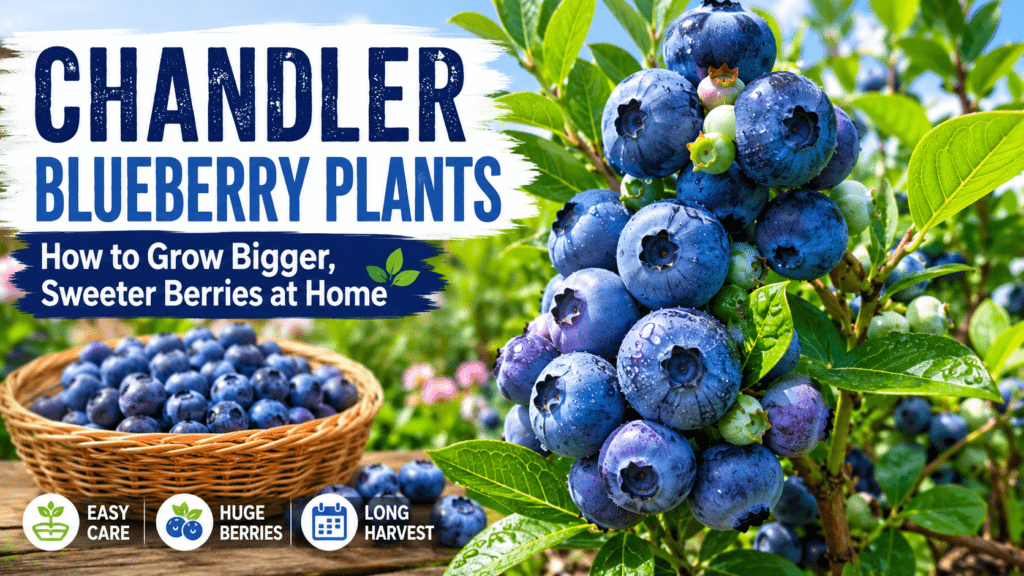
Imagine walking into your garden on a warm summer morning and picking blueberries so large they almost fill the palm of your hand 🫐✨. That’s exactly why chandler blueberry plants have become one of the most loved blueberry varieties among home gardeners and berry enthusiasts.
But here’s the problem many gardeners face: despite planting blueberry bushes with excitement, they often end up with tiny berries, yellow leaves, weak growth, or disappointing harvests 😟. The good news? Most of these problems are completely avoidable when you understand what Chandler blueberries truly need to thrive.
This complete expert guide will show you exactly how to grow healthy, productive Chandler blueberry plants with larger, sweeter berries year after year 🌱. Whether you’re planting in the ground, growing blueberries in containers, or trying to improve poor fruit production, you’ll learn proven techniques used by experienced growers.
By the end of this guide, you’ll know:
- The ideal soil and pH for Chandler blueberries
- How to water and fertilize correctly 💧
- The secret to giant berry production
- Common blueberry plant problems and fixes
- Pruning methods that increase harvests ✂️
- How to grow Chandler blueberries successfully even as a beginner
Let’s dig in 🌿
What Are Chandler Blueberry Plants? 🫐
Origin and Background 🌱
Chandler blueberry plants are a popular variety of Northern Highbush blueberry known for producing exceptionally large fruit. Developed by blueberry breeders for superior berry size and flavor, Chandler blueberries quickly became a favorite among both commercial growers and backyard gardeners.
Unlike some blueberry varieties that produce small berries over a short period, Chandler plants are famous for their:
- Huge berry size
- Extended harvest season
- Excellent sweetness
- Attractive appearance
These blueberries are ideal for fresh eating, desserts, smoothies, jams, and freezing 🍰.
Why Gardeners Love Chandler Blueberries ❤️
There are many blueberry varieties available today, but Chandler stands out for several reasons.
Massive Berry Size 🫐
Chandler blueberries are among the largest blueberries you can grow at home. Some berries can reach the size of a quarter when grown under ideal conditions.
Sweet, Rich Flavor 😋
The berries have a delicious balance of sweetness and mild acidity, making them perfect for snacking straight off the bush.
Long Harvest Season ⏳
Unlike varieties that ripen all at once, Chandler blueberries continue producing for several weeks, giving you a steady harvest throughout summer.
Beautiful Landscape Plant 🌿
With glossy green leaves, spring flowers, and vibrant fall color, Chandler blueberry plants are ornamental as well as productive.
Chandler Blueberry Plant Characteristics 🌳
Here’s what you can expect from mature Chandler blueberry bushes:
| Feature | Details |
|---|---|
| Plant Type | Northern Highbush Blueberry |
| Mature Height | 5–6 feet |
| Mature Width | 4–5 feet |
| Berry Size | Extra large |
| Flavor | Sweet and mildly tart |
| Harvest Time | Mid to late season |
| USDA Zones | 4–8 |
| Sun Requirement | Full sun ☀️ |
Chandler vs Other Blueberry Varieties 🫐
Choosing the right blueberry variety matters. Here’s how Chandler compares to other common types:
| Variety | Berry Size | Flavor | Harvest Length |
|---|---|---|---|
| Chandler | Very large | Sweet | Long |
| Duke | Medium | Mild | Early |
| Bluecrop | Medium-large | Balanced | Medium |
| Legacy | Medium | Very sweet | Long |
💡 Expert Insight:
If your main goal is growing giant blueberries with excellent flavor, Chandler is one of the best varieties available for home gardens.
Best Growing Conditions for Chandler Blueberry Plants ☀️
Blueberries are not difficult to grow, but they are very specific about their environment. Understanding these conditions is the key to healthy plants and heavy harvests.
Ideal Climate and Hardiness Zones 🌎
Chandler blueberry plants grow best in:
- USDA Zones 4–8
- Areas with cold winters and moderate summers
- Regions receiving enough chill hours during winter
Chill Hour Requirements ❄️
Blueberries need winter dormancy to produce fruit properly. Chandler blueberries require approximately:
- 800–1,000 chill hours
Without adequate winter chilling, plants may produce weak blooms or poor fruit set.
Sunlight Requirements ☀️
For maximum berry production, Chandler blueberry plants need:
- At least 6–8 hours of direct sunlight daily
Why Sunlight Matters
Insufficient sun can lead to:
- Smaller berries
- Lower sugar content
- Weak growth
- Increased disease risk
💡 Pro Tip:
Morning sun is especially beneficial because it dries moisture quickly and reduces fungal problems.
Best Soil for Chandler Blueberries 🌱
This is the most important factor for successful blueberry growing.
Blueberries are acid-loving plants and require:
- Well-draining soil
- High organic matter
- Acidic pH between 4.5 and 5.5
Why Soil pH Matters 🧪
If soil is too alkaline:
- Leaves turn yellow
- Growth slows
- Plants struggle to absorb nutrients
Many blueberry failures happen simply because gardeners skip soil testing.
How to Test Soil pH at Home 🧪
You can test soil pH using:
- Digital soil meters
- Home testing kits
- Professional soil testing services
Signs Your Soil Is Too Alkaline 🚨
- Yellow leaves with green veins
- Stunted growth
- Poor berry production
Improving Soil Before Planting 🌿
Before planting Chandler blueberry plants, prepare the soil carefully.
Best Soil Amendments
Add:
- Peat moss
- Pine bark
- Pine needles
- Compost
Lowering Soil pH Naturally
To acidify soil:
- Use elemental sulfur
- Apply acid-loving plant fertilizers
💡 Expert Tip:
Healthy blueberry roots thrive in loose, airy soil rich in organic matter.
How to Plant Chandler Blueberry Plants Properly 🌱
Correct planting makes a massive difference in long-term success.
Best Time to Plant 📅
The ideal planting times are:
- Early spring
- Fall in mild climates
Spring planting allows roots to establish before summer heat arrives.
Choosing Healthy Nursery Plants 🌿
When buying Chandler blueberry plants, look for:
✅ Healthy green leaves
✅ Strong stems
✅ No signs of disease
✅ Moist, healthy roots
Avoid plants with:
❌ Yellow leaves
❌ Wilting
❌ Root-bound containers
Step-by-Step Planting Instructions 🪴
1. Select the Right Location ☀️
Choose a sunny location with excellent drainage.
2. Prepare Acidic Soil 🌱
Mix peat moss and organic matter into the planting area.
3. Dig the Hole
Make the hole:
- Twice as wide as the root ball
- Slightly shallower than container depth
4. Position the Plant Correctly
Place the plant so the crown sits slightly above soil level.
5. Backfill Carefully
Use amended acidic soil and gently firm it around roots.
6. Water Thoroughly 💧
Deep watering helps settle soil and remove air pockets.
7. Add Mulch 🌿
Apply:
- Pine bark mulch
- Pine needles
- Wood chips
Mulch helps:
- Retain moisture
- Control weeds
- Keep roots cool
Proper Plant Spacing 📏
Space Chandler blueberry plants:
- 4–5 feet apart
Good airflow reduces disease problems and encourages healthy growth.
Growing Chandler Blueberries in Containers 🏡
Chandler blueberries grow surprisingly well in pots.
Best Container Size
Use containers:
- At least 18–24 inches wide
- With excellent drainage holes
Recommended Potting Mix 🌱
Use:
- Acidic potting soil
- Pine bark fines
- Peat moss
Container Growing Tips
- Water more frequently
- Monitor soil pH regularly
- Protect roots during winter
⚠️ Common Mistake:
Never use regular garden soil in containers. It compacts too easily and damages blueberry roots.
Watering Chandler Blueberry Plants the Right Way 💧
Improper watering is one of the most common reasons for poor blueberry growth.
How Much Water Do Chandler Blueberries Need? 🌿
Most mature plants need:
- 1–2 inches of water weekly
During hot weather or fruiting season, water requirements increase.
Signs of Underwatering 🚱
Dry plants may show:
- Drooping leaves
- Small berries
- Dry soil
- Premature fruit drop
Signs of Overwatering 🌧️
Too much water can cause:
- Root rot
- Yellow leaves
- Weak growth
- Fungal diseases
Blueberries hate soggy soil.
Best Irrigation Methods 💦
Drip Irrigation
Drip systems provide slow, deep watering ideal for blueberries.
Soaker Hoses
Excellent for maintaining consistent soil moisture.
Mulching Benefits 🌿
Mulch helps reduce evaporation and stabilize soil moisture.
💡 Expert Tip:
Consistent watering during fruit development produces sweeter, juicier berries.
Fertilizing Chandler Blueberry Plants for Maximum Growth 🌿
Blueberries have specific nutritional needs, and improper fertilization can damage plants quickly.
When to Fertilize 📅
The best schedule:
- Early spring before growth starts
- Light feeding after flowering
Avoid fertilizing late in the season because it encourages tender growth vulnerable to winter damage.
Best Fertilizers for Blueberries 🌱
Choose fertilizers designed for:
- Acid-loving plants
- Blueberries
- Azaleas or rhododendrons
Good Fertilizer Options
✅ Ammonium sulfate
✅ Cottonseed meal
✅ Organic blueberry fertilizer
✅ Slow-release acidic fertilizer
Fertilizers to Avoid ❌
Avoid:
- Fresh manure
- High-nitrogen lawn fertilizers
- Alkaline composts
These can raise soil pH and harm blueberry roots.
Signs of Nutrient Deficiencies 🚨
Nitrogen Deficiency
- Pale leaves
- Weak growth
Iron Deficiency
- Yellow leaves with green veins
Poor Fruiting
Often linked to:
- Nutrient imbalance
- Incorrect pH
Pollination Tips for Bigger Harvests 🐝
Although Chandler blueberry plants are technically self-pollinating, cross-pollination dramatically improves fruit production.
Why Cross-Pollination Matters 🌸
Planting another blueberry variety nearby helps:
- Increase berry size
- Improve yields
- Enhance fruit quality
Good Pollination Partners
- Bluecrop
- Legacy
- Elliott
Attracting Pollinators Naturally 🐝
Encourage bees by planting:
- Lavender
- Bee balm
- Coneflowers
Avoid spraying pesticides during bloom season.
Pruning Chandler Blueberry Plants Correctly ✂️
Pruning is one of the biggest secrets to producing large, healthy blueberries.
Without pruning, plants become overcrowded and less productive.
Why Pruning Matters 🌿
Proper pruning:
- Improves airflow
- Encourages new growth
- Produces larger berries
- Reduces disease risk
Best Time to Prune 📅
Prune during:
- Late winter
- Early spring before bud break
Avoid heavy pruning during active growth.
Step-by-Step Blueberry Pruning Guide ✂️
Remove Dead Wood
Cut out:
- Broken branches
- Diseased stems
- Dead canes
Thin Older Canes
Remove older woody stems to encourage vigorous new shoots.
Improve Airflow 🌬️
Open the center of the plant slightly for better light penetration.
Shape the Bush
Maintain a balanced, upright structure.
📷 Suggested Image:

Common Problems With Chandler Blueberry Plants 🚨
Even healthy blueberry bushes can run into problems from time to time. The good news is that most issues can be identified early and corrected before they seriously affect your harvest 🌿.
Understanding the warning signs will help you keep your Chandler blueberry plants productive and healthy for years.
Yellow Leaves (Chlorosis) 🍃
Yellowing leaves are one of the most common blueberry plant problems.
Main Causes
- Soil pH too high
- Iron deficiency
- Poor drainage
- Overwatering
How to Fix It ✅
- Test soil pH immediately
- Lower pH using elemental sulfur
- Apply chelated iron if needed
- Improve drainage around roots
💡 Expert Insight:
Blueberries absorb nutrients poorly when soil becomes alkaline, even if nutrients are present in the soil.
Small or Sour Berries 🫐
If your berries stay tiny or taste sour, the plant is usually stressed.
Common Reasons
- Insufficient sunlight ☀️
- Poor pollination 🐝
- Inconsistent watering 💧
- Overcrowded branches
- Nutrient deficiencies
Solutions
✅ Increase sun exposure
✅ Prune annually
✅ Maintain even moisture
✅ Add companion blueberry varieties
Poor Fruit Production 😟
Some gardeners grow beautiful blueberry bushes with very few berries.
Possible Causes
- Young plants
- Lack of pollinators
- Improper pruning
- Too much nitrogen fertilizer
- Late frost damage
How to Improve Harvests 🌿
- Encourage bees and pollinators
- Avoid overfertilizing
- Protect flowers from spring frost
- Plant multiple blueberry varieties nearby
Leaf Spots and Fungal Diseases 🍂
Blueberries can occasionally develop fungal diseases in humid or wet conditions.
Symptoms
- Brown leaf spots
- Premature leaf drop
- Moldy fruit
Prevention Tips 🛡️
- Water at the base of plants
- Avoid wetting leaves
- Improve airflow with pruning
- Remove fallen leaves
Organic Treatment Options 🌱
- Copper fungicides
- Neem oil
- Compost tea sprays
Common Pests on Chandler Blueberries 🐛
Birds 🐦
Birds absolutely love blueberries.
Protection Tips
- Use bird netting
- Install reflective tape
- Add garden scare devices
Aphids
These tiny insects suck plant sap and weaken growth.
Organic Control
- Spray with water
- Introduce ladybugs
- Use insecticidal soap
Japanese Beetles 🪲
These pests chew leaves and damage plants quickly.
Control Methods
- Hand-pick beetles
- Use traps away from plants
- Apply organic neem treatments
How Long Does It Take Chandler Blueberries to Produce Fruit? ⏳
One of the biggest questions new growers ask is: “When will I finally get blueberries?” 🫐
The answer depends on plant age and growing conditions.
First-Year Expectations 🌱
During the first year:
- Plants focus mainly on root development
- Berry production is usually light
Many experts recommend removing flowers during the first year to help the plant establish stronger roots.
Blueberry Growth Timeline 📈
| Plant Age | What to Expect |
|---|---|
| Year 1 | Root establishment |
| Year 2 | Small harvest |
| Year 3 | Moderate production |
| Year 4–5 | Heavy harvests 🫐 |
When Chandler Blueberries Reach Full Production 🌿
Mature Chandler blueberry plants can produce:
- 8–15 pounds of fruit annually
Proper care dramatically increases productivity.
💡 Expert Tip:
Patience pays off. Well-maintained blueberry bushes can remain productive for 20 years or longer.
Harvesting Chandler Blueberries for the Best Flavor 🫐
Harvest time is the most rewarding part of growing blueberries 🍇✨.
When Chandler Blueberries Ripen 📅
Chandler blueberries are considered:
- Mid-to-late season blueberries
Most plants ripen:
- Mid-summer through late summer
How to Tell When Blueberries Are Fully Ripe 👀
Ripe Chandler blueberries should be:
✅ Deep blue
✅ Slightly soft
✅ Easy to pick
✅ Sweet-smelling
Important Tip
Don’t harvest immediately after berries turn blue. Wait a few extra days for full sweetness.
Proper Harvesting Techniques ✋
To avoid damaging berries:
- Pick gently
- Avoid squeezing fruit
- Harvest during cool morning hours
Harvest Frequently
Check bushes every few days during peak season.
How to Store Fresh Blueberries 🧊
Refrigeration
Fresh berries can last:
- 1–2 weeks in the refrigerator
Freezing Tips ❄️
- Wash berries gently
- Dry completely
- Freeze in a single layer
- Transfer to freezer bags
Frozen blueberries are excellent for:
- Smoothies
- Baking
- Sauces
- Jam making 🍰
📷 Suggested Harvest Image:

Winter Care for Chandler Blueberry Plants ❄️
Blueberries are hardy plants, but winter care still matters—especially for young bushes.
Protecting Plants From Frost 🌨️
Apply Mulch
Add:
- Pine needles
- Bark mulch
- Straw
Mulch protects roots from temperature swings.
Cover Young Plants
In extremely cold areas:
- Use frost blankets
- Cover during severe freezes
Winter Watering Tips 💧
Even dormant plants need occasional moisture.
Important Guidelines
- Water during dry winters
- Avoid waterlogged soil
- Reduce watering frequency
Protecting Container Blueberries 🏡
Container-grown plants are more vulnerable to freezing.
Winter Protection Tips
- Move pots near walls
- Wrap containers with insulation
- Place mulch over soil
💡 Cold Climate Tip:
Roots freeze faster in pots than in ground soil.
Companion Plants for Chandler Blueberries 🌸
Choosing the right companion plants can improve pollination, soil health, and garden beauty.
Best Companion Plants 🌿
Blueberries thrive near other acid-loving plants.
Excellent Choices
- Azaleas
- Rhododendrons
- Camellias
- Cranberries
- Heathers
These plants enjoy similar soil conditions and moisture levels.
Pollinator-Friendly Flowers 🐝
Adding flowering plants helps attract bees and beneficial insects.
Great Pollinator Plants
🌸 Lavender
🌸 Bee balm
🌸 Salvia
🌸 Coneflowers
Plants to Avoid Nearby ❌
Avoid planting blueberries near:
- Brassicas
- Vegetables needing alkaline soil
- Heavy-feeding plants
These can compete for nutrients or alter soil pH.
Expert Tips to Grow Bigger and Sweeter Chandler Blueberries ⭐
Want truly impressive berries? These professional techniques can dramatically improve your results 🫐✨.
Mulching Secrets 🌿
Mulching is one of the best things you can do for blueberries.
Benefits
✅ Retains moisture
✅ Suppresses weeds
✅ Keeps roots cool
✅ Improves soil structure
Best Mulch Types
- Pine bark
- Pine needles
- Wood chips
Maintain:
- 2–4 inches of mulch
Maintain Soil Acidity Long-Term 🧪
Blueberries constantly need acidic conditions.
Ongoing Soil Care
- Test pH annually
- Use acidifying fertilizers
- Refresh organic mulch regularly
Increase Berry Size Naturally 🫐
To maximize berry size:
- Prune aggressively
- Water consistently
- Improve pollination
- Avoid plant stress
💡 Professional Grower Secret:
Removing weaker branches allows the plant to focus energy on fewer, larger berries.
Prevent Heat Stress ☀️
Excessive heat can reduce berry quality.
Protection Tips
- Mulch heavily
- Water deeply during heat waves
- Provide afternoon shade in very hot climates
Frequently Asked Questions About Chandler Blueberry Plants ❓
Do Chandler blueberry plants need another plant for pollination?
No, they are self-pollinating. However, cross-pollination with another blueberry variety significantly improves berry size and yield 🐝.
How big do Chandler blueberries get?
Chandler blueberries are among the largest blueberry varieties available. Some berries can grow as large as a quarter 🫐.
Can Chandler blueberries grow in pots?
Yes! They grow very well in containers as long as:
- Soil stays acidic
- Pots drain well
- Plants receive full sun ☀️
Why are my blueberry leaves turning yellow?
Yellow leaves usually indicate:
- High soil pH
- Iron deficiency
- Overwatering
Testing soil pH is the first step toward fixing the issue.
How often should I water Chandler blueberry plants?
Generally:
- 1–2 inches of water weekly
Increase watering during:
- Hot weather
- Fruiting season
Are Chandler blueberries beginner-friendly?
Absolutely 🌱. While blueberries require acidic soil, Chandler blueberry plants are relatively easy to grow once their basic needs are understood.
Conclusion 🌿🫐
Chandler blueberry plants are truly one of the most rewarding fruit bushes you can grow at home. With their giant berries, sweet flavor, and long harvest season, they offer both beauty and productivity in the garden ✨.
The key to success comes down to a few essential practices:
- Maintain acidic soil
- Provide full sunlight ☀️
- Water consistently 💧
- Prune annually ✂️
- Encourage pollination 🐝
Once established, Chandler blueberry plants can reward you with massive harvests for decades. Even beginner gardeners can achieve impressive results by following the expert techniques shared in this guide.
Whether you’re planting your very first blueberry bush or improving an existing berry garden, Chandler blueberries are a fantastic investment for fresh, homegrown fruit 🍇🌿.











