
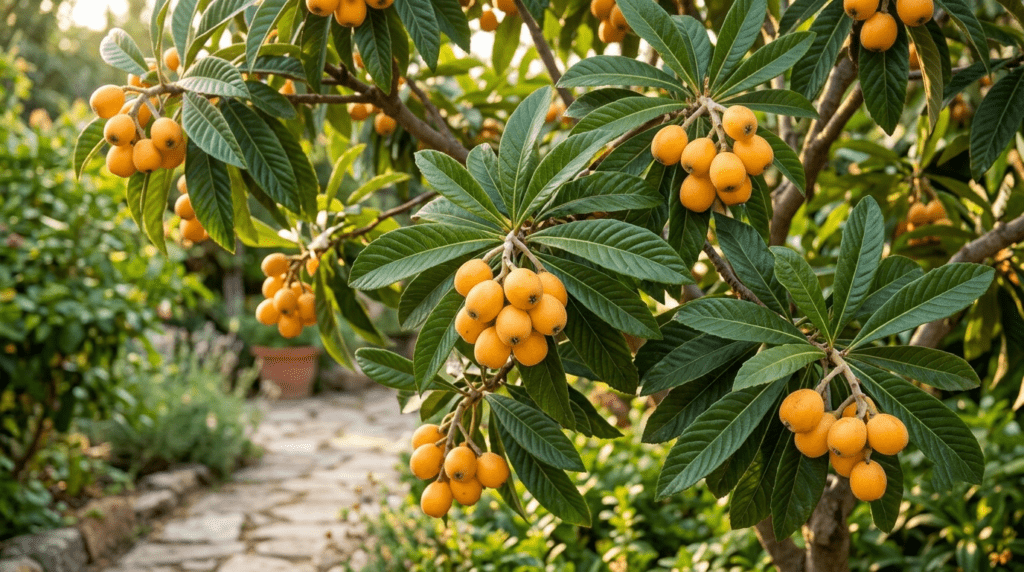
Imagine stepping into your garden on a crisp spring morning, reaching up into a canopy of massive, tropical green leaves, and plucking a bright orange, sun-warmed fruit. Biting into it reveals a juicy, complex flavor—a perfect harmony of peach, citrus, and mango. If you want to bring this exotic sweetness to your home, planting a loquat tree is one of the most rewarding and visually stunning landscaping decisions you can make.
However, many well-meaning gardeners run into a frustrating wall. They plant a loquat, water it diligently, and watch it grow into a magnificent, lush green tree—only for it to drop its delicate winter blossoms prematurely or produce small, tart, disappointing fruit. It is a common problem, but one that is entirely preventable.
As a plant care specialist with years of hands-on experience in arboriculture and subtropical fruit production, I have seen exactly where home growers go wrong. Growing a tree that merely survives is easy; cultivating one that consistently yields a massive, sugary harvest requires specific, targeted care.
In this comprehensive guide, we are going to dive deep into the botanical science and practical techniques required to unlock your tree’s full potential. From soil selection and winter protection to the highly guarded orchard secret of fruit thinning, this is your ultimate roadmap to growing a spectacular loquat harvest. Let’s dig in! 🧤
Get to Know the Loquat Tree (Eriobotrya japonica) 🍃
Before we can optimize its growth, we need to understand the plant itself. Native to the cool, misty hill regions of southeastern China, the loquat (Eriobotrya japonica) has been cultivated for over a thousand years for both its aesthetic appeal and its delicious bounty.
Unlike many deciduous fruit trees (like apples or peaches) that lose their leaves and sleep through the winter, the loquat is a broadleaf evergreen. This means it maintains its bold, deeply veined, leathery leaves year-round, adding a permanent splash of tropical flair to your landscape.
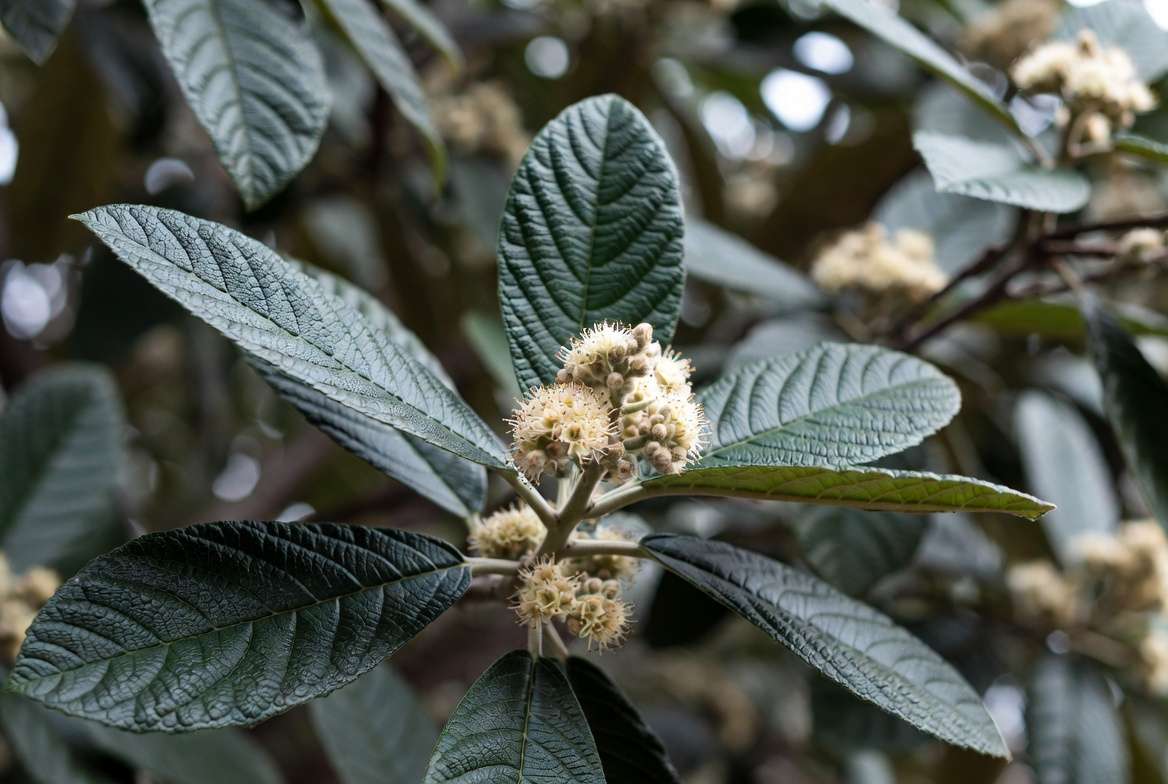
Even more unique is its lifecycle. While most trees bloom in the spring, the loquat pushes out clusters of small, highly fragrant, fuzzy white flowers in late fall and early winter. These blossoms fill the chilly air with a scent reminiscent of vanilla and almond, attracting whatever late-season pollinators are braving the cold. By early spring, when other trees are just waking up, the loquat is already heavy with ripening fruit.
Loquat Tree Quick Facts 📋
| Feature | Expert Details |
| Scientific Name | Eriobotrya japonica |
| Plant Type | Broadleaf evergreen fruit tree |
| Mature Size | 15–30 feet tall and 15–20 feet wide (dwarf varieties available) |
| Bloom Time | Late fall to early winter (November through January) |
| Harvest Time | Early spring to early summer (March through June) |
| Growth Rate | Moderate (up to 3 feet per year in optimal conditions) |
Choosing the Perfect Spot: Sunlight, Soil, and Climate ☀️
The foundation of a thriving, heavy-bearing tree is laid before you even pick up a shovel. Location is everything.
Sunlight Needs for Maximum Sugar
Loquats are incredibly adaptable and can survive in partial shade, making them a popular choice for understory planting in ornamental gardens. However, if your goal is fruit production, you must plant your tree in full sun. It requires a minimum of 6 to 8 hours of direct, unfiltered sunlight daily. Sunlight drives the photosynthesis necessary not just for blossom creation, but for sugar accumulation in the fruit. A shaded tree will yield sparse, sour loquats.
Soil Requirements and Root Health
These trees are not overly fussy, but they absolutely despise “wet feet.” They thrive in well-draining, loamy soil with a slightly acidic to neutral pH (ideally between 6.0 and 7.0). If you live in an area with heavy, compacted clay soil, you must amend the site heavily with organic matter, compost, and coarse sand to improve drainage. Alternatively, consider planting the tree on a raised mound or berm. Standing water will rapidly lead to root rot (Phytophthora), which is a death sentence for an otherwise healthy tree.
Climate and Hardiness Zones
Loquats perform best in USDA Hardiness Zones 8 through 11. However, there is a massive difference between tree survival and fruit survival.
Expert Insight: “While the wood and leaves of a mature loquat tree can survive cold snaps down to 10°F, their winter flowers and developing fruit will freeze and die if temperatures drop below 27°F. If you live in Zone 8, your tree will live, but you must actively protect the winter blooms from frost if you want a spring harvest!” 💡
If a late freeze is forecasted while your tree is in bloom, cover the canopy with frost cloth (never plastic) and anchor it to the ground to trap the earth’s radiant heat.
Step-by-Step: Planting Your Loquat Tree 🌱
Getting your tree into the ground correctly sets the stage for a lifetime of vigorous growth. Poor planting techniques are a leading cause of transplant shock and stunted development.
-
Timing the Planting: The absolute best time to plant is in the early spring or early fall. The mild temperatures allow the root system to establish itself before the extreme stress of summer heat or winter cold sets in.
-
Proper Spacing: Do not be fooled by the size of the nursery sapling. Loquats grow a dense, spreading canopy. Plant your tree at least 15 feet away from houses, fences, power lines, and other trees. This ensures adequate airflow—a crucial factor in preventing fungal diseases.
-
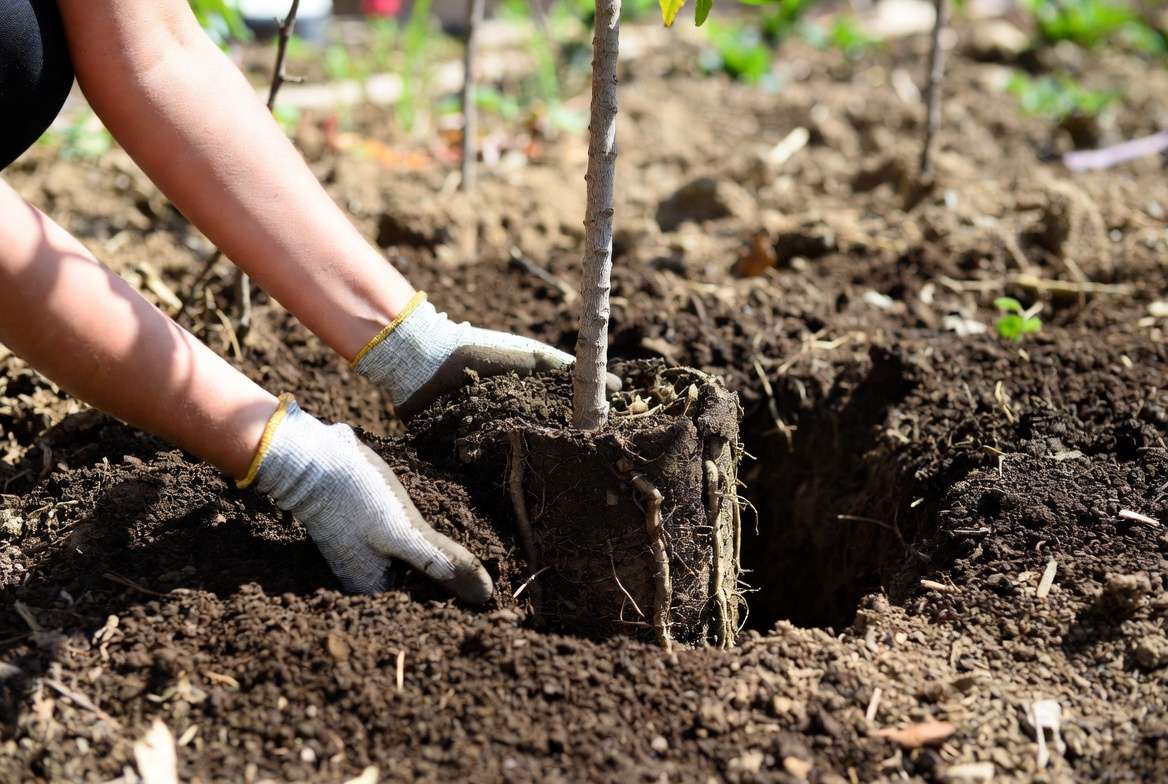
Digging the Perfect Hole: Dig a hole that is twice as wide as the root ball, but no deeper. The biggest mistake beginners make is planting the tree too deep. The root flare (the widened base of the trunk where it meets the roots) must sit just above the soil line to prevent trunk rot.
-
Planting and Backfilling: Gently loosen the circling roots of the sapling. Place it in the hole and backfill with the native soil. Do not add heavy fertilizers to the hole, as this can burn the tender new roots.
-
Watering and Mulching: Water the area deeply to collapse any subterranean air pockets. Finally, apply a 2 to 3-inch layer of organic mulch (like wood chips or pine bark) around the base, extending out to the drip line. Keep the mulch pulled a few inches away from the actual trunk to prevent moisture buildup and disease.
Essential Care: Watering, Feeding, and Pruning 💧
Once your tree is in the ground, it shifts from establishment mode to growth mode. Your maintenance routine during the first three years dictates the structural integrity and fruiting capacity of the mature tree.
Mastering the Watering Schedule 🚿
Young trees lack the deep taproots needed to seek out underground moisture. For the first six months, water your tree deeply twice a week, allowing the top two inches of soil to dry out between waterings.
As the tree matures, it becomes remarkably drought-tolerant. A mature loquat generally relies on natural rainfall. However, there is an exception to this rule: the fruiting phase. When the tree is actively swelling its fruit (late winter to early spring), providing supplemental deep watering once a week will drastically increase the size and juiciness of the harvest. If a loquat experiences drought stress while fruiting, it will abort the crop and drop the fruit prematurely to save itself.
Fertilizing for Maximum Growth and Yield 🪴
Loquats are moderate feeders, but delivering the right nutrients at the right time is what transforms an average tree into a prolific producer. For the first year, hold off on heavy chemical fertilizers. Let the tree establish its root system using the nutrients naturally present in the soil and the organic mulch you applied.
Starting in year two, begin a regular feeding program. Use a balanced, slow-release fruit tree or citrus fertilizer (a 6-6-6 or 8-8-8 NPK ratio works beautifully). Because the loquat operates on a different schedule than most fruit trees, its feeding schedule must be adjusted:
-
Late Winter / Early Spring: Feed just as the fruit is beginning to swell. This gives the tree the energy required to maximize fruit size.
-
Late Spring / Early Summer: Feed immediately after the harvest to replenish the tree’s energy reserves.
-
Early Fall: Provide a light feeding to prepare the tree for its rigorous winter blooming cycle.
Pro Tip: Always water the fertilizer in thoroughly, and never let the granules touch the trunk, which can cause fertilizer burn.
Pruning for Shape and Sunlight Penetration ✂️
Unlike peach or apple trees, which require aggressive annual pruning to produce fruit, loquat trees are relatively low-maintenance when it comes to trimming. They naturally form a beautiful, rounded canopy. However, strategic pruning is essential for disease prevention and fruit quality.
The best time to prune a loquat tree is mid-summer, shortly after the harvest is completely finished, but well before the fall blossoms begin to form.
Focus on:
-
The 3 D’s: Removing any Dead, Diseased, or Damaged wood.
-
Airflow and Light: Thinning out the dense interior branches. If the canopy is too thick, sunlight cannot penetrate to the inner branches. Fruit that grows in the shade will be noticeably less sweet and more acidic than fruit grown in direct sun.
-
Size Management: If you want to keep the fruit within arm’s reach for easy harvesting, you can “top” the tree to maintain a manageable height of 10 to 12 feet.
The Secret to Guaranteeing Sweet, Abundant Fruit 🍑
If your tree is healthy, watered, and fed, but the harvests are still disappointing, you are likely missing one of these three crucial expert steps.
Understanding Loquat Pollination 🐝
Most loquat varieties are considered self-fertile or partially self-fertile. This means a single tree planted in isolation can, and usually will, produce some fruit. However, relying on a single tree is a missed opportunity.
Botanical studies and orchard practices show that cross-pollination drastically increases both the yield and the size of the fruit. By planting two different cultivars nearby (within 50 feet of each other), the local bees and winter pollinators will cross-pollinate the blossoms. If you have the space, plant a pairing like ‘Gold Nugget’ (known for its large, sweet fruit) alongside a ‘Champagne’ (celebrated for its tart-sweet, juicy white flesh). The resulting harvest will be spectacular.
The Magic of Fruit Thinning ✂️
If there is one absolute “secret” to growing massive, grocery-store-quality loquats, it is this: You must thin the fruit.
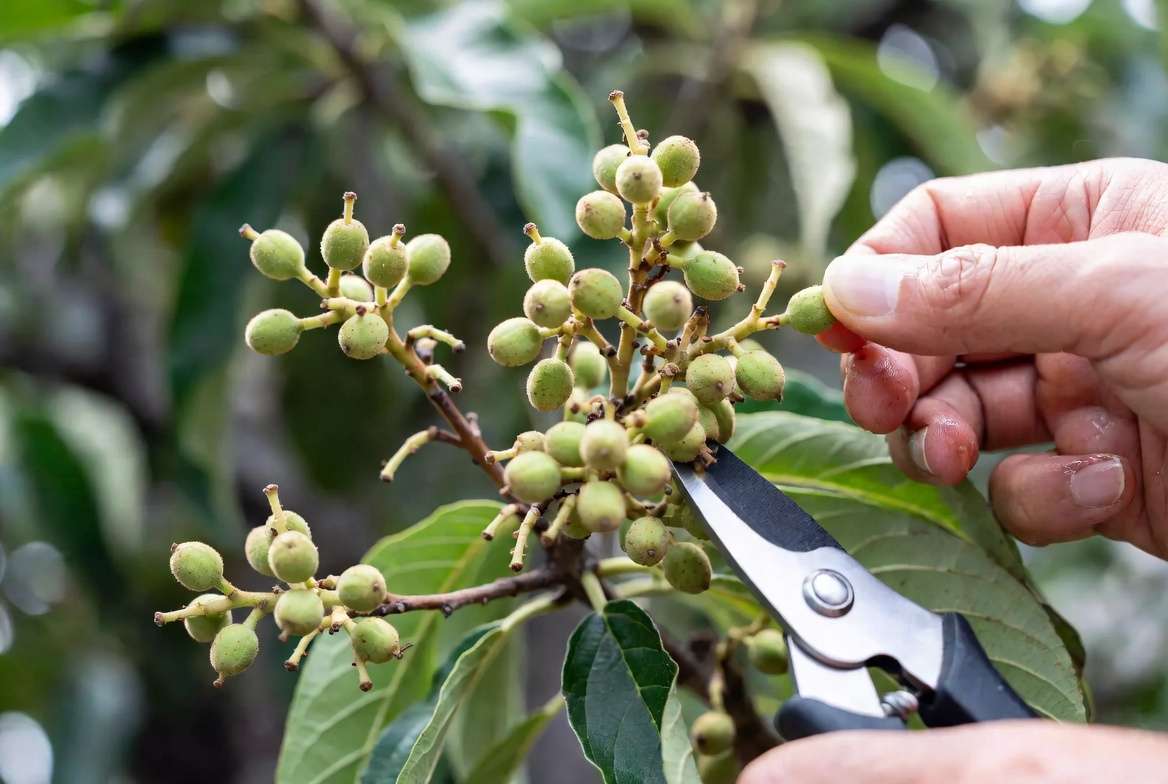
Loquat trees are notorious over-producers. They push out massive clusters of blossoms that, if successfully pollinated, result in dense, heavy clusters of fruit. While it might feel counterintuitive (and even a little heartbreaking) to cut away developing fruit, a tree only has a finite amount of energy and sugar to distribute. If it has to divide that energy among 20 loquats in a single cluster, you will end up with 20 tiny, pit-heavy, tart fruits.
How to thin:
When the developing green loquats are about the size of a pea or small marble, take a pair of sterilized pruning snips and cut away half of the fruit on each cluster. Leave only 4 to 6 of the healthiest-looking fruits per bunch. By removing the competition, the tree will channel all its sugar and water into the remaining loquats, resulting in giant, incredibly sweet fruit.
When and How to Harvest 🧺
Patience is a virtue when harvesting loquats. A common mistake is picking the fruit as soon as it turns yellow. Unlike bananas or avocados, loquats do not continue to ripen off the tree. If you pick them early, they will remain highly acidic and tart.
Wait until the fruit turns a deep, rich golden-orange. It should yield slightly to a gentle squeeze, feeling a bit soft rather than firm. A perfectly ripe loquat will easily pull away from the stem with a gentle twist. Because the skin is delicate and prone to bruising, handle them with care, placing them gently into a padded basket.
Common Pests and Diseases (And How to Beat Them) 🐛
Even the healthiest trees can occasionally fall victim to pests or disease. Being proactive is your best defense. Here are the top threats to your loquat tree and how an expert handles them:
| Problem | Symptoms | Organic / Expert Solution |
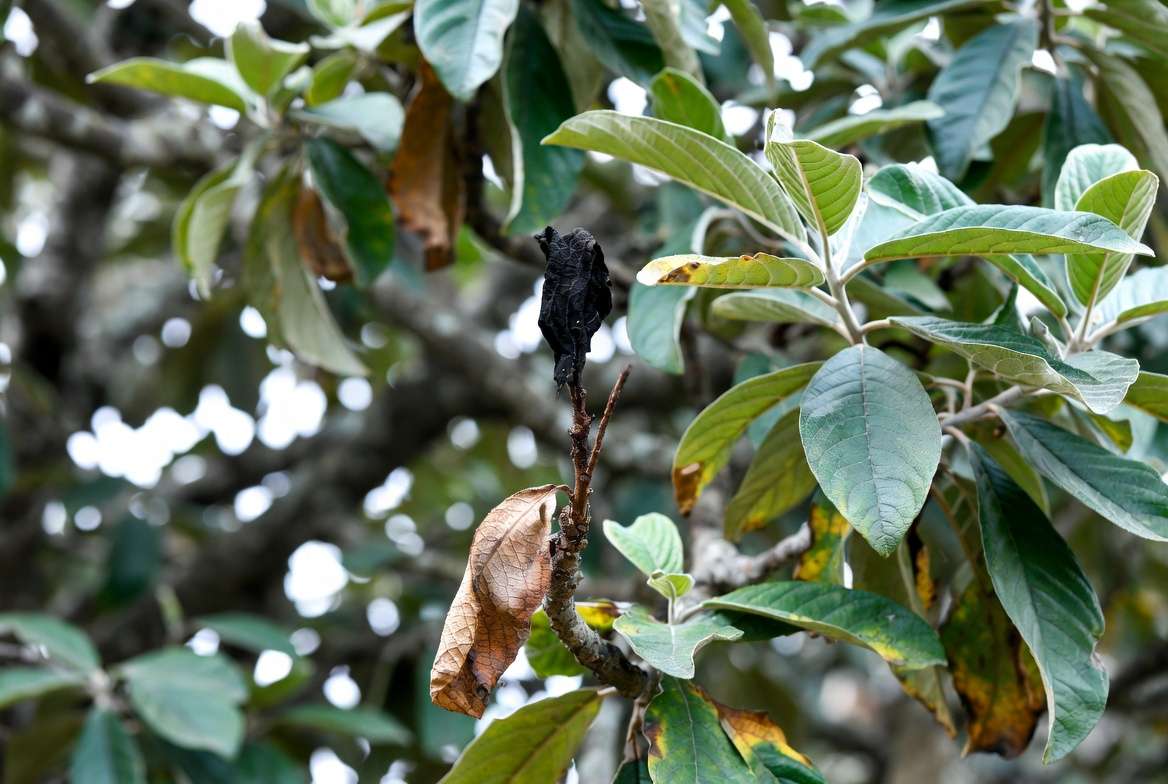
| Fire Blight (Bacterial) | Leaves and branches suddenly look scorched by fire (turning black and shriveled). Trunks may have oozing cankers. | This is highly contagious. Immediately prune infected branches at least 12 inches below the visible damage. Crucial: Sanitize your pruning shears with a 10% bleach solution between every single cut to avoid spreading the bacteria. Burn or bag the diseased wood. |
| Caribbean Fruit Flies | Tiny maggots found inside rotting fruit; premature dropping of the harvest. | Chemical sprays are often ineffective once the flies lay eggs inside the fruit. Use organic fruit bagging techniques (placing mesh bags over the thinned fruit clusters) or hang pheromone traps early in the fruiting season to disrupt mating. |
| Aphids & Scale Insects | Curled, stunted new leaf growth; a sticky “honeydew” residue on leaves that often turns black with sooty mold. | Blast the pests off with a strong jet of water from the hose. For stubborn infestations, apply organic Neem oil or insecticidal soap in the early evening (never in direct midday sun, which can burn the leaves). |
Frequently Asked Questions (FAQs) About Loquat Trees ❓
Can you grow a loquat tree in a pot?
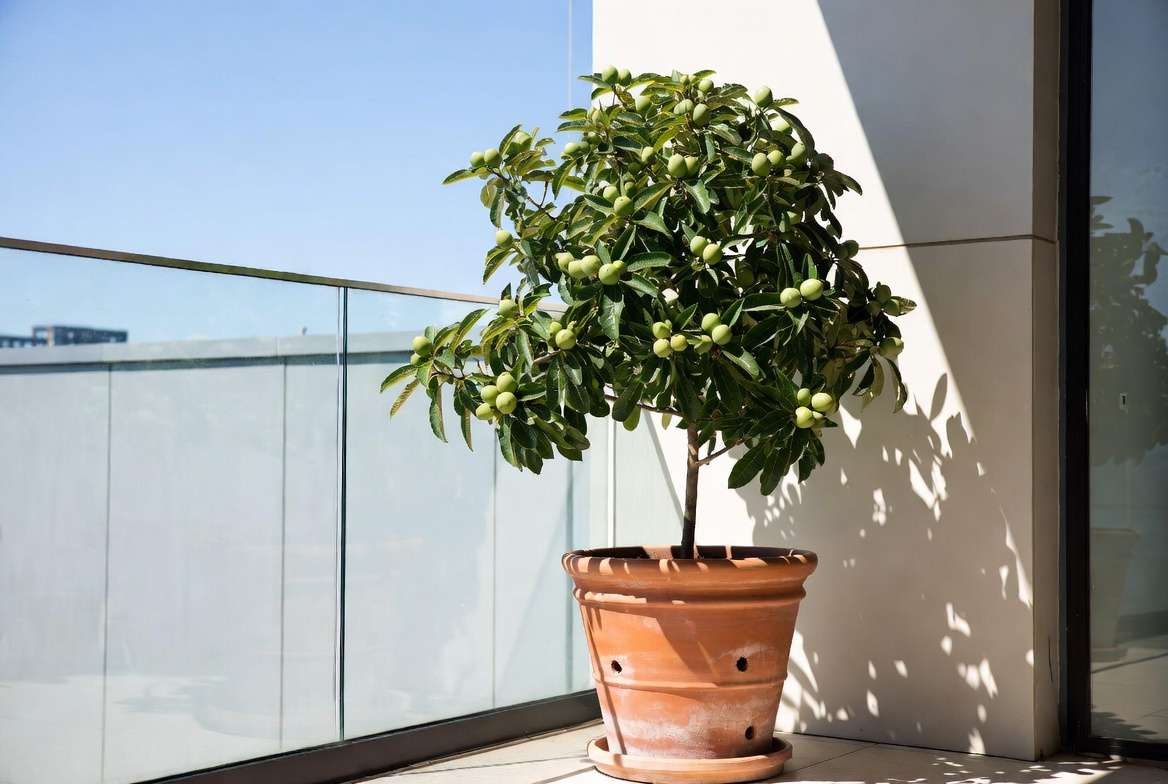
Absolutely! While standard varieties can grow quite large, you can successfully cultivate a loquat in a large container (at least 15-20 gallons). Seek out dwarf varieties, ensure the pot has excellent drainage holes, and use a high-quality, well-draining potting mix. Potted trees will need more frequent watering and fertilizing than those planted in the ground.
How long does it take for a loquat tree to bear fruit?
This depends entirely on how the tree was propagated. If you purchase a grafted tree from a reputable nursery, it will typically begin producing fruit within 2 to 3 years of planting. If you grow a loquat from seed, it can take anywhere from 8 to 10 years to produce its first harvest, and the fruit quality may not match the parent tree.
Are loquat tree leaves or seeds toxic?
The flesh of the loquat fruit is entirely safe and nutritious. However, like apples, cherries, and peaches, loquat seeds (and to a lesser extent, the young leaves) contain trace amounts of cyanogenic glycosides. If chewed and consumed in large quantities, these compounds can release mild toxins. Always spit out the seeds, and ensure pets do not chew on fallen seeds or large amounts of foliage.
Final Thoughts: Enjoying the Fruits of Your Labor 🌟
Growing a thriving loquat tree is a journey that bridges the gap between ornamental landscaping and rewarding agriculture. By providing the right foundational care—abundant sunshine, well-draining soil, and protection from severe winter freezes—you set your tree up for success. But by applying expert techniques like strategic pruning, cross-pollination, and the highly effective practice of fruit thinning, you elevate your harvest from mediocre to magnificent.
There is nothing quite like the pride of offering family and friends a bowl of fresh, sweet, homegrown loquats in the early spring, right when the rest of the garden is just beginning to wake up. Whether you plan to eat them fresh out of hand, bake them into tarts, or boil them down into a rich, spiced jam, your efforts in the garden will be repaid tenfold.
So grab your gardening gloves, prepare your soil, and get ready to transform your backyard into a tropical oasis. Happy planting! 🌳✨











