
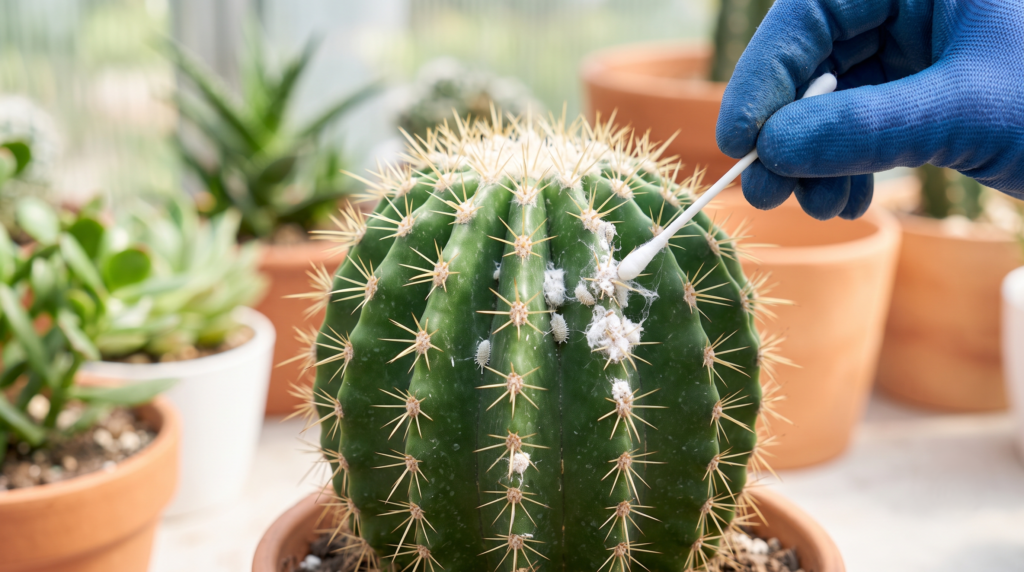
Every plant parent knows the sudden, sinking feeling of panic. You are admiring your thriving indoor jungle or outdoor succulent garden, enjoying the architectural beauty of your resilient cacti, when you suddenly spot it: tiny, uninvited clusters of what looks like white, cottony fuzz nestled deep between the spines. 😱
Your heart drops. You haven’t just discovered a harmless speck of dust; you’ve found the dreaded mealybug. While cacti are famously low-maintenance and tough as nails, these sneaky, sap-sucking pests can destroy an entire collection shockingly fast if left unchecked. But take a deep breath! You don’t have to throw your beloved prickly friends in the trash.
In this comprehensive expert guide, I am going to share the absolute best pest control methods for cactus mealybugs. Drawing from years of horticultural experience and succulent care, we will walk through exactly how to identify, treat, and permanently eradicate these resilient invaders so your plants can thrive once again. Let’s get to work! 🧤
🔍 Know Your Enemy: What Are Cactus Mealybugs?
Before you can effectively fight a pest, you must understand how it operates. Blindly spraying chemicals is rarely the answer.
The Biology of the Bug 🐛
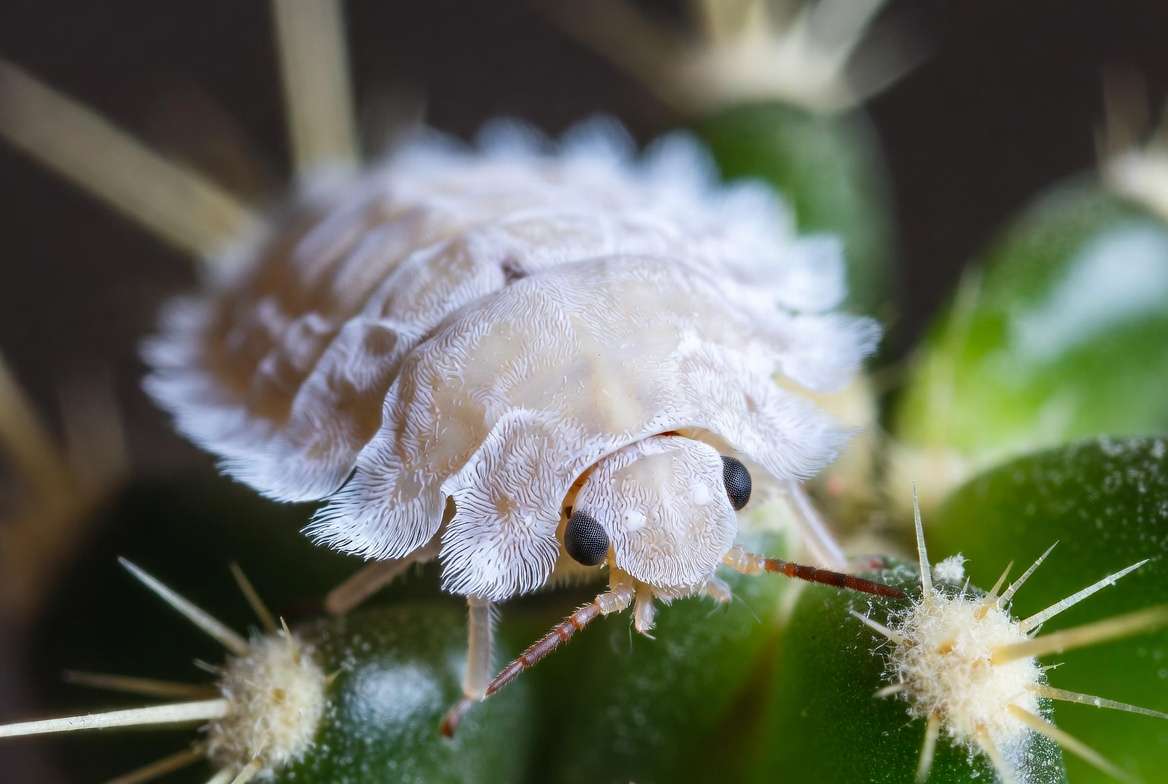
Mealybugs are tiny, soft-bodied, unarmored scale insects belonging to the family Pseudococcidae. To the naked eye, they look like small, oval-shaped bugs covered in a powdery, waxy, white coating.
This white fuzz is not just for show—it is an evolutionary marvel. The cottony wax acts as a highly effective armor that repels water and protects the insect from predators, harsh environmental conditions, and, unfortunately for you, many standard liquid pesticides. Because water simply rolls off their backs, treating them requires specific techniques that can penetrate or melt this waxy barrier.
Why Do They Love Cacti? 🏜️
You might wonder why a soft-bodied insect would choose a sharp, spiky cactus as its home. The answer lies in the cactus’s anatomy. Mealybugs thrive in tight, protected crevices. The deep ribs of a Cereus, the dense spine clusters (areoles) of an Echinocactus, and the tight rosettes of succulent relatives provide perfect, shaded hiding spots.
Furthermore, cacti are essentially living water reservoirs. Mealybugs possess a sharp, straw-like mouthpart called a stylet, which they pierce into the succulent flesh to drain the plant’s nutrient-rich sap.
Mealybugs vs. Cochineal Scale vs. Normal Cactus Fluff 🧐
As an expert plant caretaker, you must learn to properly diagnose your plant. Not all white fuzz is a mealybug!
-
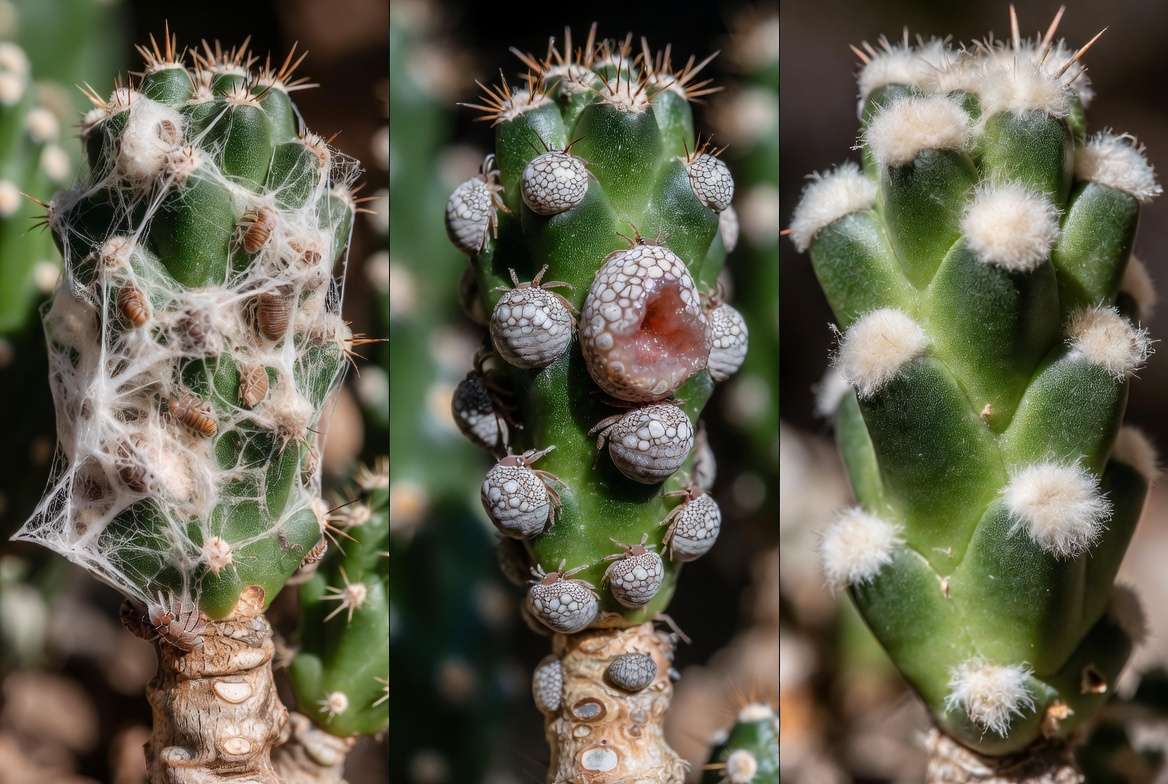
Mealybugs: Look for distinct, segmented, pill-bug-like insects hiding inside the cottony masses. If you poke them with a toothpick, they will slowly move.
-
Cochineal Scale: Commonly found on Opuntia (Prickly Pear) cacti. They also produce a white waxy substance, but if you squash a cochineal bug, it produces a deep, vivid crimson red dye (carmine).
-
Natural Fluff: Some cacti, like the Old Man Cactus (Cephalocereus senilis) or various Mammillaria species, naturally grow white hair or dense wool to protect themselves from harsh sun. Natural wool is evenly distributed and tightly attached to the areoles. Mealybug fuzz looks messy, web-like, and appears randomly in crevices.
🚨 4 Telltale Signs Your Cactus is Under Attack
Early detection is the single most important factor in saving your plant. Inspect your cacti bi-weekly for these four definitive symptoms:
-
Cottony White Webbing: This is the most obvious sign. You will find small, sticky, cotton-like masses near the growing tips (the crown), hidden under the base of the plant, or tucked securely behind spines.
-
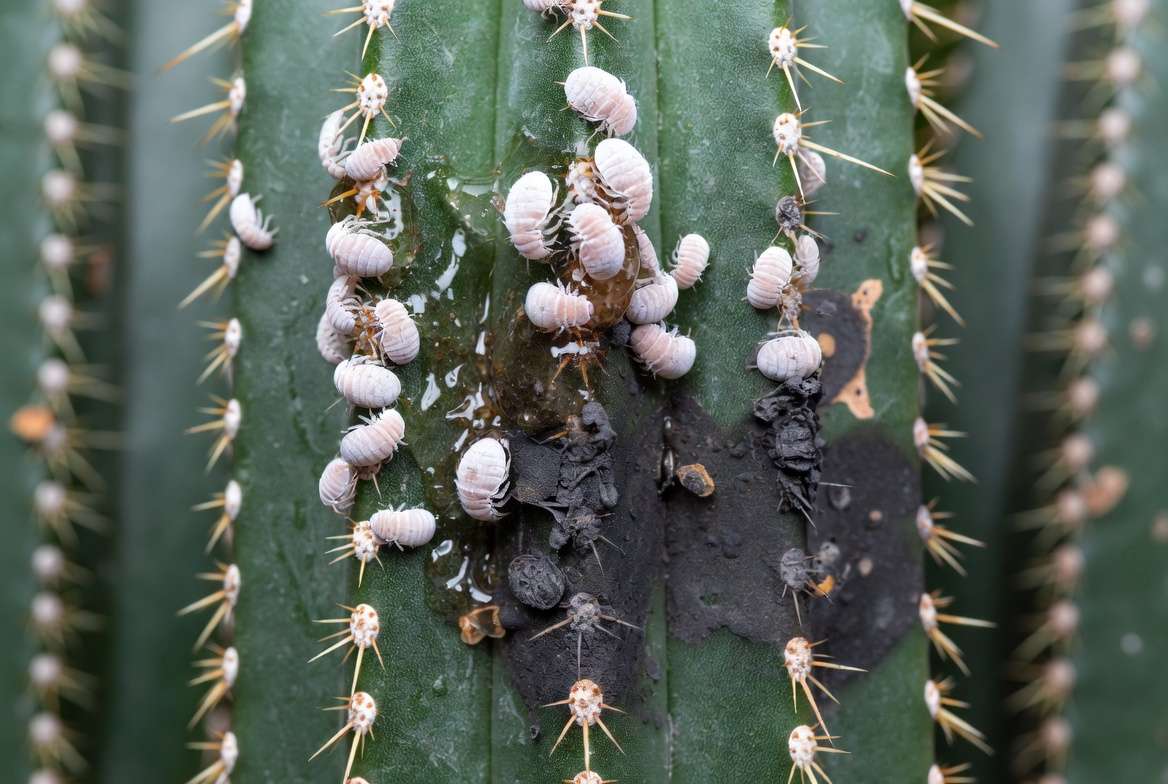
Sticky Residue (Honeydew): As mealybugs gorge on your plant’s sap, they excrete a sticky, sugary waste product known as honeydew. If your cactus feels unexpectedly sticky to the touch, or if the rim of your terracotta pot is glossy and tacky, pests are present.
-
Sooty Mold: Honeydew acts as a perfect breeding ground for a black fungus called sooty mold. If you see dark, ashy, or black powdery patches developing on the skin of your cactus, it is a secondary infection caused by the mealybugs’ waste. 🖤
-
Stunted Growth and Shriveling: A heavily infested cactus will stop growing. The flesh may begin to look puckered, yellowed, or shriveled as the bugs literally suck the hydration and life out of the plant. 🥀
🛠️ Preparation: Gather Your Mealybug Eradication Kit
When you confirm an infestation, immediately isolate the affected plant. Move it away from your indoor plant collection or outdoor garden to prevent the bugs from crawling to neighboring pots. 🛑
Next, assemble your arsenal. Having these items on hand ensures you are ready to tackle the problem efficiently:
-
Isopropyl Alcohol (70%): Do not use 90%. 70% alcohol has the perfect evaporation rate—it stays liquid long enough to penetrate the mealybug’s waxy shell and kill the pest on contact without causing chemical burns to the tough cactus epidermis.
-
Cotton Swabs (Q-tips) & Soft Paintbrushes: Essential for precise application between sharp spines.
-
Fine-tipped Tweezers: For manually picking off adult bugs.
-
Castile Soap or Insecticidal Soap: For wider spray treatments. 🫧
-
Neem Oil (100% Cold Pressed): To be used with extreme caution (more on this below).
-
A Spray Bottle: For applying broad treatments.
🛡️ Proven Pest Control Methods for Cactus Mealybugs
Because every infestation is unique, there is no one-size-fits-all solution. Below are the most effective, expert-approved methods, ranked from the most gentle spot treatments to the most aggressive systemic solutions.
Method 1: The Q-Tip & Rubbing Alcohol Technique (Spot Treatment) 🩹
When to use: This is your first line of defense, perfect for early detection, mild infestations, and delicate cacti where spraying might cause cosmetic damage.
How it works: Rubbing alcohol acts as an instant solvent. When it touches a mealybug, it melts right through their hydrophobic waxy armor, destroying their cell walls and killing them instantly.
Step-by-Step Execution:
-
Pour a small amount of 70% isopropyl alcohol into a shallow dish.
-
Dip a Q-tip or a small, soft-bristled artist’s paintbrush into the alcohol.
-
Carefully dab the alcohol directly onto the white fuzzy spots and any visible bugs. You will see the white wax instantly dissolve, revealing the small, yellowish-brown bug beneath.
-
Wipe the dead bug away.
-
Check every single nook and cranny. Mealybugs are masters of hide-and-seek. Use a flashlight to check deep inside the ribs of your cactus.
-
Expert Tip: The alcohol evaporates rapidly, making it incredibly safe for the plant, but keep the treated cactus out of direct, intense sunlight for at least 24 hours to prevent localized photosensitivity burns.
Method 2: Insecticidal Soap Sprays 🫧
When to use: If the infestation has spread across multiple cacti, or if there are simply too many bugs to individually dab with a Q-tip, it’s time to move to a spray.
How it works: True insecticidal soaps contain potassium salts of fatty acids. When sprayed, these salts penetrate the insect’s cuticle (outer shell), causing their cells to collapse and resulting in lethal dehydration.
The Expert DIY Recipe: Do not use heavy chemical dish detergents like Dawn on your cacti. They contain harsh degreasers that can strip the natural protective farina (the powdery wax) off your succulents, leaving them vulnerable to sunburn and rot. Instead, make your own safe soap spray:
-
Mix 1 teaspoon of pure, liquid Castile soap (like Dr. Bronner’s Peppermint or Baby Unscented) into 1 liter of distilled water.
-
Add 1 tablespoon of 70% rubbing alcohol to give the spray an extra kick.
-
Shake gently in a spray bottle.
-
Spray the cactus thoroughly until dripping, ensuring the liquid runs down into the crevices. Repeat every 5 to 7 days until the bugs are gone.
Method 3: Neem Oil (Use with Extreme Caution on Cacti!) 🌿
When to use: Neem oil is a fantastic organic smothering agent and hormone disruptor, but it is notorious for causing damage to cacti if used incorrectly.
How it works: Neem oil contains Azadirachtin, a compound that disrupts the mealybug’s reproductive and feeding hormones. The oil also coats the bug, suffocating it.
🚨 Crucial Expert Warning: Phytotoxicity 🚨 Cacti and heavy horticultural oils do not mix well in the presence of UV light. If you spray a cactus with Neem oil and place it in the sun, the oil will literally deep-fry the plant’s skin, causing permanent, irreversible black or brown scarring (phytotoxicity).
-
The Safe Approach: Only apply Neem oil in the late evening, just as the sun is setting. Dilute it properly (usually 1 teaspoon of Neem oil and 1/2 teaspoon of Castile soap emulsifier per quart of water). Ensure the plant remains completely shaded for at least 48 hours after treatment to allow the oils to break down safely.
Method 4: Biological Warfare (Beneficial Insects) 🐞
When to use: If you have a large outdoor cactus garden, a heavily populated greenhouse, or just prefer letting nature do the work.
The Heroes of the Garden: Chemicals are not the only way. You can purchase beneficial predatory insects online and release them onto your plants.
-
Cryptolaemus montrouzieri (The Mealybug Destroyer): This ladybug relative is an absolute apex predator for mealybugs. In an amazing display of evolutionary camouflage, the larvae of the Mealybug Destroyer look exactly like giant mealybugs! They blend into the pest colonies and voraciously consume the adults, nymphs, and eggs.
-
Green Lacewings: The larvae of green lacewings are nicknamed “aphid lions” but they happily feast on mealybugs as well.
Method 5: Systemic Insecticides (The Nuclear Option) ☢️
When to use: When you are dealing with severe, recurring infestations, large collections, or precious, rare cacti that you absolutely cannot afford to lose, and all topical treatments have failed.
How it works: Systemic insecticides (such as those containing the active ingredient Imidacloprid or Dinotefuran) come in the form of water-soluble granules. You sprinkle the granules onto the topsoil and water the plant. The cactus roots absorb the chemical, pulling it up through the vascular system. The entire plant—the sap, the flesh, and the roots—becomes highly toxic to sap-sucking insects. When the mealybug takes a bite, it gets poisoned and dies.
Pros & Cons:
-
Pros: It provides long-lasting protection (up to 8 weeks) and reaches bugs hidden deep inside crevices where sprays cannot reach.
-
Cons: It is highly toxic to beneficial pollinators. If your cactus is outdoors and preparing to bloom, do not use systemics. The chemical will travel into the flower’s nectar, killing bees and butterflies. Reserve systemics strictly for indoor plants or non-blooming periods. 🐝
🪱 The Hidden Killer: Root Mealybugs
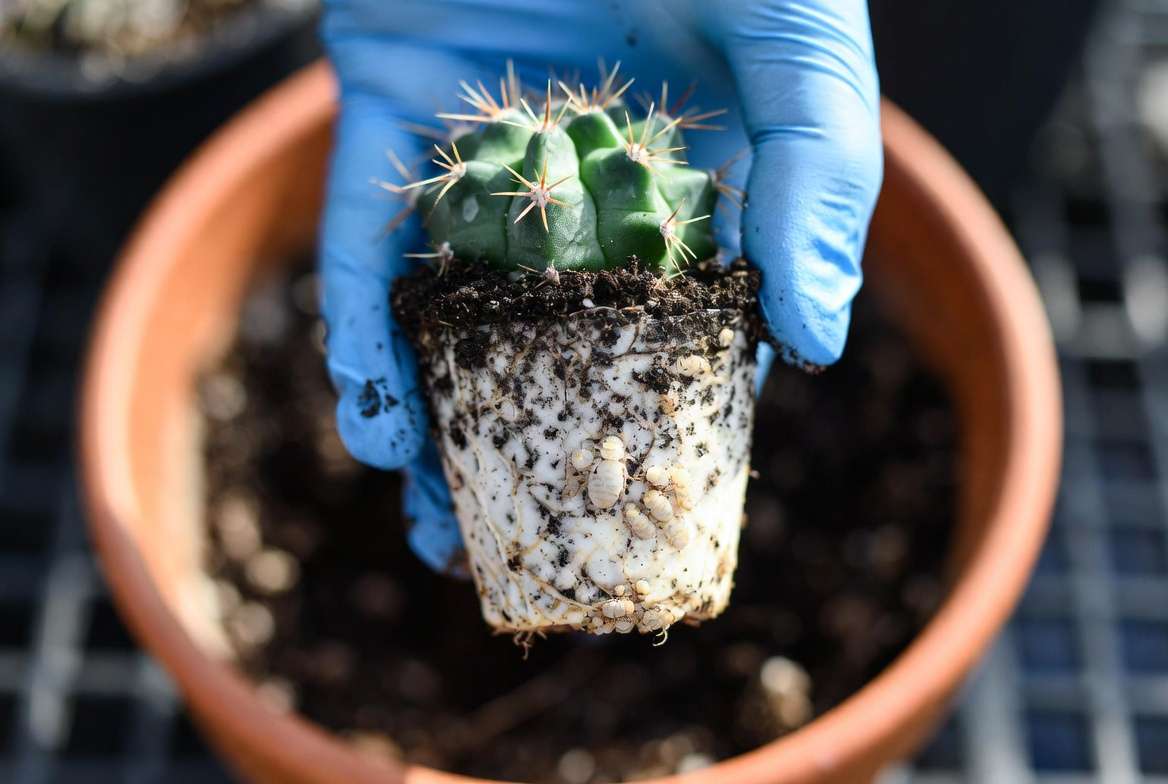
If you’ve treated the visible fuzz on top of the plant but your cactus is still yellowing, shriveling, or growing loose in its pot, you might be facing the most insidious variant: the Root Mealybug (Rhizoecus spp.).
These specialized pests live entirely underground. Because they are hidden in the soil, they often go unnoticed until it is almost too late.
How to Spot Root Mealybugs 🪴
Look closely at the drainage holes of your pot. Do you see a white, chalky, or ashy residue? If you gently un-pot the cactus, the soil will smell slightly foul (like fungus), and the roots will be covered in white powdery patches and tiny, slow-moving white bugs.
How to Eradicate Them Safely
Root mealybugs require an entirely different approach. You cannot just spray the top of the plant.
-
Unpotting: Remove the cactus from its pot.
-
Dispose of the Soil: Throw the infested soil directly into an outdoor trash can. Do not compost it. Wash the old pot thoroughly with bleach water before reusing it.
-
Root Washing: Take the naked cactus to a sink or outdoor hose and powerfully wash away all remaining dirt and visible bugs from the root system. 🚿
-
The Hot Water Bath Technique (Expert Level): To ensure 100% mortality of root mealybugs and their microscopic eggs, submerge the naked root system (keep the green body of the cactus out of the water) into a pot of water heated exactly to 115°F – 120°F (46°C – 49°C) for exactly 10 minutes. This precise temperature is lethal to the bugs but safe for the cactus roots.
-
Drying and Repotting: Allow the washed roots to air dry in a shady spot for 2 to 3 days. This lets any broken roots callous over. Finally, repot the cactus in fresh, sterile, gritty cactus mix.
🚫 5 Common Mistakes That Will Kill Your Cactus (Instead of the Bugs)
Through my years of rescuing succulents, I’ve seen countless well-meaning plant owners accidentally finish off their plants while trying to save them. Avoid these fatal errors:
-
Treating in Direct Sun: As mentioned with Neem oil, applying any liquid treatment (even alcohol or soap) while the sun is beating down on the plant acts like a magnifying glass. The liquid droplets magnify the UV rays and cause severe cellular burns. Always treat at sunset or indoors. ☀️
-
Watering Too Soon After Root Treatment: If you repot a cactus after battling root mealybugs, do not water it immediately. The roots have inevitably suffered micro-tears during the process. Watering right away invites fungal pathogens, leading to deadly root rot. Wait at least a week before the first watering. 💦
-
Ignoring the Neighbors: Mealybugs are incredibly mobile. If you find them on one cactus, assume the plants sitting next to it are also compromised. Treat the primary victim and preemptively spray the neighbors.
-
The “One and Done” Fallacy: A single treatment is never enough. Mealybug eggs can take weeks to hatch, and they are impervious to most sprays until they do. You must re-treat the plant every 7 to 10 days for at least a month to break the life cycle. 🔄
-
Using Harsh Household Cleaners: Never use bleach, Lysol, or heavy chemical surface cleaners on plant tissue. You will chemically burn the epidermis and suffocate the plant’s stomata (pores).
🪴 Proactive Prevention: Keeping the Fluff Away Forever
Eradication is exhausting. Prevention is easy. Once your plants are clear, adopt these expert habits to ensure the white fuzz never returns.
-
The Golden Rule of Quarantine: Never introduce a newly purchased nursery plant directly into your collection. Greenhouses are notorious breeding grounds for mealybugs. Keep all new arrivals in a separate room for 14 days. Inspect them thoroughly before allowing them to mingle with your established plants. 🛑
-
Optimize Airflow: Mealybugs love stagnant, humid air. Cacti, on the other hand, love dry, moving air. Ensure your growing area has excellent ventilation. If growing indoors, setting up a small oscillating fan can do wonders for pest prevention and overall plant health. 🌬️
-
Diatomaceous Earth (DE): Sprinkle a thin layer of food-grade diatomaceous earth over the topsoil of your pots. DE is an organic, chalky powder made of fossilized algae. To a microscopic bug, crawling over DE is like crawling over broken glass; it slices open their exoskeletons and dehydrates them. (Note: DE is only effective when dry; you must reapply after watering).
🙋♀️ Frequently Asked Questions (FAQs)
Q: Are cactus mealybugs harmful to humans or pets? 🐾 A: No. While they are a nightmare for your indoor plant collection, mealybugs do not bite humans, nor are they toxic to cats or dogs. However, their honeydew can be incredibly sticky and annoying if it drips onto your furniture!
Q: Can mealybugs survive in dry cactus soil? 🏜️ A: Yes. Unlike fungus gnats, which require consistently wet, swampy soil to breed, root mealybugs have adapted to survive in the dry, gritty environments that cacti prefer. This makes them particularly stubborn to remove without unpotting.
Q: How long does it take to get rid of mealybugs completely? ⏳ A: Patience is key. Because of their staggered life cycle (eggs, crawlers, adults), it typically takes 4 to 6 weeks of consistent, weekly treatments to guarantee the colony is fully eradicated.
Q: Should I just throw my heavily infested cactus away? 🗑️ A: This depends on the severity. If the cactus is small, common, and so heavily infested that the flesh has completely shriveled and rotted, it might be safer to dispose of it to protect your other plants. However, if the plant holds sentimental value, is a rare specimen, or still has a firm green body, it is absolutely worth saving!
✨ Conclusion: Don’t Give Up on Your Prickly Friends
Discovering an infestation can be incredibly discouraging, but it doesn’t mean you are a bad plant parent. Pests are simply a natural, inevitable part of cultivating a garden.
By taking swift action and consistently applying these pest control methods for cactus mealybugs, you can completely clear the infestation and reclaim the health of your collection. Remember: early detection with routine inspections, targeted spot treatments with rubbing alcohol, strategic use of insecticidal soaps, and isolating new plants are your greatest weapons.
Armed with this expert knowledge, you are more than ready to stop the white fuzz in its tracks. Stay patient, be persistent with your weekly treatments, and your resilient, prickly friends will bounce back stronger than ever! 💚











